
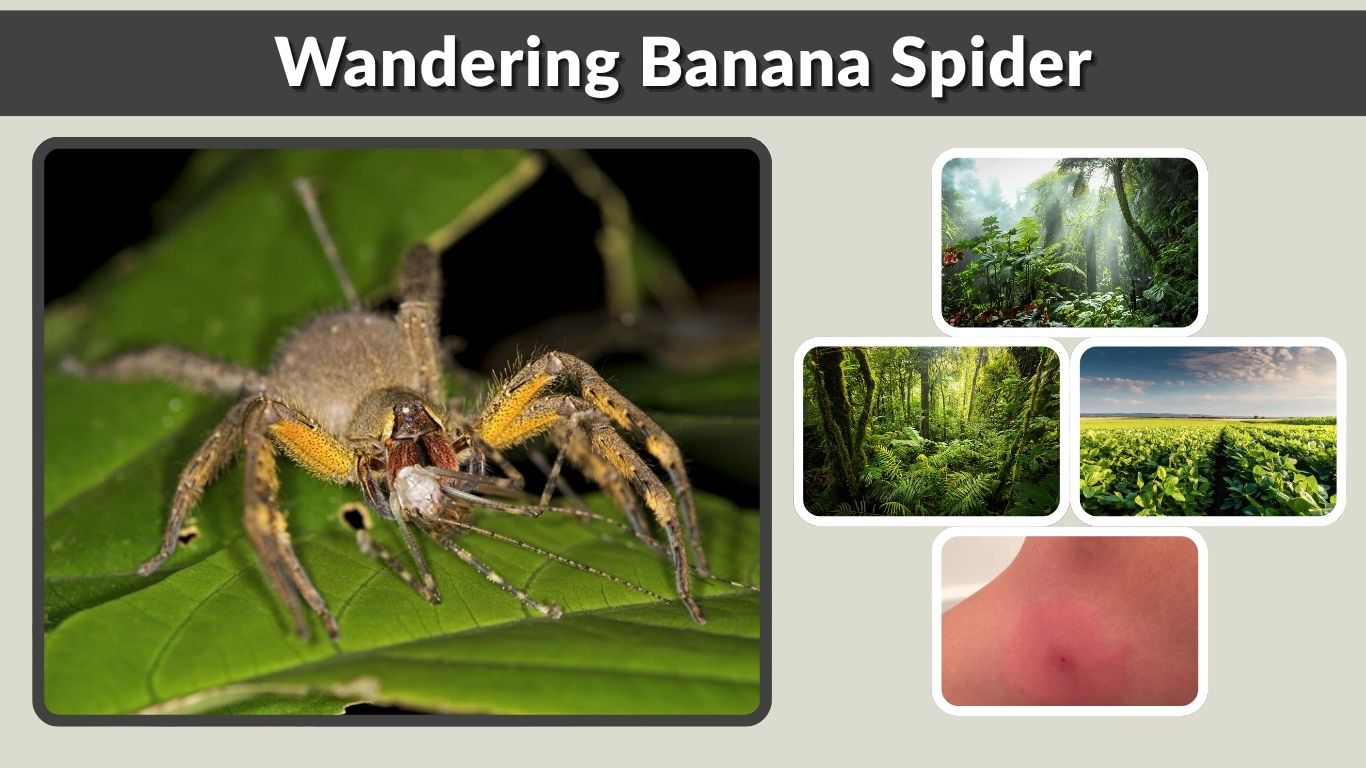
The wandering banana spider, often called the Brazilian wandering spider, is one of the most searched and misunderstood spiders in the world. Known for its potent venom and aggressive defense posture, it has gained a reputation as one of the most dangerous spiders. However, the real risk is often exaggerated. This guide explains its identification, size, behavior, habitat, and bite effects in a clear and factual way so you can understand the truth behind this infamous species.
What Is a Wandering Banana Spider?
The wandering banana spider refers to spiders in the Phoneutria genus, native to Central and South America. Unlike web-building spiders, they actively roam the ground at night hunting prey. Their nickname comes from being occasionally found in banana shipments, which has spread awareness—and fear—worldwide.
Scientific Classification
- Genus: Phoneutria
- Family: Ctenidae
- Common name: Brazilian wandering spider
- Known for: Strong venom and active hunting
Why It’s Called Banana Spider
- Sometimes transported in banana shipments
- Yellow-brown coloring resembles bananas
- Often confused with harmless orb-weavers
- Name used broadly for multiple spider types
Wandering Banana Spider Identification
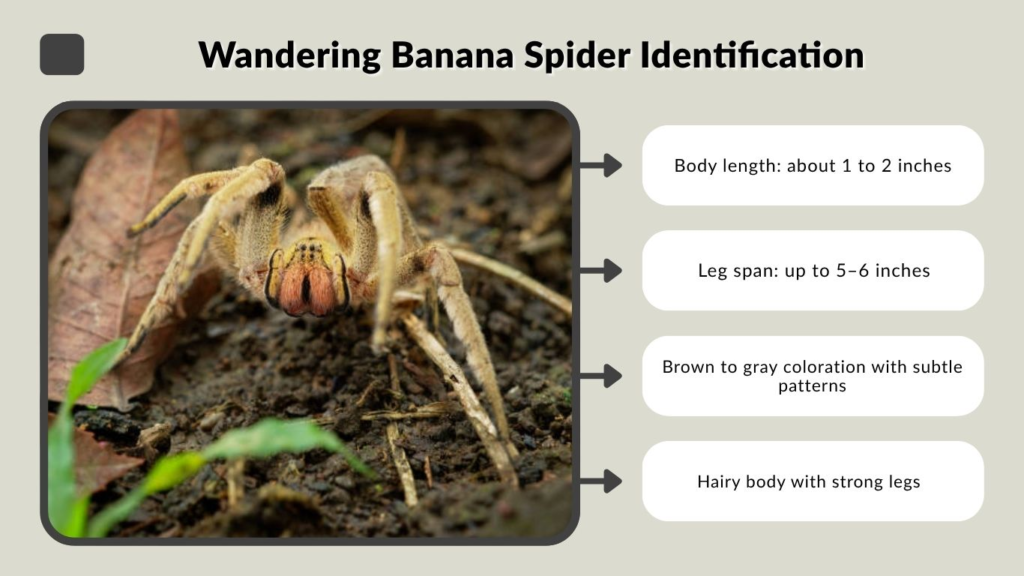
Identifying this spider correctly is important because it is often confused with harmless species. It has a distinct look and defensive posture that sets it apart from common garden spiders or orb-weavers found in places like Florida.
Size and Appearance
- Body length: about 1 to 2 inches
- Leg span: up to 5–6 inches
- Brown to gray coloration with subtle patterns
- Hairy body with strong legs
- Red hairs near the mouthparts (in some species)
Key Features to Recognize
- Raises front legs in a defensive stance
- Fast-moving and ground-dwelling
- Does not build large webs
- Eyes arranged in three rows
Wandering Banana Spider Range and Habitat
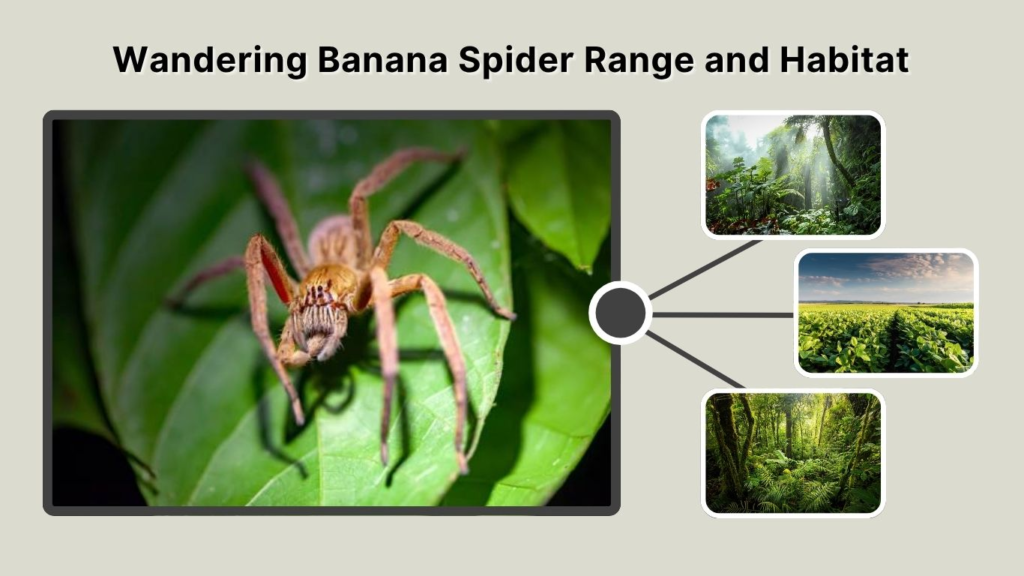
These spiders are primarily found in tropical regions, where warmth and humidity support their active hunting lifestyle. While stories suggest global presence, their natural range is actually quite limited.
Geographic Range
Wandering banana spiders are native to South and Central America, especially Brazil, Peru, Colombia, and surrounding regions. Reports outside these areas are usually linked to accidental transport through produce shipments rather than established populations.
Natural Habitat
They prefer humid, forested environments such as rainforests, plantations, and dense vegetation. During the day, they hide in dark, sheltered places like logs, leaf litter, or crevices. At night, they emerge to hunt, which is why they are rarely seen unless disturbed.
Wandering Banana Spider Behavior
The behavior of this spider is one of the main reasons it has such a strong reputation. Unlike passive web-builders, it actively moves and reacts defensively when threatened.
Why It’s Called “Wandering”
These spiders do not rely on webs to catch prey. Instead, they roam the forest floor at night, searching for insects, small animals, and other prey. This active hunting style makes them more mobile and occasionally more noticeable to humans.
Defensive Behavior
When threatened, the wandering banana spider may raise its front legs and display its fangs in a striking posture. This is a warning signal rather than an immediate attack. While they can be aggressive if provoked, they typically prefer to defend themselves rather than seek confrontation.
Wandering Banana Spider Bite
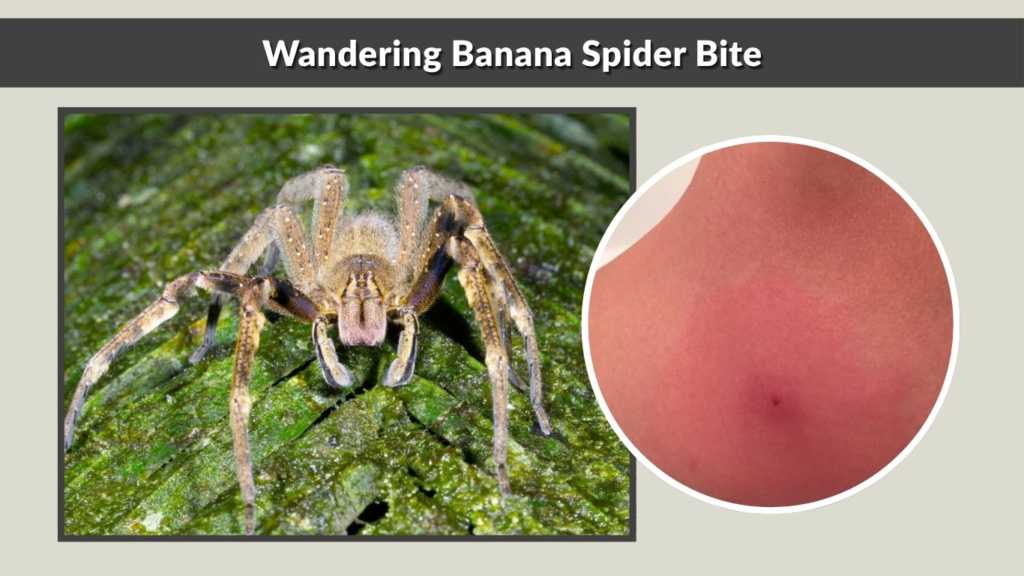
The bite of a wandering banana spider is the main reason it is widely feared. While medically significant, the actual risk depends on the situation and how quickly treatment is received.
How Dangerous Is the Bite?
- Venom is neurotoxic and can affect the nervous system
- Bites are rare and usually occur when handled
- Serious cases require medical attention
- Most people recover fully with treatment
Symptoms of a Bite
- Immediate intense pain at the bite site
- Sweating and increased heart rate
- Nausea or dizziness
- In rare cases, more severe reactions
What to Do If Bitten
- Seek medical help immediately
- Stay calm and limit movement
- Keep the bite area still
- Do not attempt home remedies
Wandering Banana Spider Venom
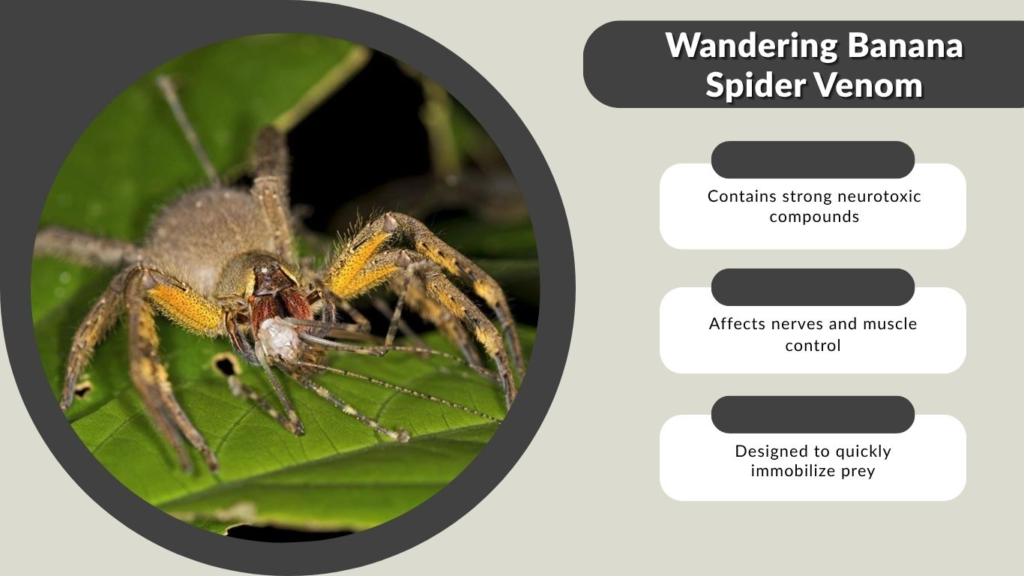
The venom of the wandering banana spider is one of the main reasons for its global reputation. It contains powerful neurotoxins that affect the nervous system and can cause intense symptoms. However, modern medical care has made serious outcomes extremely rare, and most cases are treated successfully.
Toxicity Explained
- Contains strong neurotoxic compounds
- Affects nerves and muscle control
- Designed to quickly immobilize prey
- Can impact breathing and heart rate in severe cases
Fatality Risk
- Deaths are extremely rare with treatment
- Higher risk only without medical care
- Antivenom is available in affected regions
- Most bites result in recovery within days
Are Wandering Banana Spiders Dangerous to Humans?
Although often labeled as one of the most dangerous spiders, the actual risk to humans is lower than many people believe. These spiders do not actively hunt humans and usually bite only when they feel threatened or are accidentally handled. With proper awareness and medical access, serious harm is uncommon.
Real Risk vs Myths
Many online sources exaggerate the danger of these spiders. While their venom is potent, bites are rare and typically occur due to direct contact. Most individuals who receive treatment recover fully. The spider’s aggressive reputation comes more from its defensive posture than actual attack behavior.
Comparison to Other Spiders
- More venomous than common house spiders
- Less frequently encountered than many species
- Similar medical concern level to some dangerous spiders
- Still low overall risk to the general public
Wandering Banana Spider vs Wolf Spider
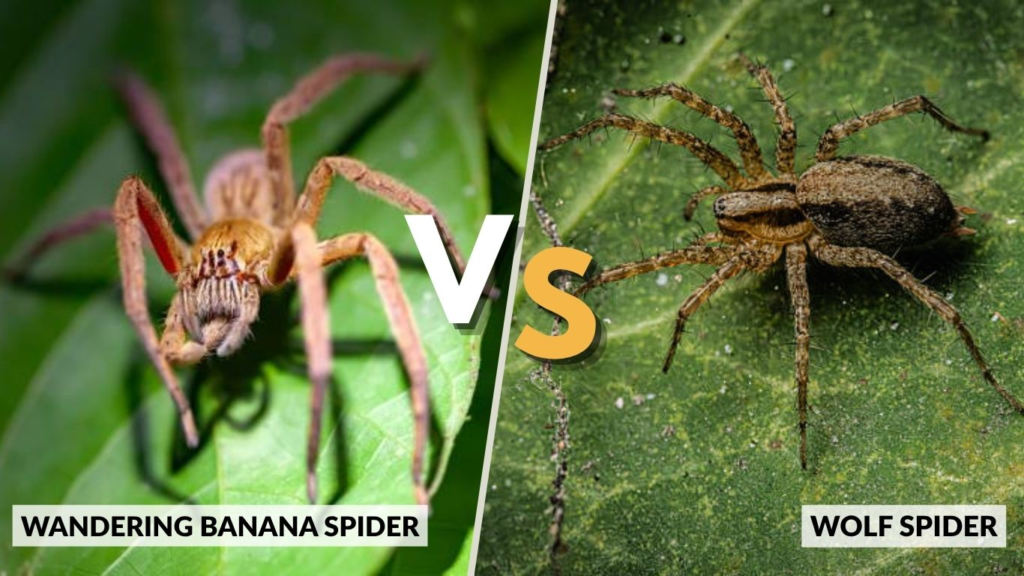
These two spiders are often confused due to their similar size and ground-dwelling behavior. However, they differ significantly in venom strength, behavior, and risk level.
Key Differences
- Wandering spider is more venomous
- Wolf spider is generally harmless
- Wandering spider shows aggressive defense posture
- Wolf spiders are shy and avoid confrontation
Wandering Banana Spider in the UK & Other Regions
Reports of wandering banana spiders outside their native range often cause concern, especially in places like the UK. These cases are typically linked to imported fruit rather than natural populations. While the idea sounds alarming, the reality is far less threatening for most regions.
Can They Be Found Outside South America?
Occasionally, individual spiders may be transported in banana shipments and discovered in supermarkets or warehouses. These cases are rare and usually isolated, with no evidence of breeding populations forming in cooler climates.
Should You Be Concerned?
For people living outside tropical regions, the risk is extremely low. These spiders cannot survive long in colder environments and are unlikely to establish themselves. Most sightings are quickly handled and do not pose ongoing danger.
FAQs
Are wandering banana spiders the same as Florida banana spiders?
No, they are completely different. Florida “banana spiders” are usually harmless orb-weavers, while wandering banana spiders belong to the Phoneutria genus and have medically significant venom.
How big is a wandering banana spider?
They typically have a body length of 1 to 2 inches, with a leg span reaching up to 5 or 6 inches. Their long legs and active movement often make them appear larger than they actually are.
Is the wandering banana spider the most venomous spider?
It is considered one of the most venomous spiders, but not always the most venomous in every category. Its reputation comes from the strength of its venom and its defensive behavior.
Can a wandering banana spider kill a human?
While it is possible in extreme untreated cases, deaths are very rare today. With prompt medical treatment and access to antivenom, most people recover without long-term effects.
Do wandering banana spiders live in houses?
They do not typically live in homes but may wander indoors accidentally. In their natural habitat, they prefer forests and ground cover rather than human structures.
