
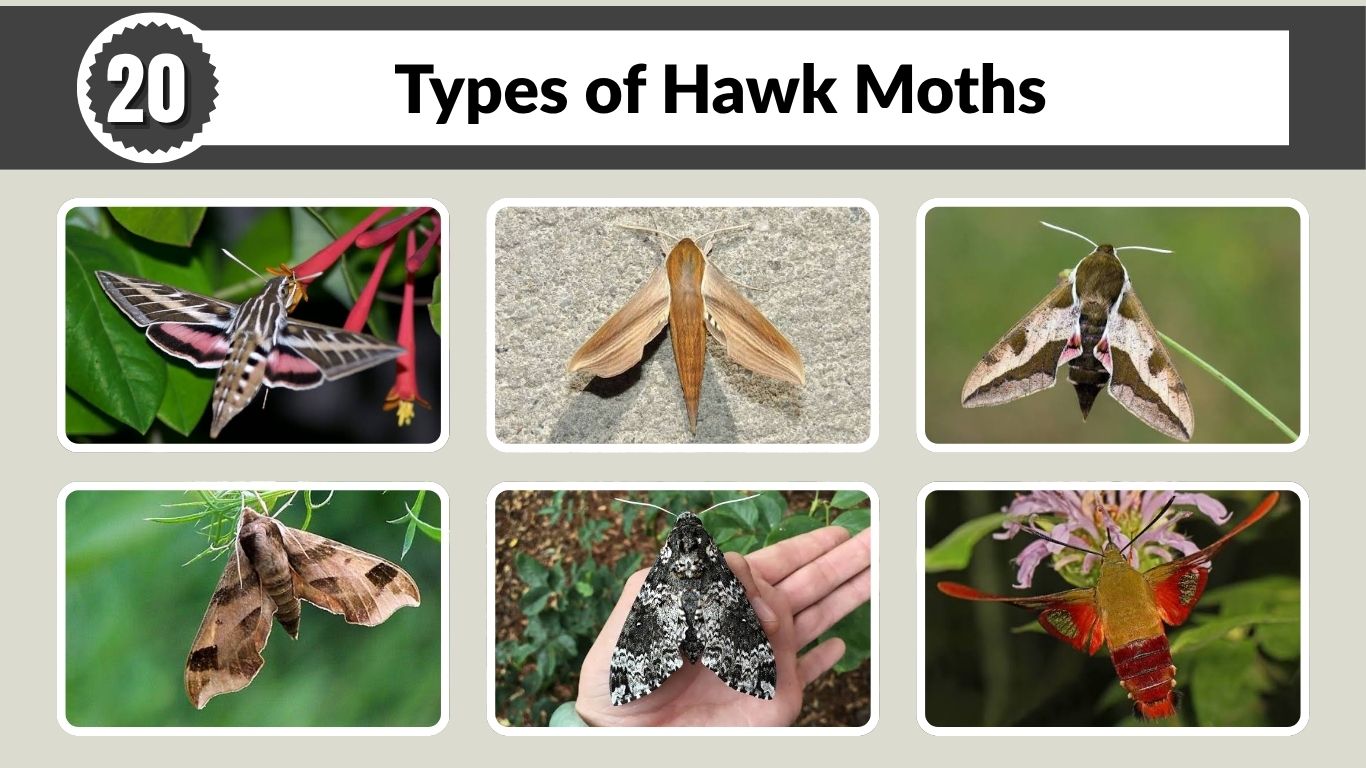
Hawk moths are remarkable insects recognized for their powerful flight, streamlined bodies, and ability to hover while feeding from flowers. Some resemble hummingbirds, while others display colorful wings, false eyespots, or snake-like caterpillars. From the hummingbird hawk-moth to the hummingbird clearwing moth, these 20 types of hawk moths reveal the fascinating characteristics, habitats, diets, behaviors, and life cycles of this diverse moth family.
1. Hummingbird Hawk-Moth
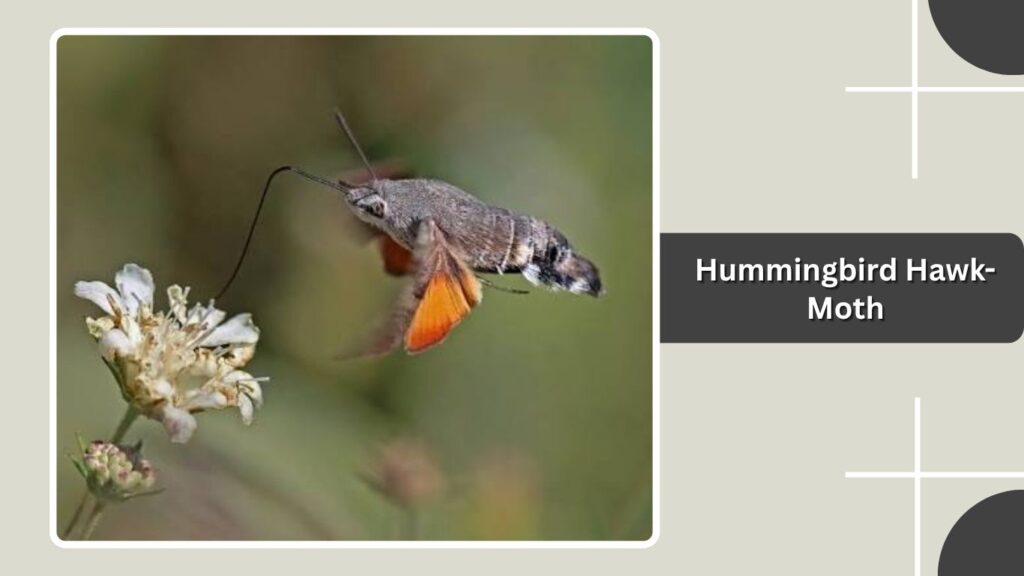
The hummingbird hawk-moth (Macroglossum stellatarum) is a fast-flying moth named for its remarkable resemblance to a hummingbird. It hovers in front of flowers while using its long proboscis to drink nectar. Unlike many moths, it is commonly active during daylight and can frequently be seen in gardens.
Characteristics
- Wingspan: Approximately 1.6–2 inches
- Forewings: Grayish-brown with dark wavy lines
- Hindwings: Bright orange with dark borders
- Body: Thick, grayish, and marked with black-and-white patches
- Proboscis: Exceptionally long for reaching deep flowers
- Flight: Fast, controlled, and capable of hovering
- Caterpillar: Green or brown with pale stripes and a tail horn
Habitat and Distribution
Hummingbird hawk-moths occur throughout Europe, North Africa, and much of Asia. They inhabit gardens, meadows, woodland edges, farmland, coastal areas, and urban landscapes.
They are strong migrants and may travel considerable distances during warmer months. Their ability to adapt to different environments allows them to appear wherever nectar-rich flowers are abundant.
Behavior and Diet
Adults are usually active during the day, especially in warm sunshine. They hover without landing and extend their long proboscis into flowers. Preferred nectar sources include lavender, honeysuckle, buddleia, red valerian, and jasmine.
The caterpillars mainly feed on bedstraw and related plants. Their green coloration allows them to remain concealed among foliage.
Life Cycle and Reproduction
Females lay small green eggs individually on caterpillar host plants. After hatching, the larvae feed continuously and pass through several growth stages.
Mature caterpillars pupate among fallen leaves or in loose soil. Multiple generations may occur in warm regions. Adults can migrate or overwinter in sheltered locations, depending on the climate.
2. Elephant Hawk-Moth
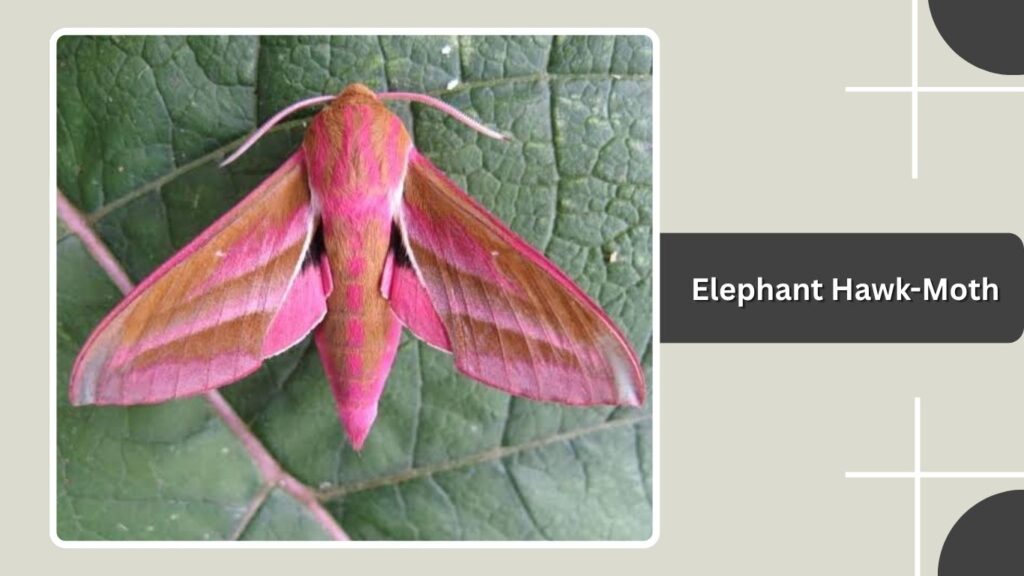
The elephant hawk-moth (Deilephila elpenor) is a colorful moth with striking pink and olive-green wings. Its name comes from the caterpillar, whose extended front section resembles an elephant’s trunk. When disturbed, the caterpillar pulls its head inward and displays large eyespots that create a snake-like appearance.
Characteristics
- Wingspan: Approximately 2.4–2.8 inches
- Forewings: Olive-green with bright pink lines
- Hindwings: Pink with dark inner sections
- Body: Olive-green with pink markings
- Activity: Primarily active at dusk and during the night
- Caterpillar: Brown or green with prominent eyespots
- Tail horn: Small curved horn near the rear of the caterpillar
Habitat and Distribution
Elephant hawk-moths are widely distributed across Europe and parts of Asia. They live in gardens, parks, woodland clearings, hedgerows, grasslands, and areas with abundant willowherb.
Adults are often noticed from late spring through summer. They may visit gardens at night or rest among dense plants during daylight hours.
Behavior and Diet
Adults use their long proboscis to drink nectar while hovering near flowers. They are particularly attracted to honeysuckle and other strongly scented flowers that open or produce more fragrance at night.
The caterpillars feed on willowherb, bedstraw, fuchsia, and several related plants. Despite their large size and snake-like display, they are harmless to humans.
Life Cycle and Reproduction
Females place their eggs individually on suitable food plants. The caterpillars hatch, feed heavily, and become noticeably larger during late summer.
When fully grown, they move to ground level and pupate among dead leaves or just beneath the soil surface. The species generally spends winter as a pupa, with adult moths emerging during the following spring or early summer.
3. Small Elephant Hawk-Moth
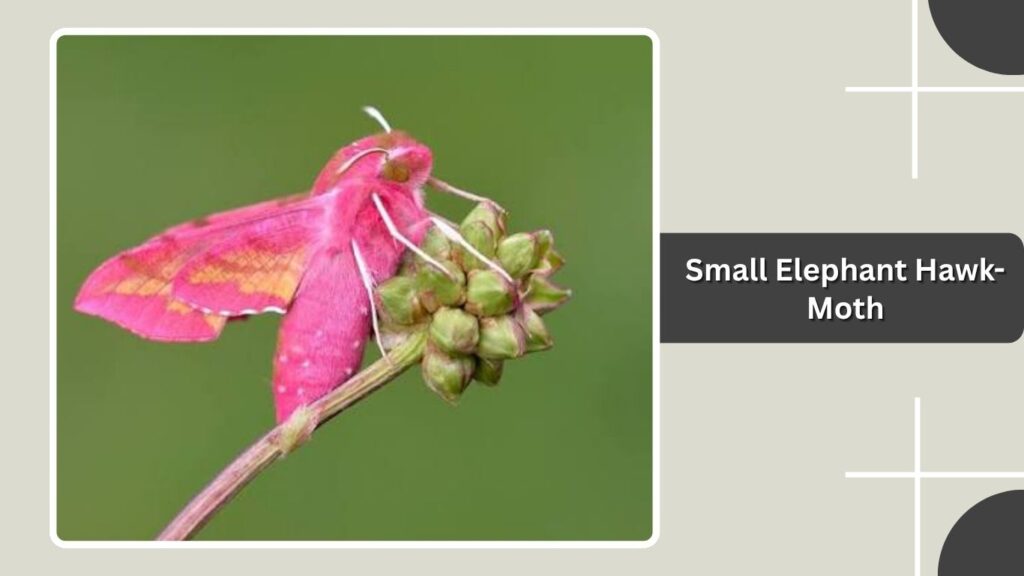
The small elephant hawk-moth (Deilephila porcellus) is a compact and brightly colored relative of the larger elephant hawk-moth. It has beautiful pink and yellowish-olive wings that provide excellent camouflage among flowers and dry vegetation. Despite its name, it remains a medium-sized and highly noticeable moth.
Characteristics
- Wingspan: Approximately 1.6–2 inches
- Forewings: Pink with yellowish or olive central areas
- Hindwings: Pink with darker borders
- Body: Golden-yellow or olive with pink markings
- Size: Smaller than the elephant hawk-moth
- Caterpillar: Grayish-brown or green with eyespots
- Tail horn: Reduced and sometimes difficult to notice
Habitat and Distribution
Small elephant hawk-moths occur across Europe, North Africa, and parts of western and central Asia. They prefer dry grasslands, chalk downs, sand dunes, woodland edges, gardens, and open countryside.
Adults are generally present from late spring through midsummer. They remain hidden among low vegetation during the day and become active around dusk.
Behavior and Diet
Adults feed on nectar from flowers such as honeysuckle, campion, and valerian. They use their long proboscis while hovering or briefly landing near blossoms.
The caterpillars primarily feed on bedstraw plants. When threatened, a caterpillar retracts its head and expands its front body segments, making its eyespots more prominent and giving it a snake-like appearance.
Life Cycle and Reproduction
Female moths lay their eggs individually on bedstraw and other suitable host plants. The caterpillars emerge and feed during summer, usually hiding near the base of plants during daylight.
Mature caterpillars form loose cocoons among plant debris or beneath the soil. They generally overwinter as pupae. Adults emerge the following year to mate and begin a new generation.
4. Oleander Hawk-Moth
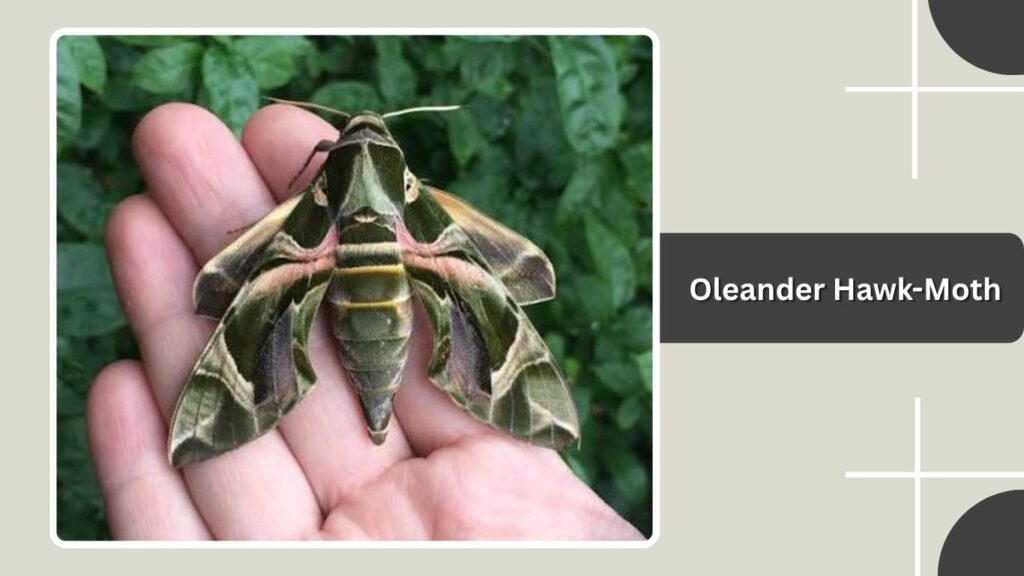
The oleander hawk-moth (Daphnis nerii) is one of the most beautifully patterned hawk moths. Its wings display a complex mixture of green, cream, pink, and brown that resembles overlapping leaves. This tropical and subtropical species is a powerful flyer and sometimes migrates far beyond its regular range.
Characteristics
- Wingspan: Approximately 3–4.5 inches
- Color: Green, olive, cream, pink, and brown
- Wing pattern: Wavy, leaf-like camouflage markings
- Body: Long and streamlined with matching green patterns
- Proboscis: Long and adapted for feeding from deep flowers
- Caterpillar: Green or brown with large blue-and-white eyespots
- Tail horn: Short, curved, and pale-colored
Habitat and Distribution
Oleander hawk-moths are found across Africa, southern Europe, the Middle East, South Asia, and Southeast Asia. They inhabit warm gardens, scrublands, forests, parks, and urban areas where oleander and related plants grow.
They are migratory and may occasionally appear in cooler regions during summer. However, they generally cannot survive prolonged cold weather.
Behavior and Diet
Adults fly rapidly at night and feed on nectar from fragrant flowers. Their excellent control allows them to hover while inserting their proboscis into long floral tubes.
Caterpillars commonly feed on oleander, periwinkle, jasmine, and other plants in the dogbane family. Although some host plants contain toxic chemicals, the caterpillars can consume them without apparent harm.
Life Cycle and Reproduction
Females lay smooth, round eggs individually on the undersides of host-plant leaves. The caterpillars develop quickly in warm conditions and may reach an impressive size.
Fully grown larvae pupate beneath fallen leaves, within loose soil, or among plant debris. Multiple generations can develop annually in tropical regions, while temporary populations in cooler climates may not survive winter.
5. Lime Hawk-Moth
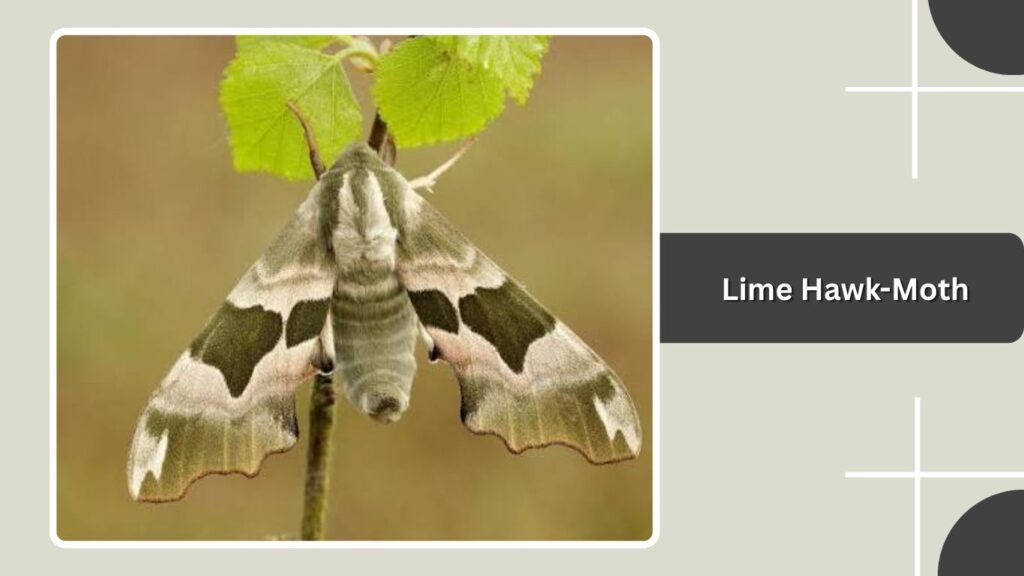
The lime hawk-moth (Mimas tiliae) is a broad-winged European hawk moth commonly associated with lime trees, which are also known as linden trees. Its irregular green and brown wing markings help it blend into bark and foliage. Individuals can vary considerably in color and pattern.
Characteristics
- Wingspan: Approximately 2.4–3.2 inches
- Forewings: Green, olive, brown, or pinkish with dark patches
- Hindwings: Brownish-yellow with darker outer areas
- Wing edges: Curved and irregular
- Body: Thick and relatively short
- Adult mouthparts: Reduced and nonfunctional
- Caterpillar: Green with diagonal yellow lines and a blue tail horn
Habitat and Distribution
Lime hawk-moths occur throughout much of Europe and into western Asia. They inhabit deciduous forests, city parks, tree-lined streets, gardens, and suburban neighborhoods.
Because lime trees are commonly planted along roads and in public spaces, the moth can live successfully in urban environments. Adults are normally seen from late spring through midsummer.
Behavior and Diet
Adult lime hawk-moths do not feed because their mouthparts are not functional. They rely on energy stored during the caterpillar stage. Adults remain still on tree trunks during the day and fly at night to locate mates.
The caterpillars feed on lime, elm, alder, birch, and certain other deciduous trees. They usually remain on the undersides of leaves, where their green bodies provide effective camouflage.
Life Cycle and Reproduction
Females place their eggs individually on the leaves of suitable host trees. The caterpillars hatch, feed during summer, and gradually develop brownish coloration shortly before pupation.
Mature caterpillars descend to the ground and pupate in shallow soil. They remain underground through winter, and adults emerge the following spring. The species normally produces one generation each year.
6. Privet Hawk-Moth
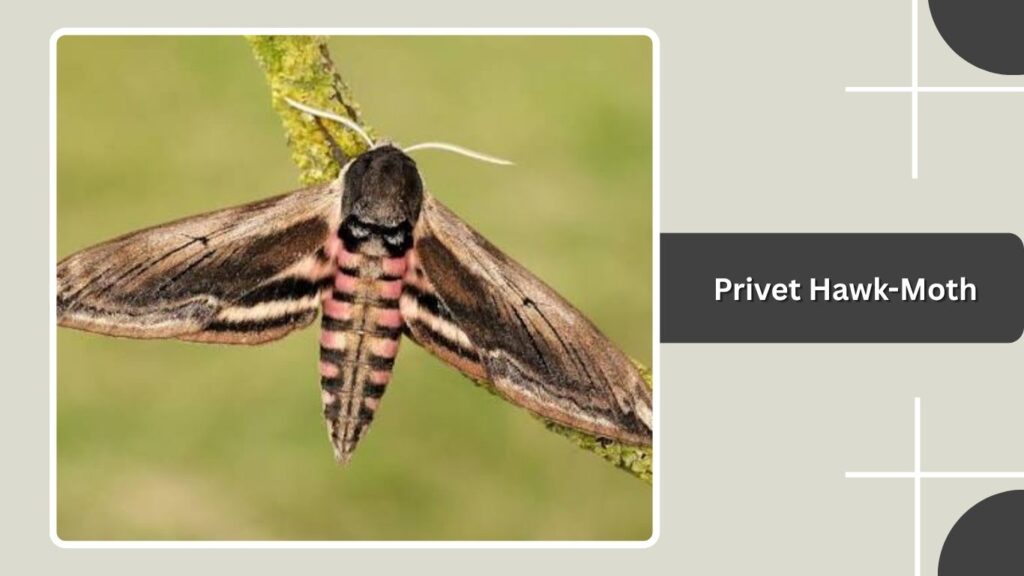
The privet hawk-moth (Sphinx ligustri) is one of the largest hawk moths found in Europe. Its long forewings provide effective camouflage, while its body and hindwings display vivid pink-and-black bands. The caterpillar is equally impressive, with bright diagonal stripes and a curved horn at the rear.
Characteristics
- Wingspan: Approximately 3.5–4.7 inches
- Forewings: Brownish-gray with dark streaks
- Hindwings: Pink with black bands
- Body: Pink-and-black striped abdomen
- Shape: Long, narrow, and streamlined wings
- Caterpillar: Bright green with purple-and-white diagonal stripes
- Tail horn: Large, curved, and usually dark-colored
Habitat and Distribution
Privet hawk-moths occur throughout Europe, North Africa, and parts of western and central Asia. They inhabit woodland edges, hedgerows, parks, gardens, farmland, and suburban areas.
Adults are most commonly observed from late spring through midsummer. During the day, they rest on tree trunks, fences, or vegetation and become active after sunset.
Behavior and Diet
Adults fly at night and feed on nectar from fragrant flowers using their long proboscis. They are powerful flyers and may travel between gardens and woodland habitats while searching for food or mates.
The caterpillars feed on privet, lilac, ash, honeysuckle, and several related plants. Despite their large size and prominent tail horn, they are harmless to humans.
Life Cycle and Reproduction
Females lay round green eggs individually on the undersides of host-plant leaves. The caterpillars feed throughout summer and may reach more than three inches in length.
Before pupating, mature larvae turn brownish and move to the ground. They burrow into loose soil and form pupae that remain underground during winter. Adults usually emerge the following spring or early summer.
7. Poplar Hawk-Moth
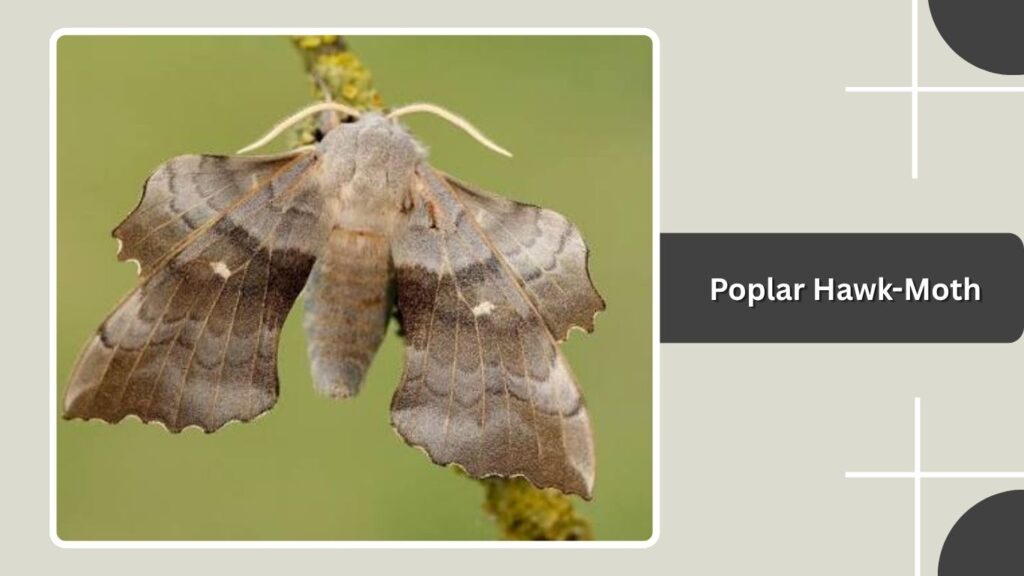
The poplar hawk-moth (Laothoe populi) is a large, unusually shaped moth found across Europe and parts of Asia. Its wings have deeply curved edges and are held in a distinctive position while resting. The muted gray and brown coloration resembles dried leaves or tree bark.
Characteristics
- Wingspan: Approximately 2.6–3.5 inches
- Color: Gray, brown, or pinkish-gray
- Wings: Scalloped edges with irregular dark bands
- Resting position: Hindwings project in front of the forewings
- Hindwing patches: Rust-colored areas exposed when disturbed
- Adult mouthparts: Reduced and nonfunctional
- Caterpillar: Green with yellow stripes and a pointed tail horn
Habitat and Distribution
Poplar hawk-moths are widespread throughout Europe and extend into parts of western and central Asia. They occupy woodlands, wetlands, riverbanks, gardens, parks, and urban areas containing poplar or willow trees.
Adults generally fly from spring through summer. A second generation may appear later in the year when the climate is warm enough.
Behavior and Diet
Adult poplar hawk-moths do not feed. They depend on the energy stored during their larval development. They remain inactive during the day and fly after dark to locate mates.
The caterpillars feed mainly on poplar, aspen, and willow leaves. Their green bodies and diagonal stripes allow them to blend closely with leaves and stems.
Life Cycle and Reproduction
Females lay smooth green eggs individually or in small groups on host-tree leaves. The caterpillars hatch and feed for several weeks, molting as they become larger.
Mature caterpillars descend from the tree and burrow into the soil. They pupate underground and normally remain there throughout winter. Adult moths emerge when temperatures rise during the following spring.
8. Eyed Hawk-Moth
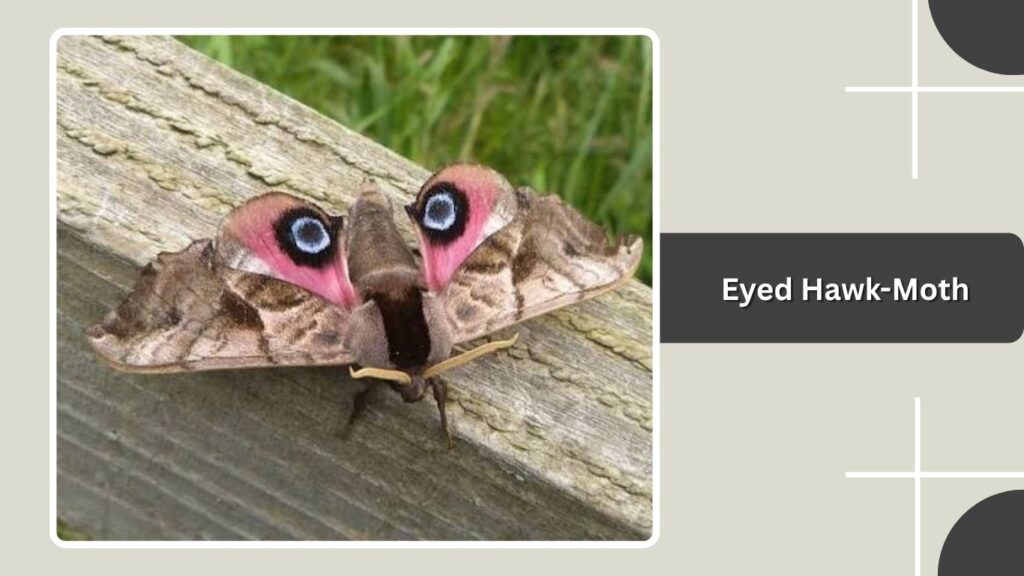
The eyed hawk-moth (Smerinthus ocellata) is named for the large blue-and-black eyespots hidden on its pink hindwings. When resting, the moth covers these markings with its forewings. If threatened, it suddenly reveals the eyespots to surprise or discourage a predator.
Characteristics
- Wingspan: Approximately 2.8–3.5 inches
- Forewings: Grayish-brown with dark, bark-like patterns
- Hindwings: Pink or reddish with large eyespots
- Eyespot colors: Blue, black, and pale cream
- Body: Thick, tapered, and grayish-brown
- Adult mouthparts: Reduced and nonfunctional
- Caterpillar: Green with pale diagonal stripes and a blue horn
Habitat and Distribution
Eyed hawk-moths are found throughout Europe and into parts of western and central Asia. They inhabit damp woodlands, riverbanks, hedgerows, parks, gardens, and other places where willow trees grow.
Adults are usually seen from late spring to midsummer. They rest on trunks, branches, or fences during daylight and become active at night.
Behavior and Diet
Adult eyed hawk-moths do not eat. Their primary adult activities are locating mates and reproducing. When disturbed, the moth exposes its colorful hindwings and rocks its body, making the eyespots appear more lifelike.
The caterpillars primarily feed on willow, poplar, and apple leaves. They rest beneath leaves or along stems, where their green coloration makes them difficult to notice.
Life Cycle and Reproduction
Females deposit green eggs on suitable host plants. The larvae feed during summer and pass through multiple growth stages before reaching their full size.
A mature caterpillar usually turns brown shortly before leaving its host tree. It burrows into the soil and forms a dark pupa. The species commonly overwinters in this stage, with adults emerging the next year.
9. Death’s-Head Hawk-Moth
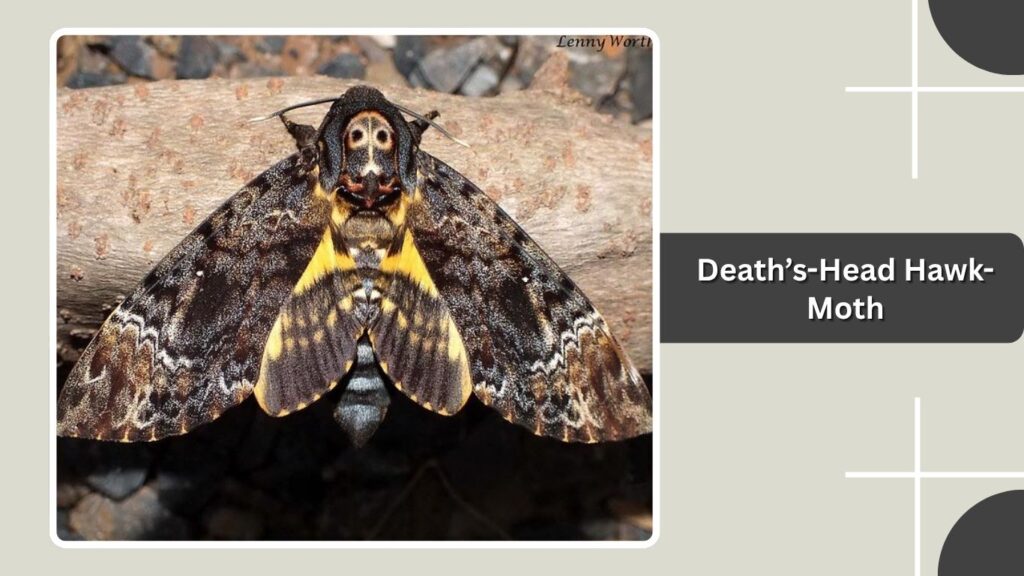
The death’s-head hawk-moth (Acherontia atropos) is famous for the skull-shaped marking on its thorax. This large moth can also produce a noticeable squeaking sound when disturbed. Its unusual appearance and behavior have made it the subject of many myths, although it is not dangerous to humans.
Characteristics
- Wingspan: Approximately 3.5–5 inches
- Forewings: Dark brown with mottled cream patterns
- Hindwings: Yellow with dark black bands
- Abdomen: Yellow and black with a bluish central stripe
- Thorax: Pale marking resembling a human skull
- Sound: Can produce an audible squeak
- Caterpillar: Yellow, green, or brown with diagonal stripes
Habitat and Distribution
The death’s-head hawk-moth is native to Africa, southern Europe, and parts of western Asia. It is a powerful migrant that regularly travels into central and northern Europe during warmer months.
It inhabits farmland, gardens, grasslands, scrubland, and areas containing suitable food plants. Migrating adults may appear far outside their normal breeding range.
Behavior and Diet
Adults feed on flower nectar, tree sap, ripe fruit, and honey. They sometimes enter honeybee colonies and pierce honey-filled cells with their strong proboscis. Chemical and behavioral adaptations may help them avoid immediate attack by bees.
The caterpillars feed on potato, nightshade, jasmine, and several other plants. Their large rear horn is flexible but cannot sting.
Life Cycle and Reproduction
Females lay individual eggs on the leaves of suitable host plants. The caterpillars grow quickly and can reach more than four inches long before pupation.
Mature larvae burrow deeply into loose soil and form large pupae. Several generations may occur in warm climates. In colder regions, migrating moths may reproduce, but their offspring often struggle to survive the winter.
10. Convolvulus Hawk-Moth
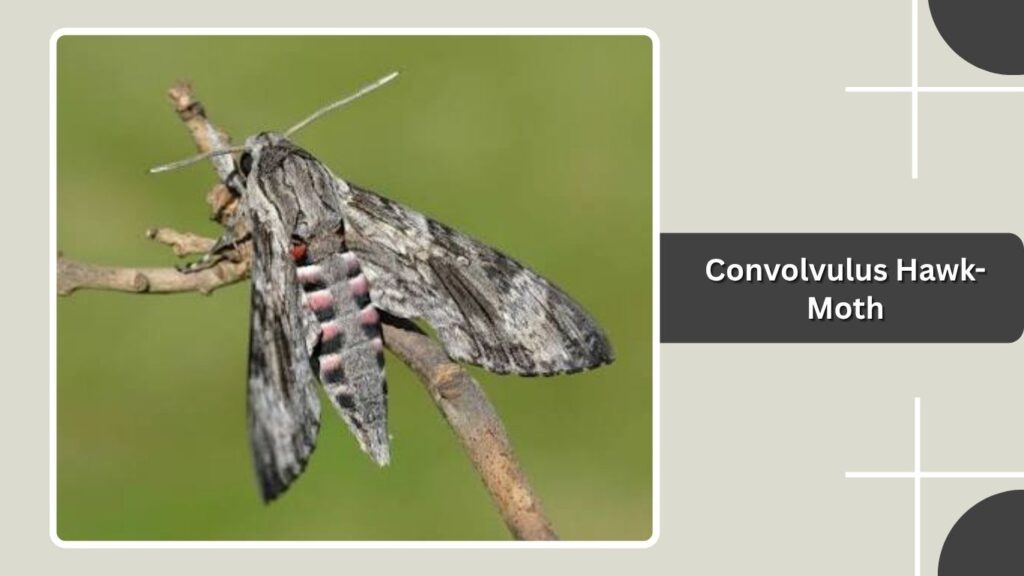
The convolvulus hawk-moth (Agrius convolvuli) is a large migratory species with an exceptionally long proboscis. Its gray and brown forewings provide excellent camouflage, while its abdomen displays distinctive pink-and-black bands. The name comes from the caterpillar’s association with bindweed plants in the genus Convolvulus.
Characteristics
- Wingspan: Approximately 3.1–4.7 inches
- Forewings: Gray or brown with wavy dark markings
- Hindwings: Gray with darker bands
- Abdomen: Pink, black, and gray bands
- Proboscis: May be longer than the moth’s body
- Flight: Powerful, rapid, and highly controlled
- Caterpillar: Green or brown with diagonal stripes and a tail horn
Habitat and Distribution
Convolvulus hawk-moths occur throughout Africa, southern Europe, Asia, and Australia. They are strong seasonal migrants and may travel into cooler areas during summer.
They live in gardens, farmland, open woodlands, grasslands, coastal areas, and places where bindweed grows. Adults often visit gardens containing deep, tubular flowers.
Behavior and Diet
Adults fly mainly at dusk and during the night. They hover in front of flowers and use their extremely long proboscis to reach nectar that many other insects cannot access. Preferred flowers include tobacco, petunia, honeysuckle, and morning glory.
The caterpillars primarily eat field bindweed and related plants. They may hide near the base of their host plants during the day.
Life Cycle and Reproduction
Females lay eggs individually on bindweed leaves. After hatching, the caterpillars feed rapidly and pass through several color variations as they mature.
Fully grown larvae dig into the soil and pupate inside underground chambers. Multiple generations may occur in warm regions. Adults from tropical and subtropical populations frequently migrate over long distances.
11. Bedstraw Hawk-Moth
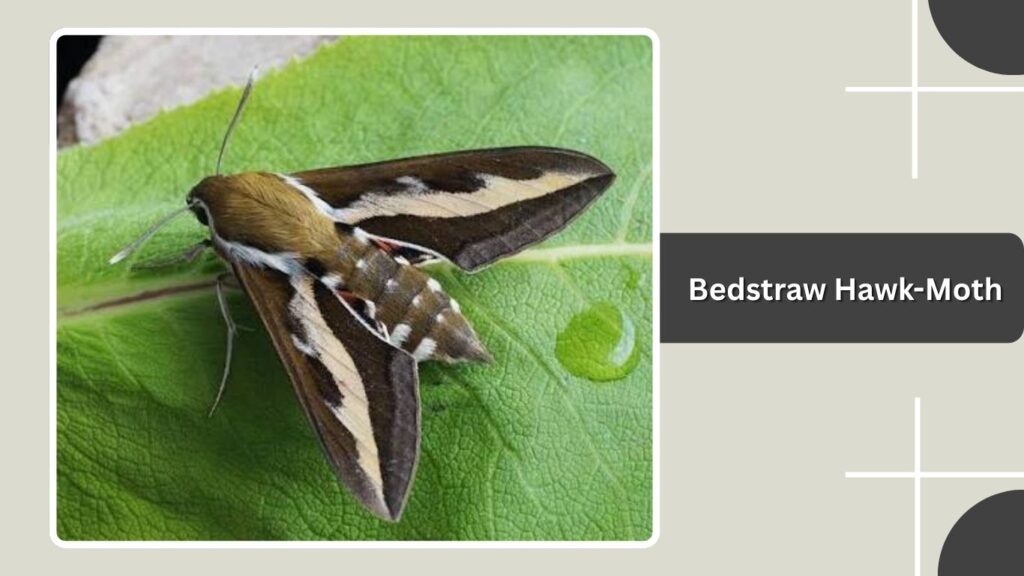
The bedstraw hawk-moth (Hyles gallii) is a fast-flying species with streamlined wings and attractive cream-colored markings. Its common name comes from bedstraw, one of the primary food plants of its caterpillar. The moth is mainly active around dusk, when it visits flowers for nectar.
Characteristics
- Wingspan: Approximately 2.4–3.1 inches
- Forewings: Olive-brown with a broad cream-colored stripe
- Hindwings: Pink with black borders
- Body: Olive-brown with pale side markings
- Flight: Rapid, direct, and capable of hovering
- Caterpillar: Green, brown, or nearly black
- Larval markings: Yellow spots and a red or dark tail horn
Habitat and Distribution
Bedstraw hawk-moths occur across Europe, Asia, and parts of North America. They prefer open habitats such as meadows, grasslands, coastal dunes, woodland clearings, gardens, and roadsides.
They are particularly associated with sunny places where bedstraw and willowherb grow. Adults are usually observed from late spring through summer.
Behavior and Diet
Adults feed while hovering in front of flowers. Their nectar sources include honeysuckle, petunia, campion, and other flowers with long or narrow tubes. They are primarily active at dusk but may occasionally fly during daylight.
The caterpillars eat bedstraw, willowherb, fireweed, and related plants. They may rest openly on foliage despite their noticeable colors and markings.
Life Cycle and Reproduction
Females place small, round eggs individually on suitable host plants. The caterpillars hatch within several days and feed rapidly during the warm season.
When fully grown, the larvae move to ground level and form loose cocoons among plant material or just beneath the soil. The species often overwinters as a pupa, with adults emerging the following year.
12. Spurge Hawk-Moth
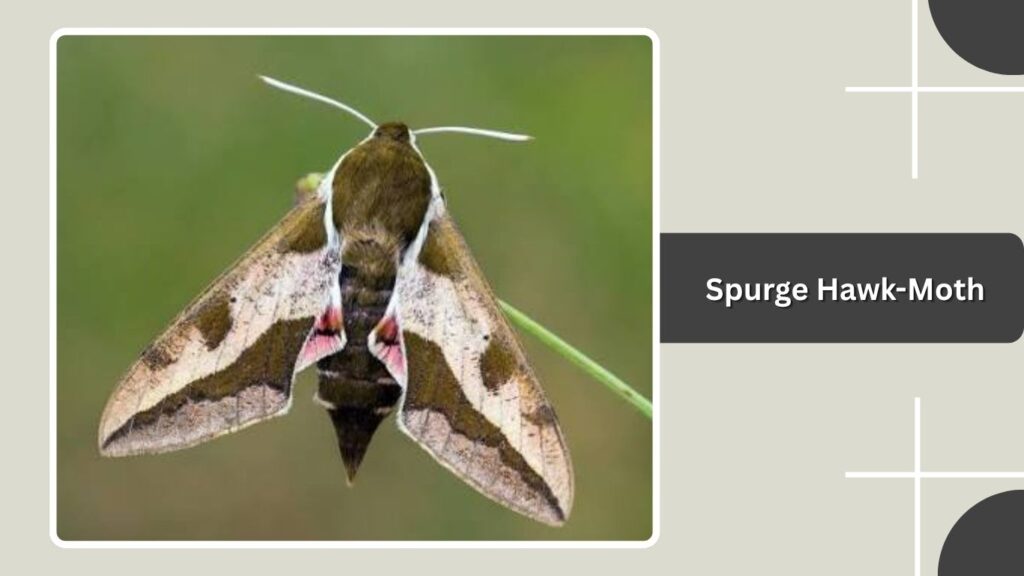
The spurge hawk-moth (Hyles euphorbiae) is a colorful species named after the spurge plants eaten by its caterpillar. Adults have long, narrow wings with olive, cream, pink, and black markings. The caterpillar is particularly striking, displaying bright spots and contrasting colors that warn predators to stay away.
Characteristics
- Wingspan: Approximately 2.4–3 inches
- Forewings: Olive-brown with a pale cream stripe
- Hindwings: Pink with broad black borders
- Body: Olive-colored with pale side stripes
- Flight: Fast and highly controlled
- Caterpillar: Black, red, yellow, and white
- Tail horn: Usually red near the base and black at the tip
Habitat and Distribution
Spurge hawk-moths are native to Europe, North Africa, and parts of western and central Asia. They have also been introduced into North America to help control invasive leafy spurge.
They inhabit dry grasslands, sand dunes, farmland, roadsides, rocky slopes, and other open locations where spurge plants are abundant.
Behavior and Diet
Adult moths fly at dusk and during the night, visiting flowers for nectar. They can hover in front of blossoms while extending their long proboscis.
The caterpillars primarily feed on spurge plants. These plants contain irritating and potentially toxic sap, but the larvae are adapted to consume them. Their bright coloration serves as a warning to birds and other predators.
Life Cycle and Reproduction
Females lay individual eggs on spurge leaves and stems. The young caterpillars begin feeding soon after hatching and pass through several increasingly colorful stages.
Mature larvae leave their host plants and pupate among dry vegetation or in shallow soil. The pupae may overwinter before adults emerge. One or more generations can occur annually, depending on the regional climate.
13. White-Lined Sphinx Moth
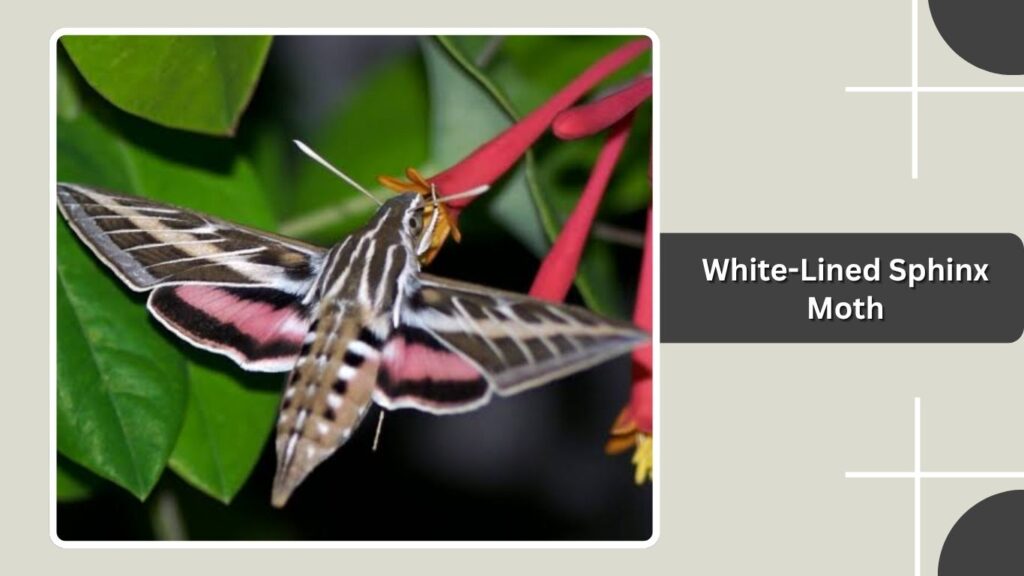
The white-lined sphinx moth (Hyles lineata) is one of the most widespread hawk moths in North America. It is sometimes called the hummingbird moth because it hovers near flowers and beats its wings rapidly. Its long white forewing stripe and pink hindwings make it relatively easy to recognize.
Characteristics
- Wingspan: Approximately 2–3.5 inches
- Forewings: Brown with a prominent white stripe
- Hindwings: Pink with broad black borders
- Body: Brown with white, black, and pink markings
- Flight: Rapid and capable of precise hovering
- Caterpillar: Green, yellow, or black with spots and stripes
- Tail horn: Prominent but harmless
Habitat and Distribution
White-lined sphinx moths occur throughout North and Central America and into parts of South America. They inhabit deserts, grasslands, gardens, farmland, woodland edges, and urban areas.
They are strong migrants and may appear in enormous numbers following favorable rainfall. Adults can adapt to many environments as long as flowers and caterpillar food plants are available.
Behavior and Diet
Adults may feed during the day, at dusk, or after dark. They hover in front of flowers and drink nectar from primrose, petunia, columbine, lilac, and other flowering plants.
The caterpillars eat many plants, including evening primrose, purslane, grape, four-o’clock, and willowherb. Large groups occasionally move across roads or open ground while searching for food or pupation sites.
Life Cycle and Reproduction
Females lay round green eggs on suitable host plants. The larvae hatch quickly and grow rapidly when food is plentiful.
Fully developed caterpillars burrow into loose soil and create underground pupal chambers. Several generations may occur each year in warmer regions. Pupae can remain underground until temperature and moisture conditions become favorable.
14. Five-Spotted Hawk Moth
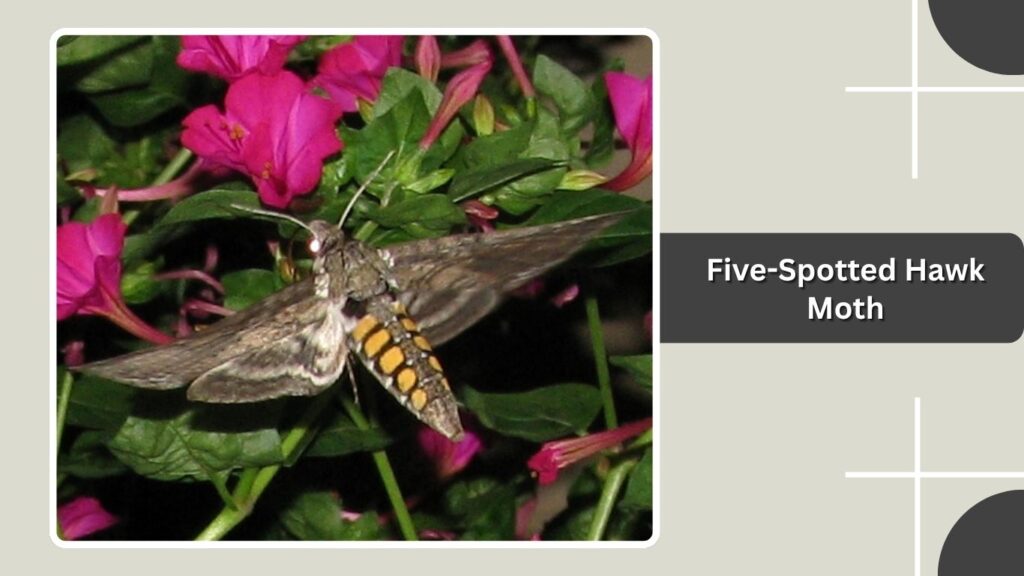
The five-spotted hawk moth (Manduca quinquemaculata) is a large North American species whose caterpillar is commonly called the tomato hornworm. Adults have long gray wings and five pairs of orange-yellow spots along the abdomen. They are powerful nighttime pollinators with a strong, hovering flight.
Characteristics
- Wingspan: Approximately 3.5–5.3 inches
- Forewings: Mottled gray and brown
- Hindwings: Dark and pale bands
- Abdomen: Five pairs of orange-yellow spots
- Proboscis: Long and adapted for deep flowers
- Caterpillar: Green with eight V-shaped white markings
- Tail horn: Dark blue or black and harmless
Habitat and Distribution
Five-spotted hawk moths occur across much of North America, particularly in the United States, southern Canada, and northern Mexico. They inhabit gardens, agricultural fields, grasslands, woodland edges, and suburban areas.
They are especially common in places where tomatoes, potatoes, and other nightshade-family plants are cultivated.
Behavior and Diet
Adults fly primarily at dusk and during the night. They hover near tubular flowers and consume nectar using their long proboscis. They may visit moonflower, tobacco, petunia, and evening primrose.
The tomato hornworm caterpillar feeds on tomato, potato, eggplant, pepper, and related plants. Large larvae can remove significant amounts of foliage and may become garden pests.
Life Cycle and Reproduction
Females lay pale green eggs individually on the leaves of host plants. The caterpillars feed rapidly and can grow to approximately four inches long.
Mature tomato hornworms burrow into the ground and pupate in the soil. Warm regions may support multiple generations per year. Pupae formed late in the season generally overwinter underground before emerging as adults.
15. Carolina Sphinx Moth
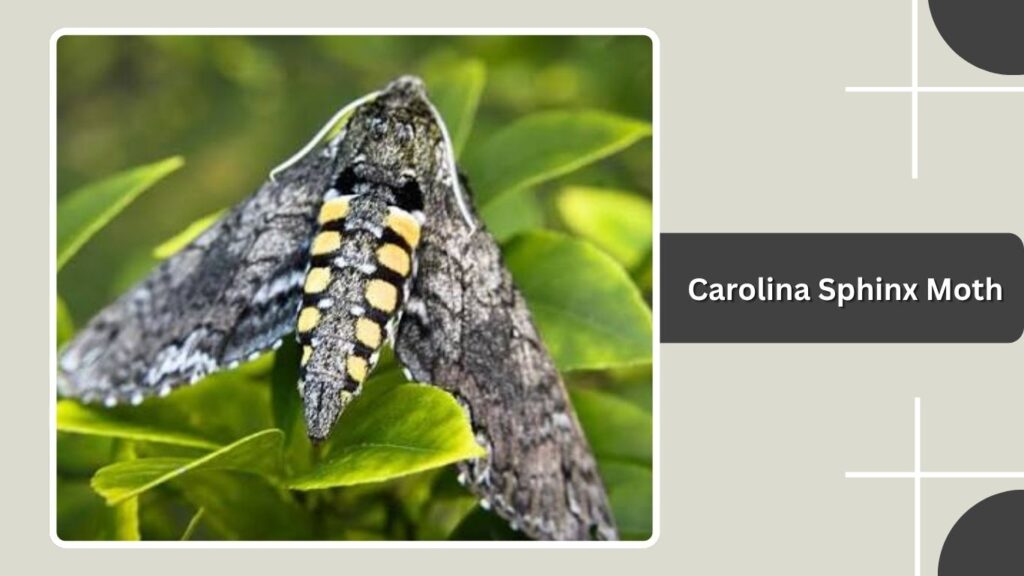
The Carolina sphinx moth (Manduca sexta) is a large hawk moth best known as the adult form of the tobacco hornworm. It closely resembles the five-spotted hawk moth but normally has six pairs of orange spots on its abdomen. Adults are important pollinators of night-blooming flowers.
Characteristics
- Wingspan: Approximately 3.5–5 inches
- Forewings: Grayish-brown with wavy dark lines
- Hindwings: Alternating light and dark bands
- Abdomen: Six pairs of orange-yellow spots
- Proboscis: Long and suited to tubular flowers
- Caterpillar: Green with seven diagonal white lines
- Tail horn: Usually red and unable to sting
Habitat and Distribution
Carolina sphinx moths are widely distributed across the Americas, from parts of Canada through the United States and into Central and South America. They inhabit gardens, farms, woodland edges, meadows, and suburban landscapes.
They are particularly common in warm regions where tobacco, tomato, and other nightshade-family plants are grown.
Behavior and Diet
Adults become active around dusk and continue flying after dark. They drink nectar from moonflower, tobacco, petunia, and other deep, fragrant flowers. Their hovering behavior allows them to feed without landing.
Tobacco hornworm caterpillars consume tobacco, tomato, pepper, and other related plants. They may damage cultivated plants by eating leaves, stems, flowers, and developing fruit.
Life Cycle and Reproduction
Females lay individual green eggs on the undersides of host-plant leaves. The caterpillars hatch within a few days and grow quickly while feeding.
When mature, they dig into the soil and create underground chambers where they transform into pupae. Several generations may develop annually in warm climates. The final generation commonly overwinters underground before emerging in spring.
16. Tersa Sphinx Moth
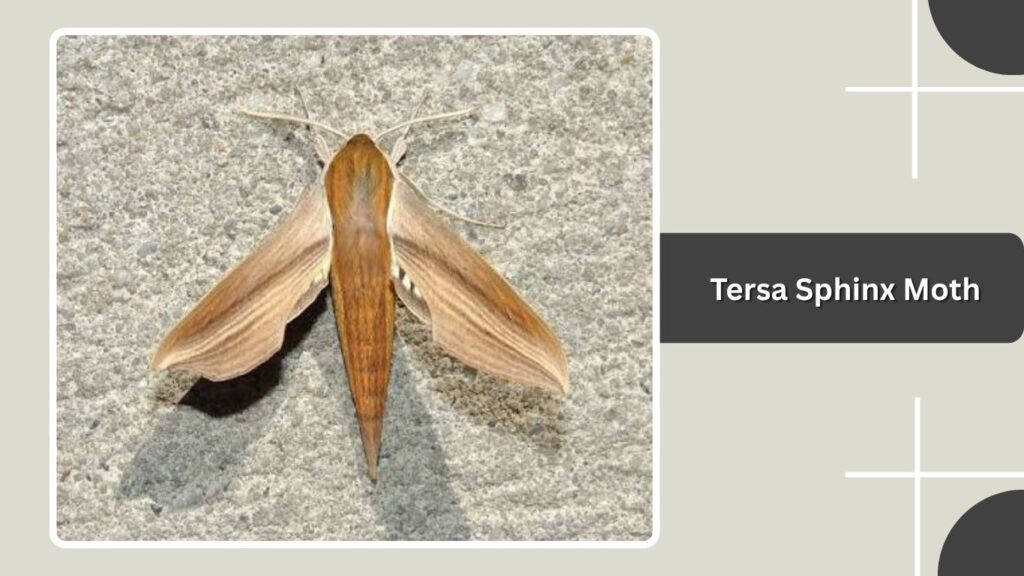
The tersa sphinx moth (Xylophanes tersa) is a streamlined hawk moth known for its pointed forewings and fast flight. Its smooth brown wings contain several narrow lines that extend toward the tips. The caterpillar possesses large false eyespots that create a convincing snake-like appearance when it retracts its head.
Characteristics
- Wingspan: Approximately 2.4–3.1 inches
- Forewings: Light brown with multiple dark lengthwise lines
- Hindwings: Black with pale yellow patches
- Body: Long, slender, and tapered
- Flight: Fast, direct, and capable of hovering
- Caterpillar: Green or brown with enormous false eyespots
- Tail horn: Small and located near the rear of the body
Habitat and Distribution
Tersa sphinx moths occur from the southern United States through Mexico and Central America into South America. Migrating individuals may travel into northern parts of the United States during summer.
They inhabit gardens, woodland edges, fields, tropical forests, and suburban areas. Their caterpillar host plants are often grown as ornamental flowers in gardens.
Behavior and Diet
Adults fly at dusk and after dark, hovering near flowers while drinking nectar. They commonly visit honeysuckle, pentas, and other tubular blossoms.
The caterpillars feed on pentas, firebush, buttonweed, and plants in the madder family. When disturbed, a caterpillar pulls its head into its body, expanding the segments containing its large eyespots.
Life Cycle and Reproduction
Females lay small green eggs individually on host-plant leaves. The caterpillars feed and molt several times, often changing from green to brown as they develop.
Mature larvae form loose cocoons among fallen leaves or pupate in shallow soil. Multiple generations may occur annually in warm climates. In colder areas, seasonal populations may not survive winter.
17. Rustic Sphinx Moth
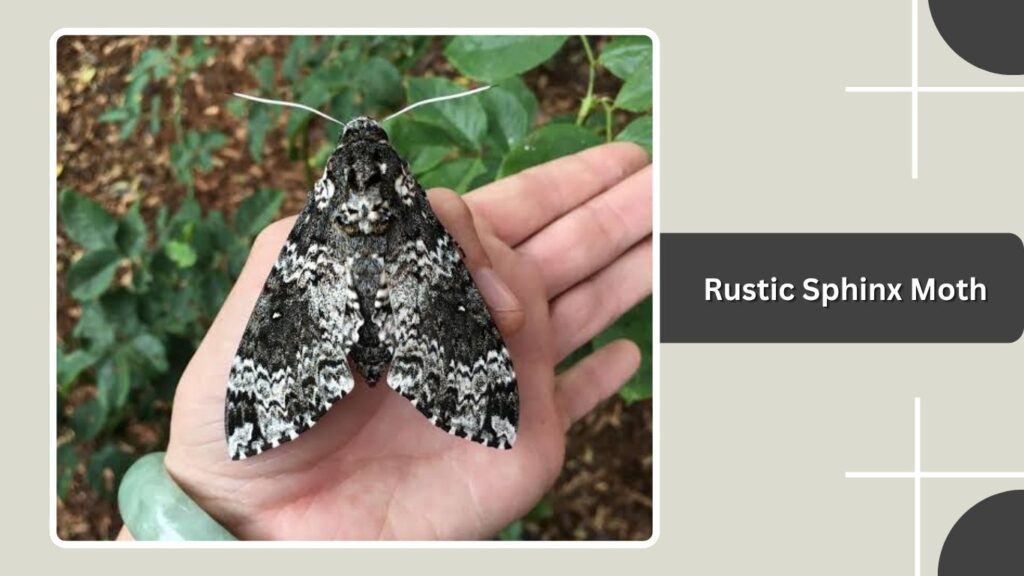
The rustic sphinx moth (Manduca rustica) is a large species with mottled gray, brown, and white wings. Its bark-like pattern provides excellent camouflage while resting on trees. The abdomen is decorated with yellow spots, helping distinguish it from other members of the genus Manduca.
Characteristics
- Wingspan: Approximately 3.5–6 inches
- Forewings: Grayish-brown with irregular white markings
- Hindwings: Dark with pale gray bands
- Abdomen: Yellow spots along the sides
- Body: Thick, long, and streamlined
- Caterpillar: Green with rough skin and diagonal purple stripes
- Tail horn: Granulated, curved, and harmless
Habitat and Distribution
Rustic sphinx moths occur from the southern United States through Mexico, Central America, and much of South America. They occasionally migrate into more northern regions during warm weather.
They inhabit tropical forests, scrublands, woodland edges, gardens, farmland, and suburban areas. Adults are most abundant in warm environments with plentiful nectar sources.
Behavior and Diet
Adults are powerful nocturnal flyers that visit flowers after sunset. They hover while feeding from deep blossoms using their long proboscis. Bright outdoor lights may also attract them.
The caterpillars eat various plants, including beautyberry, jasmine, lantana, fringe tree, and plants in the verbena family. Their markings and textured skin provide camouflage among branches and leaves.
Life Cycle and Reproduction
Females lay their eggs individually on appropriate host plants. The caterpillars feed heavily and grow through several stages before leaving their host plants.
Mature larvae burrow into the soil, where they form pupae inside underground chambers. The species may produce several generations annually in tropical regions. Pupae can overwinter in cooler parts of their range.
18. Pandorus Sphinx Moth
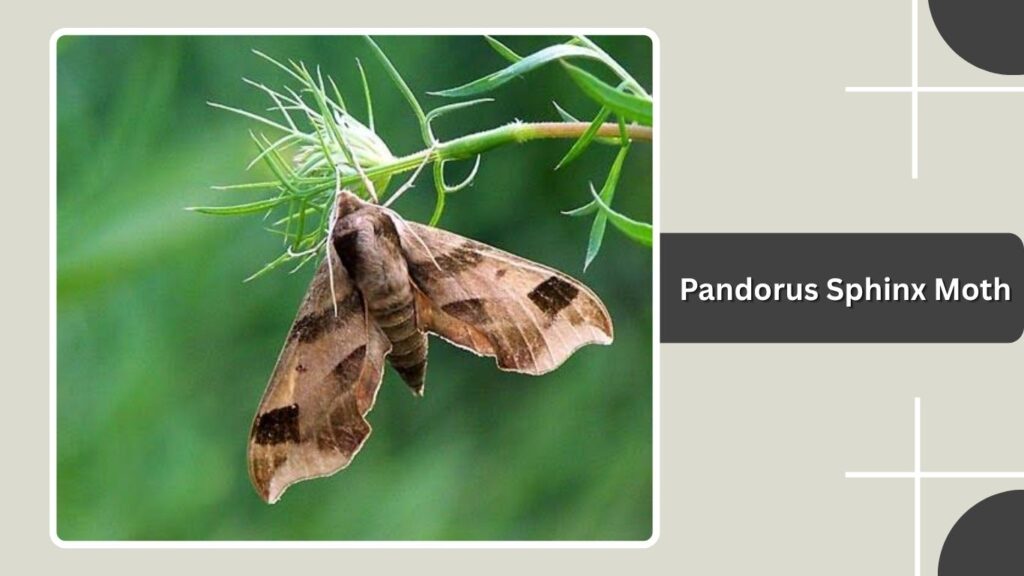
The Pandorus sphinx moth (Eumorpha pandorus) is a large North American hawk moth recognized by its beautiful olive-green patterns. Its colors resemble leaves and tree bark, allowing it to remain nearly invisible when resting. The caterpillar is also large and develops a distinctive button-like marking where its tail horn once grew.
Characteristics
- Wingspan: Approximately 3.2–4.5 inches
- Forewings: Olive-green with cream and brown patches
- Hindwings: Pale pink with darker borders
- Body: Thick with green and brown markings
- Wing shape: Long, broad, and slightly pointed
- Caterpillar: Green or reddish-brown with pale oval markings
- Rear marking: Rounded eyespot replacing the early tail horn
Habitat and Distribution
Pandorus sphinx moths are found throughout eastern and central North America. They inhabit deciduous forests, vineyards, woodland edges, gardens, parks, and areas where grapevines grow.
Adults are generally active from late spring through early fall. Their exact flight period varies according to climate and geographic location.
Behavior and Diet
Adults fly at dusk and during the night, visiting flowers for nectar. Their strong wings allow them to hover precisely while feeding. During the day, their olive coloration helps them blend into vegetation.
The caterpillars primarily eat grape, Virginia creeper, and peppervine leaves. Despite their large size, they do not sting and are harmless when handled carefully.
Life Cycle and Reproduction
Females place eggs individually on host-plant leaves. The caterpillars hatch and feed through several stages, changing noticeably in color and appearance as they grow.
Fully developed larvae burrow into the ground and pupate in earthen chambers. The species may produce one or two generations annually. Pupae formed late in the year generally remain underground through winter.
19. Achemon Sphinx Moth
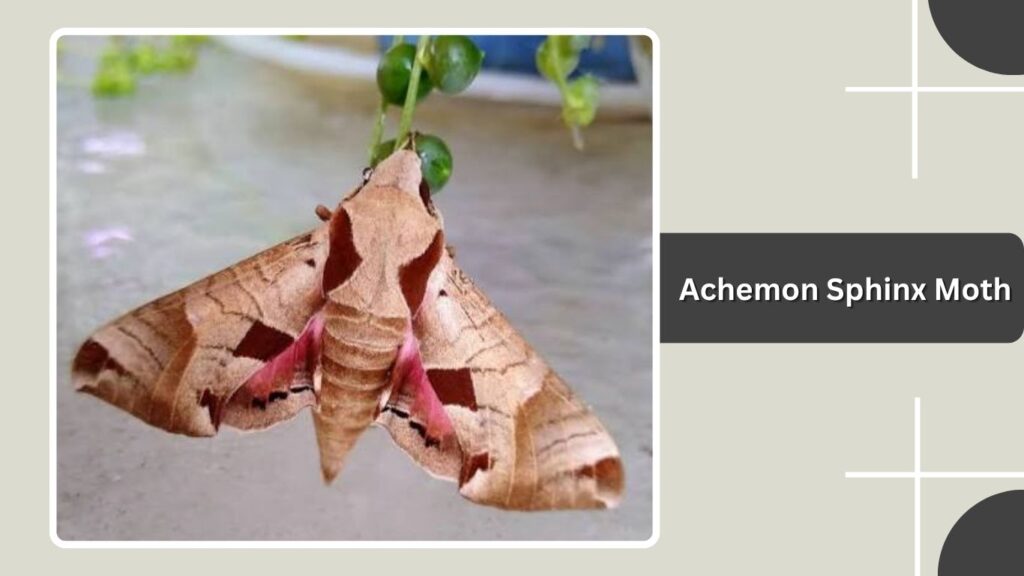
The Achemon sphinx moth (Eumorpha achemon) is a large, powerful moth found across much of North America. Its wings combine brown, tan, pink, and dark markings. It resembles the Pandorus sphinx but generally lacks the same extensive olive-green coloration.
Characteristics
- Wingspan: Approximately 3.4–4.2 inches
- Forewings: Tan or brown with darker angular patches
- Hindwings: Pink with black shading near the base
- Body: Thick, tapered, and brownish
- Flight: Rapid and capable of controlled hovering
- Caterpillar: Green, reddish-brown, or dark brown
- Rear marking: A prominent eyespot replaces the larval horn
Habitat and Distribution
Achemon sphinx moths occur across southern Canada, much of the United States, and northern Mexico. They inhabit grasslands, open woodlands, vineyards, gardens, farms, and suburban environments.
They are particularly common in regions where wild or cultivated grapevines are abundant. Adults usually appear between late spring and early autumn.
Behavior and Diet
Adults become active around dusk and feed from flowers while hovering. Their long proboscis allows them to drink nectar from tubular blossoms that are difficult for many insects to reach.
The caterpillars consume grape, Virginia creeper, and related plants. Although they sometimes eat cultivated grapevine foliage, they rarely cause serious damage under normal conditions.
Life Cycle and Reproduction
Females lay individual eggs on the leaves of host plants. Young larvae possess a tail horn, but it disappears after a later molt and is replaced by a rounded eyespot-like structure.
Mature caterpillars enter the soil and pupate underground. One or more generations can occur each year, depending on the climate. The species normally survives winter in the pupal stage.
20. Hummingbird Clearwing Moth
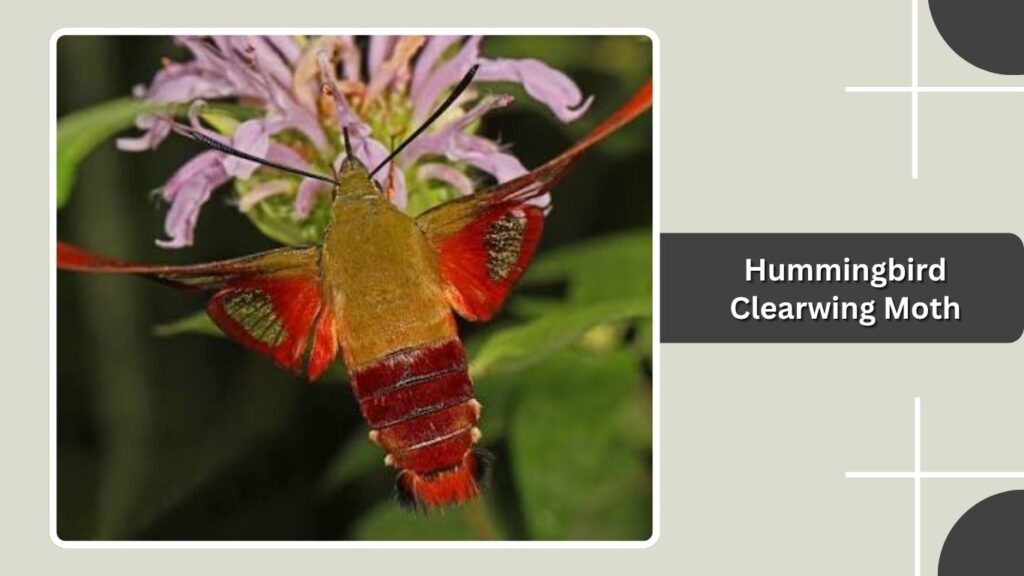
The hummingbird clearwing moth (Hemaris thysbe) is a daytime-flying hawk moth that strongly resembles a small hummingbird or bumblebee. Its rapidly beating transparent wings and hovering feeding style often cause people to mistake it for a bird. It is an important and harmless garden pollinator.
Characteristics
- Wingspan: Approximately 1.5–2.2 inches
- Wings: Mostly transparent with reddish-brown borders
- Body: Olive-green and reddish-brown
- Abdomen: Broad, fuzzy, and fan-shaped at the end
- Flight: Rapid with precise hovering ability
- Proboscis: Long and used to reach flower nectar
- Caterpillar: Green with small spots and a curved tail horn
Habitat and Distribution
Hummingbird clearwing moths are widespread across much of North America. They inhabit gardens, meadows, woodland clearings, forest edges, parks, and suburban landscapes.
They are most commonly seen from spring through early autumn. Areas containing abundant nectar flowers and caterpillar host plants provide the best habitat.
Behavior and Diet
Unlike most hawk moths, hummingbird clearwings are mainly active during daylight. They hover in front of flowers and extend their proboscis to drink nectar. They frequently visit bee balm, honeysuckle, phlox, lilac, and butterfly bush.
The caterpillars feed on honeysuckle, viburnum, hawthorn, cherry, and several other shrubs and trees. They usually rest beneath leaves when they are not feeding.
Life Cycle and Reproduction
Females lay round green eggs individually on host plants. The caterpillars hatch within approximately one week and feed throughout the warm season.
Mature larvae descend to the ground and create loose cocoons among fallen leaves. Depending on location, one or two generations may develop annually. The final generation generally overwinters as pupae before adults emerge in spring.
