
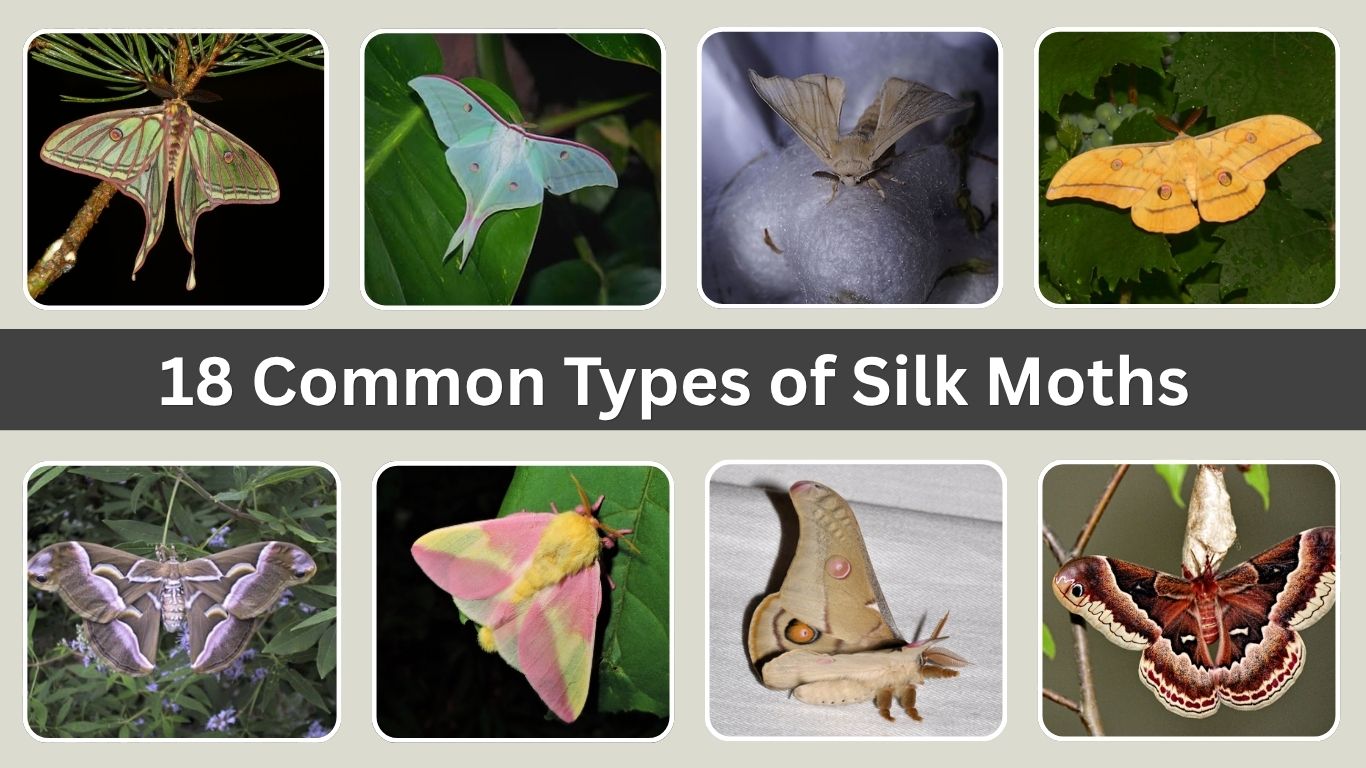
Silk moths are remarkable insects recognized for their large bodies, colorful wings, striking eyespots, and feathery antennae. This diverse group includes enormous species such as the Atlas moth, elegant moon moths with long wing tails, and the domestic silk moth used in silk production. Explore 18 common types of silk moths and learn about their identification, habitats, behavior, diets, and life cycles.
1. Luna Moth
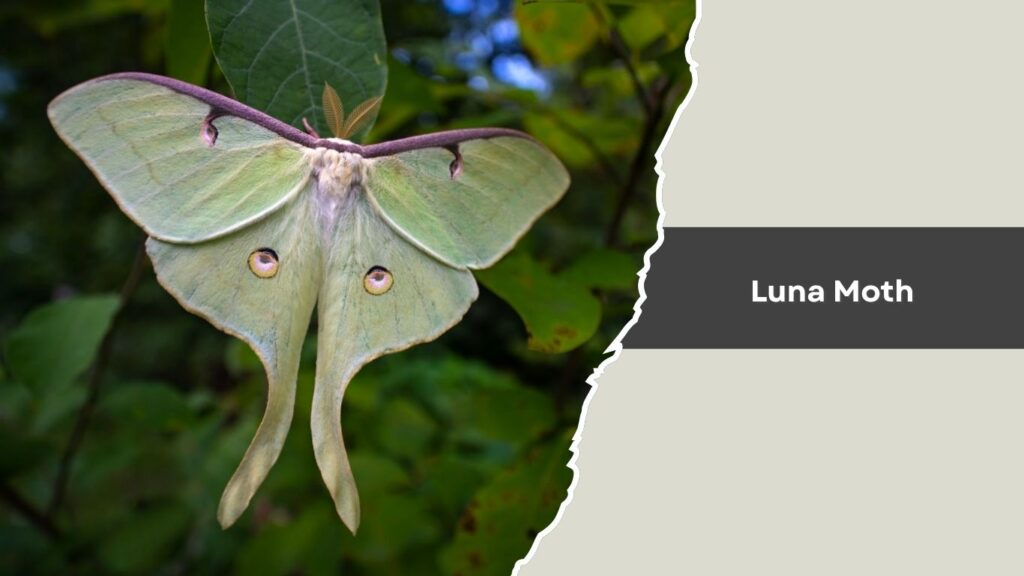
The luna moth is one of the most recognizable giant silk moths in North America. Its pale green wings, long curved tails, and prominent eyespots give it an elegant appearance. Scientifically known as Actias luna, this nocturnal moth belongs to the Saturniidae family. Although the adult is large and striking, it is harmless to humans.
Identification
- Color: Pale or lime green
- Wingspan: Approximately 3–4.5 inches
- Hindwings: Long, curved tails extending from each wing
- Markings: Transparent eyespots on all four wings
- Body: Thick, fuzzy, and usually white
- Antennae: Broad and feathery, especially in males
- Caterpillar: Large, bright green, and covered with small bumps
Habitat and Distribution
Luna moths are widely distributed across eastern North America. Their range extends from Canada through the eastern United States and into parts of northern Mexico. They primarily inhabit deciduous forests, wooded suburbs, parks, and gardens where suitable host trees are available.
Adults may occasionally appear near porch lights because they are active at night and attracted to artificial lighting. They are most commonly observed during warmer months.
Behavior and Diet
Adult luna moths do not eat because they have reduced, nonfunctional mouthparts. They survive using energy stored during the caterpillar stage and live mainly to reproduce.
Luna moth caterpillars feed on the leaves of several deciduous trees, including walnut, hickory, sweetgum, birch, persimmon, and sumac. Despite their large size, the caterpillars rarely occur in numbers high enough to cause serious tree damage.
Life Cycle and Reproduction
A female lays several hundred eggs, usually placing them individually or in small groups on host-tree leaves. The eggs hatch after approximately one to two weeks.
The caterpillars pass through five growth stages before wrapping themselves in leaves and forming brown silk cocoons. Depending on the climate, luna moths may produce one to three generations annually. Adults generally live for only about seven to ten days, during which they mate and complete the reproductive cycle.
2. Cecropia Moth
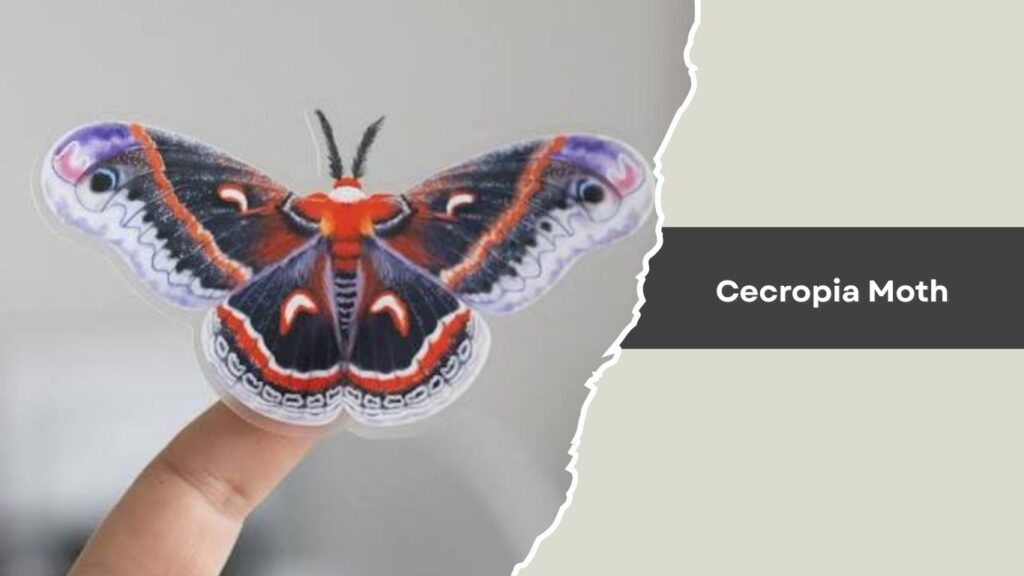
The cecropia moth (Hyalophora cecropia) is the largest native moth in North America. It has a bold mixture of red, brown, black, white, and orange markings. Like other giant silk moths, the adult is harmless, nocturnal, and unable to eat. Its impressive size and colorful wings make it easy to recognize.
Identification
- Color: Reddish-brown, black, white, and orange
- Wingspan: Approximately 5–7 inches
- Markings: White crescent-shaped marks on all four wings
- Wing borders: Orange, black, and white bands
- Body: Large, furry, and reddish with white bands
- Antennae: Broad and feathery, particularly in males
- Caterpillar: Large, green, and covered with colorful raised bumps
Habitat and Distribution
Cecropia moths occur throughout much of the United States and southern Canada. They prefer deciduous forests, woodland edges, meadows, orchards, gardens, and suburban areas containing suitable host plants.
Adults are active from late spring through summer. Because they fly at night, they are sometimes discovered resting on buildings, tree trunks, or vegetation during the day.
Behavior and Diet
Adult cecropia moths do not eat because they lack functional mouthparts. They depend entirely on energy stored during their caterpillar stage. Their short adult lives are devoted to finding mates and reproducing.
Caterpillars eat the leaves of maple, birch, apple, cherry, willow, poplar, and other deciduous trees. They are solitary feeders and normally do not cause significant damage.
Life Cycle and Reproduction
Females release chemical signals called pheromones to attract males. After mating, a female lays more than 100 eggs on suitable host plants.
The larvae hatch and pass through five growth stages before forming large brown silk cocoons attached to branches. They usually remain inside their cocoons throughout winter. In most locations, one generation emerges each year, and adults generally survive for around one to two weeks.
3. Polyphemus Moth
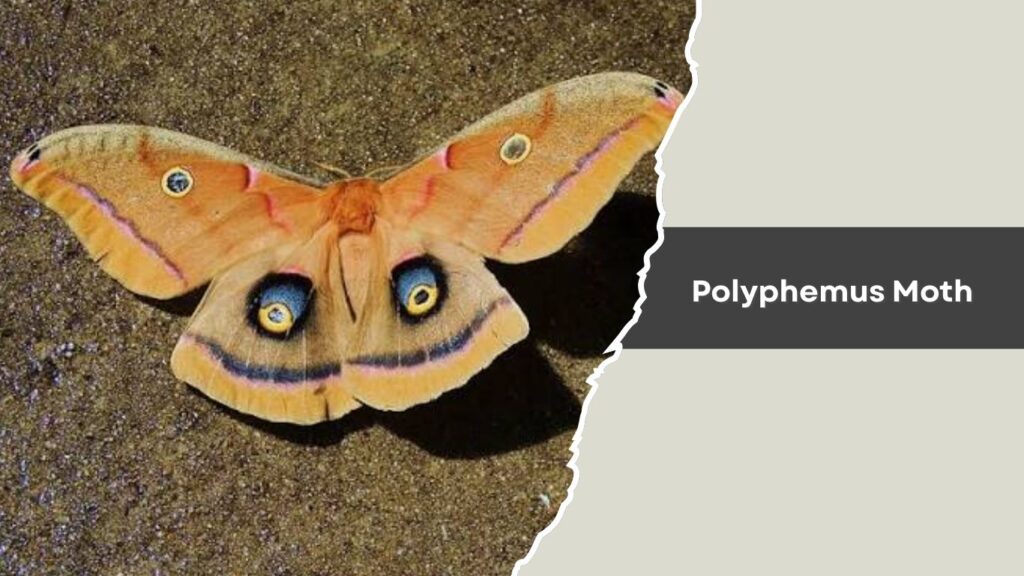
The Polyphemus moth (Antheraea polyphemus) is a widespread giant silk moth named after Polyphemus, the one-eyed giant from Greek mythology. Its name refers to the large eyespots on its hindwings. These markings may help frighten or confuse birds and other predators.
Identification
- Color: Tan, reddish-brown, or grayish-brown
- Wingspan: Approximately 4–6 inches
- Markings: Large, colorful eyespots on the hindwings
- Forewings: Smaller transparent spots near the center
- Wing edges: Often decorated with pink, black, and white bands
- Antennae: Large and feathery in males
- Caterpillar: Bright green with yellow lines and reddish bumps
Habitat and Distribution
Polyphemus moths are found throughout most of the United States, southern Canada, and parts of Mexico. They live in deciduous forests, open woodlands, parks, orchards, gardens, and suburban neighborhoods.
Adults usually appear from spring through early fall, although their exact flight season depends on the regional climate. They remain hidden during the day and become active after dark.
Behavior and Diet
Adult Polyphemus moths cannot eat and survive on stored energy. Males use their sensitive, feathery antennae to detect female pheromones from considerable distances.
The caterpillars feed on many trees and shrubs, including oak, maple, birch, willow, elm, hickory, and apple. Their strong jaws allow them to consume large amounts of foliage while growing.
Life Cycle and Reproduction
After mating, females deposit eggs on the leaves of suitable host plants. The young caterpillars hatch within approximately 10 to 14 days and begin feeding.
After passing through several growth stages, each caterpillar creates a tough, oval cocoon using silk and leaves. The pupa may overwinter inside the cocoon in colder regions. Depending on location, the species can produce one or more generations annually. Adults usually live for less than two weeks.
4. Atlas Moth
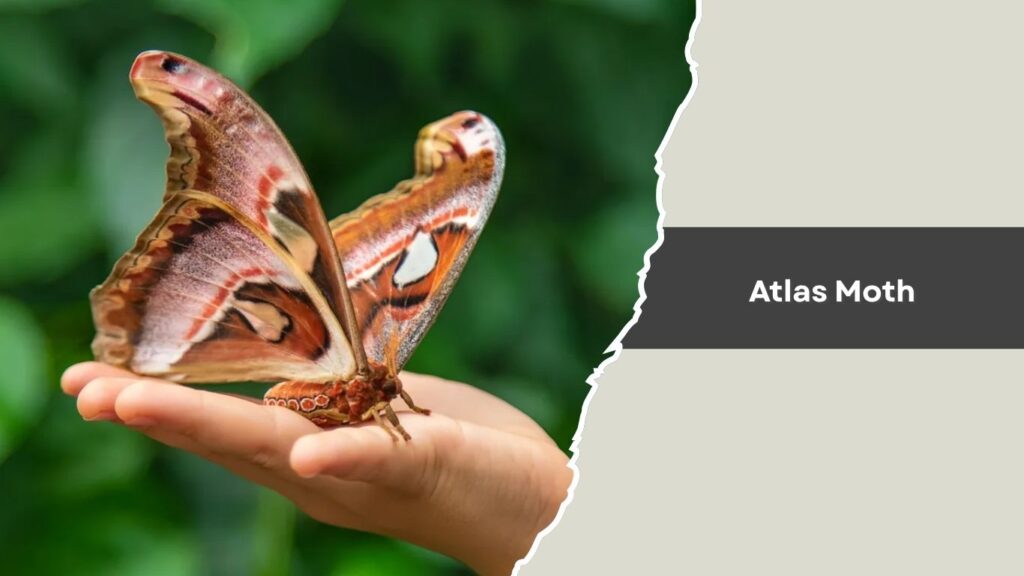
The Atlas moth (Attacus atlas) is one of the world’s largest moths based on total wing area. Native to Asia, it is famous for its enormous wings and snake-head-like wing tips. Despite its intimidating size and unusual appearance, the Atlas moth is completely harmless to people.
Identification
- Color: Reddish-brown, orange, black, white, and purple
- Wingspan: Commonly 9–12 inches
- Markings: Large triangular transparent patches on the wings
- Wing tips: Curved patterns resembling snake heads
- Body: Thick, furry, and relatively small compared with the wings
- Female: Generally larger and heavier than the male
- Caterpillar: Bluish-green with white, waxy projections
Habitat and Distribution
Atlas moths inhabit tropical and subtropical forests across South and Southeast Asia. They occur in countries such as India, China, Malaysia, Indonesia, Thailand, and the Philippines.
Their preferred habitats include rainforests, secondary forests, plantations, and wooded gardens. Adults rest quietly during the day and become active at night, particularly when searching for mates.
Behavior and Diet
Adult Atlas moths have nonfunctional mouthparts and cannot feed. Their adult stage generally lasts only long enough for mating and egg-laying. When threatened, the moth may move its patterned wing tips, possibly creating the appearance of a snake.
Caterpillars feed on various plants, including citrus, guava, cinnamon, and other broad-leaved trees. They eat heavily to store enough energy for metamorphosis and adulthood.
Life Cycle and Reproduction
Females release powerful pheromones that males detect with their feathery antennae. After mating, a female places numerous round eggs on suitable host plants.
The caterpillars feed and molt several times before creating durable silk cocoons attached to leaves or branches. Metamorphosis occurs inside the cocoon, and the adult later emerges. Adult Atlas moths generally live for approximately one to two weeks.
5. Comet Moth
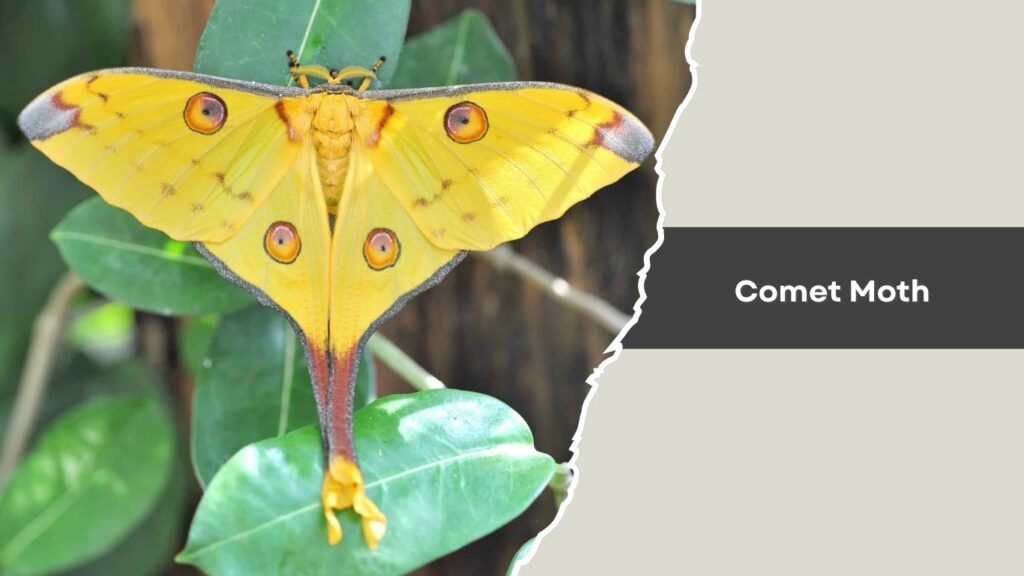
The comet moth (Argema mittrei), also called the Madagascan moon moth, is an extraordinary silk moth found only in Madagascar. Its brilliant yellow wings and exceptionally long hindwing tails make it one of the most distinctive moths in the world. Females are larger, while males usually possess longer tails.
Identification
- Color: Bright yellow with reddish-brown and black markings
- Wingspan: Approximately 6–8 inches
- Hindwing tails: May extend several inches beyond the wings
- Eyespots: Large circular markings on all four wings
- Male: Smaller body with especially long, narrow tails
- Female: Larger body with shorter and broader tails
- Caterpillar: Green with small reddish-orange markings
Habitat and Distribution
Comet moths are native exclusively to Madagascar. They primarily inhabit humid rainforests and other wooded environments where their caterpillar host plants grow.
Habitat destruction has reduced some wild populations, making forest conservation important for this species. Comet moths are also bred in specialized butterfly houses and insect conservation facilities around the world.
Behavior and Diet
Adult comet moths are nocturnal and do not have functional mouthparts. They rely on nutrients accumulated while they were caterpillars. Males fly at night searching for females, using their large antennae to detect pheromones.
The caterpillars feed on the leaves of several trees and shrubs. In managed environments, they may be raised on eucalyptus and certain other suitable host plants.
Life Cycle and Reproduction
Females lay eggs on or near appropriate host plants. After hatching, the caterpillars feed continuously and pass through several developmental stages as they increase in size.
A mature caterpillar spins a silvery, loosely woven cocoon with small openings that help prevent water from collecting inside. The adult eventually emerges, mates, and reproduces. Because it cannot eat, an adult typically survives for only a few days.
6. Imperial Moth
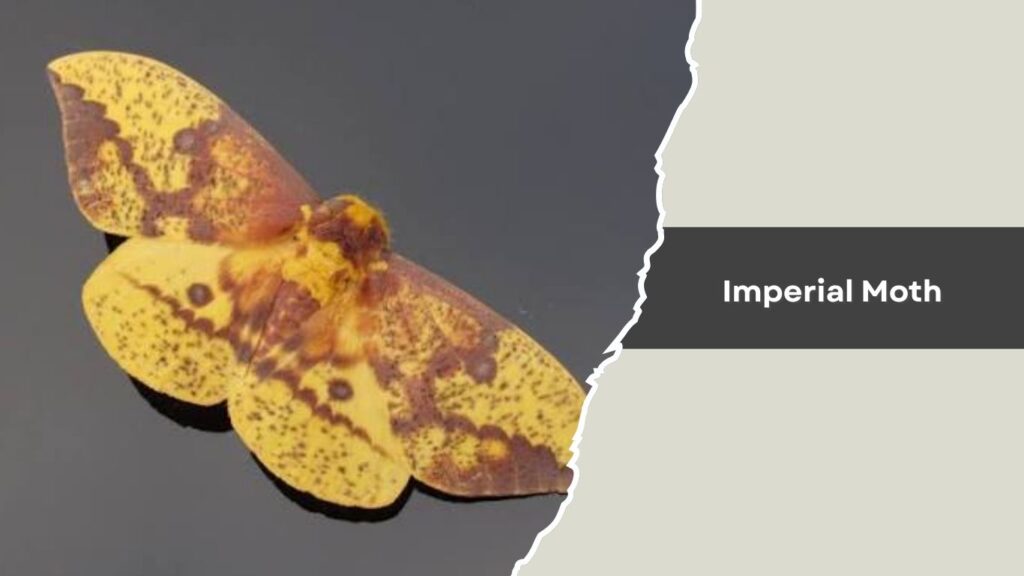
The imperial moth (Eacles imperialis) is a large North American silk moth known for its striking yellow wings covered with purple or reddish-brown markings. Color patterns vary considerably among individuals. Some appear mostly yellow, while others have extensive dark patches across their wings.
Identification
- Color: Yellow with purple, pinkish, or reddish-brown markings
- Wingspan: Approximately 3–7 inches
- Wings: Broad with irregular spots and patches
- Body: Thick, furry, and yellow with dark markings
- Female: Usually larger and more yellow
- Male: Often more heavily marked with purple
- Caterpillar: Green or brown with long hairs and noticeable spines
Habitat and Distribution
Imperial moths are distributed across eastern and central North America, from southern Canada to parts of Mexico. They inhabit deciduous forests, mixed woodlands, pine forests, parks, and suburban areas.
Adults are mainly seen during summer. They fly after dark and may be attracted to outdoor lights. During daylight hours, they typically remain motionless on trees, walls, or vegetation.
Behavior and Diet
Adult imperial moths do not feed because they lack functional mouthparts. Their adult activity focuses on mating and reproduction. Their yellow and brown coloration can help them blend with dead leaves or uneven tree bark.
Caterpillars eat the foliage of pine, oak, maple, sweetgum, cedar, and several other trees. Although individual caterpillars consume considerable amounts of foliage, they rarely become serious pests.
Life Cycle and Reproduction
Female imperial moths lay yellow eggs on host plants, either individually or in small groups. The larvae hatch and begin feeding before passing through several growth stages.
Unlike many silk moth caterpillars, mature imperial moth larvae usually burrow into loose soil rather than spinning a prominent silk cocoon on a tree. They pupate underground and often remain there through winter. Adults emerge during the following warm season and generally live for about one to two weeks.
7. Promethea Moth
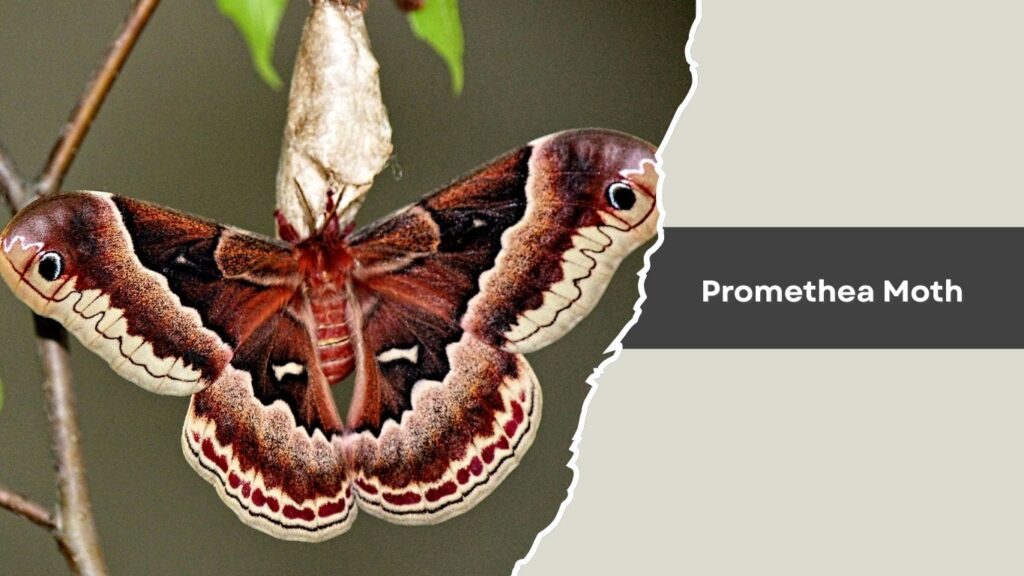
The Promethea moth (Callosamia promethea) is a large North American silk moth known for the noticeable differences between males and females. Males have dark brown or black wings, while females are reddish-brown. This dramatic variation can make the two sexes appear to be different species.
Identification
- Wingspan: Approximately 3–4 inches
- Male color: Dark brown or nearly black
- Female color: Reddish-brown with lighter markings
- Markings: White or cream-colored lines across the wings
- Body: Thick and covered with soft hairs
- Antennae: Large and feathery in males
- Caterpillar: Pale green with colorful raised knobs
Habitat and Distribution
Promethea moths are found across eastern North America, including parts of the United States and southern Canada. They inhabit deciduous forests, woodland edges, gardens, orchards, parks, and suburban areas.
Adults generally appear from late spring through summer. Females are mainly active at night, while males may fly during the late afternoon and early evening.
Behavior and Diet
Adult Promethea moths cannot eat because they do not have functional mouthparts. Males fly quickly while searching for females, using their sensitive antennae to detect pheromones.
The caterpillars feed on sassafras, spicebush, tulip trees, wild cherry, ash, and several other deciduous plants. Young caterpillars may initially feed together before becoming more solitary as they mature.
Life Cycle and Reproduction
After mating, females lay eggs in small groups on the leaves of suitable host plants. The larvae hatch and pass through several growth stages while feeding heavily.
A mature caterpillar folds a leaf around itself and secures it to a branch with strong silk. It then forms a cocoon inside the leaf. The pupa typically overwinters, with the adult emerging during the following spring or summer.
8. Io Moth
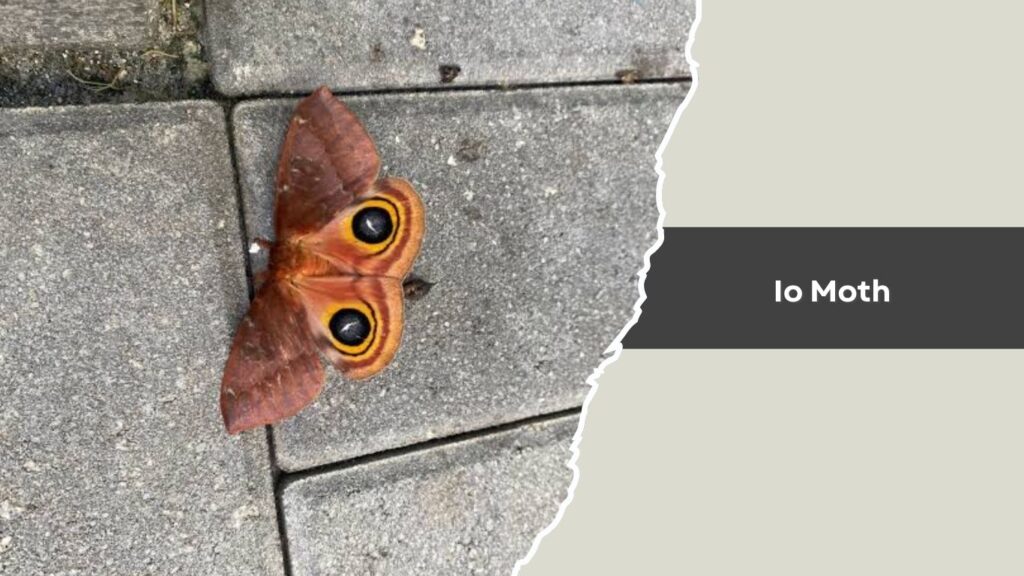
The Io moth (Automeris io) is a colorful silk moth recognized by the large eyespots on its hindwings. These markings remain hidden while the moth rests but are suddenly revealed when it feels threatened. Unlike the harmless adult, the caterpillar has venomous spines that can deliver a painful sting.
Identification
- Wingspan: Approximately 2.5–3.5 inches
- Male color: Bright yellow
- Female color: Reddish-brown or purplish-brown
- Eyespots: Large black and blue spots on the hindwings
- Body: Thick and furry
- Caterpillar: Bright green with red-and-white side stripes
- Spines: Branched, venomous spines covering the caterpillar
Habitat and Distribution
Io moths occur throughout much of eastern and central North America, extending into parts of Mexico and Central America. They live in forests, fields, gardens, parks, and suburban landscapes.
Adults are active during warm months and generally fly at night. During the day, they remain still with their forewings covering the colorful eyespots.
Behavior and Diet
Adult Io moths do not feed and survive on stored energy. When threatened, they spread their forewings to display the large eyespots, which may startle birds and other predators.
The caterpillars consume leaves from many plants, including oak, willow, maple, elm, hackberry, cherry, and various shrubs. Young larvae often feed in groups, while older caterpillars become more solitary.
Life Cycle and Reproduction
Females lay clusters of eggs on the undersides of host-plant leaves. Newly hatched larvae remain together and feed side by side before separating later in their development.
Mature caterpillars form thin, papery cocoons among fallen leaves or vegetation. Depending on the climate, Io moths may produce one to several generations annually. Adults usually live for only one to two weeks.
9. Rosy Maple Moth
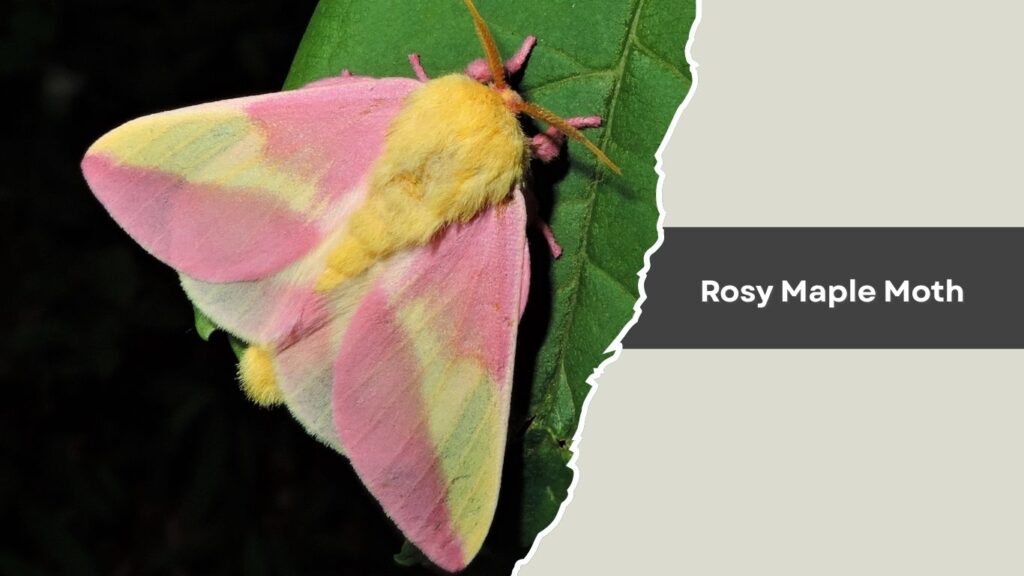
The rosy maple moth (Dryocampa rubicunda) is a small silk moth famous for its bright pink and yellow coloration. Its fluffy body and pastel wings give it an unusually soft appearance. Color intensity varies, with some individuals displaying extensive pink markings and others appearing mostly yellow or cream.
Identification
- Wingspan: Approximately 1.25–2 inches
- Color: Pink, yellow, cream, or white
- Forewings: Yellow with pink edges and markings
- Hindwings: Usually yellow or pale cream
- Body: Woolly and generally yellow
- Legs: Pink or reddish
- Caterpillar: Green with lengthwise stripes and small spines
Habitat and Distribution
Rosy maple moths are widely distributed across eastern North America. They inhabit deciduous forests, suburban neighborhoods, parks, and gardens where maple trees are present.
Adults are most commonly seen from late spring through summer. They are nocturnal and may be attracted to porch lights, where they sometimes remain until daylight.
Behavior and Diet
Adult rosy maple moths do not eat. Their mouthparts are reduced, so they rely entirely on energy collected during their larval stage.
The caterpillars, known as green-striped mapleworms, mainly feed on red maple, silver maple, and sugar maple leaves. They may also use oak and a few other trees. Large groups can occasionally remove noticeable amounts of foliage from young trees.
Life Cycle and Reproduction
Females lay clusters of eggs on the undersides of maple leaves. After hatching, young caterpillars feed together, but they become more independent as they grow.
Fully developed caterpillars crawl to the ground and pupate in shallow soil or beneath fallen leaves. Depending on the region, the species may produce one to three generations per year. Adults live for only several days and focus entirely on reproduction.
10. Giant Peacock Moth
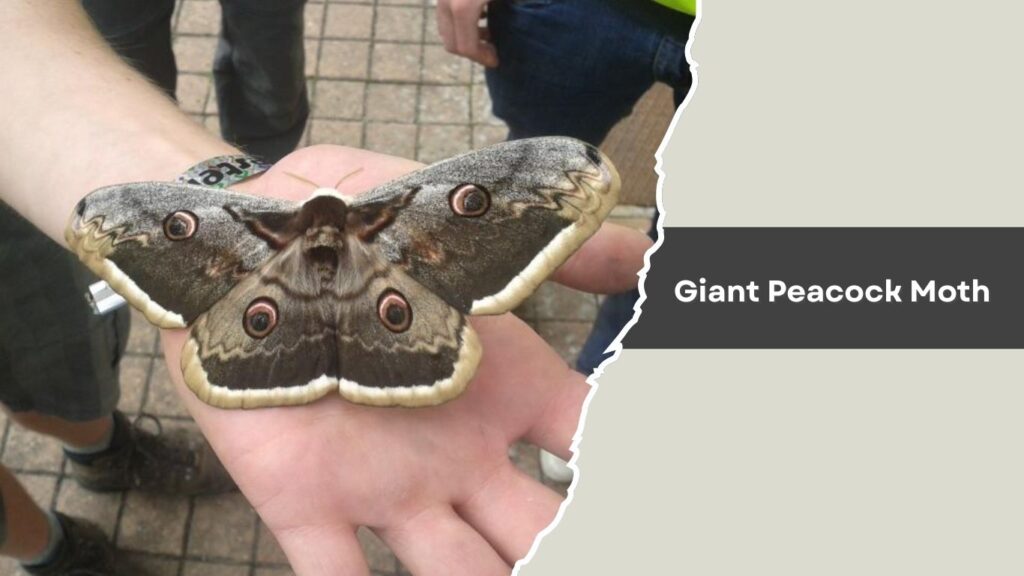
The giant peacock moth (Saturnia pyri) is the largest moth native to Europe. It is sometimes called the great peacock moth or giant emperor moth. Its broad brown wings contain large eyespots that resemble the markings found on a peacock’s feathers and help discourage potential predators.
Identification
- Wingspan: Approximately 4–6 inches
- Color: Brown, gray, black, and cream
- Eyespots: Large, colorful eyespots on all four wings
- Wing patterns: Wavy black, white, and reddish lines
- Body: Thick, furry, and brownish
- Antennae: Broad and feathery in males
- Caterpillar: Green with blue bumps and short hairs
Habitat and Distribution
Giant peacock moths occur across southern and central Europe, North Africa, and parts of western Asia. They inhabit open woodlands, orchards, scrubland, gardens, and agricultural landscapes.
Adults usually emerge in spring or early summer. They are primarily nocturnal and may occasionally be attracted to artificial lights.
Behavior and Diet
Adult giant peacock moths lack functional mouthparts and cannot feed. Males use their large antennae to locate females by detecting pheromones from long distances.
The caterpillars feed on various trees, including pear, apple, cherry, almond, ash, and elm. Despite their impressive size, the larvae are not generally considered major agricultural pests.
Life Cycle and Reproduction
Females lay clusters of eggs on the stems and leaves of suitable host trees. The caterpillars change noticeably as they grow, eventually becoming large and bright green.
A mature caterpillar creates a strong, pear-shaped silk cocoon, usually near the base of a tree or among vegetation. The pupa may remain inside for several months or longer before the adult emerges. Adults typically live for approximately one week.
11. Emperor Gum Moth
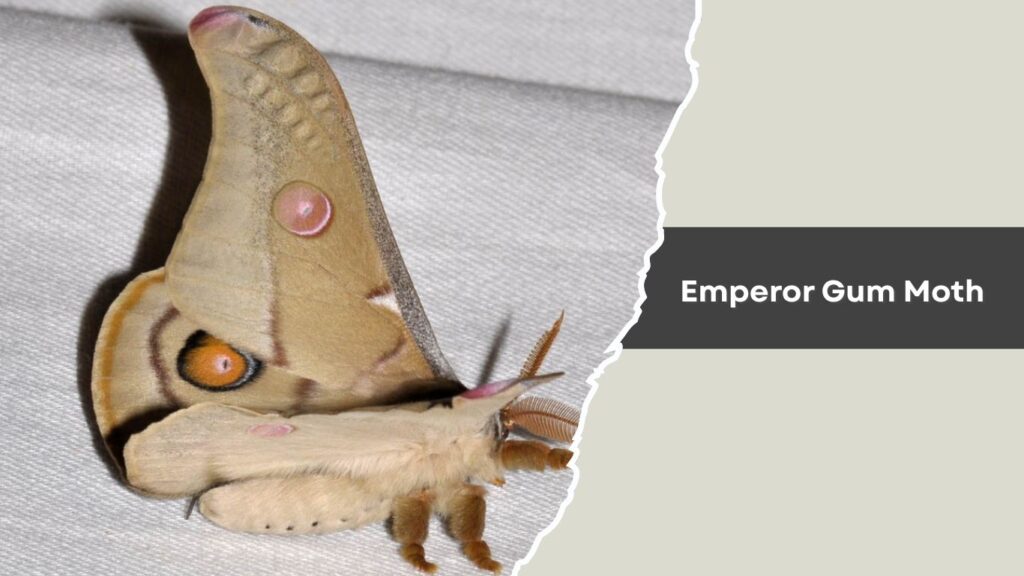
The emperor gum moth (Opodiphthera eucalypti) is a large Australian silk moth commonly associated with eucalyptus trees. It has broad reddish-brown wings decorated with four prominent eyespots. Females are generally larger than males and have rounder bodies for carrying eggs.
Identification
- Wingspan: Approximately 4–6 inches
- Color: Reddish-brown, gray, pink, and cream
- Eyespots: One large eyespot on each wing
- Wing edges: Wavy lines and shaded bands
- Female: Larger with broader wings and a heavier body
- Male: Smaller with strongly feathered antennae
- Caterpillar: Large, green, and covered with colorful bumps
Habitat and Distribution
Emperor gum moths are native to Australia but have also become established in New Zealand. They live in eucalyptus forests, urban parks, gardens, plantations, and other places where gum trees grow.
Adults may be encountered during warmer months, particularly near outdoor lights. They rest on trees, fences, walls, and vegetation during daylight hours.
Behavior and Diet
Adult emperor gum moths do not feed because their mouthparts are nonfunctional. They use stored energy to fly, locate mates, and reproduce during their short adult lives.
The caterpillars primarily eat eucalyptus leaves, although they may use pepper trees and some introduced plants. Young caterpillars have dark bodies, but they become green and develop colorful raised bumps as they mature.
Life Cycle and Reproduction
Females deposit clusters of eggs on eucalyptus leaves and branches. After hatching, the caterpillars feed heavily and molt several times before reaching their full size.
Mature larvae form strong brown silk cocoons attached to branches, bark, fences, or nearby structures. The pupal stage may last several months. Adults eventually emerge, mate, and usually survive for only about one to two weeks.
12. Japanese Oak Silk Moth
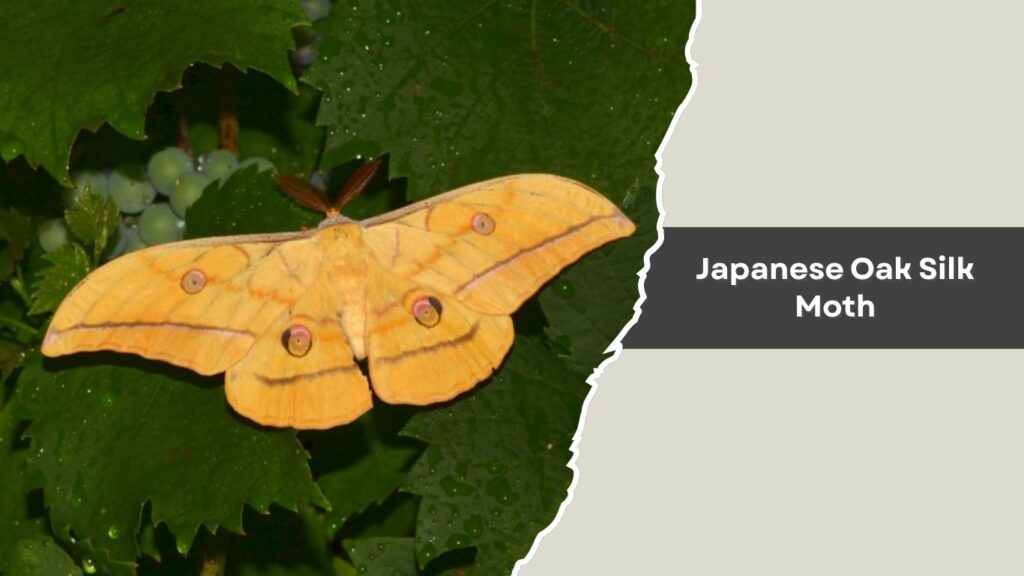
The Japanese oak silk moth (Antheraea yamamai) is a large silk-producing moth native to East Asia. It is also known as the Japanese silk moth. Its caterpillars produce a durable golden silk called tensan, which has been used commercially on a limited scale.
Identification
- Wingspan: Approximately 4–6 inches
- Color: Golden-yellow, orange, brown, or olive
- Eyespots: One transparent eyespot on each wing
- Wing pattern: Wavy reddish or purple lines
- Body: Large, hairy, and similar in color to the wings
- Antennae: Broad and feathery in males
- Caterpillar: Large and green with small raised bumps
Habitat and Distribution
Japanese oak silk moths are native to Japan, Korea, China, and parts of eastern Russia. They have also been introduced into several European countries, where some populations now survive in the wild.
They prefer deciduous forests and wooded areas containing oak trees, which are the caterpillars’ primary food source.
Behavior and Diet
Adult Japanese oak silk moths do not eat and live on stored energy. They are nocturnal, with males flying actively at night to find females. During the day, adults usually rest quietly on tree trunks or vegetation.
The caterpillars primarily consume oak leaves. Their ability to produce strong, naturally golden silk has made the species economically and culturally important in parts of Asia.
Life Cycle and Reproduction
Females lay their eggs near suitable oak foliage. Unlike many related silk moths, this species usually survives winter in the egg stage. The caterpillars hatch when fresh leaves become available in spring.
After feeding and molting several times, the larvae spin tough greenish or golden cocoons among leaves. Adults commonly emerge in late summer or early autumn. There is generally one generation each year.
13. Chinese Oak Silk Moth
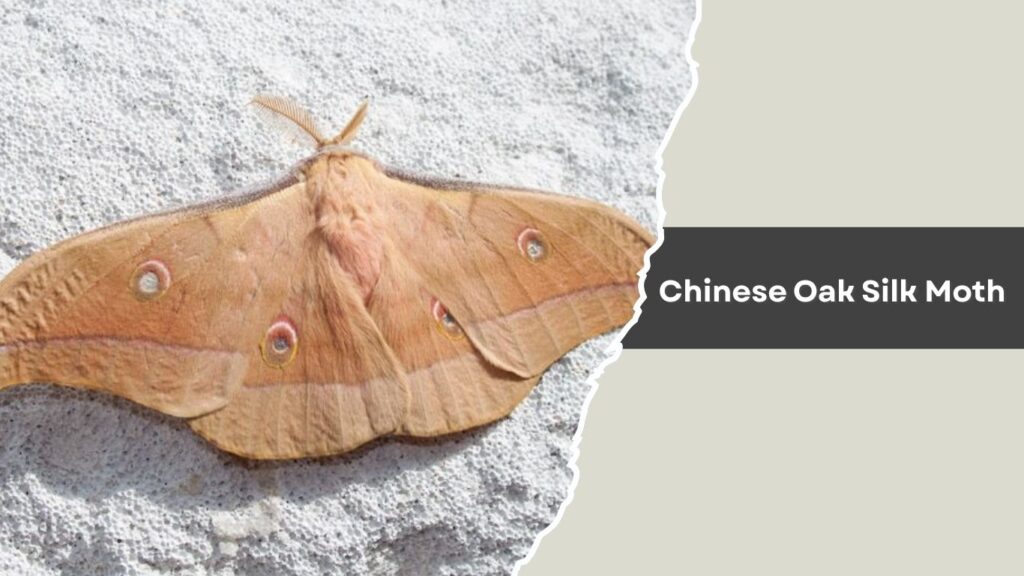
The Chinese oak silk moth (Antheraea pernyi) is a large moth native to East Asia. It is commercially raised for tussar silk, a strong, naturally tan-colored wild silk. The moth’s broad wings, transparent eyespots, and warm brown coloration help it blend with dried leaves and tree bark.
Identification
- Wingspan: Approximately 4–6 inches
- Color: Brown, reddish-brown, tan, or yellowish
- Eyespots: Large transparent eyespots on all four wings
- Wing patterns: Dark, white, and pinkish wavy bands
- Body: Thick and covered with dense hairs
- Antennae: Broad and strongly feathered in males
- Caterpillar: Large, green, and covered with small bumps
Habitat and Distribution
Chinese oak silk moths are native to China and other parts of East Asia. They have also been introduced into several countries for silk production and may survive in temperate forests outside their original range.
They primarily inhabit oak forests, wooded hillsides, silk farms, and areas where suitable host trees grow. Adults are nocturnal and generally rest during daylight hours.
Behavior and Diet
Adult Chinese oak silk moths do not eat because they have reduced mouthparts. Males fly actively at night while searching for females, whereas females usually remain closer to where they emerged.
The caterpillars feed mainly on the leaves of oak trees. They eat continuously during development, storing the energy needed to complete metamorphosis and survive their non-feeding adult stage.
Life Cycle and Reproduction
Females lay eggs on or near oak leaves. The caterpillars hatch, feed heavily, and pass through several growth stages before reaching maturity.
Each mature larva spins a strong silk cocoon among the leaves and branches of its host tree. Depending on environmental conditions, the species may produce one or two generations annually. The adults emerge, mate, lay eggs, and usually die within one to two weeks.
14. Cynthia Moth
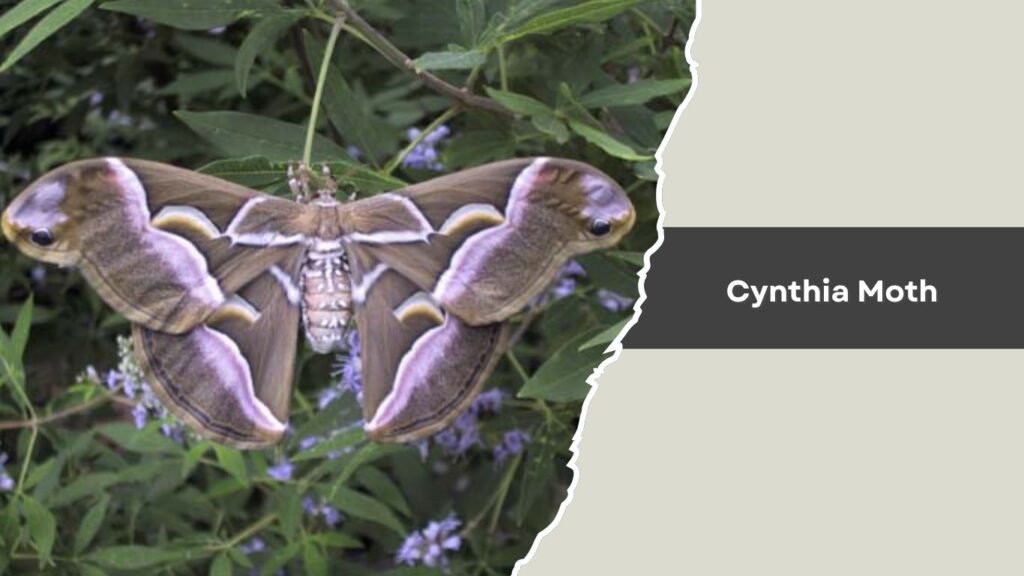
The Cynthia moth (Samia cynthia), also called the ailanthus silk moth, is a large silk moth originally native to Asia. Its caterpillars commonly feed on tree-of-heaven. The species has been introduced into several regions outside its natural range, where small populations may occur around cities and wooded areas.
Identification
- Wingspan: Approximately 4–5 inches
- Color: Brown, olive, tan, and cream
- Markings: White crescent-shaped patches on all four wings
- Wing bands: Pinkish, white, and black lines
- Wing tips: Small eyespot-like markings near the edges
- Body: Thick, brown, and covered with hairs
- Caterpillar: Pale green or bluish with white waxy bumps
Habitat and Distribution
Cynthia moths are native to China and other parts of eastern Asia. They were introduced into Europe and North America during attempts to establish alternative silk industries.
They live in forests, urban parks, vacant lots, roadsides, and suburban areas where tree-of-heaven grows. Their distribution outside Asia is often scattered and closely connected to the presence of this host tree.
Behavior and Diet
Adult Cynthia moths lack functional mouthparts and cannot eat. They remain inactive during much of the day and fly after dark to locate mates.
The caterpillars mainly feed on tree-of-heaven but may occasionally use other plants. Young larvae often feed in groups, while older caterpillars spread across the host tree as they grow larger.
Life Cycle and Reproduction
Females place their eggs in groups on host-plant leaves. After hatching, the caterpillars pass through several growth stages and develop a pale, powdery appearance.
Mature caterpillars spin silk cocoons inside leaves, attaching them securely to branches. The cocoon may remain on the bare tree after the leaf has dried. The pupal stage commonly lasts through winter, and adults emerge when warmer conditions return.
15. Spanish Moon Moth
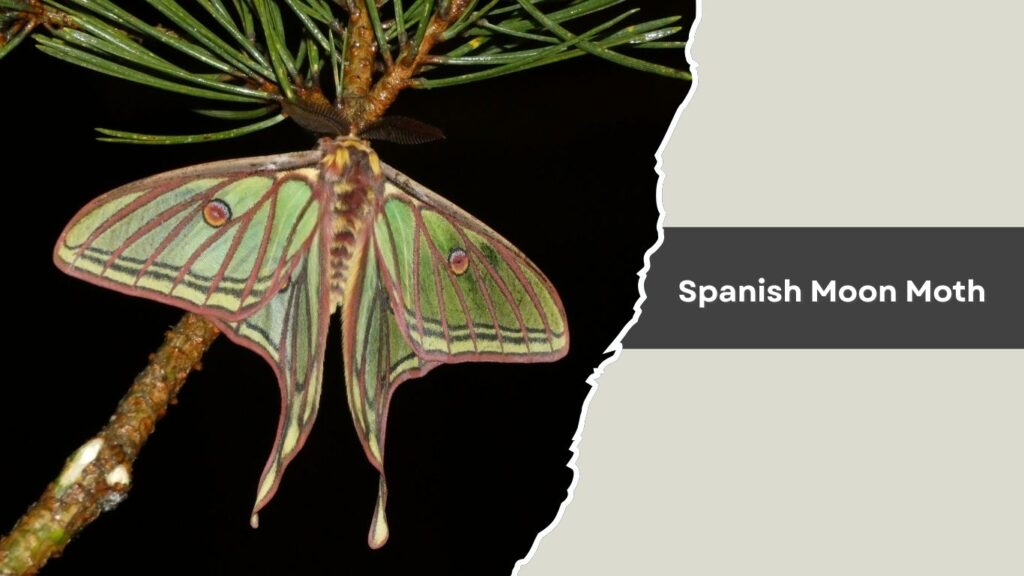
The Spanish moon moth (Graellsia isabellae) is a rare and beautiful European silk moth. It is recognized by its pale green wings, dark veins, colorful eyespots, and long hindwing tails. The species inhabits mountain pine forests and is sometimes called the Spanish lunar moth or Queen Isabella’s moth.
Identification
- Wingspan: Approximately 3–4 inches
- Color: Pale green with dark reddish-brown veins
- Eyespots: Colorful eyespots on all four wings
- Wing borders: Dark lines with pinkish or reddish shading
- Hindwings: Long tails, particularly prominent in males
- Antennae: Strongly feathered in males
- Caterpillar: Green with pale spots and short hairs
Habitat and Distribution
Spanish moon moths occur primarily in mountainous areas of Spain and parts of southern France. They inhabit open pine forests at moderate to high elevations.
The species is strongly associated with native pine trees. Adults generally emerge during spring and early summer, although timing depends on elevation and local temperatures.
Behavior and Diet
Adult Spanish moon moths do not feed. Their short adult lives are devoted entirely to locating mates and reproducing. Males can detect female pheromones with their highly sensitive antennae.
The caterpillars feed on the needles of pine trees, including Scots pine and black pine. Their green coloration provides effective camouflage among the fresh needles and branches.
Life Cycle and Reproduction
Females lay eggs on pine needles or branches. After hatching, the caterpillars begin feeding and gradually change in appearance as they pass through several developmental stages.
Mature caterpillars descend from the tree and form strong cocoons among moss, fallen needles, or ground vegetation. They usually overwinter as pupae. One generation is produced each year, and adults normally live for around one week.
16. African Moon Moth
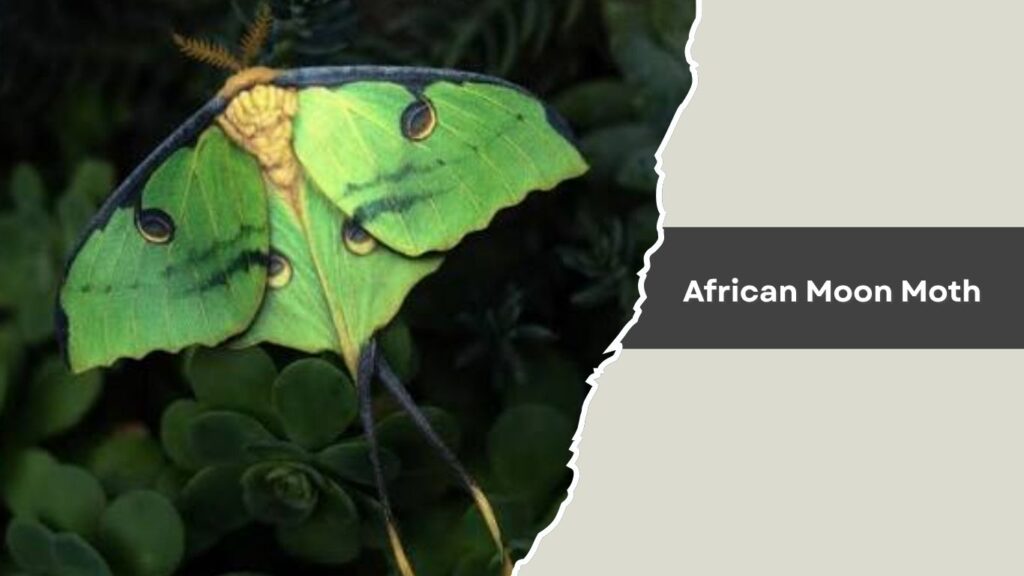
The African moon moth (Argema mimosae) is a large silk moth native to eastern and southern Africa. It has pale green wings, prominent eyespots, and long hindwing tails. Its graceful shape resembles other moon moths, but its appearance and distribution make it a distinctive African species.
Identification
- Wingspan: Approximately 4–6 inches
- Color: Pale green or yellowish-green
- Eyespots: Large, colorful eyespots on all four wings
- Hindwings: Long, narrow tails
- Wing markings: Brown, pink, black, and white accents
- Body: Thick and covered with pale hairs
- Caterpillar: Large, green, and covered with small raised bumps
Habitat and Distribution
African moon moths are found in eastern and southern Africa. They inhabit forests, wooded savannas, riverine woodlands, gardens, and other areas containing suitable caterpillar host plants.
The adults are nocturnal and may occasionally be attracted to artificial lights. During daylight hours, they generally rest among foliage, where their green coloration provides camouflage.
Behavior and Diet
Adult African moon moths cannot feed because they lack functional mouthparts. They depend on fat and energy stored during their caterpillar stage.
The caterpillars eat leaves from several native trees and shrubs, including plants in the acacia group. They feed heavily and molt repeatedly before becoming large enough to form their cocoons.
Life Cycle and Reproduction
Females release pheromones that attract males during the night. After mating, females place eggs on suitable host plants so the newly hatched caterpillars have immediate access to food.
Mature larvae create strong silk cocoons, frequently among leaves or attached to branches. Adults emerge after pupation and must reproduce quickly. Their adult lifespan generally lasts only several days to about one week.
17. Indian Moon Moth
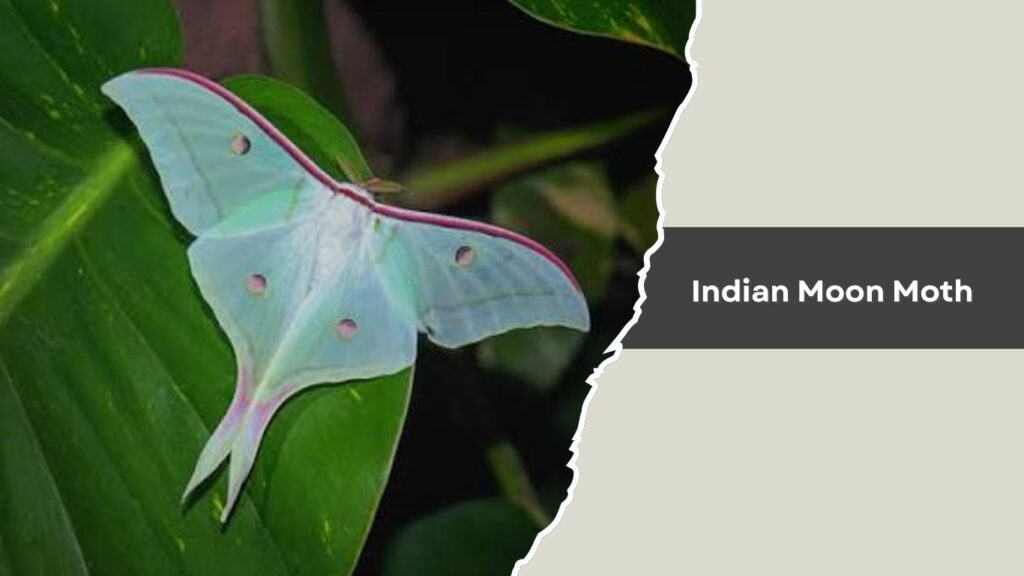
The Indian moon moth (Actias selene), also called the Indian luna moth, is a striking Asian silk moth with pale green wings and long hindwing tails. It resembles the North American luna moth but has different wing markings, including pinkish borders and crescent-shaped eyespots.
Identification
- Wingspan: Approximately 4–6 inches
- Color: Pale green or yellowish-green
- Forewing edges: Pink, purple, black, and white markings
- Eyespots: Crescent-shaped spots on all four wings
- Hindwings: Long, curved tails
- Body: White and furry with a reddish collar
- Caterpillar: Bright green with small reddish bumps
Habitat and Distribution
Indian moon moths occur across South and Southeast Asia, including India, Nepal, China, Thailand, Malaysia, and nearby regions. They inhabit tropical forests, subtropical woodlands, gardens, and areas containing suitable host trees.
Adults remain still during the day and become active after sunset. Their flight periods can vary considerably across their extensive geographic range.
Behavior and Diet
Adult Indian moon moths do not have functional mouthparts and therefore cannot eat. Males use their broad antennae to detect female pheromones and may travel considerable distances in search of a mate.
The caterpillars feed on several plants, including walnut, sweetgum, willow, and other broad-leaved trees. Food-plant preferences can differ between regions.
Life Cycle and Reproduction
Females deposit eggs individually or in small groups on host plants. The caterpillars hatch and feed through several developmental stages, growing considerably larger after each molt.
When fully grown, each caterpillar spins a brown silk cocoon among leaves. The pupal stage lasts until environmental conditions are suitable for emergence. Multiple generations may occur annually in warmer climates, while cooler areas may have fewer generations.
18. Domestic Silk Moth
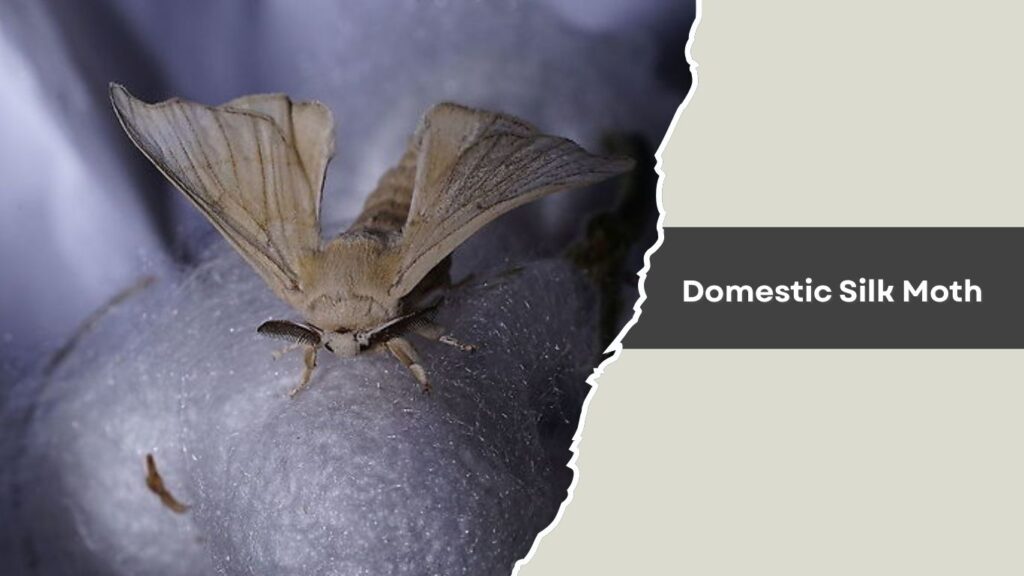
The domestic silk moth (Bombyx mori) is the primary species used in commercial silk production. Humans have raised it for thousands of years, and it no longer maintains truly wild populations. Unlike many giant silk moths, adults have small wings and heavy bodies that prevent most individuals from flying effectively.
Identification
- Wingspan: Approximately 1.5–2 inches
- Color: Cream, white, or pale brown
- Wings: Rounded with faint brownish lines
- Body: Thick, hairy, and usually cream-colored
- Antennae: Dark and strongly feathered
- Flight ability: Most adults cannot fly effectively
- Caterpillar: Smooth, pale, and commonly called a silkworm
Habitat and Distribution
Domestic silk moths do not have a natural wild habitat. They are raised in controlled environments throughout Asia and other silk-producing regions of the world.
Silkworms are kept indoors in clean trays or specialized facilities. Their survival depends on human care, regular feeding, suitable temperature, and protection from predators and diseases.
Behavior and Diet
Adult domestic silk moths do not eat. They are generally inactive and spend their brief adult lives mating and laying eggs.
Silkworms feed almost exclusively on mulberry leaves. In managed facilities, they receive fresh leaves several times daily. They grow quickly and consume increasing amounts of foliage as they approach the cocoon-forming stage.
Life Cycle and Silk Production
A female may lay several hundred tiny eggs. The eggs hatch into small silkworms that feed and molt repeatedly for approximately four to six weeks.
A mature silkworm produces a continuous silk filament and wraps it around its body to create a cocoon. In commercial production, the silk is carefully unwound before the adult emerges. If allowed to develop naturally, the moth breaks out of the cocoon, mates, lays eggs, and dies within several days.
