

Black and blue wasps are some of the most eye-catching insects in the wasp family, thanks to their metallic blue wings, shiny dark bodies, and unique flight patterns. While their bold colors may appear intimidating, many of these wasps are harmless or even beneficial to humans, helping control pest populations like beetle grubs, spiders, and cockroaches.
In this guide, you’ll discover 15 distinct types of black and blue wasps—from the well-known Blue Mud Dauber to the powerful Tarantula Hawk—complete with identification tips, behavior insights, and sting risk details.
1. Blue Mud Dauber (Chalybion californicum)

The Blue Mud Dauber is one of the most recognized black and blue wasps in North America. This solitary wasp is admired for its striking metallic blue body and helpful role in controlling spider populations, especially black widows. Unlike social wasps, it doesn’t live in colonies or display aggressive behavior.
Identification
- Metallic blue or blue-black shiny body
- Slender and elongated shape
- Long legs and narrow “wasp waist”
- Wings are dark with a slight iridescent sheen
- About 0.75 to 1 inch in length
Habitat
Often reuses nests built by other mud dauber species or creates its own in sheltered spaces like under eaves, inside sheds, or on walls.
Behavior
Non-aggressive and solitary. It hunts spiders, paralyzing them with a sting and sealing them inside mud cells as food for its larvae.
Sting
Rarely stings humans and only when handled roughly. Its sting is mild compared to social wasps and bees.
2. Steel-blue Cricket Hunter (Chlorion aerarium)

The Steel-blue Cricket Hunter is a sleek, metallic blue wasp known for its cricket-hunting behavior. It’s solitary and not aggressive toward humans, making it a beneficial garden visitor. This wasp is often confused with the Blue Mud Dauber due to its shimmering body.
Identification
- Metallic steel-blue body with green or violet hues
- Slender, elongated abdomen
- Long legs and narrow waist
- Slightly smoky, translucent wings
- Measures about 0.8 to 1 inch in length
Habitat
Commonly nests in sandy soil, loose dirt, or dry garden areas. Often seen dragging paralyzed crickets into underground burrows.
Behavior
Females paralyze crickets to feed their larvae. Adults feed on nectar and are often found near flowers.
Sting
Not aggressive and rarely stings. Sting is mild and used mainly for hunting prey, not defense.
3. Great Blue Digger Wasp (Sphex ichneumoneus)

The Great Blue Digger Wasp is a powerful solitary wasp that digs deep burrows to raise its young. Known for its deep blue iridescence, it is often seen buzzing around gardens or flower patches.
Identification
- Deep metallic blue or purplish-blue body
- Thick thorax and abdomen
- Clear or slightly smoky wings
- Sturdy legs for digging
- Length ranges from 1 to 1.3 inches
Habitat
Prefers sandy or loose soil for burrow construction. Nests are built in sunny areas, gardens, or open fields.
Behavior
Solitary and non-aggressive. Females paralyze insects like katydids or grasshoppers and bury them with eggs inside their burrow.
Sting
Rarely stings unless handled. Sting is primarily for immobilizing prey and not used for defense.
4. Blue-winged Wasp (Scolia dubia)

The Blue-winged Wasp is a large, robust wasp known for its vivid blue-black wings and beneficial role in controlling beetle larvae. It’s a solitary wasp, often seen flying low over lawns and fields in search of soil-dwelling grubs.
Identification
- Black body with metallic blue wings
- Two bright orange bands on the abdomen (especially females)
- Slightly hairy thorax
- Around 0.75 to 1 inch in length
- Strong, rapid flyer
Habitat
Frequently found in gardens, pastures, and grassy areas with loose or sandy soil—ideal for burrowing and hunting scarab beetle larvae.
Behavior
Blue-winged Wasps are solitary and rarely aggressive. Females search for white grubs underground, sting to paralyze them, and lay an egg on the immobilized host. The larva consumes the grub over time. Adults feed on nectar and are often seen on goldenrod, milkweed, and other wildflowers. Despite their large size and noisy flight, they avoid human interaction and are unlikely to sting unless directly threatened.
Sting
The sting is used solely for subduing prey and not for defense. These wasps almost never sting humans, even when approached closely. If stung (rare), the pain is moderate but short-lived. They’re considered harmless to people and pets unless severely provoked or mishandled.
5. Blue Velvet Ant (Dasymutilla spp.)

Often mistaken for ants, Blue Velvet Ants are actually female wasps with a striking fuzzy appearance and metallic blue coloration. Males have wings, but females are wingless and known for their extremely painful sting—earning them the nickname “cow killers.”
Identification
- Fuzzy, velvety exoskeleton with blue or bluish-black coloring
- Females are wingless; males have wings
- Robust body with a wasp-like shape
- Range from 0.5 to over 1 inch in length
- Bright, iridescent sheen on the thorax and abdomen
Habitat
Common in sandy or grassy areas, especially near open fields and woodland edges. They often appear during warm months.
Behavior
Solitary and ground-dwelling. Females wander across the ground searching for the nests of ground-nesting bees or wasps, where they lay their eggs. Their larvae act as parasitoids—feeding on the host’s developing brood. Despite their fearsome reputation, they are not aggressive and will attempt to escape rather than attack if disturbed.
Sting
The sting of a female Blue Velvet Ant is infamous for its intensity—described as one of the most painful among insects. However, they do not sting unless grabbed or stepped on. Their sting is not venomous in a medical sense and poses no serious danger unless someone is allergic. Males cannot sting at all.
6. Blue-eyed Ensign Wasp (Evania appendigaster)

The Blue-eyed Ensign Wasp is a small but visually striking wasp known for its black body, metallic blue eyes, and jerky movements. It plays a helpful role in pest control by parasitizing cockroach egg cases (oothecae), making it a welcome guest in homes and buildings.
Identification
- Glossy black body with a thin “flag-like” abdomen
- Brilliant metallic blue eyes
- Short antennae and long legs
- Small size, about 0.2 to 0.3 inches
- Often seen twitching its abdomen as it moves
Habitat
Commonly found indoors near cockroach infestations or in warm, humid environments. Frequently appears in homes, restaurants, and basements where cockroach oothecae are present.
Behavior
Solitary and beneficial. Females seek out cockroach egg cases, lay an egg inside, and the wasp larva consumes the developing roaches. They are not attracted to humans, food, or trash. Their erratic flying and body movements may draw attention, but they have no interest in stinging or defending themselves.
Sting
This species does not sting humans. It lacks the behavior and physical capacity to use its ovipositor for defense. It is entirely harmless and extremely useful in controlling pest populations indoors.
7. Pepsis Wasp (Tarantula Hawk)
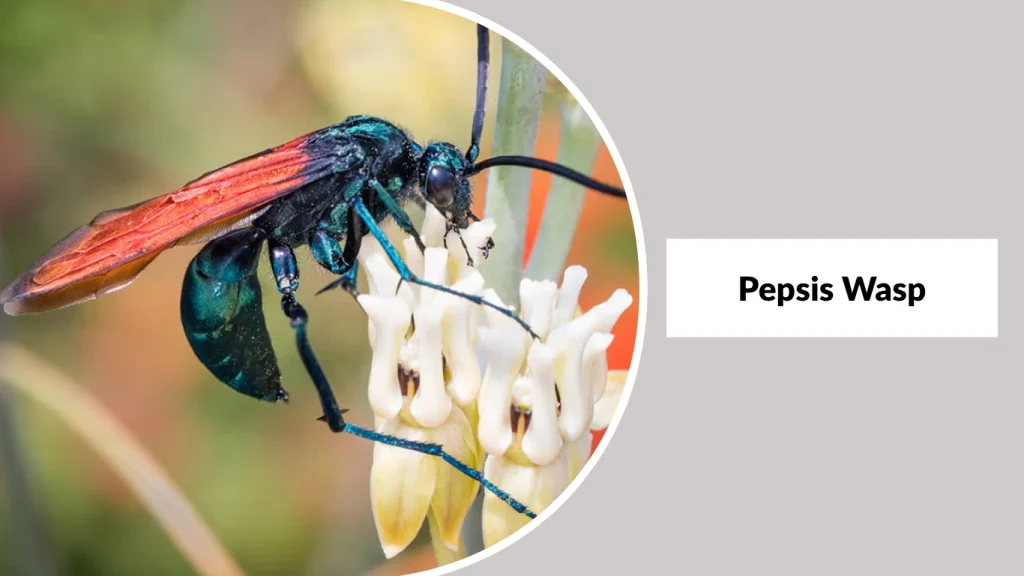
The Pepsis Wasp, famously known as the Tarantula Hawk, is one of the largest wasps in the world. With a black or bluish-black body and electric blue wings, it is both awe-inspiring and intimidating. It’s best known for hunting tarantulas to serve as live food for its larvae.
Identification
- Large body (up to 2 inches long)
- Black or deep blue body with iridescent blue or orange wings
- Long legs with hooked claws
- Smooth, hairless appearance
- Buzzing, powerful flight
Habitat
Commonly found in deserts, woodlands, and scrublands across the southern U.S., Mexico, and Central America. Prefers areas where tarantulas are active.
Behavior
Solitary and not aggressive toward humans. Females hunt adult tarantulas, sting them into paralysis, drag them to a burrow, and lay an egg on the still-living spider. The larva consumes the tarantula over time. Adults feed on nectar and are especially attracted to milkweed and mesquite.
Sting
The sting is legendary for its excruciating pain, considered one of the most painful insect stings in the world. However, Tarantula Hawks are non-aggressive and will only sting if physically threatened. Despite the intensity, the pain is short-lived and typically not dangerous unless allergic reactions occur. Their dramatic sting is a defense mechanism rather than a hunting tool.
8. Blue Cuckoo Wasp (Chrysididae family)

The Blue Cuckoo Wasp is a dazzling metallic wasp known for its parasitic lifestyle. These wasps don’t build their own nests—instead, they lay their eggs in the nests of other solitary bees and wasps. Their brilliant blue or green iridescence makes them look more like a gemstone than an insect.
Identification
- Small, compact body (0.2 to 0.5 inches)
- Iridescent blue, teal, or green coloration
- Tough, pitted exoskeleton
- Curled-under posture when threatened
- Often confused with jewel beetles
Habitat
Found in sunny, dry habitats like gardens, meadows, and forest edges. They are often near nesting sites of their host insects.
Behavior
Solitary and parasitic. The female sneaks into the nests of solitary bees or wasps and lays her eggs. Her larvae then consume the host’s egg or stored food. They don’t sting or defend themselves but instead roll into a tight ball when disturbed—a defense enabled by their armor-like body.
Sting
Does not sting. The Blue Cuckoo Wasp lacks a functional sting and poses no threat to humans. Its vivid color is more of a warning mimicry than an actual danger signal.
9. Black Wasp with Blue Wings (General Descriptor)
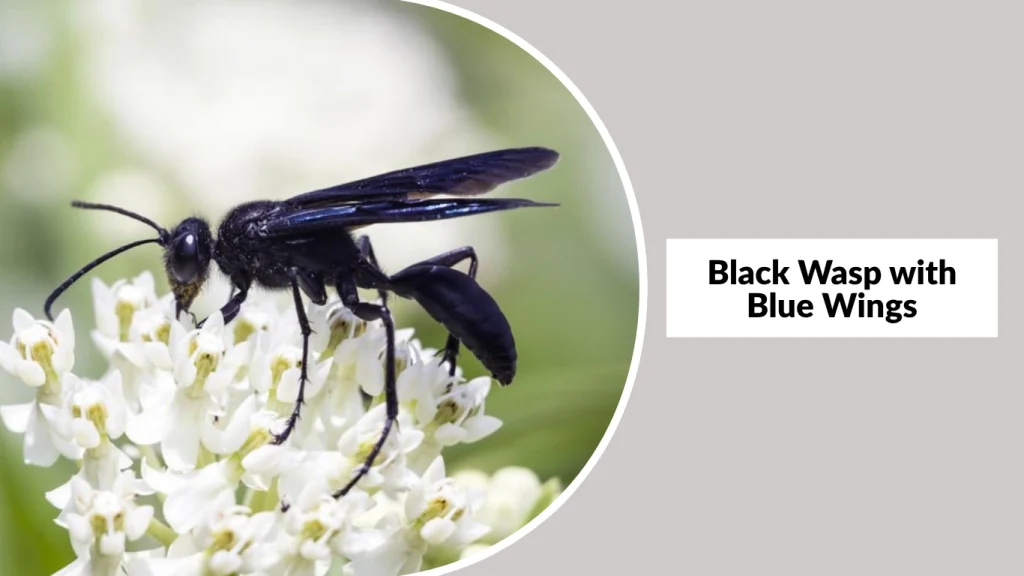
“Black Wasp with Blue Wings” is a general term people often use to describe various large wasps with iridescent blue wings and black bodies. This can include several species such as the Great Black Wasp, Blue-winged Wasp, or even the Pepsis Wasp depending on region and size.
Identification
- Black body with glossy, metallic or iridescent blue wings
- Ranges from 0.7 to over 1.5 inches in length
- Long, narrow waist
- Wings often shimmer purple or green in sunlight
- Common in late summer
Habitat
Typically found in meadows, gardens, and woodland edges. Some nest in soil, others in hollow stems or wood cavities. Their presence near flowers is common due to their nectar-feeding behavior.
Behavior
Most wasps described under this term are solitary and non-aggressive. They prey on beetle larvae, crickets, or spiders depending on the species. Females use their sting to paralyze prey, not for defense.
Sting
While capable of stinging, they rarely do unless directly threatened or handled. The sting varies by species—from mild to extremely painful (like the Pepsis Wasp). Overall, most black wasps with blue wings are beneficial and non-aggressive toward humans.
10. Campsomeris Wasp (Campsomeris spp.)

Campsomeris wasps are large, robust wasps with shiny black bodies and striking blue or purplish wings. These solitary wasps are often confused with Scolia species due to their similar size and behavior. They play a helpful role in regulating beetle populations.
Identification
- Glossy black body with metallic blue or violet wings
- Stout, powerful build
- Around 1 to 1.2 inches in length
- Orange or reddish antennae in some species
- Covered in fine hairs, especially on thorax
Habitat
Commonly seen in gardens, pastures, and woodlands where scarab beetle grubs are present. Females dig in soft soil to hunt their prey.
Behavior
Solitary and beneficial. Females locate and sting beetle larvae (especially scarabs), then lay an egg on them. Adults feed on nectar and are frequently seen on flowers. Campsomeris wasps are calm and avoid human interaction. They are most active during summer months and do not exhibit colony-based aggression.
Sting
Can sting if handled or provoked, but generally non-aggressive. The sting is used to paralyze grub prey and is usually not deployed against humans. Pain level is moderate and brief.
11. Blue Metallic Wasp (Various species)

“Blue Metallic Wasp” is a descriptive name applied to various wasps with iridescent blue exoskeletons. These species are often small to medium-sized, with a gem-like appearance, and may belong to families like Chrysididae, Chalybion, or Scolia.
Identification
- Brilliant blue or turquoise metallic body
- Small to medium size (0.3 to 0.8 inches)
- Slender form or compact, depending on species
- Reflective, shimmering exoskeleton
- Usually hairless and smooth-bodied
Habitat
These wasps thrive in sunny areas with access to flowers and nesting insects. Common habitats include gardens, meadows, sandy soils, and dead wood.
Behavior
Most blue metallic wasps are either solitary hunters or parasitoids. They do not live in colonies and generally go unnoticed by humans. Some parasitize the nests of other wasps or bees, while others are predators of insects like spiders or beetle larvae. They are important in natural pest control and pollination.
Sting
Most species do not sting humans, and many don’t even possess a functional stinger. Even those that can sting rarely do so, as they’re non-defensive and elusive. They’re safe to observe and admire without concern.
12. Blue Shiny Wasp (Common Name for Multiple Species)

“Blue Shiny Wasp” is a non-scientific name often used to describe any wasp with a glossy, metallic blue body. It typically refers to members of the Chalybion or Scolia genera, known for their vibrant appearance and solitary, beneficial behaviors.
Identification
- Deep, glossy blue or blue-black body
- Iridescent wings or sheen across the thorax and abdomen
- Medium to large size (0.5 to 1 inch)
- Sleek, hairless body
- Fast, erratic flight pattern
Habitat
Commonly found in gardens, fields, and near woodpiles or sheds. They prefer areas where prey like spiders or beetle grubs are available and are frequently seen near flowers.
Behavior
Solitary and non-aggressive. Most species labeled as “blue shiny wasps” are predators of garden pests. Females use their sting to paralyze prey and lay eggs for their larvae. Adults feed on nectar and serve as pollinators. Despite their intimidating appearance, they rarely interact with humans and avoid confrontation.
Sting
Capable of stinging, but very unlikely to do so unless physically restrained or attacked. Their sting, if delivered, is usually mild and short-lived. These wasps are more interested in hunting than defending.
13. Wasp with Blue Wings (Generic Descriptor)

“Wasp with Blue Wings” is a general label applied to various wasp species that have iridescent blue or purplish wings paired with dark or black bodies. This term can apply to several species including the Blue-winged Wasp, Campsomeris, Pepsis Wasp, or even some Mud Daubers.
Identification
- Black or dark body with shimmering blue or violet wings
- Medium to very large in size (0.6 to 2 inches)
- Wings may appear translucent or opaque depending on species
- Smooth or slightly hairy body
- Prominent in late summer
Habitat
Seen in gardens, fields, woodlands, and near structures. Many species nest underground or in sheltered cavities, and they frequent flowers for nectar.
Behavior
Most wasps under this description are solitary, non-aggressive, and beneficial. They hunt pests like spiders, beetle grubs, or crickets. Some, like the Pepsis Wasp, target tarantulas, while others help reduce crop-damaging insects. They are mostly active during warm months and prefer to avoid humans.
Sting
Some species, like the Pepsis Wasp, can deliver an extremely painful sting, while others rarely sting at all. In general, they do not attack unless provoked, and most people will never be stung unless the wasp is handled or feels threatened.
14. Blue-winged Ensign Wasp (Evania spp.)

The Blue-winged Ensign Wasp is a small, unique parasitic wasp known for its upright, flag-like abdomen and glossy blue-black wings. It belongs to the same family as the Blue-eyed Ensign Wasp and plays a helpful role in controlling cockroach populations by targeting their egg cases.
Identification
- Shiny black or very dark blue body
- Metallic blue wings with a translucent shimmer
- Small size, about 0.25 to 0.4 inches long
- Slender midsection and raised abdomen that twitches like a flag
- Large hind legs for its body size
Habitat
Typically found in warm, humid indoor areas like kitchens, basements, and restaurants. Often seen near cockroach egg cases or crawling along walls and windows.
Behavior
Solitary and harmless to humans. Females locate cockroach oothecae and insert a single egg inside. The larva consumes the cockroach embryos from within. These wasps are beneficial in pest control and do not scavenge or seek human food sources.
Sting
Does not sting. Blue-winged Ensign Wasps lack the capability or behavior to sting humans. They pose no threat and are considered completely harmless.
15. Large Black Wasp with Blue Wings (General Category)

“Large Black Wasp with Blue Wings” is a broad term often used to describe visually striking species such as the Great Black Wasp, Pepsis Wasp, or Blue-winged Wasp. These wasps are known for their size, powerful flight, and distinctive wing coloration.
Identification
- Black or dark metallic body
- Vibrant blue, violet, or iridescent wings
- Large size: typically 1 to 2 inches long
- Sturdy build with narrow waist
- Strong fliers with a loud buzz
Habitat
Common in gardens, fields, and woodland edges. They often nest underground or in soft, sandy soil and are drawn to flowering plants for nectar.
Behavior
Most of these wasps are solitary, docile, and beneficial. They paralyze prey like spiders, crickets, or beetle larvae to provision their nests. While their size and color make them look intimidating, they do not guard nests or behave aggressively toward people.
Sting
Capable of delivering a sting, but extremely unlikely to sting humans unless grabbed or pressed against the skin. If a sting occurs, the pain can vary depending on the species—from mild (e.g., Great Black Wasp) to intense (e.g., Pepsis Wasp). However, stings are rare due to their non-confrontational behavior.
