

The bald-faced hornet (Dolichovespula maculata) is a striking and formidable insect recognized by its bold black-and-white coloring and papery nest structures. Although commonly referred to as a hornet, it is technically a species of yellowjacket wasp. These insects play a crucial role in controlling garden pests, but they also pose a threat when nests are built close to homes or public spaces.
Understanding their life cycle and lifespan helps you know what to expect during different times of the year and how to manage or prevent infestations.
Life Cycle of Bald-Faced Hornets
The life cycle of bald-faced hornets consists of four distinct stages: egg, larva, pupa, and adult. This cycle begins each spring and ends with the death of the colony in late fall, except for newly fertilized queens who overwinter.
Egg Stage
Once the overwintered queen wakes from hibernation in early spring, she begins building a small starter nest. She lays a few fertilized eggs in individual hexagonal paper cells made from chewed wood fibers and saliva. These eggs hatch in about 5 to 8 days, depending on temperature and humidity.
Larval Stage
After hatching, the larvae resemble white, legless grubs. The queen alone feeds them at this stage, usually with chewed-up insects like flies or caterpillars. The larval stage lasts around 5 to 10 days. During this period, the larvae grow rapidly and prepare for pupation.
Pupal Stage
When fully grown, the larvae seal off their cells with silk-like caps and begin pupation. Inside this casing, they undergo metamorphosis, transforming into adult bald-faced hornets. This pupal stage takes roughly 10 to 14 days.
Adult Stage
The first adults to emerge are all sterile female workers. They take over tasks like foraging, feeding larvae, expanding the nest, and defending it. As the summer progresses and the colony strengthens, the queen shifts her focus to laying eggs that will become drones (males) and new queens. These reproductive members emerge in late summer or early fall.
Seasonal Timeline of Development
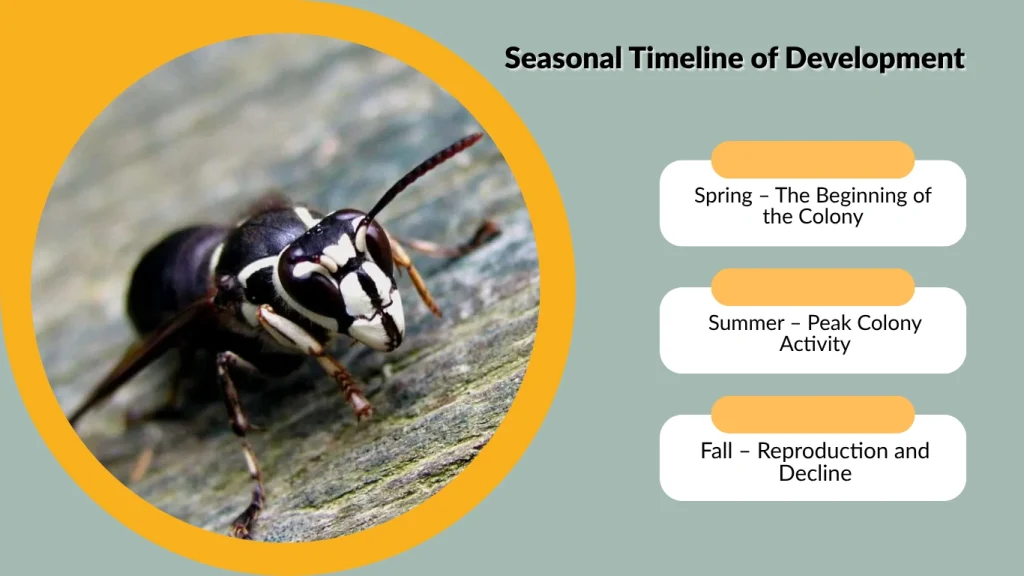
The entire colony operates in a seasonal rhythm, with different stages dominating each part of the year.
Spring – The Beginning of the Colony
Spring marks the start of the colony. The lone queen emerges from her winter shelter and begins constructing a new nest. She lays eggs and nurtures the first generation of workers by herself. This period is critical, as the success of the colony depends on her survival and productivity.
Summer – Peak Colony Activity
By early to mid-summer, a full workforce of female hornets supports the queen. The nest can grow rapidly, housing up to 400–700 individuals. During this time, the colony is at its peak size and most aggressive. The queen continues to lay eggs, and workers expand the nest and feed developing larvae.
Fall – Reproduction and Decline
As days shorten, the queen starts producing male drones and fertile females (future queens). After mating, males die shortly afterward. The original queen and remaining workers also begin to die off as food becomes scarce and temperatures drop. The newly mated queens leave the nest to find shelter and hibernate.
Winter – End of the Colony
Only the fertilized queens survive through winter. The rest of the colony — including the nest — perishes. Bald-faced hornets never reuse old nests, and each queen will build a brand-new one the following spring.
How Long Do Bald-Faced Hornets Live?
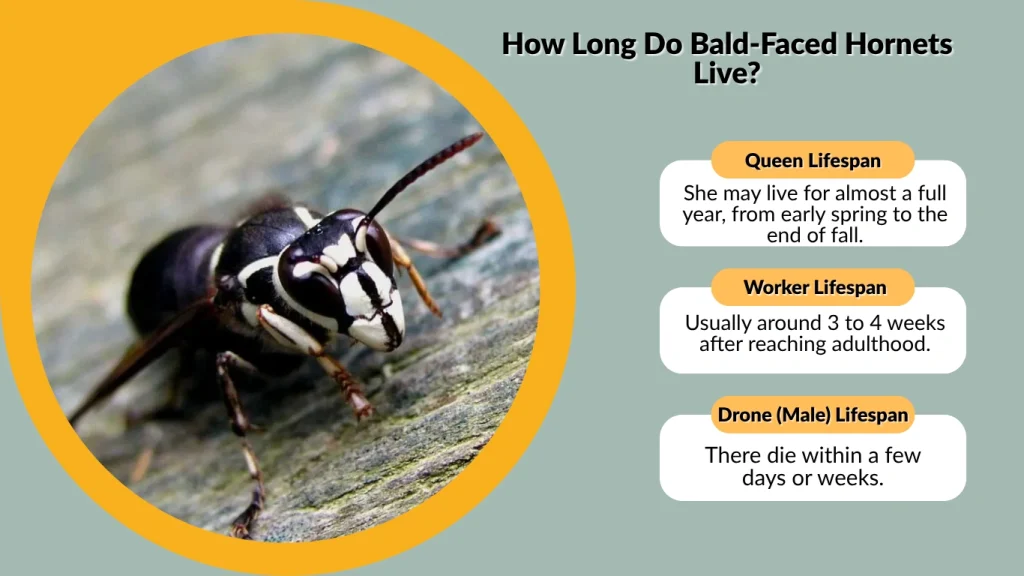
Their lifespan varies significantly based on their role within the colony.
Queen Lifespan
A queen hornet is the longest-living member of the colony. After overwintering, she may live for almost a full year, from early spring to the end of fall. Her job is solely reproductive once the first workers are born.
Worker Lifespan
Workers live significantly shorter lives — usually around 3 to 4 weeks after reaching adulthood. Their high-risk responsibilities, such as foraging and nest defense, often lead to early deaths due to predators or environmental hazards.
Drone (Male) Lifespan
Male bald-faced hornets, also known as drones, have the shortest life spans. They are born in late summer, mate with queens shortly after emerging, and then die within a few days or weeks. They do not contribute to nest maintenance or food collection.
Factors That Affect Lifespan
Several factors influence how long bald-faced hornets survive:
Weather Conditions
Warm and temperate conditions promote rapid development and longer activity periods. However, cold weather, especially early frosts, can quickly wipe out the entire colony. Harsh winters may even kill hibernating queens.
Predators and Natural Enemies
Birds like woodpeckers, raccoons, and larger hornets are known to attack bald-faced hornet nests. Some parasites, including beetles and flies, lay eggs inside hornet nests, weakening the colony from within.
Human Interference
Humans often destroy nests located near homes for safety reasons. Pest control sprays and physical nest removal cut the hornet lifespan short, often wiping out colonies in their prime.
Do Bald-Faced Hornets Reuse Nests?
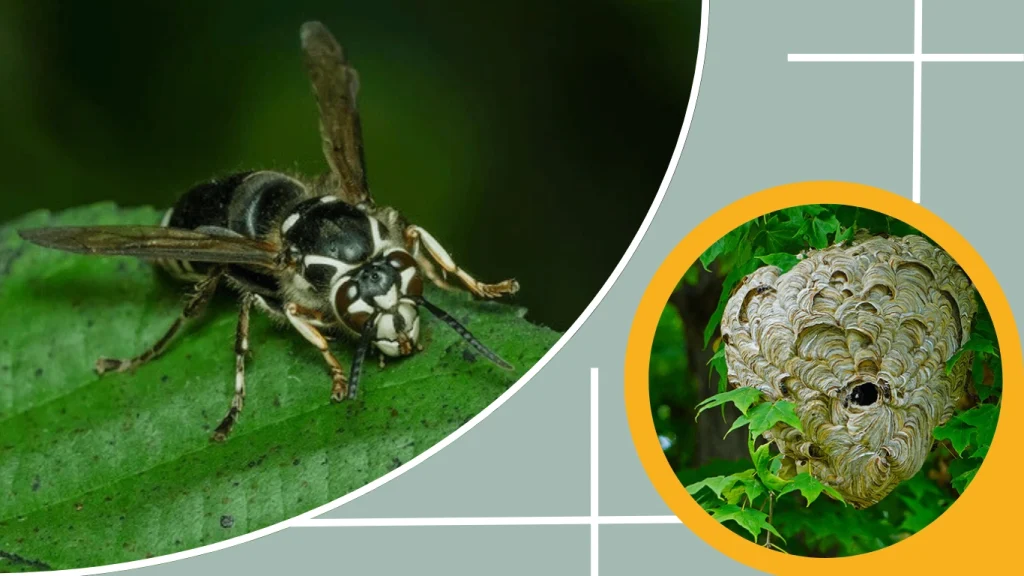
Despite building intricate and sizable nests, bald-faced hornets do not reuse them. Once the colony dies off in fall or early winter, the nest is left abandoned and begins to deteriorate. The structure cannot survive harsh weather, and any potential reuse would also pose parasite and disease risks to the new generation.
Bald-Faced Hornet Queen Behavior in Winter
The survival of the species depends entirely on the success of the mated queens.
Hibernation Spots
Before the first frost, fertilized queens leave the nest and seek sheltered locations such as under bark, in logs, soil cavities, or even attics and sheds. They enter a hibernation-like state called diapause.
Survival Chances
Many queens do not survive winter due to predation, starvation, or freezing. However, those who make it through will emerge in spring to begin the life cycle again. Only one or a few queens from hundreds born in a season will successfully establish new colonies.
FAQs About Bald-Faced Hornet Life Cycle and Lifespan
How long does it take a bald-faced hornet to become an adult?
It usually takes about 21 to 28 days from the egg stage to becoming a fully developed adult hornet.
Can bald-faced hornets live through winter?
No. Only fertilized queens survive the winter by hibernating. Workers and drones die by early winter.
When do bald-faced hornets die off?
Most die off in late fall, typically after the first frost. Drones die shortly after mating, and workers perish when the colony begins to collapse.
How long does a bald-faced hornet colony last?
A colony lasts a single season, from early spring (when the queen starts it) to late fall (when the colony naturally collapses).
What is the biggest nest size recorded for bald-faced hornets?
Some nests can grow over 2 feet long and house over 700 individuals at their peak, especially in warm climates with long summers.
Final Thoughts
The bald-faced hornet’s life cycle is a remarkable blend of precision, teamwork, and seasonal adaptation. From a single queen building the nest in spring to hundreds of workers defending it in summer, and finally to the colony’s quiet collapse in fall — it’s a powerful reminder of nature’s rhythm.
Understanding their life stages not only helps you respect their ecological role but also prepares you to manage potential conflicts safely and responsibly. Whether you’re observing them in the wild or dealing with a nest near your home, knowing their timeline can make all the difference.
