
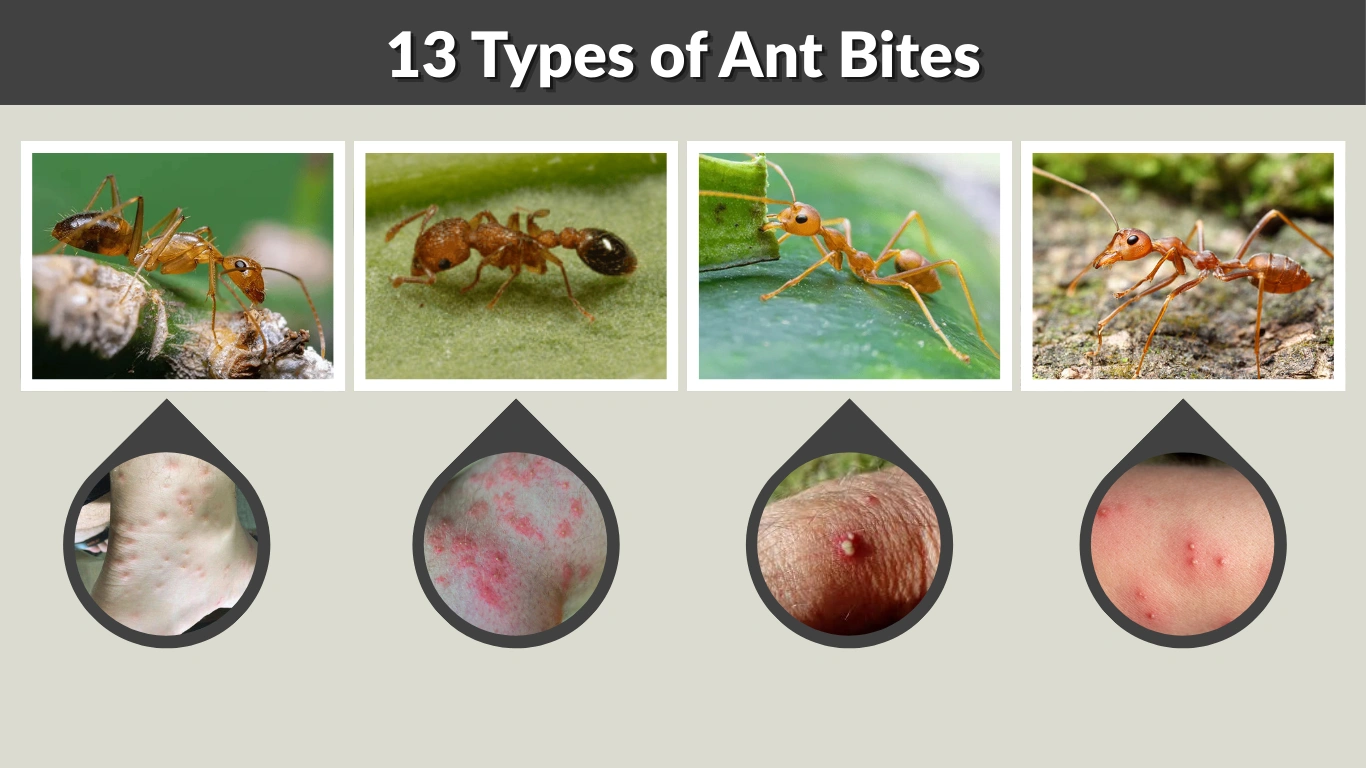
Ant bites vary widely in pain, symptoms, and severity depending on the species involved. While some ants cause only mild irritation, others can deliver extremely painful bites or stings and may even trigger severe allergic reactions. Certain species attack in large numbers, increasing the risk of complications. Understanding the different types of ant bites helps with quick identification, proper treatment, and knowing when medical attention is necessary. Below are 13 types of ants known to bite humans, explained with their identification, symptoms, allergic reactions, and treatment options.
1. Fire Ant Bite

Fire ant bites are among the most painful and aggressive ant-related injuries. Fire ants are known for attacking in groups and delivering multiple stings at once. Their venom causes a burning sensation, which is why they are called “fire” ants. These ants are common in warm regions and often build mound-shaped nests in soil, lawns, and gardens.
Identification
- Reddish-brown to dark brown body
- Small size, usually 2–6 mm
- Aggressive behavior when disturbed
- Builds visible soil mounds
- Bites and stings repeatedly in a circular pattern
Symptoms
Fire ant bites cause immediate pain followed by intense burning and itching. Within a few hours, red swollen bumps appear, often forming white, fluid-filled pustules. These pustules may last several days and can scar if scratched or infected. Multiple stings can cause significant discomfort and swelling.
Allergic Reaction
Some individuals may experience allergic reactions to fire ant venom. Symptoms can include severe swelling, hives, dizziness, nausea, difficulty breathing, or a rapid heartbeat. In rare cases, fire ant bites can trigger anaphylaxis, a life-threatening condition that requires immediate medical attention.
Treatment
Mild fire ant bites can be treated by washing the area with soap and water to prevent infection. Applying cold compresses helps reduce pain and swelling. Antihistamines and hydrocortisone creams can relieve itching. For severe reactions, oral steroids or epinephrine may be required under medical supervision.
2. Bullet Ant Bite

Bullet ant bites are considered one of the most painful insect stings in the world. The pain is often compared to being shot, which is how the ant got its name. Bullet ants are large, aggressive ants found mainly in tropical rainforests, and their venom causes intense, long-lasting pain.
Identification
- Large ant, about 18–30 mm long
- Dark brown to black body
- Long legs and visible mandibles
- Found in tropical forests
- Extremely defensive when threatened
Symptoms
A bullet ant bite causes immediate, extreme pain that can last up to 24 hours or longer. The pain is often described as sharp, burning, and throbbing. Swelling, redness, and localized muscle spasms may occur near the bite area. In some cases, the pain can radiate to nearby parts of the body.
Allergic Reaction
Although rare, some people may experience allergic reactions to bullet ant venom. Symptoms can include severe swelling, nausea, fever, sweating, and weakness. In extreme cases, victims may feel temporary paralysis or uncontrollable shaking. Anaphylactic reactions are uncommon but possible and require urgent medical care.
Treatment
There is no specific antidote for bullet ant bites. Treatment focuses on pain management and preventing infection. Cleaning the bite area with soap and water is essential. Ice packs can reduce swelling, while pain relievers and antihistamines help manage discomfort. Severe symptoms may require medical attention and prescription medications.
3. Army Ant Bite

Army ant bites are painful and often occur in large numbers because these ants attack in massive swarms. Unlike many ants, army ants do not build permanent nests and are constantly on the move. When threatened, they bite aggressively using strong mandibles, making their attacks especially dangerous.
Identification
- Medium to large-sized ants
- Reddish-brown to dark brown body
- Strong, curved mandibles
- Travels in large swarming columns
- Lacks permanent nests
Symptoms
Army ant bites cause sharp pain at the moment of the bite, followed by redness and swelling. Because attacks usually involve multiple ants, victims may have dozens or even hundreds of bites. The bite marks often appear as small red welts and may become itchy or sore for several days.
Allergic Reaction
Allergic reactions to army ant bites are uncommon but possible. Symptoms may include excessive swelling, hives, headache, nausea, or dizziness. In rare cases, severe reactions such as difficulty breathing or rapid heart rate may occur, especially after multiple bites.
Treatment
Immediate removal from the area is the first step, as army ants continue biting while on the body. Wash the affected skin with soap and water to prevent infection. Cold compresses help reduce pain and swelling. Antihistamines and anti-itch creams can relieve irritation. Seek medical care if signs of infection or severe allergic reactions develop.
4. Carpenter Ant Bite
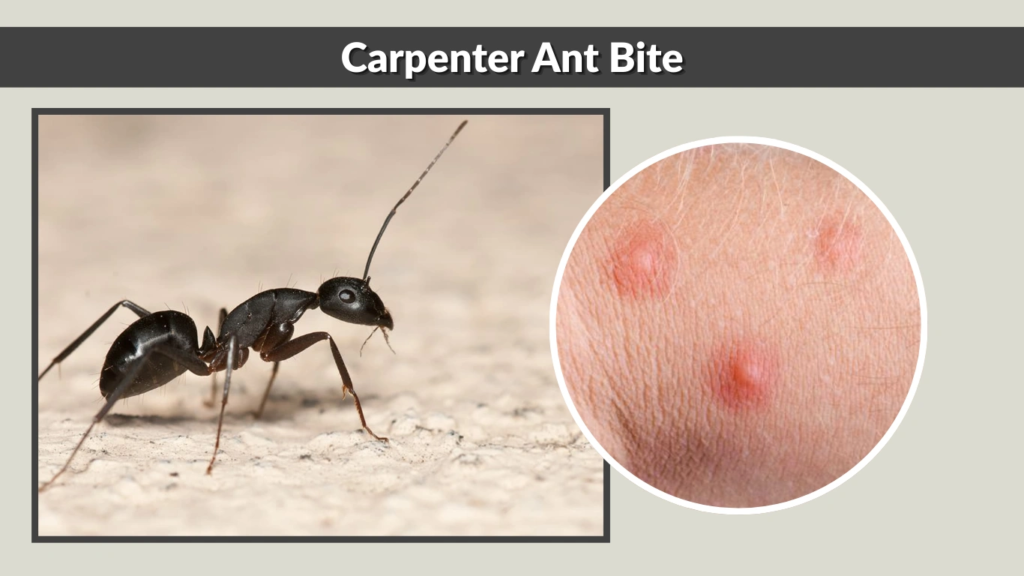
Carpenter ant bites are less venomous than stinging ants but can still be painful due to their strong jaws. These ants are known for nesting in wood, where they carve tunnels to build colonies. Bites usually occur when carpenter ants are disturbed or handled.
Identification
- Large ants, usually 6–12 mm long
- Black, red, or black-and-red coloration
- Powerful mandibles
- Smooth, rounded thorax
- Commonly found in wooden structures
Symptoms
Carpenter ant bites cause a sharp pinching sensation at the bite site. Redness, mild swelling, and localized pain are common. Some species may spray formic acid into the wound, increasing irritation and causing a burning feeling. Symptoms usually remain mild and fade within a few days.
Allergic Reaction
Allergic reactions to carpenter ant bites are rare. However, sensitive individuals may experience increased swelling, itching, or rash around the bite area. In very rare cases, systemic reactions such as hives or dizziness can occur, especially after multiple bites.
Treatment
Treatment is usually simple and focuses on wound care. Clean the bite area with soap and water to prevent infection. Applying a cold compress can reduce swelling and pain. Over-the-counter antihistamines or anti-inflammatory creams help relieve itching and irritation. Medical attention is only necessary if symptoms worsen or infection develops.
5. Bulldog Ant Bite
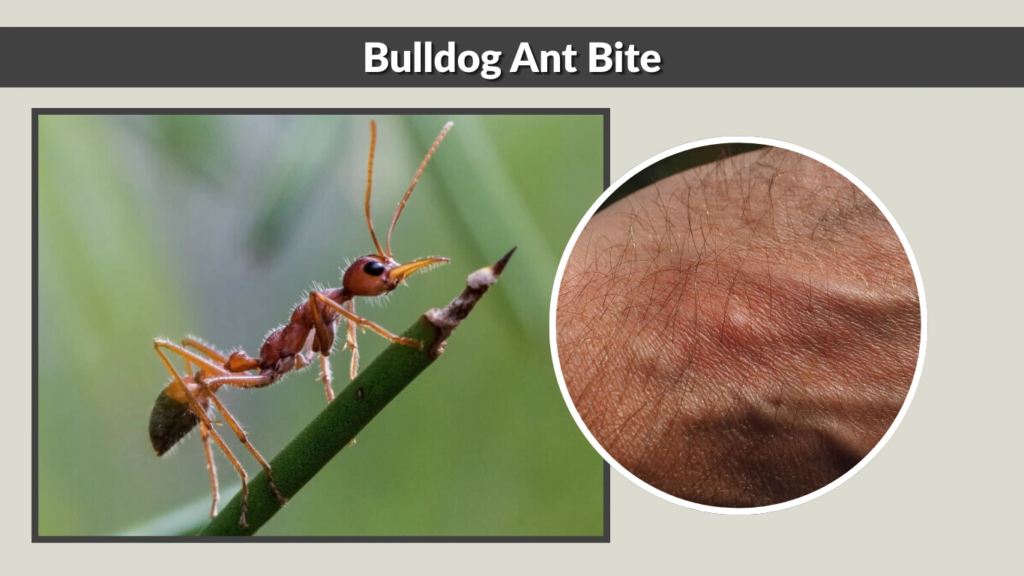
Bulldog ant bites are extremely painful and are often combined with a sting, making them particularly dangerous. These aggressive ants are native to Australia and are known for their strong jaws, excellent vision, and willingness to attack when threatened.
Identification
- Large ants, 15–40 mm long
- Reddish-brown to black body
- Long legs and large eyes
- Powerful mandibles and visible stinger
- Found mainly in Australia
Symptoms
A bulldog ant bite causes immediate, intense pain followed by redness and swelling. Because they can both bite and sting, the affected area may feel burning and throbbing. Swelling can spread beyond the bite site, and pain may last several hours or longer.
Allergic Reaction
Bulldog ants are a leading cause of ant-related anaphylaxis in Australia. Allergic reactions may include severe swelling, hives, dizziness, nausea, difficulty breathing, and rapid heartbeat. In sensitive individuals, even a single sting can trigger life-threatening anaphylaxis requiring emergency treatment.
Treatment
Wash the bite area with soap and water as soon as possible. Apply a cold compress to reduce pain and swelling. Antihistamines can help with itching and swelling, while pain relievers reduce discomfort. Severe allergic reactions require immediate medical attention and treatment with epinephrine.
6. Jack Jumper Ant Bite
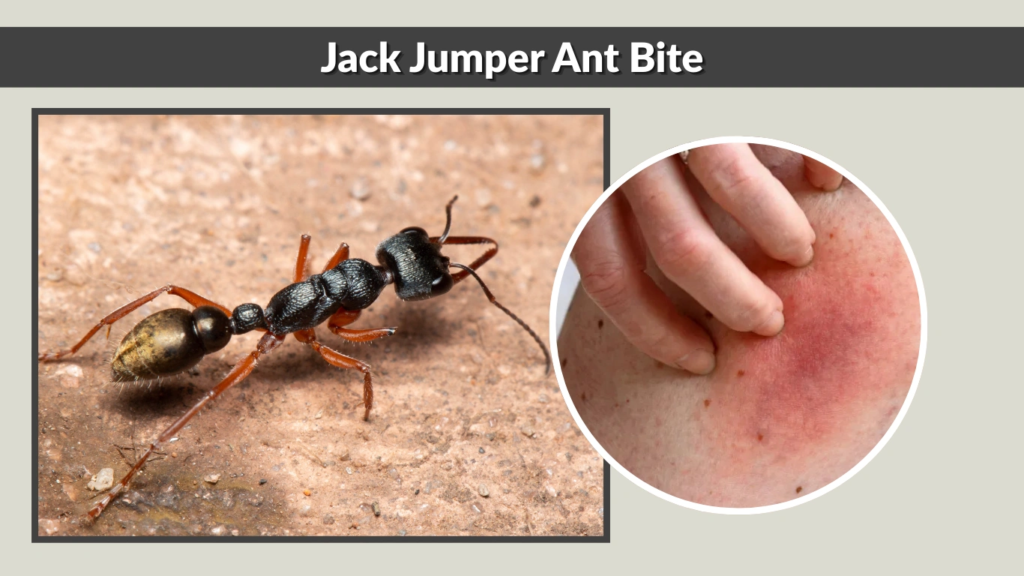
Jack jumper ant bites are extremely painful and potentially dangerous due to the ant’s potent venom. These aggressive ants are native to Australia and are known for their ability to jump and sting repeatedly. Their bites are considered medically significant because of the high risk of allergic reactions.
Identification
- Medium-sized ants, about 10–14 mm long
- Black body with orange or reddish legs
- Long legs and large eyes
- Capable of jumping when disturbed
- Found mainly in Australia
Symptoms
A jack jumper ant bite causes sudden, sharp pain followed by burning and swelling. Redness and itching develop quickly at the bite site. In some cases, blisters or welts may form, and pain can persist for several hours. Multiple stings increase the severity of symptoms.
Allergic Reaction
Jack jumper ants are one of the most common causes of insect-related anaphylaxis in Australia. Allergic reactions may include hives, severe swelling, nausea, dizziness, difficulty breathing, and collapse. Even one sting can trigger a life-threatening reaction in sensitive individuals.
Treatment
Clean the affected area with soap and water to reduce infection risk. Apply ice packs to control pain and swelling. Antihistamines can help relieve itching and inflammation. Anyone with a known allergy should use an epinephrine auto-injector immediately and seek emergency medical care.
7. Weaver Ant Bite
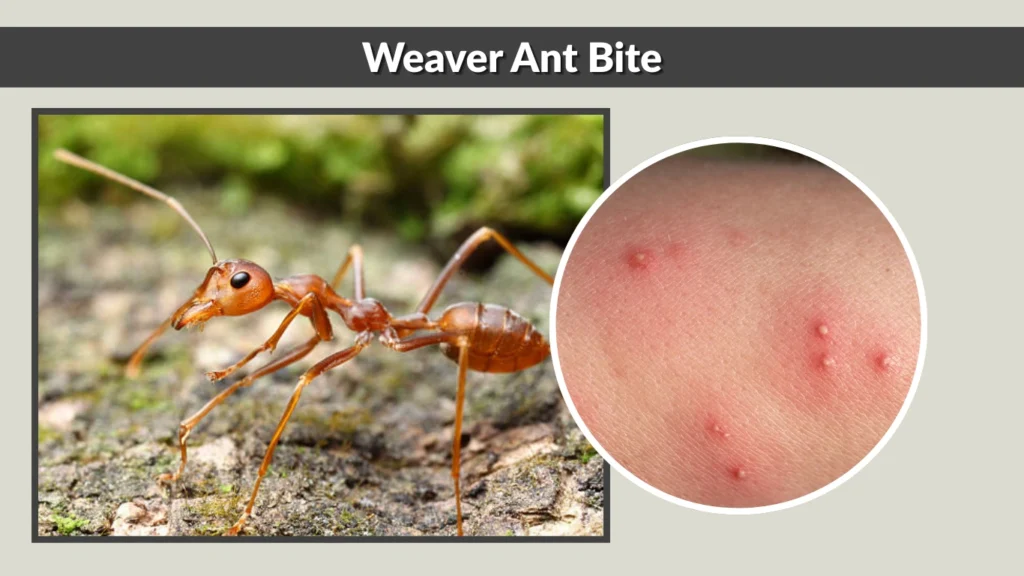
Weaver ant bites are painful and often occur in clusters because these ants aggressively defend their nests. Weaver ants are known for building leaf nests by “weaving” leaves together and are commonly found in trees in tropical and subtropical regions.
Identification
- Medium-sized ants, about 8–10 mm long
- Reddish-orange to green body
- Long legs and strong mandibles
- Builds nests by joining leaves together
- Found mainly on trees
Symptoms
Weaver ant bites cause immediate sharp pain followed by a burning sensation. Redness, swelling, and itching are common at the bite site. Because they often attack in groups, multiple bites can occur, increasing discomfort. Some species also spray formic acid, which intensifies irritation.
Allergic Reaction
Allergic reactions to weaver ant bites are uncommon but possible. Symptoms may include excessive swelling, hives, itching beyond the bite area, or mild nausea. Severe allergic reactions are rare but can occur in highly sensitive individuals.
Treatment
Wash the affected area thoroughly with soap and water. Apply a cold compress to reduce swelling and pain. Antihistamine creams or oral antihistamines can help control itching. Avoid scratching to prevent infection, and seek medical care if swelling or pain becomes severe.
8. Harvester Ant Bite
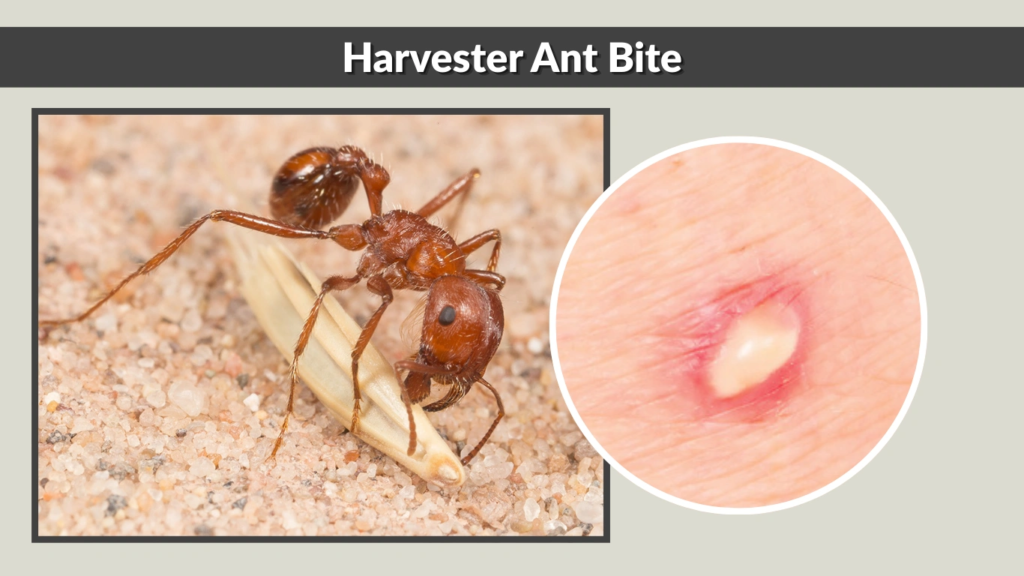
Harvester ant bites are painful and are often accompanied by a sting that delivers venom. These ants are known for collecting and storing seeds and are commonly found in dry, open habitats. When their nests are disturbed, harvester ants can become highly aggressive.
Identification
- Medium to large ants, 5–15 mm long
- Red, brown, or black body
- Large head with strong mandibles
- Ground-nesting species with visible soil mounds
- Common in dry and sandy areas
Symptoms
A harvester ant bite causes sharp pain followed by burning and swelling. Redness and itching develop quickly, and a small white pustule may form at the sting site. Pain can last for several hours, especially after multiple bites.
Allergic Reaction
Some people may experience allergic reactions to harvester ant venom. Symptoms include intense swelling, hives, dizziness, nausea, or difficulty breathing. In rare cases, severe reactions such as anaphylaxis can occur and require immediate medical attention.
Treatment
Clean the bite area with soap and water as soon as possible. Apply a cold compress to reduce swelling and pain. Antihistamines and hydrocortisone creams help relieve itching. Severe reactions require emergency care and treatment with epinephrine.
9. Driver Ant Bite
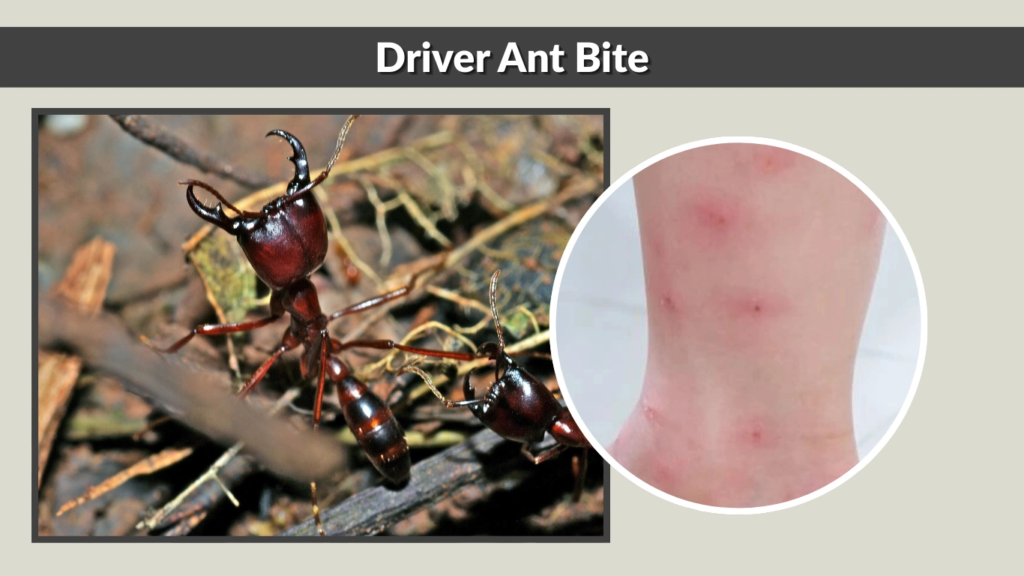
Driver ant bites are extremely painful and dangerous due to their aggressive swarming behavior. These ants attack in large numbers and use powerful mandibles to bite and latch onto skin. Driver ants are most common in parts of Africa and are feared for the sheer scale of their attacks.
Identification
- Medium to large ants
- Dark brown to black body
- Very strong, scissor-like mandibles
- Moves in massive swarms
- Common in tropical regions
Symptoms
A driver ant bite causes immediate, sharp pain where the ant clamps onto the skin. Because the ants bite and hold on, removing them can tear the skin, leading to bleeding wounds. Multiple bites can result in intense pain, swelling, redness, and soreness that may last several days.
Allergic Reaction
Allergic reactions to driver ant bites are uncommon but possible, especially after numerous bites. Symptoms may include widespread swelling, hives, dizziness, nausea, or fever. Severe reactions are rare but can occur in sensitive individuals or children exposed to large swarms.
Treatment
Quickly move away from the swarm and remove ants carefully, preferably brushing them off rather than pulling. Clean all bite wounds with soap and water to prevent infection. Apply cold compresses to reduce pain and swelling. Pain relievers and antihistamines can help manage symptoms. Seek medical care if wounds become infected or systemic symptoms appear.
10. Trap-Jaw Ant Bite
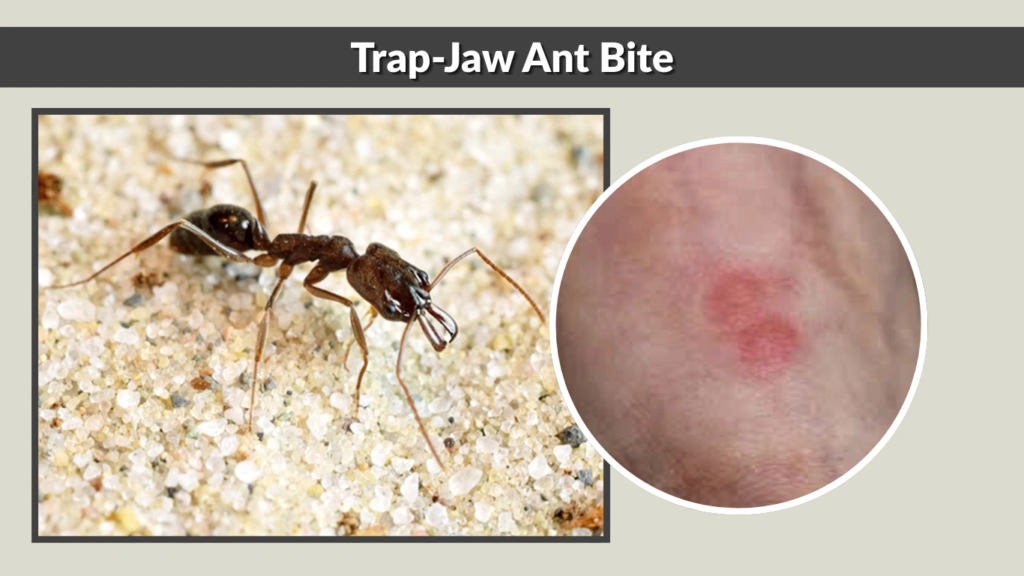
Trap-jaw ant bites are sudden and painful due to the ant’s extremely fast mandibles. These ants are known for snapping their jaws shut at incredible speed to capture prey or defend themselves. While they rarely attack humans, bites can occur if the ant is disturbed.
Identification
- Medium-sized ants, about 7–13 mm long
- Dark brown, black, or reddish body
- Large head with long, straight mandibles
- Mandibles snap shut rapidly
- Found in soil, leaf litter, or rotting wood
Symptoms
A trap-jaw ant bite causes a sharp, pinching pain at the moment of contact. Mild swelling, redness, and soreness may follow. Some species can also deliver a sting, increasing discomfort and causing a brief burning sensation. Symptoms usually remain localized and short-lived.
Allergic Reaction
Allergic reactions to trap-jaw ant bites are rare. Sensitive individuals may experience increased swelling, itching, or rash around the bite area. Systemic allergic reactions are uncommon but possible, particularly after multiple bites or stings.
Treatment
Wash the affected area with soap and water to prevent infection. Apply a cold compress to reduce swelling and pain. Over-the-counter antihistamines or anti-itch creams can help relieve irritation. Medical attention is rarely needed unless symptoms worsen or signs of infection appear.
11. Leafcutter Ant Bite

Leafcutter ant bites are painful mainly due to their powerful jaws rather than venom. These ants are famous for cutting and carrying leaves to cultivate fungus, which they use as food. Bites usually occur when their trails or nests are disturbed.
Identification
- Medium to large ants, 6–20 mm long
- Reddish-brown body with a spiny appearance
- Large head with strong cutting mandibles
- Seen carrying leaf fragments
- Found in tropical and subtropical regions
Symptoms
A leafcutter ant bite causes an immediate sharp, pinching pain. Redness, swelling, and soreness develop at the bite site. Because their mandibles are very strong, the bite may break the skin and cause minor bleeding. Pain is usually localized and fades within a few hours to a couple of days.
Allergic Reaction
Allergic reactions to leafcutter ant bites are uncommon. Some individuals may experience increased swelling, itching, or mild rash around the bite area. Systemic allergic reactions are rare but may occur in people who are highly sensitive or bitten multiple times.
Treatment
Clean the bite thoroughly with soap and water to reduce the risk of infection. Apply a cold compress to relieve pain and swelling. Antiseptic creams help prevent infection, while antihistamines can reduce itching and inflammation. Seek medical attention if signs of infection such as redness spreading, pus, or fever appear.
12. Pavement Ant Bite
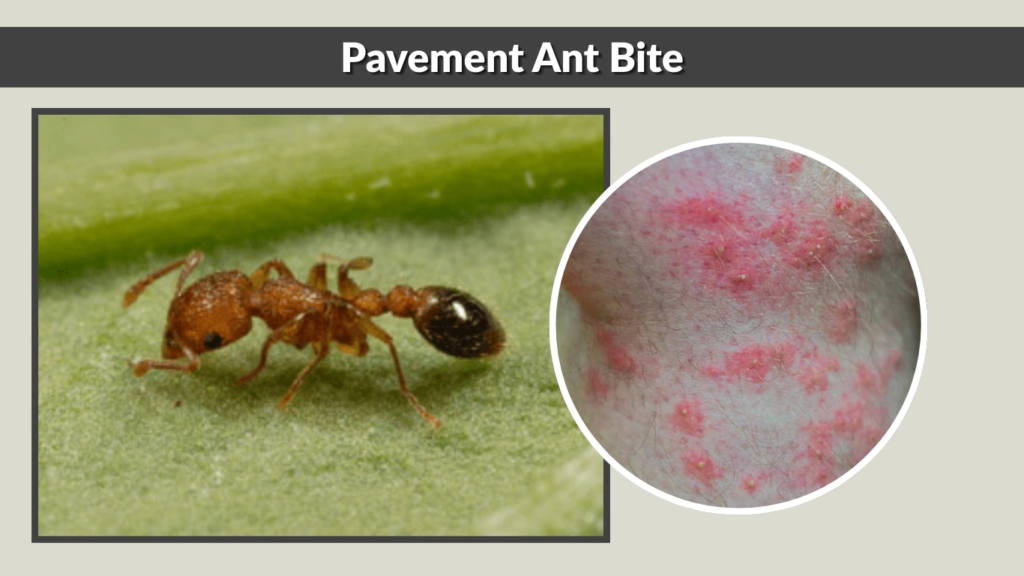
Pavement ant bites are generally mild but can still cause irritation and discomfort. These small ants are commonly found in urban areas, nesting under sidewalks, driveways, and building foundations. Bites usually occur when pavement ants are accidentally disturbed indoors or outdoors.
Identification
- Small ants, about 2.5–4 mm long
- Dark brown to black body
- Fine grooves on head and thorax
- Nests under pavement, stones, or concrete
- Common in cities and residential areas
Symptoms
A pavement ant bite causes a brief pinching sensation followed by mild redness and itching. Slight swelling may occur, but pain is usually minimal. In most cases, symptoms disappear within a few hours and do not develop into pustules or blisters.
Allergic Reaction
Allergic reactions to pavement ant bites are rare. However, sensitive individuals may experience increased redness, itching, or localized swelling. Systemic allergic reactions are extremely uncommon and usually associated with multiple bites.
Treatment
Wash the bite area with soap and water to keep it clean. Apply a cold compress to reduce minor swelling or irritation. Anti-itch creams or oral antihistamines can help relieve itching. Medical treatment is rarely necessary unless signs of infection or unusual reactions occur.
13. Crazy Ant Bite
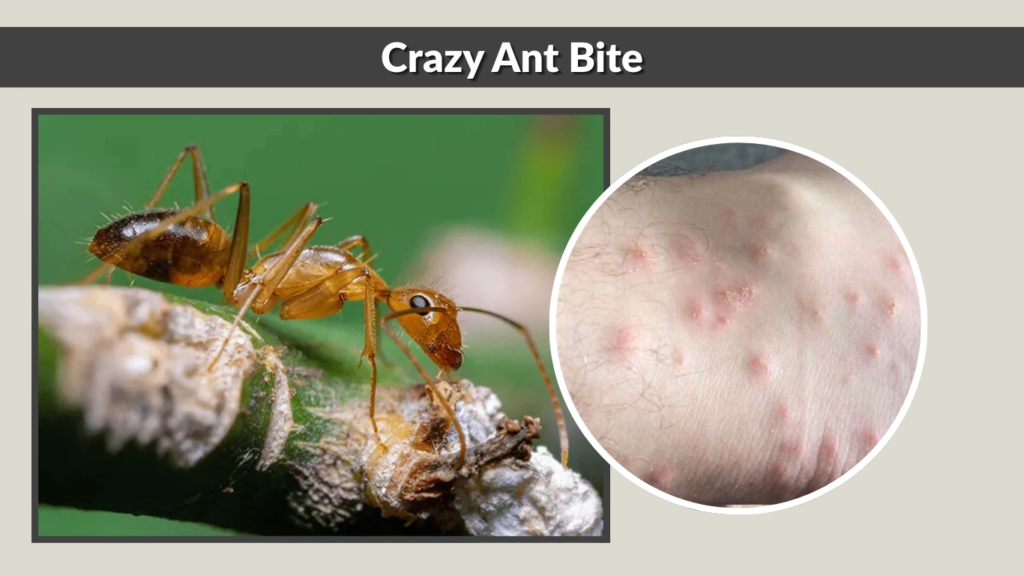
Crazy ant bites are usually mild but can be irritating, especially when ants attack in large numbers. These ants get their name from their fast, erratic movements. While crazy ants bite more often than they sting, some species can spray formic acid, increasing discomfort.
Identification
- Small to medium ants, about 2–5 mm long
- Dark brown to black body
- Long legs and antennae
- Erratic, fast-running movement
- Common around homes, gardens, and electrical equipment
Symptoms
A crazy ant bite causes a mild pinching or stinging sensation. Redness, slight swelling, and itching may develop at the bite site. When formic acid is sprayed, the skin may feel a burning or tingling sensation. Symptoms are usually mild and resolve within a short time.
Allergic Reaction
Allergic reactions to crazy ant bites are uncommon. Some individuals may experience increased swelling, redness, or itching, especially after multiple bites. Severe allergic reactions such as difficulty breathing or widespread hives are very rare but possible in highly sensitive individuals.
Treatment
Clean the affected area with soap and water to remove any acid residue and prevent infection. Apply a cold compress to reduce irritation and swelling. Over-the-counter antihistamines or anti-itch creams can help relieve discomfort. Medical attention is rarely needed unless symptoms worsen or signs of infection appear.
