
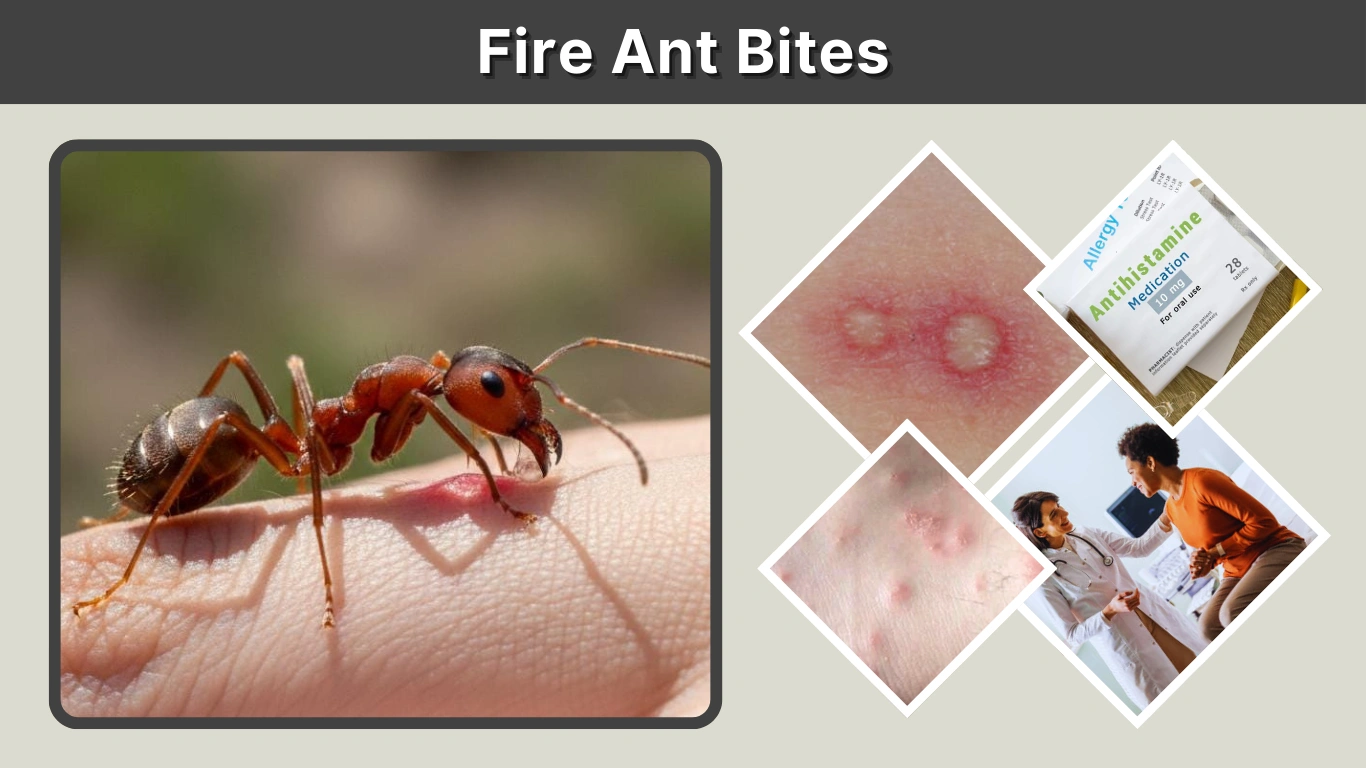
Fire ant bites are a common outdoor hazard, especially in warm climates where fire ants thrive. Unlike many insects, fire ants bite and sting repeatedly, injecting venom that causes burning pain, swelling, and itchy blisters. While most bites are mild, some can lead to infections or serious allergic reactions. Understanding fire ant bite identification, symptoms, and treatment helps prevent complications and ensures faster recovery for both humans and pets.
Fire Ant Bite Identification
Fire ant bites have distinct characteristics that make them easier to recognize than other insect bites:
- Small red bumps that appear shortly after the bite
- Intense burning or stinging sensation
- White, pus-filled pustules forming within 24 hours
- Bites often appear in clusters or lines
- Commonly found on feet, ankles, legs, and arms
These pustules are a key identifying feature and should not be confused with pimples or mosquito bites.
What Happens When a Fire Ant Bites
When a fire ant bites, it first uses its jaws to latch onto the skin. Once attached, it pivots in a circular motion and delivers multiple stings, injecting venom with each sting. This venom contains toxic alkaloids responsible for the intense burning sensation.
Within minutes, the bite site becomes red and swollen. Over the next several hours, itching increases, and a white pustule often forms. These pustules are sterile but can become infected if scratched or popped.
The severity of the reaction depends on the number of stings, bite location, and the individual’s sensitivity to fire ant venom.
Fire Ant Bite Symptoms
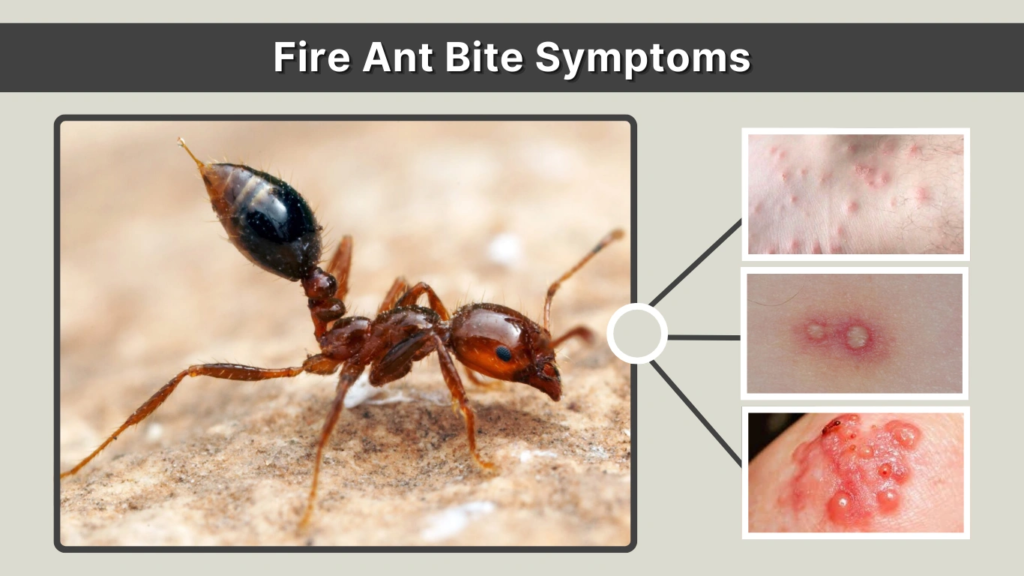
Fire ant bite symptoms can range from mild discomfort to more severe reactions:
- Immediate sharp pain or burning
- Redness and localized swelling
- Persistent itching
- Formation of white, fluid-filled blisters
- Tenderness around the bite area
Most symptoms peak within 24–48 hours and gradually improve over several days.
Fire Ant Bite Reaction vs Allergic Reaction
Normal Fire Ant Bite Reaction
A typical fire ant bite reaction includes redness, swelling, itching, and pustule formation at the sting site. These symptoms usually remain localized and resolve within a week without medical treatment.
Fire Ant Bites Allergic Reaction
An allergic reaction is more serious and affects areas beyond the bite site. Symptoms may include widespread hives, facial swelling, nausea, dizziness, rapid heartbeat, or difficulty breathing. This type of reaction requires immediate medical attention, as it can be life-threatening.
Fire Ant Bite Swelling: What’s Normal and What’s Not
Swelling is a normal part of the body’s response to fire ant venom. Mild to moderate swelling around the bite is expected and often lasts a few days. The skin may feel tight, warm, and itchy during this time.
However, excessive swelling that continues to worsen after 48 hours may signal infection or an allergic response. Swelling in sensitive areas such as the face, hands, or joints should be monitored closely.
If swelling spreads rapidly, becomes extremely painful, or is accompanied by fever or breathing issues, medical care should be sought immediately.
Fire Ant Bite Treatment

Prompt treatment can reduce discomfort and lower the risk of complications:
- Wash the bite area with soap and water
- Apply a cold compress to reduce pain and swelling
- Use hydrocortisone or calamine lotion for itching
- Take oral antihistamines to control allergic symptoms
- Avoid scratching or popping pustules
Most fire ant bites heal on their own with proper care.
Home Remedies for Fire Ant Bites
Several natural remedies can help reduce itching, swelling, and irritation caused by fire ant bites:
- Baking soda mixed with water to form a soothing paste
- Aloe vera gel to cool the skin and reduce inflammation
- Cold milk compress to calm burning sensations
- Oatmeal baths for multiple bites
- Raw honey to support healing and reduce redness
These remedies work best for mild reactions and should be used alongside basic first-aid care.
Infected Fire Ant Bite: Signs and Symptoms
Although fire ant bite pustules are sterile, infection can occur if the skin is broken. Watch closely for the following warning signs:
- Increasing redness spreading beyond the bite site
- Warmth and throbbing pain
- Yellow or green discharge
- Fever or chills
- Red streaks extending from the bite
Any of these symptoms may indicate a developing infection that needs medical attention.
Fire Ant Bite Infection Treatment
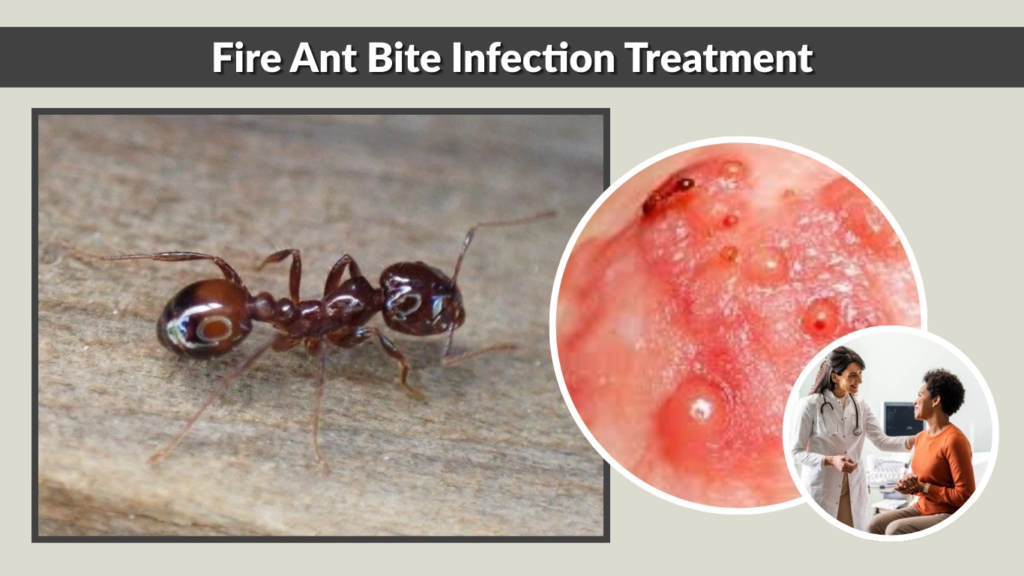
Infected fire ant bites require more than home care. A healthcare provider may recommend topical antibiotic ointments or prescribe oral antibiotics if the infection is spreading. Keeping the area clean and dry is essential during healing.
Pustules should never be popped, as this increases the risk of bacteria entering the skin. Covering the bite with a clean bandage can help protect it from further irritation.
Seek medical help immediately if symptoms worsen, fever develops, or the infection does not improve within a few days.
Fire Ant Bites on Dogs
Dogs are particularly vulnerable to fire ant bites because they may step on or disturb ant mounds. Bites commonly occur on the paws, legs, belly, and around the mouth.
- Excessive licking or chewing at the bite site
- Swelling of the face, paws, or muzzle
- Whining, limping, or sudden discomfort
- Red bumps or pustules on exposed skin
- Signs of allergic reactions, including difficulty breathing
If mild, rinse the area with cool water and apply a pet-safe antihistamine if approved by a veterinarian. Severe reactions require immediate veterinary care.
When to See a Doctor
Medical attention should be sought if any of the following occur:
- Signs of an allergic reaction
- Worsening swelling or severe pain
- Infection symptoms such as pus or fever
- Bites near the eyes, mouth, or genitals
- Fire ant bites affecting young children or older adults
Early treatment can prevent serious complications.
Prevention Tips to Avoid Fire Ant Bites
Reducing exposure is the best way to avoid fire ant bites:
- Avoid stepping on or disturbing fire ant mounds
- Wear closed-toe shoes and socks outdoors
- Use insect repellents in high-risk areas
- Inspect yards, parks, and pet areas regularly
- Treat fire ant infestations promptly
Consistent prevention greatly reduces bite risk.
FAQs
What does a fire ant bite look like?
A fire ant bite usually appears as a red bump that develops into a white, pus-filled pustule within 24 hours. Bites often occur in clusters and are accompanied by burning pain and itching.
How long do fire ant bite symptoms last?
Most fire ant bite symptoms last between three and seven days. Pain and swelling decrease within a few days, while pustules heal as they scab over if left undisturbed.
Can fire ant bites cause serious allergic reactions?
Yes, some individuals experience severe allergic reactions, including hives, swelling of the throat, difficulty breathing, dizziness, and nausea. These symptoms require immediate emergency care.
How do I know if a fire ant bite is infected?
An infected fire ant bite may show increasing redness, warmth, pus, fever, or red streaks spreading from the site. Medical evaluation is recommended if these symptoms appear.
Are fire ant bites dangerous for dogs?
Fire ant bites can be dangerous for dogs, especially if multiple stings occur or if the dog has an allergic reaction. Facial swelling, breathing issues, or extreme discomfort require prompt veterinary attention.
