

Sweat bees may be tiny, but their presence often creates big discomfort for humans. Named for their attraction to perspiration, these small insects are usually harmless unless provoked. However, when they sting, people can experience irritation ranging from mild pain to allergic reactions. Knowing how to identify a sweat bee sting, recognize its symptoms, and respond quickly is essential for comfort and safety.
What Are Sweat Bees?
Sweat bees are members of the Halictidae family, one of the largest groups of bees. They are small, usually between 0.125 to 0.5 inches long, and are often metallic green, blue, or black. Unlike honeybees, sweat bees are solitary, though some species live in small colonies.
The name “sweat bee” comes from their attraction to the salt in human sweat. They are often seen landing on skin, especially in warm outdoor settings. While most sweat bees are not aggressive, they will sting if swatted at or trapped against the skin. How to Keep Sweat Bees Away from Your Pool: Step by Step Guide
Identification of a Sweat Bee Sting
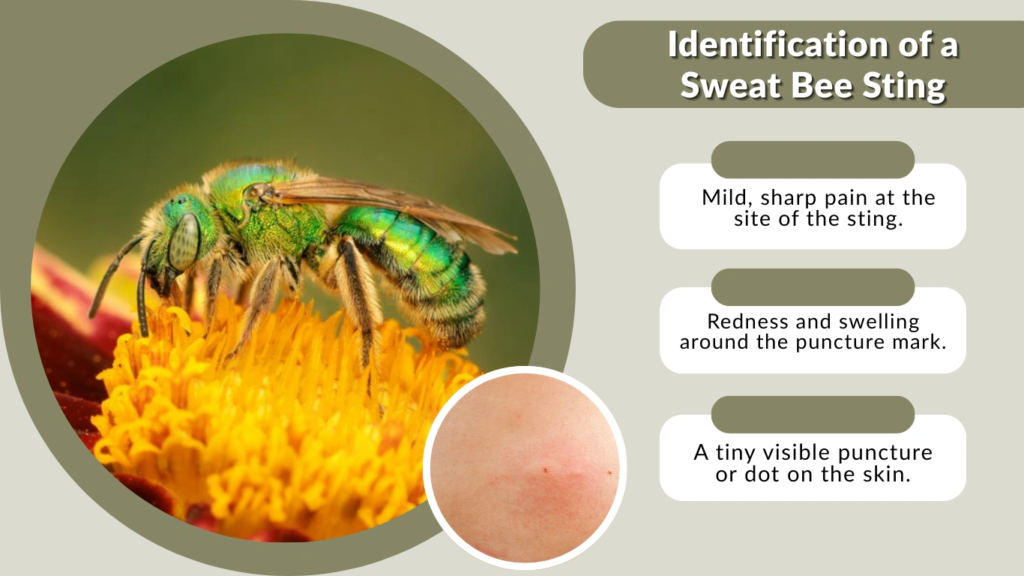
How to Recognize Sweat Bee Stings
Sweat bee stings are generally less painful than those from honeybees or wasps, but they can still cause noticeable irritation. Signs include:
- Mild, sharp pain at the site of the sting.
- Redness and swelling around the puncture mark.
- A tiny visible puncture or dot on the skin.
Unlike honeybees, sweat bees do not leave their stinger embedded in the skin, so removal is usually unnecessary.
Where Stings Usually Occur
Sweat bee stings typically happen on exposed skin such as:
- Arms
- Legs
- Neck
- Face
Because sweat bees are drawn to perspiration, they often land on sweaty areas and sting if accidentally pressed or swatted.
Symptoms of a Sweat Bee Sting
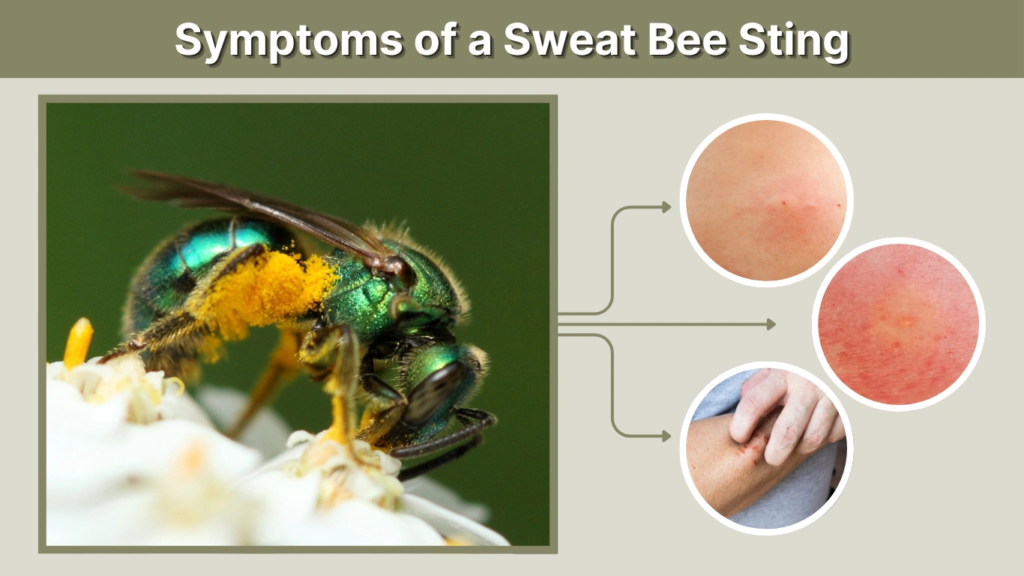
Common Symptoms
For most people, symptoms of a sweat bee sting are mild and temporary, lasting only a few hours to a couple of days. These include:
- A burning or stinging sensation immediately after the sting.
- Localized redness and swelling at the site.
- Mild itchiness as the sting begins to heal.
Less Common Symptoms
Some individuals may experience more pronounced effects, such as:
- Swelling that spreads beyond the sting site.
- Hives or raised bumps around the area.
- Longer-lasting irritation, especially in sensitive individuals.
These symptoms are usually not dangerous but may cause discomfort if untreated.
Reactions to Sweat Bee Stings
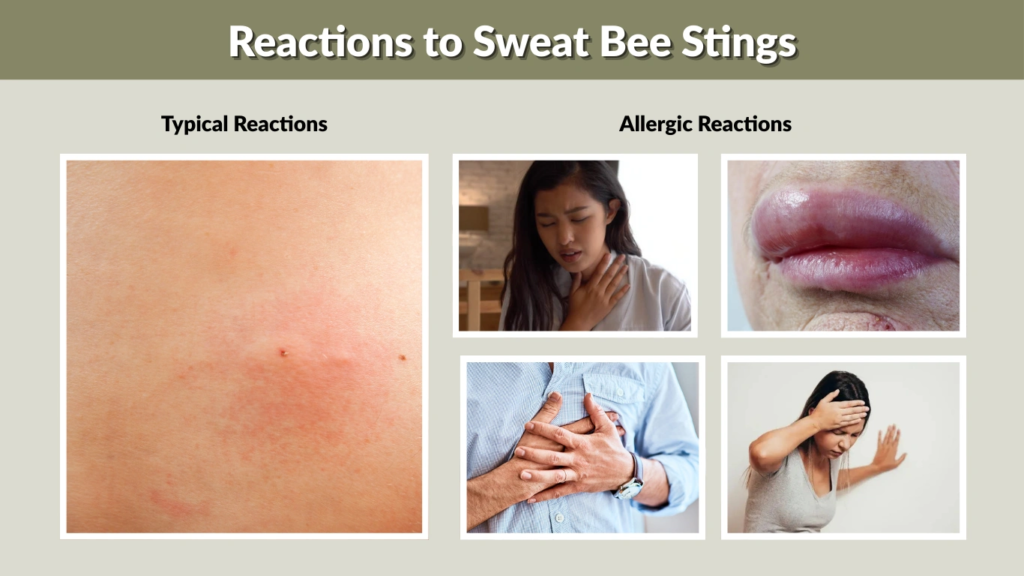
Typical Reactions
The majority of people experience only minor irritation from sweat bee stings. The pain is brief, and swelling usually subsides with simple home treatment. Compared to wasp or hornet stings, sweat bee stings are much less severe.
Allergic Reactions
In rare cases, sweat bee stings can trigger allergic responses. Symptoms may include:
- Difficulty breathing.
- Swelling of the lips, tongue, or throat.
- Dizziness or fainting.
- Rapid heartbeat.
This condition, known as anaphylaxis, is a medical emergency that requires immediate attention. People with known bee sting allergies should carry an epinephrine auto-injector (EpiPen) for emergencies.
Treatment of Sweat Bee Stings
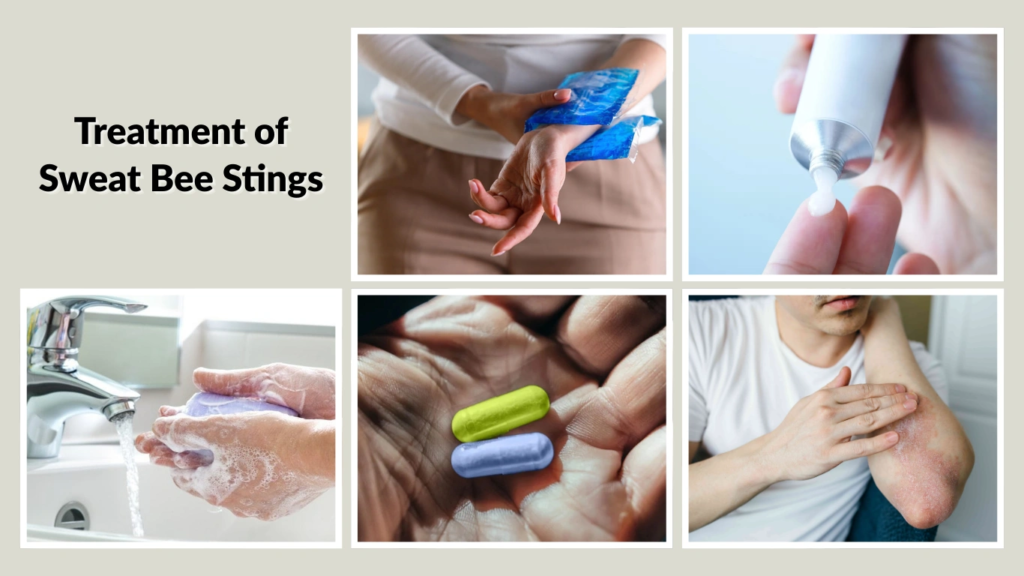
First Aid Steps
If you are stung by a sweat bee, prompt first aid can ease discomfort and prevent complications:
- Wash the area – Cleanse the sting site with mild soap and cool water to remove dirt, sweat, and any bee venom residue.
- Apply a cold compress – Place an ice pack or chilled cloth over the sting for 10–15 minutes to reduce swelling and numb pain.
- Use topical creams – Hydrocortisone cream or calamine lotion can relieve itching and redness. Antihistamine creams may also help with mild allergic reactions.
- Take oral antihistamines – Over-the-counter antihistamines like diphenhydramine (Benadryl) can minimize swelling and itching.
- Avoid scratching – Scratching increases irritation and raises the risk of infection.
Home Remedies
Many people find relief with simple home-based treatments:
- Baking soda paste: Mix baking soda with water and apply it directly to the sting to neutralize acidity and reduce itch.
- Aloe vera gel: Soothes inflammation and promotes healing of irritated skin.
- Honey: Natural antibacterial properties help prevent infection and provide a cooling effect.
- Apple cider vinegar: A dab on the sting can lessen discomfort.
These remedies are safe for mild stings, though they should be combined with proper hygiene.
When to Seek Medical Help
Most sweat bee stings heal on their own, but medical care is necessary if:
- You develop severe swelling spreading beyond the sting site.
- Symptoms of allergic reaction appear (trouble breathing, dizziness, throat swelling).
- The sting site shows signs of infection (increasing pain, pus, or warmth).
- Pain and redness persist for more than 3–4 days.
Prevention of Sweat Bee Stings

While sweat bees are less aggressive than wasps or hornets, you can reduce your chances of being stung by following these tips:
- Wear protective clothing: Light-colored, long-sleeved shirts and pants discourage bees from landing on exposed skin.
- Avoid strong fragrances: Perfumes, scented lotions, and even deodorants can attract sweat bees.
- Stay calm outdoors: If a sweat bee lands on you, gently brush it away rather than swatting, which provokes stings.
- Reduce sweat exposure: Wipe away perspiration when outdoors, especially in areas where sweat bees are active.
- Keep food covered: Like other bees, sweat bees may be drawn to sugary foods and drinks during picnics or outdoor meals.
Conclusion
Sweat bee stings are usually mild but can still cause discomfort. They are identifiable by localized pain, redness, and swelling, and they rarely result in severe reactions. Quick treatment with cold compresses, creams, or home remedies can relieve symptoms, while medical help should be sought if signs of allergy or infection appear. Preventive steps—such as wearing appropriate clothing and staying calm around bees—further reduce the risk. Understanding sweat bee stings ensures you can respond calmly and effectively if one happens.
FAQs
Are sweat bee stings dangerous?
Generally, sweat bee stings are not dangerous and cause only mild discomfort. However, individuals with severe bee sting allergies may face life-threatening reactions and should seek immediate medical care.
Do sweat bees leave their stinger in the skin?
No, sweat bees do not leave their stingers behind. Unlike honeybees, their stinger is smooth, allowing them to sting without detaching it.
How long do sweat bee stings last?
Most sting symptoms—redness, swelling, and itching—disappear within a few hours to two days. Persistent pain or irritation beyond this may signal infection or allergy.
Can you be allergic to sweat bee stings?
Yes, though it is rare. Allergic reactions can include swelling of the face or throat, difficulty breathing, hives, or dizziness. Severe cases require emergency treatment.
How do you keep sweat bees away?
Wearing light clothing, avoiding scented products, and keeping food covered outdoors help deter sweat bees. Staying calm and not swatting when one lands on you also reduces the chance of being stung.
