

Sweat bees are small, often metallic-colored insects that belong to the Halictidae family. Unlike honeybees or wasps, they are usually not aggressive, but their habit of swarming around people makes them a nuisance. As their name suggests, they are strongly attracted to human perspiration because of the salt content. They also hover around pools, picnics, and gardens, making outdoor relaxation uncomfortable.
Although sweat bees are beneficial pollinators, too many of them around your yard, pool, or house can create problems. Knowing how to get rid of sweat bees naturally, safely, and effectively helps reduce annoyance without causing harm to the environment.
Understanding Sweat Bees
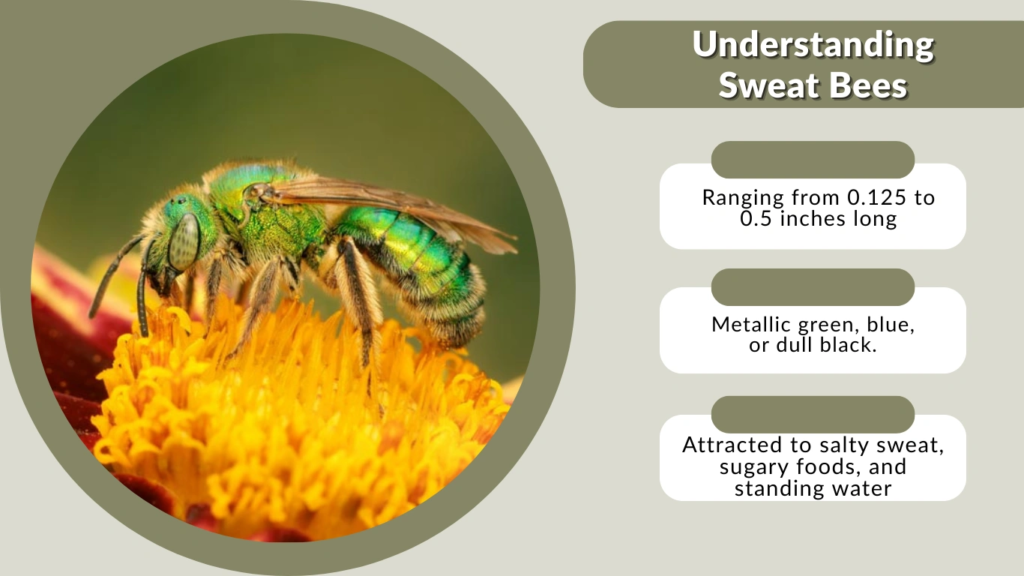
What Are Sweat Bees?
Sweat bees are generally small, ranging from 0.125 to 0.5 inches long, and can be metallic green, blue, or dull black. Unlike honeybees, they do not live in large hives. Instead, they are solitary or live in small colonies, often burrowed into the ground.
They are most active during warm months and are attracted to salty sweat, sugary foods, and standing water. While they are not aggressive, they may sting if pressed against the skin or swatted. Their sting is mild compared to wasps or hornets but still unpleasant.
Sweat Bee Stings: Identification, Symptoms and Treatment
Why Sweat Bees Are a Problem
Sweat bees are valuable pollinators, but problems arise when they:
- Gather in large numbers around pools, decks, and porches.
- Build nests in soil or garden beds.
- Become aggressive when disturbed near their nests.
- Interrupt outdoor activities like picnics, barbecues, and camping.
How to Get Rid of Sweat Bees Outside

Yard and Garden Control
Because sweat bees often nest in the soil, your yard may be their favorite spot. Here’s how to discourage them:
- Locate nests: Look for small holes in sandy or dry soil, especially in sunny areas.
- Water the soil: Sweat bees prefer dry conditions. Regularly watering your lawn discourages nesting.
- Mulch garden beds: Covering bare soil with mulch or ground cover plants makes it harder for bees to burrow.
- Remove standing water: Sweat bees, like other insects, are drawn to water sources. Eliminate puddles and containers that collect rainwater.
Around the House
Sweat bees may hover near homes if conditions attract them. Reduce their presence by:
- Installing screens on windows and doors to prevent entry.
- Sealing cracks in siding, walls, and foundations where bees could enter.
- Using natural repellents like peppermint oil or vinegar sprays around entryways.
These steps discourage bees from gathering too close to living spaces without harming them.
How to Get Rid of Sweat Bees in Pools and Outdoor Areas
Pools and Swimming Areas
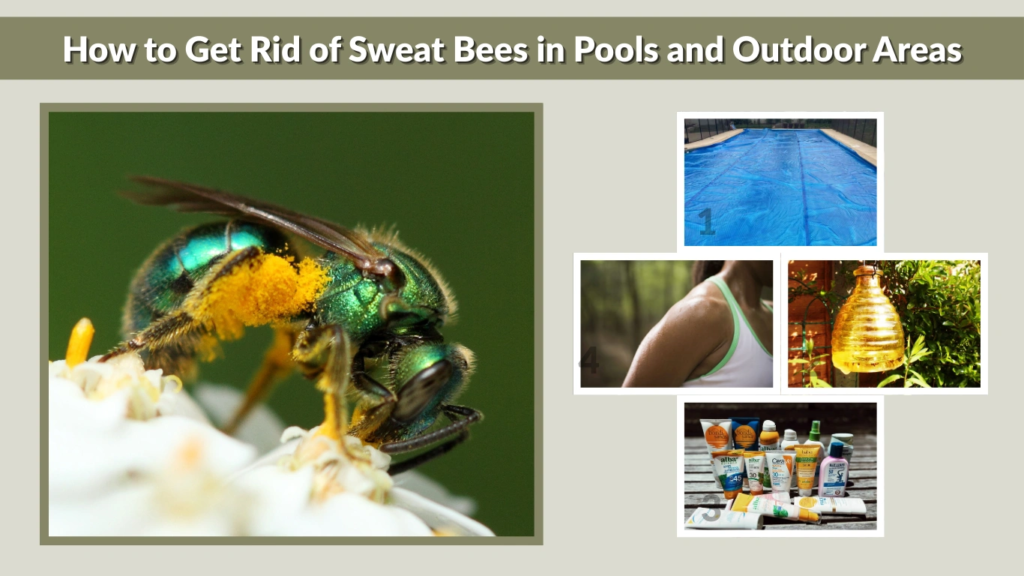
Pools attract sweat bees because of water and sweat from swimmers. Here are effective methods to keep them away:
- Cover the pool: Use a pool cover when not in use to prevent bees from hovering.
- DIY poolside traps: Fill jars with sugar water, soda, or fruit slices (mangoes work well). Place them a distance away from the pool to lure bees.
- Avoid scented lotions: Perfumes and fragranced products attract bees. Opt for unscented sunscreen when swimming.
- Rinse off sweat: Shower before entering the pool to reduce saltiness that draws sweat bees.
Picnics, Decks, and Porches
Sweat bees are notorious for disrupting outdoor meals. Prevent them with these steps:
- Keep food covered: Store snacks and drinks in sealed containers.
- Use citronella candles: The scent helps deter bees and other insects.
- Set up traps: Place baited traps at a safe distance from your picnic or seating area to distract sweat bees.
- Natural sprays: Lightly spray diluted peppermint or eucalyptus oil on tablecloths and seating areas.
By making the environment less attractive, you reduce the chances of sweat bees gathering where you relax or eat.
How to Get Rid of Sweat Bee Nests
Ground Nests
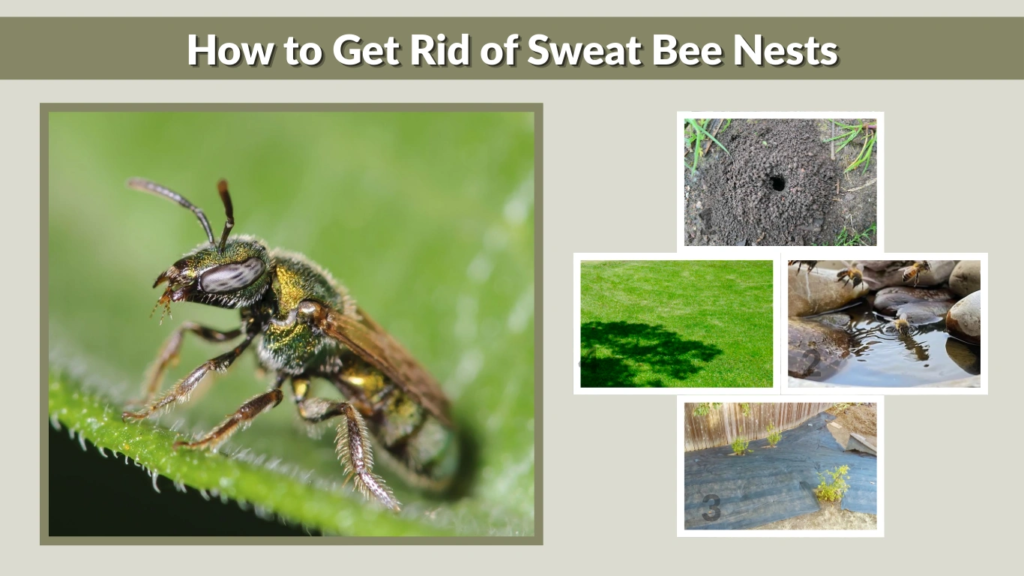
Most sweat bees nest underground in dry, sandy soil. Here’s how to address them:
- Identify active nests: Look for multiple bees flying in and out of small holes in bare soil.
- Flood with water: Pouring water into the nest discourages sweat bees from staying. This method is simple and chemical-free.
- Cover with mulch or plants: Once a nest is disturbed, covering the area prevents re-colonization.
- Encourage grass growth: A thick, healthy lawn leaves fewer bare spots for bees to dig.
Hive or Nest Removal
Sweat bees do not build large hives like honeybees, but they may gather in soil colonies. If nests are widespread or near high-traffic areas:
- Do not attempt to dig them out aggressively—this may provoke stings.
- Contact a pest control professional or beekeeper for safe removal if necessary.
Natural and DIY Remedies
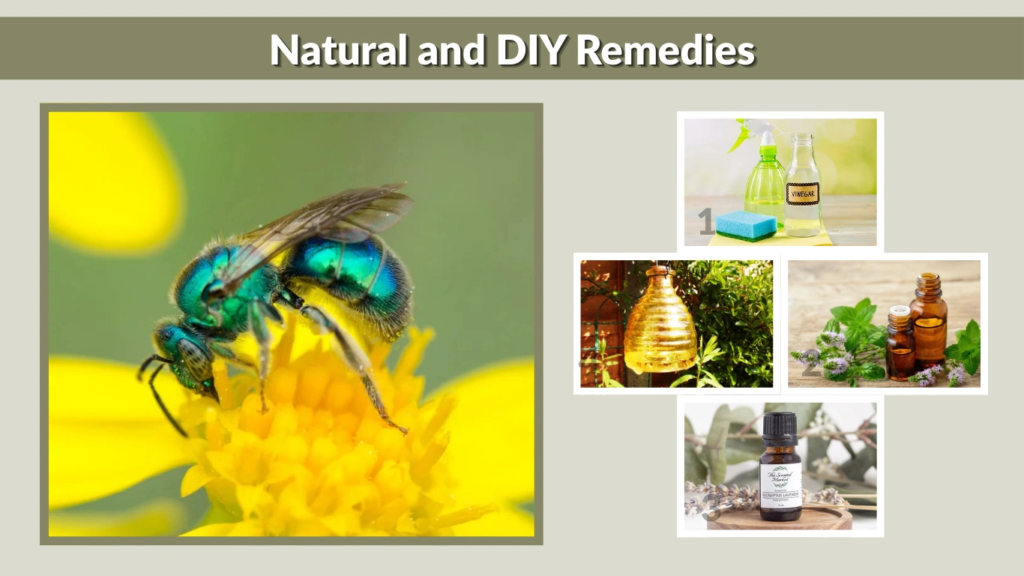
Many people prefer to avoid harsh chemicals and look for safe, eco-friendly solutions. Sweat bees can often be managed with simple natural methods.
Home Remedies
- Vinegar spray: A mixture of vinegar and water can be sprayed on outdoor surfaces to repel sweat bees.
- Peppermint oil: Sweat bees dislike strong scents. Mix a few drops of peppermint oil with water and spray it around porches, decks, and windows.
- Eucalyptus oil: Works similarly to peppermint oil and provides a refreshing outdoor scent.
- Homemade traps: Place jars filled with sugar water, soda, or fruit slices (such as mango) a distance from high-traffic areas. Bees are drawn to the sweetness and become distracted.
Eco-Friendly Practices
- Bee-repelling plants: Planting marigolds, citronella, or mint can deter bees from porches and yards.
- Eliminate standing water: Sweat bees are drawn to water sources. Keep buckets, planters, and gutters dry.
- Regular lawn maintenance: A healthy, well-watered lawn leaves fewer nesting sites for sweat bees.
How to Get Rid of Sweat Bees Without Killing Them
For those who value pollinators and want humane options, non-lethal approaches can be effective:
- Gently shoo them away: Use a soft motion instead of swatting, which provokes stings.
- Relocate nests: Professional beekeepers can sometimes move small sweat bee colonies safely.
- Repellent sprays: Use non-toxic repellents to keep sweat bees away from sitting and eating areas rather than exterminating them.
- Physical barriers: Pool covers, screened porches, and mesh enclosures reduce contact without harming the bees.
These methods respect sweat bees’ ecological role while minimizing their nuisance.
Quick Solutions for Common Situations
- Camping: Use insect repellent sprays, wear long, light-colored clothing, and keep food sealed in containers.
- Picnics: Place traps with sugary bait away from the dining area and keep drinks covered.
- By the pool: Use a cover when not swimming and avoid using scented lotions or perfumes.
- On the porch or deck: Light citronella candles, spray diluted essential oils, and remove open drink cans.
- Fast removal: Commercial bee traps can provide quick relief in areas with heavy sweat bee activity.
Prevention Tips
Prevention is the most effective long-term solution for sweat bee control.
- Water your lawn regularly: Prevents sweat bees from digging nests in dry, sandy soil.
- Cover food and drinks outdoors: Especially sweet items that attract bees.
- Use protective covers: Keep pools, hot tubs, and outdoor food stations covered when not in use.
- Avoid strong scents: Bees are drawn to perfumes, scented soaps, and lotions.
- Maintain outdoor areas: Trim grass, clean gutters, and reduce clutter where bees could hide.
By making your home and yard less attractive to sweat bees, you can greatly reduce their presence.
Conclusion
Sweat bees may be small and relatively harmless, but when they gather around pools, picnics, or porches, they quickly become a nuisance. Fortunately, there are many ways to manage them—whether through DIY remedies, natural repellents, poolside traps, or professional assistance. By addressing nests, reducing attractants, and using eco-friendly solutions, you can enjoy outdoor spaces without constant buzzing.
The key is balance: respect sweat bees as pollinators while protecting your comfort and safety. With the right strategies, you can keep sweat bees under control without harming them or your environment.
FAQs
Why are sweat bees attracted to pools?
Sweat bees are drawn to the water and sweat around pools. They often hover near swimmers because of the salt in perspiration.
How do you naturally get rid of sweat bees?
Natural methods include peppermint oil sprays, vinegar solutions, bee-repelling plants, and homemade traps using sugar water or fruit.
Do sweat bees build large hives?
No. Sweat bees are mostly solitary or live in small soil colonies. They do not build large hives like honeybees.
Can sweat bees sting multiple times?
Yes. Unlike honeybees, sweat bees do not lose their stinger after stinging, though their stings are mild compared to wasps.
What is the fastest way to get rid of sweat bees in the yard?
The quickest solutions include watering dry soil to disrupt nests, setting sugary bait traps, and spraying natural repellents around porches and seating areas.
