
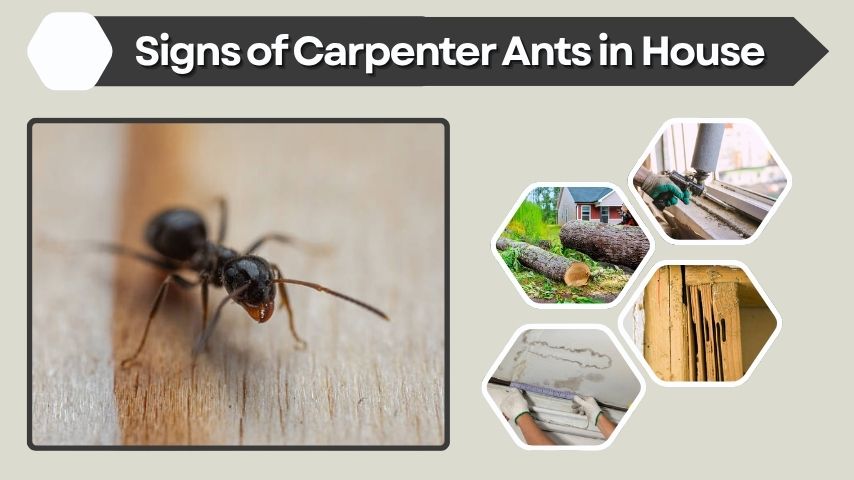
Carpenter ants are one of the most damaging household pests because they don’t eat wood—they excavate it to build nests. This makes early detection critical for preventing structural issues in walls, floors, and ceilings. Understanding the signs of carpenter ants in house, especially in drywall, basements, and wooden structures, helps homeowners act before damage spreads and repairs become expensive or extensive.
Early Signs of Carpenter Ants in House
Early detection is key when dealing with carpenter ants, as infestations often begin silently inside walls or damp wood areas. Recognizing the earliest indicators can help prevent major structural damage.
1. Sawdust-like Frass Near Wood
One of the most common early signs is small piles of sawdust-like material called frass. This is actually wood shavings pushed out from nesting sites inside walls, beams, or furniture.
- Found near baseboards or wooden structures
- Often appears in small, repeated piles
- May contain insect body parts or insulation pieces
2. Rustling or Soft Clicking Sounds
In quiet environments, especially at night, you may hear faint rustling inside walls. These sounds come from ants moving through galleries carved inside wood.
3. Winged Ants (Swarmers) Indoors
Seeing winged ants inside your home is a strong sign of a mature colony.
- Typically appear near windows or lights
- Often mistaken for termites
- Usually emerge in spring or humid conditions
Signs of Carpenter Ant Damage in Wood and Drywall
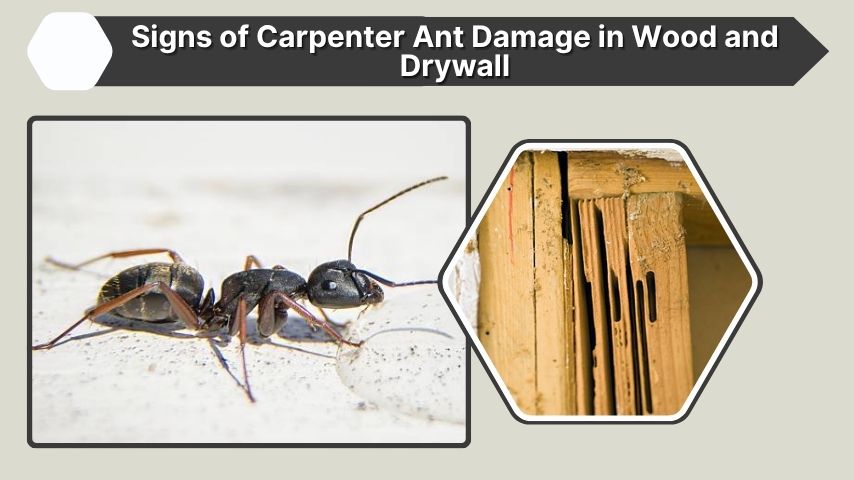
Carpenter ant damage becomes more obvious over time as nesting areas expand inside structural materials. These signs often indicate a long-term infestation.
1. Hollow or Weak-Sounding Wood
Tapping on infested wood may produce a hollow sound because ants excavate smooth tunnels inside.
- Common in beams, studs, and window frames
- Wood may look intact externally but be structurally weakened
2. Drywall Deterioration and Bubbling Paint
Carpenter ants often nest behind drywall in moist areas. As damage spreads, surfaces may begin to show visible changes.
- Bubbling or peeling paint
- Small cracks forming along walls
- Soft or crumbling drywall sections
3. Uneven Surfaces and Visible Entry Holes
Small holes may appear where ants exit or where moisture has weakened the material.
Basement, Kitchen, and Wall Signs of Infestation
Carpenter ants prefer moist environments, making certain areas of the home more vulnerable. Recognizing location-based signs can help pinpoint nesting zones.
Basement and Foundation Activity
Basements are a primary nesting area due to humidity and wood contact.
- Ant trails along foundation walls
- Frass piles near wooden supports
- Activity near leaking pipes
Kitchen and Food-Adjacent Areas
While they don’t eat food like other ants, kitchens attract them due to moisture.
- Trails near sinks or dishwashers
- Presence near garbage or damp wood
- Activity in cabinets under sinks
Wall Void Movement Patterns
Carpenter ants often build hidden colonies inside walls.
- Repeated ant trails in the same area
- Clicking or faint movement noises
- Sudden appearance of ants indoors
Carpenter Ants vs Termites: Key Differences
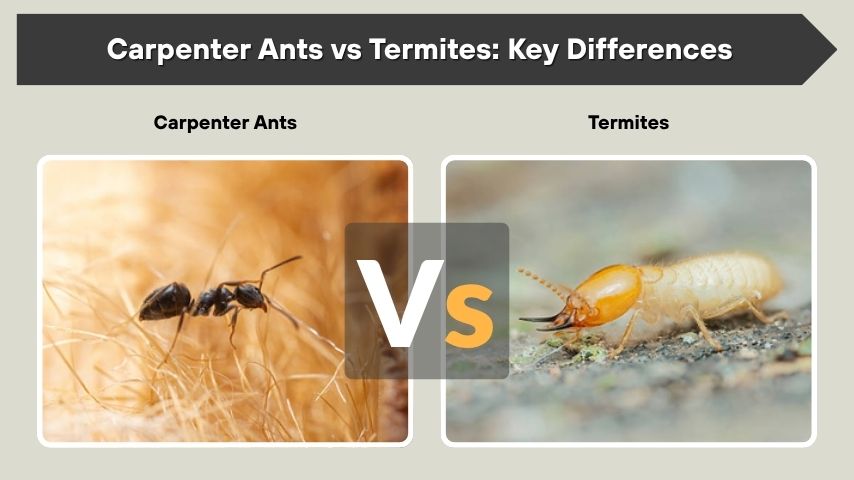
Understanding whether you’re dealing with carpenter ants or termites is essential because treatment methods differ significantly.
| Feature | Carpenter Ants | Termites |
| Diet | Do not eat wood; excavate it | Eat wood and cellulose |
| Frass | Sawdust-like piles outside nests | No visible frass (usually) |
| Body Shape | Narrow waist, bent antennae | Straight body, straight antennae |
| Wings | Front wings longer than back | Wings equal length |
| Damage Pattern | Smooth, clean tunnels | Mud tubes and messy damage |
Key Identification Points
- Carpenter ants leave wood shavings; termites do not
- Termites create mud tubes; ants do not
- Carpenter ants are often larger and more visible
Prevention and Early Action Signs
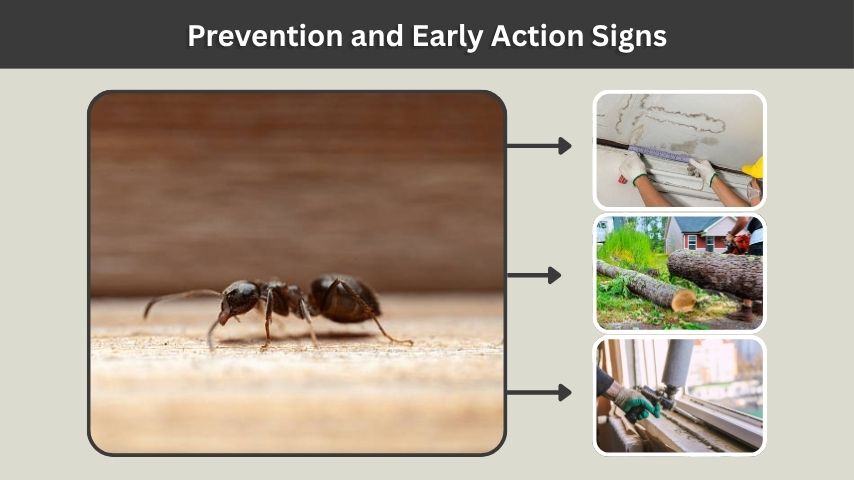
Preventing carpenter ant infestations requires controlling moisture and sealing entry points before colonies expand.
Moisture Control and Home Maintenance
Reducing moisture is one of the most effective prevention strategies.
- Fix leaking pipes and roofs
- Improve basement ventilation
- Remove damp or decaying wood
Structural Inspections and Sealing Entry Points
Regular inspections help identify early infestation risks.
- Seal cracks in walls and foundations
- Inspect wooden decks and window frames
- Replace water-damaged wood quickly
Outdoor Nest Prevention
Outdoor colonies often lead to indoor infestations.
- Trim trees touching the house
- Remove dead tree stumps near property
- Keep firewood stored away from walls
FAQs
1. What are the first signs of carpenter ants in a house?
The earliest signs include sawdust-like frass, faint rustling sounds inside walls, and occasional sightings of large black ants indoors. Winged ants appearing near windows are also a strong early warning of an established colony nearby.
2. How can I tell carpenter ants from termites?
Carpenter ants have a narrow waist and bent antennae, while termites have straight bodies and antennae. Carpenter ants leave wood shavings, whereas termites create mud tubes and consume wood entirely, causing more extensive structural damage.
3. Are carpenter ants dangerous to my home?
Yes, carpenter ants can weaken structural wood over time by excavating tunnels inside beams, walls, and floors. While they don’t eat wood, their nesting activity can still lead to serious structural damage if left untreated.
4. Where do carpenter ants usually nest inside homes?
They commonly nest in moist, decaying wood found in basements, bathrooms, kitchens, and wall voids. Areas with leaks or humidity are especially attractive because softened wood is easier for them to excavate.
5. Can carpenter ants indicate a bigger moisture problem?
Yes, carpenter ants are often a sign of excess moisture or water damage in the home. Their presence usually indicates leaking pipes, roof issues, or poorly ventilated areas that need immediate attention.
