
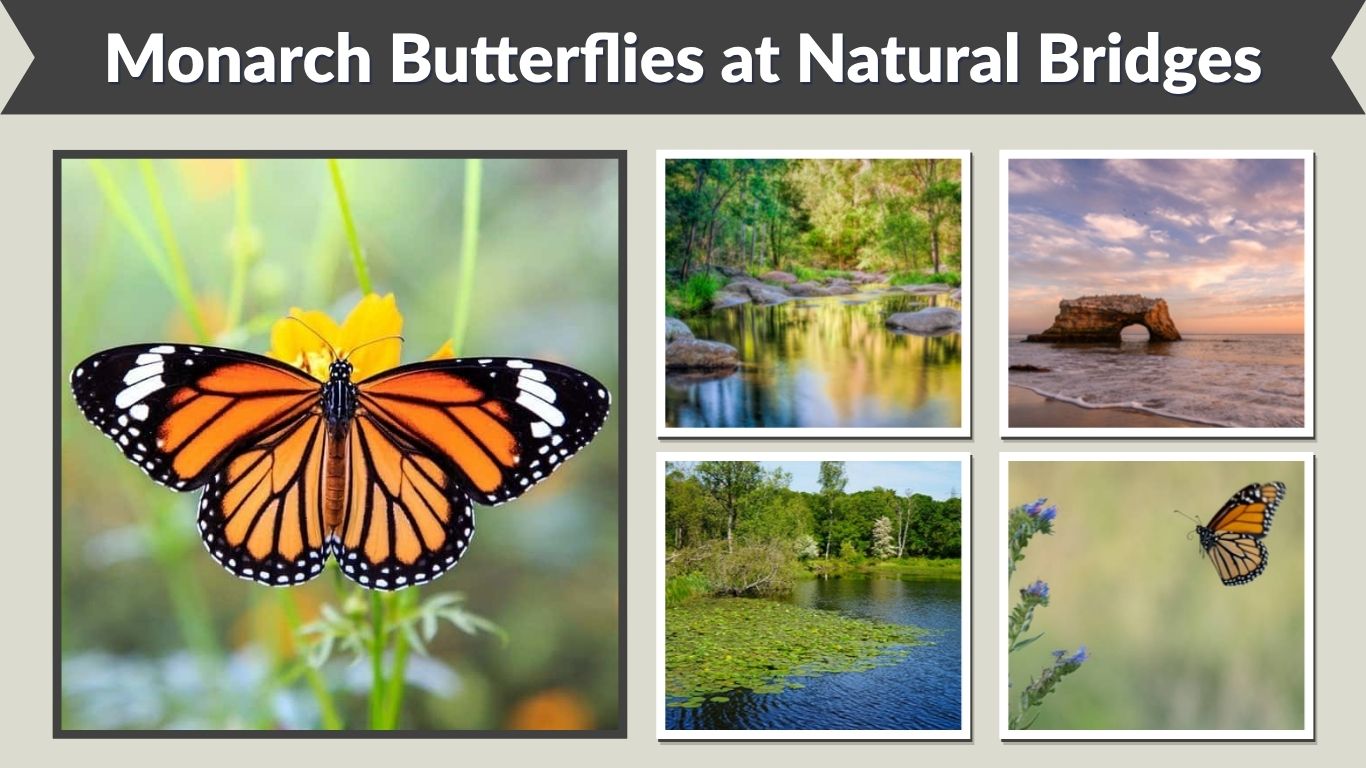
Monarch butterflies at Natural Bridges State Beach are one of Santa Cruz, California’s most famous seasonal wildlife attractions. Each fall, western monarchs begin arriving at the park’s protected eucalyptus grove, where they spend part of the winter sheltered from cold temperatures and strong coastal winds. Monarchs typically start appearing around mid-October and remain into winter, although numbers and exact dates vary each year. California State Parks says late October and November are often especially good times to visit.
Why Do Monarch Butterflies Visit Natural Bridges?
Natural Bridges State Beach provides an unusually favorable winter refuge for monarch butterflies.
The park’s Monarch Grove Natural Preserve lies within a gently sloping canyon filled with eucalyptus trees. The canyon helps block strong winds, while the tree canopy creates a relatively mild microclimate. Winter-flowering eucalyptus also provides nectar when the butterflies need energy.
Natural Bridges is particularly notable because its Monarch Grove is California’s only State Monarch Preserve. The area receives special protection to reduce disturbance to overwintering butterflies and their habitat.
What Happens in the Monarch Grove?
When temperatures are cool, monarchs gather together on eucalyptus branches in dense clusters.
At first glance, these clusters can resemble masses of dry leaves because the butterflies close their wings while resting. On warmer, sunnier days, more butterflies may leave the clusters and fly around the grove.
California State Parks notes that monarchs cluster together when temperatures drop below about 60°F.
When Are the Monarch Butterflies at Natural Bridges?
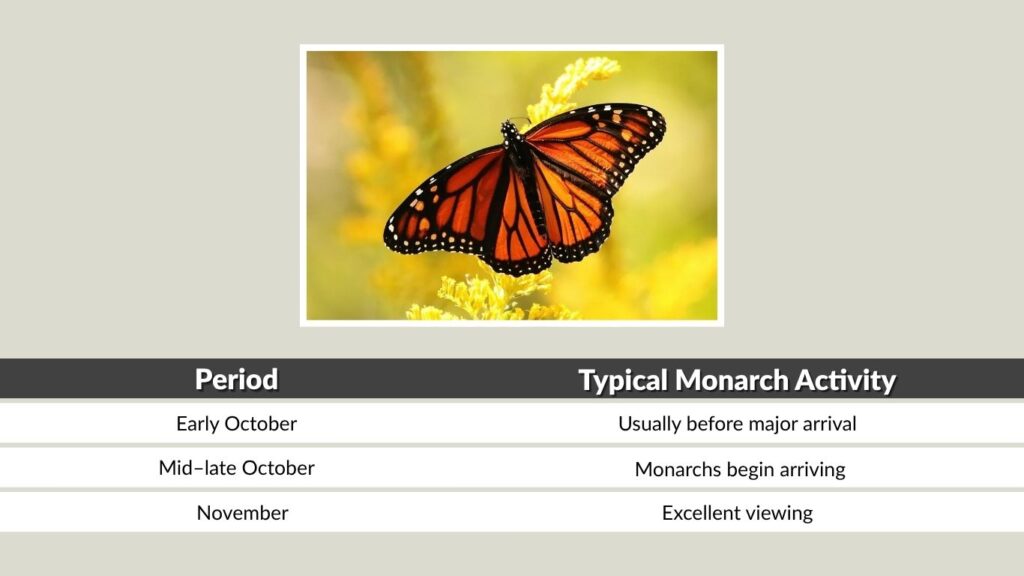
The typical Natural Bridges monarch butterfly season runs from roughly mid-October through mid-February, but migration varies from year to year.
A general seasonal timeline looks like this:
| Period | Typical Monarch Activity |
| Early October | Usually before major arrival |
| Mid–late October | Monarchs begin arriving |
| November | Excellent viewing |
| Late November–early December | Often peak numbers |
| December | Strong overwintering period |
| January | Numbers often begin declining |
| February | Remaining butterflies depart |
| Spring–summer | Monarch grove largely empty |
Visit Santa Cruz County reports that monarchs generally arrive around mid-October, with peak observations often occurring in late November and early December. Most leave by mid- to late January, although some remain into February.
Best Time to See Monarch Butterflies at Natural Bridges
If your main goal is seeing the largest possible concentration, November through early December is generally the strongest window.
California State Parks specifically identifies late October and all of November as an often-excellent period for walking through the preserve and observing monarchs.
However, monarch numbers fluctuate significantly between years. Weather, migration success, habitat conditions, and population changes can all affect how many butterflies reach Santa Cruz.
Therefore, there is no guaranteed peak date.
When Do Monarch Butterflies Arrive in Santa Cruz?
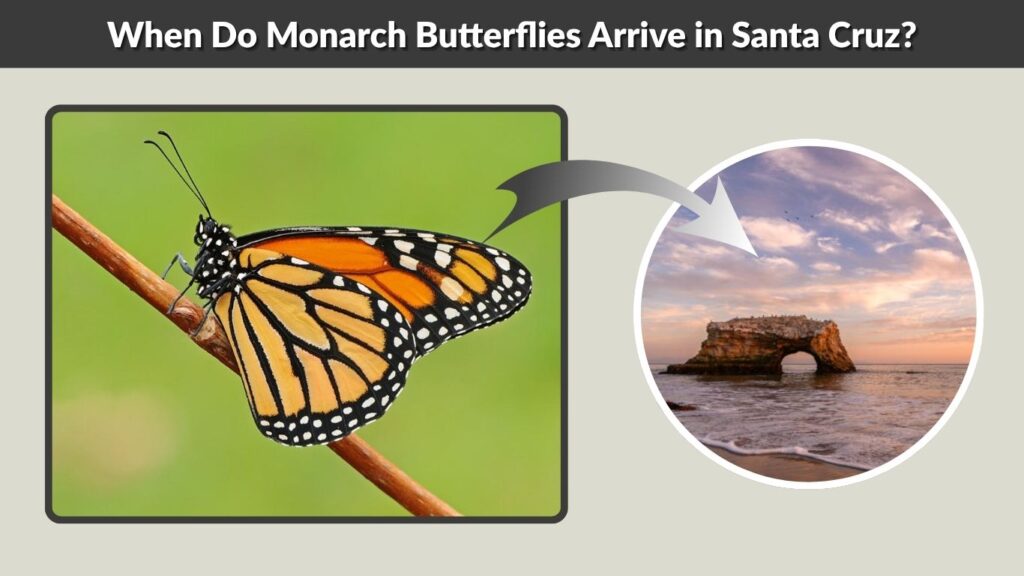
Monarchs generally begin reaching Natural Bridges in mid-October as cooler weather develops farther north.
These butterflies are part of the western monarch population. Instead of making the famous migration to central Mexico associated with many eastern monarchs, western butterflies can overwinter at protected coastal locations throughout California.
Natural Bridges provides the cool but relatively frost-protected conditions needed during winter.
When Do Monarchs Leave Natural Bridges?
Departure generally begins during winter as conditions change.
Visit Santa Cruz County reports that many monarchs leave by mid- to late January, although individuals may remain into February. California State Parks describes mid-February as the approximate end of the typical season.
As temperatures rise, the butterflies disperse toward breeding areas where milkweed becomes available.
How Many Monarch Butterflies Visit Natural Bridges?
The number can change dramatically from one year to another.
California State Parks reports that 10,000 monarch butterflies overwintered at Natural Bridges in 2024. The agency also emphasizes that both population numbers and migration dates vary annually.
This means visitors should not expect exactly the same spectacle every season.
Some years can produce large clusters covering branches, while others may have considerably fewer butterflies.
Where Is the Monarch Butterfly Preserve?
The Monarch Butterfly Natural Preserve is inside Natural Bridges State Beach in Santa Cruz, California.
Visitors reach the grove using a boardwalk that descends into the eucalyptus-filled canyon. The boardwalk leads to an observation deck where butterflies can be viewed without entering their protected roosting habitat. California State Parks identifies the boardwalk as wheelchair- and stroller-accessible.
Natural Bridges State Beach Visitor Information
Natural Bridges State Beach currently lists a $10 vehicle day-use fee, though California State Parks warns that rates may change or vary during high-demand periods. Parking, restrooms, drinking water, picnic areas, exhibits, and wildlife-viewing opportunities are available.
The park is reached from West Cliff Drive or Swift Street in Santa Cruz.
What Is the Best Time of Day to See Monarchs?
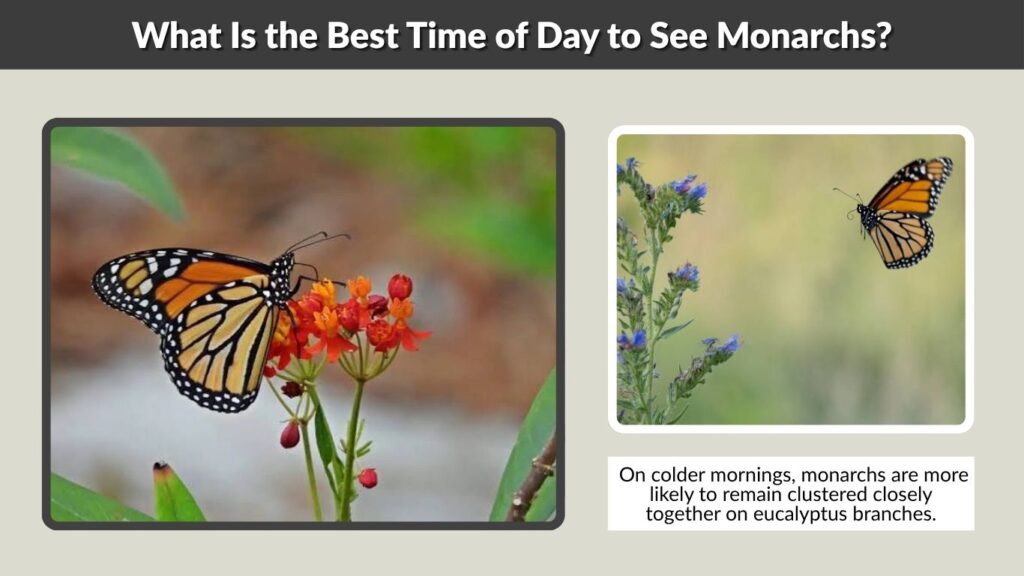
What you want to see affects the best time.
On colder mornings, monarchs are more likely to remain clustered closely together on eucalyptus branches. As the air becomes warmer, more butterflies may begin flying.
Visit Santa Cruz County notes that monarchs need sufficiently warm conditions to fly and that temperatures below roughly 55°F make clustered butterflies more likely.
For Large Clusters
Visit during a cool part of the day. Look carefully at branches because tightly packed monarchs can easily be mistaken for leaves.
For Flying Butterflies
A mild, sunny period can provide more activity as butterflies warm themselves and begin moving through the grove.
Weather therefore matters almost as much as the date.
Why Are Eucalyptus Trees Important at Natural Bridges?
Eucalyptus trees play several roles in the overwintering habitat.
Their tall canopy helps shelter monarchs from wind. The grove’s canyon location adds additional protection, and eucalyptus flowers provide a convenient winter nectar source.
These conditions combine to create a relatively stable microclimate.
However, eucalyptus is not the monarch’s caterpillar host plant. Milkweed performs that role during the breeding season: females lay eggs on milkweed, and monarch caterpillars feed on its leaves.
What Else Can You See at Natural Bridges State Beach?
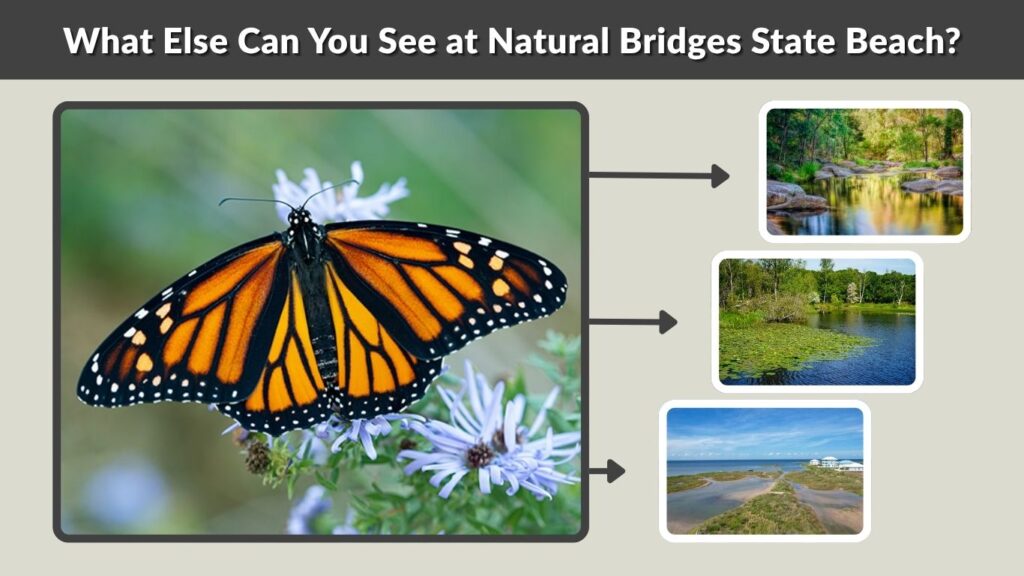
The monarch preserve is only part of the park.
Natural Bridges State Beach also contains:
- A famous wave-carved natural rock bridge
- Rocky tide pools
- Coastal scrub
- Freshwater wetlands
- Salt marsh habitat
- Shorebirds
- Seals and sea otters
- Seasonal migrating whales
The tide pools can contain sea stars, anemones, shore crabs, and other marine organisms during suitable low tides.
Combining a monarch visit with a low-tide walk can therefore make the park especially worthwhile during fall and winter.
Rules for Visiting the Monarch Grove
The butterfly preserve is protected habitat, so visitors need to minimize disturbance.
Important rules include:
- Do not touch monarch butterflies.
- Do not disturb butterfly clusters.
- Stay on the designated boardwalk and viewing areas.
- Keep noise low around the grove.
- Dogs are not permitted on the trails or beach, except qualifying service animals.
- Bicycles, skates, and skateboards are prohibited on the monarch boardwalk.
- Drones are prohibited in the park.
- Do not collect plants, animals, or natural features.
California State Parks specifically asks visitors to remain quiet and avoid touching or harming the butterflies.
Are Natural Bridges Worth Visiting for Monarch Butterflies?
Yes, particularly from late October through November, with late November and early December often producing high numbers.
The combination of a protected monarch grove, accessible viewing platform, beach scenery, tide pools, and other wildlife makes Natural Bridges one of California’s distinctive places to experience western monarch migration.
Still, monarch migration is a natural event rather than a scheduled attraction. The number visible on any particular day depends on the season, weather, and that year’s population.
FAQs
When is peak monarch butterfly season at Natural Bridges?
Peak viewing often occurs from late November into early December, although California State Parks notes that late October and November are generally excellent periods. Exact timing and butterfly numbers vary each year.
When do monarch butterflies arrive at Natural Bridges?
Monarch butterflies usually begin arriving around mid-October. Numbers gradually increase as additional butterflies reach their Santa Cruz overwintering habitat.
When do monarch butterflies leave Natural Bridges?
Many monarchs begin leaving during January. Most have departed by mid- to late January in typical years, although some may remain into February. California State Parks gives mid-February as the approximate end of the usual season.
Where can I see monarch butterflies in Santa Cruz?
The best-known location is the Monarch Grove Natural Preserve at Natural Bridges State Beach. Visitors can follow an accessible boardwalk into the eucalyptus grove and observe overwintering butterflies from a designated viewing deck.
How much does it cost to visit Natural Bridges State Beach?
California State Parks currently lists a $10 vehicle day-use fee at Natural Bridges State Beach. Fees can change, particularly during peak or high-demand periods, so visitors should verify current park information before traveling.
