
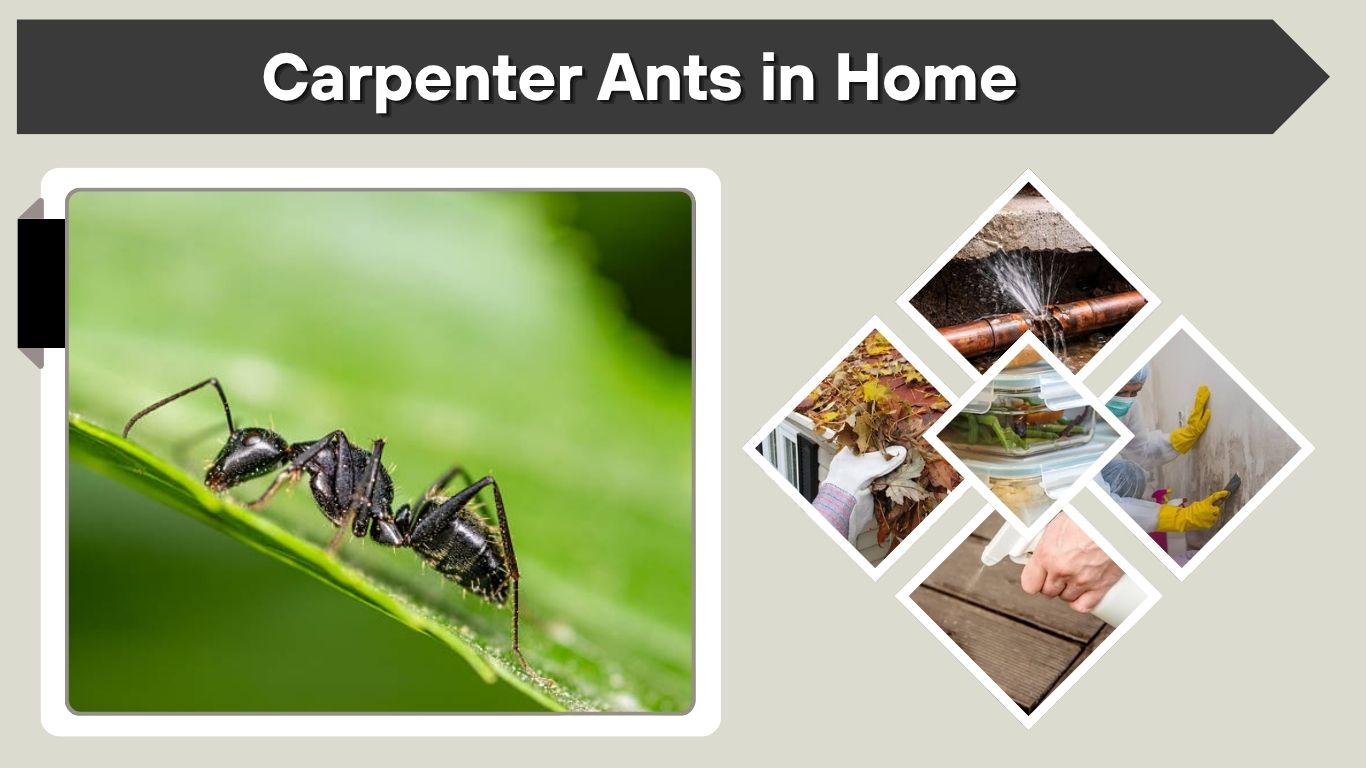
Finding carpenter ants in your home can be stressful because these large ants are often linked to hidden wood damage and moisture problems. Unlike termites, carpenter ants do not eat wood, but they tunnel through it to build nests. If you see black ants, winged ants, or sawdust-like debris indoors, it may be time to inspect your home carefully. This guide explains how to identify carpenter ants, find their nest, get rid of them, and prevent them from returning.
What Are Carpenter Ants?
Carpenter ants are large ants that usually nest in wood, especially wood that is damp, decayed, or softened by moisture. They are common around homes, trees, decks, fences, and firewood piles. When they move indoors, they may create nests inside walls, window frames, crawl spaces, or other hidden areas where moisture and wood are available.
Carpenter Ants vs Regular House Ants
Carpenter ants are usually larger than many common household ants. They may be black, dark brown, reddish-black, or a mix of colors depending on the species. Regular house ants often enter homes mainly for food, while carpenter ants may also be looking for nesting space in wood.
A few ants indoors do not always mean a major infestation. However, repeated sightings, especially near damp areas or wooden structures, should be taken seriously.
Do Carpenter Ants Eat Wood?
Carpenter ants do not eat wood. Instead, they chew through wood to create smooth tunnels called galleries. They push out tiny wood shavings and debris as they expand their nest. This is different from termites, which consume wood as a food source.
Even though carpenter ants do not eat wood, their tunneling can still weaken wood over time, especially if the infestation is large or left untreated.
Signs of Carpenter Ants in Home
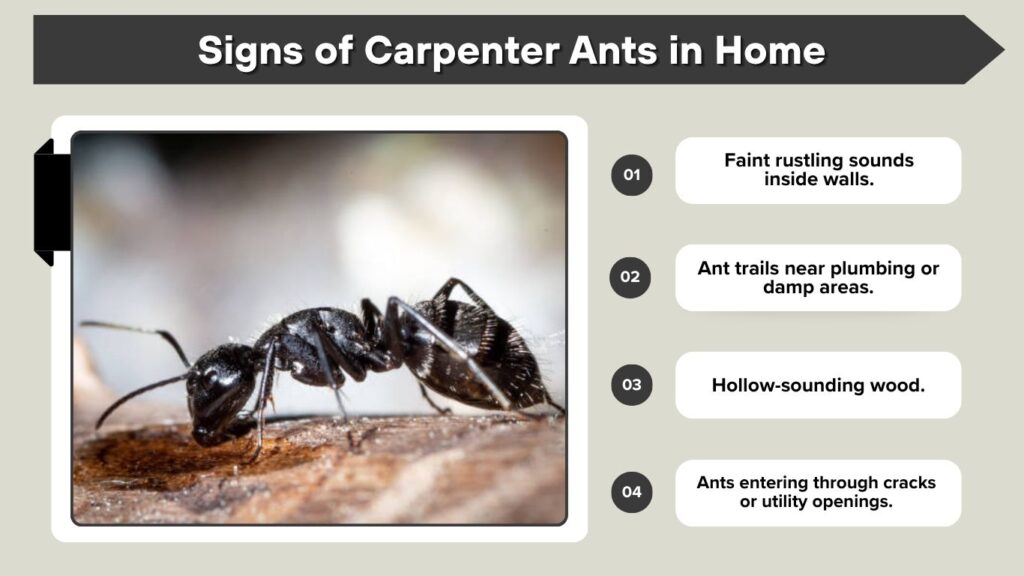
The signs of carpenter ants in home can be easy to miss at first because nests are often hidden inside walls, ceilings, floors, or damp wood. Homeowners usually notice visible ants before they find the actual nest. If carpenter ants appear repeatedly indoors, especially at night or near moisture-prone areas, you should inspect further.
Large Black Ants Indoors
One of the most common signs is seeing large black ants inside the home. They may appear in kitchens, bathrooms, basements, laundry rooms, or near windows and doors. Carpenter ants are often active at night, so seeing them after dark can be an important clue.
Winged Carpenter Ants in Home
Winged carpenter ants inside the home may indicate a mature colony. These winged ants are reproductive ants that leave the nest to start new colonies. If they are found indoors, especially near windows or lights, there may be a nest inside or very close to the structure.
Sawdust-Like Frass
Carpenter ants often leave behind frass, which looks like fine sawdust or wood shavings. This debris may collect near baseboards, window trim, door frames, beams, or small cracks in wood. Frass can also contain insect parts or soil-like material.
Other Warning Signs
Watch for these additional signs of carpenter ant activity:
- Faint rustling sounds inside walls
- Ant trails near plumbing or damp areas
- Hollow-sounding wood
- Ants entering through cracks or utility openings
- Repeated sightings in the same room
- Damaged wood near windows, decks, or rooflines
What Causes Carpenter Ant Infestations in Homes?
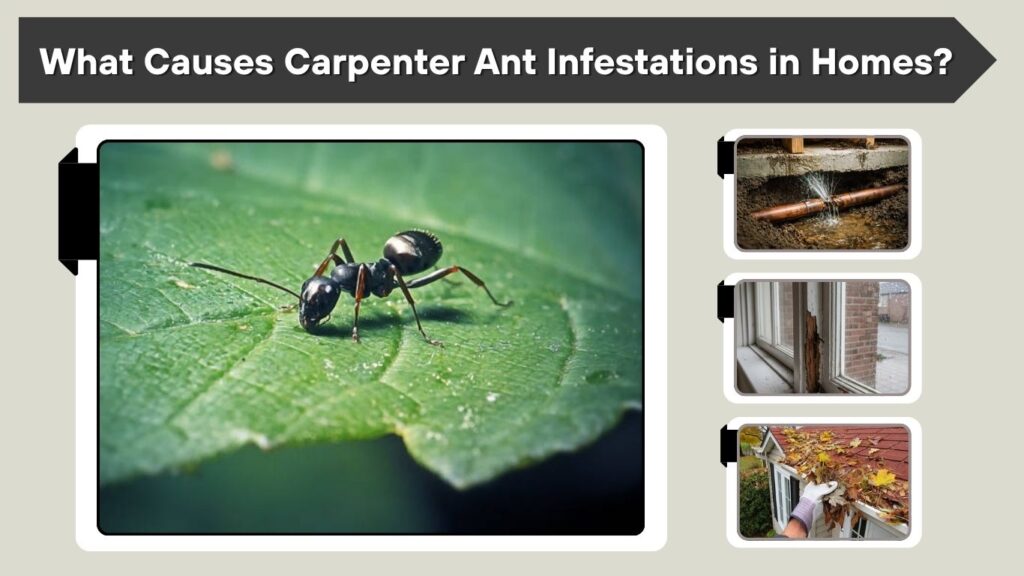
Carpenter ants enter homes when they find food, moisture, shelter, or easy access points. Moisture is one of the biggest reasons they settle indoors because damp wood is easier for them to tunnel through. Many infestations begin outdoors and later spread inside when conditions around the home support nesting and foraging.
Moisture-Damaged Wood
Carpenter ants are strongly attracted to wood that has been softened by water damage. This is why they are often found near leaks, poor drainage, or damp structural areas.
Common moisture problems include:
- Leaky roofs
- Plumbing leaks
- Wet crawl spaces
- Damaged window frames
- Clogged gutters
- Poor attic ventilation
- Damp decks or porches
- Wood touching soil
Fixing moisture issues is one of the most important steps in carpenter ant control. If damp wood remains, ants may return even after treatment.
Food Sources Indoors
Carpenter ants may come inside while searching for food. They are attracted to sweets, proteins, grease, crumbs, pet food, and spilled liquids. Kitchens and pantries are common foraging areas because food is easy to find.
Keeping food sealed and surfaces clean can reduce activity, but sanitation alone will not remove an established nest.
Easy Entry Points
Carpenter ants can enter through small gaps around windows, doors, pipes, vents, siding, and foundation cracks. Tree branches touching the roof or siding can also create a bridge into the home. Once inside, ants may travel through wall voids and hidden spaces.
How to Identify Carpenter Ants
Correct identification matters because carpenter ants require a different approach than many small nuisance ants. Killing visible ants may not solve the problem if a hidden nest remains active. Before choosing a treatment, look closely at the ants, their behavior, and the signs they leave behind.
What Carpenter Ants Look Like
Carpenter ants are usually larger than many indoor ants. They have bent antennae, a narrow waist, and a smooth, rounded upper body. Some are black, while others may have reddish or brown coloring.
Winged carpenter ants have two pairs of wings, with the front wings longer than the back wings. This feature can help separate them from termites.
Carpenter Ants vs Termites
| Feature | Carpenter Ants | Termites |
| Wood behavior | Tunnel through wood | Eat wood |
| Waist | Narrow waist | Broad waist |
| Antennae | Bent antennae | Straight antennae |
| Wings | Front wings longer | Equal-sized wings |
| Debris | Sawdust-like frass | Mud tubes or wood damage |
Are All Large Black Ants Carpenter Ants?
Not every large black ant in a home is a carpenter ant. Some other ant species may also be dark and noticeable indoors. However, if you see repeated activity, frass, winged ants, or ants near damp wood, carpenter ants become more likely.
When identification is uncertain, collect a sample or take a clear photo for a pest professional.
How to Find a Carpenter Ant Nest in Home
Finding the nest is one of the most important parts of eliminating carpenter ants in homes. Carpenter ants may have a main colony outdoors and satellite nests indoors. This means the visible ants in your kitchen or bathroom may be traveling from a hidden nest somewhere else in the structure.
Follow Ant Trails
Watch where the ants travel, especially at night when they are more active. Carpenter ants often follow steady trails between food sources and their nest. Trails may lead to wall gaps, baseboards, plumbing areas, window frames, or exterior entry points.
Inspect Moisture-Prone Areas
Focus your inspection on places where moisture and wood meet. These areas are more likely to support carpenter ant nesting.
Check these locations carefully:
- Bathrooms
- Kitchens
- Laundry rooms
- Basements
- Crawl spaces
- Attics
- Window frames
- Door frames
- Wall voids near plumbing
- Areas below roof leaks
Look for Frass and Small Openings
Frass may appear below tiny cracks, trim, beams, or wooden surfaces. You may also find small openings where ants push debris out of the nest. These signs can help narrow down the nesting location.
What If You Cannot Locate the Nest?
Sometimes the nest is deep inside a wall, ceiling, crawl space, or outdoor wood source. If you cannot locate it, avoid tearing into walls without evidence. A pest control professional can use inspection tools and targeted treatment methods to find and treat hidden carpenter ant nests.
How to Get Rid of Carpenter Ants in Home
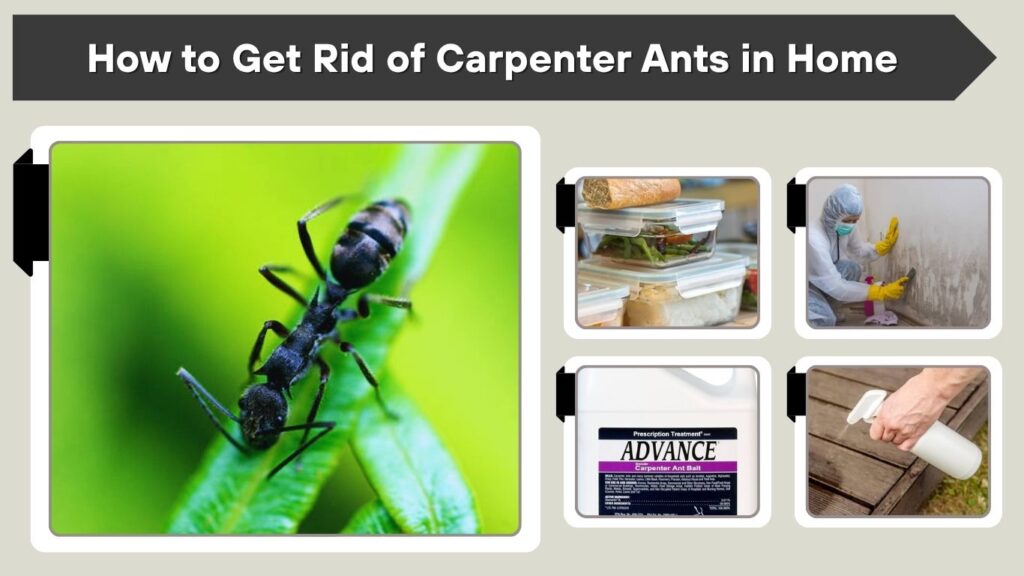
The best way to get rid of carpenter ants in home is to target the colony, not just the ants you see. A successful treatment plan includes identification, nest location, moisture repair, baiting, and prevention. If the infestation is severe or the nest is hidden, professional treatment may be the safest option.
Step 1: Remove Food Sources
Start by reducing what attracts carpenter ants indoors. Clean counters, sweep floors, store food in sealed containers, and remove pet food overnight. Take out trash regularly and wipe up grease, syrup, juice, or other spills.
Step 2: Fix Moisture Problems
Moisture control is essential. Repair leaks, improve ventilation, clean gutters, and replace rotting wood. If the home has damp crawl spaces or poor drainage, those issues should be corrected to make the property less attractive to carpenter ants.
Step 3: Use Carpenter Ant Bait
Baits can be effective because foraging ants carry the bait back to the colony. Place bait near trails, but do not spray around it because sprays can repel ants and stop them from feeding on the bait.
Step 4: Avoid Only Spraying Visible Ants
Contact sprays may kill the ants you see, but they often do not reach the hidden nest. In some cases, spraying can scatter ants and make the problem harder to solve. Targeted nest treatment is usually more effective.
Step 5: Call a Professional When Needed
Professional help is recommended if you see winged ants indoors, find frass, suspect a wall nest, notice wood damage, or cannot locate the colony. A professional inspection can identify the source and apply treatment in the right areas.
Carpenter Ant Home Remedies: Do They Work?
Many homeowners look for carpenter ants in home remedies before calling a professional. Some home methods may reduce visible activity, but they often fail to eliminate hidden nests. Remedies work best as supporting steps, not as the only solution for a serious carpenter ant infestation.
Vinegar and Soap Sprays
Vinegar or soapy water may kill ants on contact and disrupt scent trails. However, these methods usually do not reach the nest. They may provide short-term relief but should not be relied on for full elimination.
Diatomaceous Earth
Diatomaceous earth may help in dry cracks, voids, or entry points when used correctly. It must stay dry to work well. It is not always effective for nests hidden deep inside walls or damp wood.
Cleaning and Sealing
Cleaning removes food sources, while sealing entry points helps reduce access. These steps are useful, but they do not destroy an established colony. For best results, combine them with baiting, moisture repair, and nest treatment.
Carpenter Ants in Log, Mobile, and New Homes
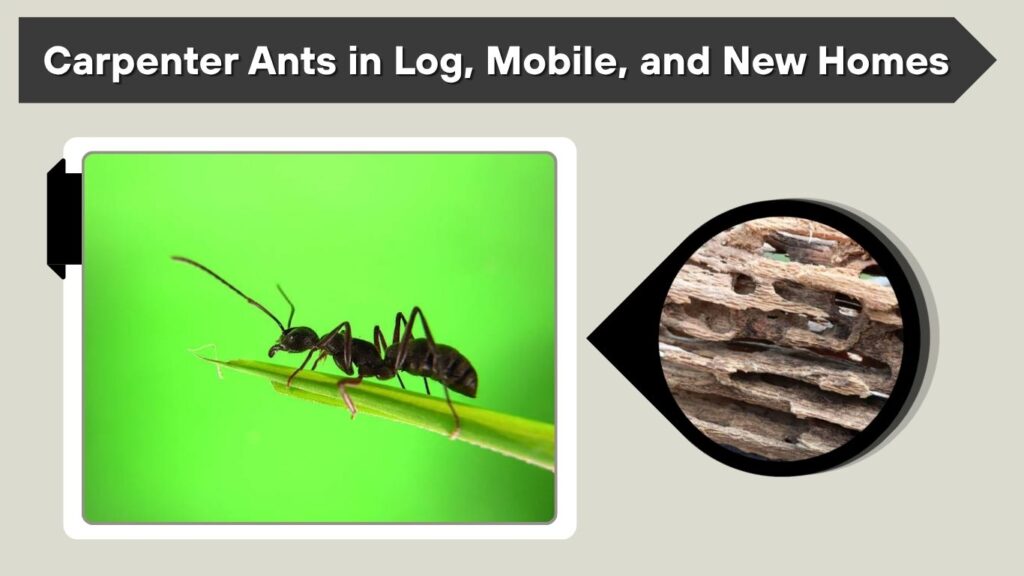
Carpenter ants can infest many types of homes, but some properties have special risk factors. Log homes, mobile homes, manufactured homes, and new construction can all experience carpenter ant problems if moisture, wood debris, or outdoor nesting sites are nearby. Treatment should match the structure and source of the infestation.
Carpenter Ants in Log Homes
Log homes can be vulnerable when logs, joints, rooflines, or exterior wood stay damp. Regular inspection is important because ants may use cracks, checks, or softened wood for nesting. Keeping logs sealed, dry, and well-maintained helps reduce risk.
Carpenter Ants in Mobile Homes
In mobile or manufactured homes, carpenter ants may nest near skirting, insulation, subfloor areas, plumbing leaks, or damp supports. Inspect underneath the home and around utility openings where ants may enter.
Carpenter Ants in New Construction
Carpenter ants in a new home may come from nearby outdoor nests, leftover wood debris, damp building materials, landscaping, or hidden leaks. A brand-new home can still attract ants if moisture and entry points are present.
How to Prevent Carpenter Ants in Your Home
Prevention focuses on making your home less attractive and harder to enter. Since carpenter ants are often linked to moisture and damaged wood, long-term control depends on repairs, maintenance, and regular inspection. A clean, dry, sealed home is much less likely to support carpenter ant activity.
Reduce Moisture Around the Home
Keep the structure dry and well-maintained. Repair leaks quickly, clean gutters, improve attic and crawl space ventilation, and direct water away from the foundation. Replace damaged or rotting wood when you find it.
Remove Outdoor Nesting Sites
Outdoor nests often lead to indoor activity. Remove or manage materials that provide shelter close to the home, such as:
- Rotting logs
- Old tree stumps
- Dead branches
- Wood debris
- Landscape timbers
- Firewood piles
- Damaged fence posts
Seal Entry Points
Seal cracks around windows, doors, siding, vents, and utility lines. Repair damaged screens and close gaps around pipes or cables. Trim tree branches and shrubs so they do not touch the roof, siding, or windows.
When to Schedule a Carpenter Ant Inspection
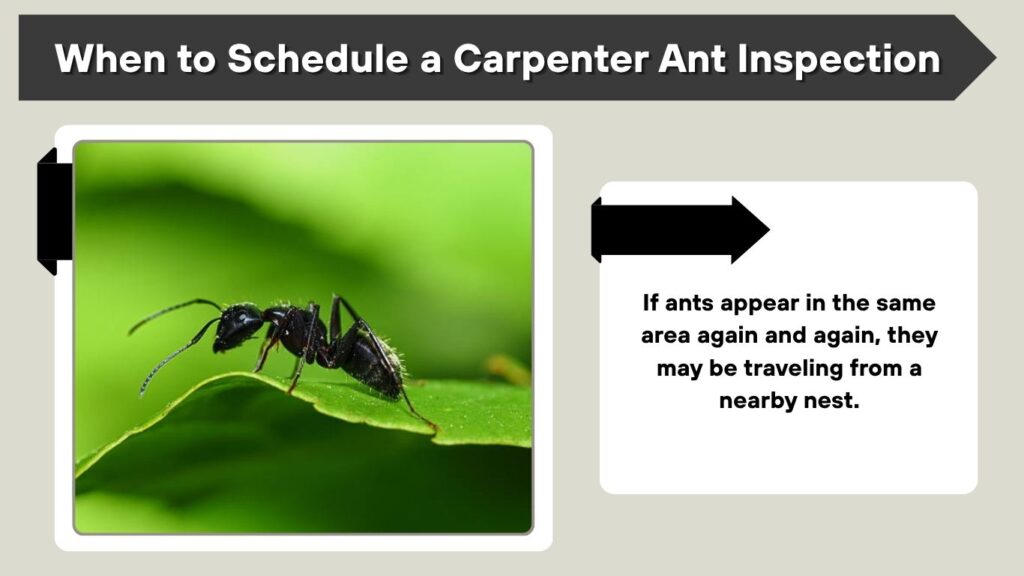
A carpenter ant inspection is helpful when the source of the problem is unclear or when activity continues after basic prevention steps. Because nests can be hidden inside walls or outdoor wood, an inspection can save time and prevent unnecessary damage from guessing where the colony is located.
You Keep Seeing Ants Indoors
Repeated sightings are more concerning than one random ant. If ants appear in the same area again and again, they may be traveling from a nearby nest.
You Find Frass or Wood Damage
Sawdust-like debris, hollow-sounding wood, or damaged trim can indicate nesting activity. These signs should be checked before the damage becomes worse.
You See Winged Ants Inside
Winged carpenter ants indoors can point to a mature nest. This is especially important if they appear near windows, lights, or upper floors.
FAQs
Why do I have carpenter ants in my home?
Carpenter ants usually enter homes because they find food, moisture, or suitable nesting areas. Damp or damaged wood is especially attractive because it is easier for them to tunnel through. Leaks, rotting wood, outdoor nests, and unsealed entry points can all contribute to an infestation.
What is the best way to get rid of carpenter ants in home?
The best way is to locate the nest, use carpenter ant bait or targeted treatment, fix moisture problems, and remove food sources. Spraying only the ants you see may give temporary relief, but it usually does not eliminate the hidden colony.
How do I find a carpenter ant nest in my home?
Follow ant trails at night and inspect damp areas near bathrooms, kitchens, basements, crawl spaces, windows, and plumbing. Look for sawdust-like frass, small openings, or repeated ant activity. If you cannot locate the nest, a professional inspection may be needed.
Are carpenter ants in home worse than termites?
Termites usually cause more serious damage because they eat wood. Carpenter ants do not eat wood, but they tunnel through it to build nests. A large carpenter ant colony can still weaken wood over time, especially if the wood is already damp or damaged.
Can carpenter ants live in my home during winter?
Yes, carpenter ants can remain active indoors during winter if they have a nest in a heated part of the home. Seeing them inside during cold months may be a sign of an indoor colony rather than ants simply wandering in from outside.
