
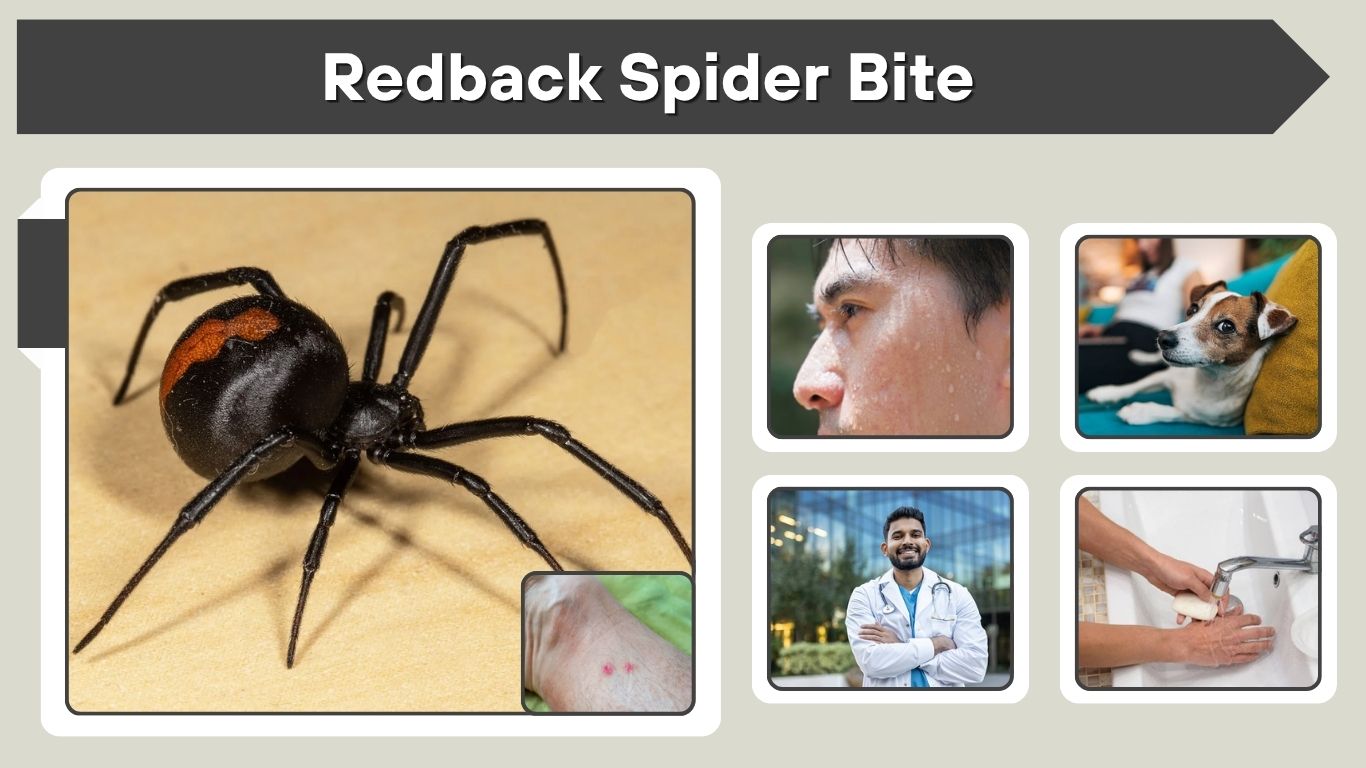
A redback spider bite can cause severe, increasing pain and a collection of nervous-system symptoms known as latrodectism. The bite may initially look insignificant, with little more than a pinprick, mild redness, or sweating around the area. Symptoms can then intensify and spread over several hours. Most patients recover with appropriate pain management and monitoring, but children, pregnant people, older adults, and anyone developing systemic symptoms should receive prompt medical advice. Correct first aid is important because pressure immobilization is not recommended for confirmed redback bites.
What Happens When a Redback Spider Bites You?
The Australian redback, Latrodectus hasselti, injects venom through two small fangs. Its venom acts on the nervous system and triggers an excessive release of chemical messengers from nerve endings.
Are All Bites Venomous?
Not every bite injects a clinically important quantity of venom. Some produce only temporary local discomfort, while others cause increasing pain and systemic illness.
Adult females cause almost all medically significant bites because their fangs and venom-delivery system are larger. Males can potentially bite, but their small size means bites are uncommon and typically cause much milder effects.
What Does a Redback Spider Bite Look Like?
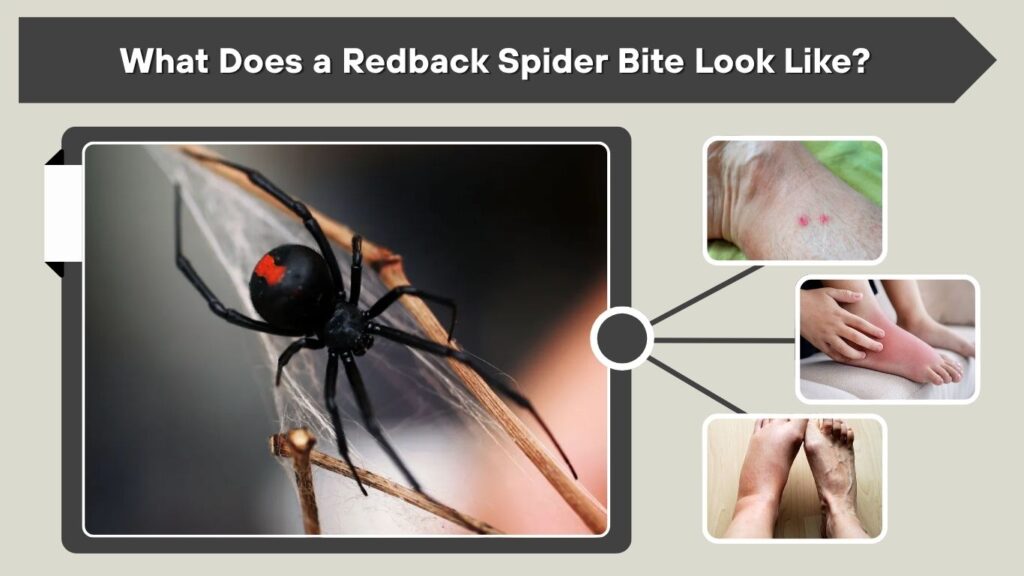
A redback bite may leave no obvious mark. When visible, the area can show a tiny puncture, mild redness, localized swelling, or a small raised spot.
Possible Skin Changes
- One or two tiny puncture marks
- Mild redness
- Limited swelling
- Sweating around the bite
- Goosebumps near the affected area
- Tenderness that spreads beyond the mark
A blister is not considered a defining feature. Large blisters, pus, significant tissue breakdown, or expanding redness may indicate infection, another type of injury, or an incorrectly identified bite.
Redback venom is not known for causing progressive skin necrosis. A wound that becomes ulcerated, increasingly hot, or filled with fluid requires medical assessment.
Can Photos Confirm the Bite?
Bite pictures cannot reliably identify a redback bite. Numerous insect bites, infections, allergic reactions, and skin conditions look similar.
Identification is more credible when the person saw the spider bite, found it in direct contact with the skin, or safely photographed it immediately afterward. Never attempt to catch it by hand.
Redback Spider Bite Symptoms
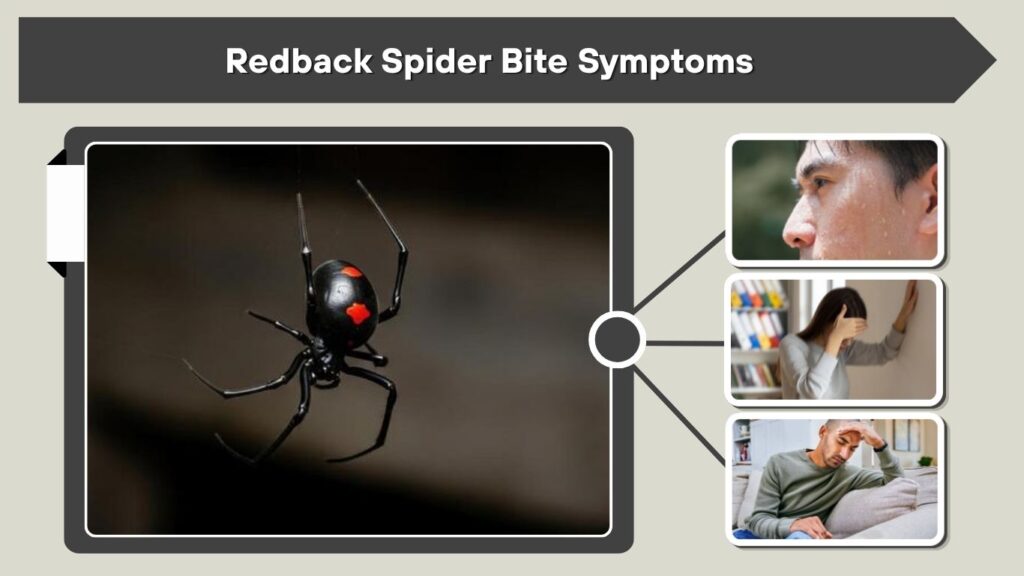
Pain is the most characteristic effect. It may begin as a pinprick or burning sensation and then become substantially stronger.
Local and Regional Symptoms
- Increasing pain at the bite site
- Pain spreading along the affected limb
- Localized or regional sweating
- Goosebumps
- Tender lymph nodes
- Mild redness and swelling
- Burning or tingling sensations
Systemic Symptoms
- Generalized sweating
- Nausea or vomiting
- Headache
- Abdominal, back, or chest pain
- Restlessness or agitation
- Muscle weakness or spasms
- Increased heart rate
- High blood pressure
- General fatigue or illness
Severe breathing problems, collapse, confusion, seizures, or loss of consciousness are uncommon but require immediate emergency assistance.
Redback Spider Bite Timeline
The progression differs between patients, so the absence of severe early symptoms does not completely exclude envenomation.
First Minutes to One Hour
The bite may feel like a pinprick or produce immediate burning. Pain commonly increases during the first hour. Sweating or goosebumps can appear around the affected area.
Several Hours
Pain may become intense and spread away from the bite. Headache, nausea, vomiting, abdominal discomfort, agitation, or generalized sweating may develop.
First 24 Hours
Significant pain may continue throughout the first day and interfere with sleep. Systemic symptoms can develop gradually rather than immediately.
A prospective study of confirmed bites found that effects lasted a median of 48 hours, pain lasted a median of 36 hours, and approximately 35% of patients experienced systemic symptoms. Individual cases can be shorter or considerably longer.
Following Days or Weeks
Most symptoms improve over several days. Persistent pain, sweating, tiredness, sleep disruption, or weakness can occasionally continue longer. Ongoing or recurring symptoms should be reviewed by a medical professional to exclude complications or another condition.
First Aid for a Redback Spider Bite
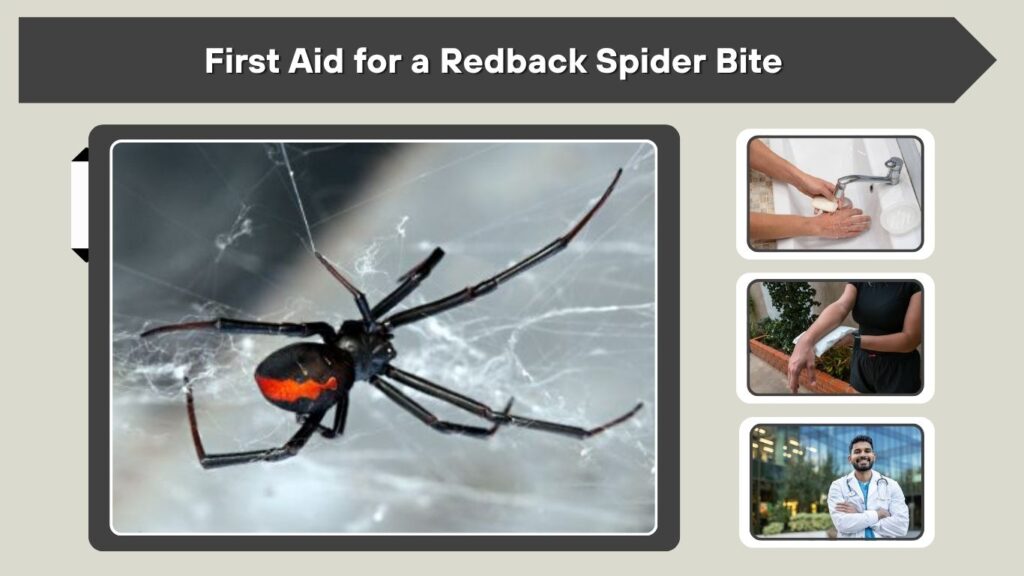
A confirmed redback bite requires cold treatment rather than pressure immobilization. Current Australian guidance states that pressure bandaging can worsen the pain.
What to Do Immediately
- Move away from the spider and sit somewhere safe.
- Wash the area gently with soap and water.
- Wrap a cold pack in cloth.
- Apply it for approximately 15 minutes.
- Contact a poison information service for personalized advice.
- Seek medical care if pain is severe or symptoms spread.
In Australia, call the Poisons Information Centre on 13 11 26. Call 000 for collapse, breathing difficulty, severe weakness, loss of consciousness, or another medical emergency. Outside Australia, contact the appropriate local poison center or emergency service.
What Not to Do
- Do not apply a pressure-immobilization bandage
- Do not use a tourniquet
- Do not cut the skin
- Do not suck the wound
- Do not place ice directly against the skin
- Do not handle the spider
- Do not rely on a bite photo for diagnosis
- Do not delay care when symptoms are worsening
If the spider was not identified and a funnel-web or another large black spider could be responsible, call emergency services immediately. Funnel-web bites require different first aid.
When to Seek Medical Attention
Contact a doctor or poison service when pain is increasing, severe, spreading, or unresponsive to basic pain relief.
Urgent Warning Signs
- Severe or persistent pain
- Repeated vomiting
- Widespread sweating
- Significant muscle cramps
- Chest or abdominal pain
- Severe agitation
- Difficulty breathing
- Faintness or collapse
- Rapidly worsening symptoms
- Signs of wound infection
A bite affecting the face, mouth, genitals, or another sensitive area should receive prompt assessment because pain and swelling can be particularly difficult to manage.
Medical Treatment and Antivenom
Treatment depends on the severity of pain and systemic symptoms. Healthcare professionals may monitor vital signs, provide suitable pain relief, treat nausea, and assess whether observation is required.
Is Antivenom Always Needed?
No. Redback antivenom is available in Australia, but most bites are managed primarily with pain relief and supportive care. Antivenom may be considered for systemic envenomation or severe pain that persists despite appropriate treatment.
Antivenom can cause allergic reactions, so its potential benefits and risks must be evaluated by a clinician, often with guidance from a toxicologist. NSW clinical guidance identifies symptomatic management as the mainstay of redback treatment.
Do not purchase antivenom or attempt treatment at home.
Can a Redback Spider Bite Kill You?
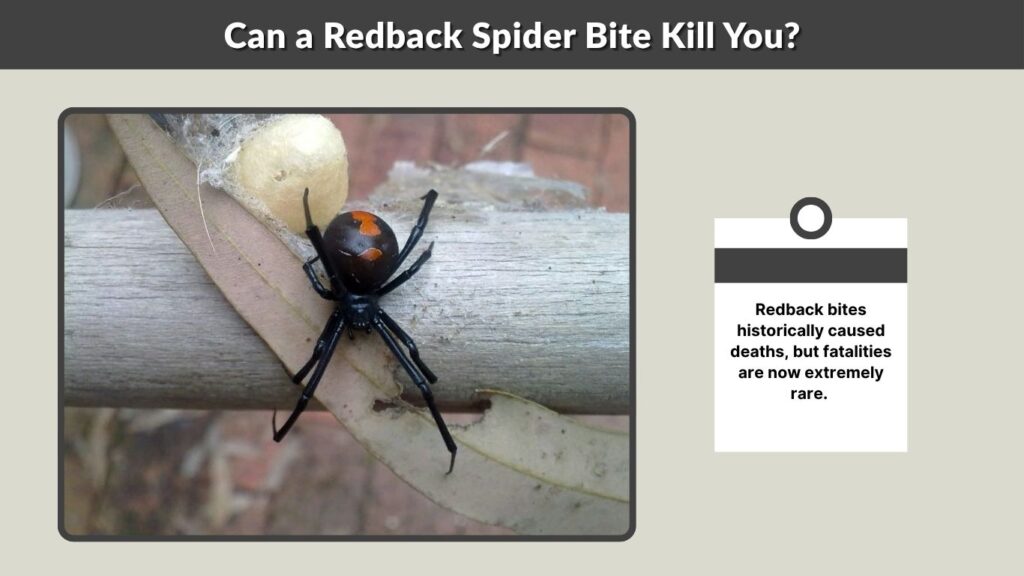
Redback bites historically caused deaths, but fatalities are now extremely rare. The University of Melbourne’s Australian Venom Research Unit reports no recorded redback deaths in Australia since 1955, the year before antivenom became available.
There is no standard “death time” following a bite. Outcomes depend on the amount of venom, the patient’s age and health, symptom severity, and access to care. Questions such as “how long until death” are therefore medically misleading. Worsening symptoms should prompt treatment rather than waiting for a particular timeline.
Bites in Children and Pregnancy
Young children may be unable to explain their pain clearly. Unexplained crying, sweating, vomiting, restlessness, or guarding one part of the body after possible spider exposure warrants immediate professional advice.
Pregnant people should also contact a medical professional or poison center promptly. Treatment decisions must consider both the patient and pregnancy, so medications or antivenom should only be given under clinical supervision.
Older adults and people with heart, respiratory, or serious chronic conditions may also require closer observation.
Redback Spider Bites in Dogs and Cats
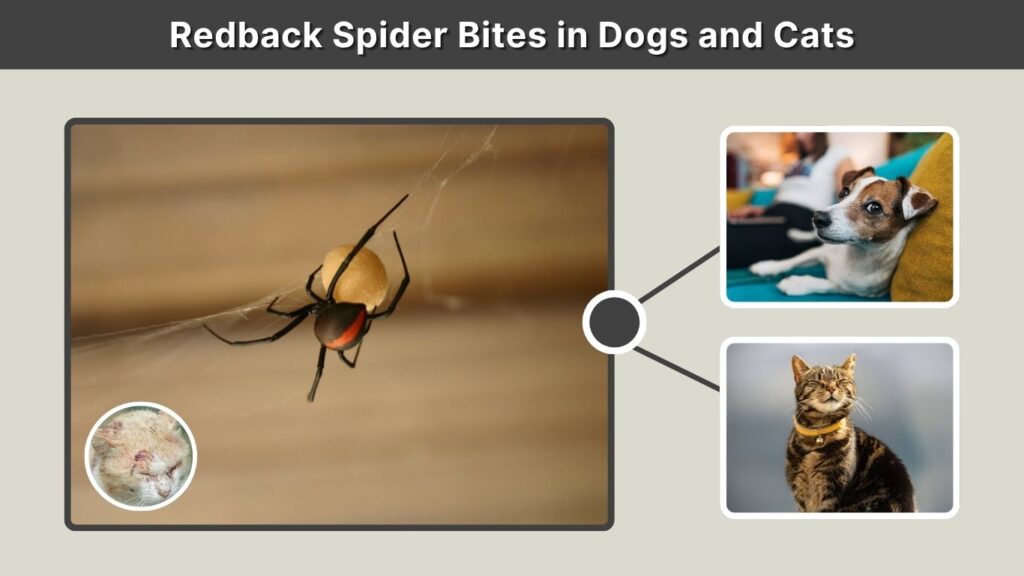
Redback venom can affect pets, and cats may be particularly sensitive. Do not give human pain medicine because several common products are toxic to animals.
Possible Pet Symptoms
- Sudden pain or vocalization
- Restlessness or agitation
- Vomiting or diarrhea
- Muscle stiffness or tremors
- Weakness
- Rapid heart rate
- Difficulty walking
- Paralysis or breathing difficulty
Move the animal away from the spider and contact a veterinarian or animal poison service immediately. In Australia, the Animal Poisons Helpline is available on 1300 869 738.
Redback vs. Red-Backed Jumping Spider Bite
A red-backed jumping spider is not the Australian redback. Jumping spiders are compact, hairy daytime hunters with large forward-facing eyes, while redbacks have glossy rounded abdomens and build tangled webs.
A jumping-spider bite generally causes localized discomfort rather than classic redback envenomation. However, any unidentified bite producing severe or spreading symptoms should receive medical assessment.
FAQs
Can you feel a redback spider bite?
Yes, although it may initially feel like a small pinprick or mild burn. Pain often intensifies during the following minutes or hours.
How painful is a redback bite?
Pain ranges from mild to severe. In confirmed cases, increasing and persistent pain is one of the most characteristic symptoms.
How long do symptoms last?
Many cases improve within one to several days. Confirmed-bite research found a median overall symptom duration of approximately 48 hours.
Does a redback bite leave fang marks?
It may leave tiny punctures, but visible fang marks are often absent. Diagnosis should not depend on finding two marks.
Can you survive a redback spider bite?
Yes. Most patients recover, and modern fatalities are exceptionally rare. Prompt professional advice remains important when pain is severe or systemic symptoms develop.
