
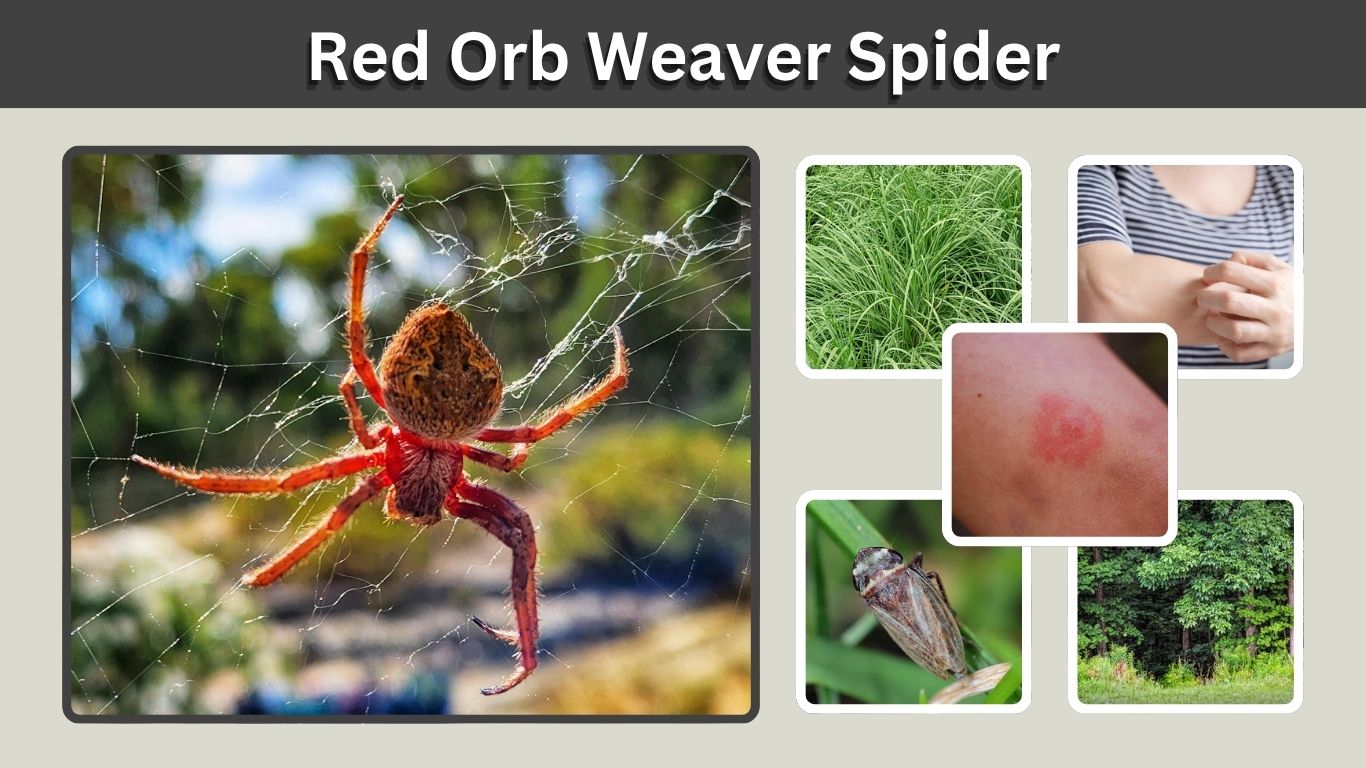
A red orb weaver is usually an orb-weaving spider with noticeable red, orange, or reddish markings rather than one single species. Depending on location and appearance, the name may refer to the red-spotted orbweaver, red-femured spotted orbweaver, marbled orbweaver, or another colorful member of the orb-weaver family. Most build large circular webs in gardens, forests, and around homes. Despite their striking colors and sometimes large size, red-colored orb weavers are generally harmless to people and rarely bite.
What Is a Red Orb Weaver?
The term red orb weaver spider can be confusing because there is no single widespread species officially known simply as the “red orb weaver.” Several spiders in the family Araneidae may appear red, orange, red-legged, or red-spotted. Their most recognizable feature is the wheel-shaped web used to catch flying insects.
Some spiders commonly associated with the name include:
- Red-spotted orbweaver – Araneus cingulatus
- Red-femured spotted orbweaver – Neoscona domiciliorum
- Marbled orbweaver – Araneus marmoreus
- Spiny orb weavers – various species
- Other Araneus and Neoscona species with reddish coloration
The red-spotted orbweaver is officially recognized as Araneus cingulatus, while Neoscona domiciliorum is especially notable for the bright red sections of its legs.
Red Orb Weaver Spider Identification
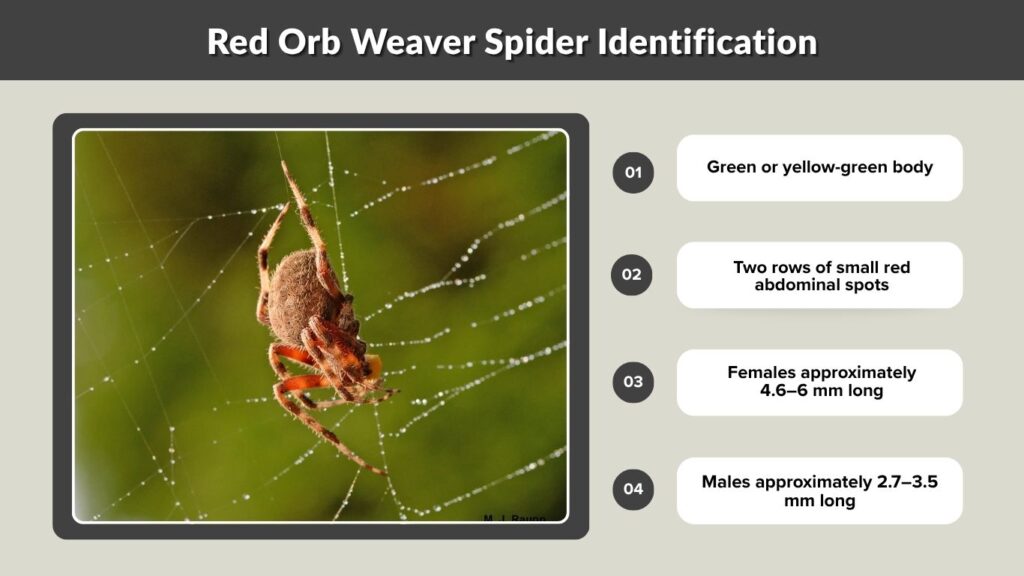
Color alone is not enough to identify these spiders because orb weavers can vary considerably between species, sexes, and individuals. Examine the abdominal pattern, leg coloration, body shape, web, and geographic location together.
Red-Spotted Orbweaver
The red-spotted orbweaver (Araneus cingulatus) is actually more green than red. Its abdomen, legs, and front portion of the body are generally green, while several small reddish spots occur along the abdomen.
Identification features include:
- Green or yellow-green body
- Two rows of small red abdominal spots
- Rounded abdomen
- Thin green legs
- Some individuals have a larger reddish marking
- Females approximately 4.6–6 mm long
- Males approximately 2.7–3.5 mm long
The species occurs primarily in eastern North America, with records extending from the northeastern United States south to Florida and westward into parts of the central United States.
Red-Femured Spotted Orbweaver
The red-femured spotted orbweaver (Neoscona domiciliorum) is one of the best matches when someone describes a large orb weaver with red legs.
The femurs—the leg sections nearest the body—are often bright red. Females may have a pale gray, white, or yellowish dorsal abdomen bordered by dark markings. Females measure approximately 7.2–16.2 mm, making them noticeably larger than the red-spotted orbweaver.
Red or Orange Marbled Orbweaver
A large orange-red orb weaver may instead be a marbled orbweaver (Araneus marmoreus).
Adult females can reach approximately 9–20 mm in body length. Their large abdomen is commonly orange with brown, purple, yellow, or cream-colored markings. Their femurs and other portions of the legs may also be orange.
Red Orb Weaver Size and Appearance
Red-colored orb weavers range considerably in size because several different species fit the description. Smaller red-spotted orbweavers may be only a few millimeters long, while large marbled orbweavers can reach about 20 mm in body length.
Why Do Some Orb Weavers Have Red Legs?
Red legs are particularly useful when identifying the red-femured spotted orbweaver. In this species, the portions of the legs nearest the body can be vivid red or reddish orange.
Other orb weavers can have orange, brown, yellow, or red bands on their legs, so red legs alone do not guarantee a particular identification.
Black and Red Orb Weaver
A black and red orb weaver may belong to several different genera. Look for the shape of the abdomen and web before assuming it is a dangerous spider.
Orb weavers often have combinations of:
- Black and red markings
- Red and white patterns
- Orange and yellow coloring
- Red or orange legs
- White abdominal patches
- Dark striped legs
These bright colors frequently serve as normal species markings rather than indications that a spider is dangerous.
Red Orb Weaver Web
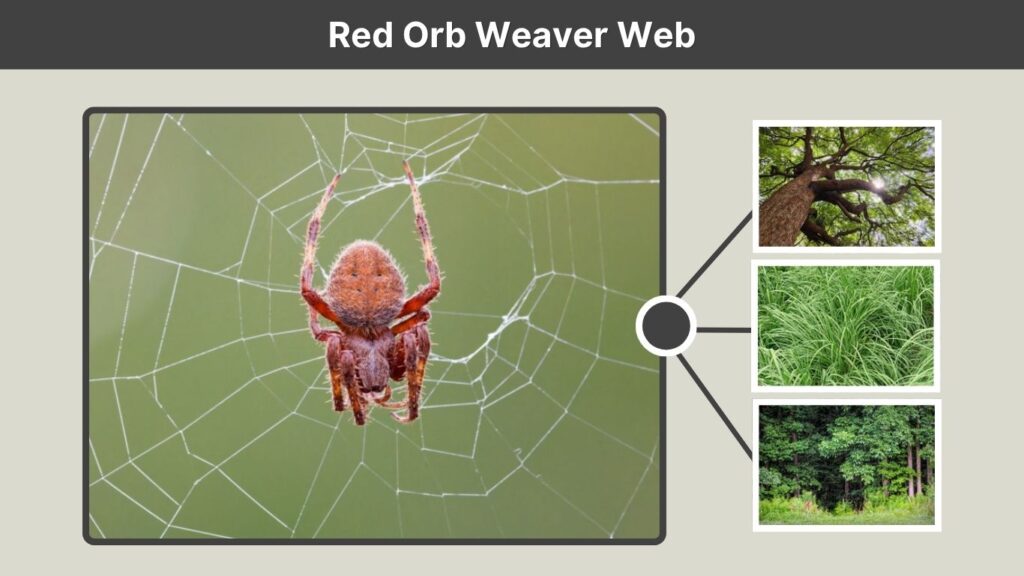
Orb weavers are named for their characteristic circular webs. The web typically contains radial strands extending outward from the center with spiral-shaped sticky silk running around them.
Where Are Their Webs Found?
Red orb weavers may build webs:
- Between tree branches
- Across shrubs
- In tall grasses
- Along forest edges
- Around porches
- Near outdoor lights
- Between fences
- In gardens and yards
Some spotted orbweavers build their webs around dusk and may dismantle much of the web again near dawn.
Marbled orbweavers commonly construct vertical webs in trees, shrubs, tall weeds, and grasses. The spider may hide in a retreat beside the web and remain connected to it by a signal thread that detects struggling prey.
What Do Red Orb Weavers Eat?
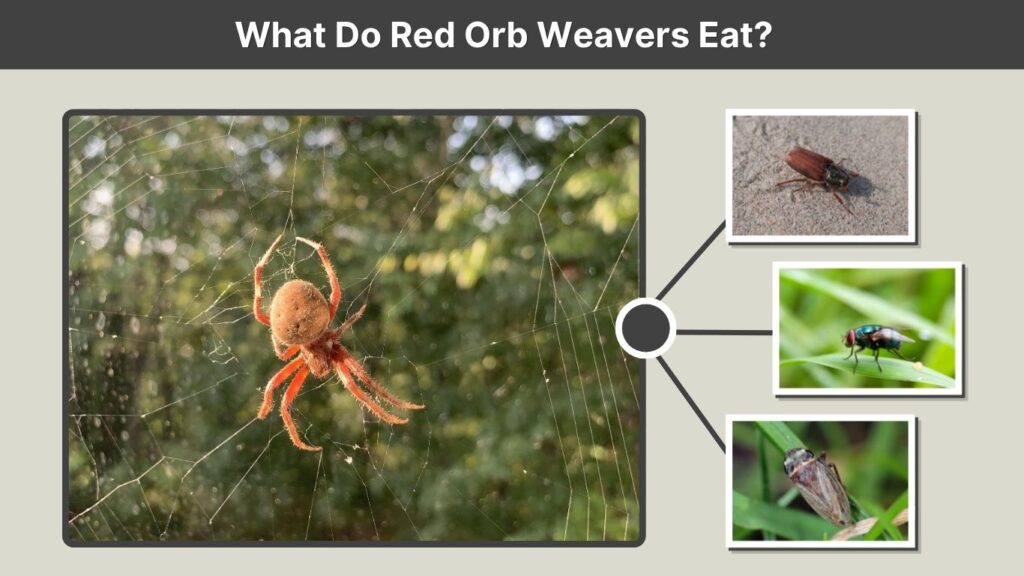
Red orb weavers are predators that help control populations of flying and crawling insects. Rather than chasing prey across the ground, they depend primarily on their sticky webs.
Common prey can include:
- Flies
- Mosquitoes
- Moths
- Beetles
- Small wasps
- Leafhoppers
- Gnats
- Other small insects
Once an insect becomes entangled, the spider detects vibrations through the silk. It approaches the prey, immobilizes it, and consumes it later.
For gardeners, this makes orb weavers beneficial natural pest predators.
Are Red Orb Weaver Spiders Poisonous?
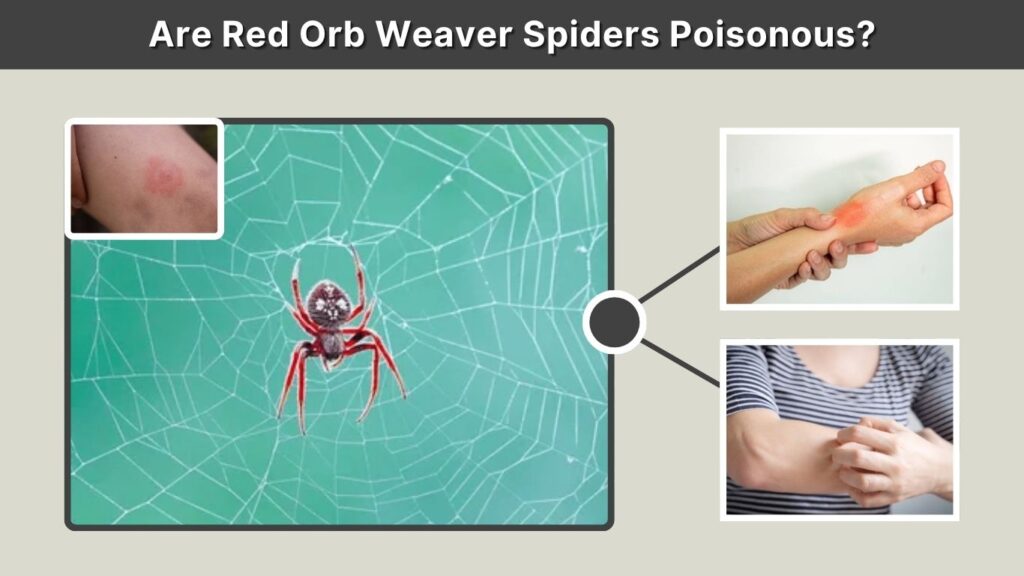
Red orb weavers are venomous rather than poisonous, as are most spiders. Venom is delivered through the fangs to immobilize prey.
However, colorful orb weavers found in gardens are not generally considered medically significant to humans. Their intimidating size and bright red coloration can make them appear more dangerous than they actually are.
Do Red Orb Weavers Bite?
They can bite when trapped against the skin, handled roughly, or otherwise threatened, but orb weavers generally prefer to escape.
A bite could cause:
- Mild localized pain
- Temporary redness
- Slight swelling
- Itching or irritation
Serious bites from typical orb-weaver species are uncommon. Penn State Extension notes that even large marbled orbweavers are unlikely to bite unless handled or disturbed around their egg sacs.
If significant swelling, breathing difficulty, severe pain, or other unusual symptoms occur after any suspected spider bite, seek medical attention.
Where Do Red Orb Weavers Live?
The exact range depends on the species.
Florida and Southeastern United States
Several colorful orb weavers occur in Florida, Georgia, Texas, and other southeastern states. The red-femured spotted orbweaver is especially associated with the eastern and southeastern United States, with documented records including Florida, Georgia, Texas, North Carolina, Virginia, and numerous surrounding states.
California
A red orb weaver seen in California should not automatically be identified as the eastern red-spotted orbweaver or red-femured spotted orbweaver. Different Neoscona, Araneus, and other orb-weaver species occur in the western United States.
Location is therefore an important part of accurate spider identification.
Red Orb Weaver Life Cycle
Most temperate orb weavers follow a seasonal cycle. Adults become particularly noticeable from summer through autumn when females grow large and begin producing eggs.
Eggs and Spiderlings
After mating, the female produces an egg sac containing developing spiderlings. Species differ in the number of eggs and where sacs are deposited.
Marbled orbweavers, for example, typically deposit egg sacs during autumn. The young remain protected through colder months and emerge the following spring. Adults become common from midsummer until freezing weather arrives.
Young orb weavers begin life extremely small but gradually develop the coloration and abdominal patterns characteristic of adults.
Red Orb Weaver vs. Dangerous Spiders
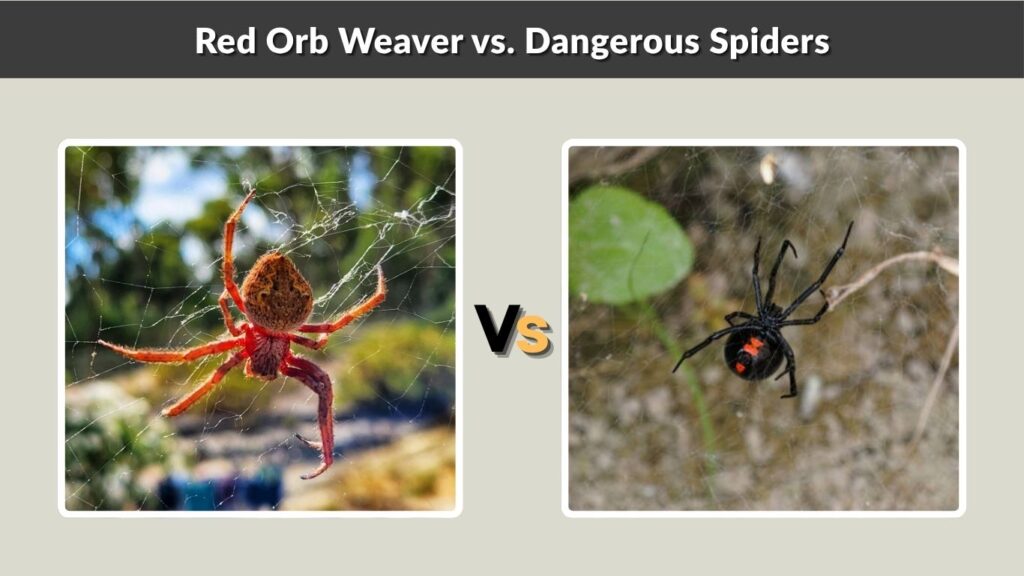
Finding a black-and-red or orange-red spider sometimes raises concerns about widow spiders. Body shape and web structure provide important clues.
Orb weavers typically have relatively large, rounded abdomens and are frequently seen sitting in conspicuous circular webs. Widow spiders instead construct irregular, tangled cobwebs in protected locations.
Never identify an unfamiliar spider solely from its red coloration.
FAQs
What is a red orb weaver spider?
“Red orb weaver” is a descriptive term that can refer to several orb-weaving spiders with red markings, including red-spotted, red-femured spotted, marbled, and other colorful orb weavers.
Are red orb weaver spiders dangerous?
Most orb weavers are not considered dangerous to humans. They possess venom for subduing insects but rarely bite unless handled or trapped.
What orb weaver has bright red legs?
The red-femured spotted orbweaver (Neoscona domiciliorum) is known for having bright red femurs, which are the leg segments nearest its body.
What is the green orb weaver with red spots?
A small green spider with rows of red spots may be the red-spotted orbweaver (Araneus cingulatus).
Are red orb weavers good for gardens?
Yes. Orb weavers capture mosquitoes, flies, moths, beetles, and many other insects, making them beneficial predators in gardens and yards.
