
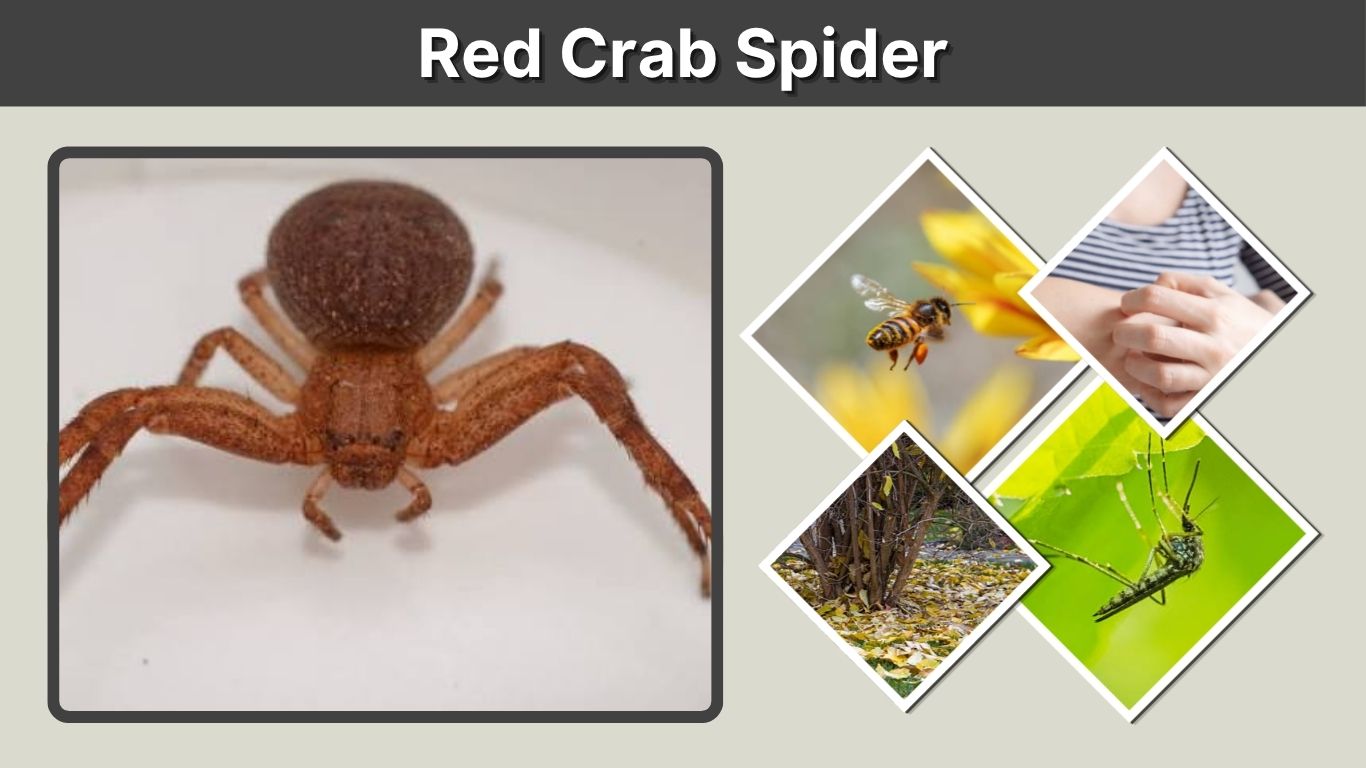
A red crab spider is usually a small crab spider with reddish, pink, brown, or red-and-white markings rather than one specific species. These spiders get their name from their crab-like shape, sideways movement, and long front legs. In North America, spiders described as red crab spiders may include the whitebanded or red-banded crab spider and several reddish ground crab spiders. They usually hide on flowers, leaves, bark, or soil and wait to ambush insects instead of building prey-catching webs.
What Is a Red Crab Spider?
Crab spiders belong to the family Thomisidae, a large group of ambush-hunting spiders. Their first two pairs of legs are generally longer and stronger than the rear legs, giving them a broad, crab-like stance. They can move sideways and backward easily, another reason people often describe them as tiny spiders that look like crabs.
Quick Identification
A typical red crab-like spider may have:
- A flattened, broad body
- Eight legs, with the front four noticeably longer
- Red, reddish-brown, pink, white, or yellow coloration
- A rounded or slightly angular abdomen
- Front legs held outward like crab claws
- No large circular prey-catching web
- A habit of waiting motionless on flowers or vegetation
Color varies greatly, so a completely red spider and a white spider with red markings could both belong to the crab-spider family.
Is “Red Crab Spider” One Species?
Not necessarily. The name is commonly used descriptively for several reddish Thomisidae.
One important North American species is the whitebanded crab spider (Misumenoides formosipes), which is also called the red-banded crab spider in some references. Females can vary substantially in color and often occur around flowers.
There are also reddish ground crab spiders in the genus Xysticus. Red individuals resembling these spiders have been documented in both Texas and Oklahoma.
Red Crab Spider Identification
Finding a red spider that looks like a crab does not always allow an exact species identification. Color, body structure, location, markings, and habitat should all be considered together.
Red-Banded or Whitebanded Crab Spider
The whitebanded crab spider (Misumenoides formosipes) is among the strongest matches for searches involving red, white, or yellow crab spiders.
Females can be white, yellow, pinkish, or patterned with reddish markings. A particularly useful identification feature is a pale ridge across the face below the eyes.
Ohio wildlife guidance lists females at roughly 5–11 mm long and males at only about 2–4 mm. Females may also change between white, yellow, and pinkish shades depending on their surroundings.
Small Red Ground Crab Spider
A small reddish or peach-colored spider found on rocks, soil, leaf litter, or the ground may be a ground crab spider, including certain Xysticus species.
Ground crab spiders are often stockier and less brightly colored than flower-dwelling species. Their brown, reddish, gray, or earthy coloration helps them blend into bark, stones, and soil.
White and Red Crab Spider
White crab spiders with red patches or bands are relatively common among flower-dwelling species.
Another species, the northern crab spider (Mecaphesa asperata), can have an off-white abdomen marked with paired reddish bands or rows of reddish spots. Its legs may also contain reddish or brown bands.
Why Does a Red Crab Spider Look Like a Crab?
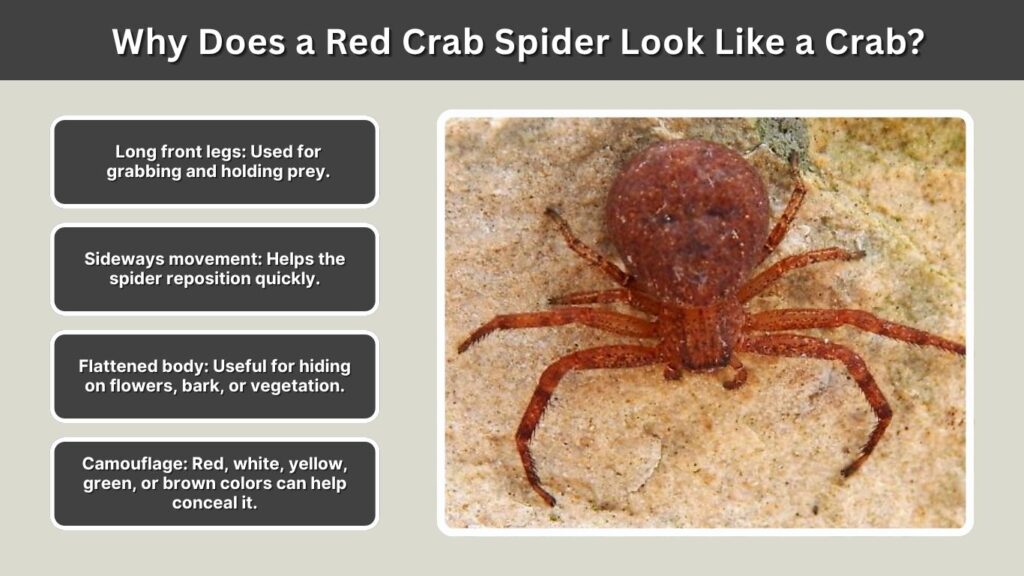
The resemblance is mainly caused by body proportions and movement. Crab spiders have strong front legs that project outward instead of directly forward. They can also move sideways in a manner similar to true crabs.
Main Crab-Like Adaptations
- Long front legs: Used for grabbing and holding prey.
- Sideways movement: Helps the spider reposition quickly.
- Flattened body: Useful for hiding on flowers, bark, or vegetation.
- Wide stance: Makes the spider look much broader than many other spiders.
- Camouflage: Red, white, yellow, green, or brown colors can help conceal it.
These adaptations allow crab spiders to hunt effectively without constructing a web to capture prey.
Habitat and Distribution
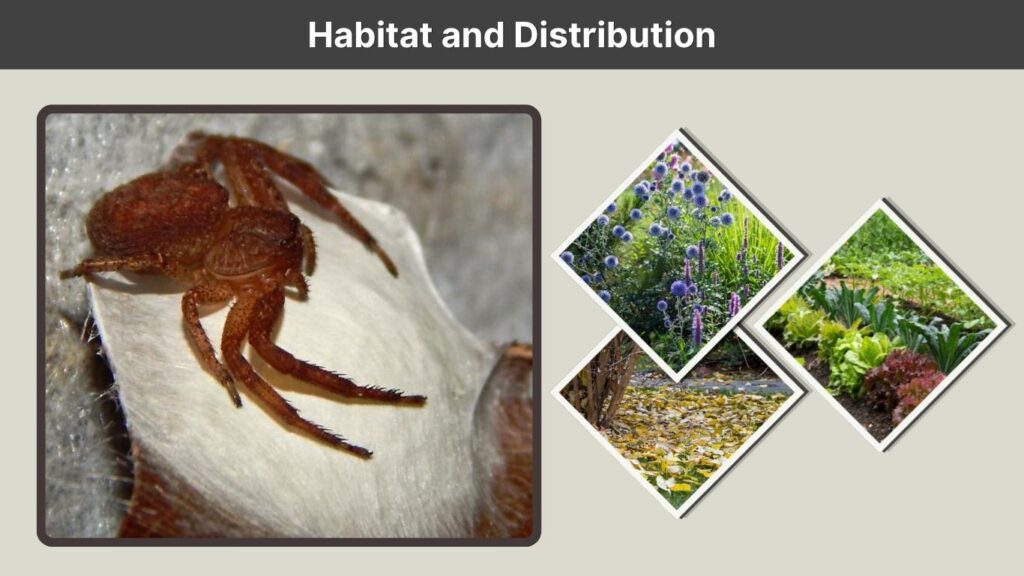
Red-colored crab spiders may be found across a wide geographic area because several species can fit the description. In the United States, reddish specimens and related crab spiders occur from Texas and Oklahoma to Florida, the Midwest, and other regions.
Where Red Crab Spiders Hide
They may be found:
- On flowers
- Beneath leaves
- On shrubs
- In gardens
- On tree bark
- Among grass
- On rocks and soil
- Around woodland edges
Flower crab spiders frequently select places where bees, flies, butterflies, and other insects visit regularly.
Red Crab Spiders in Texas and Oklahoma
Searches for a red crab spider in Texas or red crab spider in Oklahoma often involve reddish ground crab spiders or colorful flower crab spiders.
BugGuide records include reddish Xysticus crab spiders from Hays County, Texas, and Osage County, Oklahoma, demonstrating that strongly red-colored individuals occur in both states.
Exact identification normally requires a clear close-up photograph and sometimes examination of structures that cannot be seen easily with the naked eye.
What Do Red Crab Spiders Eat?
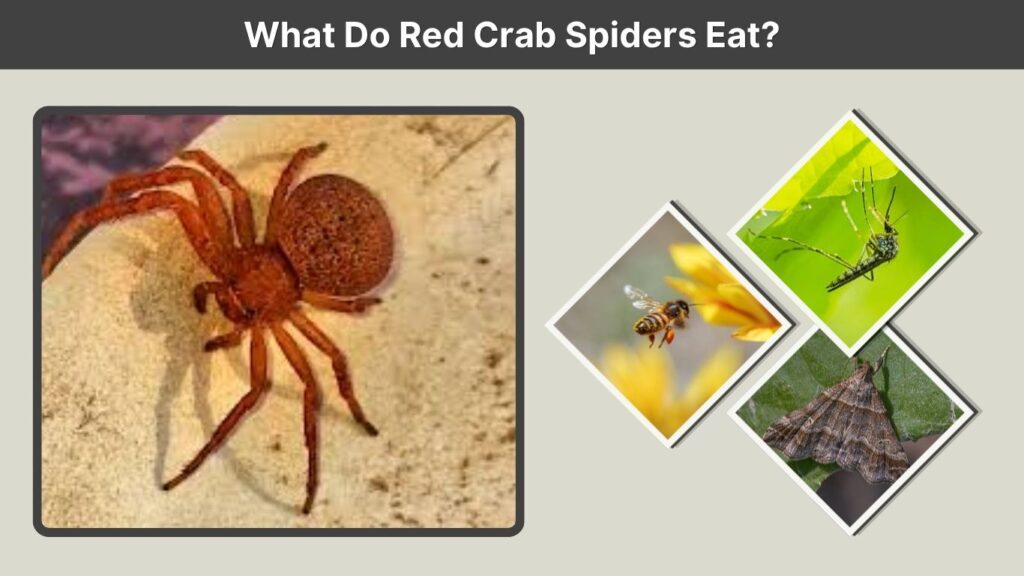
Crab spiders are active predators, but they normally do not chase prey over long distances. Instead, they remain still and suddenly attack when an insect comes within reach.
Common Prey
Their diet can include:
- Flies
- Bees
- Mosquitoes
- Moths
- Small beetles
- Leafhoppers
- Other flower-visiting insects
Some crab spiders are capable of overpowering insects larger than themselves. They grab prey with their strong front legs and deliver venom through their fangs.
Do Red Crab Spiders Make Webs?
Crab spiders produce silk, but they generally do not build webs for catching prey.
Instead, they depend on camouflage and ambush hunting. Silk may still be used for safety lines, egg sacs, shelter, or other purposes.
Are Red Crab Spiders Poisonous?
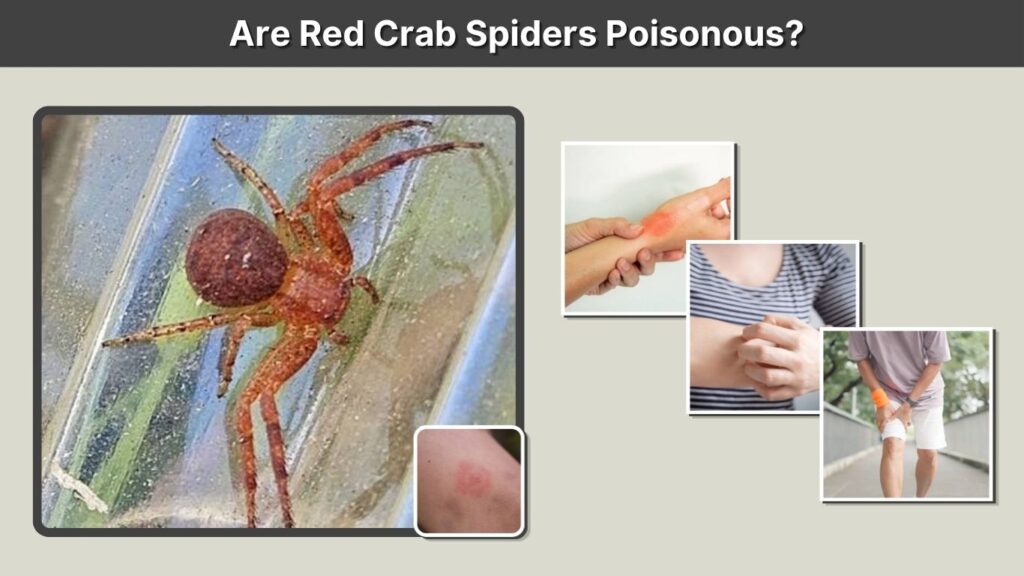
Red crab spiders are venomous, not poisonous. Venom is used to immobilize their insect prey.
For humans, however, crab spiders are not considered medically significant. The University of Kentucky notes that although some crab spiders are large enough to bite, none are known to be medically important.
Red Crab Spider Bite
A crab spider may bite if it is squeezed, trapped against the skin, or handled roughly. Bites are uncommon because these spiders usually rely on camouflage or escape instead of attacking people.
A minor bite could potentially cause:
- Temporary pain
- Redness
- Mild swelling
- Local irritation or itching
Seek medical attention if a suspected spider bite causes severe pain, rapidly increasing swelling, breathing problems, widespread symptoms, or signs of a serious allergic reaction.
Small Red Spider That Looks Like a Crab
Not every tiny red arachnid is actually a crab spider.
If the animal is extremely tiny—almost like a moving red dot—it could instead be a clover mite or another type of mite. Clover mites are arachnids but are much smaller than typical crab spiders and often appear in groups on windows, walls, patios, or around lawns.
A true crab spider normally has a clearly visible spider-shaped body and enlarged front legs.
Are Red Crab Spiders Good for Gardens?
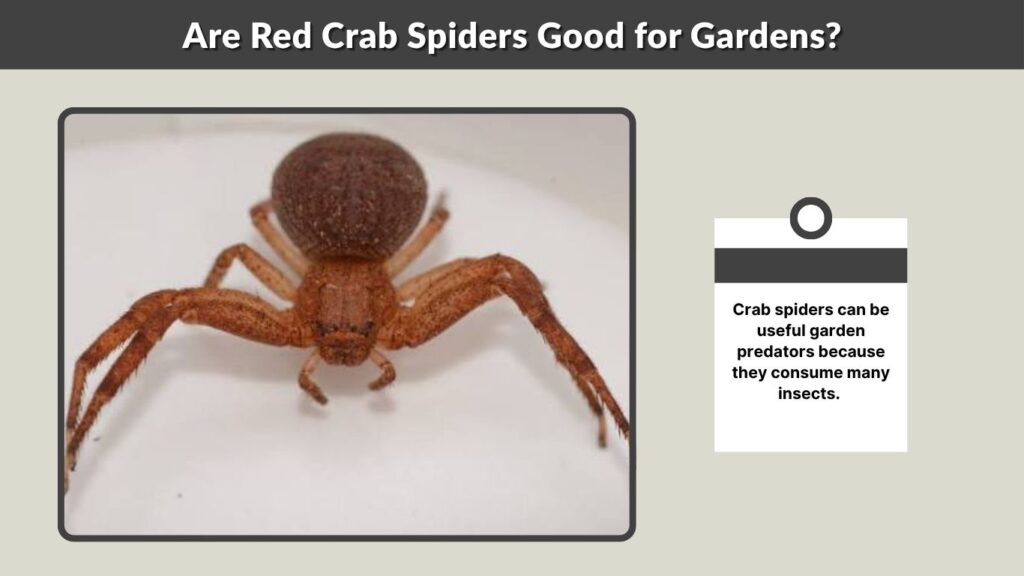
Crab spiders can be useful garden predators because they consume many insects. They sometimes capture pollinators such as bees, but they also prey on flies, mosquitoes, moths, and crop pests.
North Carolina Cooperative Extension describes crab spiders as beneficial predators that can contribute to natural pest control in gardens.
There is usually no need to remove one found outside. Leaving it undisturbed allows it to remain part of the garden ecosystem.
Red Crab Spider Life Cycle
Crab spiders generally reproduce through eggs enclosed in protective silk sacs. Females select protected locations and may remain near the eggs after laying them.
Eggs and Young
The typical cycle involves mating, egg-sac production, spiderling development, and growth through several molts before adulthood.
In many North American crab spiders, females produce eggs during the warmer season, while young spiders may overwinter or emerge during the following growing season. Life-cycle timing varies according to species and climate.
FAQs
What is a red crab spider?
A red crab spider usually means a reddish member of the crab-spider family Thomisidae. It is a descriptive name rather than the name of one universal species.
What spider is red and looks like a crab?
Possible matches include reddish ground crab spiders, whitebanded or red-banded crab spiders, and other colorful flower crab spiders.
Are red crab spiders dangerous?
No crab spiders are considered medically significant to humans. They possess venom for hunting insects but generally avoid people.
Why does a crab spider have long front legs?
The enlarged front legs help the spider seize and hold insects during an ambush and also create its characteristic crab-like appearance.
Do red crab spiders build webs?
They produce silk but usually do not build prey-catching webs. Instead, they sit on flowers, leaves, bark, or the ground and ambush insects that approach.
