
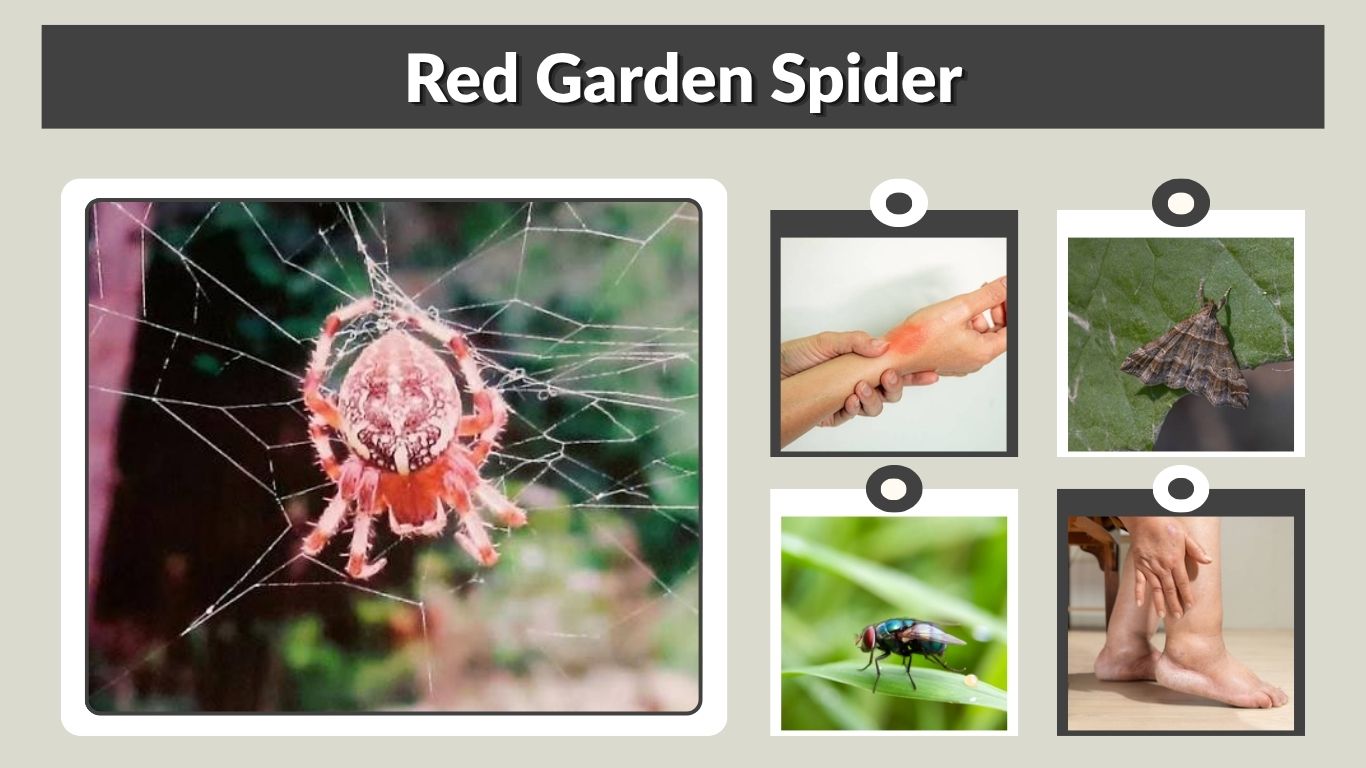
A red garden spider can be an eye-catching visitor among flowers, shrubs, and vegetables, but the name does not describe one specific spider species. Several harmless garden spiders may have red bodies, red legs, or reddish markings, while tiny red creatures on plants may actually be mites rather than spiders. Most garden spiders are beneficial predators that reduce insect pests. This guide explains how to identify red garden spiders, common types you may encounter, whether they bite, and when control may be necessary.
What Is a Red Garden Spider?
“Red garden spider” is an informal description rather than an official species name. People often use it for spiders with reddish legs, orange-red abdomens, red markings, or an overall rusty coloration. The exact species depends heavily on location. Some are orb-weavers living in webs between plants, while others are hunting spiders that move across leaves and soil.
Common Identification Features
- Red, orange, reddish-brown, or rusty coloration
- Eight legs and two main body sections
- Body size ranging from a few millimeters to several centimeters
- Some species have red legs with a pale, brown, or patterned abdomen
- Orb-weavers usually build circular webs between vegetation
- Hunting species may be found walking on leaves instead of sitting in webs
- Females are often larger and more colorful than males
Is Every Red Spider in the Garden the Same Species?
No. Color alone is not enough to identify a spider. Many unrelated species can appear reddish, especially juveniles or individuals with natural color variation.
A red spider seen in California may be completely different from one found in Pennsylvania, Georgia, the UK, Australia, or New Zealand. Web shape, body proportions, markings, size, and geographic location are usually more useful than color alone.
Common Types of Red Spiders Found in Gardens
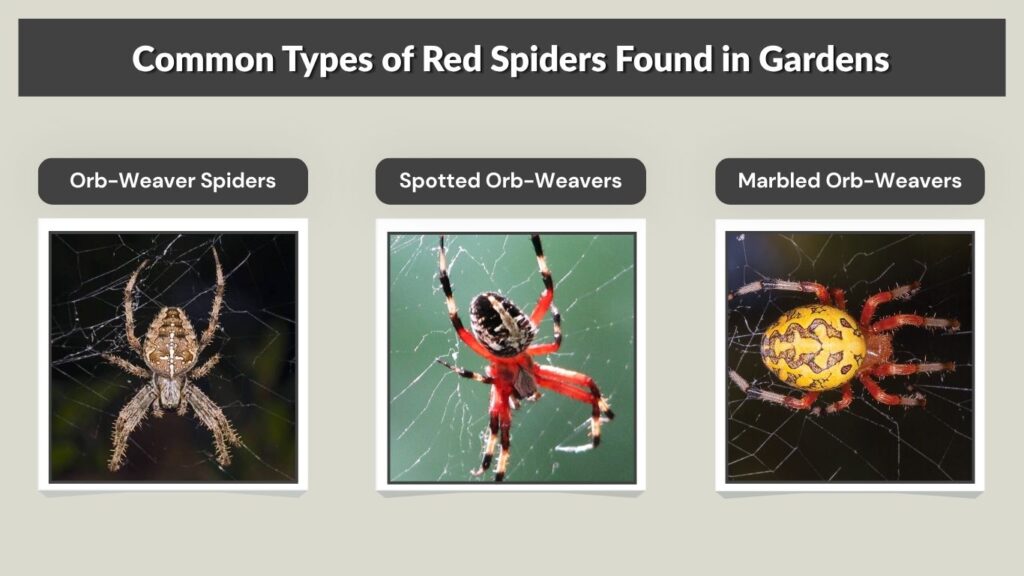
Several spider groups can match searches such as red garden spider, garden spider with red legs, or red spider with a red abdomen. Most are harmless to people and valuable to gardens because they consume insects.
Orb-Weaver Spiders
Orb-weavers are among the most likely spiders to be described as red garden spiders. They construct large, wheel-shaped webs between plants, fences, trees, and garden structures.
Many orb-weaver species have reddish-orange legs or abdomens, especially during late summer and fall. Their rounded bodies and elaborate webs make them relatively easy to recognize.
Spotted Orb-Weavers
Some spotted orb-weavers have reddish or orange legs combined with tan, brown, or patterned abdomens. They often hide during daylight and become more active around their webs in the evening.
These spiders commonly inhabit gardens, wooded edges, porches, and yards where flying insects are plentiful.
Shamrock and Marbled Orb-Weavers
Certain shamrock and marbled orb-weavers can appear orange, reddish-orange, yellow, white, or brown. Their coloration varies considerably between individuals.
They are large enough to attract attention but generally remain in their webs and avoid human contact.
Red, Black, White, and Yellow Garden Spiders
Garden spiders can display combinations of red with other colors. These patterns often cause confusion because people may assume every red-and-black spider is dangerous. In reality, many brightly colored garden species are harmless orb-weavers or other common outdoor spiders.
Red and Black Garden Spider
- Look for the location of the red markings.
- Check whether the spider has a round orb-weaver abdomen.
- Notice whether it occupies a large circular web.
- Avoid identifying it as a widow based only on red and black coloration.
- Widow spiders generally build irregular, tangled webs rather than classic circular orb webs.
Red and White Garden Spider
Red legs combined with a cream, silver, or white abdomen occur in several spider groups. Some orb-weavers have pale abdomens decorated with reddish, brown, or black markings. The pattern may change as the spider matures.
Red and Yellow Garden Spider
Yellow garden spiders sometimes have orange or reddish areas around their legs or joints. A black-and-yellow garden spider, for example, can occasionally look reddish in particular lighting or during certain developmental stages.
These large spiders are beneficial insect predators and are usually not aggressive toward people.
Small and Tiny Red Spiders in the Garden
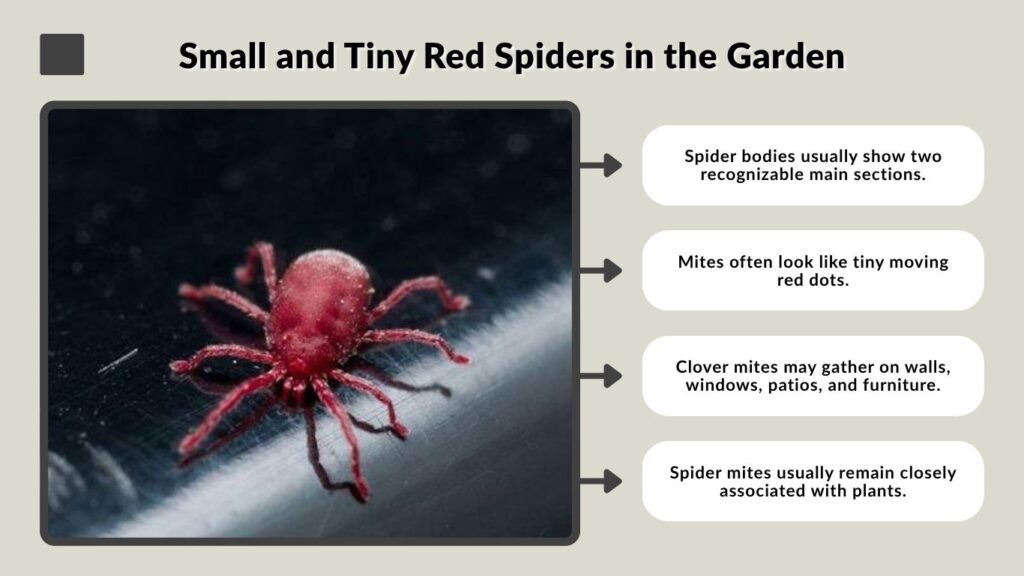
Not every tiny red creature running across leaves, walls, or garden furniture is actually a spider. Many are mites. Because mites are also arachnids and possess eight legs as adults, they are frequently mistaken for miniature spiders.
How to Tell Tiny Red Spiders From Mites
- Spider bodies usually show two recognizable main sections.
- Mites often look like tiny moving red dots.
- Clover mites may gather on walls, windows, patios, and furniture.
- Spider mites usually remain closely associated with plants.
- Plant-feeding spider mites may produce extremely fine webbing.
- True spiders generally hunt insects rather than damage plant leaves directly.
Red Spider Mites in Gardens
Spider mites are plant-feeding arachnids rather than true spiders. They pierce plant cells and remove their contents, causing leaves to develop pale dots, yellowing, bronzing, or eventually premature leaf drop.
Hot, dry conditions often encourage spider mite populations. Severe infestations may affect vegetables, flowers, shrubs, fruit plants, and ornamental species.
Are Red Spider Mites Friend or Foe?
Plant-feeding spider mites are generally garden pests. Unlike beneficial spiders, they do not protect plants by hunting insects.
However, seeing one tiny red arachnid does not automatically mean your plants are infested. Check the undersides of leaves for clusters of mites, fine webbing, stippling, and declining foliage before deciding treatment is necessary.
Are Red Garden Spiders Dangerous?
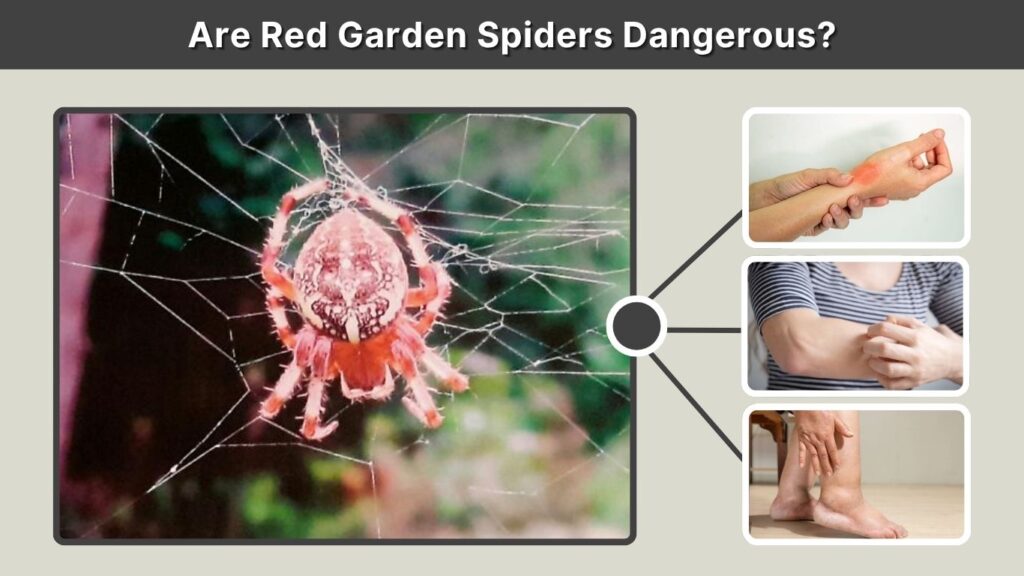
Most red or reddish spiders encountered in gardens pose little risk to people. Garden spiders generally prefer escaping, hiding, or remaining motionless rather than interacting with humans. Their venom is designed primarily for immobilizing small insect prey.
Do Red Garden Spiders Bite?
Most garden spiders can technically bite if they are trapped against the skin, squeezed, or handled roughly. However, bites are uncommon.
When a typical orb-weaver does bite, symptoms are usually limited to temporary localized discomfort such as mild pain, redness, itching, or swelling.
When Should You Be More Cautious?
Be more careful when dealing with a spider that cannot be confidently identified, especially one found in a sheltered, tangled web rather than an exposed orb web.
A spider with red markings should never be identified solely from color. Some widow spiders have red or reddish markings, but body shape, web structure, marking placement, and geographic range should all be considered.
Benefits of Red Garden Spiders
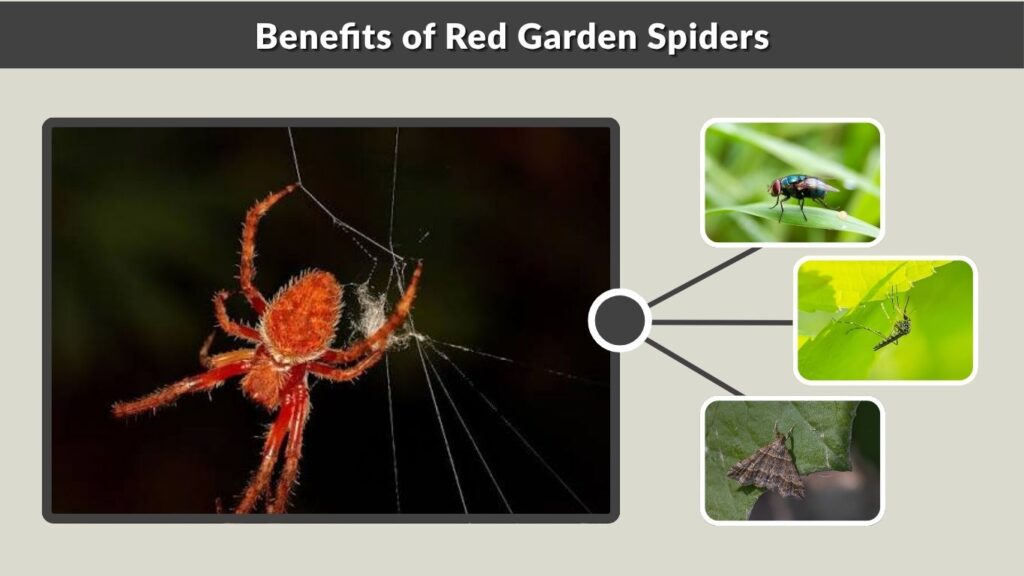
Although a large red-legged spider can look alarming, garden spiders provide natural pest control. They capture many insects that would otherwise feed on plants or become nuisances around outdoor spaces.
Garden Pests They May Eat
- Flies
- Mosquitoes
- Moths
- Small beetles
- Leafhoppers
- Gnats
- Aphids caught in webs
- Small grasshoppers
- Other flying and crawling insects
Why You May Want to Leave Them Alone
A healthy population of spiders can reduce the number of insects around gardens without pesticides. Orb-weavers are particularly useful because their large webs continuously intercept flying insects.
Spiders are also part of the garden food web and provide prey for birds, reptiles, amphibians, and other wildlife.
How to Get Rid of Red Spiders in the Garden
Before removing a red spider, determine whether you are dealing with a beneficial spider or plant-damaging spider mites. Ordinary garden spiders rarely require treatment, while a serious mite infestation may need active management.
Removing Garden Spiders
If a web is inconveniently located, gently remove it with a broom or garden tool while the spider is away, or carefully relocate the spider outdoors to another sheltered area.
Reducing bright outdoor lighting at night may also decrease the flying insects that attract web-building spiders close to doors and patios.
Controlling Red Spider Mites
For spider mites, begin by inspecting affected leaves and washing plants with a firm stream of water, particularly on leaf undersides. Removing badly damaged foliage can reduce populations.
Keep plants properly watered because drought-stressed plants can be more vulnerable to mites. In persistent infestations, horticultural oils or insecticidal soaps may help when they are appropriate for the affected plant and used according to label directions.
FAQs
1. What kind of spider is a red garden spider?
There is no single species officially called the red garden spider. The term can describe several orb-weavers and other garden spiders with red bodies, legs, or markings. Identification depends on size, web shape, body markings, and location.
2. Are red garden spiders poisonous?
Spiders are venomous rather than poisonous because they inject venom through their fangs. Most common garden spiders have venom designed for small prey and are not considered medically significant to humans.
3. Why does my garden spider have red legs?
Red or orange legs are a natural characteristic of several spider species, particularly some orb-weavers. Color can also differ between males and females, juveniles and adults, and even individuals of the same species.
4. What are the tiny red spiders all over my garden?
Very tiny red dots on plants, walls, patios, or garden furniture are often mites rather than true spiders. Spider mites may damage plants, while clover mites frequently wander onto outdoor structures without causing the same type of plant injury.
5. Should I kill red spiders in my garden?
Usually, no. Most true garden spiders are beneficial predators that eat pest insects. Leave them alone when possible. Control is more appropriate when the tiny red arachnids are confirmed plant-feeding spider mites that are causing visible damage to garden plants.
