
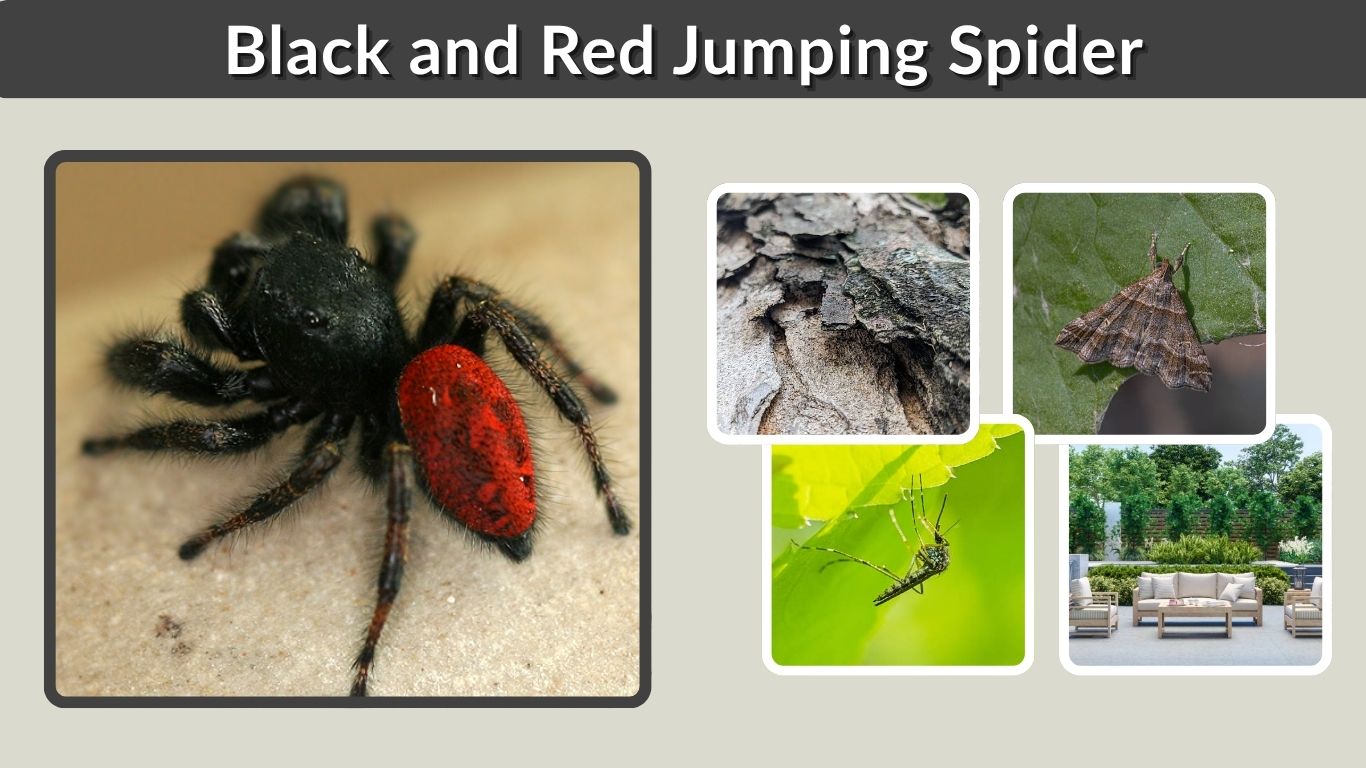
A black and red jumping spider is usually a member of the jumping spider family Salticidae, but the description can fit several species. In western North America, one of the strongest matches is the red-backed jumping spider (Phidippus johnsoni), which combines a fuzzy black body with a striking red abdomen. Juvenile bold jumping spiders can also display red or orange spots before becoming black and white as adults. Although their colors may look alarming, these active little hunters generally pose little danger to people.
What Is a Black and Red Jumping Spider?
“Black and red jumping spider” is primarily a description rather than the official common name of one species. Several jumping spiders develop red, orange, or reddish markings against a dark body.
The most likely identity depends on the spider’s abdominal pattern, size, sex, age, and geographic location.
Common Species That May Look Black and Red
- Red-backed jumping spider – Phidippus johnsoni
- Bold jumping spider – Phidippus audax, especially juveniles
- Cardinal jumper – Phidippus cardinalis
- Other reddish Phidippus species
Of these, Phidippus johnsoni is particularly well known for having a black front body and a large red area across the abdomen. It is one of the most familiar large jumping spiders of western North America.
How to Recognize a Jumping Spider
Most jumping spiders share several noticeable characteristics:
- Compact, hairy body
- Eight eyes
- Two exceptionally large forward-facing eyes
- Short, powerful legs
- Quick walking movements
- Ability to make controlled jumps
- Habit of turning toward moving objects
- No large prey-catching web
Their large front eyes give jumping spiders much better vision than many other spider groups.
Red-Backed Jumping Spider: The Most Likely Match
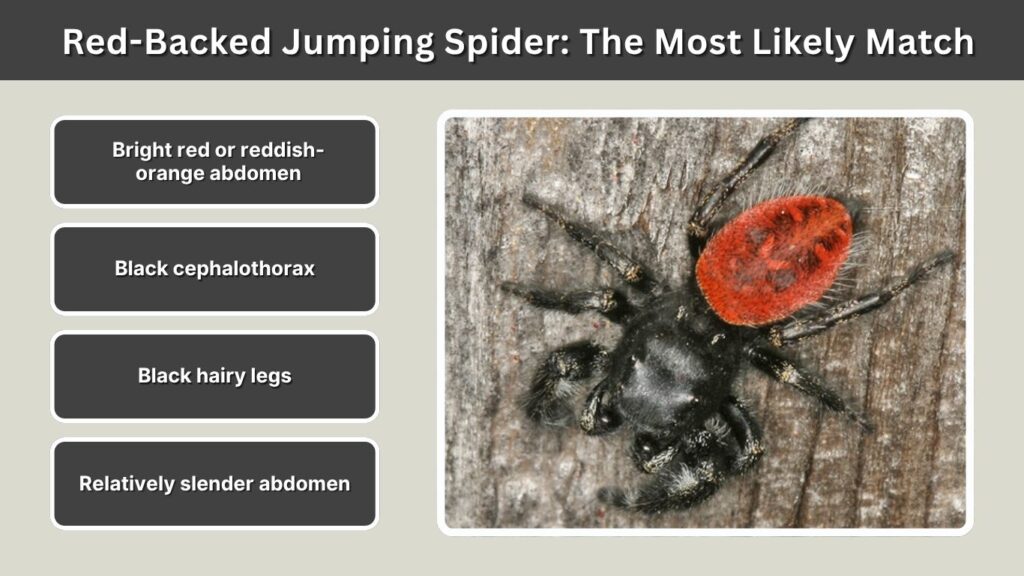
If you see a fairly large black jumping spider with a red back in California or another western region, Phidippus johnsoni is one of the first species worth considering.
Adults generally measure around 9–14 mm in body length. The body is robust and hairy, and the contrast between black and bright red can be dramatic.
Male Black and Red Jumping Spider
Adult male P. johnsoni typically has an abdomen that is almost entirely red above.
Common male characteristics include:
- Bright red or reddish-orange abdomen
- Black cephalothorax
- Black hairy legs
- Relatively slender abdomen
- Large dark front eyes
- Metallic-looking chelicerae
Because the red coloration covers most of the abdomen, a male can look like a black spider with a bright red “butt.”
Female Black and Red Jumping Spider
Female red-backed jumping spiders have a slightly different abdominal pattern. Their abdomen is red but normally contains a black marking or stripe running through the center.
Females are generally more robust than males, especially when mature. This male-versus-female difference is one of the more useful visual clues for identifying the species.
Black Jumping Spider With a Red Dot
A spider that is mainly black with only one or several small red dots may not be a red-backed jumping spider.
One particularly common possibility is the bold jumping spider (Phidippus audax).
Juvenile Bold Jumping Spider
Bold jumping spiders are typically black with white abdominal markings as adults. During immature stages, however, those markings can become orange or reddish.
This means a juvenile can look like a small black jumping spider with a red dot or several red spots. As it matures, the reddish markings often change back toward white.
Adult bold jumpers commonly have three noticeable pale abdominal spots, while juveniles may have the same basic pattern in orange or red.
Red-Backed vs. Bold Jumping Spider
The easiest difference is usually the amount and arrangement of red.
| Feature | Red-Backed Jumper | Juvenile Bold Jumper |
| Scientific name | P. johnsoni | P. audax |
| Red marking | Large red abdominal area | Separate red/orange spots |
| Adult male | Abdomen largely red | Usually black with white spots |
| Adult female | Red with central black marking | Usually black with pale spots |
| Range | Mainly western North America | Widespread in U.S. and Canada |
Because jumping spider coloration changes with age, photographs of the abdomen and face are helpful for identification.
Where Do Black and Red Jumping Spiders Live?
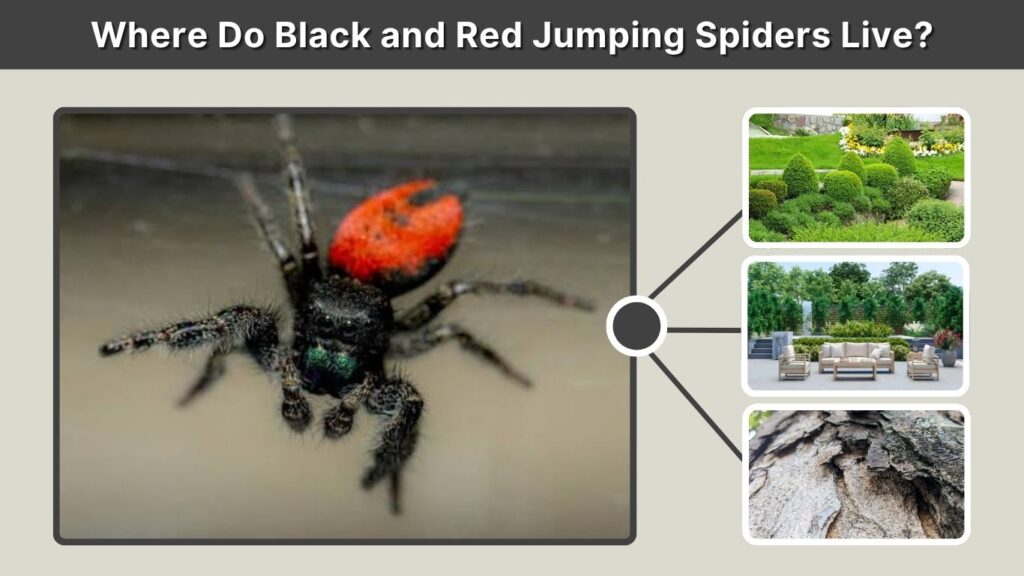
The location of the spider can significantly narrow down its identity. Phidippus johnsoni, for example, is primarily western and has been documented from northern parts of North America south into California and Arizona and east toward western South Dakota.
Common Places to Find Them
Black and red jumping spiders may be found:
- On walls and fences
- Among shrubs
- On tree trunks
- Under rocks
- Around gardens
- On outdoor furniture
- In grass and vegetation
- Around windows
- On sunny exterior walls
- Beneath loose bark or wood
They are active during daylight because vision is extremely important for hunting.
California, Nevada, and the Southwest
California is particularly well known for sightings of red-backed jumping spiders. Verified examples occur in different parts of the state, including Southern California and the San Francisco Bay Area.
Black-and-red jumpers seen in Nevada, Arizona, New Mexico, or surrounding western regions may belong to P. johnsoni or another similar western Phidippus. Color alone should not be used for a definitive species identification.
What Do Black and Red Jumping Spiders Eat?
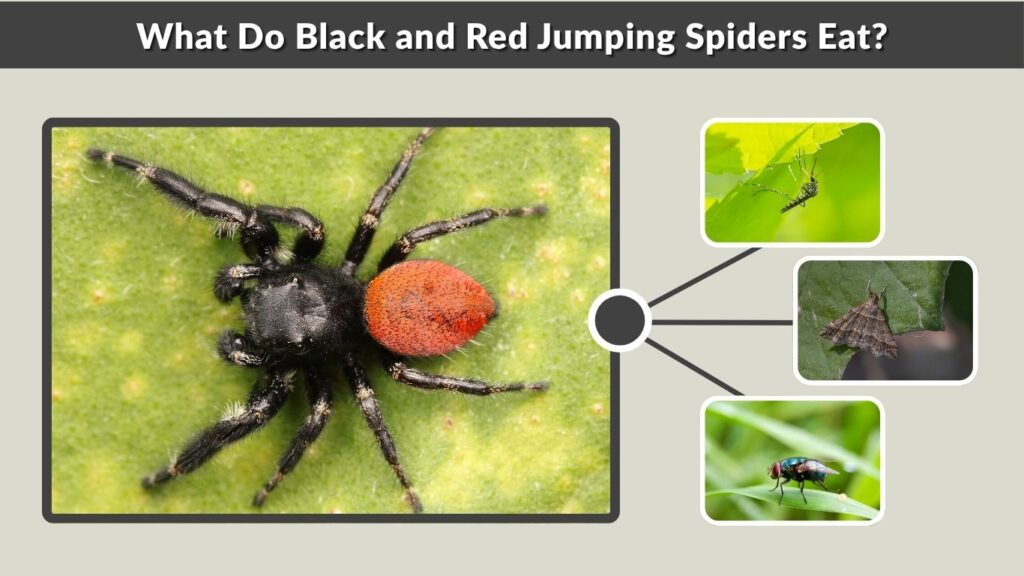
Jumping spiders are active hunters. They do not wait for insects to become trapped in a large web.
Instead, the spider watches its surroundings, stalks potential prey and makes a rapid jump when it gets close enough.
Common Prey
Their diet may include:
- Flies
- Gnats
- Mosquitoes
- Small moths
- Beetles
- Leafhoppers
- Small caterpillars
- Other spiders
Before jumping, the spider often attaches a strand of silk to the surface. This functions like a safety line if it misses its target or falls.
Because they prey on many small insects, jumping spiders can be beneficial predators around gardens and homes.
Do Black and Red Jumping Spiders Make Webs?
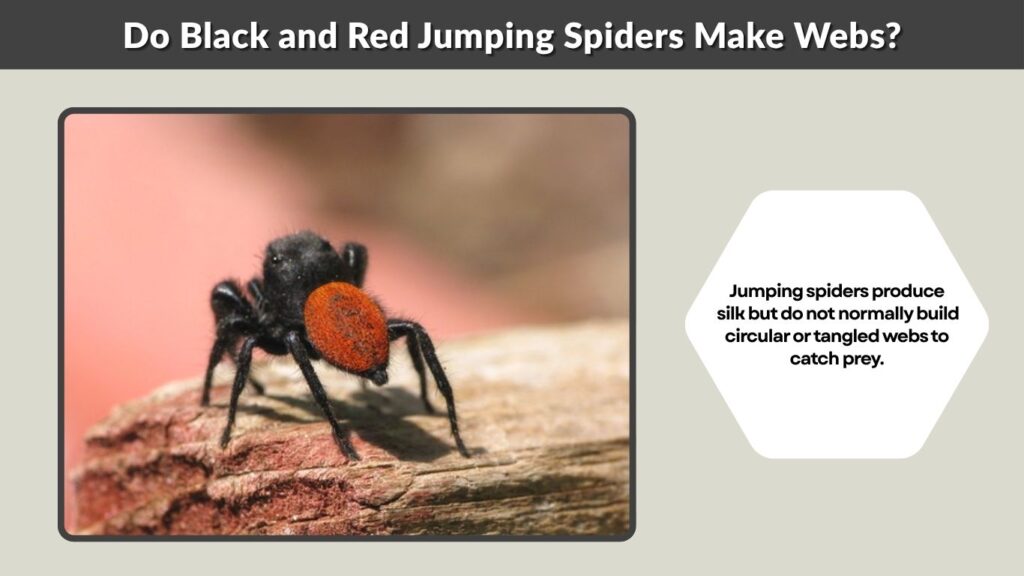
Jumping spiders produce silk but do not normally build circular or tangled webs to catch prey.
Instead, they construct small silk retreats in protected locations.
Silk Is Used For
- Resting at night
- Molting
- Protection during bad weather
- Laying eggs
- Guarding egg sacs
- Safety lines while jumping
Finding a black-and-red spider actively walking around during the day rather than sitting inside a prey-catching web is therefore another clue that it may be a jumping spider.
Are Black and Red Jumping Spiders Poisonous?
Black and red jumping spiders are venomous rather than poisonous. They use venom to subdue the insects and other small arthropods they capture.
Their venom is not considered medically significant to most people.
For Phidippus johnsoni specifically, BugGuide notes that the species is not considered harmful to humans, although a defensive bite can be painful.
Black and Red Jumping Spider Bite
Jumping spiders generally prefer escaping over biting. A bite is more likely if the spider is:
- Squeezed
- Trapped against skin
- Picked up roughly
- Accidentally pressed inside clothing
- Prevented from escaping
A minor bite may cause temporary pain, redness, swelling, or irritation.
Wash the area with soap and water and monitor it. Seek medical attention if severe swelling, intense or worsening pain, difficulty breathing, or other serious symptoms occur.
Black and Red Jumping Spider vs. Black Widow
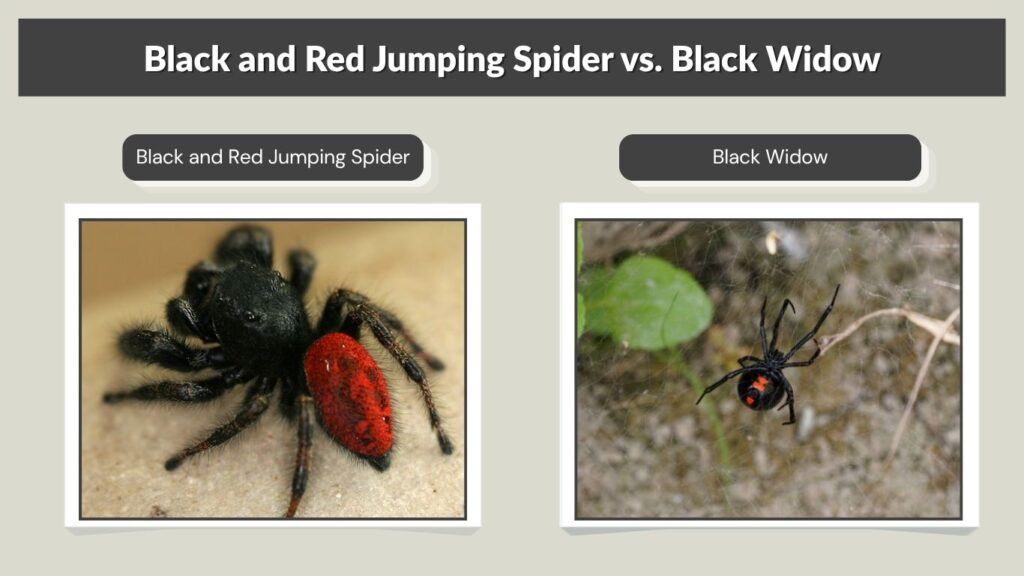
The red and black coloration sometimes causes people to confuse jumping spiders with black widows, but their appearance and behavior are very different.
Key Differences
Jumping spiders have fuzzy, compact bodies, prominent front eyes, quick movements, and frequently jump. They actively hunt prey during daylight.
Black widows have comparatively smooth bodies with large rounded abdomens and typically remain around irregular cobwebs. Adult female widows are famous for the red hourglass marking on the underside of the abdomen.
The red-backed jumping spider should also not be confused with the Australian redback spider (Latrodectus hasselti), which is a completely different widow spider.
Other Red and Black Jumping Spiders
Not every colorful jumper is P. johnsoni.
Cardinal Jumping Spider
The cardinal jumper (Phidippus cardinalis) is another species capable of displaying vivid red coloration combined with darker legs and markings. The species name cardinalis itself refers to its cardinal-red dorsal coloration.
Red, White, and Black Jumping Spiders
Some jumping spiders combine red or orange markings with white patches and black bodies. These patterns are especially common among immature Phidippus spiders.
Since coloration can change after each molt, identification from one feature such as a red spot can easily produce the wrong species name.
Are Black and Red Jumping Spiders Good to Have Around?
In most situations, yes. Jumping spiders are natural insect predators and generally have little interest in people.
A jumper living in a garden may reduce populations of flies, moths, gnats, and other small arthropods.
If one enters a house, killing it is usually unnecessary. You can place a cup over the spider, slide a piece of paper underneath, and release it outside.
Their habit of turning to look at people can make them seem unusually curious. This behavior mainly reflects their excellent eyesight and dependence on visual information for hunting and navigation.
FAQs
What is the black and red jumping spider called?
One of the most likely species in western North America is the red-backed or Johnson’s jumping spider (Phidippus johnsoni).
What is a black jumping spider with a red dot?
It may be a juvenile bold jumping spider (Phidippus audax). Juveniles commonly develop orange or reddish abdominal markings that often become white as they mature.
Are black and red jumping spiders dangerous?
Generally, no. Jumping spiders have venom for subduing prey but are not considered medically dangerous to humans.
Do black and red jumping spiders bite?
They can bite when squeezed or threatened, but bites are uncommon. Most jumping spiders would rather jump or run away.
How can I identify a red-backed jumping spider?
Look for a fuzzy black body, large forward-facing eyes and a substantial red abdominal area. Male P. johnsoni usually has a mostly red abdomen, while the female normally has a dark central marking running through the red abdomen.
