
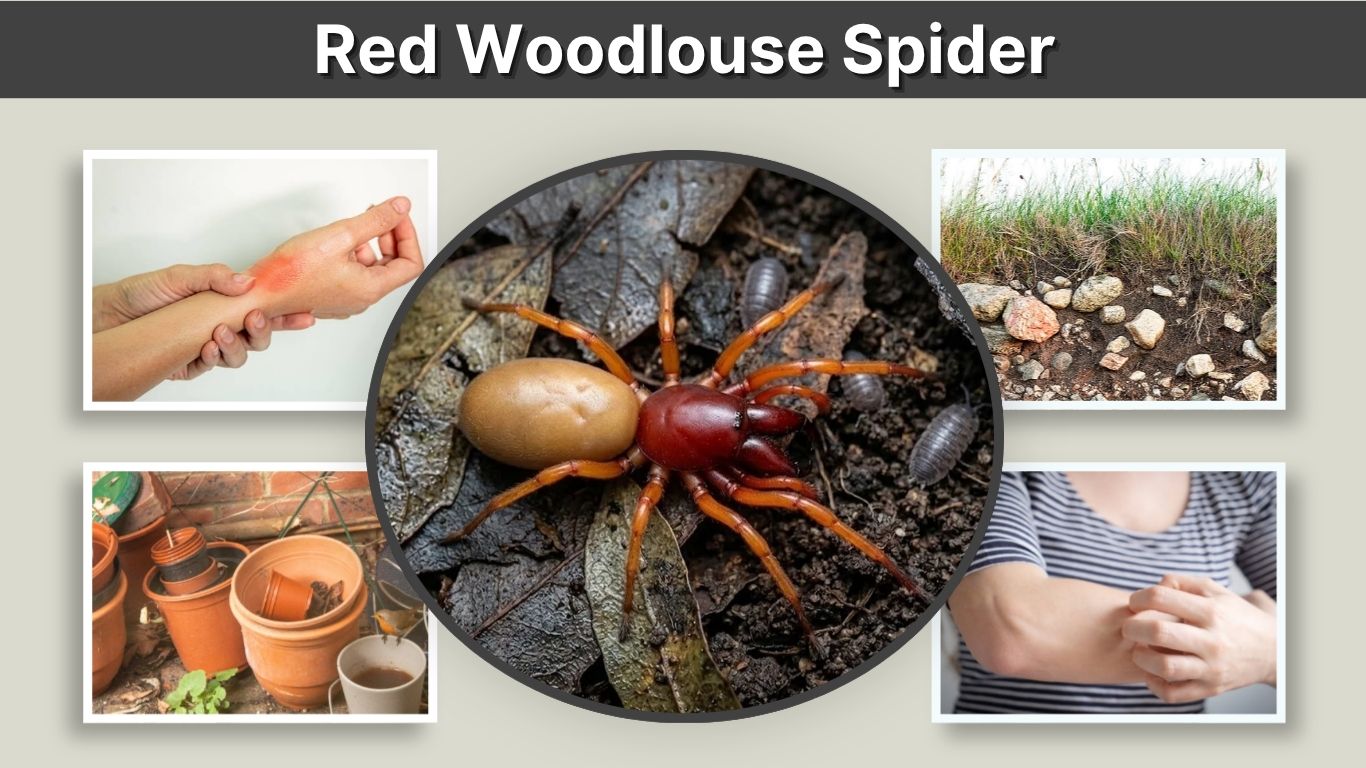
The red woodlouse spider is a distinctive hunting spider recognized by its reddish-orange body, large jaws, and pale abdomen. Scientifically known as Dysdera crocata, it is commonly found beneath stones, logs, leaf litter, and other damp hiding places where woodlice are abundant. Although its appearance can seem intimidating, this spider is not considered dangerous to most people. This guide explains how to identify a red woodlouse spider, where it lives, what it eats, whether it bites, and how to distinguish it from similar spiders.
What Is a Red Woodlouse Spider?
The red woodlouse spider, also called the woodlouse hunter or woodlouse spider, is a ground-dwelling species specialized in hunting woodlice. It does not build a typical prey-catching web. Instead, it actively searches for food at night and hides during the day. Its bright reddish cephalothorax, pale abdomen, and unusually large fangs make it easy to recognize once you know what to look for.
Scientific Classification
- Common name: Red woodlouse spider
- Other names: Woodlouse hunter, woodlouse spider
- Scientific name: Dysdera crocata
- Family: Dysderidae
- Order: Araneae
- Diet: Mainly woodlice and other small invertebrates
- Lifestyle: Nocturnal ground hunter
Why Is It Called a Woodlouse Spider?
The name comes from its strong preference for woodlice. Woodlice have hard, armored bodies that can be difficult for many predators to penetrate, but the woodlouse spider has long, powerful chelicerae and fangs capable of reaching vulnerable areas beneath their body armor.
This specialized feeding behavior allows the spider to exploit prey that many other small predators avoid.
Red Woodlouse Spider Identification
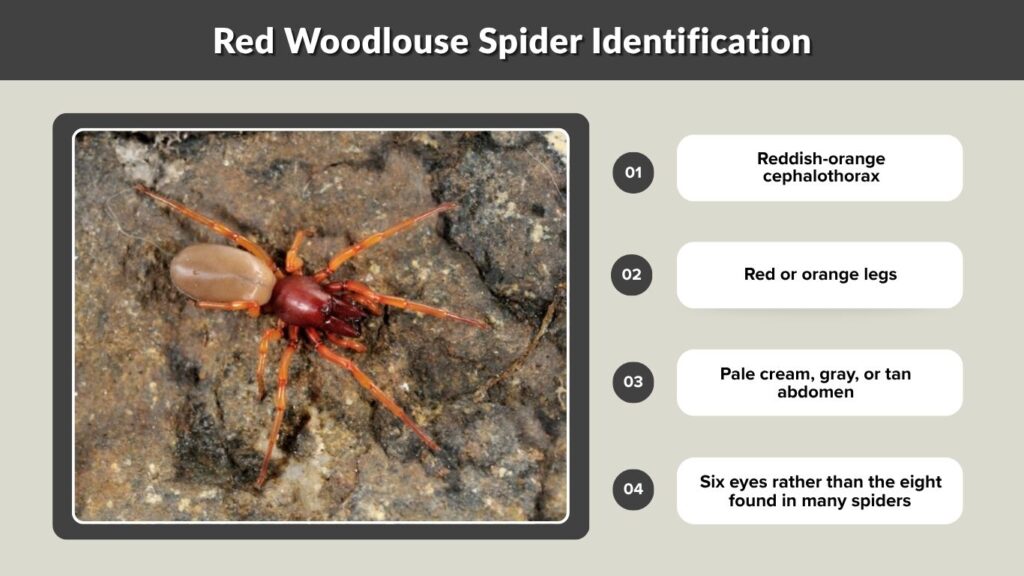
A red woodlouse spider has one of the most recognizable color combinations among common household and garden spiders. Its front body and legs are usually reddish-orange, while its abdomen is noticeably lighter. The large jaws project forward and can appear disproportionately large compared with the rest of the spider.
Key Identification Features
- Reddish-orange cephalothorax
- Red or orange legs
- Pale cream, gray, or tan abdomen
- Six eyes rather than the eight found in many spiders
- Large forward-projecting jaws
- Smooth, relatively shiny body
- Adult body length commonly around 10–15 mm
- Females are generally larger than males
Red Cephalothorax and Pale Abdomen
The strongest identifying feature is the color contrast between the two main body sections. The cephalothorax, which carries the legs and mouthparts, is usually deep reddish-orange. The abdomen is much paler and can appear cream, beige, grayish, or light brown.
This combination is responsible for searches such as red and white woodlouse spider or spider with a red body and pale abdomen.
Red Legs and Large Fangs
The legs are typically orange-red and fairly sturdy. More distinctive are the large chelicerae at the front of the head. These jaws hold long fangs adapted for capturing woodlice.
Although they look intimidating, these structures are primarily hunting tools rather than adaptations for attacking people.
Where Do Red Woodlouse Spiders Live?
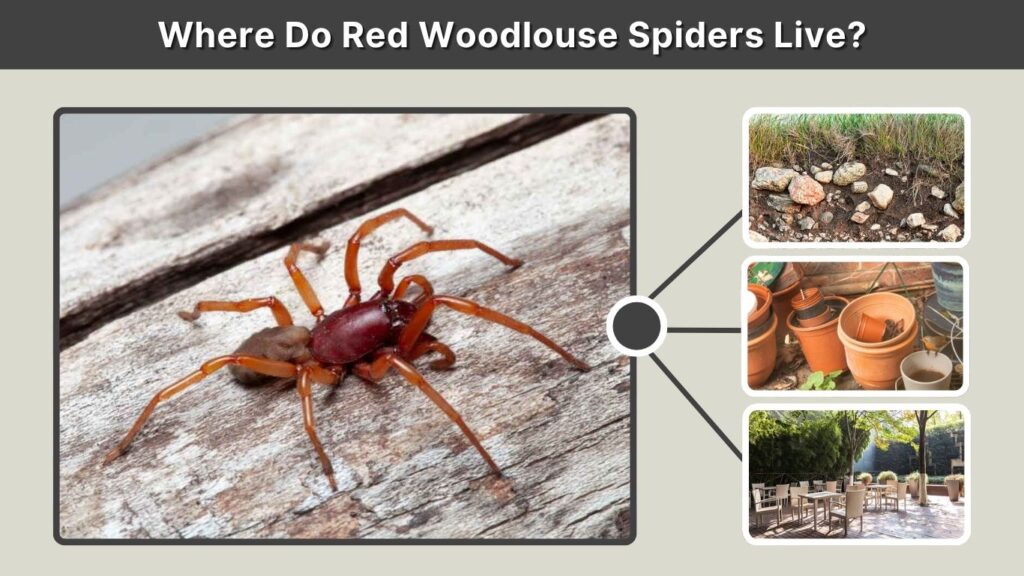
Red woodlouse spiders prefer dark, humid environments where their primary prey is plentiful. They spend much of the daytime concealed and become more active after dark. Around homes, they are commonly associated with gardens, basements, garages, sheds, and other sheltered places that retain moisture.
Common Hiding Places
- Under rocks and stones
- Beneath logs and fallen wood
- Inside leaf litter
- Under garden pots
- Beneath bark
- Around compost piles
- Inside sheds and garages
- In damp basements
- Beneath outdoor furniture
- Near building foundations
Red Woodlouse Spider in the UK
The woodlouse spider is well established in the UK and is one of the more recognizable reddish spiders found around British gardens and homes. It often hides in damp areas where woodlice gather, including beneath bricks, stones, logs, and garden containers.
Individuals may occasionally wander indoors, particularly into ground-floor rooms, garages, or basements.
Red Woodlouse Spider in the United States
Dysdera crocata also occurs widely in the United States, including western states such as California and Utah. It was introduced outside its original range and has successfully established populations in many regions.
In the United States, it is commonly encountered in gardens, landscaped areas, under rocks, and around buildings where moisture creates favorable conditions for woodlice.
Behavior and Diet of Woodlouse Spiders
Unlike orb-weavers that wait for insects to become trapped in webs, woodlouse spiders actively hunt. They usually remain hidden during daylight hours and emerge at night to search the ground for prey. Their behavior is generally secretive, and they prefer escaping or hiding when exposed.
What Do Red Woodlouse Spiders Eat?
- Woodlice
- Sowbugs
- Pill bugs
- Small insects
- Other small arthropods
- Occasionally other spiders
How They Hunt Woodlice
Woodlice can roll up, flatten against surfaces, or rely on their hardened outer plates for protection. The woodlouse spider’s elongated jaws help overcome these defenses.
The spider can position its fangs around or underneath the woodlouse’s armored plates, allowing it to deliver venom and subdue the prey.
Because of this specialization, finding woodlouse spiders often indicates that woodlice are also present nearby.
Are Red Woodlouse Spiders Poisonous?
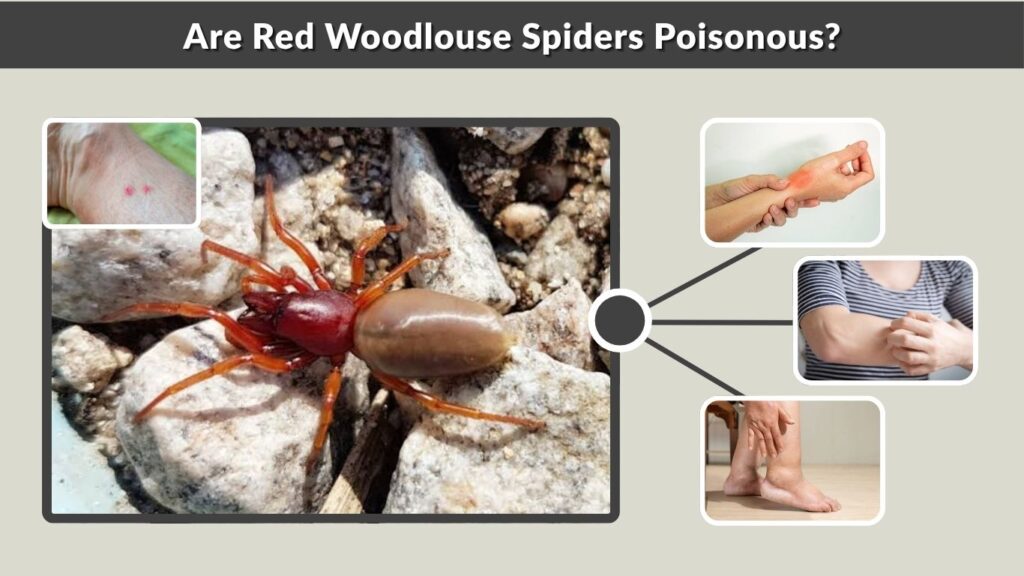
Woodlouse spiders are venomous, as are most spiders, but they are not considered dangerously venomous to humans. Their venom is intended for immobilizing small prey. They do not actively seek human contact and usually bite only when trapped, handled, or pressed against the skin.
Are They Dangerous?
For most people, woodlouse spiders present little danger. They are not regarded as medically significant spiders.
Their large fangs can make a bite more noticeable than a bite from a very small spider, but severe reactions are uncommon.
People with unusual or worsening symptoms after any spider bite should seek medical advice rather than trying to identify the cause based only on the appearance of the spider.
Red Woodlouse Spider Bite Symptoms
- Immediate pinching or sharp pain
- Local redness
- Mild swelling
- Temporary tenderness
- Possible itching or irritation
Most reported reactions remain localized and improve without serious complications. However, symptoms attributed to spiders can have many other causes, so unexplained skin lesions should not automatically be assumed to be spider bites.
How to Tell a Woodlouse Spider From Similar Spiders
Its bright reddish coloration sometimes causes people to confuse the woodlouse hunter with other red, brown, or orange spiders. Looking at its abdomen, eye arrangement, jaws, and overall shape provides a more reliable identification than color alone.
Woodlouse Spider vs. Brown Recluse
- Woodlouse spiders have red-orange legs and a pale abdomen.
- Brown recluses are generally more uniformly tan or brown.
- Woodlouse spiders have six eyes arranged differently from most common spiders.
- Brown recluses are associated with a characteristic violin-like marking, although this alone should not be used for identification.
- The woodlouse spider has particularly large, forward-projecting jaws.
Woodlouse Spider vs. Red House Spider
Red house spiders are generally smaller and have different proportions. They usually construct irregular webs and spend more time around those webs.
Woodlouse spiders are active hunters that wander across the ground and typically shelter under objects during the day instead of relying on a prey-catching web.
Are Woodlouse Spiders Good to Have Around?
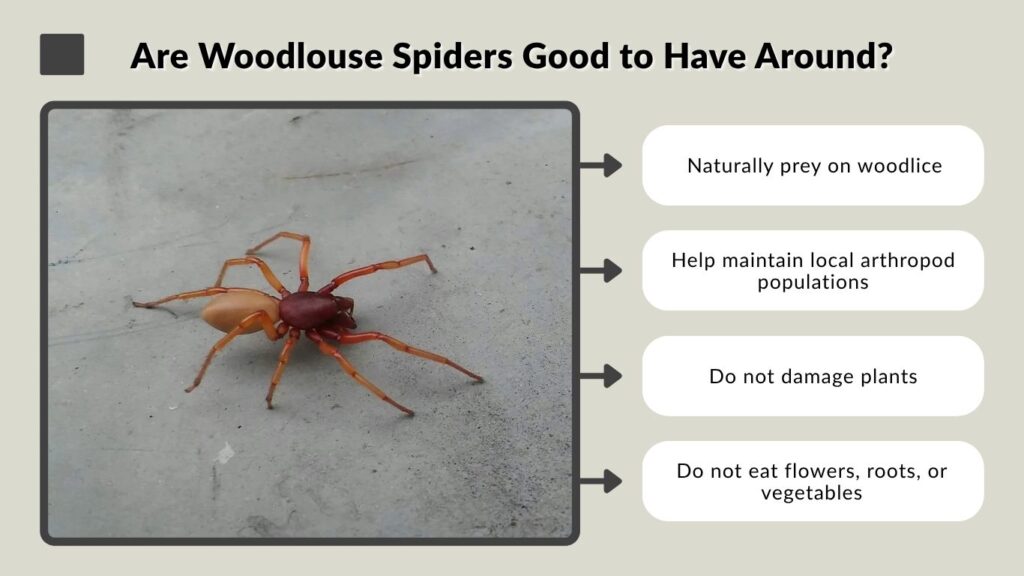
Although their large fangs and reddish appearance can be unsettling, woodlouse spiders can be beneficial predators. They naturally reduce populations of woodlice and other small invertebrates around gardens and buildings.
Benefits Around Gardens
- Naturally prey on woodlice
- Help maintain local arthropod populations
- Do not damage plants
- Do not eat flowers, roots, or vegetables
- Rarely interact with people
- Provide food for larger predators
Should You Remove Them?
Outdoor woodlouse spiders usually do not need to be removed. If one enters a home, it can often be captured safely using a container and released outdoors in a sheltered location.
Frequent indoor sightings may indicate damp conditions and a high population of woodlice. Reducing moisture, sealing gaps, and removing accumulated debris near foundations can make the area less attractive to both woodlice and their predators.
FAQs
1. Is a red woodlouse spider dangerous?
No. The red woodlouse spider is not generally considered dangerous to humans. It can bite if handled or trapped, but reactions are usually limited to localized pain, redness, or mild swelling.
2. Why is the woodlouse spider red?
The species naturally has a reddish-orange cephalothorax and legs. Its abdomen is usually pale cream, gray, or tan, creating a strong color contrast that makes the spider easy to recognize.
3. Do woodlouse spiders live in houses?
They can occasionally enter houses, especially damp basements, garages, and ground-floor rooms. However, they usually prefer outdoor hiding places such as rocks, logs, leaf litter, and garden debris.
4. Are red woodlouse spiders found in the UK?
Yes. Dysdera crocata is well established in the UK and can commonly be found in gardens and other damp habitats where woodlice are abundant.
5. Should I kill a woodlouse spider?
Usually there is no need. Woodlouse spiders are beneficial predators and do not damage plants or property. An unwanted indoor spider can normally be relocated outside instead of killed.
