
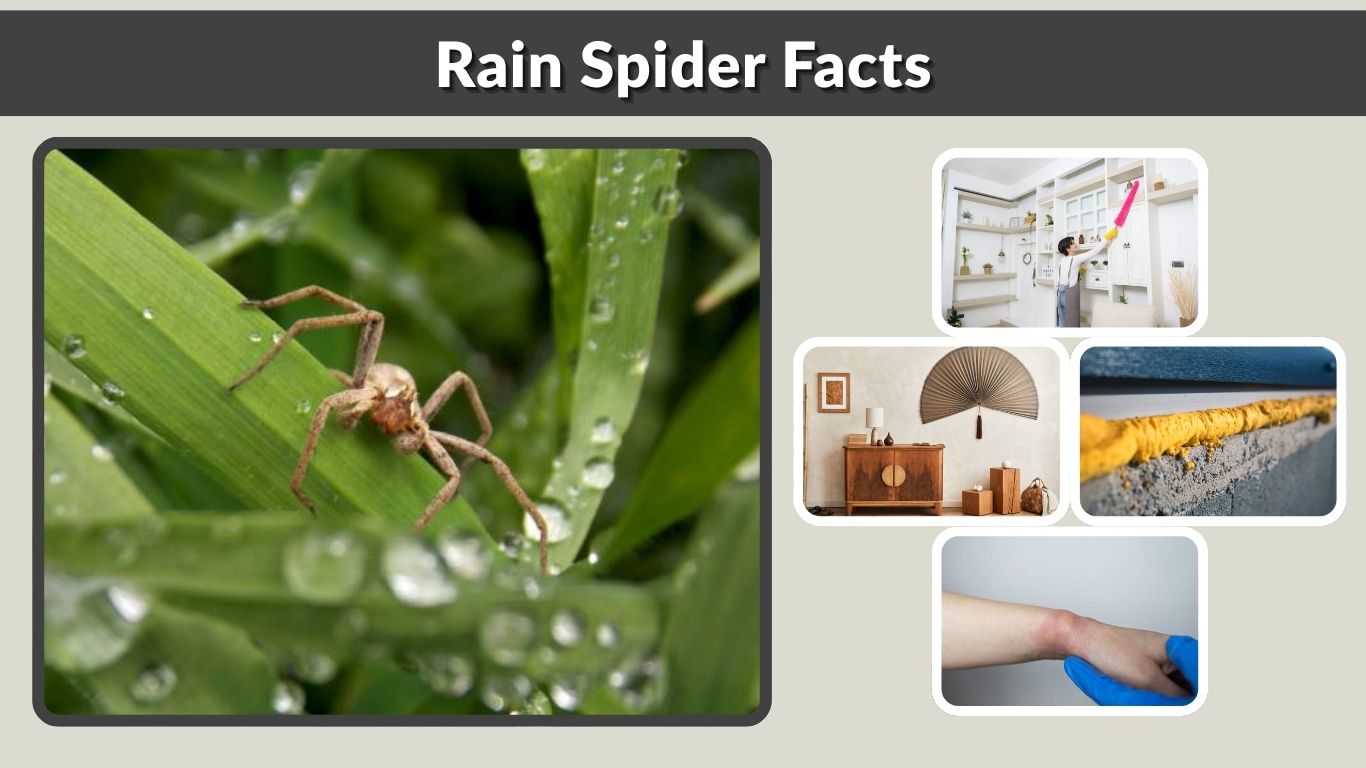
Rain spiders are often misunderstood due to their large size and sudden appearance inside homes. Many people associate them with danger or even supernatural beliefs, especially the idea that they predict rain. In reality, these spiders are simply part of the natural ecosystem and play a useful role in controlling insects. The term “rain spider” is commonly used in certain regions, particularly in Africa, and usually refers to huntsman spiders. Understanding their behavior, appearance, and habits can help reduce fear and clear up common myths.
What Is a Rain Spider?
The term “rain spider” is a common name rather than a scientific classification. It is most often used to describe large huntsman spiders that are known for their size and fast movement. These spiders are harmless in most cases and are frequently found in warm climates where they may enter homes.
Common Characteristics
- Large leg span with relatively small body
- Flat body structure for hiding in tight spaces
- Fast, sideways movement
- Usually brown or grey for camouflage
Why People Notice Them
- Sudden appearance indoors
- Large size compared to typical house spiders
- Quick movement that startles people
Why Is It Called a Rain Spider?
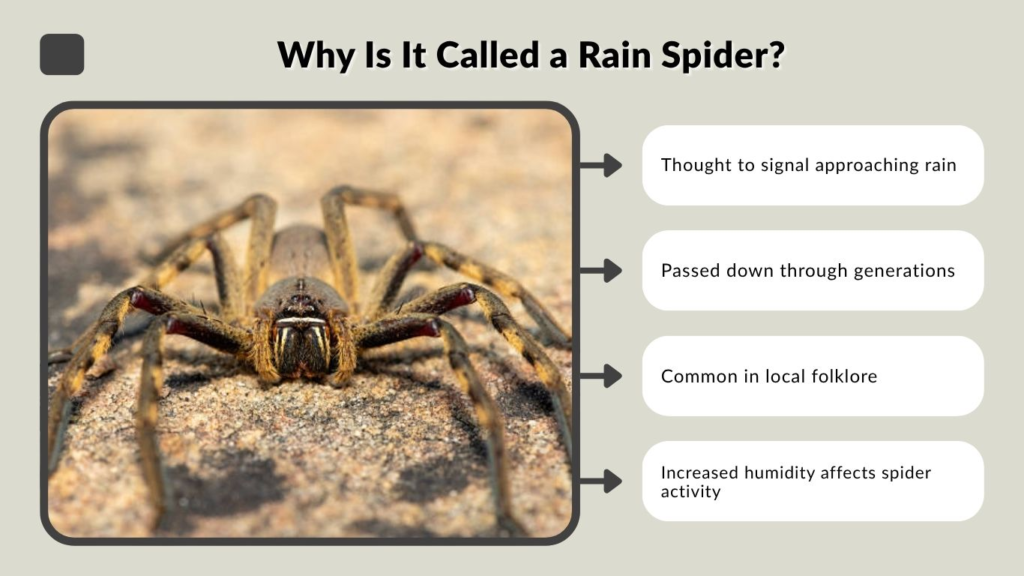
The name “rain spider” comes from long-standing beliefs that these spiders appear before rainfall. This idea is especially common in South Africa, where the term is widely used. While the connection sounds convincing, it is mostly based on observation rather than scientific proof.
Cultural Beliefs
- Thought to signal approaching rain
- Passed down through generations
- Common in local folklore
Scientific Explanation
- Increased humidity affects spider activity
- Weather changes may drive them indoors
- Movement is linked to environment, not prediction
Are Rain Spiders Dangerous?
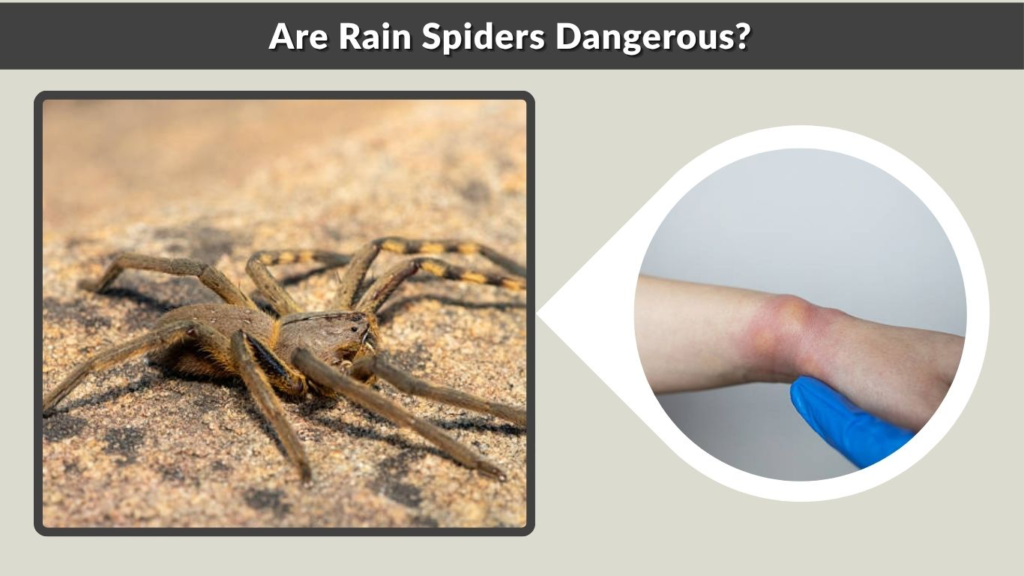
Rain spiders may look intimidating, but they are generally harmless to humans. They are not aggressive and prefer to avoid confrontation. Most encounters happen when the spider is accidentally disturbed, which may cause it to move quickly and create fear.
Bite Risk
- Bites are rare
- Occur only when the spider feels threatened
- Not considered medically dangerous
Possible Symptoms
- Mild pain at the bite area
- Slight swelling or redness
- Temporary discomfort that fades quickly
Rain Spider Size and Appearance
Rain spiders are known for their impressive size, which is often exaggerated due to their long legs. Their body remains relatively small, but the wide leg span makes them appear much larger than they actually are. Their flat shape allows them to hide easily behind objects.
These spiders typically have earthy colors such as brown, grey, or tan, which help them blend into their surroundings. Their movement is quick and smooth, often sideways, which can make them seem more alarming. However, this behavior is simply part of their natural hunting style rather than a sign of aggression.
Where Are Rain Spiders Found?
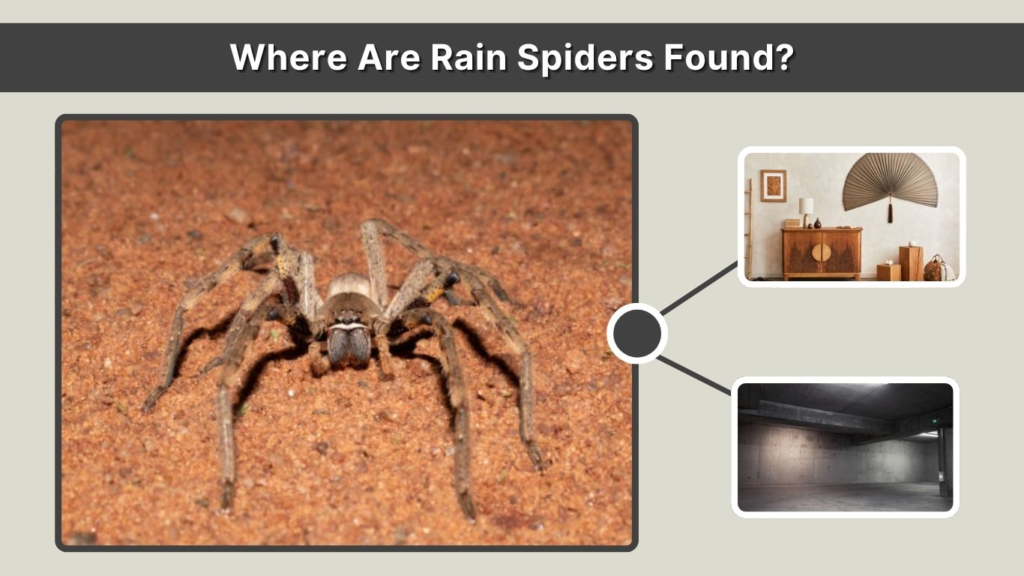
Rain spiders are commonly found in warm regions, particularly in Africa, but they can also exist in other tropical and subtropical areas. They prefer environments where they can easily find shelter and food, which is why they sometimes enter homes.
Geographic Distribution
- Most common in South Africa
- Found in other warm climates
- Can appear in urban and rural areas
Common Hiding Places
- Behind furniture and wall hangings
- Under rocks, bark, or outdoor debris
- Inside homes in dark, quiet corners
Rain Spider Behavior and Lifestyle
Rain spiders are active hunters that do not rely on webs to catch prey. Instead, they move quickly to capture insects and other small creatures. Their behavior is adapted to survival in both natural and indoor environments, making them effective predators.
Hunting Behavior
- Active at night (nocturnal)
- Chase and capture prey directly
- Feed on insects and small pests
Movement and Habits
- Fast and agile motion
- Prefer hidden and undisturbed areas
- Avoid human interaction whenever possible
Rain Spider vs Huntsman Spider
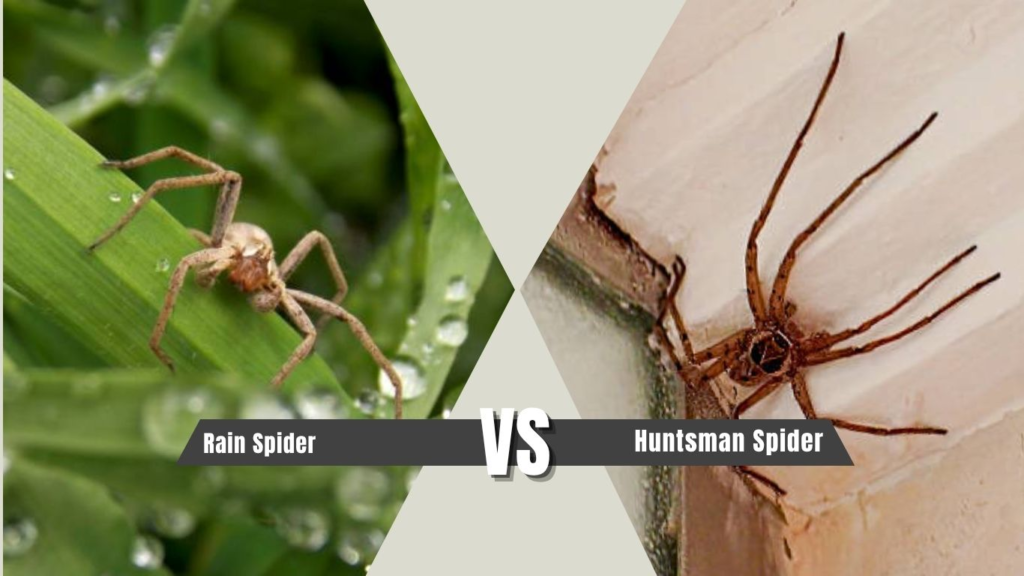
The terms “rain spider” and “huntsman spider” are often used interchangeably, which can cause confusion. In reality, rain spider is simply a regional name for certain huntsman spider species. Understanding this connection helps clarify many misconceptions.
Key Similarities
- Large size and wide leg span
- Fast movement style
- Commonly found inside homes
Key Differences
- “Rain spider” is a local/common name
- “Huntsman spider” is the scientific grouping
- Naming varies depending on region and culture
Why Do Rain Spiders Enter Homes?
Rain spiders usually enter homes in search of shelter, food, or better environmental conditions. Changes in weather, especially increased humidity, can encourage them to move indoors. Homes provide warmth, safety, and access to insects, making them an attractive temporary habitat for these spiders.
Rain Spider in the House: What to Do
Finding a rain spider inside your home can be unsettling, especially due to its size and speed. However, these spiders are not aggressive and usually try to escape rather than confront humans. Knowing how to handle the situation calmly can prevent panic and ensure both your safety and the spider’s.
Safe Ways to Handle a Rain Spider
- Stay calm and avoid sudden movements
- Do not try to touch it directly
- Keep a safe distance while observing
Steps to Remove It Safely
- Place a container over the spider
- Slide a piece of paper underneath
- Gently carry it outside and release
Rain Spider Myths and Misconceptions
Rain spiders are often surrounded by myths that exaggerate their behavior and danger. These misconceptions usually come from fear, cultural stories, or lack of understanding. Learning the truth behind these myths helps reduce unnecessary anxiety and allows people to respond more rationally.
Common Myths
- They can predict rainfall
- They are deadly to humans
- They chase or attack people
The Truth
- They do not predict weather
- They are not dangerous
- They prefer to avoid humans and escape
Rain Spider Meaning in Culture
In some cultures, rain spiders are seen as more than just insects. They are often associated with weather patterns or used as symbols in storytelling. Their large size and sudden appearances have contributed to their reputation as mysterious or even frightening creatures.
Despite these beliefs, many people also recognize their beneficial role in controlling insect populations. This dual perception—fear and usefulness—makes them an interesting subject in both folklore and everyday life.
How to Prevent Rain Spiders in Your Home
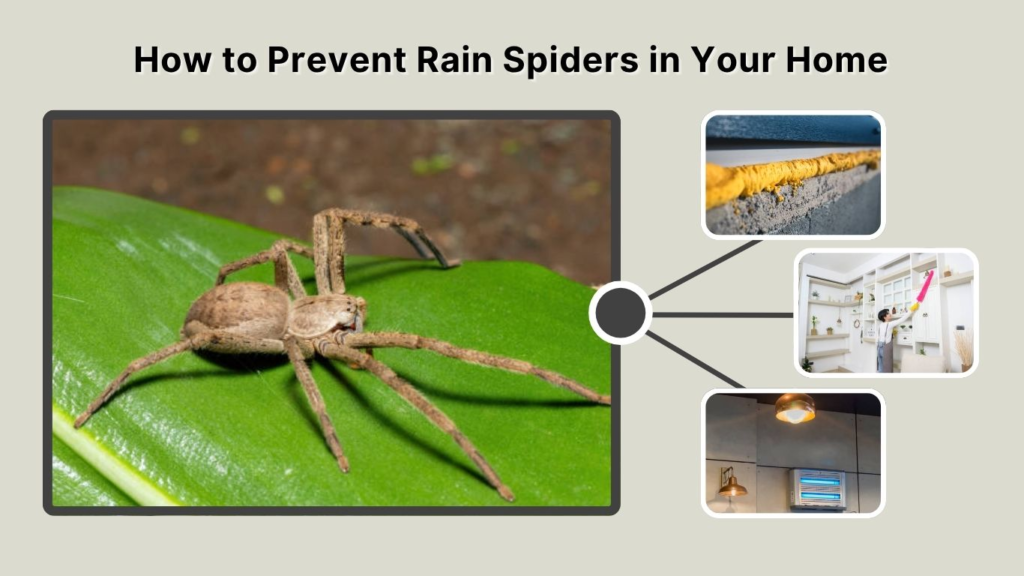
Preventing rain spiders from entering your home is mostly about reducing the conditions that attract them. Since they follow food sources and look for shelter, simple home maintenance can significantly reduce the chances of seeing one indoors.
Prevention Tips
- Seal cracks and gaps in walls and windows
- Keep your home clean and dust-free
- Reduce indoor insects using proper lighting and screens
Areas to Check Regularly
- Behind furniture and wall hangings
- Corners, ceilings, and storage areas
- Outdoor areas close to entry points
Should You Be Afraid of Rain Spiders?
Although their appearance can be intimidating, rain spiders are not a serious threat to humans. Fear often comes from their size and speed rather than actual danger. By understanding their behavior, it becomes easier to see them as harmless creatures that contribute to natural pest control.
Instead of reacting with panic, it is better to stay calm and handle the situation safely. Awareness and basic knowledge can turn a frightening encounter into a manageable one.
FAQs
What is a rain spider?
A rain spider is a common name for large huntsman spiders, especially in regions like South Africa. They are known for their size and speed but are generally harmless.
Are rain spiders dangerous to humans?
No, rain spiders are not dangerous. They rarely bite and prefer to avoid human contact. Most encounters are harmless.
Why do rain spiders come into houses?
They enter homes looking for shelter, warmth, or food such as insects. Weather changes can also encourage them to move indoors.
Do rain spiders really predict rain?
No, this is a myth. Their activity may increase due to humidity, but they cannot predict weather.
How can I keep rain spiders out of my home?
Seal entry points, keep your home clean, reduce insects, and regularly check hidden areas to minimize the chances of them entering.
