
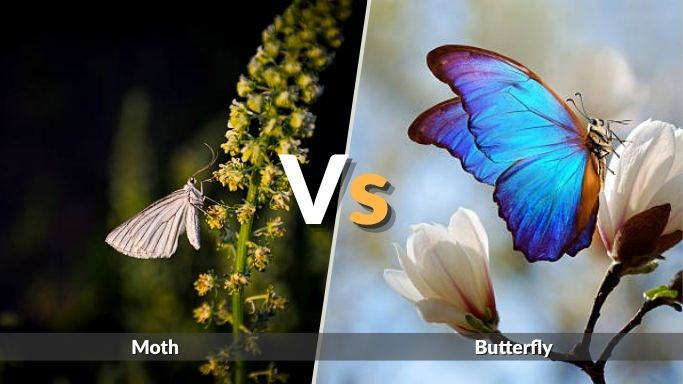
Moths and butterflies look similar because both belong to the insect order Lepidoptera. They have scaly wings, six legs, antennae, and a complete life cycle from egg to caterpillar, pupa, and adult. Still, they are not exactly the same. Butterflies usually have club-tipped antennae, slimmer bodies, and often fly during the day. Moths often have feathery or threadlike antennae, thicker bodies, and many are active at night. By comparing their wings, antennae, body shape, caterpillars, cocoons, and behavior, you can identify them more easily.
Moth vs Butterfly: Quick Difference
Moths and butterflies share many features, but they usually differ in antennae, wing position, body shape, activity time, and pupal stage. These clues are useful for quick identification. However, there are exceptions, so it is better to check several features together instead of using only one sign.
Main Difference
The easiest difference is the antennae. Butterflies usually have thin antennae with club-shaped tips. Moths usually have antennae that are feathery, comb-like, saw-edged, or threadlike without a clubbed tip.
Butterflies are usually active during the day and rest with their wings folded upright over the back. Moths are often active at night and may rest with their wings flat, tent-like, or spread over the body. Butterflies also tend to have slimmer bodies, while many moths have thicker, fuzzier bodies.
Still, these are general rules. Some moths fly during the day, and some moths are colorful like butterflies. A few butterflies may rest with wings partly open. That is why antennae, wing posture, body shape, and life cycle should be compared together.
Identification
- Butterflies usually have club-tipped antennae.
- Moths usually have feathery, comb-like, or threadlike antennae.
- Butterflies often fly during the day.
- Most moths are active at night, but some fly during the day.
- Butterflies usually rest with wings upright.
- Moths often rest with wings flat or tent-like.
- Butterflies usually have slimmer bodies.
- Moths often have thicker, fuzzier bodies.
- Butterflies form a chrysalis.
- Moths often spin a silk cocoon.
Moth vs Butterfly Difference Table
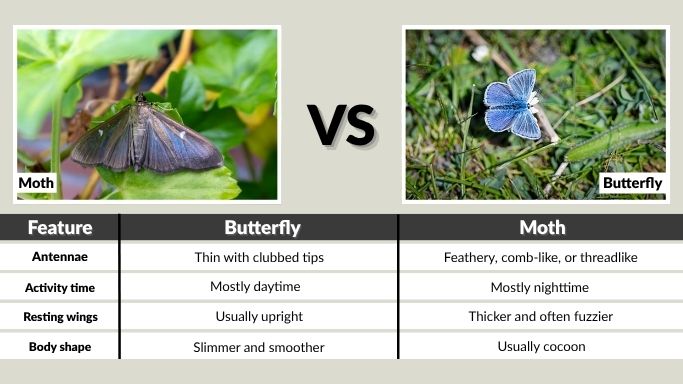
A table makes the common differences easier to understand. These are general patterns, not perfect rules. Some species break the usual pattern, especially day-flying moths and skipper butterflies.
Basic Comparison
| Feature | Butterfly | Moth |
| Antennae | Thin with clubbed tips | Feathery, comb-like, or threadlike |
| Activity time | Mostly daytime | Mostly nighttime |
| Resting wings | Usually upright | Usually flat, spread, or tent-like |
| Body shape | Slimmer and smoother | Thicker and often fuzzier |
| Pupal stage | Chrysalis | Usually cocoon |
| Colors | Often bright | Often dull, but some are bright |
| Wings | Often broad and colorful | Often patterned for camouflage |
| Common habitat | Gardens, fields, forests | Forests, gardens, walls, lights |
Why the Differences Matter
These differences help with quick field identification. If you see an insect with clubbed antennae resting on a flower in daylight, it is probably a butterfly. If you see a fuzzy-bodied insect near a porch light at night with feathery antennae, it is probably a moth.
However, do not rely only on color. Some butterflies are brown or dull, and some moths are bright and beautiful. Luna moths, atlas moths, tiger moths, and day-flying moths can be as colorful as butterflies.
Moth vs Butterfly Antennae
Antennae are one of the most reliable ways to tell a moth from a butterfly. They are sensory organs that help these insects smell, navigate, find mates, and explore their surroundings.
Butterfly Antennae
Butterfly antennae are usually long, thin, and smooth, with a small club or knob at the end. This clubbed tip is one of the easiest field marks. When a butterfly lands, the antennae may point forward or slightly outward.
The club shape helps separate butterflies from most moths. Skippers, which are close relatives of butterflies, may have hooked antenna tips. This can make them look slightly different from typical butterflies, but they still do not have the broad feathery antennae seen in many moths.
Moth Antennae
Moth antennae vary more. Some are threadlike, some are saw-edged, and many males have large feathery antennae. These feathery antennae help detect female pheromones from a distance.
If an insect has broad, comb-like antennae, it is almost certainly a moth. Female moths may have thinner antennae than males, but they usually do not have the clear clubbed tips typical of butterflies.
Moth Wings vs Butterfly Wings
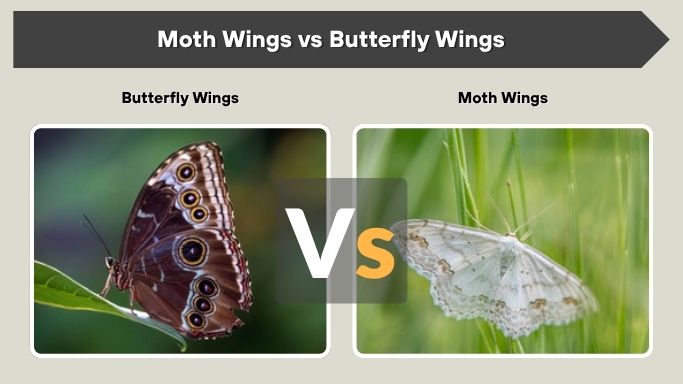
Wings are another useful clue. Both moths and butterflies have wings covered in tiny scales. These scales create colors, patterns, and camouflage. The way the insect holds its wings at rest can help with identification.
Butterfly Wings
Butterflies usually rest with their wings held upright over the body. When basking in the sun, they may open their wings flat to absorb heat. Their wings are often broad, colorful, and patterned.
Many butterflies use bright colors for warning, mate recognition, or camouflage. Monarchs, swallowtails, painted ladies, and many other butterflies have bold wing patterns that are easy to recognize.
Butterfly wings may look smooth and clean compared with many moth wings. However, wing color alone is not enough because many moths are also colorful.
Moth Wings
Moths often rest with their wings flat, roof-like, or wrapped around the body. Some moths look like dry leaves, bark, or bird droppings when resting. This camouflage helps protect them from predators during the day.
Moth wings are often brown, gray, tan, or muted, but this is not always true. Some moths are bright green, pink, orange, yellow, or patterned with eye spots. Large moths such as luna moths and atlas moths can be very striking.
Moth Face vs Butterfly Face
The face of a moth or butterfly can also show differences, especially when viewed up close. Both have compound eyes and a coiled proboscis used for feeding on nectar or other liquids. However, moths often look fuzzier around the head and body.
Butterfly Face
A butterfly face usually looks cleaner and less furry. The eyes are large, and the antennae are thin with clubbed tips. Many butterflies have a long coiled proboscis that unrolls when feeding from flowers.
Butterflies often visit flowers in daylight, so their face and mouthparts are easier to observe. When feeding, they may stand on a flower and extend the proboscis deep into the bloom.
Moth Face
A moth face often looks hairier or fuzzier. Many moths have thick scales around the head and thorax, giving them a soft appearance. Male moths may have very visible feathery antennae near the face.
Some moths do not feed as adults because their mouthparts are reduced. Others have long proboscises and visit flowers at night. Hawk moths, for example, may hover near flowers like hummingbirds.
Moth Caterpillar vs Butterfly Caterpillar
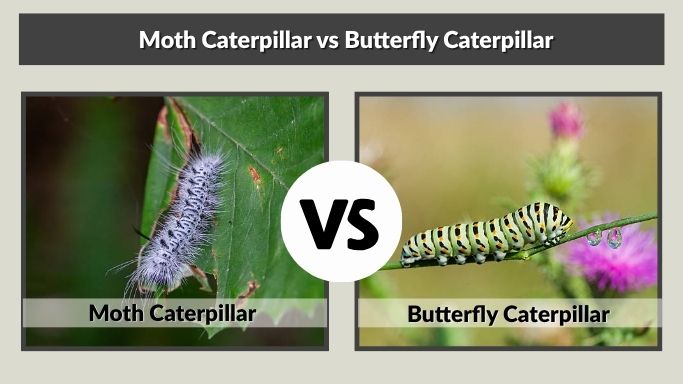
Both moths and butterflies begin life as caterpillars. Caterpillars are the larval stage, and their main job is to eat and grow. Some caterpillars are easy to identify, while others require close inspection.
Butterfly Caterpillars
Butterfly caterpillars often feed on specific host plants. For example, monarch caterpillars feed on milkweed, and swallowtail caterpillars may feed on plants in the carrot or citrus family, depending on the species.
Many butterfly caterpillars are smooth or lightly hairy, but this varies. Some have bright warning colors, spines, or false eyespots. Their appearance changes as they grow through different stages called instars.
After feeding and growing, a butterfly caterpillar usually forms a chrysalis. It does not usually spin a full silk cocoon around itself.
Moth Caterpillars
Moth caterpillars are extremely diverse. Some are smooth, some are hairy, and some are spiny. Woolly bears, hornworms, tent caterpillars, tussock moth caterpillars, and inchworms are all moth larvae.
Many moth caterpillars spin silk or use silk to protect themselves. Some become pests of crops, clothing, stored food, or trees. Others are harmless and important food for birds and wildlife.
It can be difficult to identify whether a caterpillar will become a moth or butterfly without knowing the species or host plant. Some caterpillars look very similar.
Moth Cocoon vs Butterfly Chrysalis
The pupal stage is one of the clearest differences people search for. Many people say “butterfly cocoon,” but most butterflies do not make a true cocoon. They usually form a chrysalis.
Cocoon and Chrysalis Table
| Stage Feature | Butterfly | Moth |
| Pupal covering | Chrysalis | Usually silk cocoon |
| Silk use | Usually small silk pad or support | Often spins silk around pupa |
| Location | Plant stems, leaves, branches | Soil, leaf litter, bark, stems, or hidden places |
| Appearance | Exposed hard pupa | Silk-covered or protected pupa |
| Common phrase | Butterfly chrysalis | Moth cocoon |
Butterfly Chrysalis
A chrysalis is the hardened pupal form of a butterfly. It may hang from a leaf, stem, twig, or other surface. Some are green, brown, gold, or patterned to blend with the environment.
Inside the chrysalis, the caterpillar transforms into an adult butterfly. Wings, legs, antennae, and adult body structures develop during this stage.
Moth Cocoon
Many moth caterpillars spin silk around themselves before pupating. This silk covering is called a cocoon. Some cocoons are soft and loose, while others are tough and papery. Some moths pupate underground or in leaf litter.
There are exceptions. Some moths do not make obvious cocoons, and some butterfly relatives may use silk differently. But in general, chrysalis is linked with butterflies, while cocoons are more common among moths.
Moth vs Butterfly Life Cycle
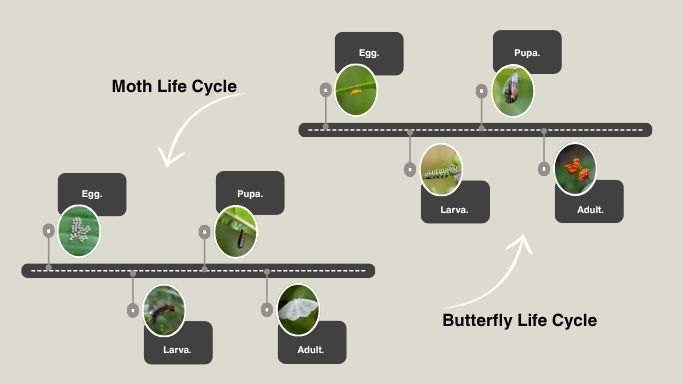
Both moths and butterflies have complete metamorphosis. This means they pass through four main stages: egg, larva, pupa, and adult. The adult stage is the winged insect most people recognize.
Life Cycle Comparison
| Life Stage | Butterfly | Moth |
| Egg | Laid on or near host plants | Laid on host plants, surfaces, or hidden places |
| Larva | Caterpillar eats leaves or host plant | Caterpillar may eat leaves, fabric, grain, wood, or other food |
| Pupa | Chrysalis | Usually cocoon or hidden pupa |
| Adult | Often feeds in daytime | Often feeds or mates at night |
| Main purpose | Reproduction and dispersal | Reproduction and dispersal |
Butterfly Life Cycle
Butterflies usually lay eggs on specific host plants. The caterpillar hatches and eats the plant. After growing through several molts, it forms a chrysalis. Later, the adult butterfly emerges, dries its wings, and begins feeding or mating.
Butterflies are important pollinators, but their caterpillars are also important because they feed many birds and other animals.
Moth Life Cycle
Moths also begin as eggs. The caterpillars may feed on leaves, seeds, stored food, fabric, or other materials depending on the species. After feeding, many spin cocoons or pupate in hidden places.
Adult moths may feed on nectar, sap, fruit juices, or not feed at all. Many are active at night and play a major role in nighttime pollination.
White Butterfly vs White Moth
White butterflies and white moths are easy to confuse. A white insect flying in the garden may be either one, especially if it is small and fast-moving.
How to Tell Them Apart
A white butterfly usually has clubbed antennae and flies during the day in a fluttering pattern. It may land on flowers or host plants such as cabbage, mustard, or related plants. The cabbage white butterfly is a common example.
A white moth may have threadlike or feathery antennae and may be more active at dusk or night. It may rest on walls, lights, leaves, or tree trunks. Some white moths also fly during the day, so antennae are still the best clue.
If the insect rests with wings upright, it is more likely a butterfly. If it rests with wings flat or tent-like, it is more likely a moth.
Moth vs Butterfly Symbolism
Moths and butterflies often carry different symbolic meanings in culture, art, and tattoos. These meanings are not scientific identification features, but they are popular in search and design topics.
Butterfly Symbolism
Butterflies often symbolize transformation, beauty, hope, growth, rebirth, and freedom. Their life cycle makes them a strong symbol of change because they transform from caterpillar to chrysalis to winged adult.
In tattoos, butterflies are often used to represent personal growth, healing, femininity, freedom, or a new beginning. Different colors may add different meanings.
Moth Symbolism
Moths often symbolize mystery, attraction, night, intuition, hidden truth, and transformation. Because many moths fly toward light, they are sometimes linked with desire, guidance, or danger.
In tattoos, moths may represent change, inner strength, darkness, spiritual searching, or quiet beauty. A moth tattoo can feel more mysterious than a butterfly tattoo.
Butterfly vs Moth vs Skipper
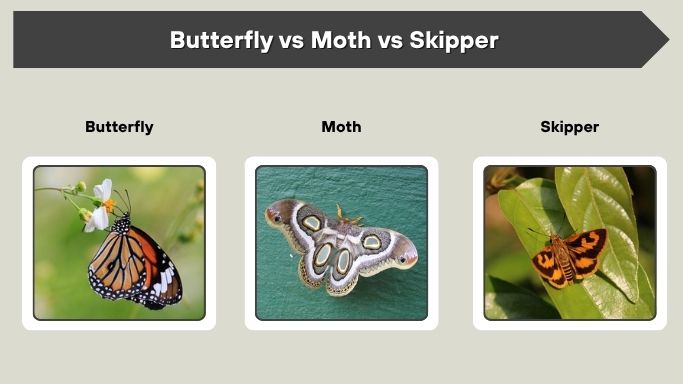
Skippers are often mentioned with butterflies and moths because they look like a mix of both. They are usually classified with butterflies but have some moth-like features.
What Is a Skipper?
A skipper is a small, fast-flying butterfly-like insect. Skippers have hooked antenna tips, thick bodies, and quick darting flight. Many rest with their wings partly open in a different position from typical butterflies.
They are not moths, but they may look moth-like because of their stout bodies and fast movement. If you see a small brown insect flying quickly in daylight, it may be a skipper rather than a moth.
How Skippers Compare
Butterflies usually have clubbed antennae and graceful flight. Moths often have feathery or threadlike antennae and may be nocturnal. Skippers have hooked antennae and a rapid skipping flight.
This makes skippers an important third group to mention when comparing moths and butterflies.
FAQs
What is the main difference between a moth and a butterfly?
The main difference is usually the antennae. Butterflies have thin antennae with club-shaped tips, while moths usually have feathery, comb-like, saw-edged, or threadlike antennae. Butterflies are often active during the day, while many moths are active at night.
Is a moth caterpillar different from a butterfly caterpillar?
Yes, but it can be hard to tell without knowing the species. Butterfly caterpillars often feed on specific host plants and later form a chrysalis. Moth caterpillars are more diverse and may be hairy, smooth, or spiny. Many moth caterpillars later spin cocoons.
Do butterflies make cocoons?
Most butterflies do not make true cocoons. They usually form a chrysalis, which is an exposed hardened pupa. Moths are more likely to spin silk cocoons around the pupa. However, there are exceptions, so the species matters.
Are moths just night butterflies?
No, moths are not simply night butterflies. They are related insects in the order Lepidoptera, but they differ in antennae, body shape, resting posture, and pupal habits. Many moths are nocturnal, but some moths are active during the day.
How can you tell a white moth from a white butterfly?
Look at the antennae and resting wings. A white butterfly usually has clubbed antennae and often rests with wings upright. A white moth usually has threadlike or feathery antennae and often rests with wings flat or tent-like. Activity time can also help.
