
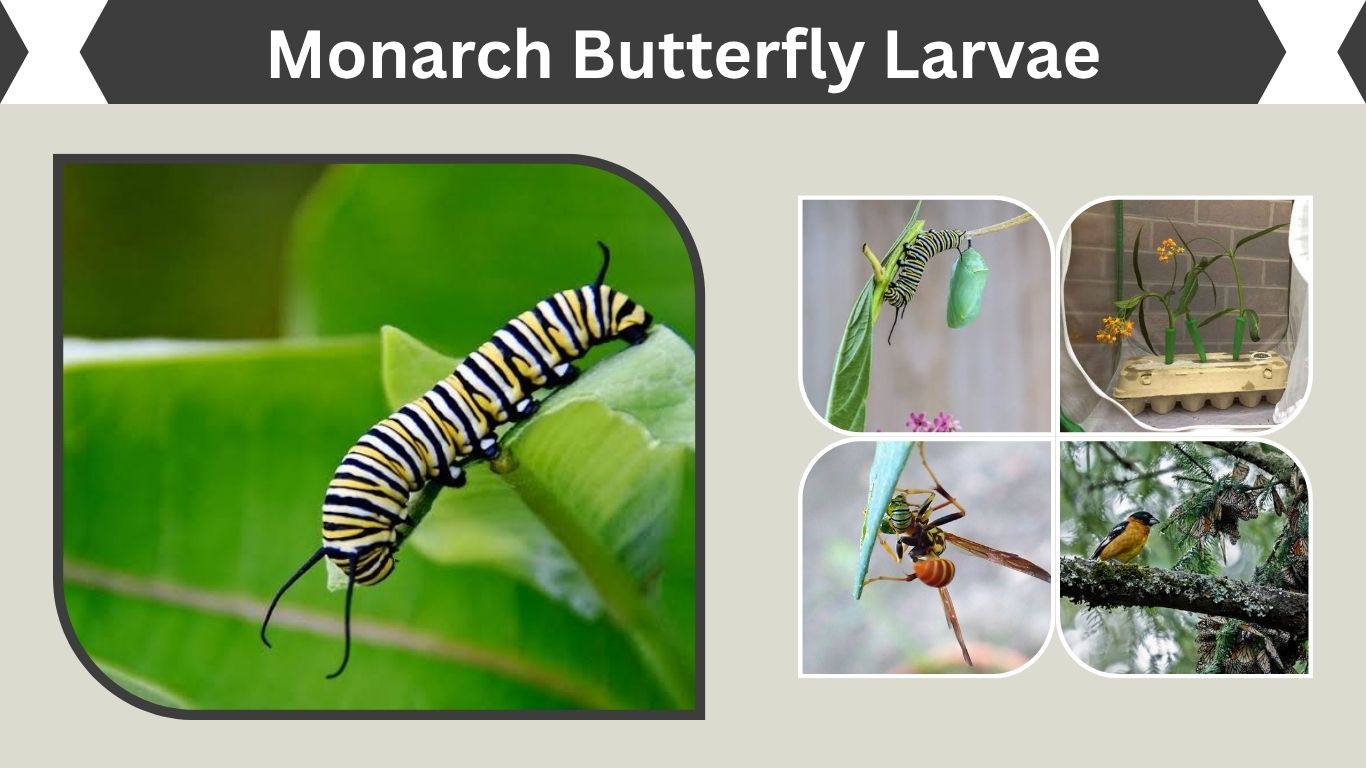
Monarch butterfly larvae are the striped caterpillars that eventually transform into adult monarch butterflies. They are recognizable by their black, white, and yellow bands and their dependence on milkweed plants. During the larval stage, monarchs eat continuously, molt five times, and grow rapidly before forming a chrysalis. Understanding what monarch larvae look like, what they eat, how long they remain caterpillars, and what threatens them can help gardeners support these important pollinators.
What Are Monarch Butterfly Larvae?
Monarch butterfly larvae are the caterpillar stage of the monarch butterfly, scientifically known as Danaus plexippus. The larval period begins when a monarch egg hatches and ends when the fully grown caterpillar forms a chrysalis.
The terms “monarch larva” and “monarch caterpillar” describe the same insect. “Larva” is the scientific term for the immature feeding stage, while “caterpillar” is the common name used for butterfly and moth larvae.
Monarch Butterfly Classification
Monarch butterflies belong to:
- Kingdom: Animalia
- Phylum: Arthropoda
- Class: Insecta
- Order: Lepidoptera
- Family: Nymphalidae
- Genus: Danaus
- Species: Danaus plexippus
Like other butterflies, monarchs undergo complete metamorphosis through four stages: egg, larva, pupa, and adult.
What Do Monarch Butterfly Larvae Look Like?
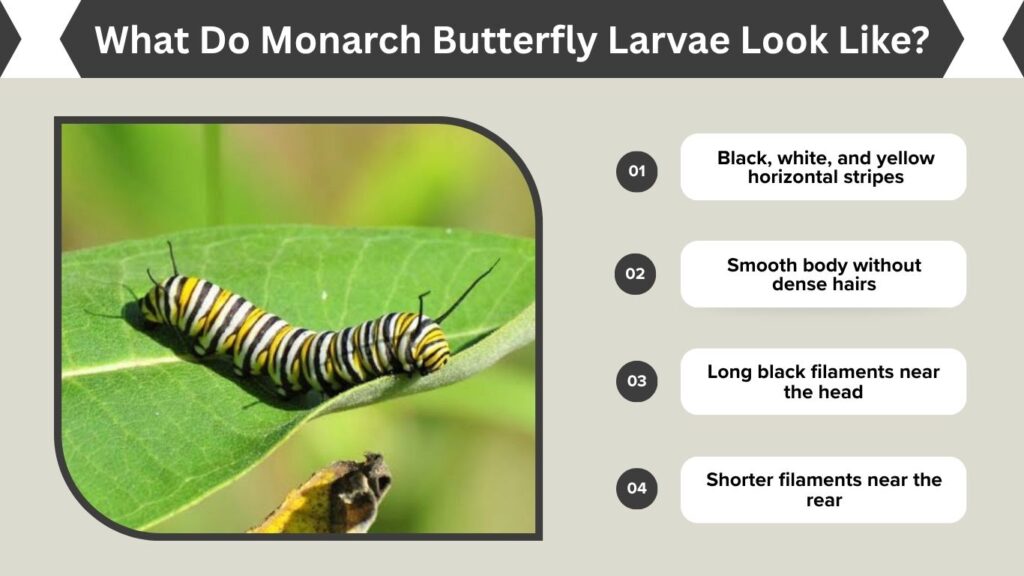
Monarch larvae have smooth bodies marked with alternating black, white, and yellow bands. Their distinctive pattern becomes clearer as they grow.
They also have two pairs of soft black filaments. One long pair is near the head, while a shorter pair is near the rear. These structures may resemble antennae or stingers, but they are harmless sensory appendages.
Monarch Larvae Identification
Important identification features include:
- Black, white, and yellow horizontal stripes
- Smooth body without dense hairs
- Long black filaments near the head
- Shorter filaments near the rear
- Black head with pale markings
- Frequent presence on milkweed
- Length of up to approximately 2 inches when mature
Newly hatched larvae look very different from mature caterpillars. They are tiny, pale, and may have only faint markings. Their bold striped appearance develops after they molt.
Are Monarch Larvae Poisonous?
Monarch larvae are not venomous and cannot sting or bite people. However, they consume defensive chemicals called cardenolides from milkweed.
These chemicals remain in their bodies and make the caterpillars distasteful or toxic to some predators. Their bright striped coloration serves as a warning that they may not be safe to eat.
Monarch Butterfly Eggs and Larvae
A female monarch normally lays each egg separately on a milkweed plant. Eggs are frequently placed on the underside of leaves, where they receive some protection from sunlight and weather.
Monarch eggs are creamy white or pale yellow, dome-shaped, and covered with fine vertical ridges. Each egg is approximately the size of a pinhead.
From Egg to Larva
A monarch egg generally hatches after about three to five days, although temperature can affect the timing. The newly emerged larva often eats its eggshell before beginning to feed on milkweed.
First-stage larvae are extremely small and vulnerable. Heavy rain, extreme heat, pesticides, ants, spiders, and other insects can kill them before they grow large enough to be easily noticed.
Monarch Butterfly Larval Stages
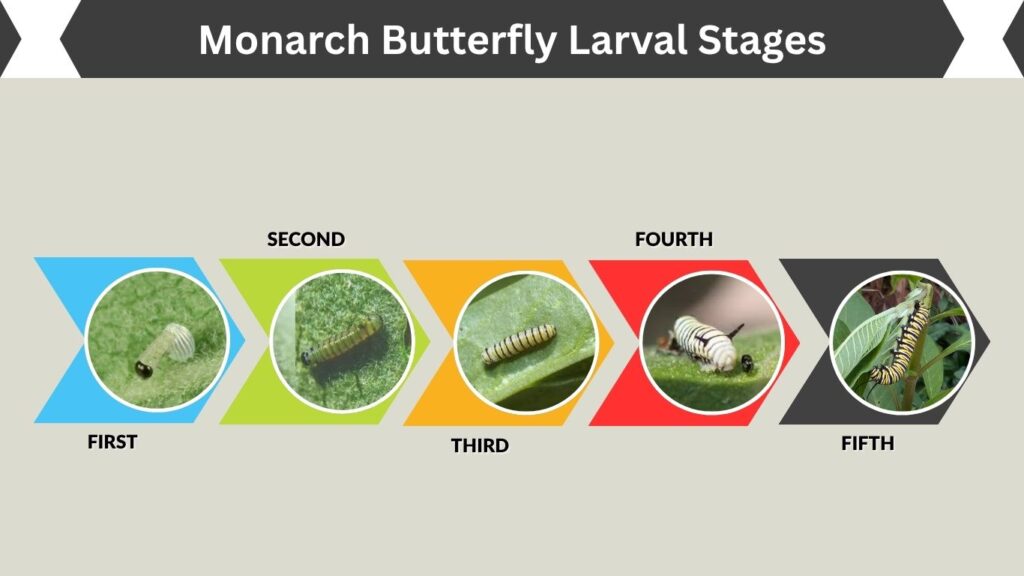
Monarch larvae pass through five growth stages called instars. At the end of each instar, the caterpillar sheds its skin because its outer covering cannot expand enough to accommodate continued growth.
| Instar | General Appearance | Behavior |
| First | Tiny, pale and lightly marked | Eats small areas of milkweed |
| Second | Stripes become more visible | Begins growing more rapidly |
| Third | Clear black, white and yellow bands | Consumes larger leaf sections |
| Fourth | Larger body and longer filaments | Feeds heavily on milkweed |
| Fifth | Thick body, bold colors and long filaments | Searches for a pupation site |
How Long Is the Larval Stage?
Monarch butterflies usually remain in the larval stage for approximately 10 to 14 days during warm weather. Cooler temperatures may slow their development.
Throughout this period, the caterpillar grows from only a few millimeters long to nearly 2 inches. Most of its time is spent eating, resting, and preparing to molt.
Monarch Larva to Butterfly
After completing the fifth instar, the caterpillar stops eating and leaves its milkweed plant. It searches for a protected surface where it can form a silk attachment pad.
The caterpillar hangs upside down in a curved “J” shape. It then sheds its final larval skin and becomes a green chrysalis. The adult butterfly normally emerges around 8 to 15 days later, depending on temperature.
What Do Monarch Butterfly Larvae Eat?
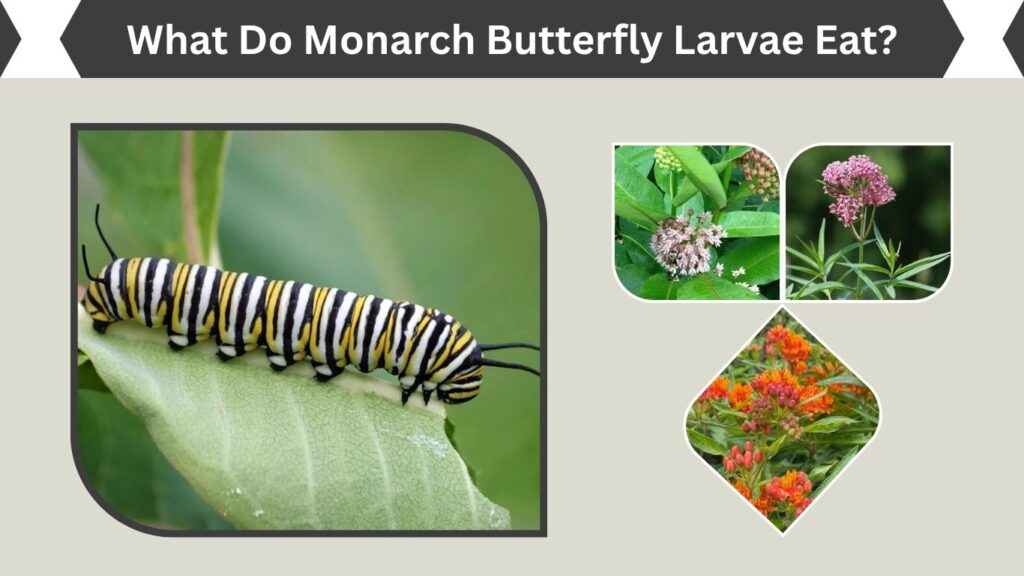
Milkweed is the essential food source for monarch larvae. They may eat the leaves, flowers, buds, seed pods, and tender stems of suitable milkweed plants.
Adult monarch butterflies drink nectar from many types of flowers, but their larvae have a specialized diet and cannot develop normally without milkweed.
Monarch Larvae and Milkweed
Common milkweed plants used by monarch larvae include:
- Common milkweed
- Swamp milkweed
- Butterfly weed
- Showy milkweed
- Whorled milkweed
- Antelope-horns milkweed
- Tropical milkweed
The best milkweed choice depends on the location. Native milkweed species are generally preferred because they are adapted to local conditions and natural monarch behavior.
Do Monarch Larvae Eat Butterfly Weed?
Yes. Butterfly weed is a type of milkweed with the scientific name Asclepias tuberosa. Monarch larvae can eat its leaves and other tender parts.
Although butterfly weed produces less visible milky sap than many other milkweeds, it still serves as a monarch host plant.
Do Monarch Larvae Eat Parsley or Marigolds?
Monarch larvae do not normally eat parsley, dill, fennel, carrots, or marigolds. Caterpillars found on parsley are more likely to be black swallowtail larvae.
A monarch caterpillar may crawl onto another plant while searching for shelter or a place to form its chrysalis. Its presence on a plant does not necessarily mean it is eating it.
Predators of Monarch Butterfly Larvae
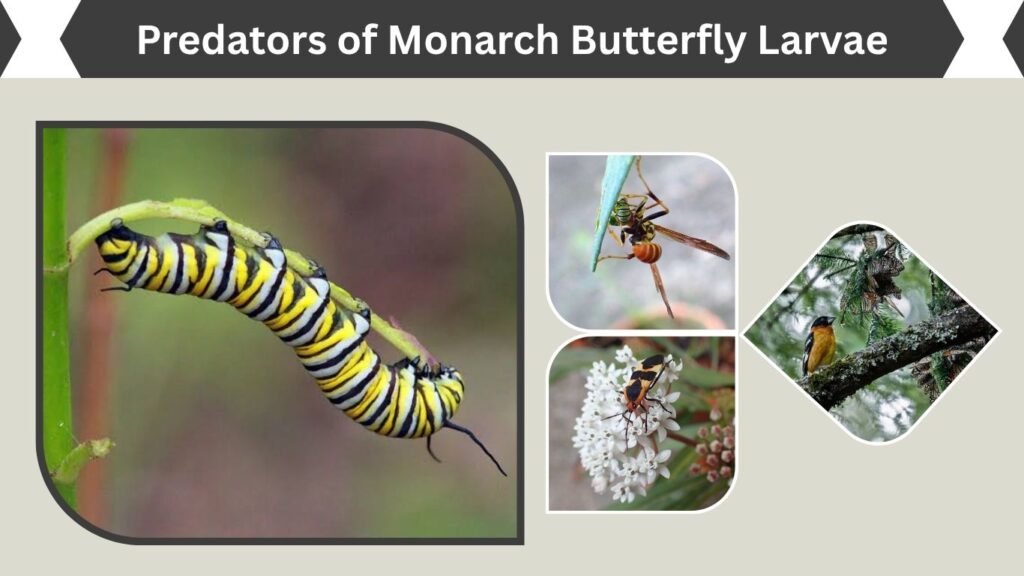
The chemicals obtained from milkweed discourage some predators, but they do not make monarch larvae completely safe. Eggs and young caterpillars experience particularly high mortality.
What Eats Monarch Larvae?
Potential predators include:
- Ants
- Spiders
- Wasps
- Assassin bugs
- Stink bugs
- Lady beetles
- Lacewing larvae
- Certain birds
- Small mammals
Some predators can tolerate the chemicals stored in monarch caterpillars. Others may attack a larva but reject it after tasting its defensive compounds.
Parasites and Disease
Tachinid flies are important monarch parasites. An adult fly may lay an egg on or near a monarch caterpillar. The fly larva then develops inside the monarch and eventually kills it.
Monarchs can also carry the microscopic parasite Ophryocystis elektroscirrha, commonly called OE. Infected butterflies may have difficulty emerging from their chrysalises or may develop weak, deformed wings.
Crowded rearing containers and contaminated surfaces can increase the risk of disease transmission.
Raising Monarch Butterfly Larvae
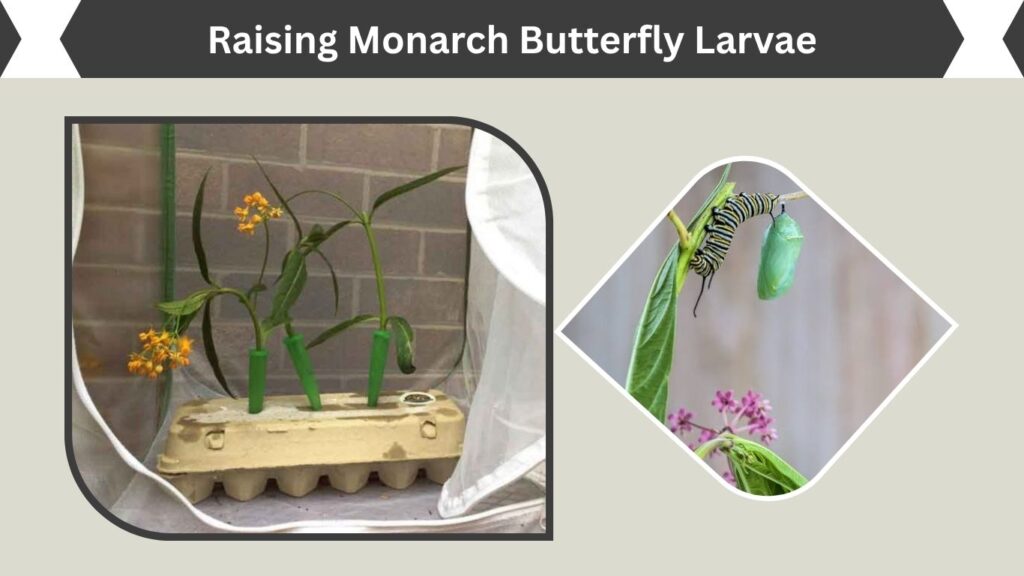
Some people raise monarch larvae for education, photography, or conservation. Successful care requires fresh milkweed, good ventilation, cleanliness, and protection from extreme temperatures.
Basic Monarch Larvae Care
Provide pesticide-free milkweed and replace wilted leaves regularly. Do not collect milkweed from areas that may have been treated with insecticides or herbicides.
Remove old leaves and caterpillar waste, known as frass, every day. Keep the enclosure out of direct sunlight, as enclosed containers can become dangerously hot.
Avoid handling larvae while they are molting. A caterpillar preparing to molt may remain motionless for several hours and should not be disturbed.
Healthy larvae usually eat regularly, hold firmly to leaves, produce solid frass, and grow noticeably between molts.
Monarch Butterfly Larvae for Sale and Kits
Searches for live monarch butterfly larvae, caterpillar kits, and larvae for sale are common. However, purchasing and shipping monarchs requires careful consideration.
Rules concerning the sale, possession, and transportation of live butterflies vary by region. Moving monarchs over long distances may also spread parasites or mix populations that are adapted to different environments.
Before Buying Monarch Larvae
Consider the following precautions:
- Check local wildlife and agricultural regulations.
- Choose a reputable local supplier when possible.
- Ask whether the larvae were screened for disease.
- Confirm that sufficient pesticide-free milkweed is available.
- Avoid releasing unhealthy or weak butterflies.
- Never release monarchs far outside their natural range.
Finding eggs or caterpillars naturally on locally grown milkweed may provide a more responsible learning experience than ordering live larvae from a distant seller.
Plants That Attract Monarch Larvae
Adult female monarchs are attracted to gardens containing healthy milkweed because it provides a place to lay eggs. Nectar flowers encourage adults to remain in the area and supply energy during breeding and migration.
A monarch-friendly garden should contain native milkweed along with flowers that bloom at different times of the year. Suitable nectar sources may include asters, goldenrod, blazing star, coneflowers, and native sunflowers.
Avoid spraying broad-spectrum insecticides, even when pests appear on milkweed. These products may also kill monarch eggs and larvae.
FAQs
Are Monarch Butterfly Larvae the Same as Caterpillars?
Yes. A monarch butterfly larva is the caterpillar stage of the monarch’s life cycle. It begins after the egg hatches and ends when the caterpillar forms a chrysalis. “Larva” is the scientific term, while “caterpillar” is the common term.
How Big Do Monarch Larvae Get?
Newly hatched monarch larvae are only a few millimeters long. After passing through five instars, mature caterpillars may reach approximately 1.5 to 2 inches in length. Their bodies become thicker and their striped markings become increasingly bold as they grow.
Do Monarch Larvae Need Warmth to Hatch?
Warm temperatures generally speed egg and larval development, but excessive heat can be harmful. Monarch eggs hatch naturally under normal seasonal outdoor conditions. Indoor containers should be kept at a stable temperature and protected from direct sunlight, overheating, and sudden temperature changes.
Why Is My Monarch Larva Not Eating?
A monarch larva may stop eating before molting or forming a chrysalis. This temporary inactivity is normal. However, prolonged weakness, discoloration, fluid leakage, or difficulty gripping surfaces may indicate pesticide exposure, disease, injury, or parasitism.
Can Monarch Larvae Survive Without Milkweed?
No. Monarch larvae depend on milkweed as their primary host plant and cannot complete healthy development on parsley, marigolds, or ordinary garden leaves. When raising caterpillars, a continuous supply of fresh, pesticide-free milkweed is essential.
