
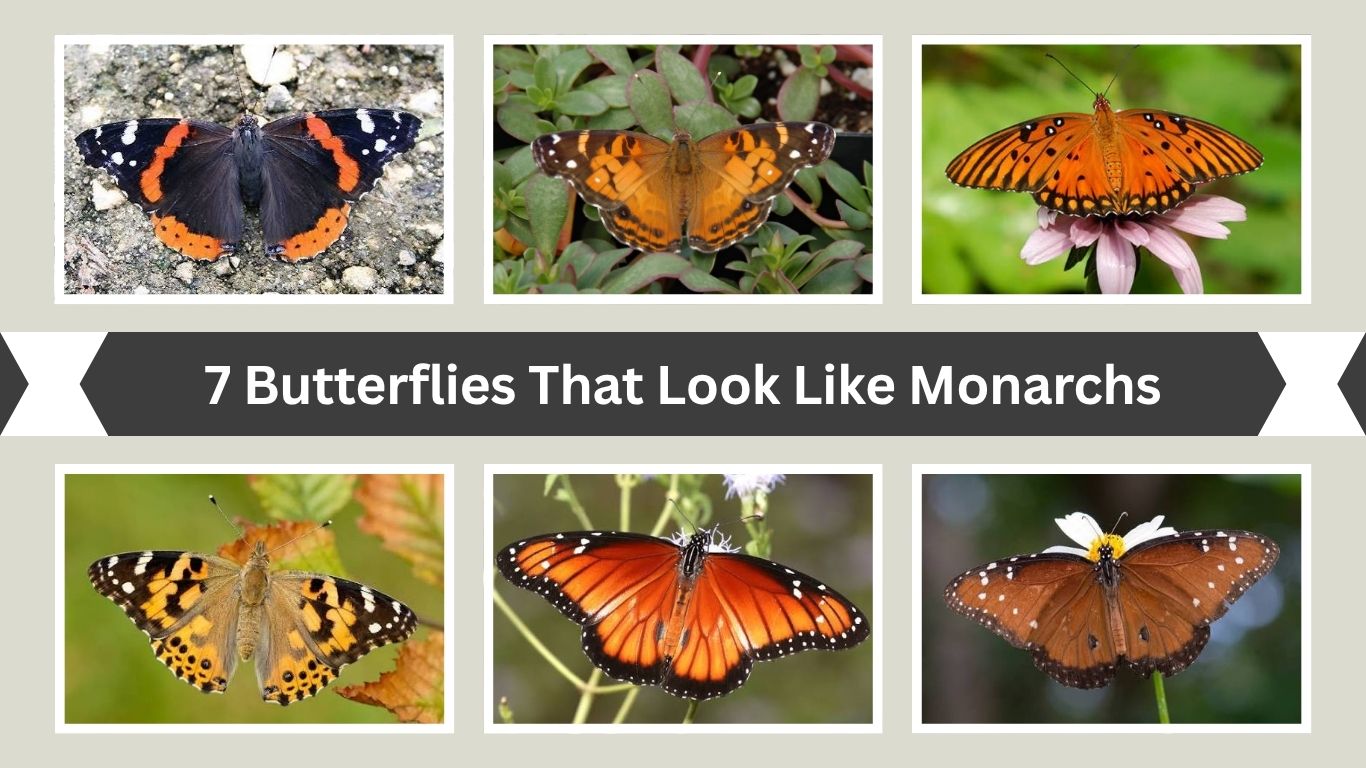
Monarch butterflies are easy to recognize, but several other species share their bright orange, black, and white coloring. From the closely related queen and soldier butterflies to the viceroy, Gulf fritillary, painted lady, American lady, and red admiral, these look-alikes can be confusing at first glance. Each species has unique wing patterns, body size, markings, habitat, and host plants that help separate it from a true monarch. This guide explains seven butterflies that look like monarchs and shows the key identification features you can use to tell them apart in gardens, fields, wetlands, and other natural habitats across North America.
1. Viceroy Butterfly
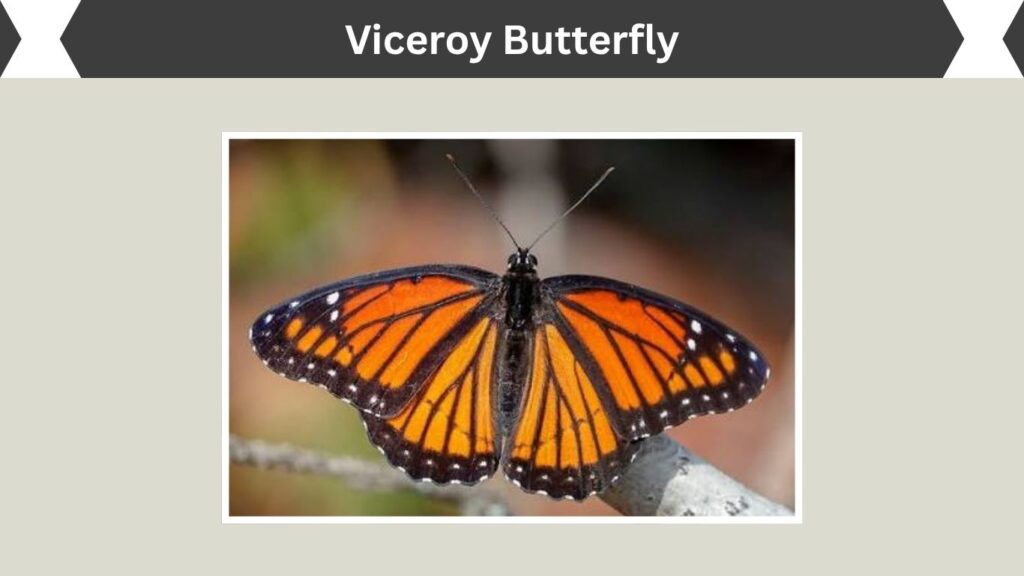
The viceroy butterfly (Limenitis archippus) is one of the closest monarch look-alikes in North America. Its orange wings, black veins, and white-spotted borders closely resemble a monarch’s pattern. However, a distinctive black line across each hindwing makes identification easier.
Identification
- Bright orange wings with bold black veins
- Black borders containing small white spots
- Curved black line crossing each hindwing
- Wingspan of roughly 2.5 to 3.2 inches
- Smaller body and wings than a typical monarch
- Scientific name: Limenitis archippus
Why It Looks Like a Monarch
The viceroy and monarch share warning colors that help discourage predators. Viceroys were once believed to be harmless butterflies that simply copied toxic monarchs. Research now indicates that viceroys can also be distasteful, so the resemblance is considered a form of Müllerian mimicry in which both species benefit from sharing a recognizable warning pattern.
Habitat and Distribution
Viceroys are found across much of North America. They commonly inhabit wetlands, marshes, riverbanks, meadows, and woodland edges where willows, poplars, and cottonwoods grow. Adults are often seen flying close to the ground near moist habitats.
Caterpillar and Food
Viceroy caterpillars mainly feed on willow, poplar, cottonwood, and related trees rather than milkweed. Their mottled brown-and-green appearance resembles bird droppings, helping them remain hidden from predators. Adult butterflies feed on flower nectar as well as moisture and minerals from damp soil, decaying fruit, and animal waste.
2. Queen Butterfly
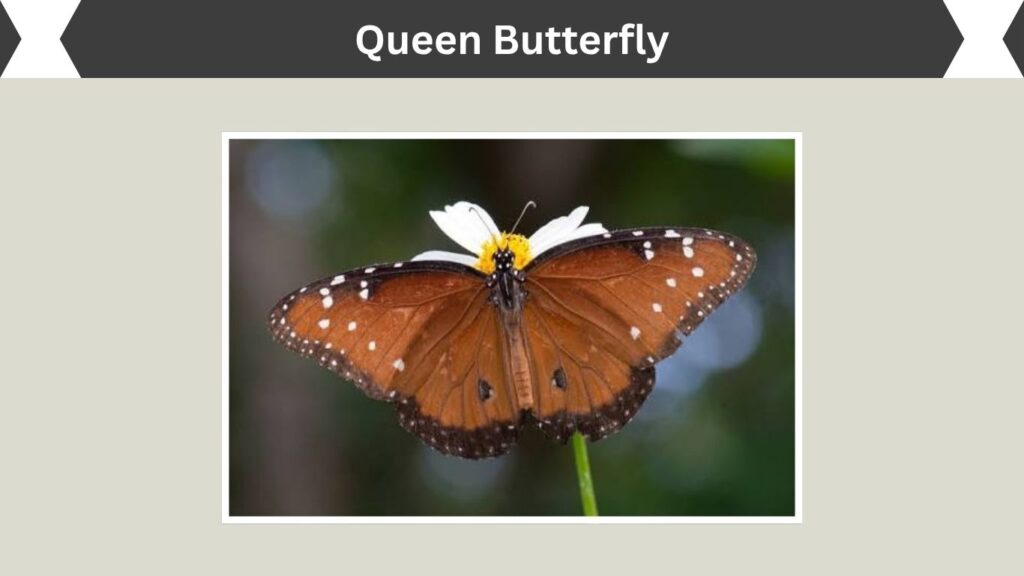
The queen butterfly (Danaus gilippus) closely resembles the monarch because both species have orange-brown wings, black borders, and white spots. However, the queen is usually darker and has fewer prominent black veins. It belongs to the same butterfly genus as the monarch and commonly occurs in warm regions of the Americas.
Identification
- Deep orange or reddish-brown wings
- Black wing borders with white spots
- Small white spots scattered across the forewings
- Less noticeable black wing veins than a monarch
- Wingspan of approximately 2.5 to 3.5 inches
- Males have visible black scent patches on their hindwings
- Scientific name: Danaus gilippus
Why It Looks Like a Monarch
Queen and monarch butterflies are closely related members of the milkweed butterfly group. Both develop bright warning colors after their caterpillars eat milkweed plants containing defensive chemicals. Their similar orange, black, and white patterns warn predators that they may taste unpleasant.
The queen can be distinguished from the monarch by its darker coloring and spotted forewings. Monarch wings have bold black veins throughout, while the queen’s wing veins are less strongly outlined.
Habitat and Distribution
Queen butterflies live primarily in warm, sunny environments. They are common in Florida, Texas, the southwestern United States, Mexico, Central America, South America, and parts of the Caribbean.
They can be found in open fields, deserts, gardens, roadsides, woodland edges, and coastal areas. Adults are usually active throughout the year in tropical regions but may appear seasonally in cooler locations.
Caterpillar and Food
Queen butterfly caterpillars feed mainly on milkweed and related plants. They have black, white, and yellow bands similar to monarch caterpillars, but queens usually have three pairs of long black filaments instead of two.
Adult queen butterflies drink nectar from flowers such as milkweed, lantana, asters, and mistflowers. Male queens may also collect certain plant chemicals that help them produce pheromones used during courtship.
3. Soldier Butterfly
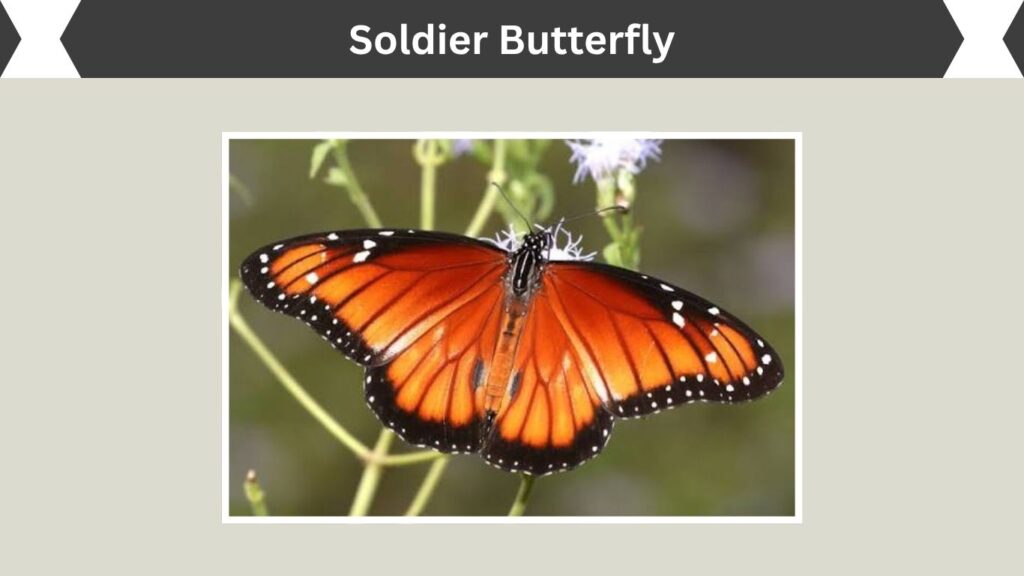
The soldier butterfly (Danaus eresimus) is a dark orange-brown butterfly that resembles both the monarch and queen butterfly. It belongs to the milkweed butterfly group and displays similar black borders and white spots. However, its darker wings and less prominent black veins help separate it from a monarch.
Identification
- Dark reddish-brown or orange-brown wings
- Black wing borders containing small white spots
- Pale white spots across the forewings
- Less visible black veins than a monarch
- Darker overall appearance than most monarchs
- Wingspan of approximately 2.5 to 3.5 inches
- Scientific name: Danaus eresimus
Why It Looks Like a Monarch
The soldier butterfly shares the monarch’s orange, black, and white warning pattern. Both species belong to the same genus and feed on milkweed during the caterpillar stage. Chemicals obtained from milkweed can make them unpleasant to certain predators.
A soldier butterfly is usually darker and browner than a monarch. Monarchs also have bold black veins extending across both wings, while the soldier’s veins are less strongly outlined. Soldiers may be more easily confused with queen butterflies because of their similar dark coloring.
Habitat and Distribution
Soldier butterflies prefer warm, open habitats such as tropical forests, woodland edges, fields, gardens, roadsides, and coastal areas. They occur in parts of Florida, Texas, Mexico, Central America, South America, and the Caribbean.
They are most common in tropical and subtropical regions. Adults can often be seen flying slowly near flowering plants or resting with their wings closed.
Caterpillar and Food
Soldier butterfly caterpillars feed on milkweed and other plants in the dogbane family. Their bodies have black, white, and yellow markings, along with several pairs of long fleshy filaments.
Adult soldiers drink nectar from milkweed, lantana, asters, and other flowering plants. Their dependence on milkweed makes gardens containing native milkweed useful habitats for both caterpillars and adults.
4. Gulf Fritillary
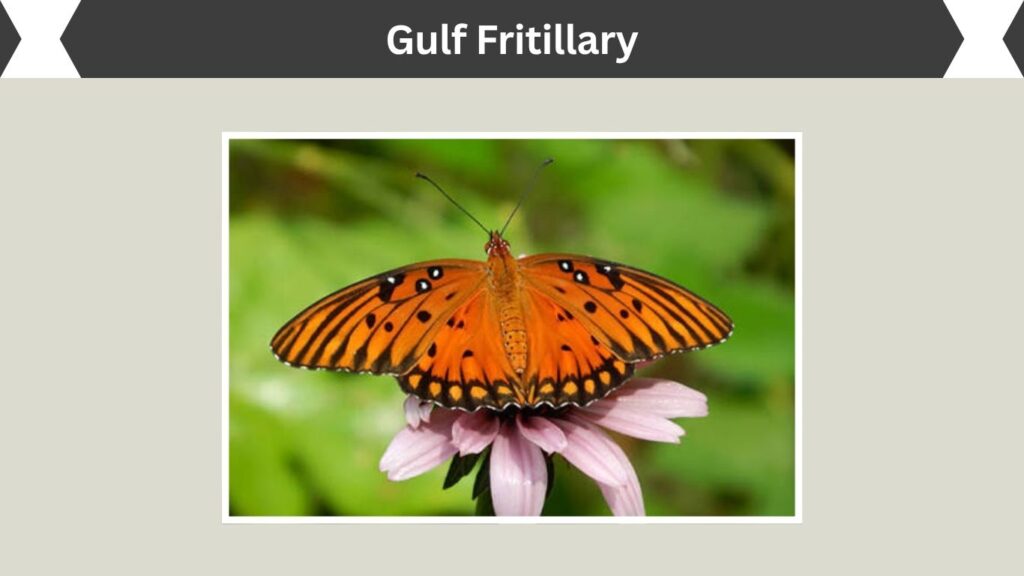
The Gulf fritillary (Dione vanillae) is a bright orange butterfly that may be mistaken for a monarch from a distance. Both have orange-and-black wings, but the Gulf fritillary has a more elongated shape and striking silver spots on the undersides of its wings. It is especially common in warm parts of the Americas.
Identification
- Bright orange upper wings with black markings
- Long, narrow forewings
- Large silver or white spots under the wings
- Several black spots on the upper forewings
- Wingspan of approximately 2.5 to 3.5 inches
- More slender body than a monarch
- Scientific name: Dione vanillae
Why It Looks Like a Monarch
The Gulf fritillary resembles a monarch mainly because of its vivid orange coloration and dark wing markings. However, its pattern is less heavily veined, and its wings are longer and narrower.
The easiest way to distinguish it is by looking at the underside of the wings. Gulf fritillaries have shiny silver patches, while monarchs have pale orange undersides with bold black veins and white-spotted borders.
Habitat and Distribution
Gulf fritillaries are found in the southern United States, Mexico, Central America, South America, and the Caribbean. They commonly live in gardens, fields, roadsides, coastal areas, and open woodland.
They prefer warm climates and may move northward during summer. Adults are strong, fast flyers and are frequently seen visiting flowers in sunny gardens.
Caterpillar and Food
Gulf fritillary caterpillars feed mainly on passionflower vines. They are bright orange with black branching spines, giving them a dangerous appearance, although they are generally harmless to people.
Adult Gulf fritillaries drink nectar from flowers such as lantana, zinnia, verbena, and asters. Planting passionflower vines provides food for the caterpillars, while nectar-rich flowers attract the adults.
5. Painted Lady Butterfly
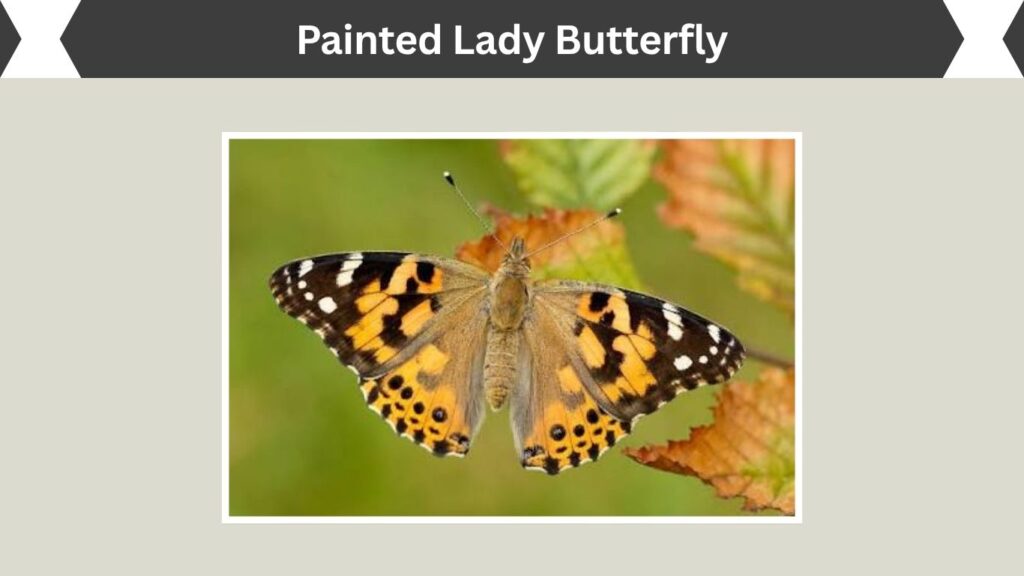
The painted lady butterfly (Vanessa cardui) can resemble a monarch because of its orange-and-black wings. However, it is smaller and has white forewing patches, scattered black spots, and several eyespots beneath the hindwings. It is a widespread migratory butterfly commonly seen in gardens and open landscapes.
Identification
- Orange, brown, black, and white wings
- Black forewing tips containing white patches
- Several small black spots on the hindwings
- Four small eyespots beneath each hindwing
- Mottled brown, cream, and gray underwings
- Wingspan of approximately 2 to 3 inches
- Scientific name: Vanessa cardui
Why It Looks Like a Monarch
Both butterflies display noticeable orange-and-black coloring, so a flying painted lady may initially be mistaken for a monarch. However, monarchs are generally larger and have bold black veins covering both pairs of wings. Painted ladies have irregular black markings, white forewing patches, and spotted rather than heavily veined hindwings.
Habitat and Distribution
Painted ladies favor sunny, open environments such as gardens, meadows, prairies, roadsides, vacant lots, and old fields. They are strong migrants and may appear in large numbers during favorable years. Adults frequently visit tall nectar-producing plants in open areas.
Caterpillar and Food
Painted lady caterpillars commonly feed on thistles and mallows, although they can use several other host plants. A caterpillar often creates a protective shelter by joining leaves with silk. Adults drink nectar from flowers such as asters, coneflowers, blazing stars, zinnias, clover, and milkweed.
6. American Lady Butterfly
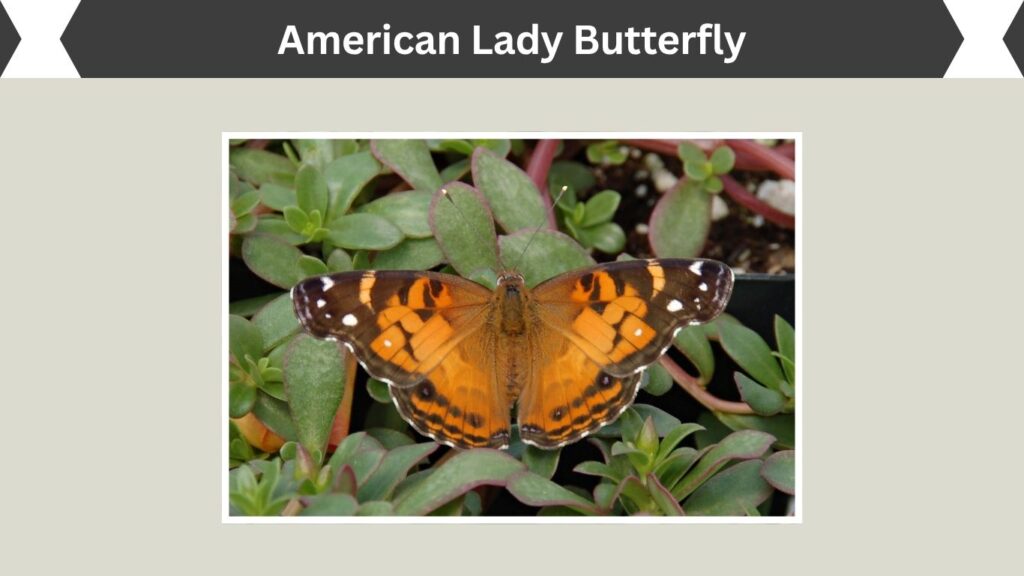
The American lady butterfly (Vanessa virginiensis) has orange-and-black wings that may resemble a monarch when seen in flight. However, it is noticeably smaller and has white spots near the tips of its forewings. Two large eyespots on the undersides of the hindwings are among its easiest identifying features.
Identification
- Orange wings with irregular black markings
- Black forewing tips containing white spots
- One small white spot inside the orange forewing area
- Two large eyespots beneath each hindwing
- Mottled brown and gray underwing pattern
- Wingspan of approximately 1.75 to 2.6 inches
- Scientific name: Vanessa virginiensis
Why It Looks Like a Monarch
The American lady resembles a monarch primarily because both butterflies have orange-and-black upper wings. From a distance, their similar colors can cause confusion, especially while they are flying.
A monarch is larger and has bold black veins extending across its wings. The American lady has irregular dark patches rather than a clear network of veins. Its white forewing spots and large underwing eyespots also separate it from the monarch.
Habitat and Distribution
American lady butterflies occur throughout much of North America, Central America, and parts of South America. They inhabit gardens, meadows, roadsides, fields, woodland openings, and other sunny areas containing flowering plants.
Adults are active, fast flyers and often rest on bare ground or low vegetation with their wings open. They may migrate between warmer and cooler regions as seasonal conditions change.
Caterpillar and Food
American lady caterpillars mainly feed on plants in the everlasting group, including pearly everlasting, cudweed, and pussytoes. The caterpillars create protective shelters by joining leaves together with silk.
Adult butterflies drink nectar from asters, goldenrod, dogbane, milkweed, and other flowering plants. They may also obtain minerals and moisture from damp soil, mud, and animal droppings.
7. Red Admiral Butterfly
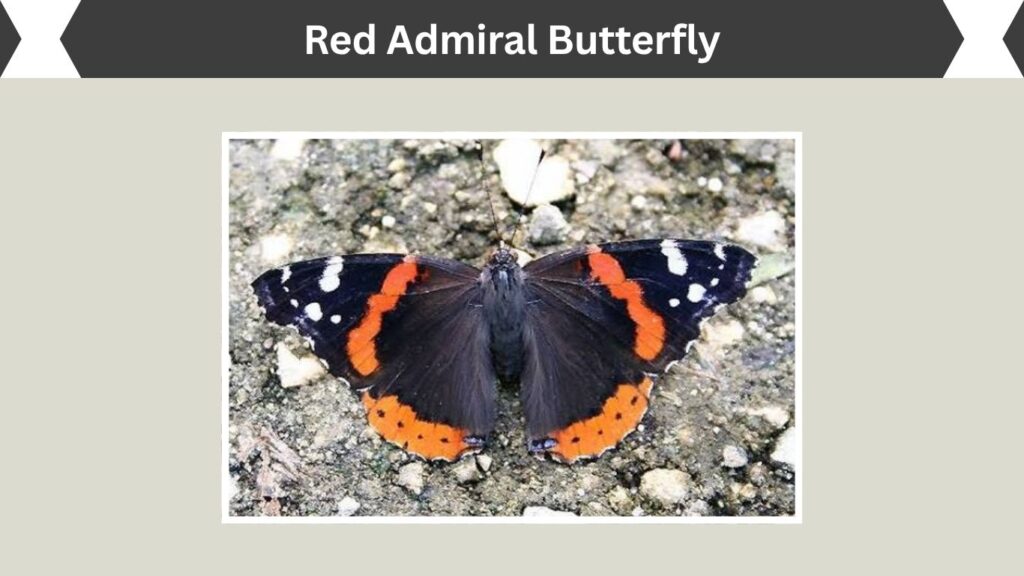
The red admiral butterfly (Vanessa atalanta) may resemble a monarch because both have dark wings with bright orange-red markings. However, the red admiral has broad red bands rather than orange wings covered with black veins. It is a fast-flying butterfly commonly seen in gardens, woodland edges, and open areas.
Identification
- Dark brown or black wings
- Bright red-orange bands across the forewings
- Red-orange borders on the hindwings
- White spots near the forewing tips
- Mottled brown, gray, and black underwings
- Wingspan of approximately 2 to 3 inches
- Scientific name: Vanessa atalanta
Why It Looks Like a Monarch
The red admiral can be confused with a monarch because of its combination of orange-red and black colors. Both butterflies are also active migrants and frequently visit flowering gardens.
However, monarchs have mostly orange wings divided by bold black veins. Red admirals have dark wings with narrow red bands and white forewing spots. They are also generally smaller and fly more quickly and irregularly than monarchs.
Habitat and Distribution
Red admiral butterflies occur across North America, Europe, northern Africa, and parts of Asia. They live in gardens, parks, fields, woodland clearings, roadsides, and moist areas near streams.
Adults often defend sunny territories and may repeatedly return to the same resting place. They migrate seasonally in many regions to avoid harsh winter conditions.
Caterpillar and Food
Red admiral caterpillars mainly feed on nettle plants. A caterpillar folds or joins nettle leaves with silk to create a protective shelter while feeding.
Adult red admirals drink nectar from asters, milkweed, goldenrod, and other flowers. They also feed on tree sap, overripe fruit, and moisture from damp soil.
FAQs
What Butterfly Is Most Commonly Mistaken for a Monarch?
The viceroy butterfly is the species most commonly mistaken for a monarch. Both have orange wings, black veins, and white-spotted borders. However, the viceroy is usually smaller and has a distinct black line running across each hindwing.
How Can You Tell a Monarch From a Viceroy?
Look for the black horizontal line across the viceroy’s hindwings. Monarch butterflies do not have this line. Monarchs are also generally larger and have a more open wing shape, while viceroys usually appear slightly smaller and more compact.
Are Queen Butterflies and Monarchs the Same?
No. Queen butterflies and monarchs are separate species, although they belong to the same genus. Queens are usually darker reddish-brown, have white spots across their forewings, and lack the monarch’s strongly outlined black wing veins.
Why Do Several Butterflies Look Like Monarchs?
Many butterflies share orange, black, and white warning colors that discourage predators. Some species are genuinely distasteful, while others gain protection by resembling harmful butterflies. This survival strategy is known as mimicry and can reduce attacks from birds and other predators.
Are All Orange-and-Black Butterflies Monarchs?
No. Viceroys, queens, soldiers, Gulf fritillaries, painted ladies, American ladies, and red admirals can all display orange-and-black markings. Wing size, vein patterns, white spots, eyespots, and underwing colors help separate these species from true monarch butterflies.
