
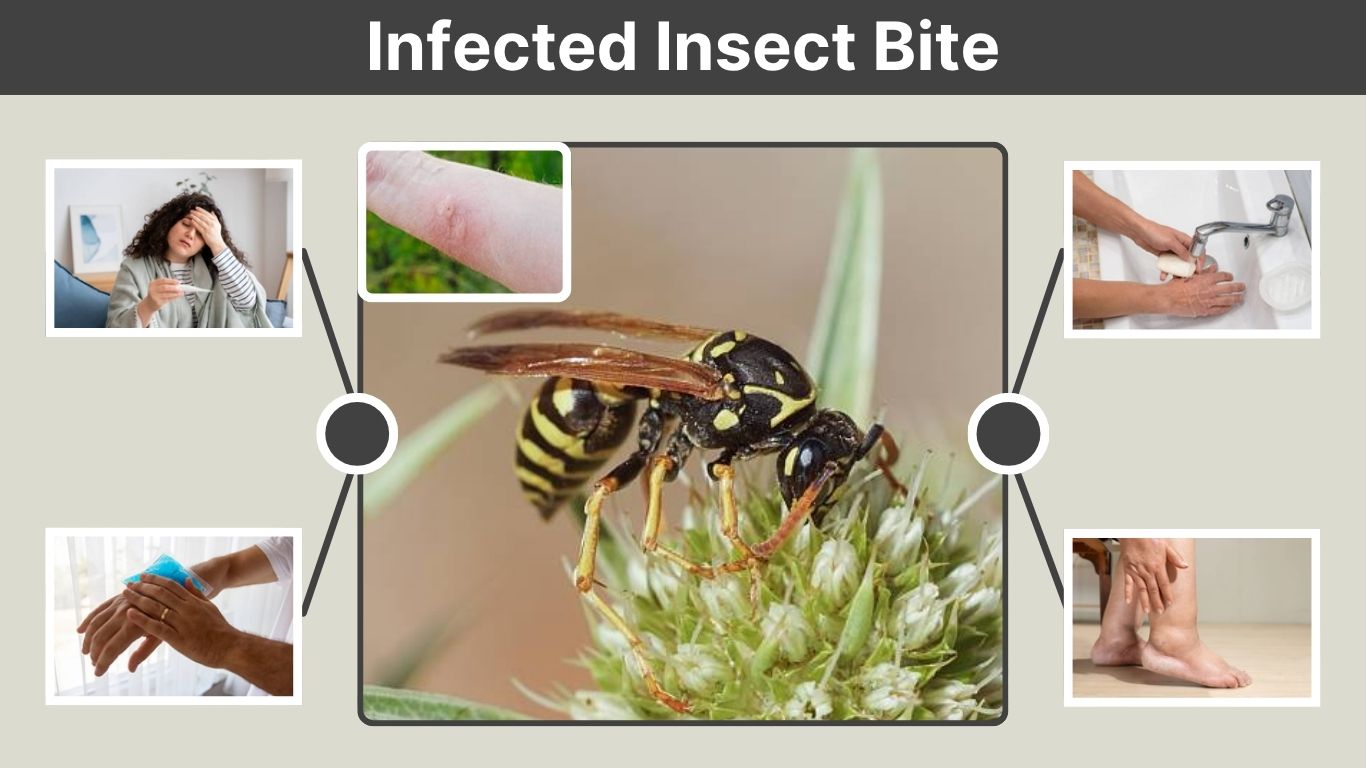
An insect bite often leaves an itchy bump that gradually settles. However, bacteria can enter broken skin, especially after scratching, and cause an infection. Recognizing an infected insect bite means watching how symptoms change rather than judging the bite by its size alone. Spreading redness, increasing pain, pus, and fever deserve attention, while breathing difficulty or confusion require emergency help. This guide explains ten warning signs, how infection differs from a normal reaction, what to do at home, and when to contact a doctor.
What Causes an Insect Bite to Become Infected?
A bite damages the skin’s protective barrier. Scratching can widen that opening, allowing bacteria to enter. Infection may remain near the surface or spread into deeper skin tissue. Although an itchy, swollen bite can look alarming, inflammation does not automatically mean infection. The pattern of symptoms, their progression, and how you feel overall help guide assessment.
How Scratching Increases the Risk
Scratching can turn a small bump into an open wound. Bacteria already present on your skin may then enter and multiply. Infection sometimes develops two or three days after a bite, particularly when repeated scratching has damaged the surface.
Infection Versus a Normal Reaction
A normal bite reaction usually involves itching and localized swelling. A larger allergic reaction can also become warm, red, and swollen without bacteria being involved.
Increasing tenderness, spreading skin changes, or discharge raise greater concern. Timing alone cannot confirm infection, and a large bump does not necessarily need antibiotics.
10 Signs of an Infected Insect Bite
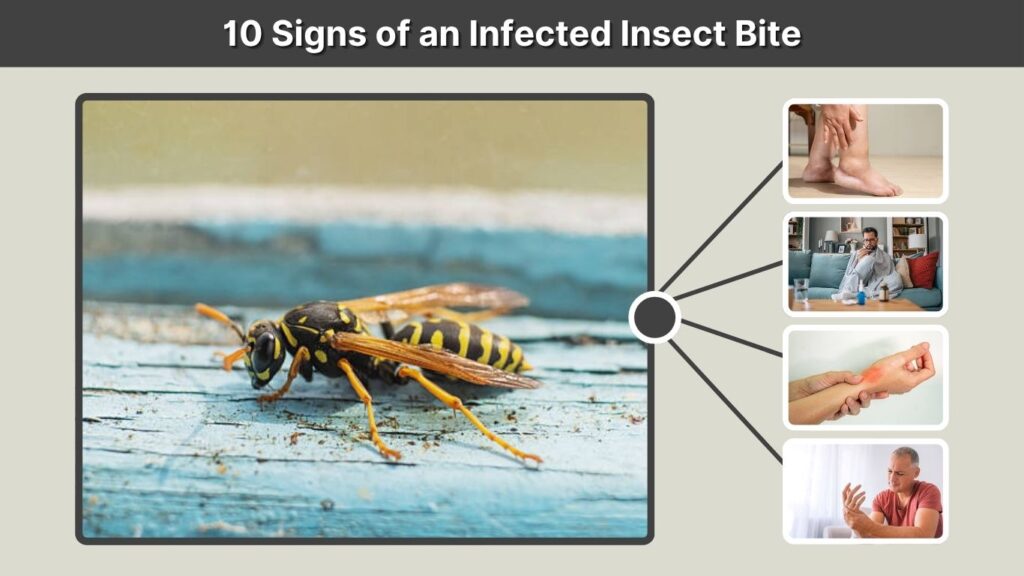
These signs are reasons to seek advice, especially when several occur together or symptoms keep worsening. None provides a reliable diagnosis on its own. Redness, warmth, and swelling can also accompany ordinary inflammation. Pay attention to changes beyond the original bump, new drainage, and symptoms affecting your whole body rather than relying on appearance alone.
1. Spreading Redness or Skin Discoloration
An area of redness that keeps expanding beyond the bite may indicate infection. On brown or black skin, redness can be difficult to see, so also check for increasing warmth, tenderness, and swelling.
2. Increasing Warmth
Infected skin may feel hot compared with the surrounding area. Mild warmth can occur after an uncomplicated bite, but warmth that increases alongside pain or spreading swelling deserves medical assessment.
3. Worsening Pain or Tenderness
An ordinary bite may itch more than it hurts. Increasing pain, particularly after the area initially seemed to improve, is concerning. Tell a clinician whether clothing brushing against the skin or moving the affected limb has become painful.
4. Swelling That Continues to Increase
Swelling can occur with infection or an allergic reaction. It is more concerning when accompanied by worsening tenderness, heat, or spreading redness. Rapid progression should prompt urgent advice rather than continued home monitoring.
5. Pus or Cloudy Drainage
Pus in or around a bite is a warning sign. However, clear fluid from a scratched blister does not automatically mean bacterial infection. Have new discharge assessed, particularly when the surrounding skin is increasingly painful or hot.
6. A Growing, Painful Lump
A lump that becomes increasingly tender and develops a pus-filled center could be an abscess or boil. Some skin infections are mistaken for insect bites. Do not squeeze, puncture, or cut the lump yourself.
7. Red Streaks Extending From the Area
A red line tracking away from the bite can indicate spreading inflammation or infection involving lymphatic vessels. Seek same-day assessment, even if the original wound looks small. Do not wait for fever to develop.
8. Swollen or Tender Glands
Nearby lymph nodes may swell while your body responds to infection. You might notice tenderness in an armpit or groin, depending on the bite’s location. Swollen glands alongside a worsening bite warrant medical advice.
9. Fever or Chills
Fever or chills with worsening skin symptoms require prompt assessment. They may reflect a skin infection or an illness transmitted by the insect. Tell your doctor about recent travel and any suspected tick or mosquito exposure.
10. Feeling Generally Unwell
New fatigue, body aches, or an overall feeling of illness can accompany infection. These symptoms are especially concerning when combined with fever, spreading skin changes, or worsening pain. Feeling unwell after a bite should not be dismissed as ordinary itching.
When to See a Doctor
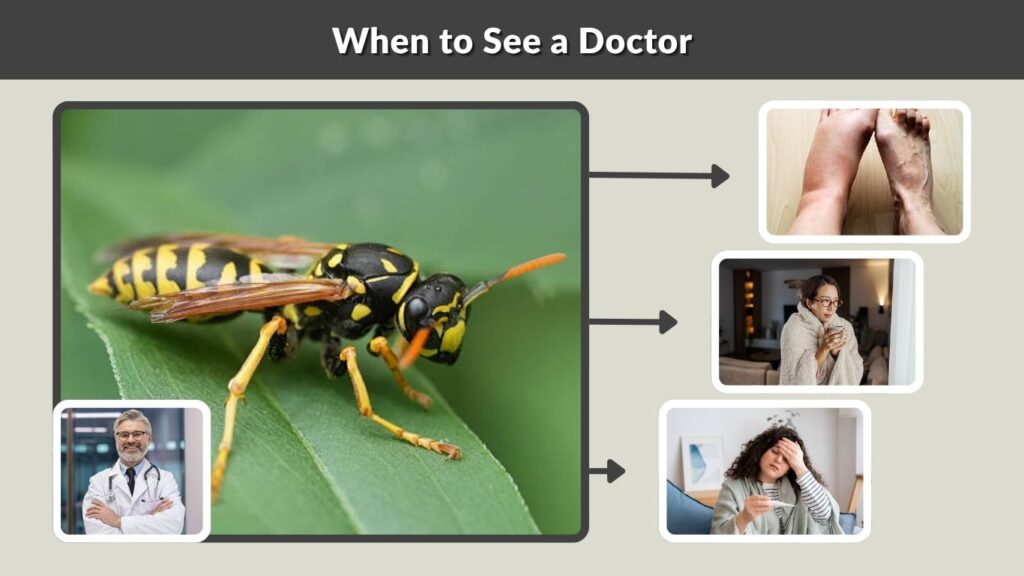
Seek medical advice when symptoms suggest infection or continue to worsen. Early assessment can identify whether you need antibiotics, drainage, or another treatment. The urgency depends on how quickly symptoms progress, where the bite is located, and whether you feel unwell. People with conditions that increase infection risk should seek advice sooner.
Get Same-Day Medical Advice
Contact a doctor or urgent care service if you notice:
- Spreading skin changes with increasing heat, swelling, or pain.
- Pus, a growing painful lump, or red streaks.
- Fever, chills, or swollen glands with worsening bite symptoms.
- Symptoms that deteriorate or fail to improve.
Suspected infection should be assessed promptly rather than treated indefinitely with itch remedies.
Seek Advice Earlier if You Have Higher Risk
Diabetes, a weakened immune system, poor circulation, or lymphoedema can increase the risk of cellulitis. Mention these conditions when contacting a clinician. Increasing swelling around an eye also deserves urgent assessment because infection in that area can be serious.
Recognize Emergency Symptoms
Call your local emergency number for:
- Difficulty breathing or sudden swelling of the tongue or throat.
- Collapse, fainting, or difficulty waking the person.
- New confusion or severe disorientation.
- Severe illness with clammy skin, a weak pulse, or shortness of breath.
Breathing problems and throat swelling may indicate anaphylaxis. Severe illness or confusion during an infection may indicate sepsis, a life-threatening emergency.
What to Do While Arranging Medical Advice
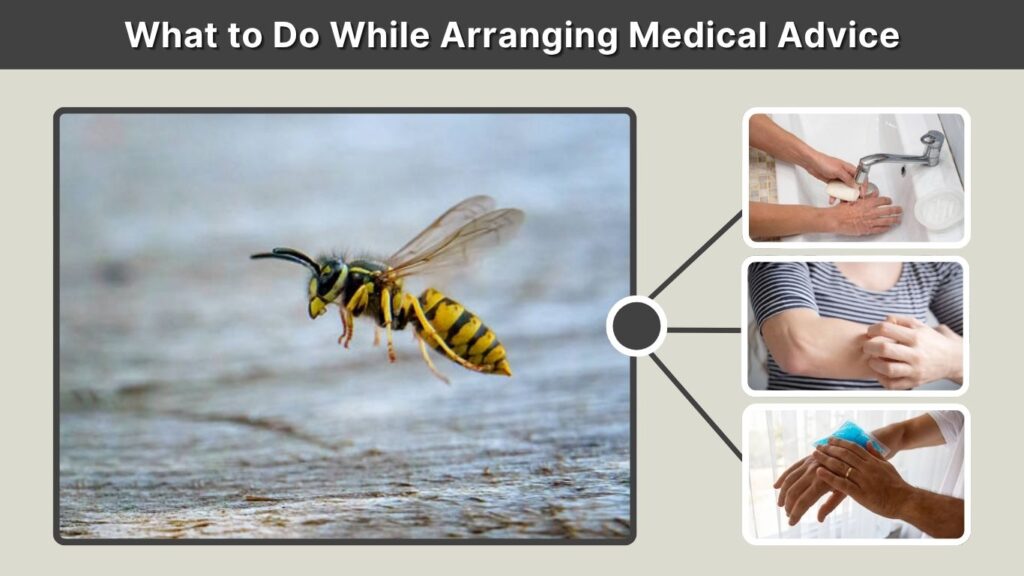
Basic skin care can protect the area and ease discomfort while you arrange assessment. It cannot replace treatment for a spreading infection. Avoid repeatedly touching the wound, experimenting with harsh remedies, or trying to drain a painful lump. Keep track of when the bite occurred and how the symptoms have changed.
Clean and Protect the Area
Useful first steps include:
- Gently wash the bite with soap and water.
- Avoid scratching, picking, or squeezing it.
- Apply a cool compress wrapped in cloth for swelling.
- Raise the affected limb when practical.
These measures can help with ordinary bite discomfort, but worsening symptoms still require assessment.
Use Symptom Relief Carefully
A pharmacist can advise on suitable pain relief or an oral antihistamine for itching. Follow the product directions and check suitability for children, pregnancy, or existing medical conditions.
Hydrocortisone may help an uncomplicated bite, but ask a pharmacist or clinician before applying it to broken or potentially infected skin.
How Doctors Treat an Infected Insect Bite
Treatment depends on what the examination shows. A clinician will consider the skin’s appearance, tenderness, spread, drainage, and your general health. They may also ask whether you actually saw an insect bite you. This matters because other skin conditions can resemble bites, and insect-transmitted illnesses require a different assessment from a local wound infection.
Antibiotics for Bacterial Infection
Cellulitis usually requires antibiotics prescribed by a clinician. Take them exactly as directed. Contact the prescriber if you have not started improving within two to three days, and seek help sooner for rapid deterioration or new severe symptoms.
Drainage for a Collection of Pus
A deeper or larger pus-filled lump may need professional drainage. Creams alone may not resolve it. Trying to open it at home can spread infection and damage the skin.
FAQs
Can an Insect Bite Be Infected Without Pus?
Yes. Cellulitis affects deeper skin and may cause heat, swelling, and pain without visible drainage. The absence of pus does not rule out infection.
Does a Large Swollen Bite Always Need Antibiotics?
No. A large local allergic reaction can cause substantial swelling. Antibiotics treat bacterial infection; they do not treat an ordinary allergic reaction.
How Quickly Can a Bite Become Infected?
Infection sometimes develops after two or three days, particularly following scratching. There is no fixed timeline, so worsening symptoms matter more than the number of days.
Can an Infected Bite Heal With Home Care Alone?
Some minor surface problems may settle, but suspected cellulitis or a painful pus-filled lump needs assessment. Seek advice for spreading redness, increasing pain, drainage, or fever.
Can Fever After a Bite Mean Something Else?
Yes. Fever can result from an insect-transmitted illness rather than infection at the bite site. Report recent travel, tick exposure, and any new rash or body aches to your doctor.
