
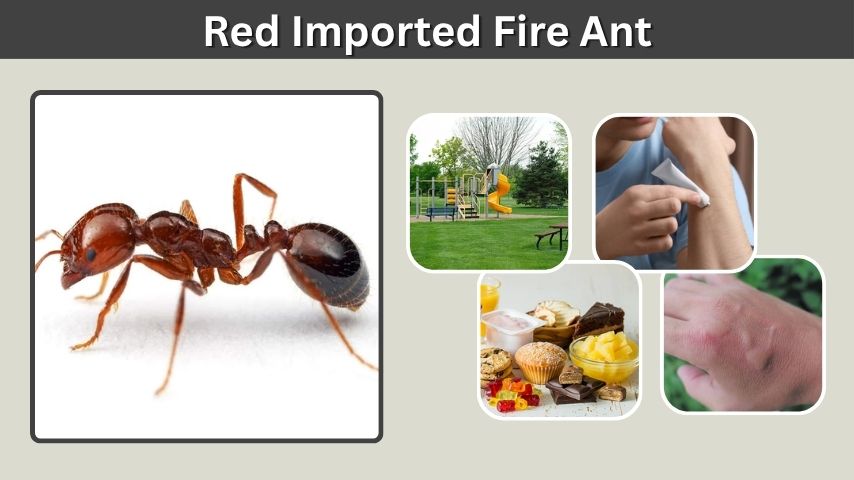
The red imported fire ant is one of the most aggressive invasive ants in the United States and several other warm regions. Its scientific name is Solenopsis invicta. These ants build soil mounds, sting painfully, damage lawns, threaten wildlife, and can create problems around farms, homes, parks, and electrical equipment. Correct identification is important because fire ant control usually requires colony-level treatment, not just killing visible workers.
What Is a Red Imported Fire Ant?
The red imported fire ant, often shortened to RIFA, is an invasive ant species originally from South America. It was accidentally introduced to the United States and has spread widely through warm southern regions. It has also been introduced to other parts of the world, including Australia and several Asian and Caribbean regions. USDA notes that imported fire ants spread naturally and can also move through agricultural materials such as soil, plants, hay, and equipment.
Red imported fire ants are known for their aggressive defense behavior. When a mound is disturbed, workers quickly rush out, climb onto the threat, bite to grip the skin, and sting repeatedly. Their sting causes a burning sensation, itching, swelling, and often a white pustule.
Red Imported Fire Ant Identification
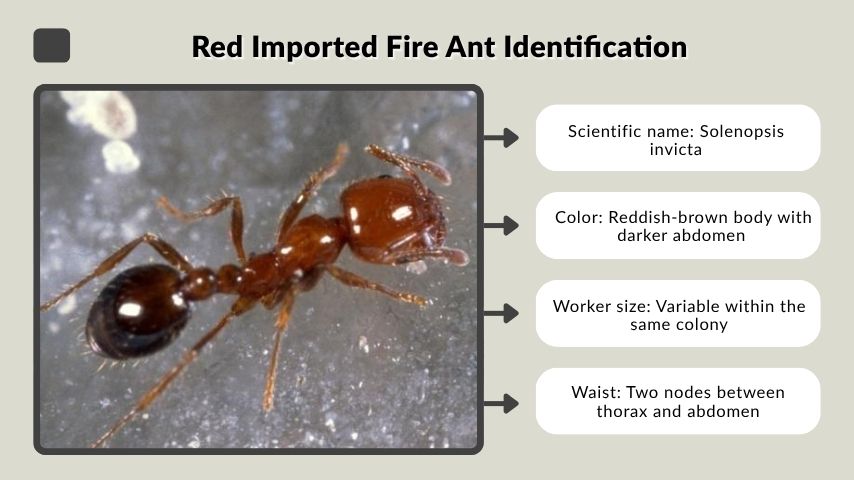
Red imported fire ants are reddish-brown to dark reddish ants with darker abdomens. Workers vary in size, which is one helpful sign. In the same colony, you may see small and larger workers together. They have two visible waist nodes between the thorax and abdomen, and their antennae end in a club.
A strong clue is the mound. Red imported fire ant mounds are usually dome-shaped piles of loose soil. They often have no obvious central entrance hole. The ants enter and exit through underground tunnels around the mound. Mounds commonly appear in sunny open areas such as lawns, pastures, roadsides, playgrounds, fields, and disturbed soil.
Key Characteristics
- Scientific name: Solenopsis invicta
- Common name: Red imported fire ant
- Color: Reddish-brown body with darker abdomen
- Worker size: Variable within the same colony
- Waist: Two nodes between thorax and abdomen
- Mound: Loose soil mound, often without a clear central opening
- Behavior: Aggressive when disturbed
- Defense: Bites first, then stings repeatedly
- Habitat: Lawns, fields, pastures, roadsides, gardens, and warm open areas
If you are unsure whether you have red imported fire ants, contact a local extension office or pest professional. Several native ants can look similar, and correct identification helps avoid unnecessary treatment.
Red Imported Fire Ant Size
Red imported fire ant workers are polymorphic, meaning workers come in different sizes within the same colony. This is different from many household ants where workers look more uniform. Smaller workers handle many nest tasks, while larger workers may help with defense and food processing.
Queens are much larger than workers. A mature queen can lay many eggs and is the key to colony survival. Killing only the workers on the surface does not eliminate the colony if the queen remains alive underground.
Red Imported Fire Ant Mound and Nest
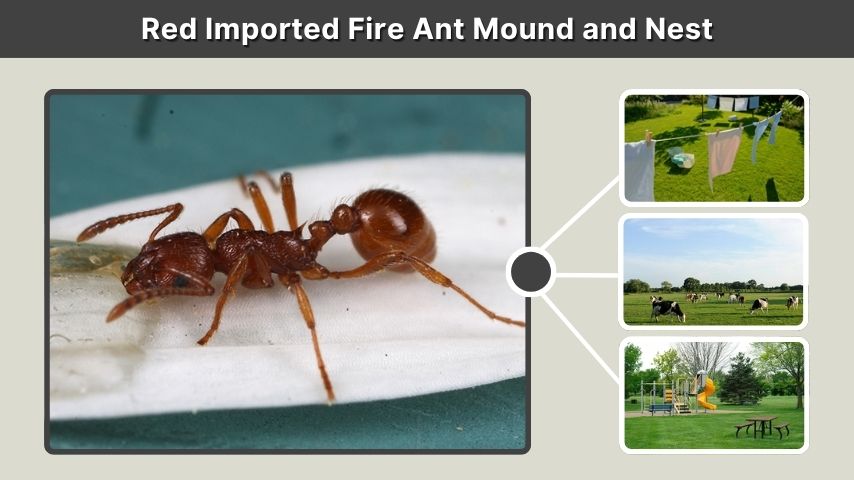
A red imported fire ant nest is much larger than the visible mound. The mound is only the top part of the colony’s underground tunnel system. Fire ants use soil mounds to regulate temperature and protect brood. After rain, warm weather, or soil disturbance, new mounds may appear quickly.
Fire ant mounds can be dangerous because they may look like ordinary soil piles. Children, pets, and livestock can accidentally step on them. Once disturbed, workers may attack in large numbers.
Where Mounds Commonly Appear
- Sunny lawns and yards
- Pastures and grazing fields
- Parks and playgrounds
- Road shoulders and sidewalks
- Garden beds and mulch edges
- Around irrigation areas
- Near electrical boxes and outdoor equipment
- Open disturbed soil after construction or flooding
Fire ants may also nest near foundations and occasionally move indoors during extreme heat, flooding, or drought.
Where Did the Red Imported Fire Ant Come From?
The red imported fire ant is native to South America. It reached the United States accidentally, likely through cargo or soil material moved by shipping. From its first establishment in the southern United States, it expanded into many warm regions where climate and disturbed habitats helped it spread.
Its success comes from several traits: aggressive colony defense, fast reproduction, flexible feeding, mound-building behavior, and the ability to relocate after disturbance. In some places, colonies may have one queen, while in other areas, colonies may have multiple queens. Multi-queen colonies can create higher ant densities and make control more difficult.
Why Are Red Imported Fire Ants Invasive?
Red imported fire ants are invasive because they spread quickly, outcompete many native insects, and affect people, animals, agriculture, and ecosystems. They can reduce native ant diversity, attack small wildlife, damage crops, and interfere with outdoor activities.
A recent scientific review describes Solenopsis invicta as one of the world’s most threatening invasive pest species because of its expansion, aggressive behavior, and effects on agriculture, nurseries, infrastructure, and urban green spaces.
| Problem Area | Impact of Red Imported Fire Ants |
|---|---|
| People | Painful stings, allergic reactions, outdoor safety concerns |
| Pets and livestock | Stings on feet, nose, eyes, and young animals |
| Lawns and parks | Unsightly mounds and unsafe play areas |
| Agriculture | Crop damage, equipment problems, harm to young animals |
| Wildlife | Attacks on ground-nesting birds, reptiles, amphibians, and insects |
| Infrastructure | Damage around electrical boxes and outdoor equipment |
Red Imported Fire Ant Bite and Sting
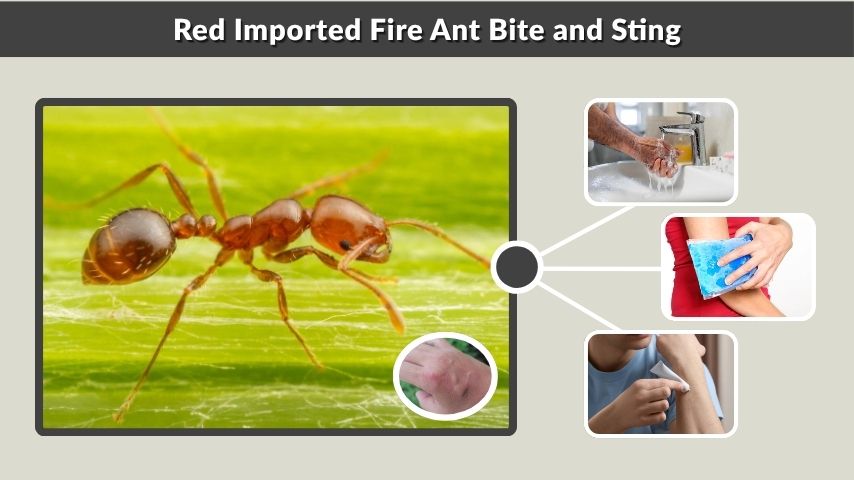
Many people say “fire ant bite,” but the painful reaction usually comes from the sting. Fire ants bite first to anchor themselves, then curve the abdomen and inject venom with the stinger. A single ant can sting more than once.
The first feeling is often a burning pain, which is why they are called fire ants. Later, the sting site may become red, swollen, itchy, and painful. A small white pustule often forms within a day. Scratching can break the skin and increase the risk of infection.
Bite and Sting Treatment
For mild stings, wash the area with soap and water. Apply a cold compress to reduce pain and swelling. Avoid scratching the pustules. An over-the-counter antihistamine or anti-itch cream may help with itching, but follow label directions.
Seek urgent medical help if there are signs of a severe allergic reaction, such as trouble breathing, dizziness, swelling of the face or throat, chest tightness, or widespread hives. People with known insect sting allergies should follow their medical plan immediately.
Red Imported Fire Ant Queen and Colony
The queen is the reproductive center of the colony. A mature red imported fire ant queen can live for years and produce large numbers of eggs. Colonies may contain one queen or multiple queens, depending on the population type.
Workers care for eggs, larvae, and pupae. They also forage, build tunnels, defend the mound, and feed the queen. Winged males and queens are produced when the colony is mature. These reproductive ants may leave the nest during mating flights, especially after warm weather and rain.
Red Imported Fire Ant Life Cycle
Red imported fire ants develop through complete metamorphosis: egg, larva, pupa, and adult. The queen lays eggs. Larvae hatch and are fed by workers. After the pupal stage, adult workers emerge and join colony tasks.
A growing colony can become large and aggressive. Because the nest extends underground, surface sprays alone often fail. To eliminate a mound, control methods must reach the queen or disrupt the colony enough that it cannot recover.
What Do Red Imported Fire Ants Eat?
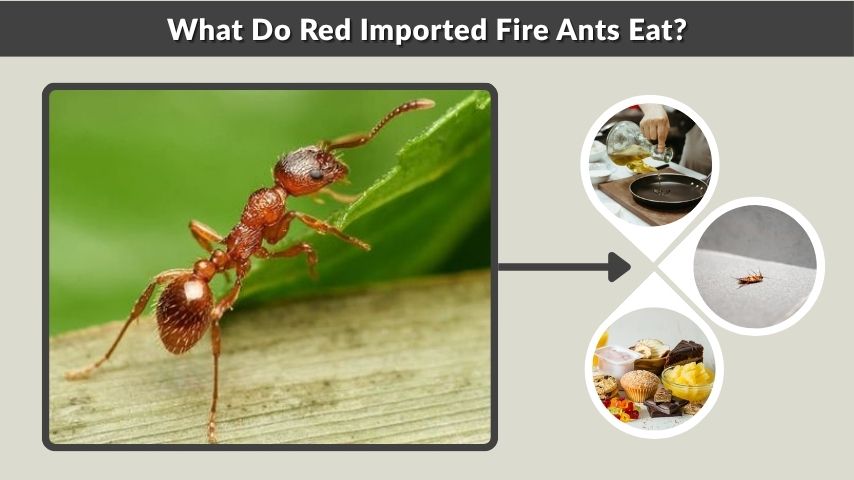
Red imported fire ants are omnivores. They eat plant material, seeds, nectar, honeydew, dead insects, live insects, small animals, grease, proteins, and sugary foods. Their flexible diet helps them survive in lawns, farms, forests, wetlands, and urban areas.
They may protect honeydew-producing insects such as aphids because honeydew provides sugar. They also scavenge dead animals and prey on other insects. Around homes, they may be attracted to pet food, grease, trash, and spilled sweet liquids.
Red Imported Fire Ant Control
Red imported fire ant control works best when it targets the whole colony. Treating only the visible mound may provide quick relief, but it may not solve a larger yard-wide problem. Texas A&M AgriLife recommends science-based options such as broadcast baiting and targeted mound treatment, depending on how quickly control is needed and the size of the area.
Two-Step Control Method
The two-step method is one of the most common approaches for lawns and larger areas.
- Step 1: Broadcast bait: Spread fire ant bait over the infested area when ants are actively foraging. Workers carry bait back to the colony, where it can affect the queen and brood.
- Step 2: Treat problem mounds: Use a mound treatment for colonies that need faster control, such as mounds near doors, playgrounds, walkways, or animal areas.
Texas A&M notes that individual mound treatments can be expensive and labor-intensive when many mounds are present, and treatments must kill the queen or queens to be effective.
How to Get Rid of Red Imported Fire Ants
Start by confirming the ant species. Then choose a control method based on the location, number of mounds, and safety needs. Always read and follow product labels, especially around children, pets, gardens, and water sources.
Practical Control Steps
- Confirm identification: Make sure the mound belongs to red imported fire ants.
- Avoid disturbing mounds: Disturbance can cause ants to attack and sometimes relocate.
- Use bait when ants are foraging: Place a small test amount near a mound. If ants collect it within 30–60 minutes, conditions are good for baiting.
- Broadcast bait for larger areas: This helps target hidden colonies, not just visible mounds.
- Treat high-risk mounds directly: Use approved mound treatments near homes, walkways, playgrounds, or livestock areas.
- Repeat seasonally if needed: Fire ants can reinvade from nearby untreated areas.
- Protect pets and children: Keep them away from treated areas according to label instructions.
- Avoid unsafe home remedies: Gasoline, bleach, and harsh chemicals can be dangerous and environmentally harmful.
Red Imported Fire Ants in the House
Red imported fire ants usually nest outdoors, but they may enter homes during weather stress. Heavy rain, flooding, drought, or extreme heat can push colonies to move. Indoors, they may search for food, water, or shelter.
If fire ants are inside the house, avoid spraying randomly. Find where they are entering, remove food sources, seal gaps, and consider outdoor control around the structure. If ants are nesting in walls, electrical equipment, or indoor voids, professional pest control is safer.
Red Imported Fire Ant Predators
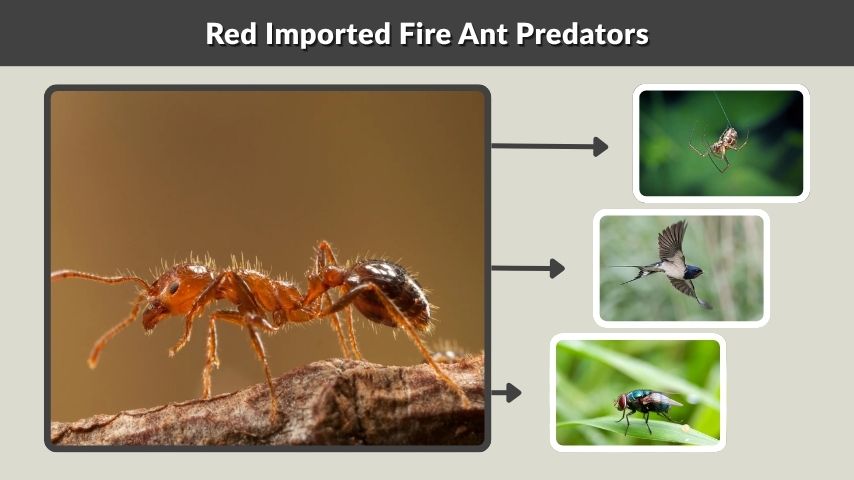
Red imported fire ants have natural enemies in their native range, including parasitoid flies, pathogens, competing ants, spiders, birds, and other predators. However, predators usually do not eliminate fire ant populations by themselves.
In introduced areas, fire ants often spread because they lack enough natural controls and can dominate disturbed habitats. Biological control programs have studied natural enemies such as phorid flies, but yard-level control still usually depends on baiting, mound treatment, habitat management, and prevention.
Prevention and Long-Term Management
Complete permanent eradication from a neighborhood is difficult because fire ants can reinvade from nearby land. Long-term management focuses on reducing mound numbers, protecting high-use areas, and preventing spread.
Prevention Tips
- Inspect lawns after rain and warm weather.
- Treat new mounds before they expand.
- Keep pet food and trash sealed.
- Avoid moving soil, hay, nursery plants, or equipment from infested areas without checking regulations.
- Maintain healthy turf to make mound detection easier.
- Work with neighbors when possible because fire ants move across property lines.
- Call local extension services for regional control recommendations.
FAQs
What is the scientific name of the red imported fire ant?
The scientific name of the red imported fire ant is Solenopsis invicta. It is often called RIFA for short. This species is native to South America but has become invasive in several warm regions, including parts of the United States, Australia, Asia, and the Caribbean.
Are red imported fire ants dangerous?
Yes, red imported fire ants can be dangerous because they sting aggressively when disturbed. Their stings cause burning pain, itching, swelling, and pustules. Some people may have serious allergic reactions. They can also harm pets, livestock, wildlife, and people working or playing outdoors.
How do you identify a red imported fire ant mound?
A red imported fire ant mound is usually a loose dome of soil without a clear central entrance hole. Mounds often appear in sunny lawns, fields, roadsides, and disturbed soil. When disturbed, many ants rush out quickly and aggressively, which is a strong warning sign.
What is the best control method for red imported fire ants?
The best control method is often a two-step approach: broadcast fire ant bait over the infested area, then treat high-risk mounds directly. Bait helps reach hidden colonies, while mound treatment gives faster control in dangerous areas. Always follow product labels carefully.
Do red imported fire ants have wings?
Worker red imported fire ants do not have wings. However, mature colonies can produce winged males and queens for mating flights. These winged ants leave the colony to mate and may start new colonies. Winged fire ants are usually seen during warm, humid conditions after rain.
