
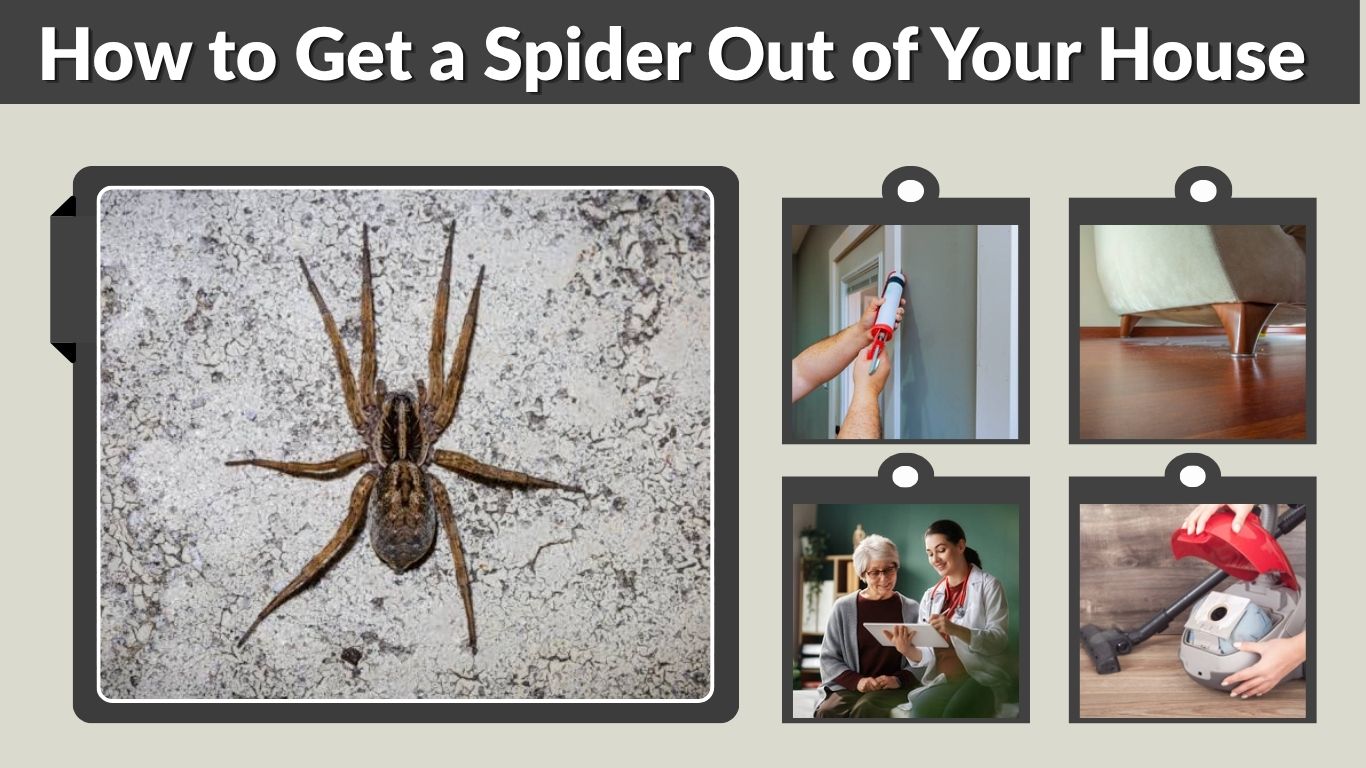
Finding a large spider on your wall, floor, or ceiling can be unsettling, but most spiders that wander indoors are not aggressive and do not need to be killed. The simplest way to get a spider out of your house is to cover it with a container, slide stiff paper underneath, and move it away from the living area. If spiders appear repeatedly, sealing entry points, removing webs and egg sacs, reducing clutter, and controlling the insects they eat will provide better long-term results than repeatedly spraying individual spiders.
How to Get a Spider Out of Your House
For a single spider that you can easily reach, physical removal is usually the fastest solution.
Most spiders encountered indoors either live quietly in webs or have wandered inside accidentally. University of Minnesota Extension recommends capturing and removing individual spiders when only small numbers are present.
Cup and Paper Method
You need:
- A clear cup, jar, or plastic container
- A stiff piece of paper or thin cardboard
- Closed-toe shoes if the spider is large
- Gloves if they make you more comfortable
Place the container over the spider without crushing its legs.
Slowly slide the cardboard between the container and the wall or floor until the spider is completely enclosed. Hold both pieces together, move the spider away from the occupied room, and release it in an appropriate sheltered location.
Avoid grabbing an unidentified spider with your bare hands.
How to Get a Big Spider Out of the House
The same technique works for large spiders, but use a container with plenty of room so the spider’s legs are not caught around the edge.
Large wolf spiders, giant house spiders, and similar species may move extremely quickly.
For a Large Spider
Stay several feet away while preparing your container. Approach slowly and avoid chasing it around the room.
If it disappears behind furniture, do not reach blindly into the hiding place. Move objects carefully or wait until the spider emerges.
Colorado State University Extension recommends trapping wandering spiders in a container or removing them with a vacuum when direct capture is impractical.
If you suspect the spider could be a medically significant species in your region, avoid direct handling and have it identified before attempting close contact.
How to Get a Spider Out of Hiding
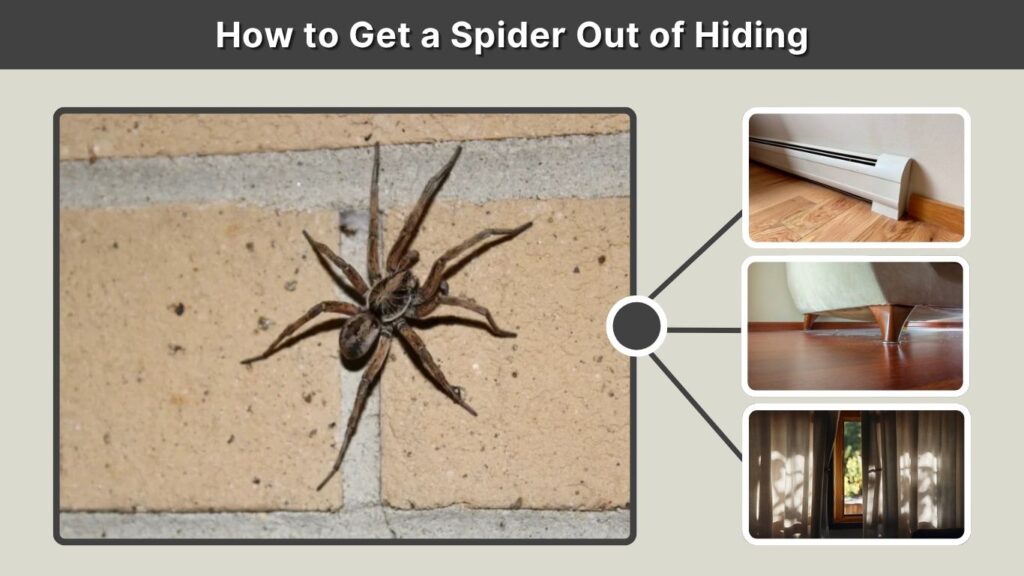
Spiders often disappear beneath furniture, behind cabinets, or into wall gaps after being disturbed.
Constantly chasing the spider can make removal more difficult.
Try These Methods
Clear unnecessary objects from the immediate area and keep pets and children away.
Look along:
- Baseboards
- Behind furniture
- Under appliances
- Beneath boxes
- Around curtains
- Inside quiet corners
- Near doors or windows
Sticky monitoring traps placed along walls can help reveal where spiders are traveling, particularly if you have repeated sightings. Keep glue traps where children and pets cannot reach them.
Should You Kill a Spider in Your House?
Usually, it is unnecessary.
Spiders eat flies, moths, mosquitoes, cockroaches, and other arthropods, making them beneficial predators. Most are also reluctant to bite humans.
If you are comfortable with a harmless web-building spider remaining in an unused basement or garage corner, it may actually reduce other pest insects.
Relocation makes more sense when a spider is in a bedroom, kitchen, children’s area, or another place where accidental contact is likely.
How to Get Rid of a Spider Infestation
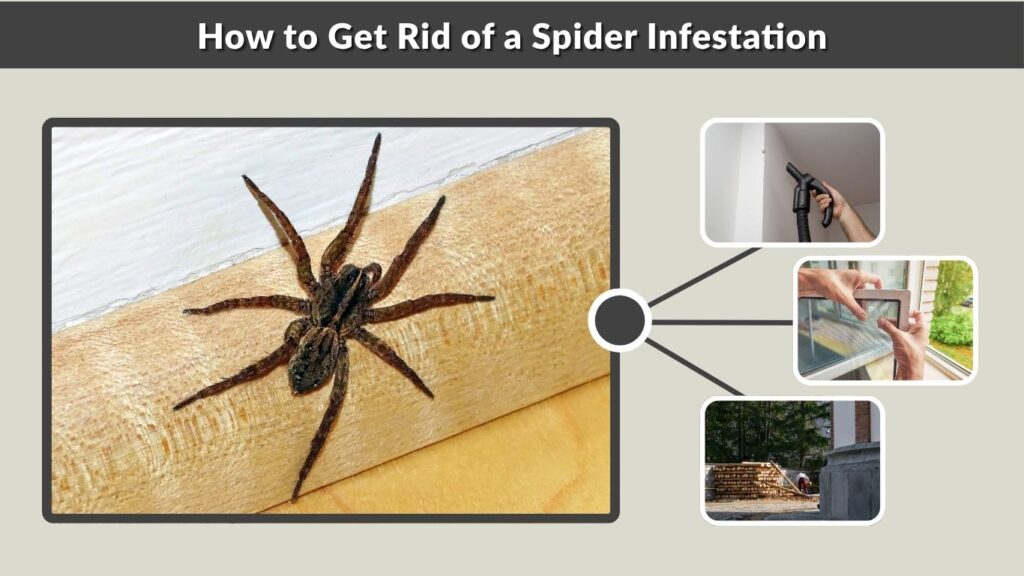
Seeing one or two spiders does not mean your house is infested.
Repeated sightings, numerous webs, multiple egg sacs, and many spiders of different ages may indicate that indoor conditions are supporting them.
Reduce Spider Numbers
Focus on:
- Vacuuming webs
- Removing egg sacs
- Reducing indoor insects
- Clearing storage clutter
- Sealing exterior gaps
- Repairing window screens
- Installing door sweeps
- Moving firewood away from the building
- Keeping vegetation away from walls
Spiders remain where prey and shelter are available. Reducing insects inside the house therefore removes much of their food supply.
Completely eliminating spiders from a building is rarely realistic or necessary.
How to Get Rid of Spider Webs Inside the House
Old webs can make even a low-spider home look heavily infested.
Use a vacuum hose, broom, or long-handled web-removal brush around:
- Ceiling corners
- Windows
- Basements
- Garages
- Behind furniture
- Light fixtures
- Storage areas
Vacuuming has an additional advantage because it can remove spiders and egg sacs along with the web.
University of Minnesota Extension specifically recommends removing webbing with a broom or vacuum and destroying egg sacs encountered during cleaning.
How to Remove Spider Webs Outside the House
Exterior spiders commonly build webs beneath eaves, around lights, porches, door frames, and windows because these locations attract flying insects.
Best Removal Methods
Use:
- A long-handled broom
- Web-removal brush
- Vacuum where practical
- Strong stream of water
Colorado State University recommends washing nuisance outdoor spiders and webs away with a forceful jet of water.
Cleaning alone may not stop webs from returning if outdoor lights continually attract insects.
Reducing unnecessary nighttime lighting or repositioning lights farther from doors can reduce both insects and the spiders hunting them.
How to Get Rid of Spider Egg Sacs
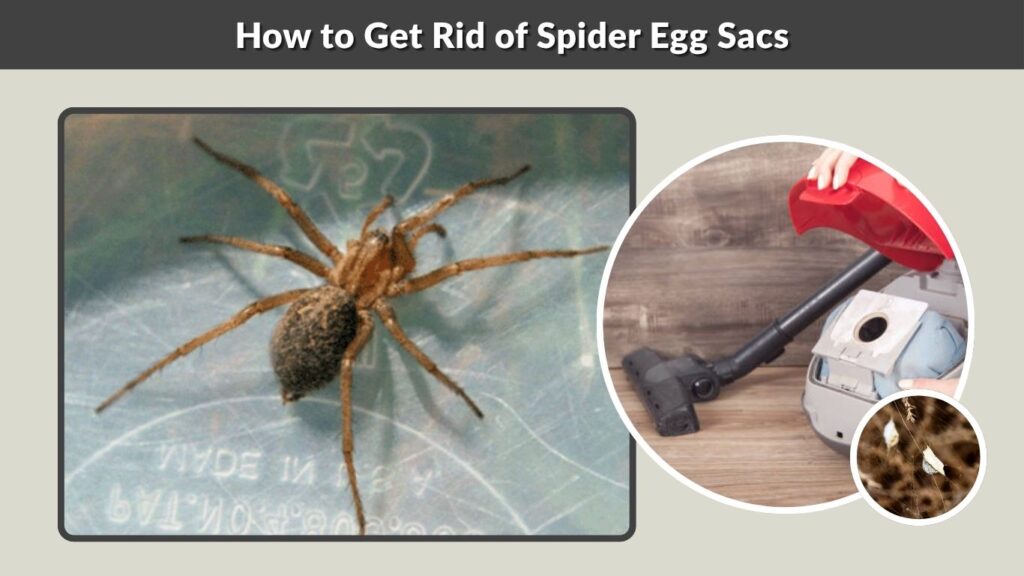
Spider egg sacs vary in appearance. They may be round, oval, flattened, papery, cottony, or hidden inside webbing.
If an egg sac is inside your house and you do not want spiderlings emerging, removal before hatching is much easier.
Egg Sac Removal
Use a vacuum or remove the entire web and sac together.
Do not tear an egg sac open indoors because it may contain dozens or more developing spiderlings.
Female behavior differs by species. Web-building spiders may attach sacs to silk or protected surfaces, while female wolf spiders carry their egg sacs from their spinnerets and later carry newly hatched spiderlings on their backs.
Why Do Spiders Keep Getting Into Your House?
Many hunting spiders are primarily outdoor animals that accidentally enter buildings.
Others can successfully live and reproduce indoors.
Common entry routes include:
- Gaps beneath doors
- Foundation cracks
- Garage doors
- Torn screens
- Open windows
- Gaps around pipes
- Utility openings
- Items carried indoors
Colorado State notes that some wandering spiders enter houses during cooler periods while seeking shelter.
How to Keep Spiders Out
Install tight-fitting door sweeps and weather stripping.
Seal cracks around foundations, doors, windows, pipes, and cables.
Repair window screens.
Move firewood, boards, stones, and debris farther from exterior walls.
Trim vegetation touching the building.
These exclusion methods reduce spider entry without requiring routine pesticide spraying.
How to Get a Wolf Spider Out of Your House
Wolf spiders are fast ground hunters that do not build webs to capture prey.
They often enter homes accidentally and are normally shy rather than aggressive.
Use a large container and cardboard if possible.
Do not attempt to pick up a wolf spider with your fingers. Its speed can make handling difficult, and a large individual can bite defensively if trapped against the skin.
Finding a single wolf spider does not normally indicate an indoor colony.
How to Get Rid of a Giant House Spider
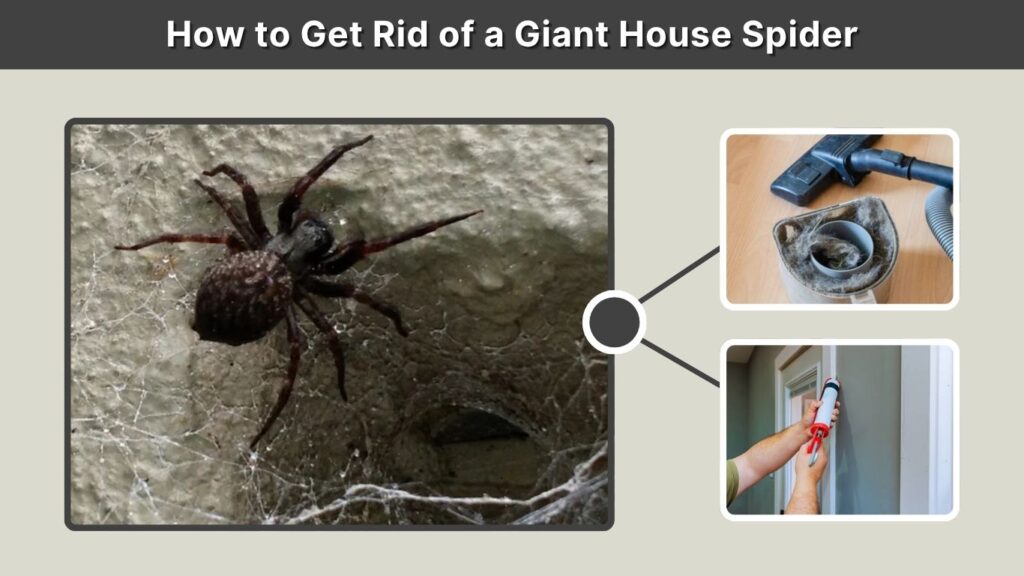
Giant house spiders are large funnel-weaving spiders that commonly cause alarm because adult males may wander indoors.
The best approach remains physical removal and exclusion.
Capture the spider, vacuum unwanted webbing, seal gaps around doors and foundations, and reduce clutter.
Repeated sightings may justify placing monitoring traps along baseboards to determine where spiders are entering.
Do You Need Spider Spray?
Usually not for an occasional spider.
University of Minnesota Extension notes that surface treatments and total-area fogging are generally ineffective approaches to spider control. If a severe infestation requires pesticide treatment, products should be directed only to appropriate cracks, gaps, and hiding places and used strictly according to the label.
Sanitation and exclusion remain more important.
Spraying one visible spider does nothing to seal the doorway through which the next one enters.
Spider Crickets Are Not Spiders
Despite their name, spider crickets are insects, not spiders.
They are also called camel crickets or cave crickets and have six legs plus very long antennae.
They commonly enter damp:
- Basements
- Garages
- Crawl spaces
- Sheds
Their control involves reducing moisture, sealing entry points, and removing hiding places—not ordinary spider-web removal.
Spider Mites Are Not House Spiders
Spider mites are tiny arachnids that attack plants.
They may produce fine silk webbing across leaves, which sometimes causes people to mistake them for tiny house spiders.
If webbing is concentrated on houseplant leaves and the foliage has pale stippling or discoloration, inspect for spider mites rather than treating the room for spiders.
Plant-pest treatment is completely different from household spider control.
What If You Get Bit by a House Spider?
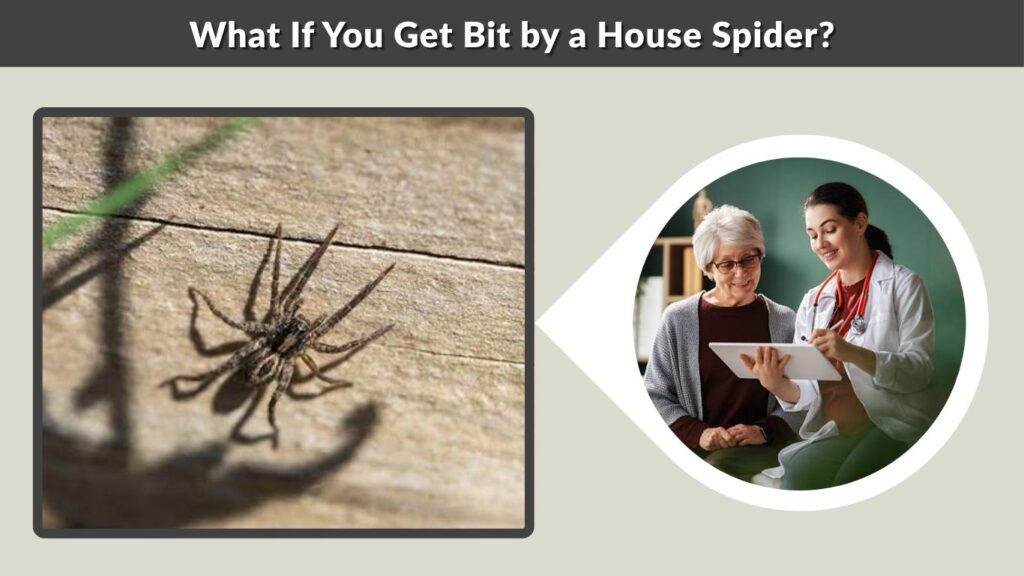
Confirmed spider bites are uncommon because spiders generally avoid people.
A minor bite may produce temporary pain, redness, itching, or swelling. However, many unexplained skin lesions blamed on spiders actually have other causes.
Colorado State Extension notes that only a small number of spider species present medically important risks to people.
Seek medical advice for severe pain, spreading symptoms, difficulty breathing, significant systemic illness, or a suspected bite from a medically important spider.
FAQs
1. What is the easiest way to get a spider out of your house?
Cover the spider with a cup or jar, slide stiff paper underneath, and carry the enclosed spider away from the occupied room. Small numbers of spiders are best handled individually.
2. What should I do if the spider is too big to catch?
Use a larger container, keep your distance, and avoid bare-hand handling. A vacuum can be used when safe capture is impractical.
3. Why do I keep finding spiders in my house?
Accessible cracks, abundant insect prey, clutter, and sheltered hiding places can all encourage spiders. Seal entry points and reduce the insects they feed on.
4. How do I get rid of spider webs permanently?
Remove existing webs and egg sacs, then reduce insects and seal entry points. Webs will return if spiders continue finding prey and shelter around the property.
5. Does one spider mean there is an infestation?
No. Many hunting spiders simply wander indoors accidentally. Multiple spiders, repeated egg sacs, and extensive active webbing are stronger signs that conditions inside are supporting a population.
