
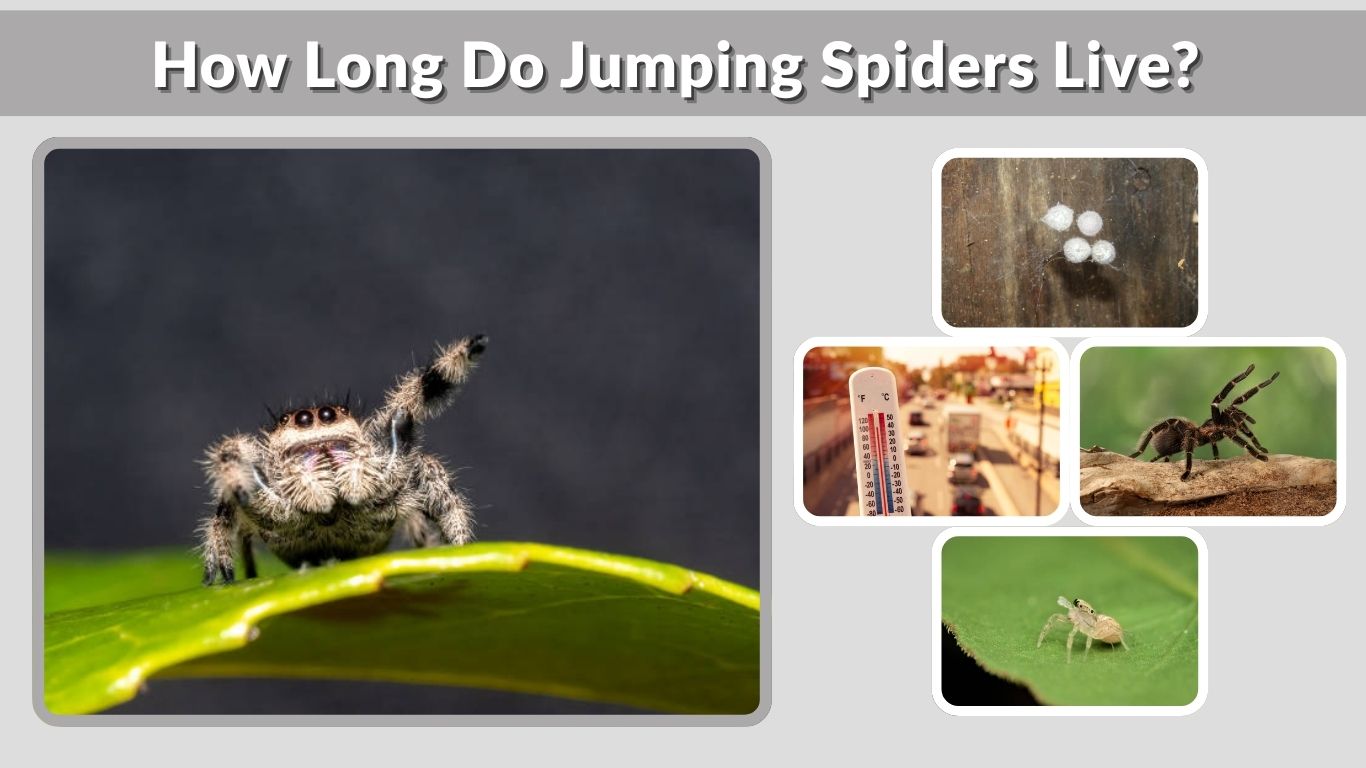
Jumping spiders are small, active hunters known for their excellent vision and curious behavior. Whether you’ve spotted one in your home or are thinking about keeping one as a pet, a common question is: how long do jumping spiders live?
The lifespan of a jumping spider depends on several factors, including its species, environment, and whether it lives in the wild or captivity. While they don’t live very long compared to larger animals, their life cycle is fascinating and varies more than many people expect.
Average Lifespan of Jumping Spiders
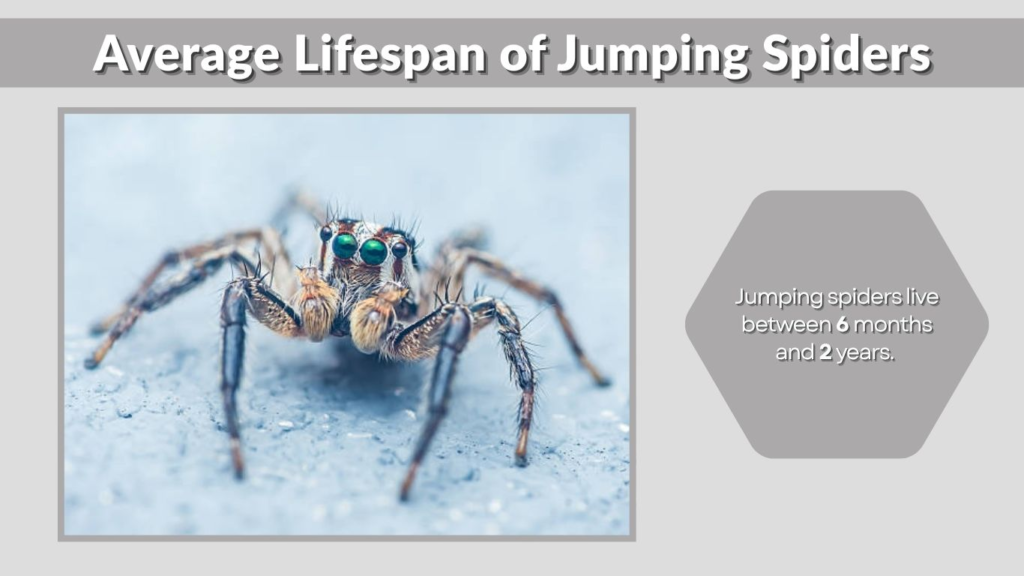
On average, most jumping spiders live between 6 months and 2 years. This range depends largely on the species and living conditions.
- Smaller species: around 6–12 months
- Larger species (like Regal or Bold jumping spiders): 1–2 years
In general, female jumping spiders tend to live longer than males. Males often have shorter lifespans because they spend more time searching for mates and may die soon after mating.
Lifespan in the Wild vs Captivity
In the Wild
Jumping spiders in the wild usually have shorter lifespans due to environmental challenges such as:
- Predators
- Lack of food
- Weather conditions
- Accidents or injury
Because of these risks, many wild jumping spiders may only live several months to a year.
In Captivity
In captivity, jumping spiders often live longer because they are protected from many dangers. With proper care, including regular feeding and a safe enclosure, they can reach the upper end of their lifespan.
Pet jumping spiders, especially popular species like the Regal jumping spider (Phidippus regius), can live 1.5 to 2 years or more under good conditions.
Lifespan by Species
Different types of jumping spiders have slightly different lifespans:
Bold Jumping Spider (Phidippus audax)
- One of the most common species
- Lives about 1 year, sometimes longer
Regal Jumping Spider (Phidippus regius)
- Popular as pets
- Females can live up to 2 years
Zebra Jumping Spider
- Smaller species
- Typically lives 6–12 months
Peacock Jumping Spider
- Very small and delicate
- Usually lives less than a year
Overall, larger species tend to live longer than smaller ones.
Life Cycle of a Jumping Spider
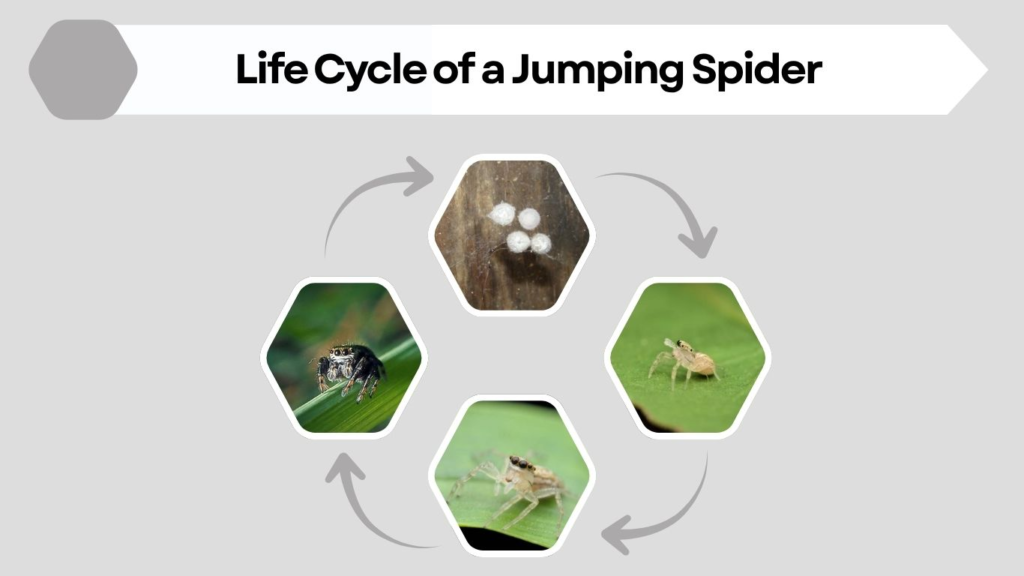
To understand how long jumping spiders live, it helps to look at their life cycle.
1. Egg Stage
Female jumping spiders lay eggs in a silk sac. Depending on the species and environment, eggs hatch in a few weeks.
2. Spiderlings (Babies)
Once hatched, baby jumping spiders (spiderlings) stay near the nest briefly before dispersing. At this stage, they are very small and vulnerable.
3. Juvenile Stage
As they grow, jumping spiders molt several times. Each molt allows them to increase in size and develop further.
4. Adult Stage
After reaching adulthood, they begin mating. This is often the final stage of their life.
- Males often die shortly after mating
- Females may live longer to lay eggs
Do Male and Female Jumping Spiders Live the Same Length?
No, there is a noticeable difference between males and females.
Males:
- Usually live shorter lives
- Focus on finding mates
- Often die soon after mating
Females:
- Live longer
- Can survive through multiple egg-laying cycles
- Sometimes reach the maximum lifespan for the species
This difference is common in many spider species, not just jumping spiders.
What Affects the Lifespan of Jumping Spiders?
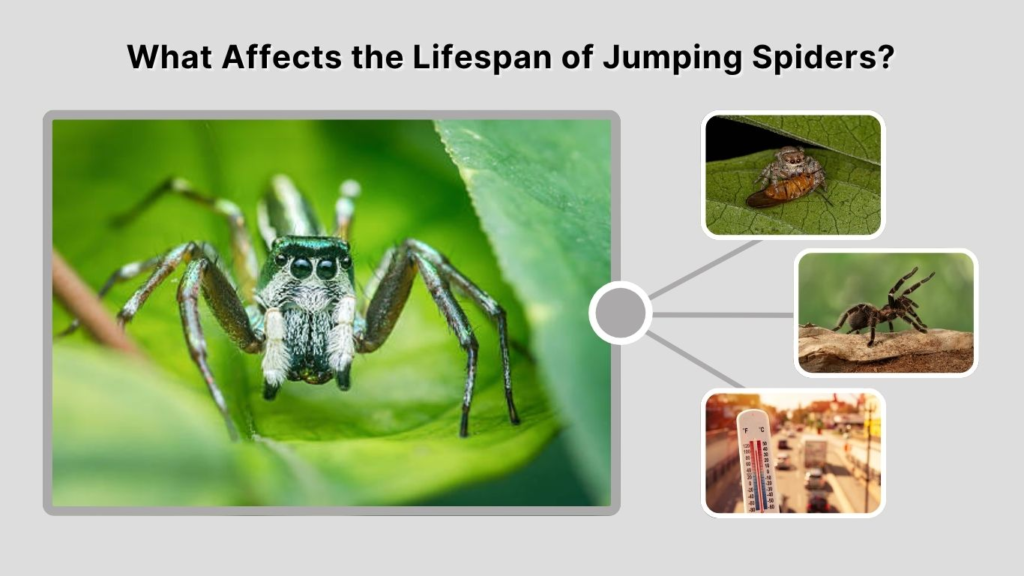
Several factors influence how long a jumping spider lives:
1. Food Availability
Spiders that have consistent access to food are more likely to survive and grow properly.
2. Temperature and Climate
Extreme heat or cold can shorten lifespan. Moderate, stable temperatures are best.
3. Predators
Birds, larger spiders, and insects can prey on jumping spiders in the wild.
4. Stress and Handling (in captivity)
Excessive handling or poor enclosure conditions can reduce lifespan.
5. Molting Success
Jumping spiders must molt to grow. Problems during molting can be fatal.
How to Help a Pet Jumping Spider Live Longer
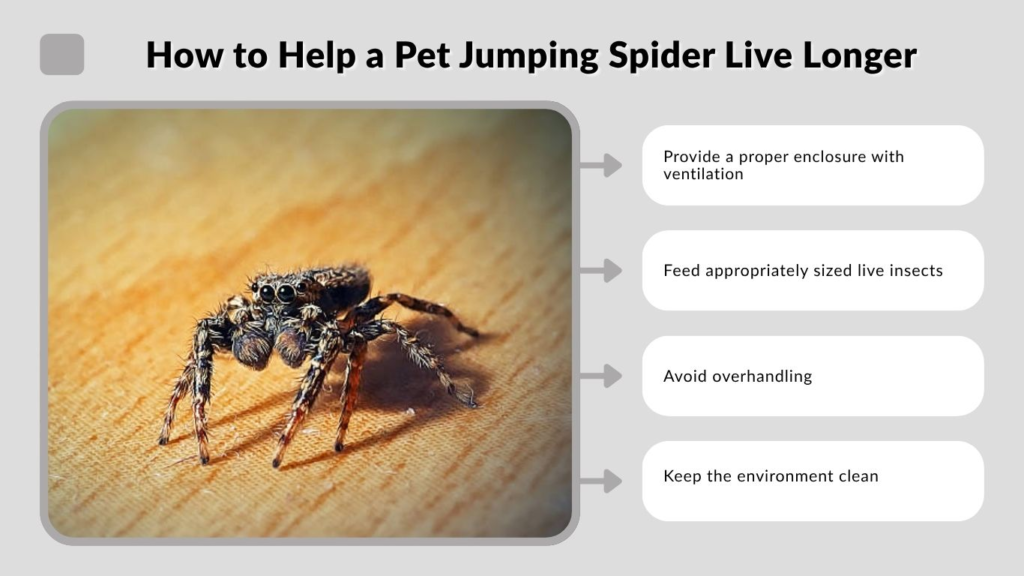
If you keep a jumping spider as a pet, there are several ways to maximize its lifespan:
- Provide a proper enclosure with ventilation
- Feed appropriately sized live insects (2–3 times per week)
- Avoid overhandling
- Keep the environment clean
- Maintain suitable temperature and humidity
- Offer water through light misting
With good care, pet jumping spiders often live longer than those in the wild.
Do Jumping Spiders Hibernate?
Jumping spiders do not truly hibernate, but they may become less active in colder months. During this time:
- They eat less
- Move less
- Conserve energy
This reduced activity can slightly extend their lifespan, especially in stable environments.
Conclusion
So, how long do jumping spiders live? Most species live between 6 months and 2 years, depending on their size, species, and environment.
While their lifespan may seem short, jumping spiders go through an interesting life cycle and play an important role in controlling insect populations. Whether in the wild or as pets, these tiny hunters live active and fascinating lives.
