
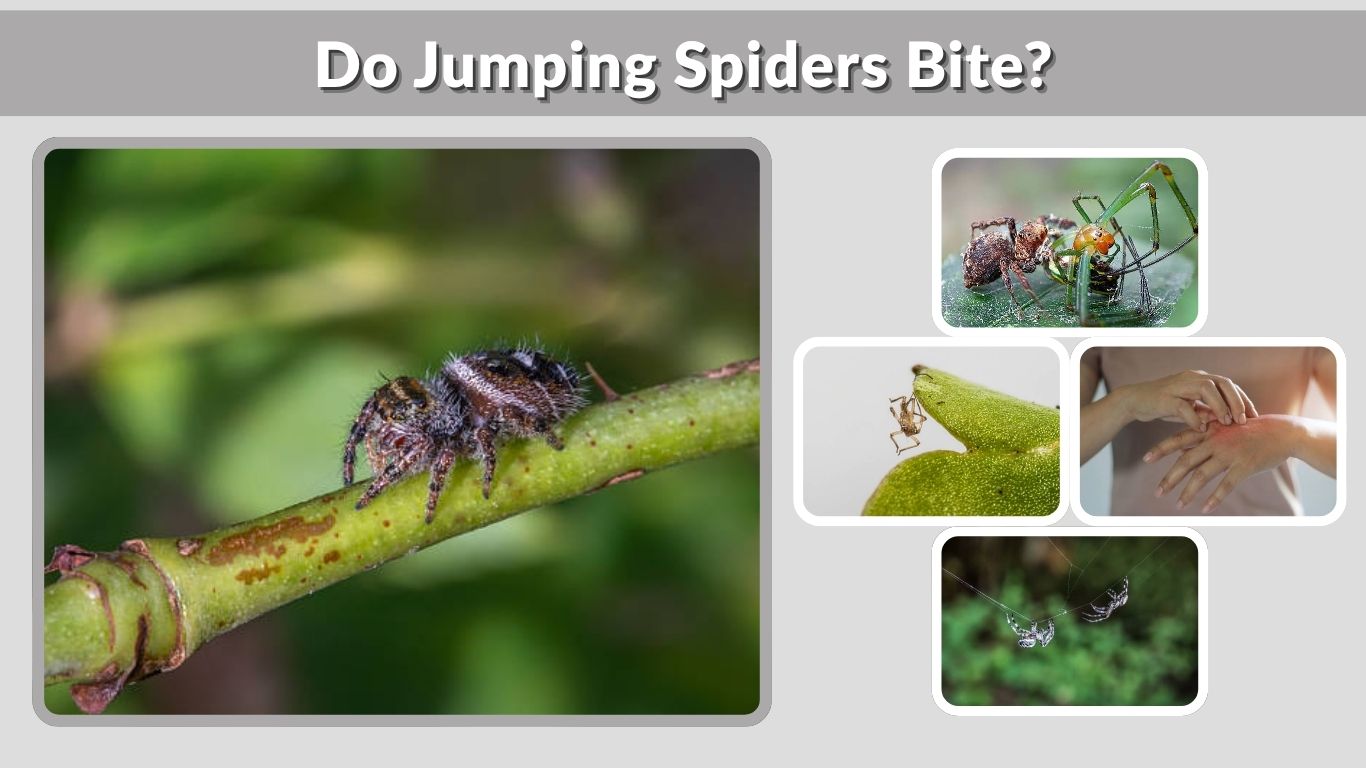
Jumping spiders are small, curious creatures often seen on walls, windows, and in gardens. Their quick movements and large front eyes make them look alert and even a bit intimidating to some people. Naturally, this leads to a common question: do jumping spiders bite?
The short answer is yes, jumping spiders can bite—but it is very rare and usually harmless. These spiders are not aggressive toward humans and prefer to avoid contact whenever possible. Understanding when and why they bite can help ease concerns and give you a clearer picture of how safe they really are.
Do Jumping Spiders Bite Humans?
Yes, jumping spiders are capable of biting humans, but it almost never happens under normal circumstances. These spiders are naturally shy and tend to run or jump away rather than defend themselves.
Most people who encounter jumping spiders will never be bitten. In fact, bites usually only occur when the spider feels threatened. This can happen if:
- The spider is trapped against your skin
- It is accidentally pressed or handled
- It feels there is no escape
Even then, many jumping spiders will still try to escape instead of biting. So, while the answer to do jumping spiders bite humans is technically yes, it is extremely uncommon in everyday situations.
Do Jumping Spider Bites Hurt?
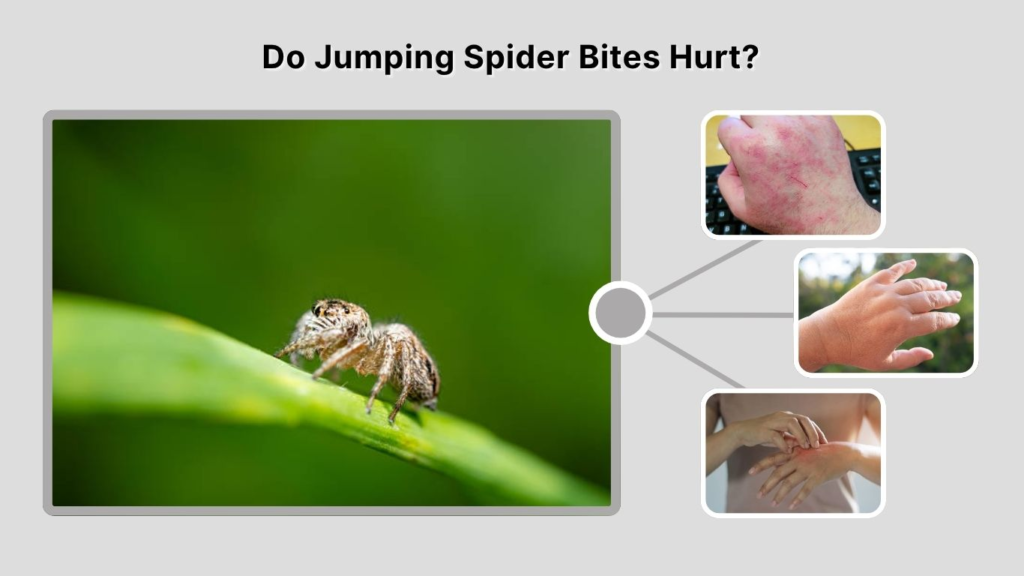
If a jumping spider does bite, the effects are usually very mild. Most people describe the sensation as similar to a mosquito bite or a small pinch.
Common symptoms may include:
- Slight redness
- Minor swelling
- Mild irritation or itching
These symptoms typically go away within a short time without any treatment. There are no serious medical risks associated with jumping spider bites for healthy individuals.
So, if you’re wondering do jumping spider bites hurt, the answer is: only a little, and not for long.
How Often Do Jumping Spiders Bite?
Jumping spiders bite very rarely. They are not aggressive and do not seek out humans as prey or threats. In most cases, they will avoid contact completely.
For the average person, it’s unlikely you will ever experience a bite from a jumping spider. Even people who handle them occasionally, such as pet owners, rarely report being bitten.
So, when asking how often do jumping spiders bite, the answer is simple: almost never.
When Do Jumping Spiders Bite?
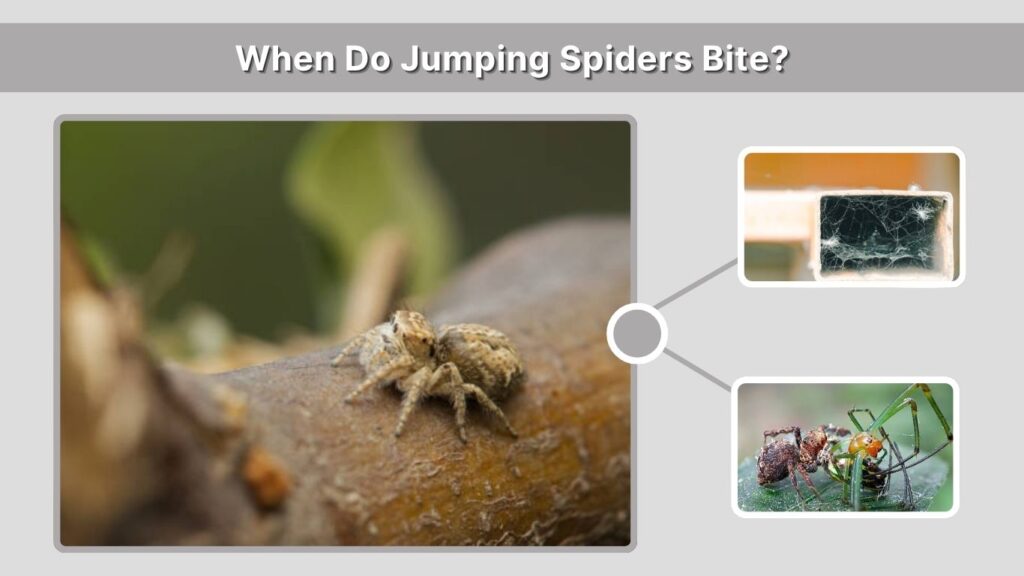
Jumping spiders only bite in defensive situations. They do not bite randomly or without reason. A bite is typically a last resort when the spider feels threatened and cannot escape.
Situations that may lead to a bite include:
- Being squeezed or trapped
- Rough handling
- Sudden physical contact
It’s important to remember that jumping spiders rely on their speed and agility to escape danger. Biting is not their primary defense.
Do Different Types of Jumping Spiders Bite?
Many people wonder whether certain types of jumping spiders are more likely to bite than others. In reality, most species behave in very similar ways.
Bold or daring jumping spiders (Phidippus audax), for example, are larger and more noticeable, but they are still non-aggressive and rarely bite humans. Regal jumping spiders, which are commonly kept as pets, are also known for their calm behavior.
Zebra jumping spiders, often found on walls and windows, are small and harmless. The same applies to black, white, tan, and house jumping spiders—their color or pattern does not make them more likely to bite.
Even less common types, such as fuzzy or green-fanged jumping spiders, follow the same pattern. They may be capable of biting, but they rarely do so unless provoked.
Do Small, Baby, or Tiny Jumping Spiders Bite?

Baby jumping spiders, also known as spiderlings, can technically bite, but it is extremely unlikely to affect humans. Because of their tiny size, their fangs are often too small to penetrate human skin effectively.
Even if a very small jumping spider were to bite, the sensation would likely be unnoticeable or feel like a tiny prick. Their venom is also very weak and designed only to subdue tiny prey.
So, whether you’re asking about small, little, or tiny jumping spiders, the answer remains the same: they are capable of biting, but it is harmless and rarely even noticeable.
Do Jumping Spiders Bite Dogs?
Jumping spiders are not dangerous to dogs. In most cases, if a dog encounters a jumping spider, the spider will quickly run away rather than bite.
Even if a bite were to occur—which is very rare—the effects would likely be mild. A dog might experience slight irritation or discomfort for a short period, similar to a minor insect bite.
Overall, jumping spiders are not considered a threat to pets, including dogs.
Do Pet Jumping Spiders Bite Their Owners?
Jumping spiders are popular pets because of their calm and curious nature. When kept in captivity, they can become accustomed to human presence and handling.
Pet jumping spiders rarely bite their owners. Most will simply walk away or jump off if they feel uncomfortable. Biting usually only happens if the spider feels stressed, threatened, or trapped.
With gentle handling and proper care, the risk of being bitten by a pet jumping spider is extremely low.
Do Jumping Spiders Bite in Different Regions?
Some people worry that jumping spiders may behave differently depending on where they live, such as in the UK, Australia, or parts of the United States like Florida.
However, jumping spiders are consistent in their behavior worldwide. Regardless of location, they are non-aggressive and rarely bite humans.
Even in places known for more dangerous spiders, jumping spiders remain harmless. Their behavior does not change based on region, and they are not considered dangerous anywhere in the world.
Do Female Jumping Spiders Bite Males?
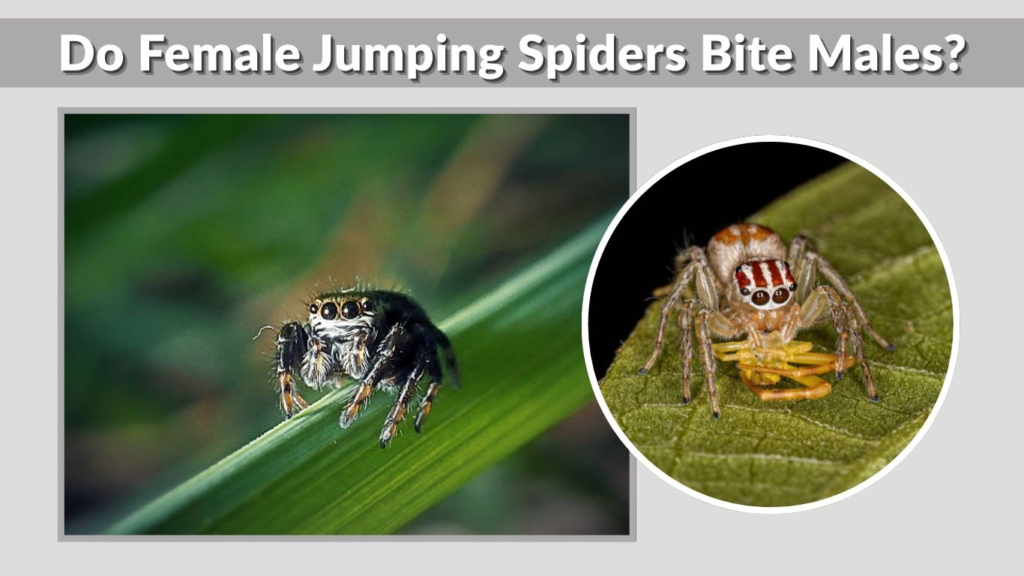
A common question is whether female jumping spiders bite or harm males, especially during mating. In some spider species, females may attack or even eat males, but this behavior is not common in jumping spiders.
Jumping spiders have complex courtship behaviors, where males perform visual displays to attract females. This reduces the risk of aggression.
While rare cases of cannibalism can occur, it is not typical behavior. Most mating interactions do not involve the female biting the male.
Conclusion
Jumping spiders are capable of biting, but it is extremely rare and usually harmless. They are shy, non-aggressive spiders that prefer to escape rather than defend themselves.
Even when bites do occur, they result in only mild symptoms such as slight redness or irritation, similar to a mosquito bite. They are not dangerous to humans, pets, or everyday environments.
