
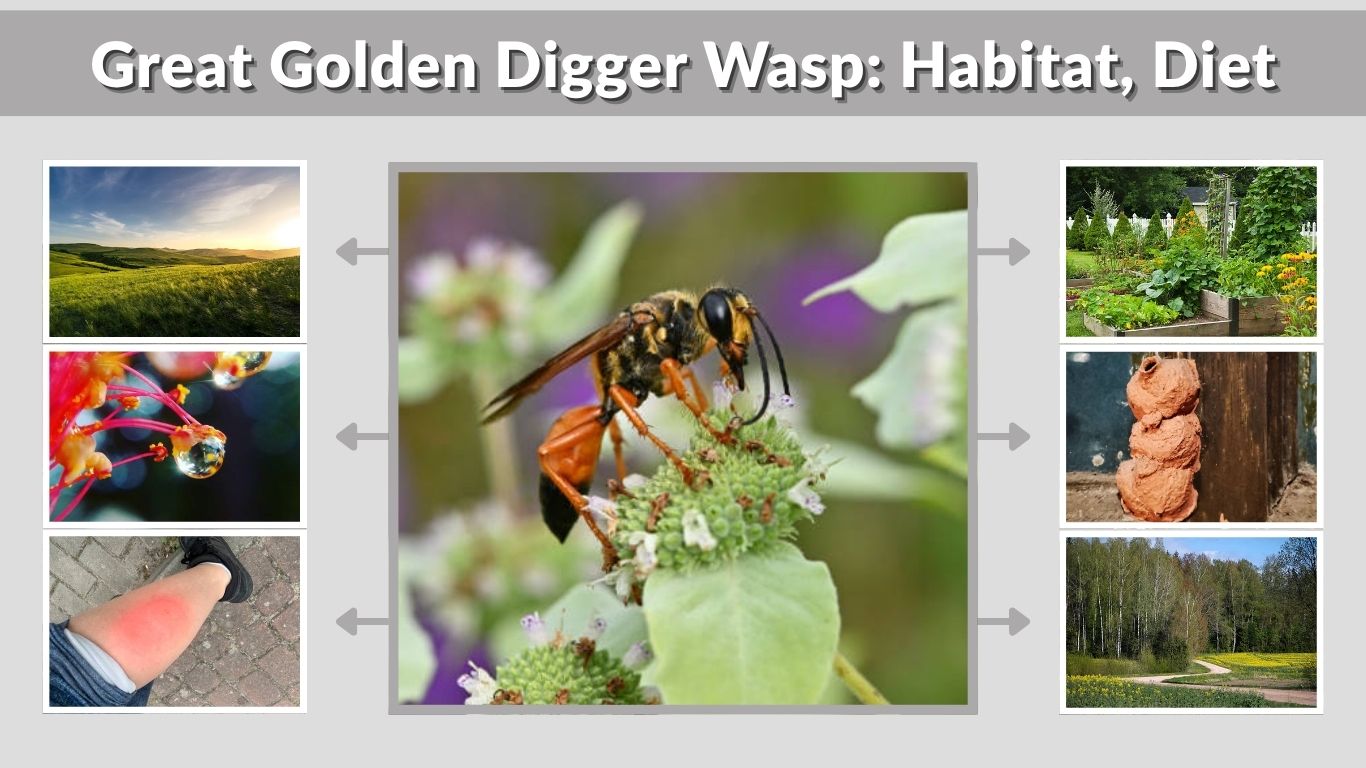
The great golden digger wasp is one of the most striking insects you might encounter in gardens, lawns, or open fields. With its bright golden-orange thorax and sleek black abdomen, it often catches attention—and sometimes concern. Many people mistake it for a dangerous wasp due to its size and appearance, but in reality, this species is far less threatening than it looks.
Unlike aggressive social wasps such as hornets or yellowjackets, the great golden digger wasp is solitary and generally avoids human interaction. In fact, it plays an important role in the ecosystem by controlling pest populations and contributing to pollination. Understanding its behavior and characteristics can help reduce fear and promote coexistence.
What Is the Great Golden Digger Wasp?
Scientific Classification
The great golden digger wasp is scientifically known as Sphex ichneumoneus. It belongs to the family Sphecidae, a group of solitary wasps known for their burrowing and hunting behavior. Unlike social wasps, these insects do not live in colonies or have a queen ruling a hive.
General Overview
This species is commonly referred to as a “digger wasp” because of its habit of excavating nests in the ground. Female wasps dig burrows where they lay eggs and store food for their developing larvae. Their behavior is fascinating, as it involves hunting, paralyzing prey, and carefully preparing a nest for the next generation.
Despite their intimidating appearance, great golden digger wasps are not aggressive and rarely sting humans unless directly handled or threatened.
Great Golden Digger Wasp Identification and Physical Appearance
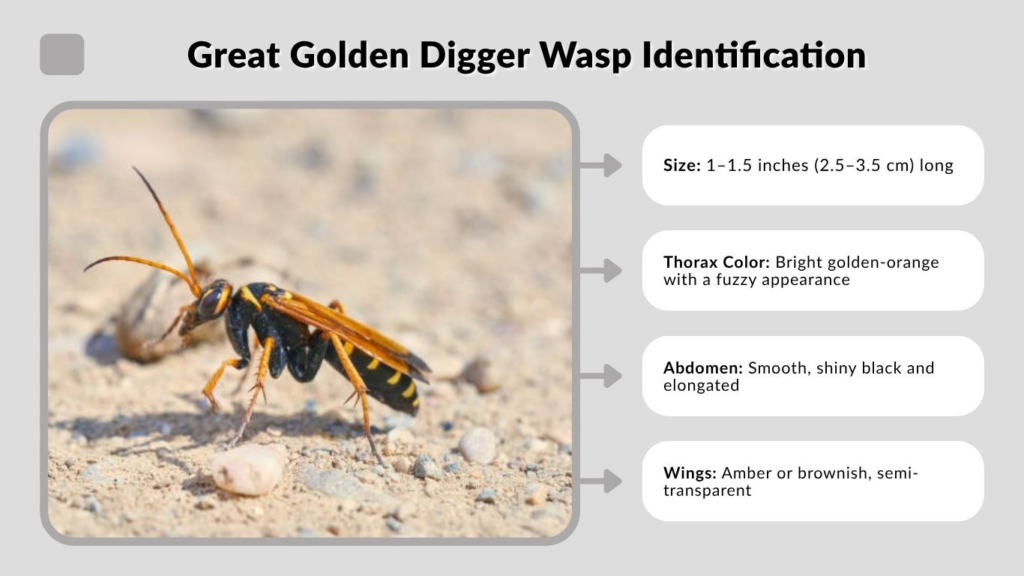
The great golden digger wasp is easy to recognize due to its striking color contrast and slender body shape. Although it may look intimidating at first glance, its unique features make it distinguishable from other wasps once you know what to look for.
Key Identification Features:
- Size: حوالي 1–1.5 inches (2.5–3.5 cm) long
- Thorax Color: Bright golden-orange with a fuzzy appearance
- Abdomen: Smooth, shiny black and elongated
- Wings: Amber or brownish, semi-transparent
- Body Shape: Long, slender, and streamlined
- Legs: Long legs that often hang during flight
Quick Comparison Clues:
- More slender than cicada killer wasps
- Lacks yellow stripes seen in many aggressive wasps
- Does not build visible hanging nests like paper wasps
Great Golden Digger Wasp Habitat and Distribution
Where They Are Found
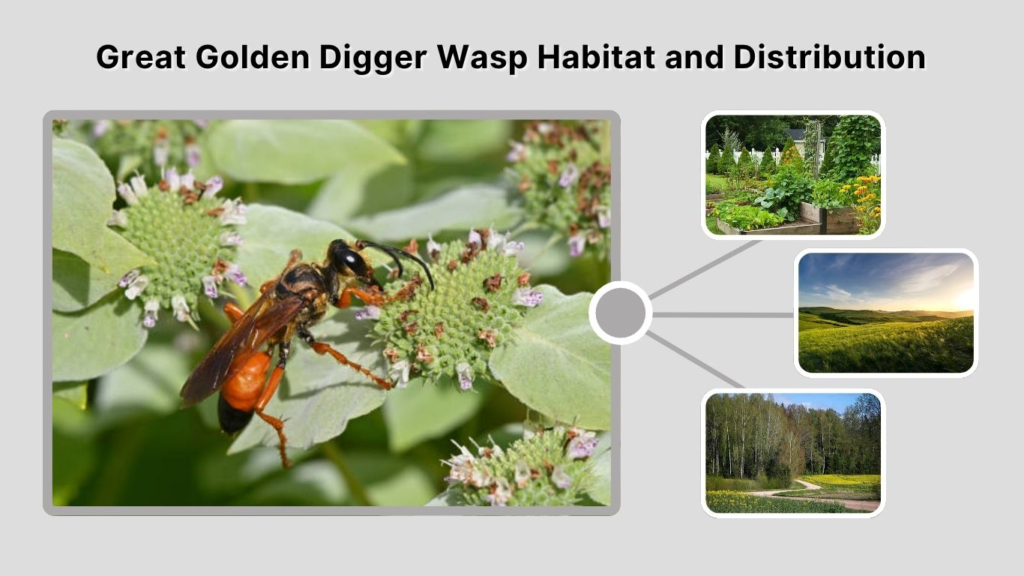
The great golden digger wasp is widely distributed across North America. It is commonly found in the United States, southern Canada, and parts of Mexico. These wasps are especially prevalent in warm regions where suitable nesting grounds are available.
Preferred Environment
These wasps prefer areas with loose, well-drained soil where they can easily dig their nests. Common habitats include:
- Gardens and flower beds
- Lawns and grassy fields
- Open woodland edges
- Sandy or dry soil areas
They are often seen flying low over the ground or visiting flowers for nectar.
Seasonal Activity
Great golden digger wasps are most active during the warmer months, typically from late spring through early fall. Their peak activity usually occurs in summer, when they are busy hunting and nesting.
As temperatures drop, adult wasps die off, leaving behind the next generation to emerge the following year.
Great Golden Digger Wasp Behavior and Lifestyle
Solitary Nature
One of the most important things to understand about the great golden digger wasp is that it is solitary. Unlike bees or hornets, these wasps do not form colonies or live in groups. Each female operates independently, building her own nest and caring for her offspring alone.
Because they are not defending a colony, they are far less aggressive toward humans.
Daily Activity Patterns
These wasps are active during the daytime and are often seen flying in search of food or suitable nesting sites. Their flight is fast and purposeful, sometimes appearing erratic as they scan the ground for prey or nesting spots.
They also frequently visit flowers to feed on nectar, making them occasional pollinators.
Great Golden Digger Wasp Nesting Habits
How They Build Nests
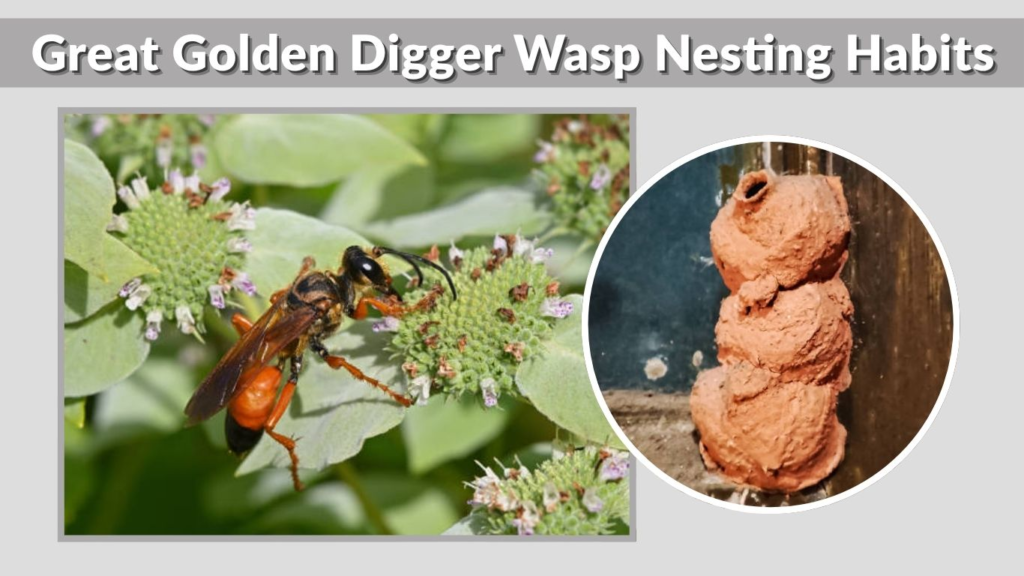
Female great golden digger wasps dig burrows in the soil using their legs and mandibles. These burrows are usually several inches deep and may contain multiple chambers.
Each chamber is prepared carefully to house a single egg along with food for the будущ larva.
Nest Location
Nests are typically found in sunny, dry areas with loose soil. You may notice small holes in the ground with a bit of loose dirt around the entrance—these are signs of digger wasp activity.
They often choose locations that are undisturbed, although they can sometimes appear in lawns or garden paths.
Great Golden Digger Wasp Diet and Hunting Behavior
What They Eat
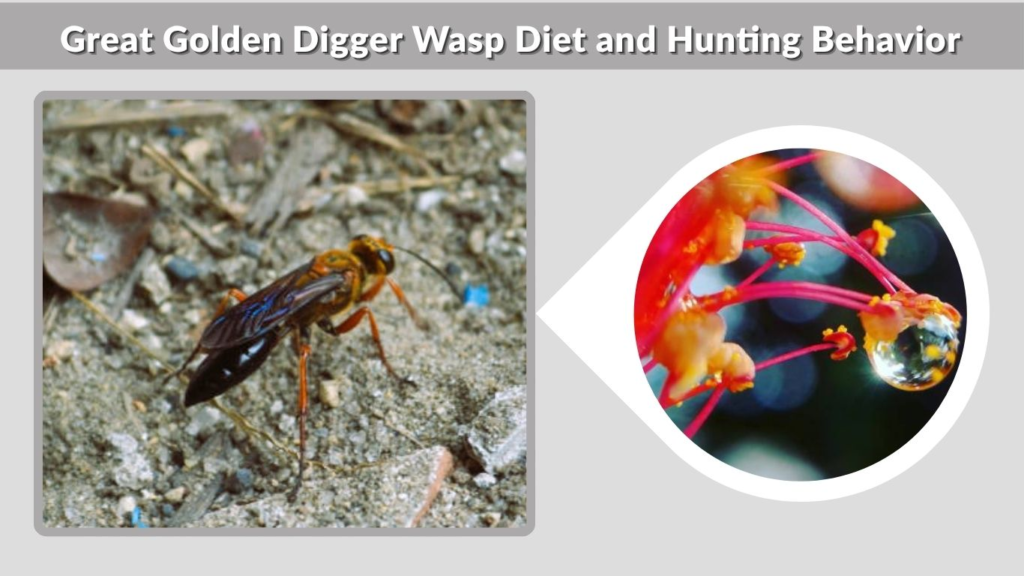
The diet of the great golden digger wasp varies depending on its life stage. Adult wasps primarily feed on nectar from flowers, which provides them with the energy needed for flying and hunting. This nectar-feeding behavior also makes them minor pollinators, contributing to plant reproduction.
However, their larvae have a very different diet. Instead of nectar, the young feed on paralyzed insects that the adult female provides.
Hunting Strategy
The hunting behavior of the great golden digger wasp is both fascinating and highly specialized. Female wasps hunt insects such as grasshoppers and katydids. Once a suitable prey is found, the wasp uses its sting to paralyze the insect rather than kill it.
This paralysis keeps the prey alive but immobile, ensuring that it remains fresh for the larva. The wasp then drags or flies the prey back to its nest, placing it inside a chamber. After laying a single egg on the prey, the chamber is sealed.
When the egg hatches, the larva feeds on the immobilized insect, ensuring a steady food supply until it matures.
Role in the Ecosystem
Natural Pest Control
Great golden digger wasps are highly beneficial to the environment, especially in gardens and agricultural areas. By hunting grasshoppers and similar insects, they help control pest populations that could otherwise damage plants and crops.
This makes them a natural and eco-friendly form of pest management.
Pollination Benefits
While not as efficient as bees, these wasps still contribute to pollination as they visit flowers for nectar. Their movement between plants helps transfer pollen, supporting plant growth and reproduction.
Ecological Importance
These wasps play a vital role in maintaining ecological balance. They act as both predators and pollinators, fitting into multiple levels of the food chain. Their presence indicates a healthy and functioning ecosystem.
Great Golden Digger Wasp Sting
Do They Sting Humans?
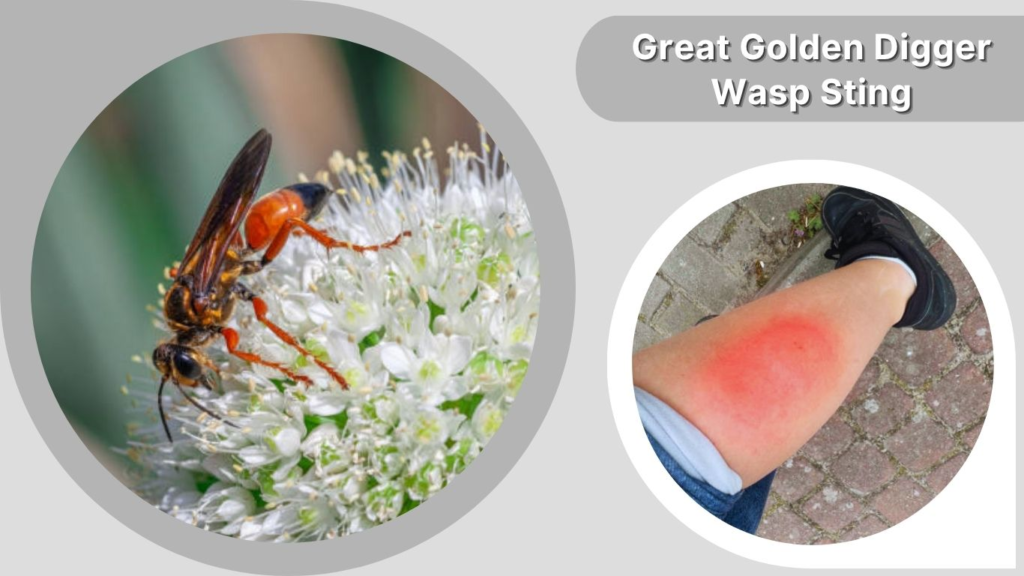
Although they are capable of stinging, great golden digger wasps rarely sting humans. Because they are solitary, they do not have a colony to defend, which significantly reduces aggressive behavior.
Most stings occur only when the wasp is directly handled, trapped, or threatened.
Pain Level and Symptoms
If a sting does occur, it is generally considered mild to moderate in pain compared to other wasps. Common symptoms include:
- Sharp but brief pain
- Redness around the sting site
- Mild swelling
For most people, these symptoms fade within a few hours to a day.
What to Do If Stung
Basic first aid is usually sufficient:
- Clean the area with soap and water
- Apply a cold compress to reduce swelling
- Use antihistamines or topical creams if needed
However, individuals with allergies to insect stings should seek medical attention immediately if severe reactions occur.
Are Great Golden Digger Wasps Dangerous?
Aggression Level
Great golden digger wasps are non-aggressive by nature. They are more focused on hunting and nesting than interacting with humans. Unlike social wasps, they do not swarm or attack in groups.
Risk to Humans and Pets
The risk posed by these wasps is minimal. They are unlikely to sting unless provoked, and even then, the sting is not considered highly dangerous for most people.
Pets are also generally safe, as the wasps do not actively target larger animals.
When They Might Sting
Stinging usually happens only in defensive situations, such as:
- Being stepped on
- Being handled or grabbed
- Having their nest disturbed
Avoiding these situations is usually enough to prevent any problems.
Benefits of Having Them Around
Garden Protection
One of the biggest advantages of having great golden digger wasps nearby is their role in protecting gardens. By reducing populations of plant-eating insects, they help keep vegetation healthy.
Eco-Friendly Insect Control
Unlike chemical pesticides, these wasps provide a natural method of pest control without harming the environment. Encouraging their presence can be beneficial for sustainable gardening.
How to Identify Their Nests
Signs of Activity
The most noticeable sign of a digger wasp nest is a small hole in the ground. These holes are typically surrounded by loose soil that has been excavated.
Soil Patterns
You may also observe small mounds or scattered dirt near the entrance. Unlike ant hills, these nests are usually simple and not heavily structured on the surface.
Frequent wasp activity in and out of a particular spot is another clear indicator.
How to Get Rid of or Manage Them
When Removal Is Necessary
In most cases, removal is not needed due to their harmless nature. However, it may be necessary if nests are located in high-traffic areas such as:
- Walkways
- Play areas
- Door entrances
Natural Deterrents
If you want to discourage nesting, consider:
- Regularly watering the soil to make it less suitable for digging
- Reducing dry, sandy patches in your yard
- Keeping grass well-maintained
Prevention Tips
Maintaining a dense, healthy lawn can make it harder for wasps to dig. Covering exposed soil and minimizing bare patches can also help prevent nesting.
Interesting Facts
- Great golden digger wasps are solitary and independent
- They rarely sting unless provoked
- Each female prepares nests without help
- Their hunting behavior is highly precise and instinct-driven
FAQs
Are great golden digger wasps aggressive?
No, great golden digger wasps are not aggressive. They are solitary insects and typically avoid human interaction. They only sting if directly threatened or handled.
How painful is a great golden digger wasp sting?
The sting is usually mild to moderate in pain. It may cause temporary redness and swelling but is generally less painful than stings from more aggressive wasps like hornets.
What do great golden digger wasps eat?
Adult wasps feed on nectar from flowers, while their larvae consume paralyzed insects such as grasshoppers and katydids that the female stores in the nest.
Where do great golden digger wasps build their nests?
They build nests in the ground, usually in sandy or loose soil. Common locations include gardens, lawns, and open sunny areas.
Should I remove great golden digger wasps from my yard?
In most cases, removal is not necessary. They are beneficial insects that help control pests. However, if they are nesting in high-traffic areas, you may consider safe deterrent methods.
Conclusion
The great golden digger wasp is a fascinating and beneficial insect that often gets misunderstood due to its size and appearance. Despite looking intimidating, it is non-aggressive and plays an important role in controlling pests and supporting the ecosystem.
By understanding their behavior and benefits, it becomes clear that these wasps are more helpful than harmful. In most cases, the best approach is to leave them undisturbed and appreciate their contribution to a healthy environment.
