
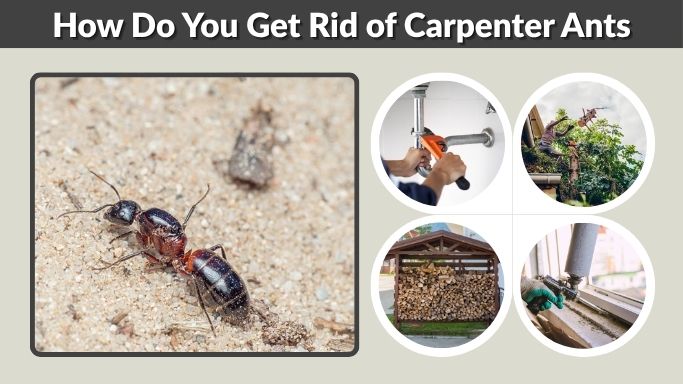
Carpenter ants can be difficult to remove because the visible ants are often only a small part of the problem. These large black, red, or reddish-black ants do not eat wood like termites, but they tunnel through damp or damaged wood to build nests. To get rid of carpenter ants permanently, you need to find the colony, remove moisture, treat the nest, and block future entry points.
Why Carpenter Ants Are Hard to Get Rid Of
Carpenter ants are not just a surface pest. When you see them walking across floors, walls, trees, decks, or kitchen counters, they may be traveling from a hidden nest. Killing the ants you see may reduce activity for a few days, but it usually does not solve the infestation.
They Often Nest in Hidden Places
Carpenter ants prefer protected spaces where they can build tunnels and stay close to moisture. The main colony may be outdoors, while smaller satellite colonies may develop inside your home. This makes control harder because the ants may be spread across more than one nesting site.
Common carpenter ant nesting areas include:
- Damp wall voids
- Window and door frames
- Bathroom walls
- Kitchen areas near plumbing
- Attics with roof leaks
- Crawl spaces
- Rotten deck boards
- Tree stumps
- Firewood piles
- Hollow tree sections
A good treatment plan starts with locating where the ants are coming from, not just spraying where they are walking.
They Follow Moisture and Food
Carpenter ants are strongly attracted to damp wood and food sources. Indoors, they may feed on sweets, grease, crumbs, pet food, and other insects. Outdoors, they may nest in trees, logs, mulch, or damaged wood near the home.
If moisture remains, the problem can return even after treatment. Fixing leaks, drying wood, and removing rotten materials are just as important as using bait or insecticide.
How to Identify Carpenter Ants Before Treatment
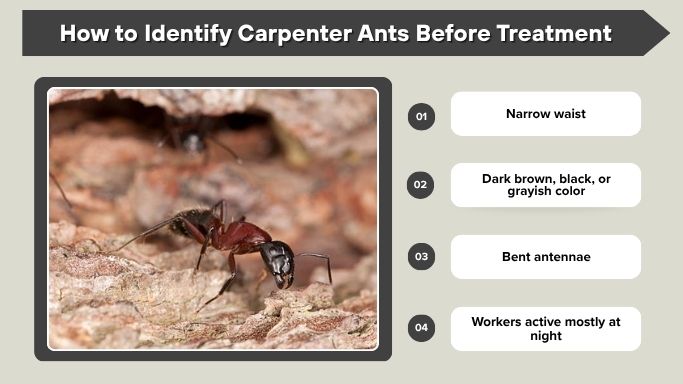
Before treating, make sure you are dealing with carpenter ants. They are often confused with termites, pavement ants, or other large black ants. Correct identification helps you choose the right method.
Carpenter Ant Identification Signs
Carpenter ants are usually larger than many household ants. Workers may vary in size within the same colony. Some are black, while others may be red, brown, or mixed in color depending on the species.
Look for these signs:
- Large black or reddish ants
- Narrow waist
- Bent antennae
- Workers active mostly at night
- Ant trails near walls or windows
- Sawdust-like frass near wood
- Winged ants indoors
- Rustling sounds inside walls
- Activity near damp wood
Winged carpenter ants are reproductive ants. If you see them indoors, especially more than once, it may mean a mature colony is nearby.
Carpenter Ants vs Termites
Carpenter ants and termites can both damage wood, but they behave differently. Carpenter ants tunnel through wood to create nests, while termites eat wood for food.
| Feature | Carpenter Ants | Termites |
| Wood behavior | Tunnel through wood | Eat wood |
| Body shape | Narrow waist | Broad waist |
| Antennae | Bent | Straight |
| Wings | Front wings longer than back wings | Wings equal in size |
| Debris | Sawdust-like frass | Mud tubes or pellets |
| Activity | Often seen foraging | Often hidden |
| Moisture link | Common around damp wood | Varies by species |
If you are unsure whether you have carpenter ants or termites, avoid guessing. The wrong treatment can allow the real pest problem to continue.
How Do You Get Rid of Carpenter Ants in the House?
Getting rid of carpenter ants inside the house requires patience. The goal is to trace their movement, find the nest, and use the right treatment method without scattering the colony.
1. Track the Ant Trail
Carpenter ants are often more active at night. Use a flashlight to follow their trail and see where they enter and exit. Do not spray them immediately if you are still trying to locate the nest.
Check around:
- Baseboards
- Windows
- Door frames
- Kitchen counters
- Bathroom walls
- Electrical outlets
- Plumbing openings
- Attic access points
- Basement walls
The trail may lead to a wall void, ceiling gap, damp wood area, or outdoor nest.
2. Use Carpenter Ant Bait
Bait is often more effective than contact spray because worker ants carry it back to the colony. The bait must match what the ants are feeding on. Sometimes they prefer sweets, while other times they prefer protein or grease-based foods.
Use bait properly:
- Place bait near ant trails.
- Do not spray near bait.
- Keep bait away from children and pets.
- Be patient for several days.
- Replace bait if ants stop feeding.
- Try different bait types if needed.
Spraying visible ants can make the colony split or move deeper into walls. Bait works better when ants are actively feeding and carrying it back.
3. Treat Wall Voids Carefully
If carpenter ants are nesting inside a wall, bait alone may not always be enough. Wall void treatment may be needed, especially if there is frass, rustling sounds, or ants coming from outlets or cracks.
This step should be done carefully. Applying products inside walls without proper knowledge can be unsafe or ineffective. If the nest is hidden deep inside a structure, a pest professional may be the best option.
How Do You Get Rid of Carpenter Ants Naturally?
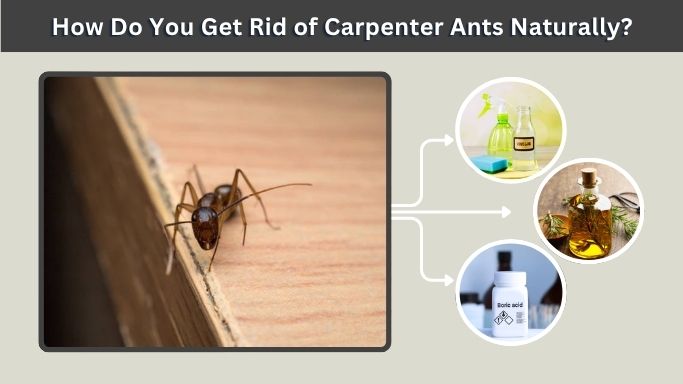
Natural methods can help reduce carpenter ants, especially when the infestation is small or still outside. However, natural control works best when combined with moisture repair and nest removal.
Natural Repellents and Cleaning Methods
Some natural products may disrupt ant trails or discourage ants from entering certain areas. These methods may reduce activity, but they may not kill the main colony.
Natural options include:
- Vinegar and water for cleaning trails
- Soapy water for direct contact
- Essential oil sprays around entry points
- Diatomaceous earth in dry cracks
- Boric acid bait used carefully
- Removing food crumbs
- Storing sweets in sealed containers
- Keeping pet food bowls clean
Do not rely only on repellents if ants are nesting inside walls. Repellents may push ants into new areas instead of eliminating them.
Remove Moisture Naturally
Moisture control is one of the most powerful natural prevention methods. Carpenter ants prefer damp wood, so drying the area makes your home less attractive.
Important steps include:
- Fix leaking pipes.
- Repair roof leaks.
- Improve bathroom ventilation.
- Clean gutters.
- Replace rotten wood.
- Dry wet crawl spaces.
- Seal window leaks.
- Keep mulch away from siding.
If you remove the moisture source, carpenter ants are less likely to stay or return.
How Do You Get Rid of Carpenter Ants Outside?
Outdoor carpenter ants may nest in trees, logs, stumps, fences, decks, or firewood piles. If outdoor colonies are close to the house, they may eventually move inside.
Find the Outdoor Nest
Look for ant trails outdoors during evening or nighttime. Carpenter ants often travel along tree branches, fences, foundation walls, and utility lines.
Outdoor places to inspect include:
- Tree stumps
- Dead tree limbs
- Firewood stacks
- Rotten logs
- Wooden fences
- Deck supports
- Porch steps
- Mulch beds
- Siding gaps
- Foundation cracks
If the nest is in a dead stump or rotten log, removing that material may solve much of the problem.
Outdoor Treatment Steps
Once you find the outdoor nest or trail, you can use bait or targeted treatment. Avoid spraying randomly across the yard because it may not reach the colony.
Effective outdoor steps include:
- Place bait near ant trails.
- Remove dead wood near the house.
- Store firewood off the ground.
- Keep wood piles away from siding.
- Trim branches touching the roof.
- Seal cracks in the foundation.
- Replace rotten deck boards.
- Reduce heavy mulch near walls.
Outdoor control is important because many indoor problems begin with a colony outside the home.
How Do You Get Rid of Carpenter Ants in Trees?
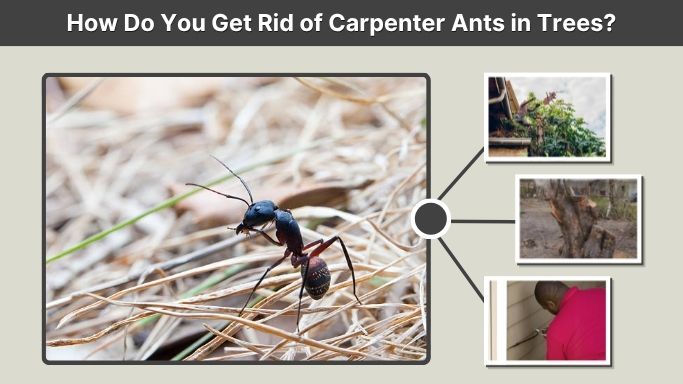
Carpenter ants in trees usually nest in hollow, decaying, or moisture-damaged areas. They are often a sign that part of the tree already has rot or internal damage.
Should You Remove Carpenter Ants from Trees?
Carpenter ants do not usually attack healthy tree wood first. They often move into areas that are already softened by decay. If you see carpenter ants in a tree, inspect the tree for cavities, dead limbs, cracks, or moisture damage.
You should be concerned if:
- The tree is close to your house.
- Large branches are dying.
- The trunk has hollow areas.
- Ants are entering through cracks.
- The tree leans dangerously.
- Ant trails lead from the tree to your home.
For large trees, contact an arborist before removing limbs or treating cavities. The tree may need pruning, repair, or removal if it is structurally unsafe.
Prevent Ants from Moving from Trees to Your Home
Even if the tree stays, you can reduce the chance of ants entering your house.
Helpful steps include:
- Trim branches away from the roof.
- Remove dead limbs.
- Keep tree cavities dry when possible.
- Seal exterior gaps near the home.
- Remove wood debris around the base.
- Watch ant trails at night.
- Keep outdoor lights from attracting insects near entry points.
Trees can support carpenter ants for a long time, so regular inspection is important.
How to Get Rid of Flying Carpenter Ants
Flying carpenter ants are a warning sign because they usually come from a mature colony. They may appear near windows, lights, ceilings, or walls during swarming periods.
What Flying Carpenter Ants Mean
A few winged ants may enter from outside, especially during warm weather. But repeated sightings indoors can mean there is a nest inside or very close to the house.
Flying carpenter ants may appear:
- Near windows
- Around ceiling lights
- In bathrooms
- Near attic spaces
- Around doors
- In basements
- Close to wall cracks
Vacuuming flying ants removes the immediate problem, but it does not eliminate the colony. You still need to find where they are coming from.
Treatment for Winged Carpenter Ants
Do not treat winged ants as the only problem. They are a symptom of a larger colony. Look for worker ants, trails, frass, and moisture damage nearby.
Best steps include:
- Vacuum visible flying ants.
- Check windows and lights.
- Inspect nearby walls.
- Look for worker ant trails.
- Place bait near active areas.
- Seal entry points.
- Inspect attic or crawl spaces.
- Call a professional if swarms continue.
Repeated indoor swarms should not be ignored.
How to Get Rid of Carpenter Ants Permanently
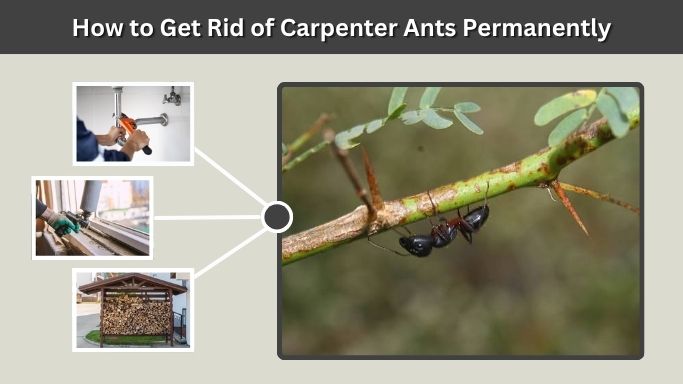
Permanent control means removing the colony and preventing future nesting conditions. A quick spray may kill some ants, but it rarely solves the full problem.
Long-Term Prevention Plan
The best carpenter ant control plan combines inspection, treatment, moisture control, and home maintenance.
Follow these steps:
- Find the trail and nesting area.
- Use bait instead of random spray.
- Treat hidden nests when needed.
- Fix leaks and moisture problems.
- Replace damaged wood.
- Seal cracks and openings.
- Remove outdoor dead wood.
- Trim trees away from the house.
- Store firewood properly.
- Keep food sealed and clean.
If carpenter ants return every season, there is likely a nearby nest or moisture problem that has not been corrected.
When to Call a Pest Professional
A professional is useful when the nest is hidden, the infestation is large, or ants keep returning after DIY treatment. Professional inspection is also important if you suspect both carpenter ants and termites.
Call for help if:
- You see winged ants indoors.
- Frass keeps appearing.
- Ants come from walls or ceilings.
- There is visible wood damage.
- DIY bait does not work.
- The nest location is unknown.
- Multiple rooms have ant activity.
- Moisture damage is present.
Professional treatment can target the colony more directly and reduce unnecessary spraying.
FAQs
What is the fastest way to get rid of carpenter ants?
The fastest effective method is to locate the nest and treat it directly. Bait can also work well because worker ants carry it back to the colony. Spraying only visible ants may give quick results, but it usually does not remove the hidden colony.
Can I get rid of carpenter ants naturally?
Yes, small problems may improve with natural methods such as cleaning trails with vinegar, removing food sources, using diatomaceous earth in dry areas, and fixing moisture problems. However, if carpenter ants are nesting inside walls or structural wood, natural methods alone may not remove the colony.
How do you get rid of black carpenter ants?
Black carpenter ants are controlled the same way as other carpenter ants. Track their trails, place bait near active areas, find the nest, remove damp or rotten wood, and seal entry points. If they are coming from walls, ceilings, or repeated indoor trails, professional treatment may be needed.
How do you get rid of carpenter ants outside?
To remove carpenter ants outside, inspect trees, stumps, logs, decks, fences, mulch, and firewood piles. Remove rotten wood when possible and place bait near active trails. Also trim branches away from the house and keep firewood stored away from exterior walls.
How do you get rid of carpenter ants permanently?
Permanent control requires more than killing visible ants. You must find the nest, use bait or targeted treatment, repair leaks, replace damaged wood, seal entry points, and remove outdoor nesting sites. If the colony is hidden inside walls, professional inspection may be the safest option.
