
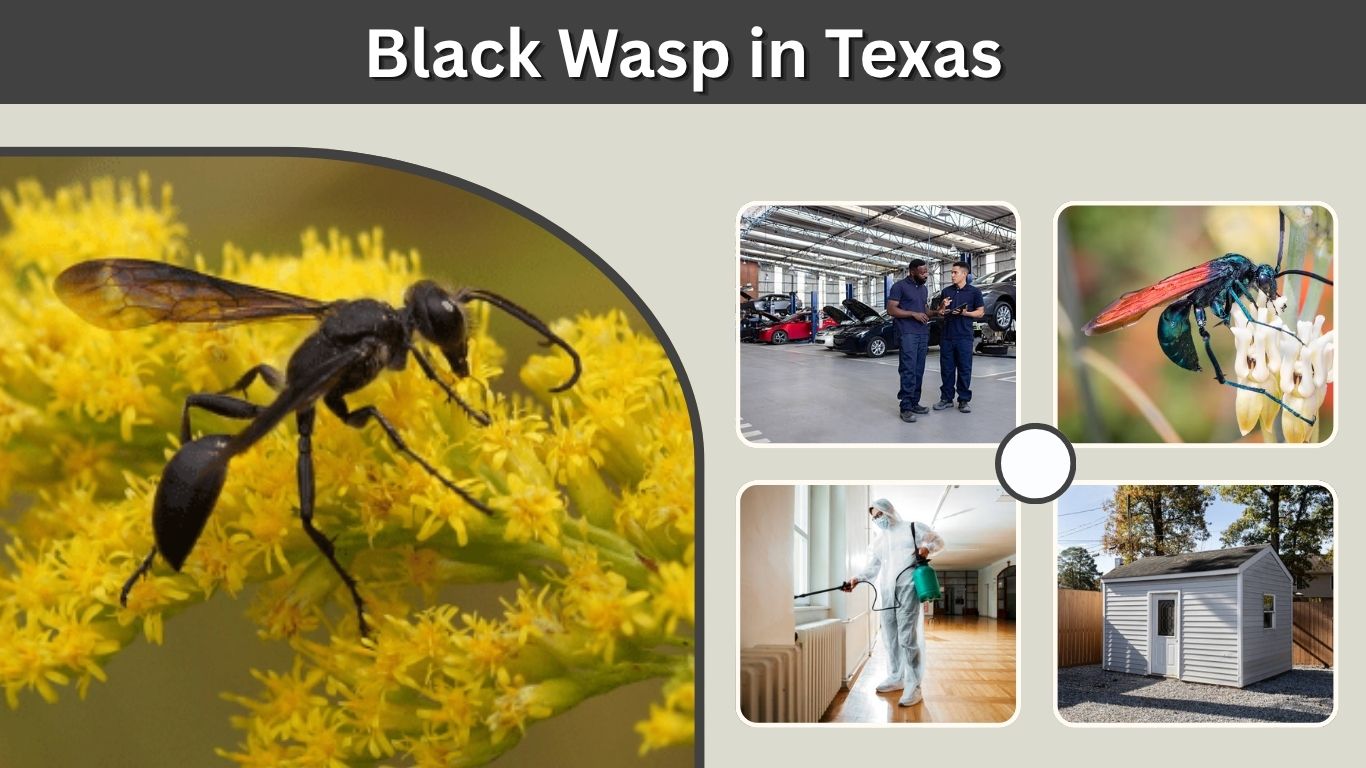
Seeing a black wasp in Texas can be alarming, especially when the insect is large, completely black, or has dark blue wings. Texas is home to several wasps that may appear black, including the great black wasp, mud daubers, tarantula hawks, cicada killers, and several smaller solitary species. Most are beneficial predators rather than aggressive pests. Knowing their size, markings, wing color, nesting behavior, and location makes identification much easier and helps determine whether the wasp requires control.
How to Identify a Black Wasp in Texas
A Texas black wasp cannot always be identified by color alone. Several unrelated species have black bodies, while others combine black with yellow, red, blue, white, or orange. Look closely at body shape, approximate length, wing color, nesting site, and behavior. These details can quickly narrow down whether you have a great black wasp or another Texas species.
Key Identification Features
Look for these characteristics when identifying the insect:
- Body color: Solid black, blue-black, or black with colored markings
- Body shape: Often slender with a narrow waist
- Size: May range from tiny parasitoid wasps to more than an inch long
- Wings: Clear, smoky, blue-black, reddish, or orange
- Legs: Usually long and noticeable on larger solitary species
- Nest location: Soil, mud structures, wood cavities, or sheltered spaces
- Behavior: Often hunts insects or spiders rather than gathering around human food
Great black wasps, for example, average about 22 mm for males and 28 mm for females and belong to the thread-waisted wasp family Sphecidae.
Is a Big All-Black Wasp a Great Black Wasp?
Quite possibly. The great black wasp (Sphex pensylvanicus), also called the great black digger wasp, is one of the strongest matches for searches such as “big black wasp in Texas,” “giant black wasp Texas,” and “all black wasp Texas.”
It has a predominantly black body, long legs, narrow waist, and dark wings that may show a bluish or violet sheen. Records confirm the species occurs in Texas.
Common Types of Black Wasps in Texas
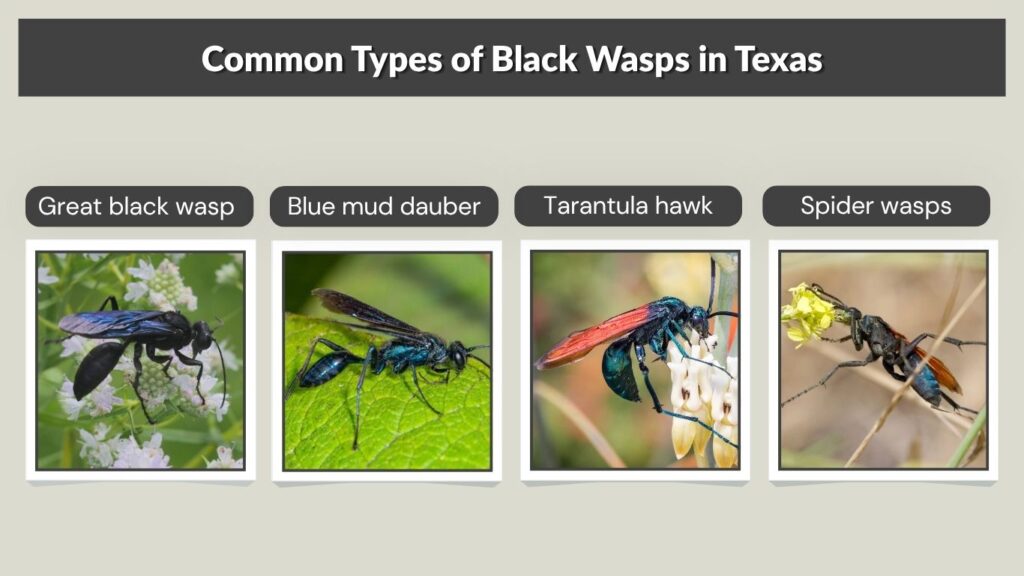
Not every large dark wasp is the same species. Texas supports several groups that homeowners may simply describe as black wasps. Some live underground, while others make mud nests beneath structures. Recognizing these major groups helps explain searches for large, small, blue-black, yellow-and-black, and orange-winged wasps across the state.
Black Wasps You May Encounter
Common possibilities include:
- Great black wasp – Glossy black, relatively large, with a narrow waist and dark wings.
- Blue mud dauber – Metallic blue to blue-black with an extremely narrow waist.
- Black-and-yellow mud dauber – Dark-bodied with obvious yellow markings.
- Tarantula hawk – Large, dark-bodied spider wasp that can have yellow-orange wings.
- Cicada killer – Large wasp with black or rusty coloration and yellow abdominal markings.
- Spider wasps – Often dark-colored, long-legged wasps that hunt spiders.
- Small parasitoid wasps – Tiny black species that develop on or inside other insects.
Texas A&M notes that mud daubers can range from dull black to yellow-marked or iridescent blue-black, while tarantula hawks and cicada killers are among the state’s larger conspicuous wasps.
What Is a Small Black Wasp in Texas?
A small black wasp in Texas could belong to one of many solitary or parasitoid groups. Some are only a fraction of an inch long and spend their time hunting or parasitizing other insects.
These tiny wasps usually pose little concern around people. Color alone is rarely enough for exact identification, so body proportions, antennae, wing pattern, and where the insect was found are especially important.
Black Wasps With Different Colors in Texas
Color combinations are among the most useful identification clues. Searches for red-and-black, black-and-yellow, blue-black, or black-and-orange Texas wasps may refer to entirely different families. Wing color is particularly important because a wasp with an all-black body and orange wings is unlikely to be the same species as a glossy black wasp with blue-black wings.
Common Color Patterns
- Black and blue wasp: Often a blue mud dauber or another metallic solitary wasp.
- Black and yellow wasp: Could be a mud dauber, yellowjacket, cicada killer, or another patterned species.
- Black with orange wings: Tarantula hawks are one important possibility.
- Red and black wasp: Several spider and parasitoid wasps show this combination.
- Black and white wasp: Some dark social or solitary wasps have pale markings.
- Red wasp with black wings: Certain paper wasps can appear reddish with darker wings.
Southern yellowjackets, for comparison, have black bodies covered with characteristic yellow markings, while cicada killers have yellow abdominal markings and may reach about 1½ inches long.
Why Wing Color Can Be Misleading
Dark wings often reflect sunlight and appear blue, purple, brown, or nearly black depending on the viewing angle. Because of this, a “black and blue wasp Texas” sighting might actually involve a mostly black species with iridescent wings rather than a genuinely blue-bodied insect.
Photographing the insect in natural light makes identification more reliable.
Where Do Black Wasps Nest in Texas?
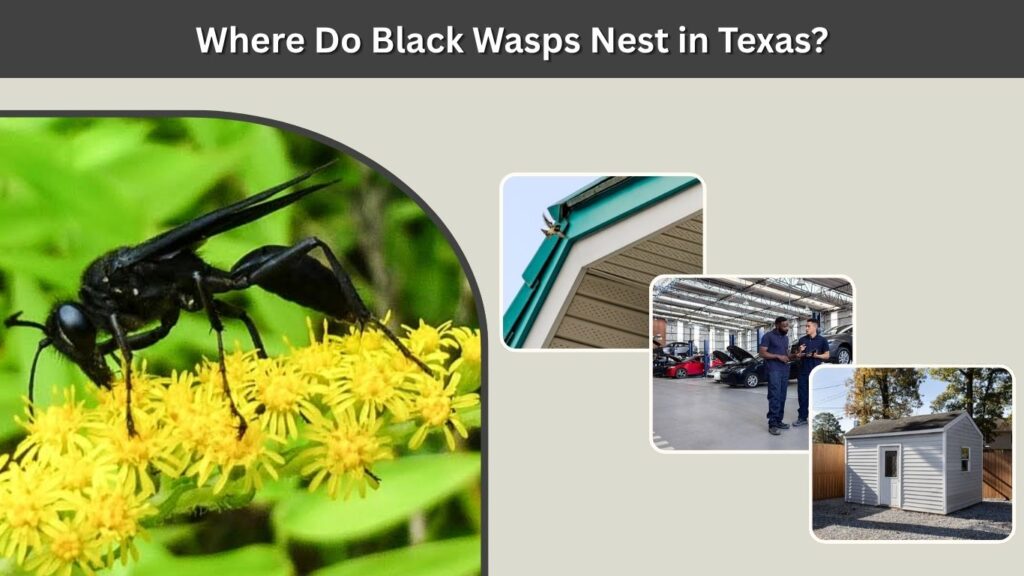
Black wasps use several nesting strategies depending on species. Many of the intimidating large species are solitary, meaning each female prepares her own nest rather than maintaining a large defensive colony. Great black wasps generally use burrows in soft soil, while mud daubers construct recognizable nests from mud under protected surfaces around houses and other structures.
Great Black Wasp Nests
Female great black wasps use burrows in soft earth and stock their nests with katydids for their developing young. BugGuide reports that their underground nests are commonly provisioned with several prey items.
A ground hole with a solitary large black wasp repeatedly entering and leaving may therefore be a hunting wasp rather than a colony of aggressive social wasps.
Mud Nests Around Texas Homes
Mud daubers commonly attach mud nests under eaves, overhangs, garages, sheds, and other sheltered surfaces. Different species stock these nests with paralyzed spiders.
Texas A&M notes that the blue mud dauber may reuse nests constructed by other mud daubers and primarily provisions them with spiders.
Are Black Wasps in Texas Dangerous?
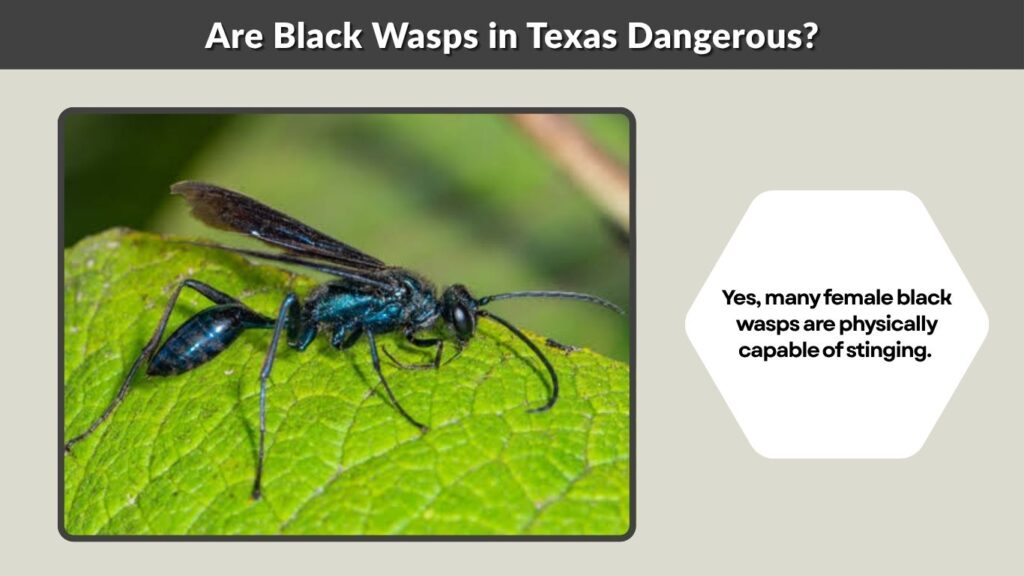
The intimidating appearance of a large black wasp does not necessarily indicate aggressive behavior. Many Texas species that look frightening are solitary hunters. They generally focus on finding prey, flowers, nesting material, or nesting sites. However, females of many species possess a functional sting and may defend themselves when grabbed, stepped on, trapped against skin, or disturbed directly.
Do Black Wasps Sting?
Yes, many female black wasps are physically capable of stinging. However, species differ considerably in temperament.
Texas A&M describes mud daubers as capable of stinging but rarely aggressive. Cicada killer females can also sting but are generally considered unlikely to attack people without provocation. Male cicada killers cannot sting.
Avoid handling an unidentified wasp with bare hands.
Are Black Wasps Poisonous?
Black wasps are better described as venomous rather than poisonous because venom is delivered through a sting. For most people, an isolated wasp sting causes localized pain, swelling, redness, or itching.
Severe allergic reactions require immediate medical attention. Difficulty breathing, swelling of the throat or tongue, faintness, or widespread hives after a sting are emergency warning signs.
What to Do With a Black Wasp in Your Texas Home
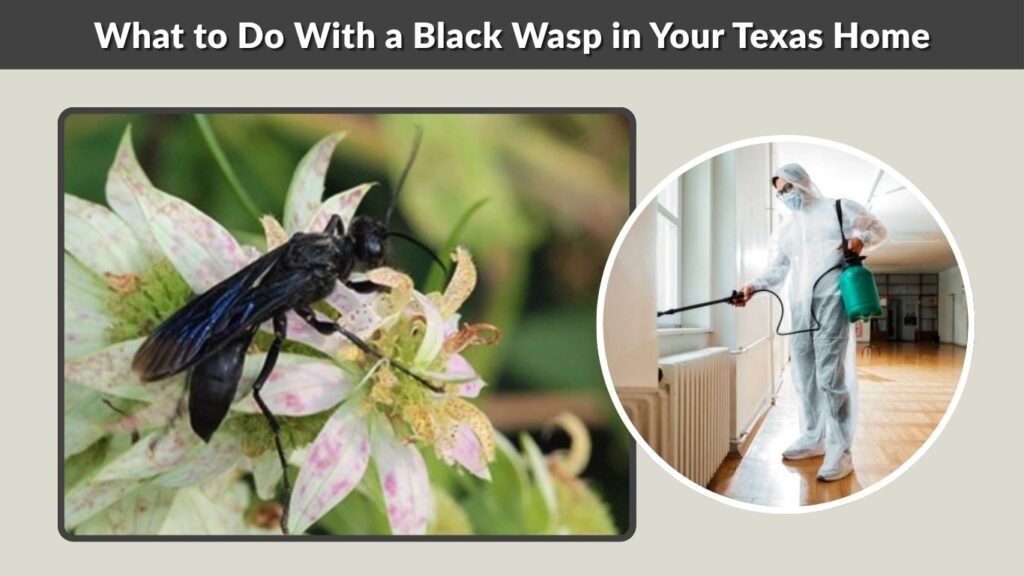
A single black wasp indoors often entered accidentally through an open door, window, vent, or damaged screen. Finding one individual does not automatically mean there is a nest inside the building. Repeated sightings, however, may justify checking attics, garages, wall openings, eaves, and nearby soil for ongoing activity.
Safe Steps to Take
- Keep children and pets away from the wasp.
- Avoid hitting or grabbing it with your hands.
- Open a nearby exterior door or window when practical.
- Inspect damaged screens and gaps around doors.
- Check eaves and garages for mud nests.
- Watch for repeated wasp traffic entering one particular opening.
- Seek professional help if a nest is difficult to identify or safely access.
Mud dauber nests commonly occur around buildings, but these solitary wasps are generally less defensive than colony-forming social wasps.
Should You Remove Black Wasps Outdoors?
Removal is not always necessary. Solitary black wasps can help control populations of katydids, spiders, cicadas, and other arthropods. A nest located far from walkways, doors, play areas, or other frequently used spaces can often be left undisturbed.
Control becomes more reasonable when nests create a repeated sting risk or interfere with everyday use of the property.
FAQs
1. What is the big black wasp commonly seen in Texas?
One likely identification is the great black wasp (Sphex pensylvanicus). Females average around 28 mm long and have a predominantly black body with dark wings. Texas occurrence records are well established, although other large dark species can look similar.
2. Are great black wasps aggressive?
Great black wasps are solitary rather than colony-forming social wasps. They spend much of their time hunting katydids, visiting flowers, and provisioning underground nests. They are generally less defensive than social yellowjackets, though females should still be treated cautiously because they can sting when directly threatened or handled.
3. What is a black wasp with orange wings in Texas?
A tarantula hawk is one strong possibility. Texas A&M describes Pepsis tarantula hawks as large black wasps with long legs and yellow-orange wings edged in black. They are spider wasps that hunt tarantulas to provide food for their developing larvae.
4. Why are black wasps around my Texas house?
They may be searching for flowers, spiders, insects, mud, water, or sheltered nesting locations. Mud daubers frequently build nests underneath eaves and inside garages. An occasional wasp indoors may simply have entered accidentally, while repeated sightings around one opening deserve closer inspection.
5. What is a blue-black wasp in Texas?
A likely candidate is the blue mud dauber (Chalybion californicum). Texas A&M describes this species as iridescent blue-black and notes that mud daubers typically have a very long, narrow waist. Blue mud daubers are solitary and are rarely aggressive toward people.
