
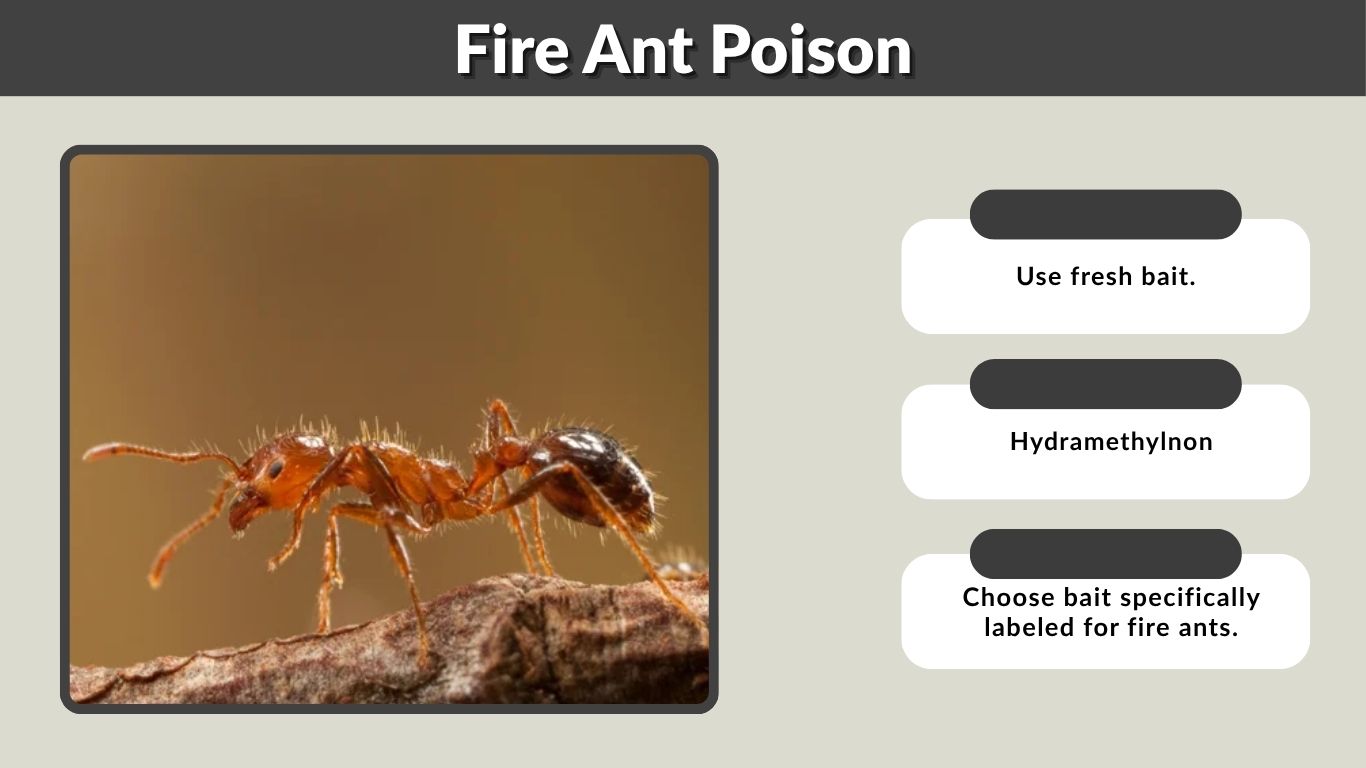
Fire ant poison can help control aggressive colonies that create mounds across lawns, gardens, pastures, and other outdoor spaces. The most effective treatment depends on whether you need gradual colony elimination or fast control of a troublesome mound. Fire ant baits, granules, powders, and liquid drenches work differently, so choosing the right approach matters. This guide explains how fire ant poison works, which treatment types are useful, how long they take, natural alternatives, and important precautions for dogs, children, and other animals.
How Does Fire Ant Poison Work?
Fire ant poisons generally work either as slow-acting colony treatments or fast-acting contact treatments. Baits are deliberately slow so workers have enough time to collect the material and carry it into the colony. Direct mound treatments work faster but primarily affect the particular mound being treated. A combination of broadcast bait and targeted mound treatment is often recommended for broad control.
Fire Ant Bait Targets the Colony
Fire ant bait contains food material combined with a small quantity of insecticide. Foraging workers pick up the particles and carry them underground, where the material can spread through the colony.
Important advantages include:
- Reaches colonies that may not have obvious mounds
- Workers transport the treatment themselves
- Can eventually affect the queen
- Useful across larger lawns
- Requires relatively little material when properly applied
- Provides longer-term colony management
The slow action is intentional. A poison that killed workers immediately would prevent them from transporting the bait back to other ants.
Contact Fire Ant Poison
Contact insecticides work differently. Powders, granules, and liquid mound drenches can kill ants when the treatment reaches them.
These options are particularly useful when a mound near a patio, playground, doorway, or other frequently used area needs faster control.
Best Fire Ant Poison Types for Outdoor Control
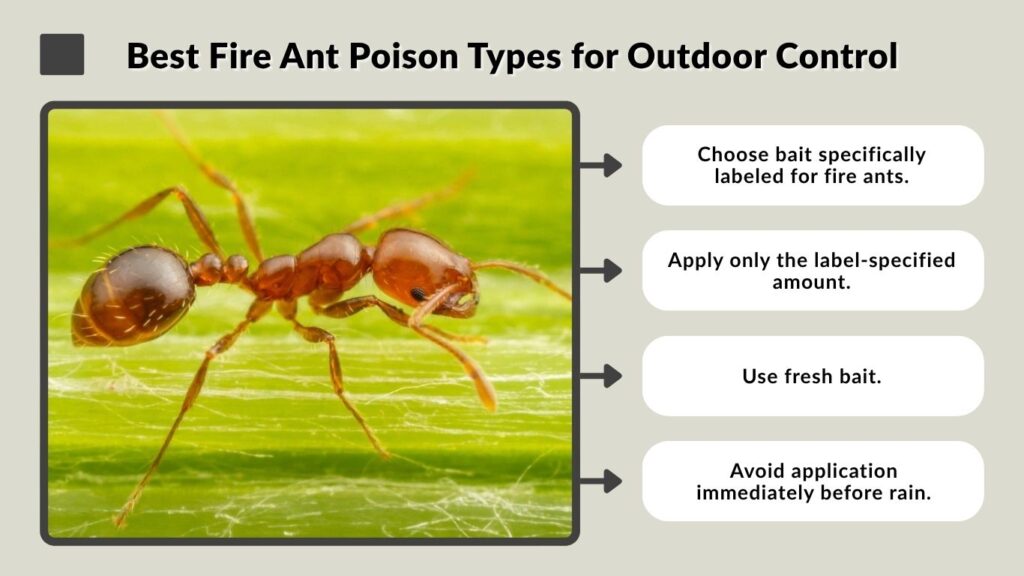
There is no single formulation that is ideal for every situation. A yard containing numerous colonies generally requires a different strategy than one containing a single troublesome mound. Extension specialists commonly recommend a two-step approach: broadcast an appropriate fire ant bait and then spot-treat troublesome surviving mounds.
Granular Fire Ant Bait
Granular bait is one of the most useful choices when fire ants occur throughout a lawn.
The bait should normally be broadcast over the treatment area according to its label rather than dumped directly onto visible mounds. Fire ant workers forage away from the mound and collect bait particles from the surrounding ground.
For good results:
- Choose bait specifically labeled for fire ants.
- Apply only the label-specified amount.
- Use fresh bait.
- Avoid application immediately before rain.
- Avoid watering immediately after treatment.
- Apply while ants are actively foraging.
- Store leftover bait according to label directions.
More product does not necessarily produce better control.
Fire Ant Poison Powder
Fire ant poison powder is generally intended for individual mound treatment rather than treating an entire property.
Some dry mound treatments contain fast-acting contact insecticides. They can be useful when only a few visible colonies require immediate attention.
Do not disturb the mound before treatment. Disturbance can cause workers to move queens deeper underground or potentially relocate parts of the colony.
Liquid Fire Ant Poison
Liquid mound drenches are another option for fast treatment. The properly diluted treatment must penetrate the mound sufficiently to reach ants underground.
Liquid drenches can provide quicker mound control than slow-acting baits, although treating numerous mounds individually becomes labor intensive.
What Is the Best Poison for Fire Ants?
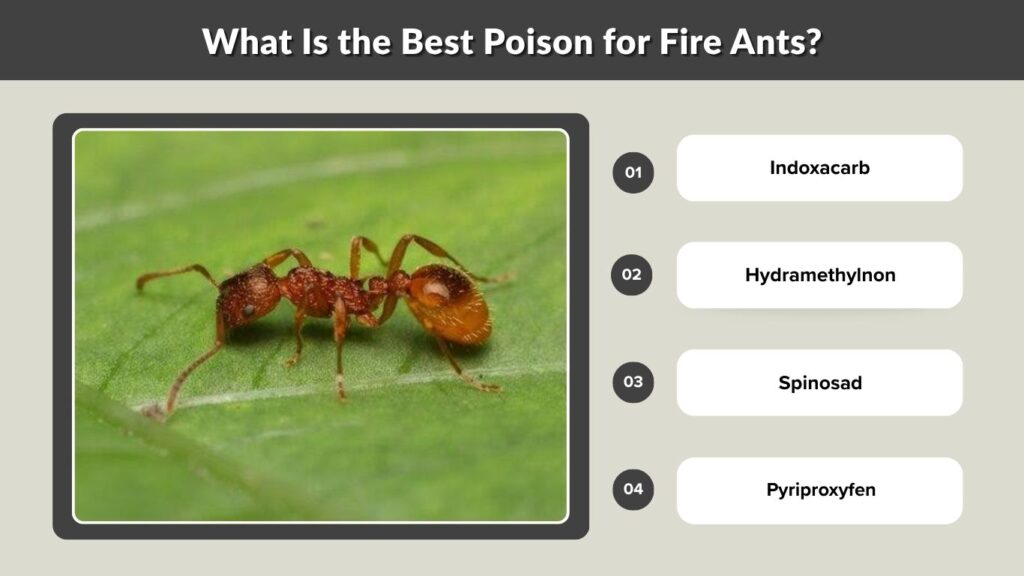
The most appropriate fire ant poison depends on the goal. Slow-acting bait is particularly useful when the objective is colony-level control throughout a yard, while mound treatments are useful when individual colonies require faster elimination.
Common Fire Ant Bait Ingredients
Fire ant products may use several different active ingredients and modes of action.
Examples found in labeled fire ant baits include:
- Indoxacarb
- Hydramethylnon
- Spinosad
- Pyriproxyfen
- Methoprene
- Metaflumizone
- Abamectin
Some act directly on ants, while insect growth regulators such as methoprene interfere with colony reproduction and development. Always choose according to the current product label rather than relying only on the brand name, because formulations can change.
The Two-Step Method
For yards with persistent infestations, one practical strategy is:
- Broadcast labeled fire ant bait across the affected lawn.
- Allow workers time to collect it.
- Wait several days before using contact insecticides on remaining problem mounds.
- Monitor for newly developing colonies.
- Repeat treatment only according to label directions.
Properly applied bait programs can substantially reduce fire ant mound numbers, though reinvasion can occur because newly mated queens can establish fresh colonies.
How Long Does Fire Ant Poison Take to Work?
Treatment speed depends largely on the formulation. A mound drench may act within hours, while dry mound treatments can take longer. Colony baits are deliberately slower because workers must transport the poison through the colony before the treatment reaches its full effect.
How Long Does Fire Ant Bait Take?
Maximum control from many fire ant baits typically takes about 2–6 weeks, and some formulations may require several additional weeks for their full result.
Do not automatically reapply because ants remain visible a few days after baiting. Applying excessive pesticide wastes product and may increase exposure without improving control.
Signs Fire Ant Poison Is Working
Look for:
- Less worker activity
- Declining numbers around food sources
- Reduced mound activity
- Fewer new mounds
- Abandoned colonies
- A gradual reduction across the lawn
Persistent mounds can then be individually treated according to label directions.
Natural Fire Ant Poison and Nonchemical Options
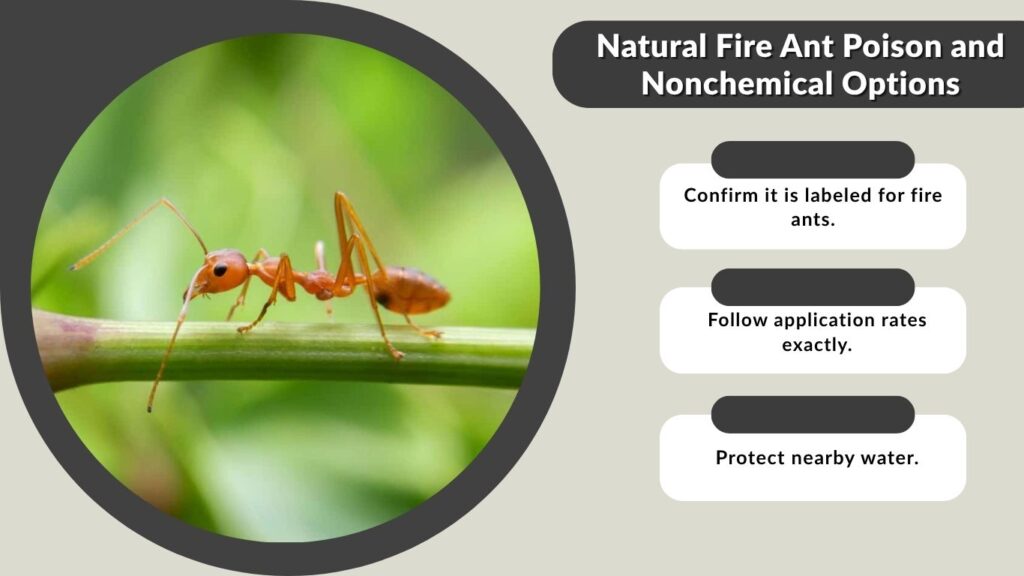
People looking for natural fire ant poison often encounter recommendations involving household mixtures, boric acid, boiling water, or diatomaceous earth. Results vary considerably, and some homemade treatments can damage grass or expose people and pets without reliably reaching the queen.
Lower-Impact Fire Ant Treatments
Some commercially labeled fire ant treatments use ingredients such as spinosad or d-limonene. Mississippi State Extension notes that certain organic-compatible baits and mound drenches can be incorporated into fire ant control programs.
Regardless of whether a product is marketed as natural or conventional:
- Confirm it is labeled for fire ants.
- Follow application rates exactly.
- Protect nearby water.
- Keep it away from food.
- Follow garden and crop restrictions.
- Observe pet and child precautions.
“Natural” does not automatically mean risk-free.
Is Fire Ant Poison Safe for Dogs?
Safety depends on the specific pesticide, concentration, quantity involved, and how the product is used. Some fire ant bait products pose relatively limited exposure when properly broadcast according to their labels, but pets should never be allowed to eat pesticide directly.
Using Fire Ant Poison Around Pets
The EPA recommends reading pesticide labels carefully and keeping pets away from products and treatment areas as directed. Baits should also be placed or applied so pets cannot access concentrated material.
Important precautions include:
- Remove pet food and water before treatment.
- Prevent dogs from accessing spills or piles of granules.
- Keep pesticide containers securely stored.
- Never transfer poison into food containers.
- Observe label-specific reentry instructions.
- Clean accidental spills promptly.
Requirements vary among products, so there is no universal waiting period that applies to every fire ant poison.
What If a Dog Eats Fire Ant Poison?
If a dog consumes fire ant poison, remove access to the product and identify the exact brand and active ingredient. Contact a veterinarian or an appropriate animal poison service promptly and keep the original container or label available.
Do not automatically induce vomiting or administer a home remedy unless a veterinary professional or the pesticide label specifically instructs you to do so. The EPA stresses keeping the label because it contains first-aid information and emergency contact details.
Fire Ant Poison vs. Fire Ant Stings
People sometimes describe fire ant stings as “fire ant bites,” but the painful reaction primarily results from venom delivered through the ant’s stinger. This is unrelated to commercial fire ant poison used for pest control.
Do Fire Ant Bites Have Poison?
Fire ants can use their jaws to grip the skin and then sting, often multiple times. The sting introduces venom and frequently produces burning pain followed by characteristic raised pustules.
A severe allergic reaction requires prompt medical attention. Commercial fire ant pesticide, meanwhile, contains entirely different substances intended for controlling the insects.
FAQs
Fire ant products vary significantly in active ingredients and application methods. Reading the specific product label is essential before deciding where, when, and how to apply it.
1. What is the best fire ant poison?
Broadcast fire ant bait is particularly effective for widespread yard infestations because workers can carry it into colonies. Individual mound treatments are more appropriate when faster control of a specific mound is needed.
2. Does fire ant poison really work?
Yes, when the product is appropriate and correctly applied. Extension guidance reports that properly used broadcast bait programs can reduce fire ant populations substantially, especially when combined with treatments for surviving individual mounds.
3. Does fire ant poison kill other ants?
Some active ingredients can affect other ant species, but effectiveness varies. Use products only for pests and sites specifically listed on the pesticide label rather than assuming a fire ant treatment will control carpenter ants or other species.
4. How long does fire ant poison stay on the ground?
There is no single duration because persistence varies by active ingredient, formulation, weather, sunlight, moisture, soil conditions, and application rate. Check the environmental and reentry information on the specific product label.
5. Should fire ant bait be placed directly on the mound?
Usually not when using granular bait. Workers commonly forage around the mound, so labeled bait is generally placed across the surrounding area or broadcast throughout the lawn. Direct mound powders and drenches are different products and should be applied according to their own instructions.
