
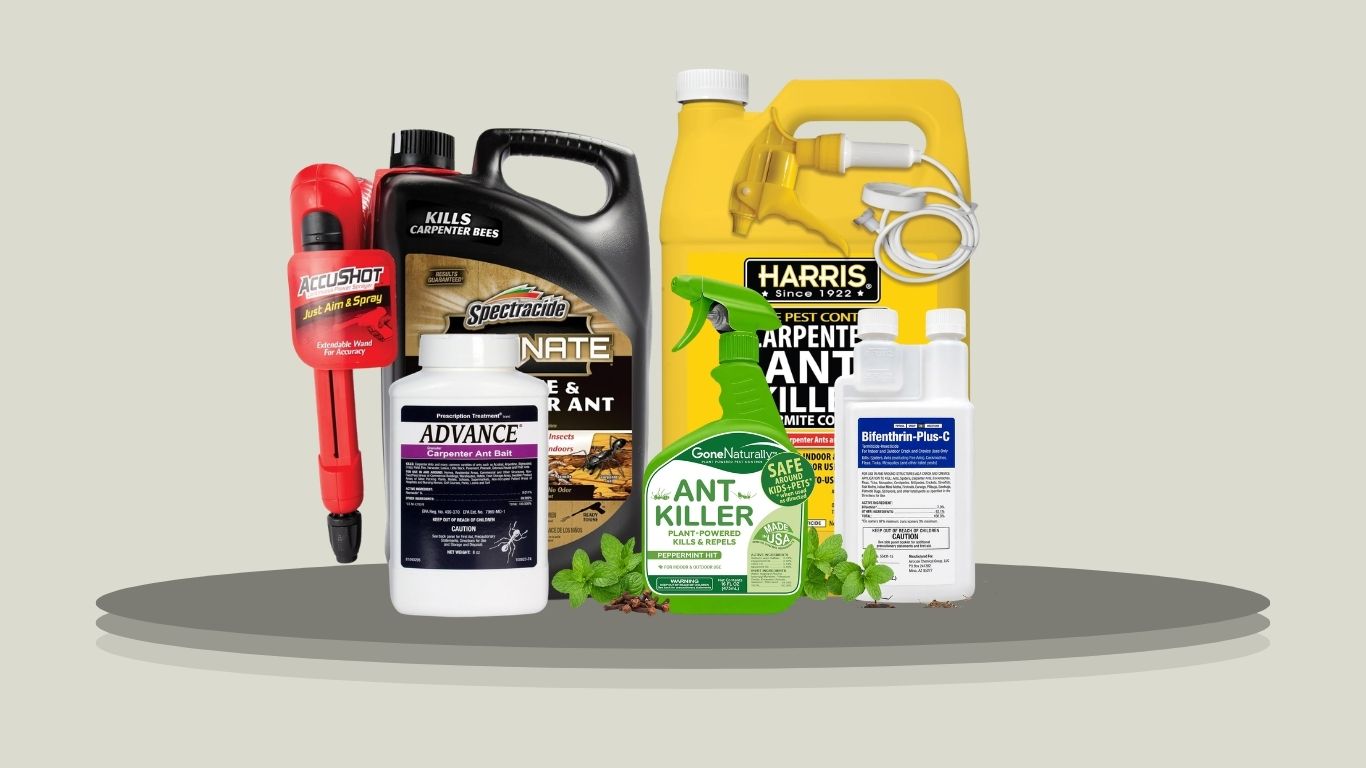
Carpenter ants can damage wood structures over time, making early and effective control important for protecting your home. The best carpenter ant killers come in several forms, including sprays, granular baits, perimeter treatments, and insecticides designed to target active colonies and common entry areas. Some products work quickly on contact, while others are carried back to the nest for broader control. In this guide, we review 8 of the best carpenter ant killers based on application method, coverage, ease of use, and overall pest-control performance.
1. Spectracide Terminate Termite & Carpenter Ant Killer
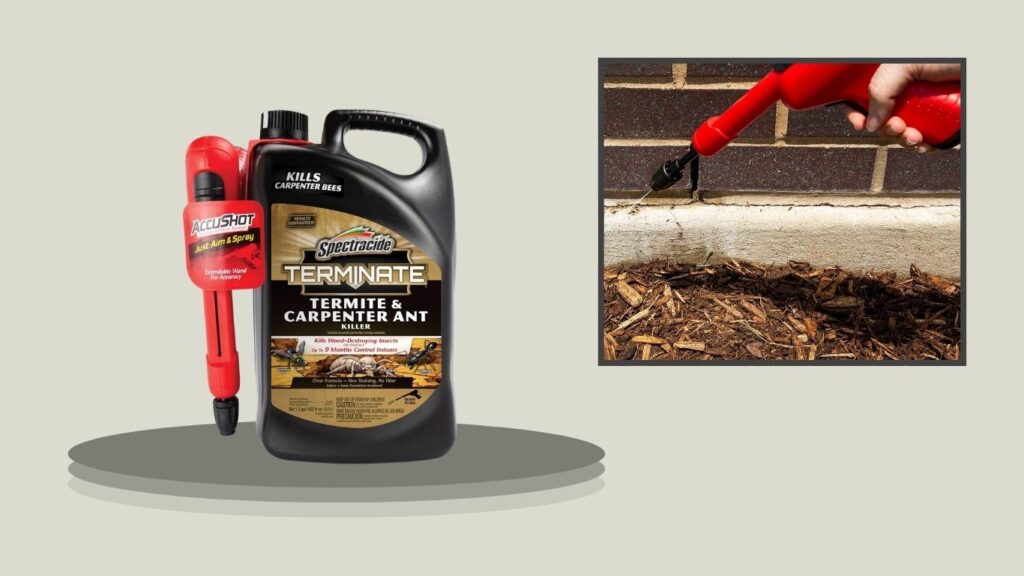
Spectracide Terminate Termite & Carpenter Ant Killer with AccuShot Sprayer is designed for homeowners dealing with carpenter ants and other wood-destroying insects around the house. Its ready-to-use formula works indoors and outdoors, while the continuous-power sprayer makes targeted application easier around foundations, cracks, baseboards, decks, and other problem areas. The manufacturer states that it kills carpenter ants on contact and provides residual indoor control for up to nine months.
Key Features
- Ready-to-use 1.33-gallon formula
- AccuShot continuous-power sprayer
- Contains 0.03% lambda-cyhalothrin
- Kills carpenter ants and other listed insects
- Suitable for indoor and outdoor applications
- Clear, non-staining formula
- Designed for precise crack, crevice, and perimeter treatment
- Provides up to nine months of indoor carpenter-ant control when used as directed
Why It’s Best for Targeted Carpenter Ant Control
One of the strongest features of this Spectracide treatment is its combination of ready-to-use insecticide and powered application. Carpenter ants frequently travel along foundations, wall edges, plumbing openings, decks, and wooden structures. The AccuShot wand helps direct the spray into these specific locations without the repeated hand pumping required by many standard trigger bottles.
This makes it particularly practical for homeowners treating several problem areas around a property.
Performance, Coverage & Ease of Application
The formula kills exposed carpenter ants on contact and can be used around foundations, porches, woodpiles, fences, decks, baseboards, cracks, and other labeled locations. The continuous sprayer is especially convenient when treating larger perimeter areas because it provides steady application with less hand effort.
Because it is already mixed, there is no measuring or dilution required. Users should always follow the product label carefully and keep people and pets away from treated areas until the spray has dried.
Overall Verdict
Spectracide Terminate is a strong choice for homeowners who want a convenient, ready-to-apply carpenter ant treatment rather than mixing concentrates or setting multiple bait stations. The powered AccuShot sprayer, indoor/outdoor versatility, contact-kill performance, and residual indoor protection give it a practical advantage for treating both active ant locations and common entry areas around the home.
2. TERRO Perimeter Ant Bait Plus
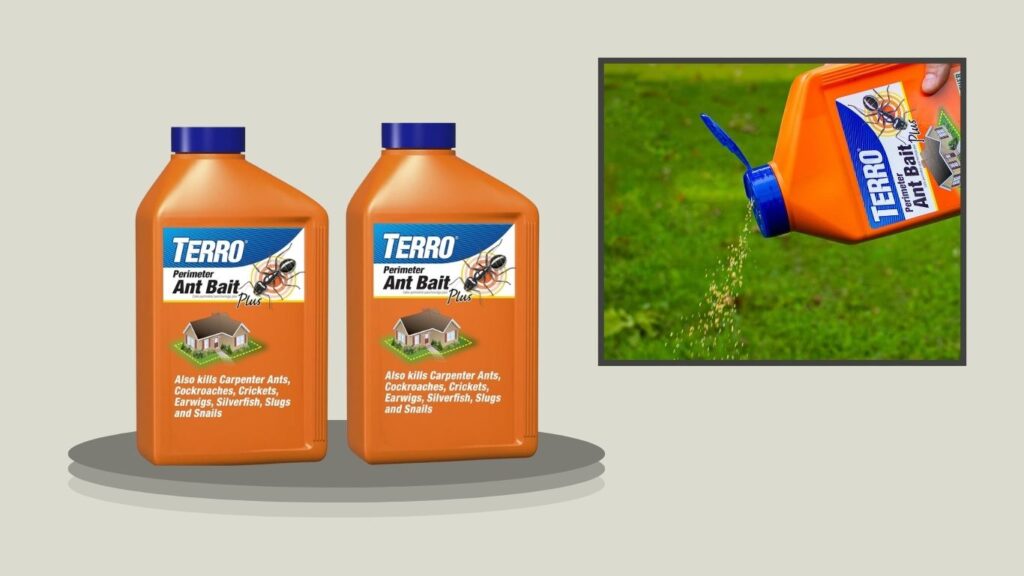
TERRO Perimeter Ant Bait Plus is a practical outdoor solution for homeowners who want to target carpenter ants before they move indoors. Instead of working only through direct contact, these weather-resistant bait granules attract foraging ants, allowing them to carry the bait back toward the colony. The 2-pound shaker container also makes perimeter application straightforward around homes and other problem areas.
Key Features
- Ready-to-use granular ant bait
- Targets carpenter ants and several other listed pests
- Weather-resistant formula
- Protection for up to four weeks
- Convenient 2-pound shaker container
- Designed primarily for outdoor perimeter treatment
- Can be applied around trees, stumps, and firewood areas
Why It’s Best for Outdoor Colony Control
The main advantage of TERRO Perimeter Ant Bait Plus is how it works with normal ant-foraging behavior. Carpenter ants are attracted to the bait and can carry it back toward the colony rather than simply being killed immediately at the surface.
That makes this product particularly appealing when carpenter ants are active around foundations, landscaping, wood piles, trees, or other exterior locations. Creating a treated perimeter can also help address ant activity before workers establish regular routes into the house.
Performance & Application Convenience
The weather-resistant granules provide protection for up to four weeks according to TERRO. The shaker-style container eliminates the need for a separate spreader and makes it easier to distribute bait along selected perimeter areas.
For carpenter ants, the label also provides directions for treating ant trails, trees, stumps, firewood piles, and other possible nesting areas. Always follow the labeled application rate and keep children and pets away during application.
Overall Verdict
TERRO Perimeter Ant Bait Plus stands out for people who want colony-oriented outdoor control rather than another contact spray. Its long-lasting granules, simple shaker application, and carpenter-ant labeling make it especially useful for protecting the exterior perimeter of a property.
3. BASF Advance Granular Carpenter Ant Bait
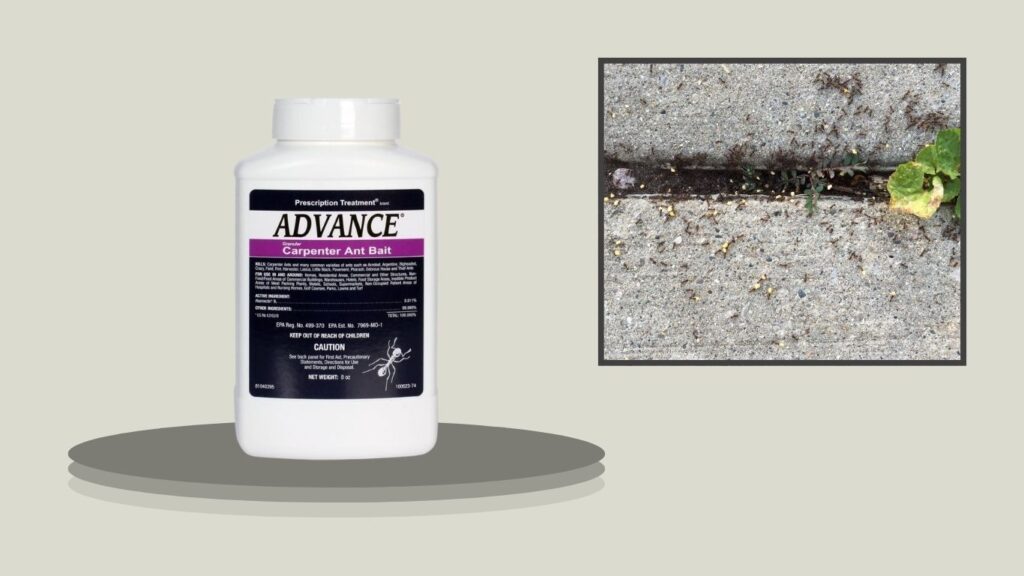
BASF Advance Granular Carpenter Ant Bait is specifically formulated with large granules and a proprietary attractant blend intended for carpenter ants and other difficult-to-control large ants. Unlike sprays that primarily target exposed workers, this bait is designed to be collected by foraging ants. It can be used indoors or outdoors according to the product label, giving it considerable flexibility for targeted carpenter-ant management.
Key Features
- Specifically designed for carpenter ants
- Contains 0.011% abamectin B1
- Large grit size suited to larger ants
- Proprietary blend of attractants
- Suitable for indoor and outdoor use
- Available for perimeter and targeted treatments
- Colony-focused baiting approach
Why It’s Best for Carpenter Ant Baiting
This BASF product has an important advantage: carpenter ants are its primary target rather than simply one insect on a long pest list. Its larger bait particles are designed with larger ant species in mind.
Foraging carpenter ants pick up food and return to their colony, so baiting uses that natural behavior as part of the control process. This makes Advance particularly interesting when the nest itself is difficult to locate or reach directly.
Performance & Versatility
Advance can be incorporated into several treatment strategies, including perimeter, mound, broadcast, and bait-station applications where allowed by the label. The granules can therefore work in locations where a liquid spray may be inconvenient.
Because bait effectiveness depends on ants accepting and carrying the food, avoid contaminating bait with other insecticides and follow the current label carefully.
Overall Verdict
BASF Advance Granular Carpenter Ant Bait is one of the more specialized choices in this roundup. Its carpenter-ant-focused formulation, large grit size, and indoor/outdoor versatility make it especially suitable for homeowners who prefer a baiting strategy aimed beyond the individual ants they can see.
4. GoneNaturally Peppermint Ant Killer & Repellent Spray
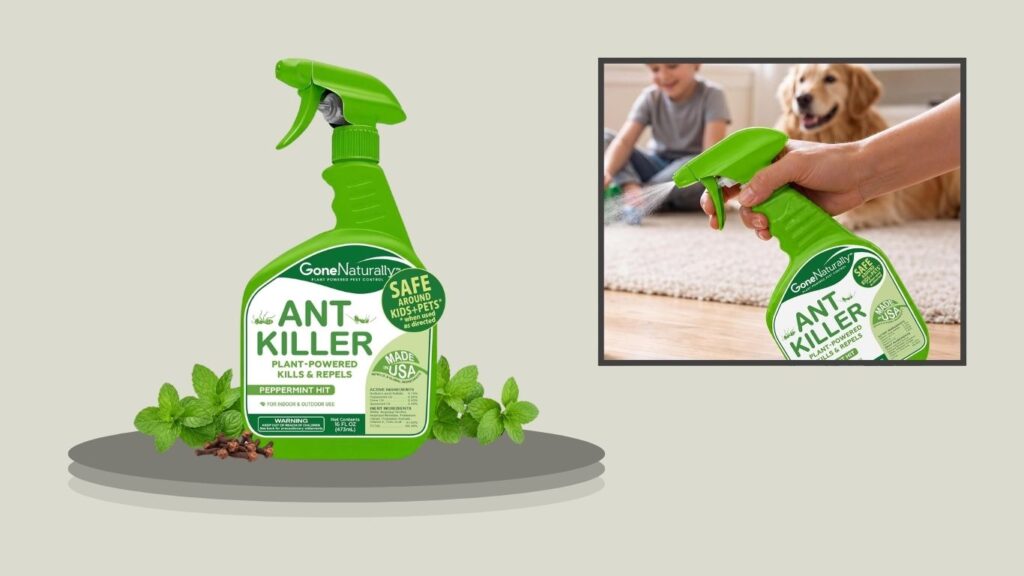
GoneNaturally Peppermint Ant Killer & Repellent Spray provides a different approach for homeowners who prefer an essential-oil-based product. The 16-ounce ready-to-use formula combines peppermint, clove, and spearmint oils and is marketed for killing ants on contact while also repelling them from treated locations. Carpenter ants are among the ant species specifically listed by the manufacturer.
Key Features
- Plant-based essential-oil formula
- Contains peppermint, clove, and spearmint oils
- 16-ounce ready-to-use spray
- Targets carpenter and other listed ants
- Designed to kill on contact and repel
- Suitable for labeled indoor and outdoor areas
- Fresh peppermint scent
Why It’s Best for a Plant-Based Approach
GoneNaturally stands apart from conventional synthetic insecticide products in this list. Its essential-oil formula may be particularly attractive to users who want a peppermint-based treatment for kitchens, baseboards, windowsills, patios, and similar targeted locations.
There is also no concentrate to measure or granular bait to distribute. A quick spray application makes it convenient for treating individual ants, visible trails, and frequently used entry points.
Performance & Everyday Application
The manufacturer describes the spray as fast acting on direct contact while leaving a peppermint-scented repellent treatment on surfaces. Because the bottle is ready to use, it works well for smaller, localized ant problems where precise application matters.
Essential oils still need responsible handling. Apply only as directed, never spray pets or pet bedding, and allow treated areas to dry according to the product instructions.
Overall Verdict
GoneNaturally is a strong fit for users specifically seeking a plant-based carpenter-ant spray. It may not replace a colony-targeting bait for a substantial hidden nest, but its convenient application, contact action, and repellent properties make it appealing for routine treatment of visible carpenter-ant activity.
5. BioAdvanced Carpenter Ant & Termite Killer Plus Concentrate
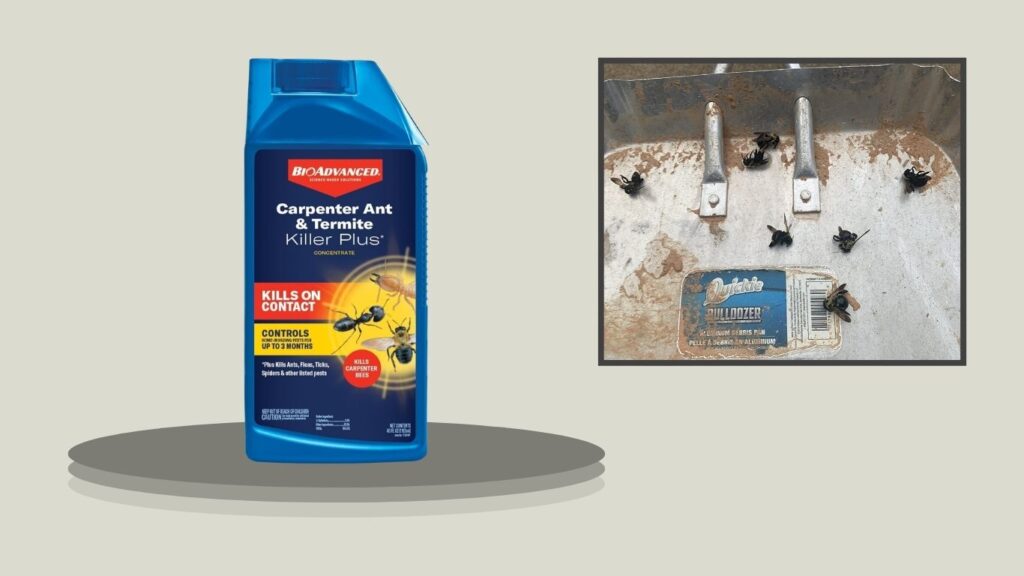
BioAdvanced Carpenter Ant & Termite Killer Plus is a concentrated insecticide designed for homeowners who need broader exterior treatment rather than a small ready-to-use bottle. The 40-ounce concentrate targets carpenter ants, termites, carpenter bees, and numerous other listed pests. Because it is concentrated, it is particularly useful when larger lawns, foundations, decks, landscapes, or structural perimeter areas require treatment.
Key Features
- 40-ounce concentrated formula
- Targets carpenter ants and termites
- Kills listed insects on contact
- Broad-spectrum pest control
- Suitable for labeled exterior structural areas
- Useful around lawns, landscapes, foundations, and decks
- Concentrated design provides substantial treatment capacity
Why It’s Best for Large Treatment Areas
The greatest advantage of BioAdvanced is coverage flexibility. Small trigger bottles are convenient for spot treatment, but they can become inefficient when ant activity extends around foundations, decks, patios, landscaping, or other broad exterior areas.
A concentrate allows users to prepare the amount needed according to label directions and apply it with suitable spraying equipment. This makes it particularly attractive for homeowners who routinely maintain a larger perimeter.
Performance & Coverage
BioAdvanced describes this product line as providing contact control against carpenter ants and other listed pests. The concentrate can be applied to multiple exterior areas where wood-infesting insects may be active.
Accurate dilution is essential with concentrates, so measurement and application should follow the current product label rather than estimated mixing ratios.
Overall Verdict
BioAdvanced Carpenter Ant & Termite Killer Plus makes sense for users who want one concentrated product capable of treating carpenter ants as well as several other structural and outdoor pests. Its broad application range and concentrate format give it an advantage for larger properties and more extensive perimeter treatments.
6. Harris Carpenter Ant Killer & Termite Control Treatment
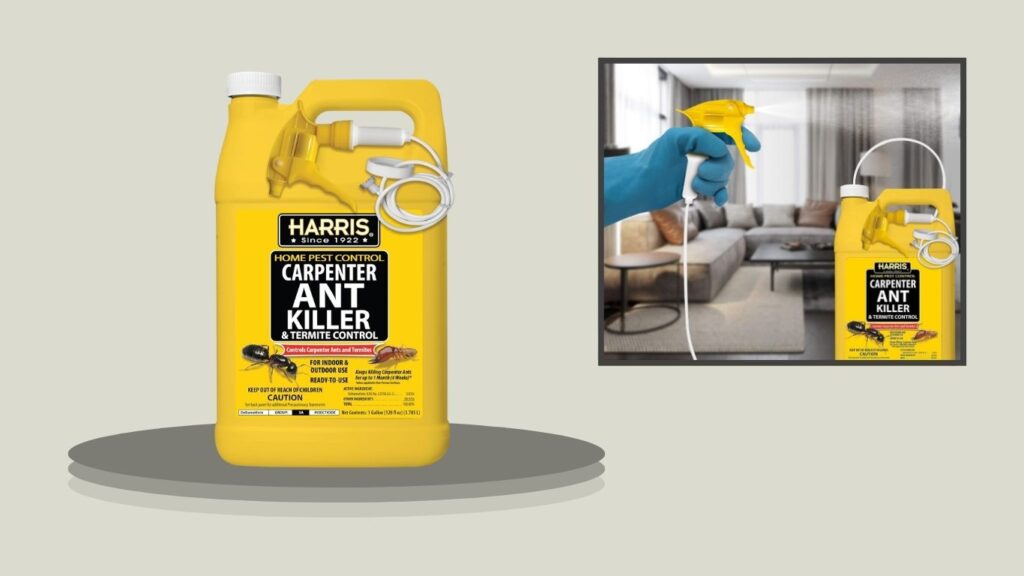
Harris Carpenter Ant Killer & Termite Control Treatment comes in a large 128-ounce ready-to-use container designed for carpenter ants, termites, and related pest problems. It uses deltamethrin and combines direct-contact killing action with residual treatment. The formula is described as odorless and non-staining, making it a convenient option when substantial treatment volume is desired without mixing a concentrate.
Key Features
- Large 128-ounce container
- Ready-to-use liquid formula
- Contains deltamethrin
- Kills carpenter ants on contact
- Also labeled for termite control
- Odorless and non-staining formulation
- Trigger sprayer for targeted application
- Provides residual carpenter-ant control
Why It’s Best for Ready-to-Use Large-Volume Treatment
Harris fills the gap between small spot-treatment bottles and concentrates requiring preparation. A full gallon gives users plenty of ready-mixed treatment for multiple areas while avoiding measuring and dilution.
This format can be particularly practical when carpenter ants are appearing around several structural locations or when users want enough product available for repeat treatments permitted by the label.
Performance & Long-Lasting Control
The product is designed to kill carpenter ants on contact, while seller information describes continued carpenter-ant control for up to one month after treatment. Its non-staining, odorless characteristics are also useful when treating appropriate surfaces where a strong lingering chemical odor would be undesirable.
As with any residual insecticide, follow the labeled locations, application rates, drying requirements, and precautions around children and pets.
Overall Verdict
Harris Carpenter Ant Killer & Termite Control is particularly attractive for homeowners who want substantial ready-to-use capacity without handling a concentrate. The gallon size, trigger sprayer, contact action, and residual protection create a practical combination for recurring carpenter-ant problems around labeled treatment areas.
7. Advance 375A Select Granular Ant Bait
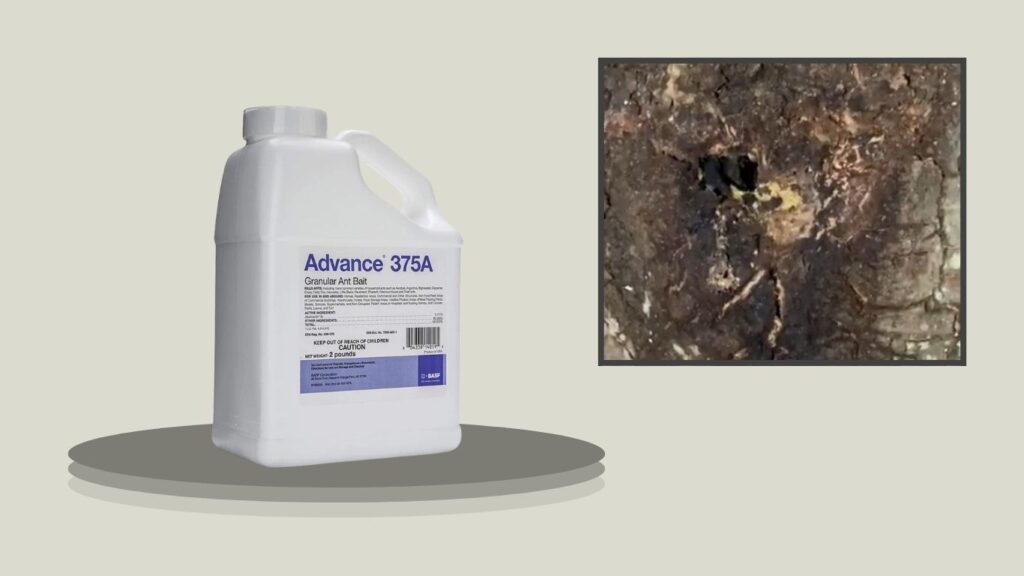
Advance 375A Select Granular Ant Bait is a colony-oriented treatment designed for carpenter ants and several other ant species. Rather than relying on immediate contact action, the granules are intended for foraging ants to collect as food. Its versatile application options make it useful around homes, landscapes, structural perimeters, and selected indoor locations when applied according to the product label.
Key Features
- Granular ant-bait formulation
- Contains abamectin as the active ingredient
- Specifically labeled for carpenter ants
- Also targets other listed ant species
- Suitable for indoor and outdoor applications
- Can be used around structural perimeters
- Designed for colony-focused ant management
Why It’s Best for Colony-Focused Treatment
Advance 375A is particularly useful when simply killing visible carpenter ants is not enough. Worker ants typically leave the nest to search for food, so an attractive bait can take advantage of this natural foraging behavior.
This approach is valuable when the colony is hidden inside wood, walls, trees, or another inaccessible area. Instead of requiring direct access to every ant, the treatment focuses on the workers moving between feeding locations and the nest.
Performance & Application Flexibility
The product is labeled for carpenter ants and can be used in and around residential and commercial structures. Its granular format allows users to focus applications around trails, perimeter locations, and other areas where ants are actively foraging.
Baits generally work best when ants are actively feeding on them. Avoid placing repellent sprays directly over bait locations, since this can interfere with ant feeding. Application amounts and locations should always follow the current label.
Overall Verdict
Advance 375A Select Granular Ant Bait is a practical choice for homeowners who want to target carpenter ants through their feeding behavior. Its granular design, carpenter-ant labeling, and indoor/outdoor versatility make it particularly attractive when the nest cannot easily be located or directly treated.
8. Bifenthrin Plus C Termiticide/Insecticide
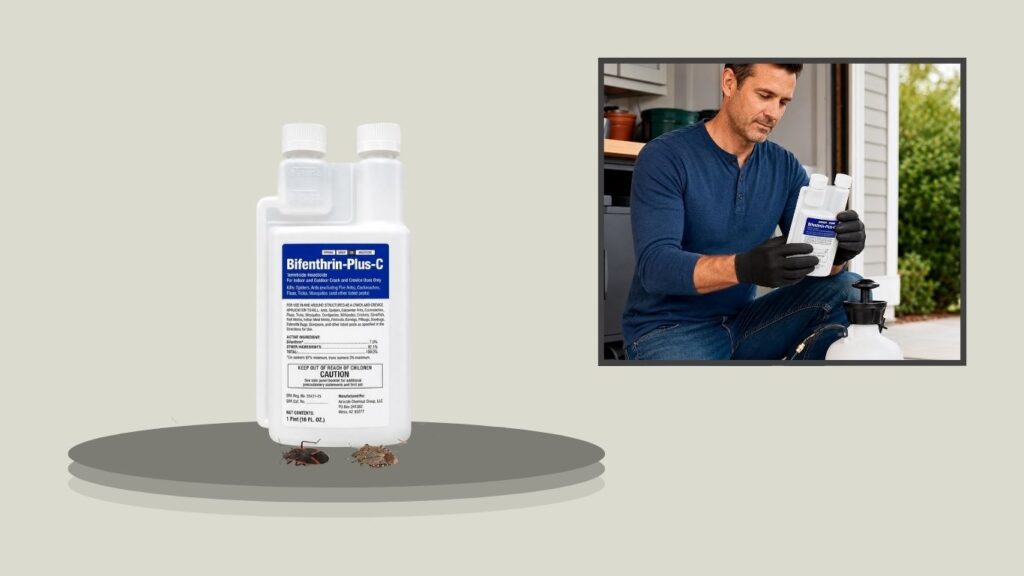
Bifenthrin Plus C Termiticide/Insecticide is a concentrated pest-control treatment with specific label directions for carpenter ants both indoors and outdoors. It can be used around ant trails, entry points, cracks, crevices, structural voids, trees, fencing, decks, and other permitted locations. This makes it one of the more versatile options for homeowners dealing with carpenter ants across several areas of a property.
Key Features
- Concentrated termiticide and insecticide
- Specifically labeled for carpenter ants
- Indoor and outdoor application directions
- Suitable for cracks, crevices, and spot treatments
- Can treat selected structural voids and galleries
- Useful around doors, windows, and exterior perimeters
- Also labeled for numerous other household pests
Why It’s Best for Broad Carpenter Ant Treatment
The standout advantage is the variety of carpenter-ant treatment locations included on the label. Indoors, it can be applied to appropriate cracks, crevices, corners, and other areas where ants forage. Outdoors, the label includes ant trails, nests, building perimeters, tree trunks, and selected wooden structural materials.
That versatility can be valuable when carpenter ants are appearing in more than one part of a property.
Performance, Coverage & Application
Because Bifenthrin Plus C is a concentrate, it requires proper dilution before use. The EPA-approved label provides specific dilution and application instructions depending on where and how carpenter ants are being treated. It also states that nests should be treated when possible for improved control.
Concentrated insecticides require more preparation than ready-to-use sprays, but they can provide greater flexibility for larger or more complex treatment jobs. Users should follow the label exactly, including restrictions for indoor residential applications.
Overall Verdict
Bifenthrin Plus C is a strong option for homeowners who need a versatile concentrated treatment rather than a simple spot spray. Its detailed carpenter-ant directions, indoor and outdoor applications, and ability to treat multiple types of problem areas make it particularly useful for more extensive carpenter-ant management.
FAQs
Choosing the right carpenter ant killer depends on where the ants are active, whether the colony can be located, and whether you prefer bait, spray, granules, or a concentrated treatment. Carpenter ants can nest inside damaged or moisture-affected wood, so controlling visible workers alone may not always address the underlying colony.
1. What is the best type of killer for carpenter ants?
Both baits and appropriately labeled insecticide treatments can be useful. Baits are particularly valuable when worker ants can carry food back toward a hidden colony, while sprays and residual treatments can help target trails, nests, entry points, cracks, and other active areas. The best approach often depends on the location and severity of the infestation.
2. How long does it take to get rid of carpenter ants?
The time needed varies considerably. Contact treatments may kill exposed ants quickly, while bait treatments can take longer because workers need to feed on the bait and transport it within the colony. Larger or multiple colonies can require continued monitoring and additional treatment.
3. Are carpenter ant baits better than sprays?
Neither method is automatically better for every situation. Baits can be useful for reaching hidden colonies through foraging workers, whereas sprays are helpful for targeted treatment of nests, trails, cracks, and entry points. In some situations, an integrated approach may be more effective, provided products are used according to their labels.
4. Where should carpenter ant killer be applied?
Common treatment locations include visible ant trails, cracks, wall gaps, doors, windows, foundations, decks, damaged wood, and other areas where carpenter ants are actively traveling. Exact application locations vary by product, so always follow the pesticide label.
5. How do I know if carpenter ants are damaging my home?
Possible signs include large ants regularly appearing indoors, piles of coarse wood debris near openings, rustling sounds inside walls or wood, and smooth galleries excavated within damaged wood. Carpenter ants do not eat wood like termites; they remove it while creating nesting galleries. Persistent activity inside structural wood may warrant inspection by a qualified pest-control professional.
