
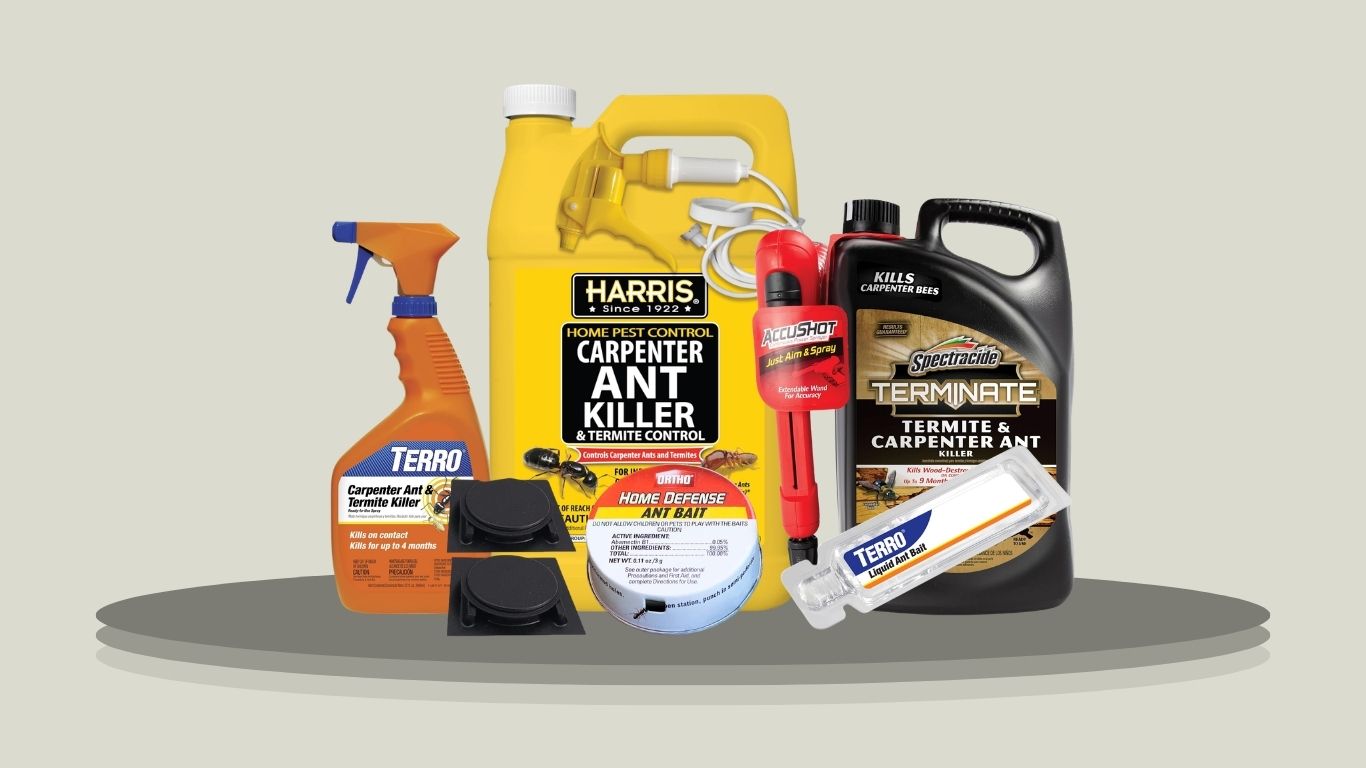
Carpenter ants can quickly become a serious problem when they begin nesting inside walls, wooden structures, or other hidden areas around the home. Using the right exterminator trap or spray can help control active ants while also targeting colonies more effectively. In this guide, we review 10 of the best carpenter ant exterminator traps and sprays, including slow-acting baits, liquid bait stations, ready-to-use sprays, and outdoor treatments. These options are designed for different infestation levels, treatment areas, and household needs.
1. Slow-Acting Carpenter Ant Bait – Indoor Ant Elimination
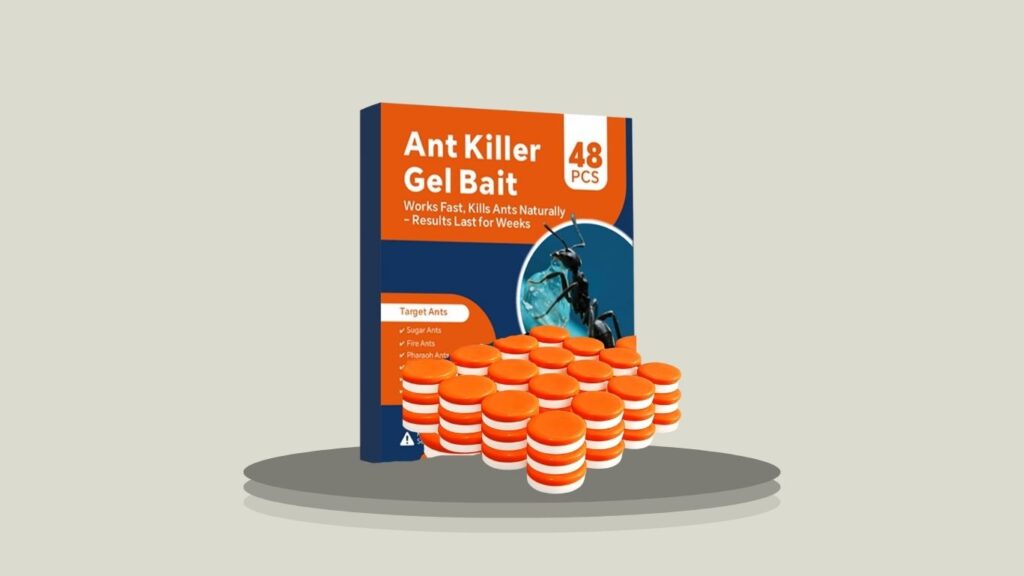
This slow-acting carpenter ant bait is designed for homeowners who want to target ants around kitchens, bathrooms, entry points, and other indoor problem areas. Rather than focusing only on visible ants, its bait-style approach allows foragers to interact with the treatment and potentially carry it back toward the colony. The simple placement method also makes it convenient for treating multiple active areas around the home.
Key Features
- Slow-acting bait approach for carpenter ant control
- Designed for placement in common household problem areas
- Useful near ant trails, cracks, corners, and entry points
- Requires no complicated spraying equipment
- Suitable for treating several locations at the same time
- Convenient option for ongoing indoor ant management
Why It’s Best For Indoor Carpenter Ant Problems
This option is particularly useful when carpenter ants repeatedly appear in the same indoor locations. Because carpenter ants may travel considerable distances from their nesting area while searching for food, treating only the ants you see may not address the underlying activity.
A slow-acting bait provides a more strategic approach. Placing it close to established trails or frequently visited areas gives worker ants an opportunity to encounter the bait naturally. It can be especially practical around bathrooms, utility areas, kitchens, and other places where moisture or food sources encourage ant activity.
Performance & Ease of Use
The biggest advantage is its straightforward setup. There is no need to mix concentrates or cover large surfaces with spray. Correct placement is more important than using a large amount of product.
For better results, avoid disturbing active ant trails immediately after placing the bait. Slow-acting products may take time to reduce activity, so they are better suited to gradual colony control than instant knockdown. Keeping bait locations clean and checking them periodically can also improve consistency.
Pros, Cons & Overall Verdict
Pros
- Easy indoor placement
- Targets active foraging ants
- No complicated application process
- Practical for multiple infestation points
Cons
- Results may not be immediate
- Correct placement is important
- Severe infestations may require additional treatment
Overall Verdict: This slow-acting carpenter ant bait is a practical first-line option for homeowners dealing with recurring indoor ant trails. Its simple bait-based design makes it especially appealing when the goal is longer-term control rather than merely killing visible ants on contact.
2. TERRO T300 Liquid Ant Baits
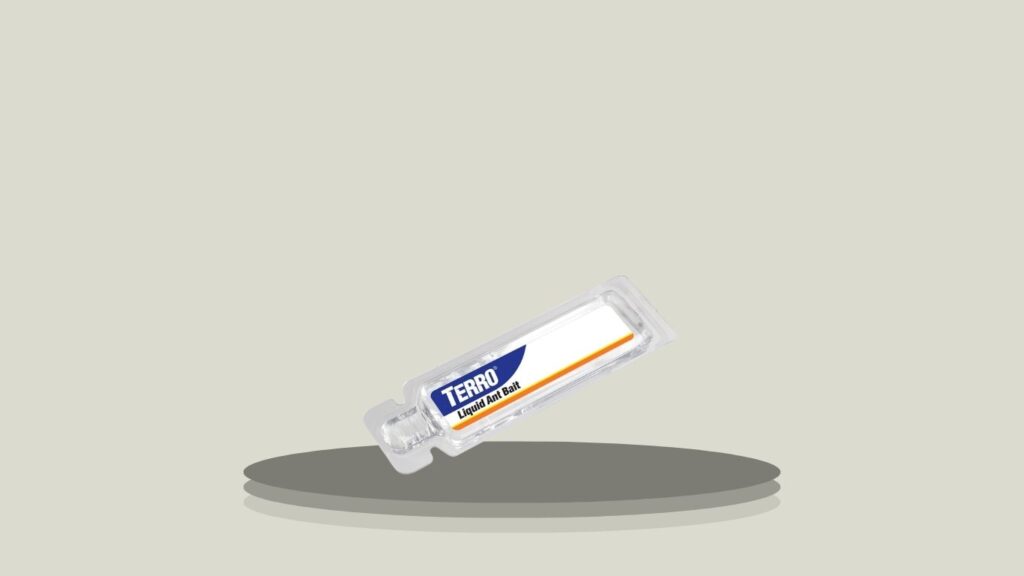
TERRO T300 Liquid Ant Baits offer a simple bait-based approach for dealing with ants that repeatedly travel through kitchens, bathrooms, baseboards, and other indoor areas. The pre-filled stations reduce the need for measuring or mixing treatments, making them convenient for household use. Their slow-acting strategy is intended to give foraging ants enough time to interact with the bait before returning toward their colony.
Key Features
- Pre-filled liquid bait stations
- Simple, ready-to-place design
- Slow-acting baiting approach
- Suitable for common indoor ant trails
- Multiple stations can cover different problem areas
- No spraying or mixing required
Why It’s Best For Convenient Indoor Baiting
The T300 stands out for convenience. Instead of spraying every ant that appears, users can position stations near established trails and allow ants to encounter the bait during normal foraging.
This makes the product particularly useful in areas where spraying may be inconvenient, such as beneath cabinets, beside appliances, or around baseboards. Multiple stations also make it easier to treat several activity points at once.
Performance & Durability
Liquid bait works differently from contact insecticides, so patience is important. Ant activity may remain visible while workers continue visiting the bait.
The enclosed station helps keep the bait contained and simplifies monitoring. Placement should be checked regularly, especially when ant traffic changes. Avoid spraying strong repellents directly around bait stations, as this may discourage ants from approaching them.
Pros, Cons & Overall Verdict
Pros
- Convenient pre-filled stations
- Easy indoor placement
- No mixing required
- Useful for recurring ant trails
Cons
- Not designed for instant knockdown
- Placement strongly affects results
- Additional treatment may be needed for major carpenter ant infestations
Overall Verdict: TERRO T300 is a convenient choice for households that prefer an easy, low-mess baiting method. It works particularly well as part of a broader carpenter ant control strategy when active trails can be identified.
3. Spectracide Terminate Carpenter Ant Killer AccuShot
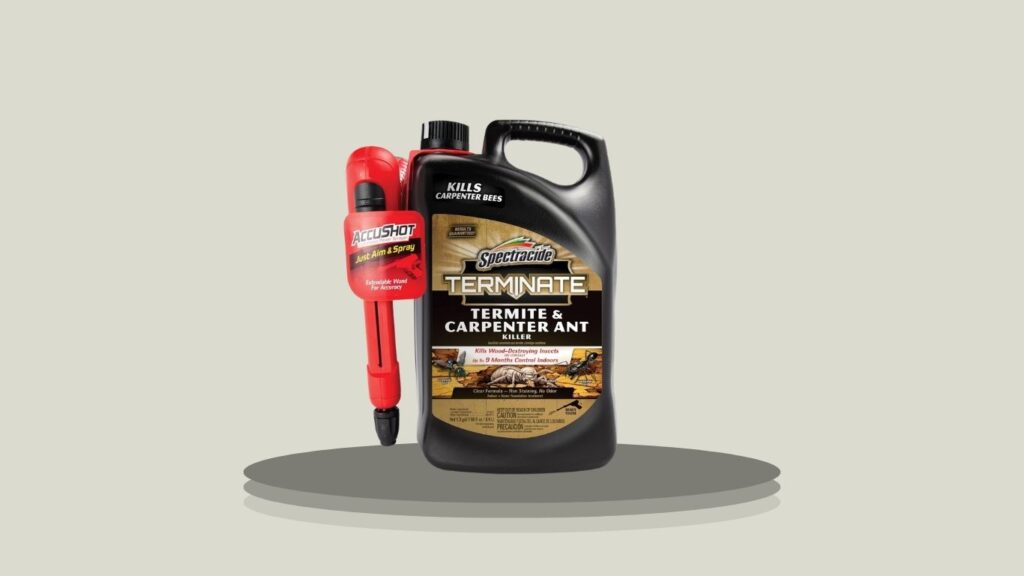
Spectracide Terminate with an AccuShot-style applicator is designed for homeowners who prefer a targeted liquid treatment for carpenter ants and other wood-infesting pest activity. Unlike bait stations, this option focuses on applying insecticide directly to accessible areas where insects are active. The applicator can make it easier to reach cracks, edges, foundations, and other locations without relying on a conventional trigger bottle.
Key Features
- Ready-to-use liquid treatment
- Targeted AccuShot-style application
- Designed for carpenter ant and termite control
- Useful around cracks and entry points
- Suitable for spot treatments
- No concentrate mixing required
Why It’s Best For Targeted Applications
This type of treatment is useful when you know where carpenter ants are entering or traveling. Rather than treating an entire room, the applicator lets you concentrate the product along specific cracks, gaps, or structural edges.
It can complement baiting by helping manage visible activity around entry points and accessible nesting areas. For homes with several outdoor-to-indoor pathways, targeted treatment can also make pest-control routines more organized.
Performance & Durability
A ready-to-use spray offers faster contact control than slow-acting bait, making it suitable when visible ants need immediate attention.
Its long-term performance depends on treatment location, environmental exposure, and whether the underlying colony is reached. Outdoor applications exposed to rain or heavy weather may require monitoring and reapplication according to the product label.
Pros, Cons & Overall Verdict
Pros
- Targeted application
- Ready to use
- Useful around entry points
- Convenient for cracks and crevices
Cons
- May not reach hidden colonies
- Requires careful application
- Baiting may still be useful for colony-level control
Overall Verdict: Spectracide Terminate is a practical option for homeowners who want direct, targeted treatment around carpenter ant entry points and active areas.
4. Slow-Acting Carpenter Ant Dual-Sided Bait Stations

These slow-acting dual-sided carpenter ant bait stations are designed to provide accessible baiting points along active ant trails. The station format offers a cleaner alternative to loose bait and can be positioned around common household infestation areas. For homeowners who continue seeing carpenter ants in predictable locations, strategically placed stations may help reduce activity without requiring repeated spraying.
Key Features
- Slow-acting carpenter ant bait
- Dual-sided station design
- Simple placement around ant trails
- Suitable for indoor household use
- No liquid spraying required
- Multiple stations can target several locations
Why It’s Best For Multiple Ant Activity Areas
The main benefit of bait stations is flexibility. Carpenter ants may enter through one area while appearing in several rooms, so having multiple bait points allows for broader coverage.
Stations can be positioned near walls, corners, cabinets, plumbing areas, and other locations where ants are regularly observed. Because the bait works gradually, worker ants have time to interact with it before returning toward other colony members.
Performance & Durability
Slow-acting stations are intended for gradual control rather than immediate results. Their effectiveness depends heavily on placement and whether ants accept the bait.
Monitoring is important. If ants stop visiting one location, repositioning a station near a more active trail may improve results. Keeping competing food sources cleaned up can also make bait stations more attractive to foraging ants.
Pros, Cons & Overall Verdict
Pros
- Easy to position
- Clean station-style treatment
- Good for multiple ant trails
- No spraying equipment needed
Cons
- Takes time to work
- Ant acceptance can vary
- Hidden structural nests may need professional attention
Overall Verdict: These dual-sided bait stations are well suited to homeowners who want a straightforward way to manage several recurring carpenter ant trails with minimal mess.
5. Harris Carpenter Ant & Termite Control Treatment
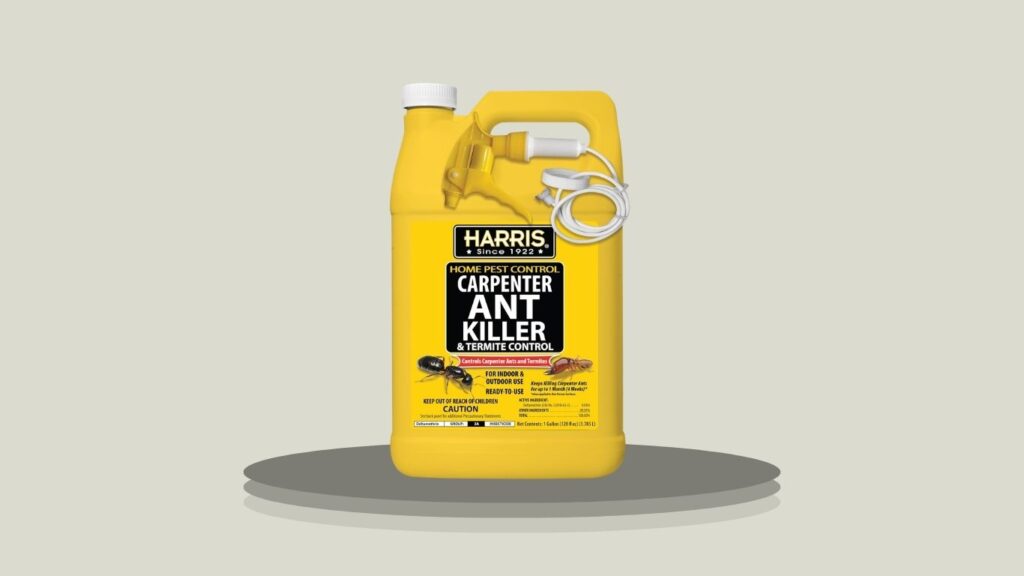
Harris Carpenter Ant & Termite Control Treatment provides a spray-based option for addressing carpenter ants around accessible structural areas. It can be useful when insects are seen traveling along foundations, wooden surfaces, entry gaps, or other identifiable routes. For homeowners who prefer direct application over bait stations, this style of treatment can become part of a broader strategy that combines immediate control with preventive measures.
Key Features
- Designed for carpenter ants and termites
- Ready-to-apply treatment
- Useful for cracks and structural entry areas
- Suitable for targeted pest-control applications
- Helps address visible ant activity
- Can complement bait-based control methods
Why It’s Best For Structural Treatment Areas
Carpenter ants often use cracks, gaps, damp wood, and structural edges as travel routes. A targeted treatment allows these specific locations to receive attention without requiring bait stations throughout the entire property.
It is particularly useful where ant movement can be traced to accessible entry points. Treating those locations while correcting moisture problems and sealing gaps can provide a more complete pest-management approach.
Performance & Durability
Spray treatments can provide more immediate control of exposed ants compared with slow-acting bait. They can also create treated areas where ants frequently travel.
However, carpenter ant nests may be located inside walls, roof voids, damaged wood, or other inaccessible spaces. Surface treatment alone may therefore need to be combined with inspection, moisture correction, and baiting.
Pros, Cons & Overall Verdict
Pros
- Direct application
- Useful around structural areas
- Targets visible carpenter ants
- Straightforward household treatment
Cons
- Hidden nests can be difficult to reach
- Requires careful label-directed use
- May need complementary bait treatment
Overall Verdict: Harris Carpenter Ant & Termite Control is a practical choice for targeted structural treatment, especially when carpenter ant pathways and entry points are easy to identify.
6. T1100 Carpenter Ant & Termite Killer Ready-to-Use Spray
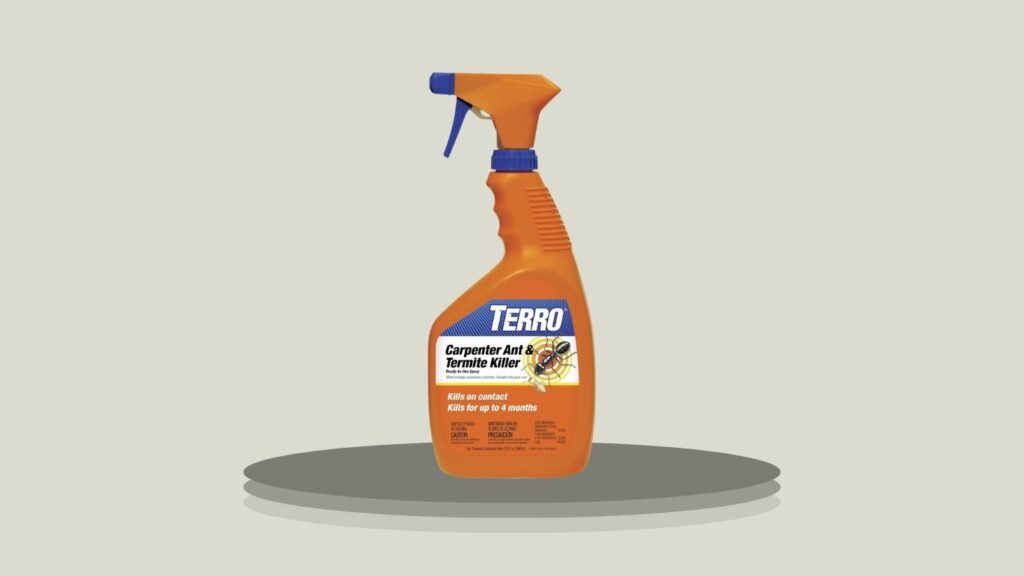
The T1100 Carpenter Ant & Termite Killer is a ready-to-use treatment aimed at homeowners who want a direct spray option for pest activity around the home. It is designed for targeted application rather than complicated mixing, making it suitable for spot treatment along known ant pathways, structural gaps, wooden areas, and other accessible locations where carpenter ants have been observed.
Key Features
- Ready-to-use formula
- Designed for carpenter ants and termites
- Suitable for spot applications
- No concentrate mixing required
- Useful around cracks and pest entry points
- Convenient for household pest-control routines
Why It’s Best For Ready-to-Use Treatment
One advantage of this product is simplicity. A ready-to-use formulation eliminates the measuring and dilution steps associated with concentrates, making treatment faster to prepare.
It is most useful when homeowners already know where ants are entering or traveling. Applying treatment strategically to those areas can be more efficient than spraying broad surfaces unnecessarily.
Performance & Durability
Direct sprays are helpful for controlling carpenter ants that are visible during treatment. Applications to cracks, gaps, and frequently used travel routes may also help reduce recurring activity.
Long-term results depend on whether the main colony is reached. Carpenter ants can maintain nests deep inside structural wood or wall cavities, which means persistent infestations may require baiting or professional inspection in addition to surface treatment.
Pros, Cons & Overall Verdict
Pros
- Ready to use
- No mixing required
- Convenient spot treatment
- Useful around known ant pathways
Cons
- May not eliminate inaccessible nests
- Requires careful treatment placement
- Repeat monitoring may be necessary
Overall Verdict: T1100 is a convenient direct-treatment option for homeowners who want a ready-to-use carpenter ant spray. It is best suited for accessible problem areas and works most effectively when combined with efforts to locate and correct the source of the infestation.
7. Slow-Acting Carpenter Ant Bait Stations
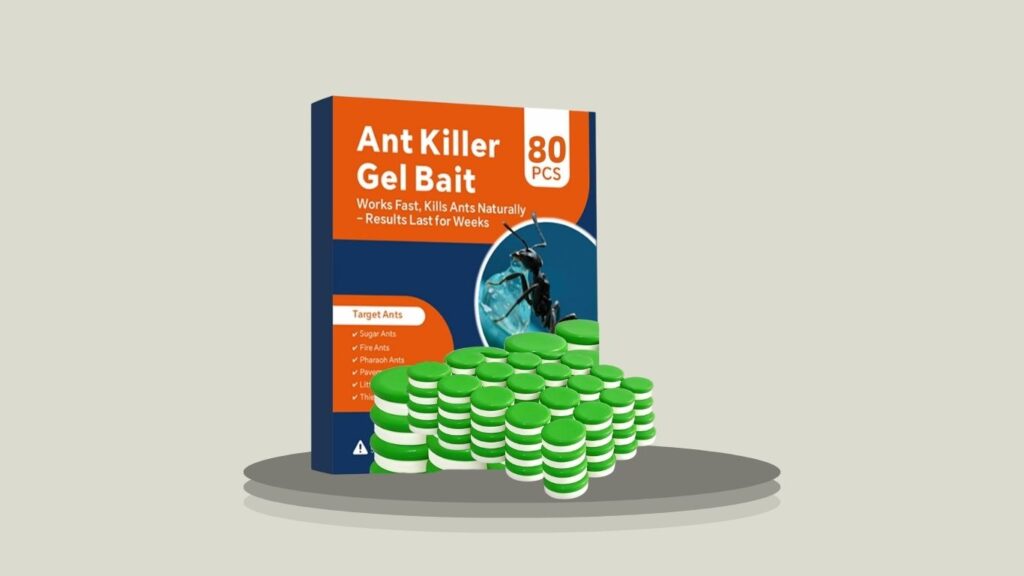
These slow-acting carpenter ant bait stations are designed for homeowners who want a simple way to target recurring ant activity without relying entirely on sprays. The stations can be positioned close to active trails, wall edges, entry points, or other areas where carpenter ants regularly appear. Their gradual baiting approach is intended to give worker ants time to interact with the bait and potentially carry it back toward the colony.
Key Features
- Slow-acting carpenter ant bait system
- Ready-to-place bait stations
- Suitable for indoor ant trails
- Helps reduce the need for frequent spraying
- Can be placed in multiple problem areas
- Convenient for ongoing monitoring
Why It’s Best For Recurring Ant Trails
This option is especially useful when carpenter ants repeatedly follow the same paths through a home. Placing bait near those routes lets the ants encounter the treatment naturally rather than forcing homeowners to chase individual ants with contact spray.
Bait stations can also work well near baseboards, cabinets, utility areas, and other low-traffic locations where ant movement is easy to identify.
Performance & Durability
Because the formula is slow acting, results may develop gradually. This can be beneficial for baiting because worker ants need time to return toward the nest after feeding.
The station design also helps keep the bait contained and organized. Regular monitoring is recommended so stations can be moved if ant traffic shifts to another location.
Pros, Cons & Overall Verdict
Pros
- Simple placement
- Useful for recurring trails
- Cleaner than loose bait
- Suitable for multiple locations
Cons
- Not designed for immediate knockdown
- Results depend on placement
- Large infestations may need additional treatment
Overall Verdict: These slow-acting stations are a convenient choice for homeowners who prefer a low-mess baiting method and want to target persistent carpenter ant activity over time.
8. EcoVenger Plant-Based Insect Killer & Residual Deterrent
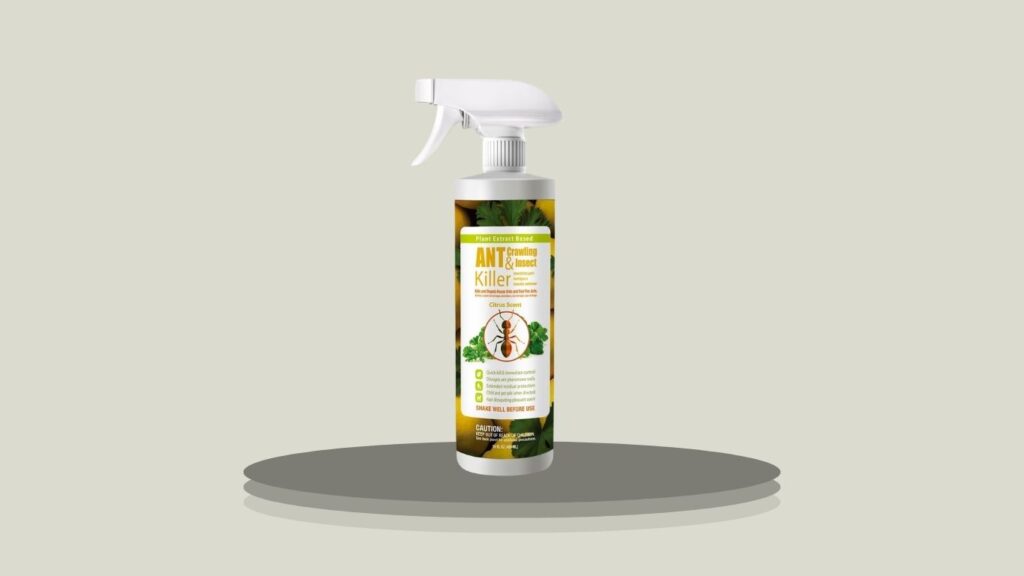
EcoVenger is a plant-based insect-control spray designed for users who prefer a botanical-style treatment for household pests. It provides direct contact control while also offering residual deterrence on treated surfaces. For carpenter ant management, it can be used around known travel routes, cracks, entry points, and other accessible areas where ants are frequently seen.
Key Features
- Plant-based insect-control formula
- Ready-to-use spray
- Provides contact pest control
- Offers residual deterrence
- Useful around cracks and entry points
- Suitable for targeted household applications
Why It’s Best For Plant-Based Pest Control
EcoVenger stands out for users who want an alternative to more conventional insecticide sprays. Its ready-to-use format makes it simple to apply around common ant pathways without preparing or diluting concentrates.
It can be particularly useful around doors, windows, wall edges, and other locations where carpenter ants enter the home.
Performance & Durability
The spray works best when applied directly to active areas and known ant routes. Its residual effect can help maintain treated zones after the initial application.
However, carpenter ants may nest deep inside wall cavities or damaged wood, so surface spraying alone may not address the entire infestation. Combining treatment with baiting, sealing entry points, and moisture correction can improve overall control.
Pros, Cons & Overall Verdict
Pros
- Plant-based formula
- Easy ready-to-use application
- Contact and residual action
- Useful for targeted indoor treatment
Cons
- Hidden colonies may remain untreated
- May require repeat applications
- Proper placement is still important
Overall Verdict: EcoVenger is a practical option for households seeking a plant-based carpenter ant spray that combines direct treatment with residual deterrence.
9. Professional-Strength Slow-Acting Carpenter Ant Bait
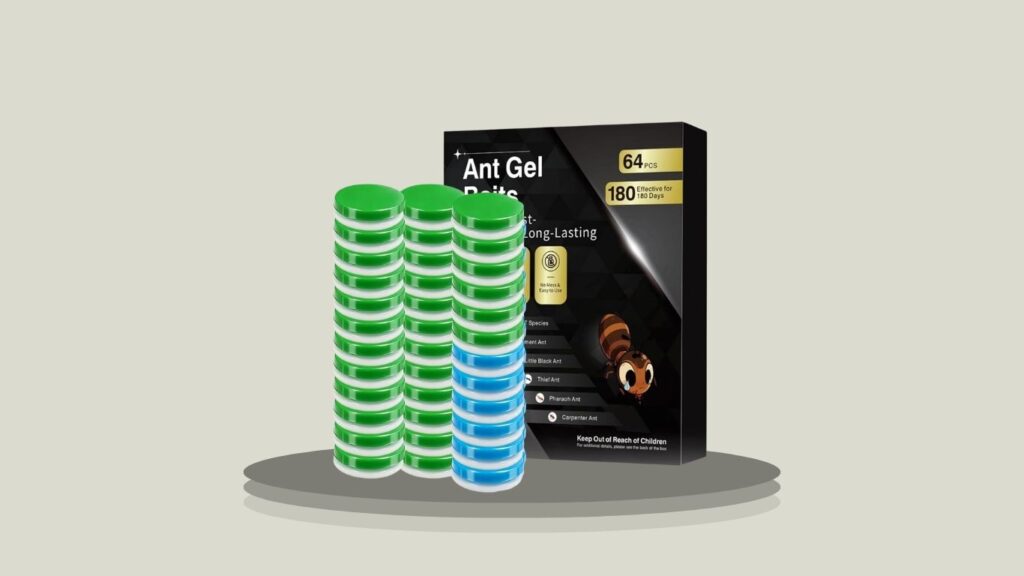
This professional-strength slow-acting carpenter ant bait is designed to provide a colony-focused approach to ant control. Instead of killing only the ants visible on surfaces, the bait gives workers time to interact with the treatment before returning toward their nesting area. It can be positioned around kitchens, bathrooms, wall edges, entry points, and other locations where carpenter ants regularly forage.
Key Features
- Professional-strength baiting approach
- Slow-acting formula
- Designed for carpenter ant control
- Suitable for indoor household areas
- Useful around active ant trails
- Can complement spray treatments
Why It’s Best For Colony-Focused Control
The major advantage of slow-acting bait is that it targets foraging behavior. Carpenter ants often leave their nests to search for food, which makes active trails useful locations for bait placement.
By allowing ants enough time to move between the bait and colony, this approach may reach beyond the visible insects homeowners notice on counters, floors, or walls.
Performance & Durability
Performance depends heavily on whether ants are attracted to the bait and whether stations are placed near active routes. Keeping nearby food sources minimized may help encourage bait feeding.
The product is better suited to gradual control than instant elimination. Consistent monitoring can help determine whether activity is declining or whether additional treatment areas should be added.
Pros, Cons & Overall Verdict
Pros
- Targets foraging behavior
- Useful for colony-focused treatment
- Easy to position near trails
- Can work alongside other control methods
Cons
- Takes time to show results
- Ant acceptance may vary
- Severe structural infestations may need professional help
Overall Verdict: This slow-acting bait is a strong option for homeowners who want to focus on longer-term carpenter ant control rather than simply killing visible workers.
10. Ortho Home Defense Outdoor Ant Killer
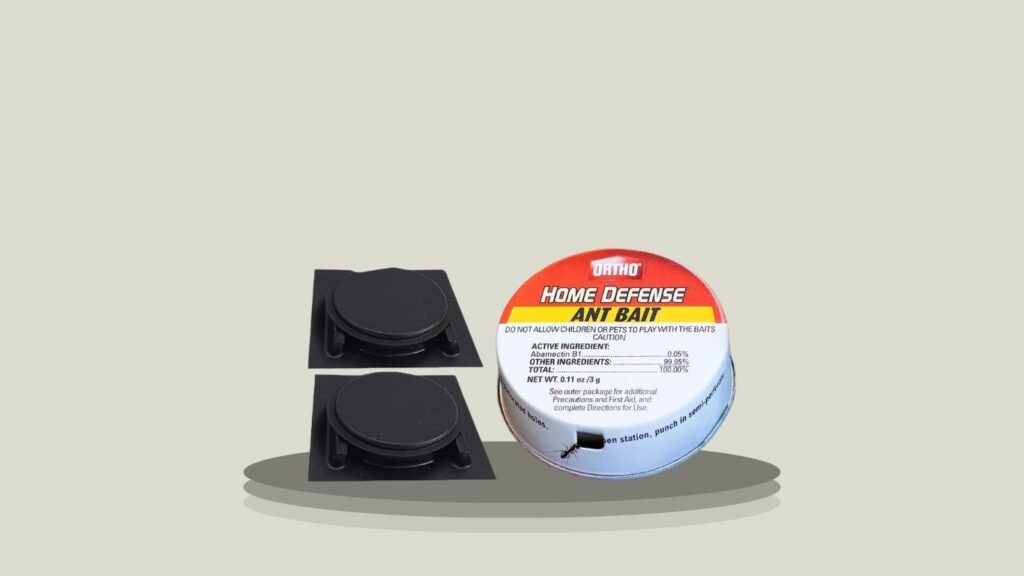
Ortho Home Defense Outdoor Ant Killer is designed for treating exterior areas where ants travel, enter, or establish activity around the property. It can be used as part of a perimeter-focused strategy to reduce carpenter ants before they move indoors. For homes experiencing ant activity near foundations, patios, walkways, or other exterior surfaces, an outdoor treatment can add another layer of protection.
Key Features
- Designed for outdoor ant control
- Suitable for perimeter applications
- Useful around foundations and entry areas
- Helps target exterior ant activity
- Can complement indoor bait stations
- Suitable for broader outdoor treatment zones
Why It’s Best For Outdoor Perimeter Control
Carpenter ants frequently travel between outdoor nesting or feeding areas and indoor structures. Treating the exterior can help reduce the number of ants reaching doors, cracks, utility openings, and foundation gaps.
This makes the Ortho treatment particularly useful as a companion to indoor baiting. Instead of focusing only on ants already inside, homeowners can also address activity around the perimeter.
Performance & Durability
Outdoor performance depends on weather conditions, application areas, and how heavily ants are using the treated zone. Rain, irrigation, and surface exposure can affect how long outdoor treatments remain effective.
Regular inspections are useful for identifying new trails or entry points. Combining perimeter treatment with sealing cracks and removing moisture-damaged wood can improve long-term results.
Pros, Cons & Overall Verdict
Pros
- Good for outdoor applications
- Useful around foundations
- Supports perimeter pest management
- Complements indoor treatments
Cons
- Outdoor exposure may reduce longevity
- May require repeat treatment
- Indoor colonies may need separate control
Overall Verdict: Ortho Home Defense Outdoor Ant Killer is a useful option for homeowners who want to strengthen perimeter control and reduce carpenter ant activity before it reaches indoor living spaces.
FAQs
1. What is the best way to get rid of carpenter ants?
A combination of baiting, targeted sprays, moisture control, and sealing entry points often provides better results than relying on one method alone. Baits can help target foraging ants, while sprays are useful for visible activity and accessible travel routes.
2. Are carpenter ant bait stations better than sprays?
Bait stations and sprays serve different purposes. Baits are generally better for slow colony-focused control, while sprays are useful for direct treatment of visible ants and entry points. Many infestations benefit from using both approaches strategically.
3. How long does carpenter ant bait take to work?
Slow-acting bait may take several days or longer to noticeably reduce ant activity. The process is intentionally gradual so worker ants have time to carry or share the bait before being affected.
4. Where should I place carpenter ant bait traps?
Place bait near active ant trails, baseboards, wall edges, cabinets, plumbing areas, cracks, and other locations where carpenter ants are frequently observed. Avoid placing strong repellent sprays directly beside bait stations.
5. When should I call a professional exterminator?
Professional help may be needed if carpenter ants continue appearing after treatment, if you suspect a nest inside walls or structural wood, or if there are signs of extensive moisture damage. A professional inspection can help locate hidden nesting areas and determine the most effective treatment approach.
