
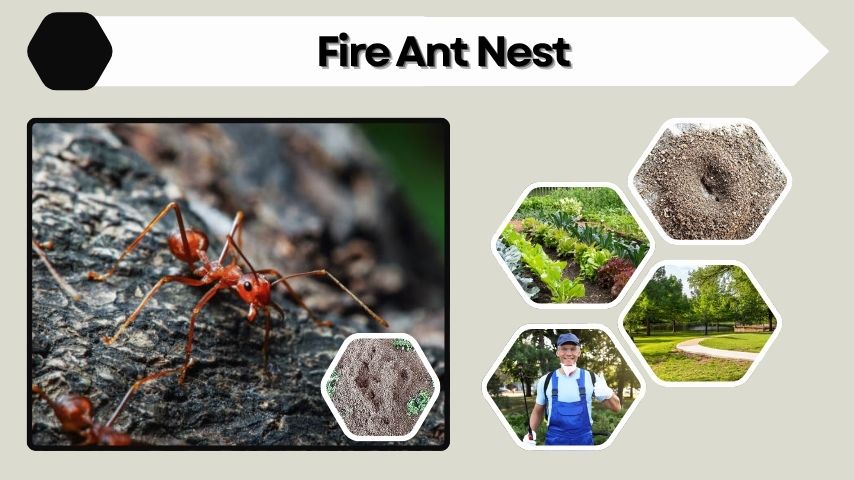
Fire ant nests are more than just piles of dirt in your yard. These underground colonies can contain thousands of aggressive ants capable of delivering painful stings when disturbed. Many homeowners discover a fire ant infestation only after accidentally stepping on a mound or noticing unusual ant activity around their property. Understanding what a fire ant nest looks like, where it forms, and how it functions is the first step toward effective control. This guide explains how to identify fire ant nests and recognize the signs of an active colony.
What Is a Fire Ant Nest?
A fire ant nest is an underground colony built by fire ants to house workers, larvae, and queens. While the mound above the soil is often the most visible feature, most of the colony exists beneath the surface. These nests are carefully organized structures that allow ants to survive, reproduce, and protect themselves from environmental threats.
Difference Between a Nest and a Mound
Many people use the terms “nest” and “mound” interchangeably, but they are not exactly the same. The mound is the visible pile of soil found above ground, while the nest includes the extensive underground tunnel and chamber system below it.
The mound helps regulate temperature and moisture inside the colony while providing protection from predators and weather conditions.
How Fire Ant Colonies Function
Fire ant colonies operate as highly organized communities. Worker ants gather food, defend the colony, and care for developing larvae. Queens remain deep inside the nest and are responsible for producing eggs.
Large colonies can contain tens of thousands of ants working together to ensure the survival of the nest.
What Do Fire Ant Nests Look Like?
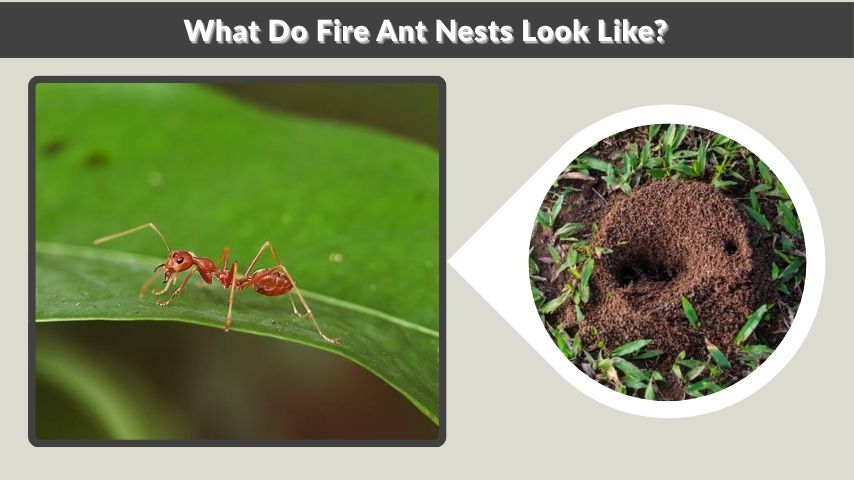
Identifying a fire ant nest can help prevent painful stings and property infestations. Fire ant nests often have characteristics that distinguish them from ordinary ant hills. Learning these signs allows homeowners to detect colonies before they become larger and more difficult to manage.
Above-Ground Appearance
A typical fire ant mound appears as a dome-shaped pile of loose soil. Unlike many ant hills, fire ant mounds often lack a visible entrance hole at the top.
Freshly constructed mounds usually have a smooth appearance and may look as though the soil has recently been turned or disturbed.
Common Signs of an Active Nest
Several indicators suggest that a fire ant nest is active:
- Large numbers of reddish-brown ants
- Fresh soil accumulation
- Rapid ant movement when disturbed
- Multiple worker ant sizes
- Increased activity during warm weather
These signs often confirm the presence of a healthy colony beneath the mound.
Nest Size and Growth
Fire ant nests can vary significantly in size. Smaller colonies may create modest mounds only a few inches high, while mature colonies can build structures exceeding a foot in height.
As colonies grow, their underground tunnel systems become increasingly complex and may spread well beyond the visible mound.
Where Do Fire Ants Build Their Nests?
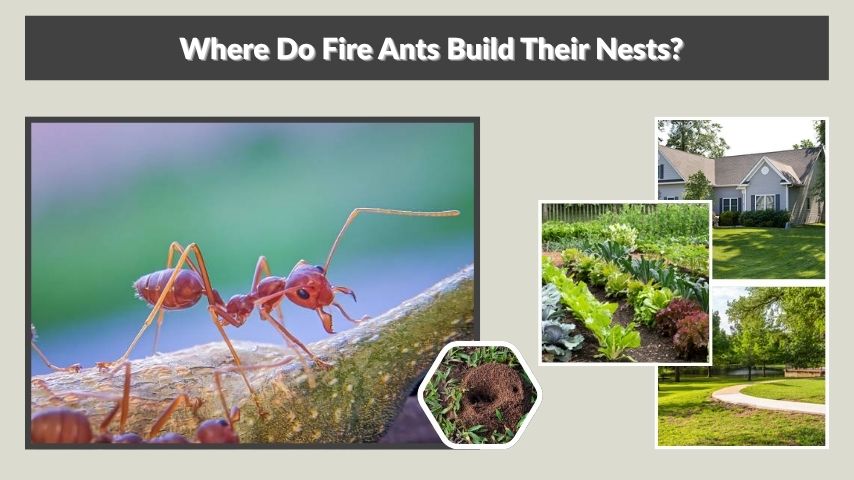
Fire ants are highly adaptable and can establish colonies in many environments. Their choice of nesting location is influenced by sunlight, moisture, soil conditions, and access to food. Because of this flexibility, fire ant nests can appear in both residential and natural settings.
Fire Ant Nests in Lawns
Lawns are among the most common locations for fire ant colonies. Open grassy areas provide warm soil conditions and easy access to insects and other food sources.
Homeowners often discover nests while mowing, gardening, or walking across the yard.
Fire Ant Nests Near Buildings
Fire ants frequently build colonies near foundations, sidewalks, and driveways. These structures absorb heat, creating favorable nesting conditions.
Colonies located near buildings can become a concern when worker ants begin entering homes in search of food and water.
Common Nesting Locations
Fire ants commonly establish nests in:
- Lawns
- Gardens
- Pastures
- Parks
- Road edges
- Building foundations
- Utility boxes
Regular inspections of these areas can help identify infestations before they expand.
Fire Ant Nest Structure Explained
Although only the mound is visible from the surface, the majority of a fire ant colony remains hidden underground. The nest consists of an intricate network of tunnels and chambers designed to support every aspect of colony life. Understanding this structure explains why fire ants are so resilient and difficult to eliminate.
Underground Tunnel Systems
Fire ants create interconnected tunnels that allow workers to move efficiently throughout the colony. These passageways provide access to food storage areas, brood chambers, and queen chambers.
The tunnels also help maintain airflow and regulate environmental conditions inside the nest.
Specialized Colony Chambers
Different sections of the nest serve different purposes. Some chambers contain developing larvae, while others store food or shelter worker ants.
This organization allows the colony to function efficiently even as its population grows into the thousands.
How Deep Are Fire Ant Nests?
Many fire ant nests extend several feet below the soil surface. The exact depth depends on factors such as soil type, temperature, and colony size.
Deep nesting helps protect queens and developing brood from predators, flooding, and temperature extremes.
Red Fire Ant Nests
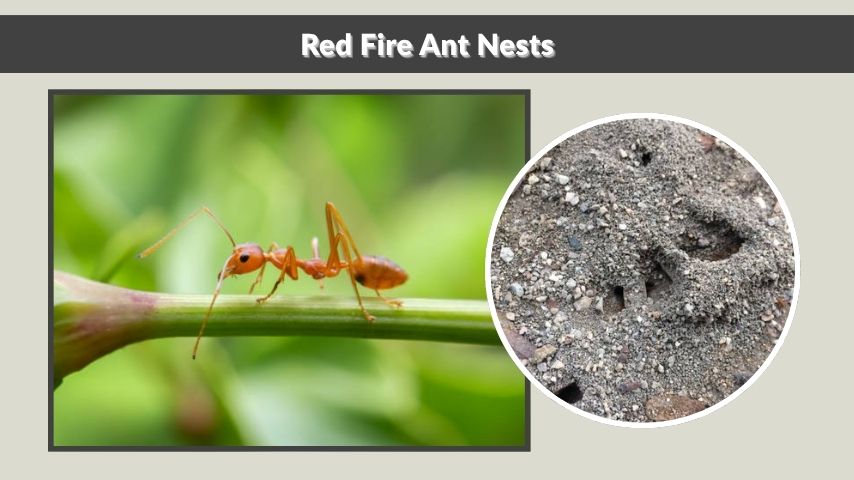
Red imported fire ants are among the most aggressive and invasive fire ant species. Their nests are similar in structure to those of other fire ants, but they often support larger populations and spread rapidly when left untreated. Identifying a red fire ant nest early is critical for preventing extensive infestations.
Characteristics of Red Fire Ant Nests
Red fire ant nests often display:
- Large dome-shaped mounds
- High worker ant activity
- Aggressive defensive behavior
- Rapid colony expansion
- Multiple nearby mounds in severe infestations
These characteristics make red imported fire ants one of the most challenging ant species to control.
Why Red Fire Ant Colonies Spread Quickly
Red fire ants are highly adaptable and reproduce efficiently. New colonies can form through queen flights or colony splitting, allowing infestations to expand across large areas in a relatively short period.
How Fire Ant Workers Carry Bait Back to the Nest
Fire ant bait products are among the most effective tools for controlling entire colonies. Unlike contact insecticides that kill only visible ants, baits rely on the natural behavior of worker ants. Workers collect food, transport it back to the colony, and distribute it among other colony members. This process allows treatment to reach areas of the nest that would otherwise be inaccessible.
How Fire Ant Baits Work
Baits are designed to attract foraging worker ants. Once collected, the bait is carried back through the tunnel system and shared with larvae, workers, and queens.
Because the active ingredients spread throughout the colony, bait treatments can eliminate entire nests rather than just reducing surface activity.
Why Bait Is Effective
Several factors make bait products successful:
- Workers willingly collect the bait
- Treatment reaches the queen
- Colonies are affected from within
- Large infestations can be reduced
- Long-term control is possible
Proper application significantly increases the likelihood of colony elimination.
Common Bait Mistakes
Many homeowners unintentionally reduce bait effectiveness by applying it incorrectly. Disturbing the mound before treatment or using bait during unsuitable weather conditions can prevent workers from collecting enough product to impact the colony.
How to Get Rid of a Fire Ant Nest

Removing a fire ant nest requires targeting the entire colony rather than just the visible mound. Surface treatments alone often fail because queens remain protected deep underground. Successful control strategies focus on eliminating the colony’s reproductive center and preventing future reinfestations.
Using Fire Ant Baits
Baits are widely recommended because they allow worker ants to spread treatment throughout the nest. Most products require patience, as complete colony elimination may take several weeks.
However, the delayed action often produces better long-term results than quick-kill sprays.
Mound Treatments
Direct mound treatments involve applying insecticides directly to the colony. These products may provide faster results than bait but often require careful application to ensure the treatment reaches deep nesting areas.
Improper application can cause colonies to relocate rather than die.
Professional Pest Control
Large infestations may require professional assistance. Pest control specialists have access to commercial-grade products and treatment strategies designed to eliminate difficult colonies.
Professional treatment is often recommended when multiple mounds are present across a property.
Best Fire Ant Nest Killers
A variety of products are available for homeowners seeking to eliminate fire ant colonies. The best option depends on colony size, infestation severity, and the desired speed of results. Understanding the strengths of each treatment method can help improve control efforts.
Popular Treatment Options
Common fire ant nest killers include:
- Granular bait products
- Contact insecticides
- Dust formulations
- Broadcast treatments
- Professional-grade products
Each option offers different advantages depending on the situation.
Choosing the Right Product
Selecting the appropriate treatment requires considering the colony’s location, accessibility, and size. Baits are generally preferred for long-term colony elimination, while contact insecticides may provide faster visible results.
Combining multiple strategies often produces the best outcomes for persistent infestations.
Red Imported Fire Ant Control: Nest Excavation and Backfilling
In some agricultural, research, and government control programs, physical nest removal techniques are used to manage fire ant populations. Nest excavation and backfilling involve exposing and removing the colony before restoring the affected area. Although not commonly used by homeowners, this method demonstrates the complexity of large-scale fire ant management.
What Is Nest Excavation?
Nest excavation involves digging into the mound and surrounding soil to expose the colony’s internal chambers. Researchers often use this technique to study colony structure and locate queens.
The process reveals the extensive tunnel systems hidden beneath the surface.
How Backfilling Works
After excavation is completed, soil is returned to the area and compacted to restore the site. This process helps reduce hazards and prevents erosion after colony removal.
Backfilling is commonly used in large-scale eradication and monitoring programs.
Advantages and Limitations
While excavation provides valuable information about colony structure, it is labor-intensive and generally impractical for routine residential pest control.
For most homeowners, baiting and targeted treatments remain more effective solutions.
Common Mistakes When Treating Fire Ant Nests
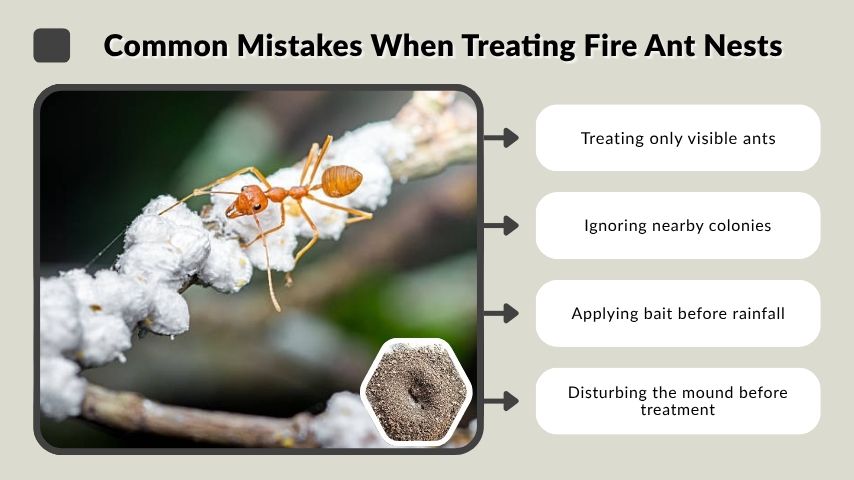
Many fire ant control efforts fail because important mistakes allow colonies to survive. Understanding these errors can save time, money, and frustration while improving treatment success rates.
Mistakes to Avoid
Common fire ant control mistakes include:
- Treating only visible ants
- Ignoring nearby colonies
- Applying bait before rainfall
- Disturbing the mound before treatment
- Using the wrong product type
Avoiding these issues greatly improves the chances of eliminating the entire colony.
How to Prevent New Fire Ant Nests
Preventing future infestations is often easier than removing established colonies. Routine monitoring and property maintenance can reduce the likelihood of fire ants settling in your yard. Early detection also allows smaller colonies to be addressed before they become serious problems.
Lawn Maintenance Tips
Maintaining healthy turf and reducing excess moisture can make your property less attractive to fire ants. Regular inspections help identify new mounds while they are still small and manageable.
Monitoring for New Activity
Watch for fresh soil mounds, unusual ant activity, and increased foraging near food sources. Early treatment is typically more effective and less costly than addressing large infestations later.
FAQs
What do fire ant nests look like?
Fire ant nests typically appear as dome-shaped mounds of loose soil with extensive underground tunnel systems hidden beneath the surface.
How deep is a fire ant nest?
Many fire ant nests extend several feet underground, although depth varies based on soil conditions and colony size.
Can fire ants build nests inside houses?
Yes. Fire ants sometimes establish colonies near foundations, wall voids, crawl spaces, and other protected areas around homes.
What is the best fire ant nest killer?
Bait products are often considered the most effective because worker ants carry them back to the colony and share them with the queen.
How long does it take to eliminate a fire ant nest?
Depending on the treatment used, complete colony elimination can take anywhere from a few days to several weeks.
Why do fire ant workers carry bait back to the nest?
Workers naturally collect food and transport it to the colony, making bait an effective method for distributing treatment throughout the nest.
