
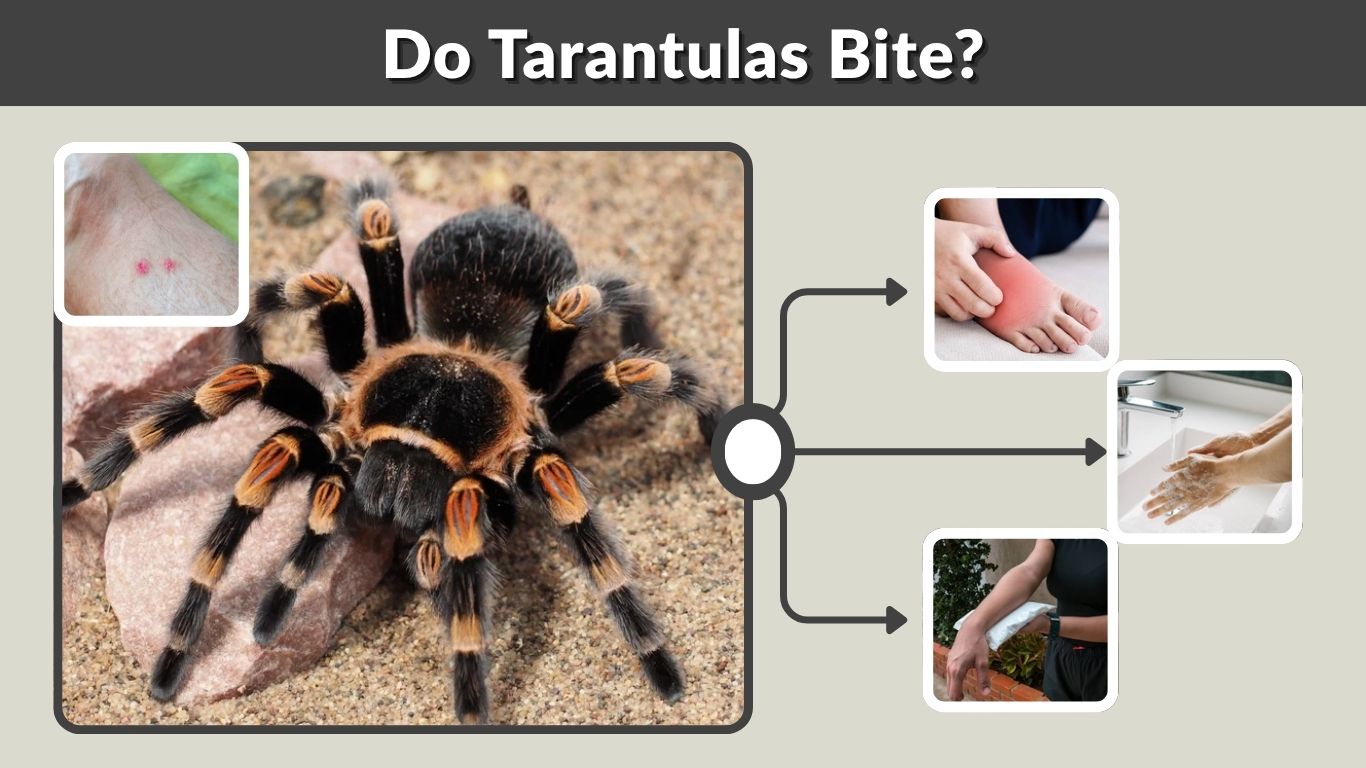
Yes, tarantulas can bite humans, but biting is usually a defensive response rather than an attempt to attack people. Most tarantulas prefer escaping, hiding, or displaying warning behaviors before using their fangs. Bites from many commonly encountered New World species generally cause localized pain, redness, and swelling, while some Old World species can produce more significant symptoms. Understanding why tarantulas bite, how painful a bite can be, and what to do afterward can make encounters with these large spiders much less frightening.
Do Tarantulas Bite Humans?
Tarantulas have large fangs and venom glands because they need them to capture and subdue prey. Those same fangs can penetrate human skin when a spider feels sufficiently threatened.
However, humans are not prey for tarantulas. A bite is normally defensive.
Verified tarantula bites most commonly produce local effects such as pain and puncture marks. Serious systemic effects are much less common, although they have been documented with certain species.
Why Do Tarantulas Bite?
A tarantula may bite when it:
- Feels trapped or restrained
- Is handled roughly
- Cannot escape from a perceived threat
- Is disturbed inside its retreat
- Mistakes movement for prey
- Is repeatedly provoked
Some tarantulas first display a threat posture by raising the front of their body and exposing their fangs. Defensive behavior varies considerably among species and individual spiders.
How Do Tarantulas Bite?
Tarantulas belong to the mygalomorph group of spiders and possess two prominent fangs connected to venom glands.
During a defensive bite, the spider drives its fangs into the target. Venom may then be introduced through the fangs.
Not every bite necessarily produces the same amount of venom, so symptoms can vary considerably.
Do Tarantulas Bite or Sting?
Tarantulas bite; they do not sting.
Their primary offensive structures are their fangs. Many New World tarantulas also possess defensive urticating hairs on the abdomen, which they can release when threatened. Contact with these hairs can cause redness, itching, and swelling, and eye exposure can cause more serious irritation.
Does a Tarantula Bite Hurt?
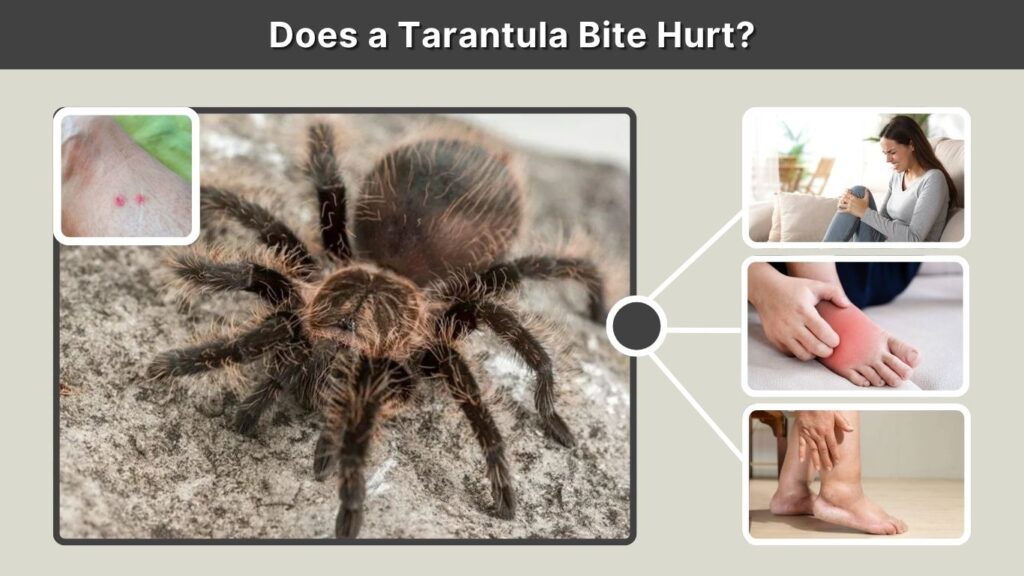
A tarantula bite can definitely hurt. The large fangs themselves can create puncture wounds even before considering the effects of venom.
Poison Control reports that tarantula bites can produce considerable pain or throbbing along with inflammation and swelling.
Common Tarantula Bite Symptoms
Possible symptoms include:
- Immediate pain
- Two small puncture wounds
- Redness
- Swelling
- Tenderness
- Throbbing around the bite
Less commonly, symptoms such as nausea, vomiting, or fever may occur.
Symptoms depend partly on the tarantula species and how much venom was delivered.
Are Tarantulas Venomous or Poisonous?
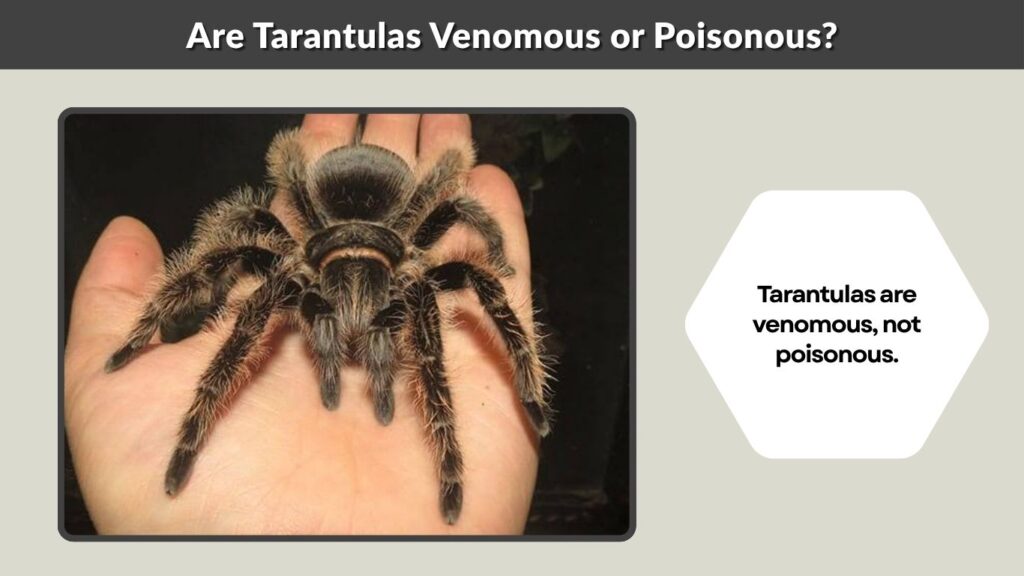
Tarantulas are venomous, not poisonous.
Venom is delivered through their fangs when they bite. Tarantulas primarily use it to immobilize prey rather than defend themselves against humans.
For many species, especially North American tarantulas, the effects in humans are generally mild and mainly involve pain around the bite.
Can a Tarantula Bite Kill You?
Most tarantula bites do not cause life-threatening poisoning in humans. However, it would be misleading to assume that every species produces equally mild symptoms.
Published medical reports show that bites from some African and Asian Old World tarantulas can cause intense pain, swelling, and prolonged muscle cramps.
Severe or rapidly developing symptoms should therefore be taken seriously.
New World vs Old World Tarantula Bites
The potential effects of a bite differ significantly among species. A useful general distinction for keepers is between New World and Old World tarantulas.
New World Tarantulas
New World tarantulas come from the Americas and include popular species such as:
- Mexican red knee tarantula
- Chilean rose tarantula
- Curly hair tarantula
- Brazilian black tarantula
- Pink toe tarantula
Many possess urticating hairs as an additional defensive mechanism. Bites from North American species are generally associated with localized symptoms in humans.
Old World Tarantulas
Old World species come from Africa, Asia, and parts of Europe.
Examples include:
- Cobalt blue tarantula
- Indian ornamental tarantula
- Orange baboon tarantula
- Indian violet tarantula
Some Old World tarantula bites have been associated with systemic effects, particularly painful and persistent muscle cramps.
Handling these species is therefore strongly discouraged.
Do Pet Tarantulas Bite Their Owners?
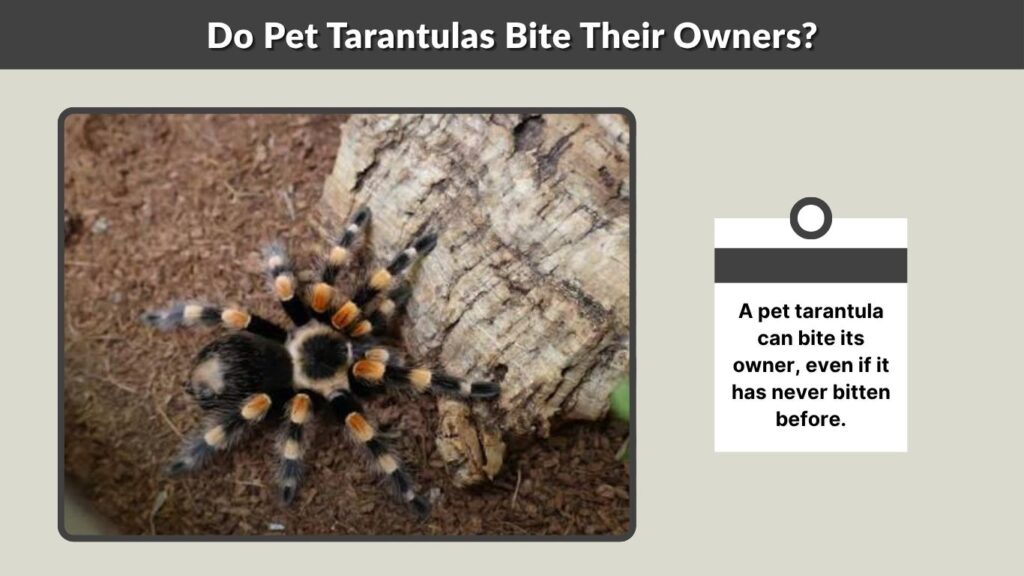
A pet tarantula can bite its owner, even if it has never bitten before.
Tarantulas are not domesticated in the same way as dogs or cats. They respond largely according to instinct and may react defensively when frightened or restrained.
The safest approach is to keep unnecessary handling to a minimum.
How Often Do Pet Tarantulas Bite?
Bites appear uncommon when tarantulas are housed properly and handled carefully during maintenance. Most interactions do not require direct contact with the spider.
Rather than picking up a tarantula during rehousing, keepers can use:
- Catch cups
- Long feeding tongs
- Soft brushes
- Secure transfer containers
Avoiding direct handling protects both the keeper and the tarantula.
Do Different Tarantulas Bite?
Virtually any tarantula physically capable of biting may do so if sufficiently threatened, although temperament and defensive strategies differ substantially between species.
Mexican Red Knee Tarantulas
Mexican red knees are often considered relatively manageable New World tarantulas, but they can still bite. They may also rely on urticating hairs when defensive.
Chilean Rose Tarantulas
Chilean rose tarantulas have a reputation for relatively calm behavior, yet they remain capable of biting when threatened.
Curly Hair Tarantulas
Curly hairs are another commonly kept New World species. They can bite but frequently rely on retreating or other defensive behaviors first.
Pink Toe Tarantulas
Pink toes can also bite. Their speed and arboreal lifestyle make unnecessary handling particularly risky because the spider may suddenly jump or run.
Cobalt Blue Tarantulas
Cobalt blues are fast, defensive Old World tarantulas. Direct handling is strongly discouraged because Old World tarantulas include species capable of producing more significant envenomation symptoms.
What to Do If a Tarantula Bites You
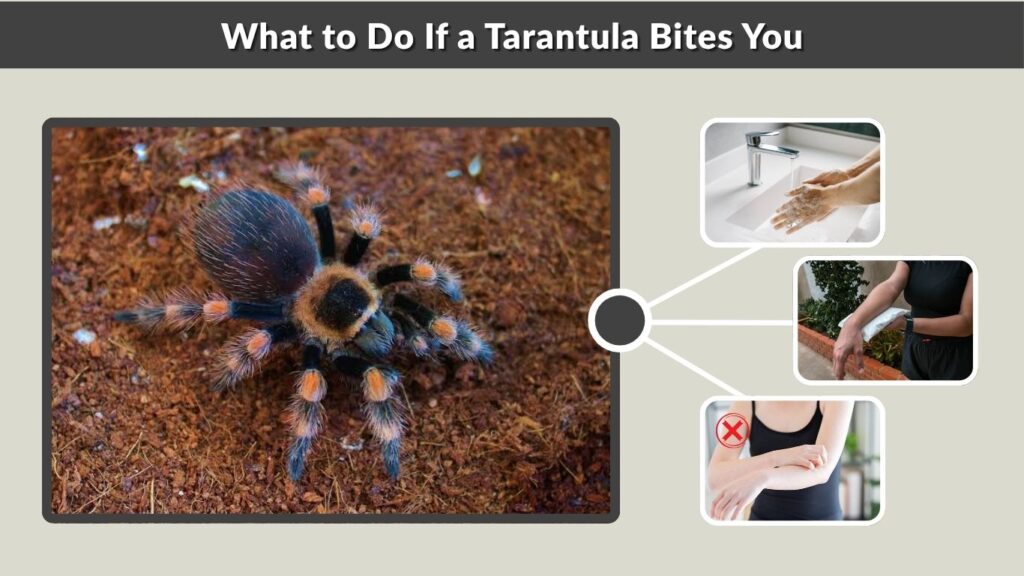
Most uncomplicated bites require basic wound care, but symptoms should be monitored carefully.
Poison Control advises washing a tarantula bite with soap and water and contacting a poison center for individualized advice. General spider-bite care can also include applying a cold pack to reduce pain and swelling.
After a Bite
- Move away from the spider safely.
- Wash the wound thoroughly with soap and water.
- Apply a wrapped cold pack if needed for discomfort.
- Avoid scratching or unnecessarily manipulating the wound.
- Monitor symptoms closely.
- Seek professional medical guidance when appropriate.
Seek urgent medical attention for serious symptoms such as difficulty breathing, severe widespread muscle cramping, rapidly worsening symptoms, or other signs of a severe reaction.
Do not attempt to capture an agitated tarantula with your bare hands simply to identify it.
Can Tarantulas Bite Dogs or Cats?
A tarantula can bite another animal if it feels threatened.
Pet owners should be particularly cautious because interactions between curious dogs or cats and large spiders can put both animals at risk. Research involving Australian theraphosid spiders has documented severe and even fatal outcomes in dogs following some bites, showing that human risk cannot simply be used to predict risk in pets.
If a dog or cat is known or strongly suspected to have been bitten by a tarantula, contact a veterinarian promptly rather than waiting for symptoms to develop.
How to Avoid Tarantula Bites
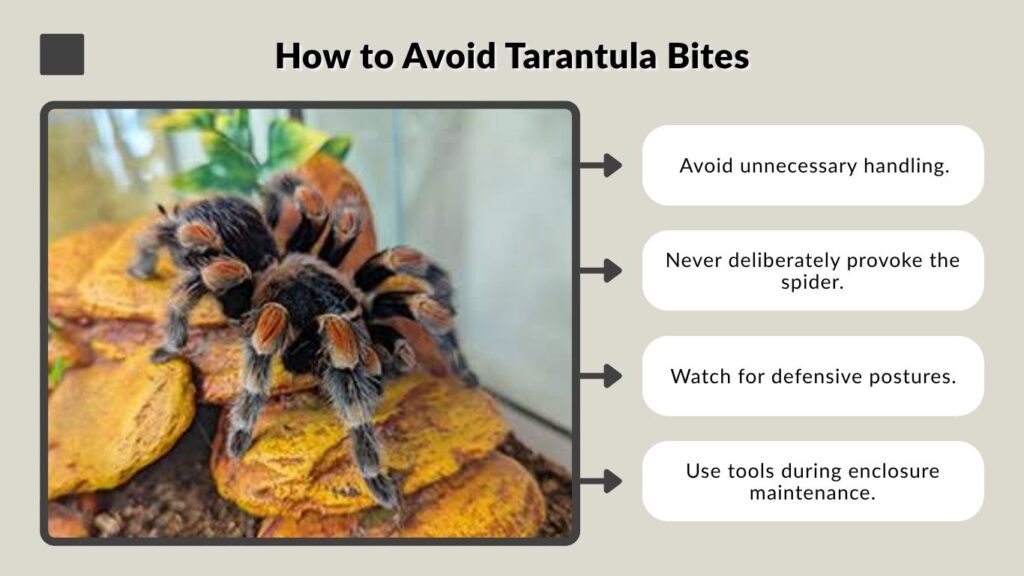
Preventing a bite is much easier than dealing with one afterward.
Use these precautions:
- Avoid unnecessary handling.
- Never deliberately provoke the spider.
- Watch for defensive postures.
- Use tools during enclosure maintenance.
- Provide a secure hide.
- Avoid disturbing a molting tarantula.
- Use a catch cup during transfers.
- Keep children and pets away from the enclosure.
- Make sure the enclosure is escape-proof.
Tarantulas are best treated as animals to observe rather than pets that need physical affection.
FAQs
Do tarantulas bite people?
Yes. Tarantulas can bite people when threatened or restrained, although humans are not their prey and bites are mainly defensive.
Do all tarantulas bite?
All tarantulas possess fangs and are physically capable of biting, but their willingness to bite varies by species and individual temperament.
How painful is a tarantula bite?
Pain varies. Some bites produce localized pain, swelling, and throbbing, while certain Old World species have been associated with more severe pain and muscle cramping.
Are pet tarantulas likely to bite?
Pet tarantulas can bite, but bites can usually be avoided by minimizing direct handling and using safe tools when feeding, cleaning, or rehousing.
Are tarantula bites dangerous?
Many tarantula bites cause mainly localized symptoms, but some species can produce more significant effects. Severe pain, widespread muscle cramps, breathing difficulty, or rapidly worsening symptoms warrant prompt medical attention.
