
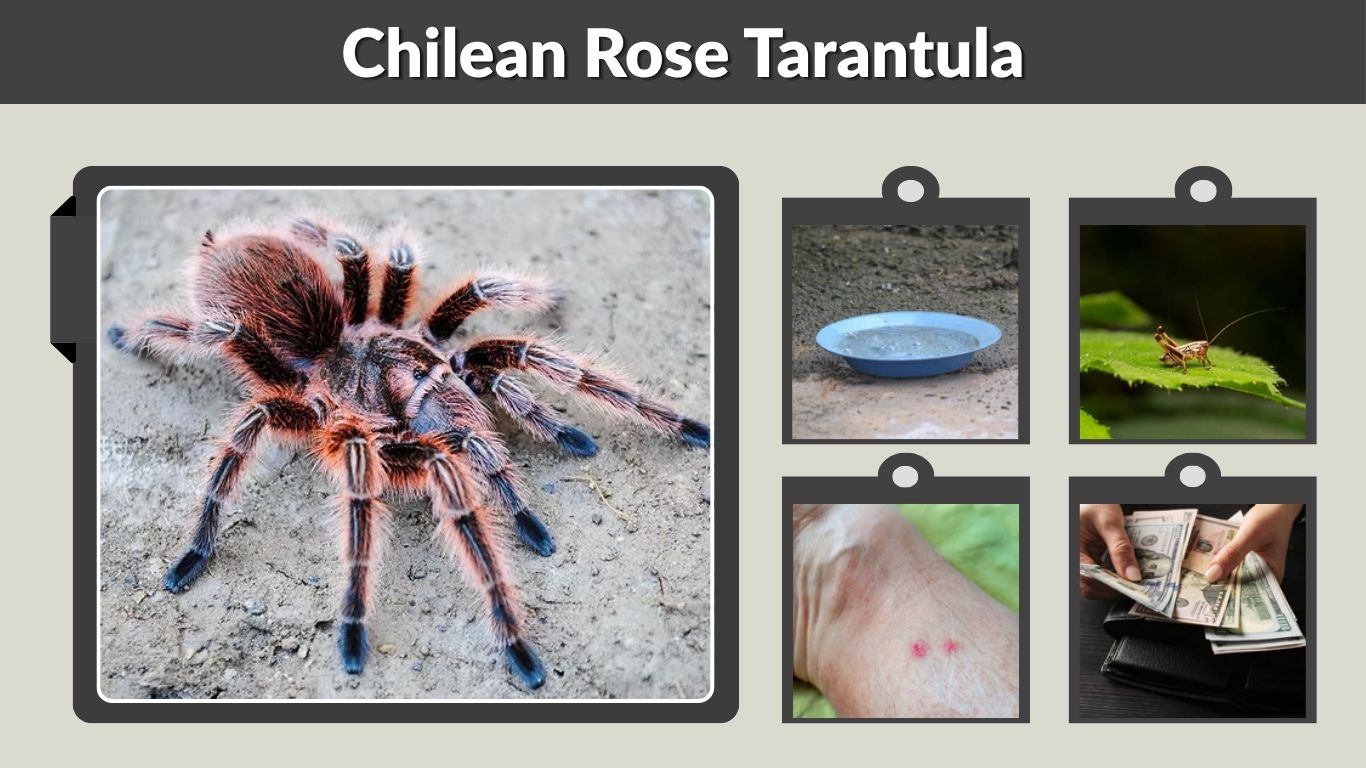
The Chilean rose tarantula is one of the best-known terrestrial tarantulas in the pet trade. Also called the Chilean rose hair tarantula, it is admired for its calm appearance, manageable size, rose-colored hairs, and relatively straightforward care. However, this spider still requires proper housing, careful feeding, and minimal handling. Whether you are considering one as a pet or simply want to learn about the species, this guide covers its size, lifespan, enclosure, diet, molting, temperament, bite, venom, and other important facts.
What Is a Chilean Rose Tarantula?
The Chilean rose tarantula is a ground-dwelling tarantula native to parts of South America. Its accepted scientific name is Grammostola rosea, and it belongs to the family Theraphosidae. Its natural distribution includes Chile, Bolivia, and Argentina.
These tarantulas are associated mainly with relatively dry desert and scrub habitats. They spend much of their time on or near the ground and may use burrows and sheltered areas for protection.
Appearance
Chilean rose tarantulas generally have dark brown, grayish, or blackish bodies covered with noticeable hairs. Rose, pink, or reddish hairs across the upper body and legs give the spider its common name.
Color can vary considerably between individuals, which is why names such as Chilean rose hair tarantula, red Chilean rose tarantula, and pink Chilean rose tarantula are sometimes used.
Chilean Rose Tarantula Size
This is considered a medium-sized terrestrial tarantula.
Typical characteristics include:
- Adult females can reach around a 5-inch leg span.
- Adult males commonly average closer to 3.5 inches.
- Females usually have heavier bodies.
- Mature males tend to look slimmer and have proportionally longer legs.
Smithsonian’s National Zoo reports females averaging around 5 inches (12–13 cm) in leg span.
Chilean Rose Tarantula Lifespan
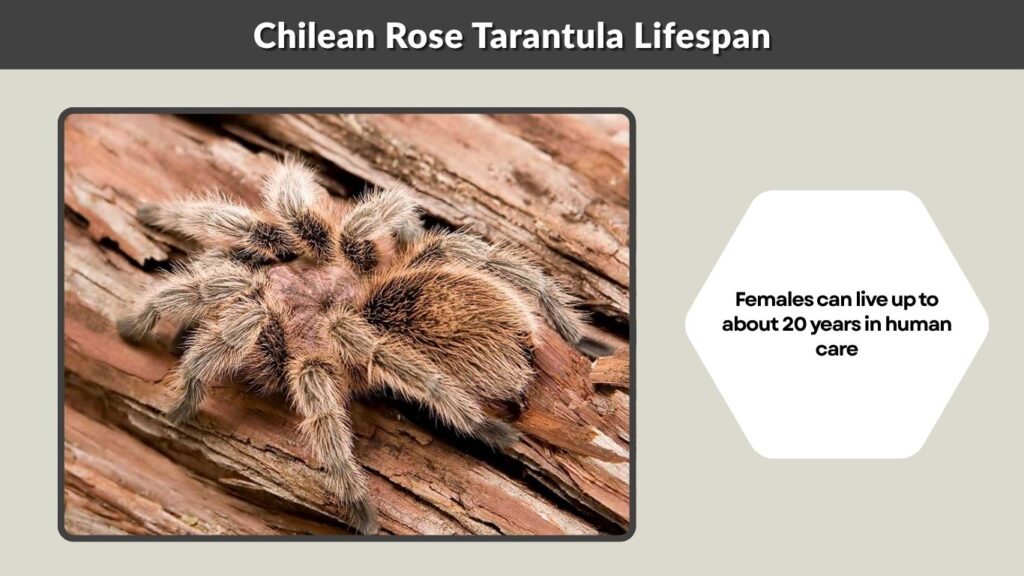
One reason owners should carefully consider this species before buying one is its potentially long lifespan. A healthy female can remain with an owner for many years, making tarantula ownership a significant long-term commitment.
How Long Does a Chilean Rose Tarantula Live?
Females can live up to about 20 years in human care, while males generally have substantially shorter lives. Mature males often survive only a relatively short period after reaching maturity and mating.
Lifespan depends on factors including sex, genetics, feeding, temperature, housing conditions, and overall care.
Chilean Rose Tarantula Care
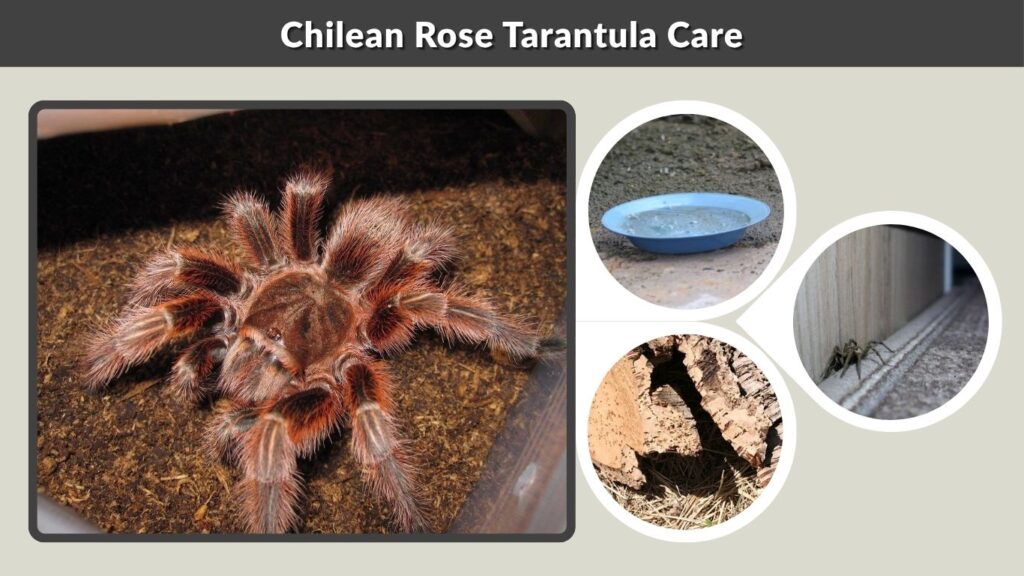
Chilean rose tarantulas have historically been popular with newer keepers because their husbandry is less complicated than that of many tropical species. However, “easy to care for” does not mean they can simply be placed in a tank and ignored.
A secure terrestrial enclosure, suitable substrate, access to water, appropriate temperatures, and live prey are essential.
Chilean Rose Tarantula Enclosure
Floor space matters more than height because this species is terrestrial. Excessive climbing height should be avoided because a fall can seriously injure a heavy-bodied tarantula.
A suitable enclosure should include:
- Secure, escape-proof ventilation
- Several inches of suitable substrate
- A cork bark or similar hide
- A shallow water dish
- Enough floor space for normal movement
- No sharp decorations
- Limited vertical climbing distance
Keep the enclosure away from direct sunlight and places that experience extreme temperature changes.
Best Substrate for a Chilean Rose Tarantula
A compactable soil-based substrate is generally suitable. Coco fiber, pesticide-free topsoil, or appropriate tarantula substrate mixtures can be used.
Several inches of substrate allow the spider to dig or modify its hiding area. Commercial care recommendations commonly suggest roughly 3–4 inches as a starting depth.
Avoid substrates containing fertilizers, pesticides, sharp wood pieces, or strong aromatic oils.
Temperature and Humidity
Chilean rose tarantulas come from relatively dry environments and should not be maintained like tropical rainforest species.
A moderate room-temperature environment is usually appropriate. One published care guideline gives approximately 70–80°F (21–27°C) during the day with moderate humidity.
Good ventilation is especially important. Avoid constantly soaking the substrate. A clean water dish should remain available even when the enclosure is relatively dry.
What Does a Chilean Rose Tarantula Eat?
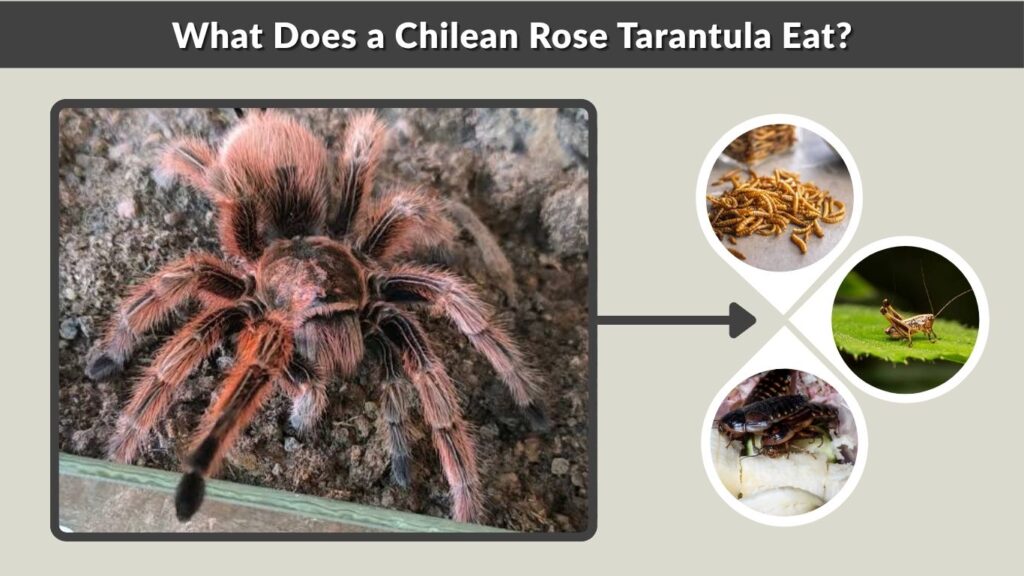
Chilean rose tarantulas are predators. In nature, they consume various invertebrates and may occasionally take small vertebrate prey.
Pet tarantulas normally do not need vertebrate prey.
Best Foods for Pet Chilean Rose Tarantulas
Common feeder insects include:
- Crickets
- Dubia roaches
- Mealworms
- Superworms
- Locusts where legally available
Feed appropriately sized prey rather than insects that are excessively large.
Juveniles generally need smaller meals more frequently than adults. Adult Chilean rose tarantulas may eat relatively infrequently and can sometimes refuse food for extended periods.
Always remove uneaten prey, particularly if the tarantula appears ready to molt.
Chilean Rose Tarantula Molting
Like other tarantulas, Chilean roses must shed their exoskeleton to grow. This process is called molting or ecdysis.
Before a molt, the tarantula may stop eating, become less active, darken in color, or spend more time in its hide.
What Happens During Molting?
A tarantula often lies on its back during the molting process. This can alarm inexperienced owners, but it is normally part of the process.
During a molt:
- Do not handle the spider.
- Do not disturb or flip it over.
- Remove live feeder insects.
- Keep fresh water available.
- Wait until the new exoskeleton and fangs harden before feeding again.
Young tarantulas molt more frequently because they grow faster. Smithsonian notes that spiderlings may molt five or six times during their first year.
Chilean Rose Tarantula Temperament and Handling
Chilean rose tarantulas have a reputation for being relatively calm, and Smithsonian describes them as generally calm and docile. Nevertheless, temperament varies between individual spiders.
A normally calm tarantula can become defensive when stressed, disturbed, hungry, or preparing to molt.
Can You Hold a Chilean Rose Tarantula?
Handling is possible, but it is usually better to treat tarantulas as observation pets.
Handling creates risks for both the spider and the keeper. A startled tarantula may suddenly run, bite, or release defensive hairs. More importantly, dropping a terrestrial tarantula even from a relatively modest height can cause severe injury.
Use a catch cup and soft brush when moving the spider whenever possible.
Are Chilean Rose Tarantulas Poisonous?
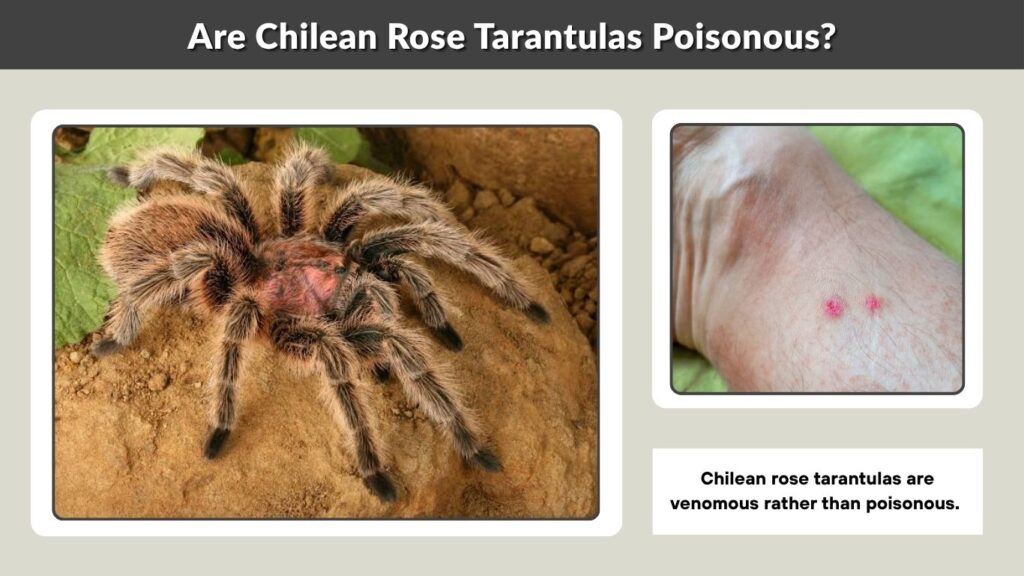
Chilean rose tarantulas are venomous rather than poisonous. They use venom through their fangs to help subdue prey.
For most healthy adults, a defensive bite is not generally considered life-threatening, but any bite can cause pain, swelling, or other symptoms.
Chilean Rose Tarantula Bite and Defensive Hairs
Biting is not their only defense.
Chilean rose tarantulas can release irritating hairs from their abdomen when threatened. These irritating hairs can irritate skin and can be much more serious if they enter the eyes.
After working inside the enclosure, avoid touching your eyes and wash your hands thoroughly.
Male vs Female Chilean Rose Tarantula
Male and female Chilean rose tarantulas can look similar when young, making reliable sex identification difficult based only on external appearance.
Adult females normally become heavier-bodied and live much longer. Mature males typically become slimmer and develop reproductive structures associated with adulthood.
For keepers interested in determining sex accurately, examining a properly preserved molt is generally more reliable than judging appearance alone.
Buying a Chilean Rose Tarantula
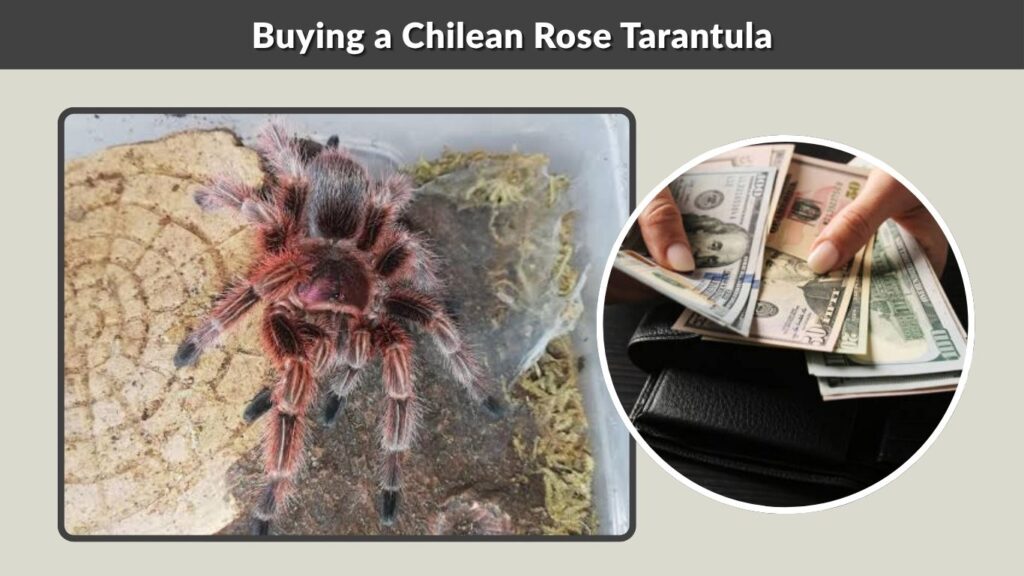
If you see a Chilean rose tarantula for sale, choose the animal and seller carefully instead of selecting purely according to price.
Before buying:
- Prefer reputable breeders or specialist sellers.
- Ask whether the tarantula is captive-bred.
- Confirm its approximate age and size.
- Ask about its feeding history.
- Check for obvious injuries or abnormalities.
- Learn whether its sex has been confirmed.
- Prepare the enclosure before bringing it home.
The price of a Chilean rose tarantula can vary considerably depending on size, sex, age, availability, seller, and location. Adult confirmed females are often valued differently from spiderlings or mature males because females can live much longer.
Interesting Chilean Rose Tarantula Facts
The Chilean rose is more than just a popular pet. Its appearance and biology give it several fascinating characteristics.
- Its scientific name is Grammostola rosea.
- It belongs to the Theraphosidae tarantula family.
- Its natural range includes Chile, Bolivia, and Argentina.
- Females can reach approximately a 5-inch leg span.
- Females may live up to around 20 years in captivity.
- It is primarily a terrestrial species.
- It hunts mainly at night.
- It uses venom to subdue prey.
- It can release irritating hair for defense.
- Females generally live substantially longer than males.
FAQs
Is a Chilean rose tarantula a good pet?
It can be a suitable tarantula for someone prepared to provide proper housing and long-term care. It is generally considered relatively calm but is better suited to observation than frequent handling.
How big does a Chilean rose tarantula get?
Adult females commonly reach around a 5-inch leg span, while males average closer to 3.5 inches.
How often should I feed a Chilean rose tarantula?
Feeding frequency depends on age and body condition. Juveniles usually eat more frequently, while healthy adults can be offered appropriately sized insects less often. Remove uneaten insects promptly.
Can a Chilean rose tarantula kill you?
Chilean rose tarantulas possess venom, but they are not generally regarded as dangerously venomous to healthy humans. A bite can still cause pain or other reactions, so unnecessary handling should be avoided.
How long can a Chilean rose tarantula live?
Female Chilean rose tarantulas can live up to around 20 years in human care, while males usually have much shorter lifespans.
