
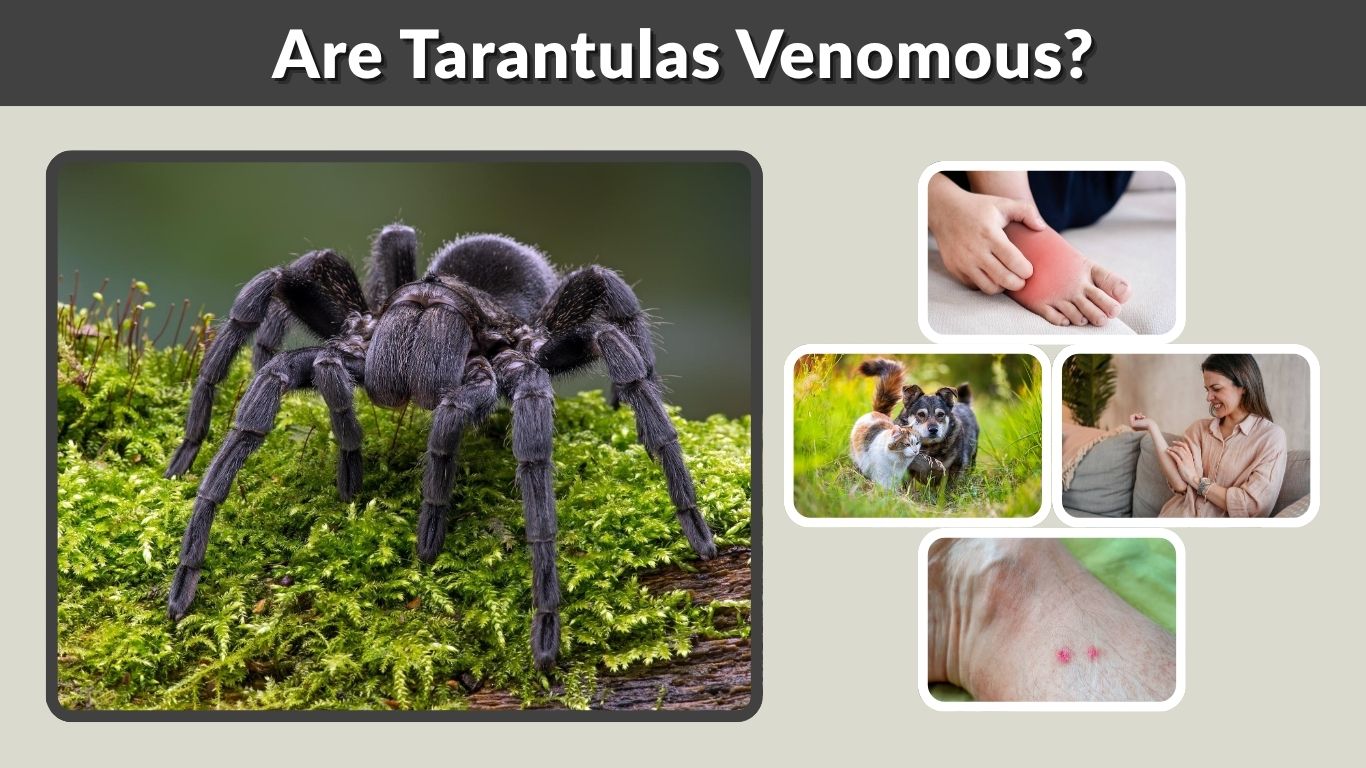
Yes, tarantulas are venomous spiders. They use venom primarily to immobilize prey such as insects, roaches, crickets, and other small animals. However, being venomous does not automatically make a tarantula highly dangerous to humans. Most tarantula bites cause localized pain, redness, and swelling rather than life-threatening poisoning. Venom strength also varies considerably between species. New World tarantulas are generally considered less medically concerning, while some Old World species can cause much stronger pain and muscle-related symptoms.
Are All Tarantulas Venomous?
All true tarantulas possess venom and have fangs capable of delivering it. Venom is an important hunting adaptation that allows these large spiders to subdue prey without having to rely entirely on physical strength.
However, not all tarantula venom has the same potency. Some species produce venom that usually causes relatively mild effects in humans, while others can cause considerable pain and additional symptoms.
What Tarantulas Are Venomous?
Essentially all commonly recognized tarantula species are venomous, including:
- Mexican red knee tarantula
- Chilean rose tarantula
- Curly hair tarantula
- Pink toe tarantula
- Brazilian black tarantula
- Brazilian jewel tarantula
- Texas brown tarantula
- Arizona blonde tarantula
- Cobalt blue tarantula
- Orange baboon tarantula
- Goliath birdeater
- Australian tarantulas
Therefore, asking which tarantulas are venomous can be slightly misleading. The more useful question is how potent the venom of a particular species is.
Are There Non-Venomous Tarantulas?
There are no commonly recognized true tarantulas that are completely non-venomous. Even species regarded as calm beginner pets possess venom.
The difference is that many species have venom that poses relatively little danger to healthy adults.
For example, popular New World pet species such as Mexican red knees, Arizona blondes, and curly hair tarantulas are venomous but are generally considered less medically significant than many Old World species.
How Venomous Are Tarantulas to Humans?
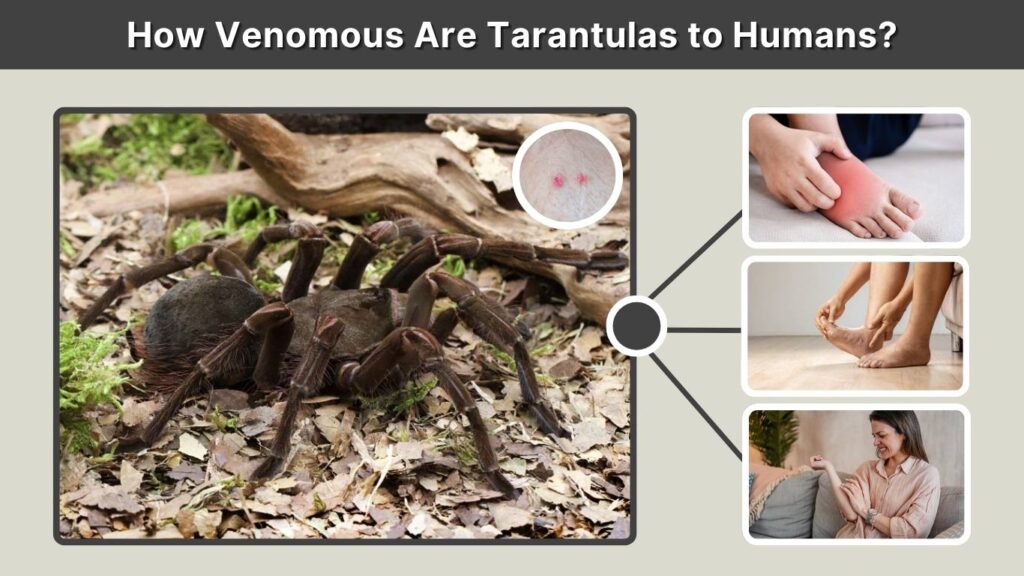
For most healthy adults, a bite from many common tarantulas is painful but not considered life-threatening. Symptoms can vary depending on the species, amount of venom delivered, bite location, and individual sensitivity.
Common Tarantula Bite Symptoms
Possible symptoms include:
- Immediate pain at the bite
- Redness
- Local swelling
- Tenderness
- Burning or throbbing sensations
- Itching
- Fang puncture marks
The symptoms of many New World tarantula bites remain concentrated around the bite area and gradually improve.
However, individual reactions can vary, so significant or worsening symptoms should receive medical attention.
Old World Tarantulas Can Cause Stronger Reactions
Old World tarantulas from regions of Africa and Asia deserve additional caution. Several species are known among keepers for causing substantially more painful bites than many New World tarantulas.
Possible effects can include intense pain, muscle cramps or spasms, sweating, nausea, and prolonged discomfort.
The orange baboon tarantula and several Asian terrestrial species are examples of tarantulas whose bites should be taken seriously.
This is one reason experienced keepers generally avoid handling Old World tarantulas.
Are Tarantulas Poisonous or Venomous?
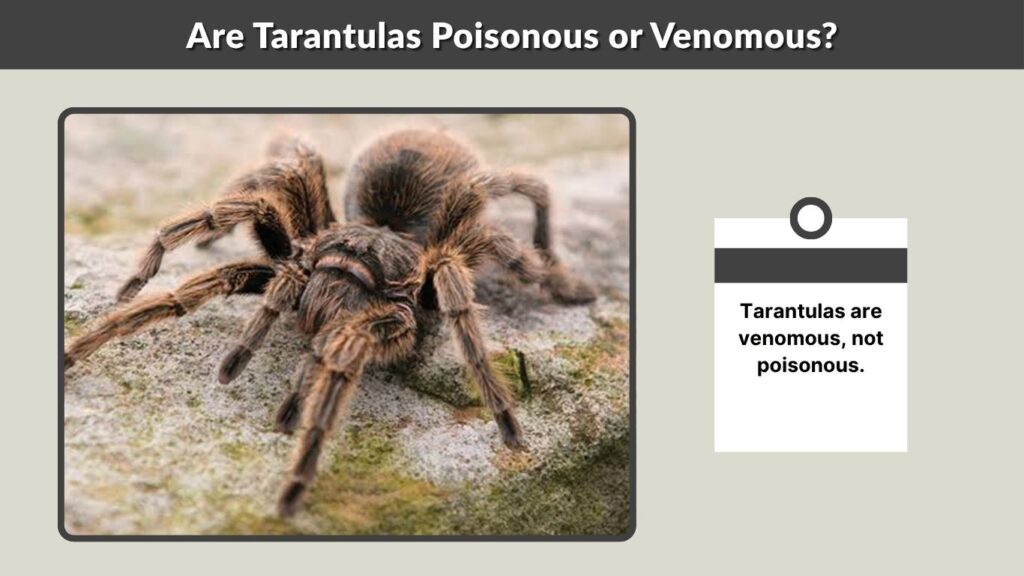
Tarantulas are venomous, not poisonous.
The distinction depends on how a toxin enters another animal.
A venomous animal actively introduces toxins through a bite or sting. Tarantulas inject venom through their fangs, making them venomous.
A poisonous animal causes harm when its toxins are eaten, touched, or otherwise absorbed.
Therefore:
Tarantula bite = venom
Tarantula body = not considered poisonous
This distinction also explains why merely touching a tarantula does not expose someone to its venom.
Are Tarantula Bristles Venomous?
No. The irritating hairs found on many New World tarantulas are not venomous.
These hairs, commonly called urticating hairs, are a separate defensive mechanism.
When threatened, some tarantulas use their hind legs to release tiny barbed hairs toward a predator.
What Tarantula Hairs Can Cause
Exposure may result in:
- Skin irritation
- Itching
- Redness
- Burning sensations
- Rash-like irritation
- Eye irritation
Getting urticating hairs in the eyes can be considerably more serious and may require medical treatment.
A tarantula therefore has two very different defenses: venom delivered through its fangs and irritating hairs released from its abdomen.
Old World tarantulas generally lack the defensive urticating hairs found in many New World species and often rely more heavily on speed, threat displays, and biting.
Are Common Pet Tarantulas Venomous?
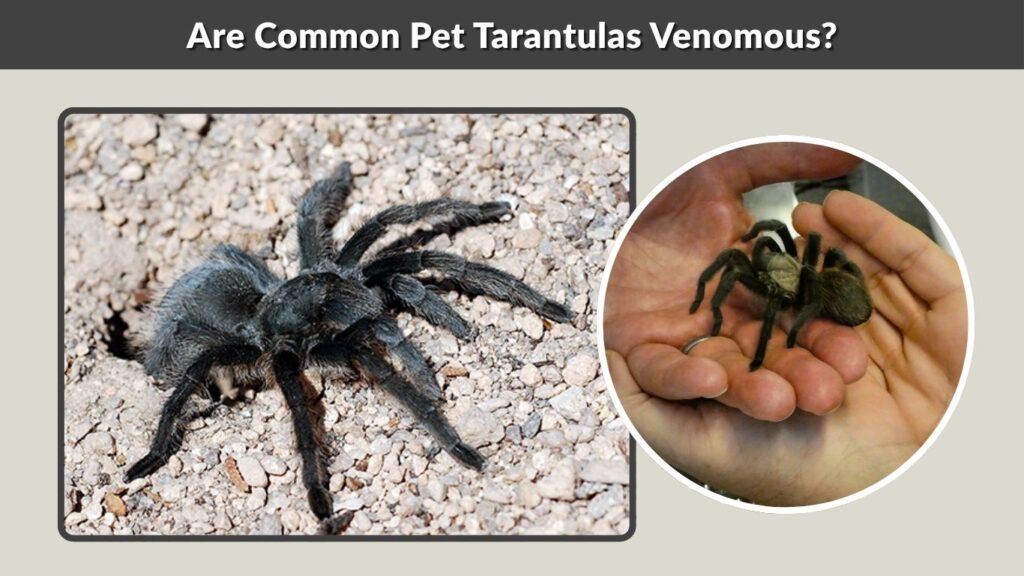
Yes. Even commonly kept pet tarantulas contain venom. Fortunately, many popular beginner species belong to groups whose venom is generally considered less concerning to humans.
Pink Toe Tarantula
Pink toe tarantulas are venomous, but their venom is generally considered relatively mild for humans. They are arboreal spiders and may attempt to escape before biting when disturbed.
Curly Hair Tarantula
Curly hair tarantulas are also venomous. They are popular pets because of their generally calm nature. Their defensive urticating hairs may be a more frequent concern than bites.
Mexican Red Knee Tarantula
Mexican red knee tarantulas possess venom but are not considered highly venomous to humans. They frequently rely on defensive posturing or urticating hairs before resorting to biting.
Chilean Rose Tarantula
Chilean rose tarantulas are venomous, although their venom is generally regarded as relatively mild. Individual spiders can still behave defensively when frightened or stressed.
Brazilian Black Tarantula
Brazilian black tarantulas have venom like other tarantulas. They have a reputation for relatively calm behavior, although handling any tarantula unnecessarily carries risks for both the spider and the person.
Which Tarantulas Have Stronger Venom?
There is no simple ranking that accurately covers hundreds of tarantula species. However, Old World tarantulas generally deserve greater caution because bites from some species are associated with more intense and longer-lasting effects.
Examples frequently treated with additional caution include:
- Orange baboon tarantulas
- Cobalt blue tarantulas
- Indian ornamental tarantulas
- Other African and Asian Old World species
New World species such as Arizona blondes, Texas browns, Mexican red knees, and curly hairs usually have less medically concerning venom.
This does not mean a New World tarantula bite should be deliberately tested or ignored.
Are Tarantulas Venomous to Dogs and Cats?
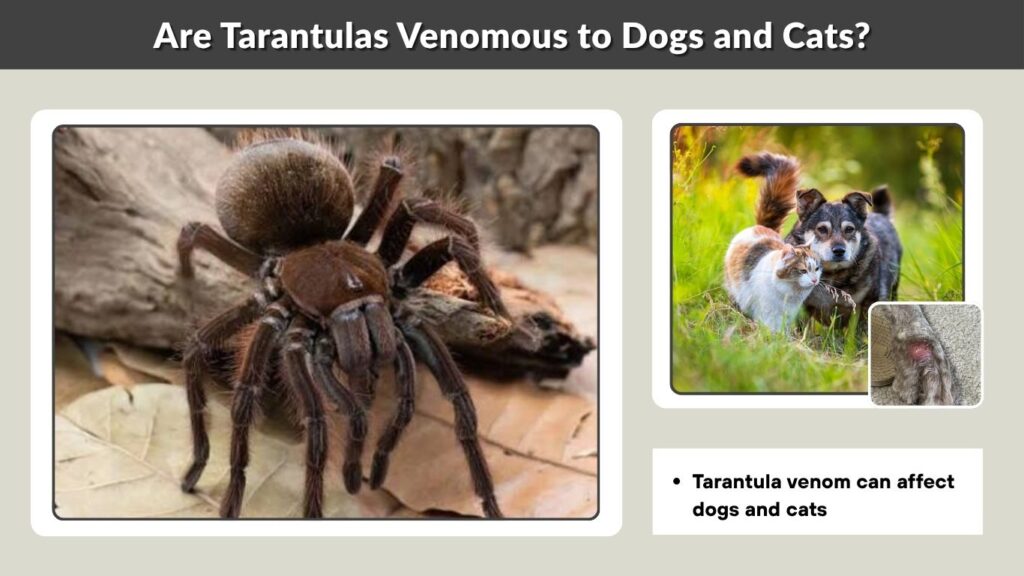
Tarantula venom can affect dogs and cats, and encounters should be taken more seriously than they might be for a healthy adult human.
Pets may investigate spiders with their noses or mouths, increasing the likelihood of a bite occurring around sensitive areas.
Possible warning signs include swelling, pain, excessive drooling, weakness, vomiting, difficulty walking, or unusual behavior.
Urticating hairs can also irritate a pet’s nose, mouth, skin, and eyes.
If a dog or cat is suspected of being bitten by a tarantula—particularly an Old World species—contacting a veterinarian promptly is the safest approach.
Are Tarantula Hawks Venomous?
Yes, but a tarantula hawk is not a tarantula.
Tarantula hawks are large wasps famous for hunting tarantulas. Female tarantula hawks deliver an extremely painful venomous sting that temporarily paralyzes a tarantula.
Although their sting can cause extraordinary pain in humans, serious complications are uncommon in most healthy people.
The terms should therefore not be confused:
Tarantula: venomous spider that bites.
Tarantula hawk: venomous wasp that stings.
Can a Tarantula Bite Kill a Human?
Fatalities from true tarantula bites are extraordinarily rare, and most commonly kept species are not considered deadly to healthy humans.
Still, a bite should not be dismissed entirely. Species differences, allergic reactions, secondary infection, and individual health conditions can influence how someone responds.
Seek urgent medical care if a bite is followed by difficulty breathing, severe swelling, fainting, widespread symptoms, severe muscle spasms, or rapidly worsening symptoms.
FAQs
Are all types of tarantulas venomous?
Yes. True tarantulas possess venom glands and use venom primarily for capturing prey. Venom potency differs considerably between species.
Are tarantulas highly venomous?
Most common New World tarantulas are not considered highly dangerous to healthy humans. Some Old World species can produce substantially stronger and more painful symptoms.
Are Mexican red knee tarantulas venomous?
Yes. Mexican red knee tarantulas have venom, but their venom is generally considered relatively mild for humans compared with many Old World tarantulas.
Are Goliath birdeater tarantulas venomous?
Yes. Goliath birdeaters possess venom and large fangs. Their impressive size makes a bite mechanically painful even though their venom is not considered among the most dangerous spider venoms to humans.
Are Texas brown tarantulas venomous?
Yes. Texas brown tarantulas contain venom, but their bites are generally regarded as relatively low risk for healthy humans. They may also use defensive urticating hairs when threatened.
