

Wasps and yellow jackets are often confused due to their similar size, coloring, and stinging abilities. However, while all yellow jackets are wasps, not all wasps are yellow jackets — and the differences between them go beyond appearance. From body shape and nesting habits to aggression levels and diet, understanding these distinctions can help you identify them correctly and stay safe during outdoor activities.
Wasp vs Yellow Jacket Comparison Table

While wasps and yellow jackets share many similarities, they also have clear differences in appearance, nesting behavior, diet, and aggression. The table below provides a quick side-by-side comparison to help you identify them more easily in the field.
| Feature | Wasp (General) | Yellow Jacket |
| Scientific Classification | Family Vespidae, multiple genera | Genus Vespula or Dolichovespula, Family Vespidae |
| Body Shape | Slender body with a narrow waist | Stockier, more compact body |
| Size | 0.5 to 1.5 inches (varies by species) | 0.5 to 0.75 inches (workers), queens slightly larger |
| Color Pattern | Various colors: yellow, black, brown, red, metallic blue | Bright yellow-and-black bands |
| Body Texture | Smooth, sometimes slightly fuzzy | Smooth and glossy, no visible hair |
| Nest Location | Trees, eaves, attics, shrubs, underground (varies by species) | Primarily underground, also in wall voids or shrubs |
| Nest Material | Paper (chewed wood fibers), mud, or plant material | Papery material from chewed wood fibers |
| Aggression Level | Varies by species; many less aggressive unless provoked | Highly aggressive, especially in late summer/fall |
| Diet | Nectar, insects, fruit, sweet liquids | Insects for larvae, plus sweets and meats in late summer |
Physical Differences
Wasps and yellow jackets share some traits, but there are clear differences that make identification easier.
Body Shape & Size
Wasps are usually slender with long legs and a narrow waist, and their size can range widely depending on the species. Yellow jackets are shorter and stockier, with a more compact build. Workers measure around 0.5 to 0.75 inches, while queens are slightly larger.
Color Patterns
Wasps come in many colors, including yellow, black, brown, red, and metallic blue. Yellow jackets, however, have a consistent bright yellow-and-black banding that stands out sharply and is the most common clue to their identity.
Hair & Texture
Wasps generally have smooth bodies, though some may have a slight fuzz on the thorax. Yellow jackets are always smooth, glossy, and hairless, giving them a sharp, well-defined appearance compared to bees.
Nesting Habits
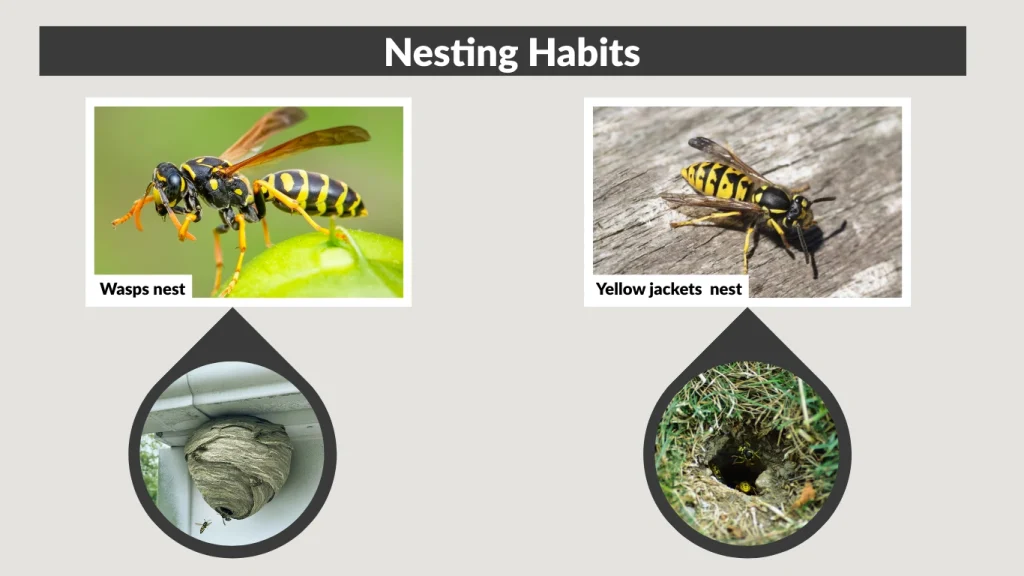
Nest Location
Wasps may nest in trees, eaves, attics, shrubs, or underground, depending on the species. Yellow jackets usually prefer underground burrows but can also build nests in wall voids, shrubs, or sheds.
Nest Material & Shape
Both use a papery material made from chewed wood fibers, but wasp nests vary in shape, while yellow jacket nests are often ball-shaped or hidden underground.
Behavior Differences
Aggression Level
Many wasp species are not aggressive unless threatened. Yellow jackets are highly aggressive, especially in late summer and fall, and will defend their nest in large numbers.
Feeding Habits
Wasps feed on nectar, insects, and fruit. Yellow jackets also hunt insects but scavenge more for meat and sugary foods later in the season.
Sting and Danger Level
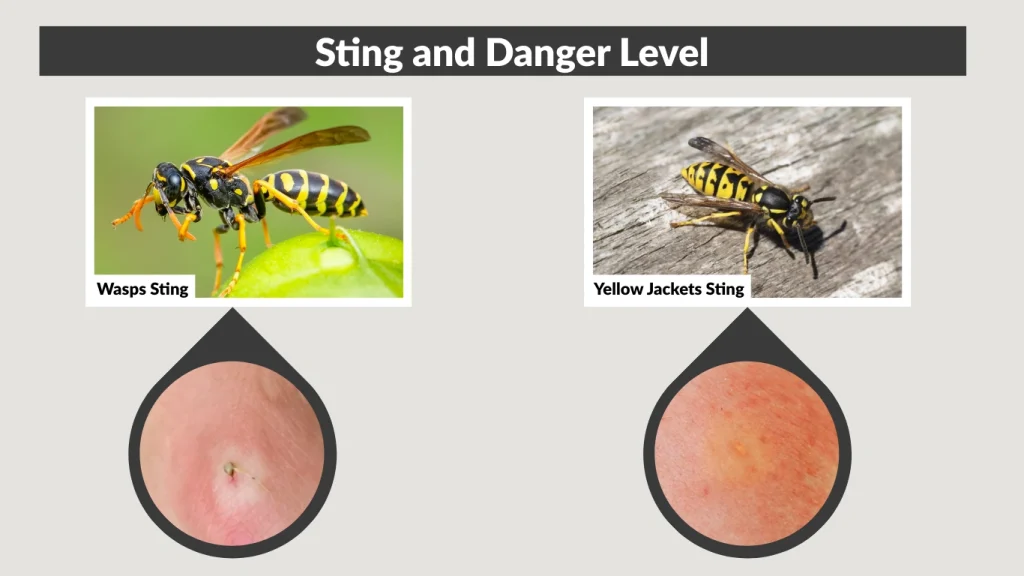
Sting Ability
Both can sting multiple times due to smooth stingers. Yellow jackets often attack in groups, increasing the risk of multiple stings.
Venom & Reaction
Wasp and yellow jacket venom can cause pain, swelling, and allergic reactions. Yellow jackets are more likely to sting repeatedly, which can be dangerous for allergic individuals.
Ecological Roles
Wasps help control pest populations by hunting insects and, in some cases, aid in pollination. Yellow jackets also control pests but contribute little to pollination due to their smooth, hairless bodies.
Quick Comparison Table (Visual Summary)
The table below offers a side-by-side view of key traits, making it easier to tell wasps and yellow jackets apart.
| Feature | Wasp (General) | Yellow Jacket |
| Body Shape | Slender | Stocky |
| Color Pattern | Varies | Yellow/black |
| Aggression | Varies | High |
| Nesting | Various spots | Often underground |
| Sting | Multiple | Multiple, often in groups |
Which One is More Problematic for Humans?
While both wasps and yellow jackets can sting and defend their nests, yellow jackets generally present a bigger risk to humans. Their aggressive nature, combined with their habit of nesting in areas close to human activity, increases the chance of accidental encounters. In late summer and early fall, when natural food sources decline, yellow jackets actively scavenge for sugary drinks, meats, and other human foods. This brings them directly into contact with picnics, outdoor gatherings, and garbage bins, making stings more likely.
Another reason yellow jackets are more problematic is their group defense strategy. When a yellow jacket nest is disturbed, it can trigger an immediate swarm attack involving dozens or even hundreds of wasps, all capable of stinging multiple times. This aggressive behavior significantly raises the risk of severe injuries, especially for those allergic to wasp venom.
In comparison, many other wasp species, such as paper wasps, are less confrontational and only attack when directly threatened. While any wasp sting can cause pain or allergic reactions, yellow jackets’ combination of aggression, persistence, and proximity to people makes them the more dangerous of the two for everyday encounters.
How to Identify Them Quickly in the Field
Correctly identifying a wasp or yellow jacket is important for safety and pest control decisions. By focusing on a few visual and behavioral clues, you can tell them apart without getting too close.
1. Body Shape and Size
- Wasps: Generally slender with a long, narrow waist and elongated legs that may dangle while flying.
- Yellow Jackets: More compact and stocky with a less pronounced waist.
2. Color Patterns
- Wasps: Can be yellow and black, but also brown, reddish, or metallic blue depending on the species.
- Yellow Jackets: Always have bright yellow-and-black banding across the abdomen.
3. Behavior and Activity
- Wasps: Often seen visiting flowers for nectar or hunting insects.
- Yellow Jackets: Frequently scavenge for sugary drinks, meats, and human food, especially in late summer.
4. Nest Location
- Wasps: May build paper nests under eaves, in trees, or in bushes.
- Yellow Jackets: Commonly nest underground in burrows, but also in wall voids or dense shrubs.
Final Thoughts
While yellow jackets are a type of wasp, their appearance, nesting habits, and behavior make them stand out as one of the most aggressive members of the wasp family. They are shorter and stockier than many other wasps, have a consistent yellow-and-black pattern, and are far more likely to sting repeatedly, especially when defending their nests.
