

Yellow jackets are among the most aggressive stinging insects, and having their nest near your home can quickly become a serious safety concern. Unlike bees, yellow jackets can sting multiple times, and they fiercely defend their colonies. Whether they’ve built a nest underground, in your walls, or in a tree, removing it requires the right approach to avoid painful stings and potential allergic reactions. In this guide, we’ll explain how to identify a yellow jacket nest, remove it safely, and take steps to prevent them from returning.
Understanding Yellow Jacket Nests

Yellow jackets are highly aggressive stinging insects that live in large colonies. Their nests are made from chewed wood fibers mixed with saliva, creating a papery, layered structure. These colonies can grow rapidly, and by late summer, they may house thousands of individuals. Because yellow jackets defend their nest aggressively, knowing exactly what to look for is essential before attempting removal.
What Yellow Jacket Nests Look Like
- Paper-like material with visible layers.
- Grey or tan in color.
- A single entrance hole leading to multiple internal chambers.
- Size can range from a small ball to a large basketball.
Common Nest Locations
- Underground burrows – often in abandoned rodent holes.
- Inside structures – walls, attics, sheds, or under decks.
- Hanging sites – trees, shrubs, or overhangs (less common).
Why Removal Should Be Done Carefully
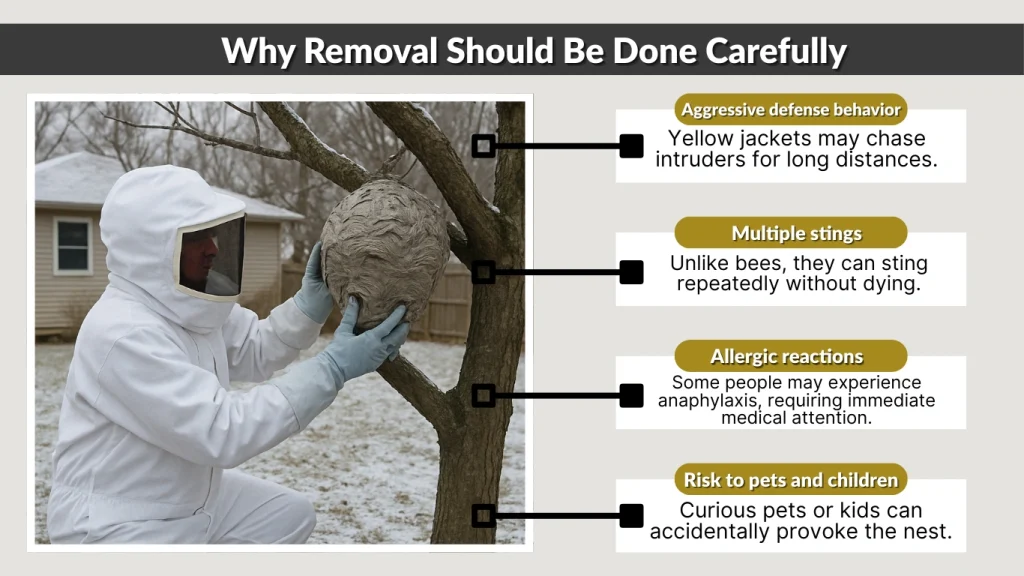
Removing a yellow jacket nest is not the same as dealing with a typical insect problem. These wasps are extremely territorial and will defend their nest with multiple, painful stings. A single disturbance can trigger dozens of yellow jackets to attack at once, making safety the top priority. For those allergic to wasp venom, even one sting can lead to a serious medical emergency.
Key Risks to Consider
- Aggressive defense behavior – yellow jackets may chase intruders for long distances.
- Multiple stings – unlike bees, they can sting repeatedly without dying.
- Allergic reactions – some people may experience anaphylaxis, requiring immediate medical attention.
- Risk to pets and children – curious pets or kids can accidentally provoke the nest.
Why Caution Matters
- A hasty or poorly planned removal attempt can make the situation worse.
- Professional help may be the safest option for large or hard-to-reach nests.
Safety Precautions Before Attempting Removal
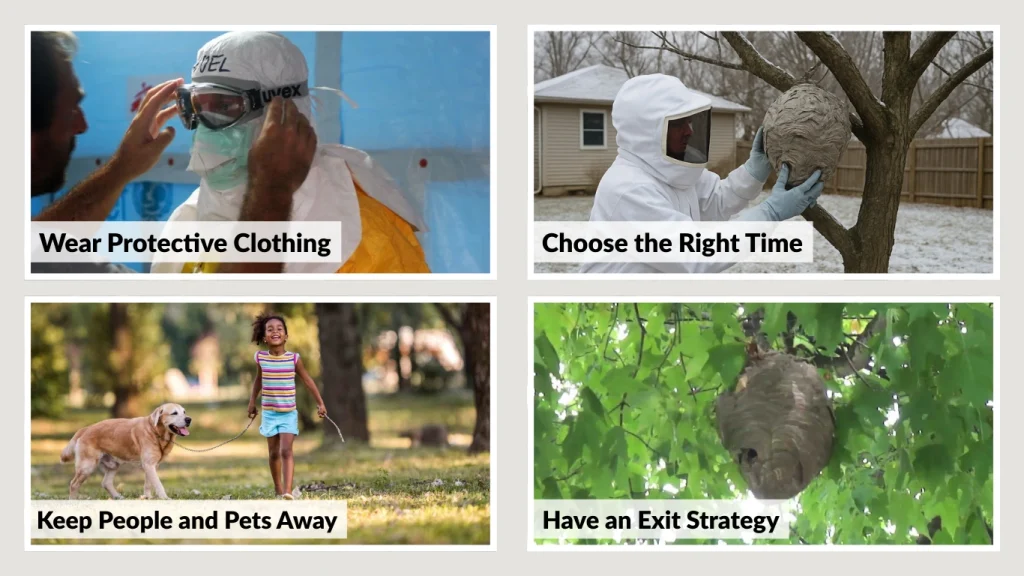
Before tackling a yellow jacket nest, proper preparation is essential to reduce the risk of injury and stings.
Wear Protective Clothing
Dress in long-sleeved shirts, thick pants, and gloves to shield your skin. A bee veil or safety goggles can protect your face and eyes from aggressive wasps.
Choose the Right Time
Plan the removal for early morning or late evening when yellow jackets are less active. Cooler temperatures during these times slow their movement, making them easier to handle.
Keep People and Pets Away
Ensure children and pets remain indoors during the removal process to prevent accidental provocation of the nest.
Have an Exit Strategy
Always maintain a clear path for retreat in case the wasps swarm. Avoid placing tools or objects in your escape route.
How to Locate the Nest
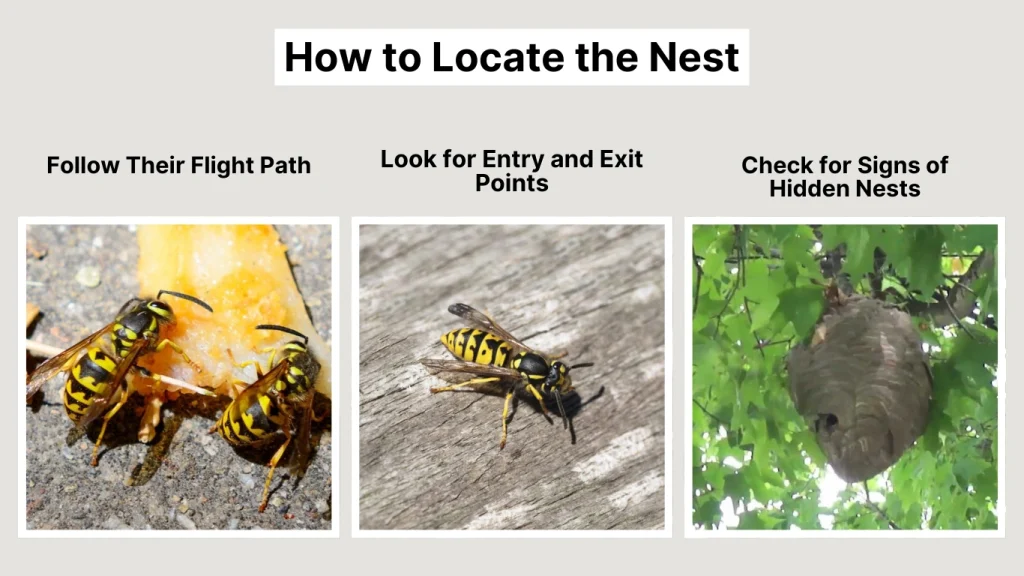
Finding the exact location of a yellow jacket nest is the first step toward safe and effective removal. Because these insects can travel far in search of food, you may see them around your property without the nest being nearby. Careful observation will help pinpoint where they are coming from.
Follow Their Flight Path
Watch yellow jackets closely after they leave food sources such as garbage cans, pet food, or fallen fruit. They typically fly in a straight line back to their nest, which can guide you to the entrance.
Look for Entry and Exit Points
Nests often have a single entrance that worker wasps use repeatedly. This could be a hole in the ground, a gap in a wall, or an opening under a deck or shed.
Check for Signs of Hidden Nests
Buzzing sounds inside walls, increased wasp activity near a certain area, or glimpses of papery material in cracks can indicate a concealed nest. Identifying these signs early will make the removal process more straightforward and safer.
Methods to Get Rid of a Yellow Jacket Nest
Choosing the right method depends on where the nest is (ground, wall void, shrub), how large it is, and your comfort level. Below are safe, practical options with clear steps. Never use fire or gasoline, and always wear protective clothing and work at dusk or dawn.
Natural & DIY Methods (Low toxicity)
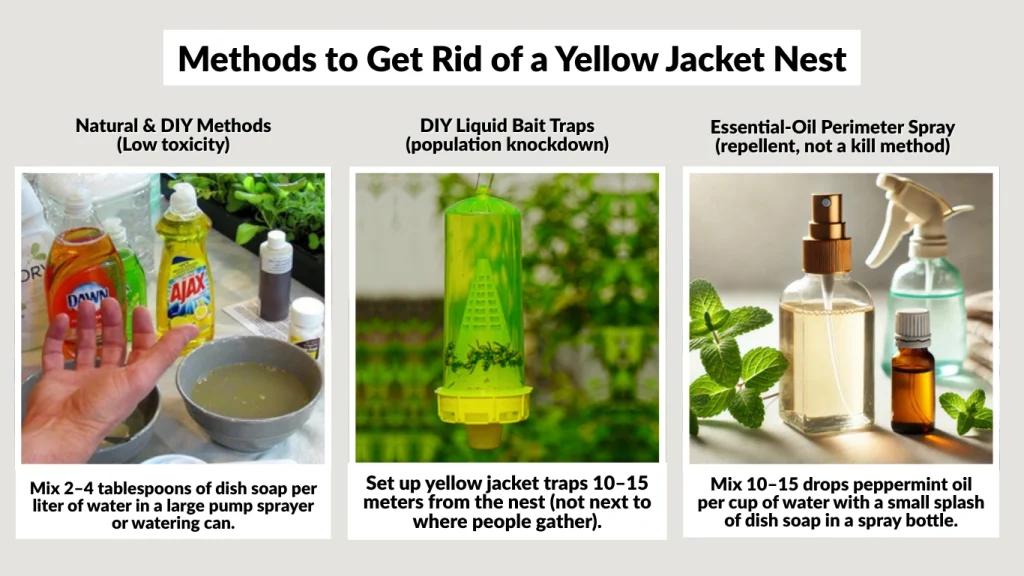
These approaches work best for small, accessible nests, especially in the ground.
Soapy Water Drench (for ground nests)
- Mix 2–4 tablespoons of dish soap per liter of water in a large pump sprayer or watering can.
- At dusk or dawn, approach quietly and locate the single entrance hole.
- Stand to the side of the flight path; pour or spray directly into the entrance for 10–15 seconds to flood the tunnels.
- Step back and observe from a safe distance.
- Recheck after 24 hours; if activity remains, repeat the drench once more.
DIY Liquid Bait Traps (population knockdown)
- Set up yellow jacket traps 10–15 meters from the nest (not next to where people gather).
- Fill with a protein bait (spring/early summer) or sweet bait (late summer)—follow trap instructions.
- Replace bait as directed; traps reduce worker numbers and make treatment safer.
- Use traps before and after treatment to curb stragglers.
Essential-Oil Perimeter Spray (repellent, not a kill method)
- Mix 10–15 drops peppermint oil per cup of water with a small splash of dish soap in a spray bottle.
- Spray around, not into, the suspected area to discourage scouting and redirect traffic.
- Reapply after rain; use alongside a primary kill method.
Step-by-Step Removal Guide

Eliminating a yellow jacket nest requires a planned approach to ensure both safety and effectiveness. Following these steps in order will help you minimize risks and achieve complete removal.
Step 1 – Wear Protective Clothing
Before approaching the nest, put on thick, long-sleeved clothing, gloves, and closed-toe shoes. A bee veil or protective headgear is essential to shield your face and neck. Ensure there are no gaps where wasps could get inside your clothing.
Step 2 – Approach at the Right Time
Always plan to treat the nest during early morning or late evening. During these times, most yellow jackets are inside the nest, and cooler temperatures make them less active and slower to react.
Step 3 – Apply Your Chosen Method
Whether using soapy water, insecticide spray, or dust, apply it directly into the nest entrance. Make sure to saturate or thoroughly coat the area so the treatment reaches deep inside the colony.
Step 4 – Retreat and Observe
Once the treatment is applied, retreat to a safe distance. Watch the nest for the next 24–48 hours to determine if any activity remains. A small number of stragglers may still return, but there should be no steady stream of wasps entering or exiting.
Step 5 – Remove and Dispose of the Nest
When you are certain there is no more activity, carefully remove the nest. Place it in a heavy-duty plastic bag, seal it tightly, and dispose of it with your trash. If the nest was in a wall or structure, repair and seal the entry point to prevent future infestations.
What NOT to Do When Removing a Nest
While it might be tempting to try quick or unconventional methods, certain actions can make yellow jacket nest removal more dangerous, ineffective, or even illegal. Avoid these mistakes to keep yourself and others safe.
Do Not Block the Nest Entrance Before Treatment
Blocking the entrance will not trap the wasps inside. Instead, it will agitate them and force them to find another way out—often into nearby structures or directly toward you.
Never Use Fire or Gasoline
Using fire is extremely dangerous and can cause property damage or wildfires. Pouring gasoline or other flammable liquids into a nest is toxic to the environment, poses explosion risks, and is illegal in many places.
Avoid Daytime Removal
Yellow jackets are most active during the day, which means attempting removal then greatly increases your chances of being stung multiple times.
Do Not Attempt Without Proper Protection
Even small nests can contain hundreds of aggressive wasps. Without proper clothing and gear, you risk serious injury.
FAQs
How long do yellow jackets stay in a nest?
Yellow jackets typically use their nest for a single season. By late fall, the colony dies off, leaving only fertilized queens to survive winter in sheltered spots. These queens will start new nests the following spring, meaning an old nest will not be reused but the area could still attract new colonies.
Can yellow jackets reuse an old nest?
No, yellow jackets never reuse an old nest. Once the colony dies in winter, the structure becomes abandoned. However, if the conditions around the site remain favorable, such as abundant food and shelter, new queens may choose to build a fresh nest in the same general location.
Is it safe to remove a nest during the day?
Removing a yellow jacket nest during the day is not safe. Daytime is when the colony is most active, with many workers outside foraging and ready to defend. Attempting removal at this time greatly increases your chances of multiple stings. Early morning or late evening is far safer.
How far will yellow jackets chase you?
When their nest is disturbed, yellow jackets can chase an intruder for 50 to 100 feet, sometimes even farther if the colony is highly agitated. They are persistent defenders and can sting multiple times, so having a clear escape path before starting removal is critical for safety.
Can I drown a yellow jacket nest with water alone?
Plain water usually isn’t effective for killing an entire yellow jacket colony. The tunnels and chambers inside the nest are designed to shed moisture, meaning many wasps survive. Mixing dish soap with water is far more effective, as the soap clogs their breathing pores, quickly suffocating them.
