

Ground-nesting bees include a wide range of species that dig burrows in soil, adapt to abandoned holes, or build underground colonies. While some are gentle pollinators like miner bees and sweat bees, others such as yellow jackets can be aggressive defenders of their nests. Understanding these bees is important for identifying them in your yard, appreciating their ecological role, and knowing when caution is necessary.
1. Bumble Bees (Bombus spp.)

Bumble bees are large, fuzzy black-and-yellow insects often found buzzing around flowers in spring and summer. Many species prefer nesting underground, using abandoned rodent burrows or soil cavities. They are vital pollinators but can become aggressive when defending their nests.
Identification
- Large, round bodies covered with dense hair (fuzzy appearance).
- Distinct black-and-yellow striped coloration.
- Generally bigger than honey bees and ground-dwelling sweat bees.
- Slow, loud buzzing flight pattern.
Nesting
Bumble bees often establish nests in abandoned rodent burrows, compost heaps, or grassy soil cavities. Unlike solitary bees, bumble bees live in small colonies that may contain 50–400 individuals. Their underground nests are insulated and hidden, making them difficult to detect until disturbed.
Habitat
These bees thrive in temperate regions across North America, Europe, and parts of Asia. They prefer areas with abundant flowering plants, including meadows, gardens, and woodland edges. In residential areas, bumble bees may nest near lawns or fields where loose soil is available.
Behaviors and Sting
Bumble bees are generally non-aggressive while foraging but will defend their colony if threatened. Unlike honey bees, bumble bees can sting multiple times without dying. Their sting is painful and may cause swelling, though they usually sting only in defense of their nest.
2. Miner Bees (Andrena spp.)

Miner bees are solitary ground-nesting bees that dig small burrows in sandy or loose soil. They are among the earliest spring pollinators and play an important role in fruit tree pollination. Despite their numbers, they are non-aggressive and rarely sting.
Identification
- Small to medium-sized bees, usually 7–15 mm long.
- Brown, black, or reddish in color with fine hair.
- Females have noticeable pollen-collecting hairs on their legs.
- Often mistaken for small honey bees but live alone.
Nesting
Female miner bees excavate tunnels in well-drained sandy soil. Each tunnel contains several brood cells where eggs are laid with a pollen and nectar supply. Nests often appear in clusters, forming small bee “villages,” though each female maintains her own nest.
Habitat
Miner bees are found across North America, Europe, and Asia. They prefer sunny areas with bare soil, such as gardens, lawns, paths, and fields. They are especially common in orchards and areas with flowering plants in early spring.
Behaviors and Sting
Miner bees are gentle pollinators and not aggressive toward humans. They rarely sting, and if they do, it is mild compared to honey bees or wasps. Their main activity is pollination, making them beneficial insects in both wild and agricultural environments.
3. Sweat Bees (Halictidae family)

Sweat bees are among the most common small bees found worldwide. Many species nest in the ground, creating tiny burrows in bare soil. They are named for their attraction to human sweat, from which they obtain salt and moisture.
Identification
- Very small bees, ranging from 4–10 mm.
- Shiny metallic colors, often green, blue, or bronze.
- Some species are dull black or brown.
- Slender bodies compared to bumble bees or honey bees.
Nesting
Sweat bees typically dig narrow tunnels in exposed or lightly vegetated soil. Depending on the species, they may nest alone or in semi-social groups with multiple females sharing an entrance. Nests are usually inconspicuous, marked only by a small soil mound.
Habitat
They are highly adaptable and occur in gardens, lawns, meadows, forests, and agricultural lands. They prefer sunny spots with loose, well-drained soil. Some species are especially abundant in North America and thrive in suburban yards.
Behaviors and Sting
Sweat bees are generally non-aggressive. They will only sting if trapped or pressed against the skin, and the sting is mild compared to honey bees or wasps. Their tendency to land on humans for sweat can be annoying, but they are valuable pollinators for wildflowers and crops.
4. Cellophane Bees (Colletes spp.)
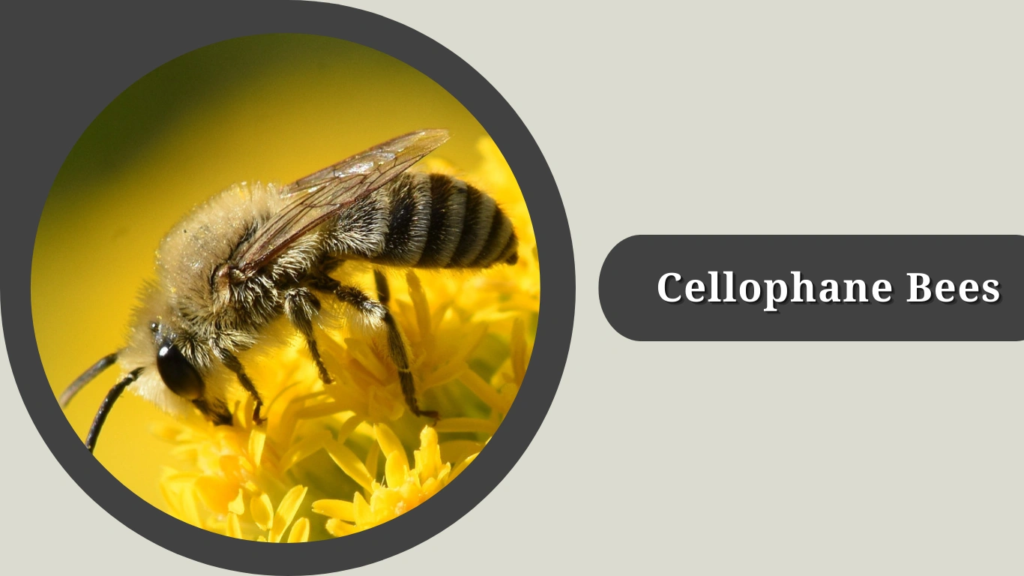
Cellophane bees, also called plasterer bees or polyester bees, are solitary ground-nesting insects. They are named for the waterproof, cellophane-like substance females produce to line their nest cells. This natural “plastic” protects the developing larvae from moisture and decay.
Identification
- Medium-sized bees, typically 8–14 mm long.
- Slender bodies with pale hair bands across the abdomen.
- Often resemble small honey bees but with fuzzier thoraxes.
- Females have strong mandibles for digging.
Nesting
Female cellophane bees dig burrows in sandy or loamy soils. Each tunnel leads to brood cells lined with their unique secretion, which hardens into a protective, plastic-like coating. This keeps food stores (pollen and nectar) fresh for the larvae. Nests often occur in aggregations, but each female builds and maintains her own burrow.
Habitat
They are widespread across North America, Europe, and Asia, thriving in sandy banks, fields, meadows, and even suburban lawns. Cellophane bees prefer sunny locations with loose, well-drained soil. Some species specialize in pollinating specific plants, making them important for local ecosystems.
Behaviors and Sting
Cellophane bees are docile and rarely sting. They spend most of their time digging nests and collecting pollen. Even when nests are clustered in large numbers, they pose little threat to humans and pets. Their gentle nature makes them valuable, non-aggressive ground pollinators.
5. Digger Bees (Anthophora spp.)

Digger bees are robust, hairy insects that often resemble small bumble bees. They are solitary nesters, with females digging tunnels in dry, sandy, or compacted soil. These bees are important pollinators and are usually seen buzzing energetically around flowers.
Identification
- Medium to large bees, usually 12–18 mm long.
- Dense hair on thorax, often gray, brown, or yellowish.
- Strong, fast fliers with a loud buzz.
- Often confused with bumble bees but slimmer in shape.
Nesting
Female digger bees excavate deep tunnels in soil banks, garden edges, or open ground. Each tunnel leads to several brood chambers stocked with pollen and nectar for developing larvae. Although they are solitary, many nests are often built close together, creating the appearance of a colony.
Habitat
Digger bees thrive in dry, open environments such as meadows, sandy banks, fields, and gardens. They prefer areas with little vegetation cover, which makes digging easier. They are common in North America, especially in warm, sunny climates.
Behaviors and Sting
Digger bees are non-aggressive and rarely sting, even when disturbed near their nesting sites. They spend most of their time foraging and nesting. Their sting is mild compared to wasps and yellow jackets, making them harmless to people and pets while being highly beneficial pollinators.
6. Mason Bees (Osmia spp.)
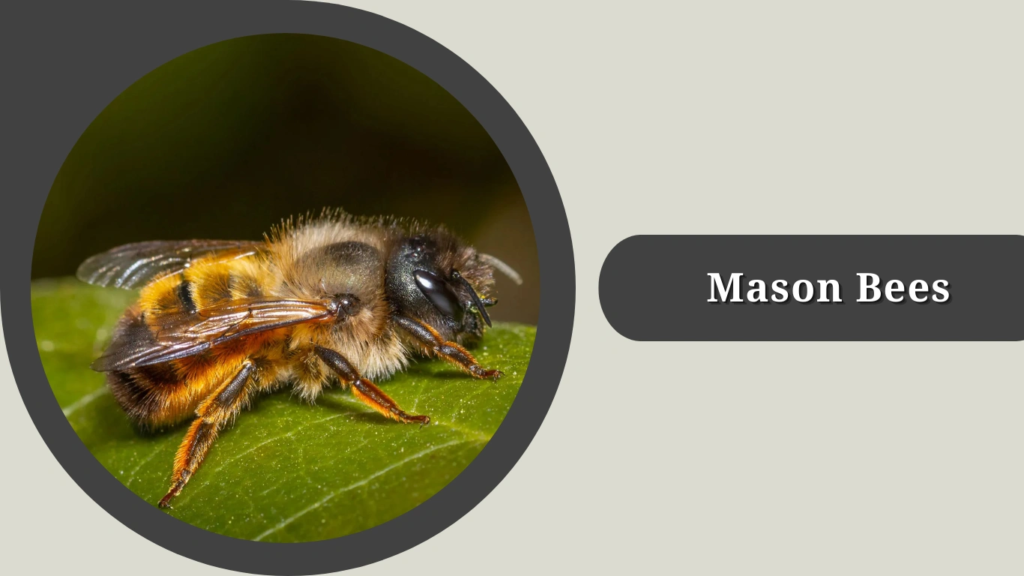
Mason bees are solitary pollinators well known for their use of mud or other natural materials to build nest partitions. While many species prefer cavities in wood or hollow stems, some also nest in soil or natural ground holes, especially in sandy areas. They are excellent pollinators and far more efficient than honey bees on a per-bee basis.
Identification
- Small to medium-sized bees, typically 8–12 mm long.
- Metallic blue, green, or black sheen on the body.
- Stocky build with dense hairs for pollen collection.
- Females carry pollen on their abdominal hairs, not on their legs like honey bees.
Nesting
Mason bees use pre-existing cavities, such as holes in wood, cracks, or hollow stems. In some cases, they adapt to ground cavities or soil banks. They seal off each brood cell with mud or plant material, hence the name “mason.” Each nest contains multiple cells, each provisioned with pollen and nectar for a single larva.
Habitat
They are widespread across North America, Europe, and Asia, commonly found in orchards, gardens, and woodland edges. They are especially important in fruit tree pollination, making them highly valued in agriculture. Many gardeners provide “bee hotels” to encourage mason bees.
Behaviors and Sting
Mason bees are extremely gentle and rarely sting. They are solitary, so they do not defend a colony like bumble bees or yellow jackets. If handled roughly, females may sting, but the sting is mild. Their calm behavior and efficiency make them one of the most beneficial ground- and cavity-nesting bees for gardeners and farmers.
7. Yellow Jackets (Vespula spp.)
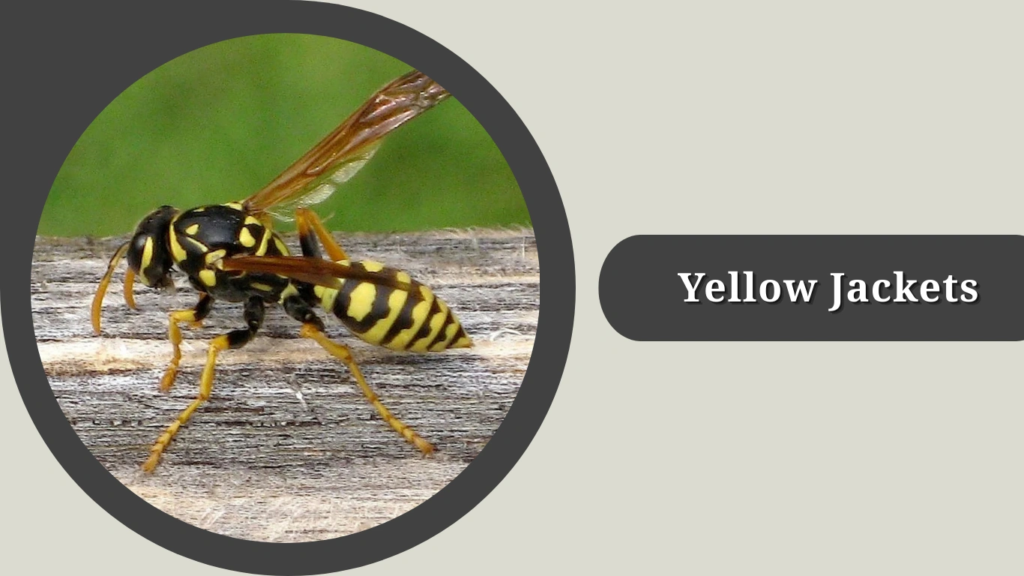
Yellow jackets are often mistaken for bees because of their black-and-yellow markings. However, they are actually wasps and one of the most aggressive ground-nesting stinging insects. They build large colonies underground and are especially defensive during late summer and fall.
Identification
- Medium-sized insects, about 10–16 mm long.
- Bright black-and-yellow striped bodies.
- Smooth, shiny appearance (unlike fuzzy bees).
- Quick, darting flight patterns.
Nesting
Yellow jackets typically build large paper nests underground, often in abandoned rodent burrows, soil cavities, or near tree roots. Their nests can contain thousands of workers by late summer. Unlike solitary ground bees, yellow jackets live in highly organized colonies with queens, workers, and drones.
Habitat
They are widespread across North America, Europe, and other temperate regions. Yellow jackets are frequently encountered in backyards, gardens, parks, and fields. They thrive near human activity because of access to food waste, sugary drinks, and protein sources.
Behaviors and Sting
Yellow jackets are extremely aggressive when defending their nests. They can sting repeatedly, delivering painful venom that may cause allergic reactions in sensitive individuals. Unlike most ground-nesting bees, they actively seek out food and can become pests at outdoor events. Their stings are considered more dangerous than those of bumble bees or miner bees.
8. Cuckoo Bees (Nomada spp.)
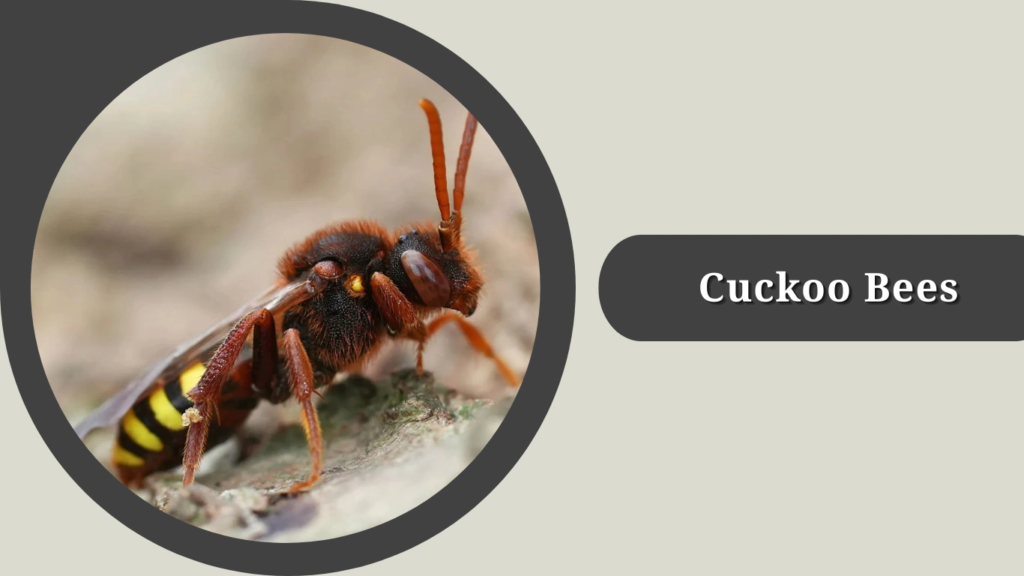
Cuckoo bees are parasitic ground-nesting bees that do not build their own nests. Instead, females lay eggs in the burrows of other solitary ground bees, particularly Andrena (miner bees). The cuckoo bee larva then consumes the host’s stored pollen and nectar, often killing the host’s offspring.
Identification
- Small to medium-sized bees, 6–12 mm long.
- Often slender with little body hair.
- Brightly marked with red, black, or yellow patterns.
- Wasplike in appearance due to their smooth bodies.
Nesting
Cuckoo bees do not dig their own burrows. Instead, they invade the nests of other ground bees. A female waits until the host bee leaves, then enters to lay her egg on the stored provisions. The emerging larva eliminates the host egg or larva and feeds on the pollen supply.
Habitat
They are found in the same environments as their host bees—sandy soils, meadows, gardens, and open fields. Since their survival depends on other solitary bees, cuckoo bees are distributed wherever ground-nesting bee populations thrive.
Behaviors and Sting
Cuckoo bees are solitary and spend much of their time searching for host nests. They are not aggressive and rarely sting. Their role as parasites may seem harmful, but they help balance bee populations and maintain ecological diversity.
9. Carpenter Bees (Xylocopa spp.)
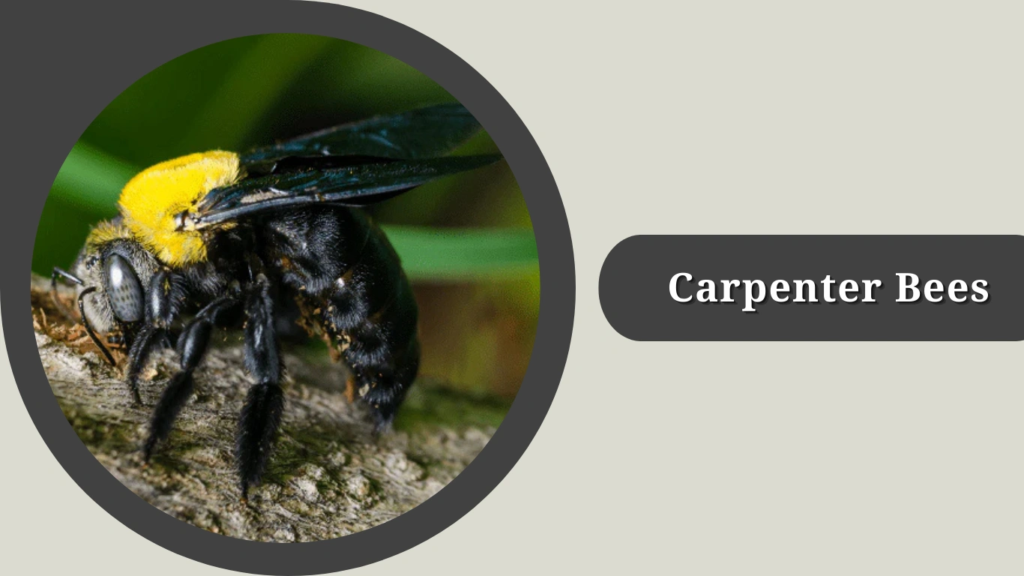
Carpenter bees are large, solitary bees often confused with bumble bees. While most species nest in wood, some will also establish burrows in soil banks or soft ground when suitable wooden structures are not available. Their size and loud buzzing make them very noticeable around homes and gardens.
Identification
- Large bees, 12–25 mm long.
- Shiny, hairless black abdomens (unlike fuzzy bumble bees).
- Robust, heavy bodies with strong wings.
- Males often hover aggressively near flowers but cannot sting.
Nesting
Carpenter bees usually tunnel into untreated or weathered wood, but certain species adapt to ground nesting in soil banks or soft earth. Females bore round holes that lead to tunnel systems, where they create brood chambers filled with pollen and nectar. Each tunnel may be reused and expanded over time.
Habitat
They are found worldwide, especially in temperate and tropical regions. Carpenter bees are common in gardens, wooded areas, and near human structures. In soil-nesting cases, they prefer compact soil or banks exposed to sunlight.
Behaviors and Sting
Male carpenter bees are territorial and may dive toward intruders, but they cannot sting. Females are capable of stinging but rarely do unless provoked. Although they are solitary, their nesting activity can sometimes cause minor damage to wooden structures. In the ground, however, they pose no structural risk and serve as excellent pollinators.
10. Alkali Bees (Nomia melanderi)
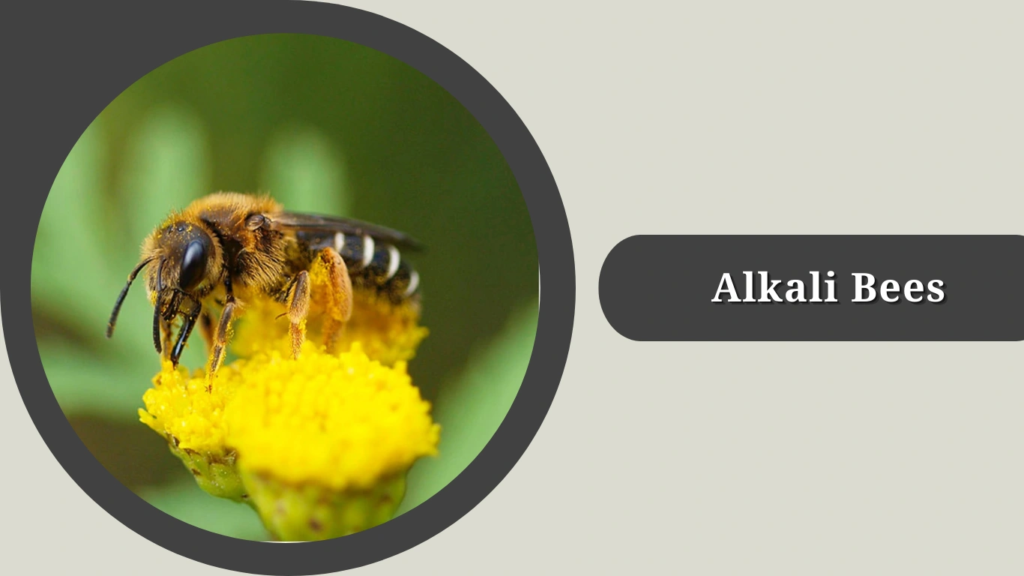
Alkali bees are solitary ground-nesting bees best known for their role as efficient pollinators of alfalfa. They are unusual among ground nesters because they thrive in alkaline or salty soils that many other insects avoid. Farmers often encourage their presence due to their exceptional value in crop pollination.
Identification
- Medium-sized bees, 8–12 mm long.
- Dark bodies with metallic green or bluish highlights.
- Narrow yellow or pale bands on the abdomen.
- Similar in size to honey bees but slimmer and shinier.
Nesting
Alkali bees construct extensive underground burrows in hard, salty soils. Each female digs her own nest, which may include dozens of brood cells provisioned with pollen and nectar. In areas where soil conditions are right, thousands of females may nest together, forming dense bee aggregations that look like colonies but function independently.
Habitat
They are native to the western United States and thrive in arid regions with alkaline or clay soils. Farmers in states like Washington, Oregon, and Idaho often maintain special nesting beds for alkali bees near alfalfa fields to support pollination.
Behaviors and Sting
Alkali bees are non-aggressive and rarely sting. They are gentle pollinators, spending most of their time on flowers. Because of their effectiveness at pollinating alfalfa blossoms—better than honey bees—they are considered one of the most economically important ground-nesting bee species in agriculture.
11. Plasterer Bees (Colletidae family)

Plasterer bees, also called polyester bees, are solitary ground-nesting bees known for their unique habit of lining nest cells with a waterproof, plastic-like secretion. This lining resembles cellophane and protects the developing larvae from moisture, fungi, and bacteria.
Identification
- Small to medium-sized bees, 6–15 mm long.
- Often slender with gray, brown, or black coloration.
- Pale bands of short hair on the abdomen.
- Females have strong mandibles used for digging.
Nesting
Plasterer bees dig burrows in loose or sandy soil, forming tunnels that lead to individual brood cells. Each cell is lined with a waterproof secretion that hardens into a silky, protective coating. This adaptation allows them to thrive in soil conditions that might be too damp for other bees.
Habitat
They are widespread across North America, Europe, and other temperate regions. These bees prefer open, sunny areas such as meadows, fields, and lawns. They often nest in aggregations, where many individuals dig burrows close together, though each bee tends her own nest independently.
Behaviors and Sting
Plasterer bees are docile and not aggressive toward humans. They rarely sting, and their mild sting is only used in self-defense. Their primary focus is on foraging and nest building, making them valuable and harmless ground-dwelling pollinators.
12. Augochlora Bees (Augochlora spp.)

Augochlora bees are small, metallic green ground-nesting bees belonging to the sweat bee family. Their shimmering colors make them easy to spot, and they play a significant role as pollinators of wildflowers. Unlike many sweat bees that prefer open ground, Augochlora species often choose rotting wood near the ground or soil cavities for nesting.
Identification
- Small bees, about 6–10 mm long.
- Metallic green, blue, or golden sheen on the body.
- Slender bodies with short hair.
- Often confused with flies due to size and quick movement.
Nesting
Augochlora bees typically nest in rotting logs, soil crevices, or abandoned ground cavities. Some species burrow directly into soil banks, creating tunnels with individual brood cells. Females line these chambers with resin or secretions to protect developing larvae.
Habitat
They are common across North and South America, especially in warm and humid climates. Augochlora bees prefer woodland edges, meadows, and gardens where flowers are abundant. Their presence near fallen logs or soil cavities makes them an adaptable pollinator species.
Behaviors and Sting
These bees are non-aggressive and very unlikely to sting unless handled. They spend most of their time foraging on flowers for nectar and pollen. Their metallic appearance makes them distinctive and admired, and they are considered beneficial pollinators with little risk to humans.
13. Long-Horned Bees (Melissodes spp.)

Long-horned bees are named for the exceptionally long antennae of the males, which make them easy to identify. They are solitary ground nesters that specialize in pollinating plants like sunflowers, asters, and other composites. Their energetic foraging makes them an important group of wild pollinators.
Identification
- Medium-sized bees, 10–18 mm long.
- Males have very long, threadlike antennae.
- Females have dense hairs on their hind legs for pollen collection.
- Dark brown to black bodies with pale yellow or white hair bands.
Nesting
Females dig tunnels in sandy or loose soil, where they create brood chambers for their larvae. Each chamber is stocked with a mixture of pollen and nectar. Though solitary, many females may nest close to each other, creating noticeable ground aggregations.
Habitat
Long-horned bees are common in North and South America, especially in prairies, grasslands, and gardens with abundant composite flowers. They prefer sunny, open areas with loose soil suitable for burrowing.
Behaviors and Sting
These bees are active foragers, often buzzing around flowers in large numbers. They are not aggressive toward humans, and stings are rare. Males often patrol flowers and hover near females, but they cannot sting. Females may sting only if handled. Their role as sunflower pollinators makes them especially valuable in both wild and cultivated landscapes.
14. Sweat Bee (Lasioglossum spp.)

Lasioglossum bees are one of the largest genera of sweat bees, with hundreds of species worldwide. Many are small, black ground-nesting bees often overlooked due to their size and inconspicuous appearance. They are important wild pollinators, frequently visiting flowers in gardens and fields.
Identification
- Tiny to small bees, usually 3–8 mm long.
- Usually dark brown or black, sometimes metallic green.
- Slender bodies with sparse hair.
- Females carry pollen on scopal hairs located on their hind legs.
Nesting
Most Lasioglossum species are solitary, though some show primitive social behavior with multiple females sharing a nest. They excavate tunnels in bare or lightly vegetated soil, with each tunnel containing brood cells provisioned with pollen and nectar. Nests may be grouped in small aggregations.
Habitat
They are found worldwide in diverse habitats, from woodlands to suburban gardens. Lasioglossum bees prefer sunny areas with sandy or loamy soils. They are often spotted foraging on small wildflowers and garden blooms throughout spring and summer.
Behaviors and Sting
Sweat bees in this group are docile and usually harmless. They may land on people to lick sweat for salts, which can be startling but not dangerous. Their sting is weak and rarely delivered unless handled or pressed against the skin. Despite their size, they are vital pollinators for many ecosystems.
15. Leafcutter Bees (Megachile spp.)

Leafcutter bees are solitary pollinators well known for cutting neat, circular pieces from leaves and petals to build their nests. While many species prefer hollow stems or wood cavities, some also use soil cavities and ground holes for nesting. Their efficient pollination makes them especially valuable for gardens and crops.
Identification
- Medium-sized bees, about 7–18 mm long.
- Dark bodies with light hair bands on the abdomen.
- Females carry pollen on hairs under the abdomen, not on their legs.
- Distinctive behavior of carrying leaf fragments while flying.
Nesting
Leafcutter bees create nests in pre-existing cavities such as hollow stems, wood holes, or cracks in soil banks. They cut circular pieces of leaves or petals to line and partition brood cells. Each chamber contains a pollen ball and an egg, sealed off with leaf fragments. Some species adapt to ground holes for nesting.
Habitat
They are distributed worldwide, especially in temperate regions. Leafcutter bees thrive in gardens, fields, orchards, and forest edges. In agricultural settings, they are managed as pollinators for crops like alfalfa, fruits, and vegetables.
Behaviors and Sting
Leafcutter bees are gentle and non-aggressive. They rarely sting and pose little risk to humans or pets. Unlike honey bees, they do not defend a colony, as each female tends to her own nest. Their leaf-cutting behavior may cause minor cosmetic damage to plants, but they provide far greater benefits as efficient pollinators.
