

Yellow jacket bees are one of the most aggressive stinging insects encountered by humans. Unlike honeybees, which sting once and die, yellow jackets can sting multiple times, injecting venom with each sting. This makes their attacks far more painful and potentially dangerous, especially for people allergic to insect venom.
Encounters often occur during outdoor activities where food or sugary drinks are present. Because yellow jackets are both predators and scavengers, they are drawn to human gatherings, increasing the likelihood of stings. Understanding the symptoms, treatment, and first aid for yellow jacket bee stings can help reduce discomfort and prevent complications.
What Does a Yellow Jacket Bee Sting Look Like?

Immediate Appearance
A sting from a yellow jacket bee usually results in:
- A red welt at the sting site.
- A central puncture mark where the stinger pierced the skin.
- Rapid swelling and redness, sometimes within minutes.
- A burning or sharp pain that can last for hours.
The swelling can remain localized, or in some cases, spread several inches around the sting area. This is often mistaken for an allergic reaction, but mild swelling is a normal immune response.
Pictures and Visual Examples
Typical images of yellow jacket stings show raised, red welts with a white or darker center. In more sensitive individuals, the redness may expand and form hives.
Since many insects cause skin reactions, identifying the unique pattern of a yellow jacket sting helps ensure the correct treatment.
Symptoms of a Yellow Jacket Bee Sting

Mild Reactions
Most stings fall under the mild category. Common symptoms include:
- Sharp pain at the site of the sting.
- Redness and swelling lasting several hours.
- Itching or burning sensation as the body reacts to venom.
These symptoms usually resolve within 24–48 hours with basic first aid.
Moderate Reactions
Some people experience more noticeable swelling that extends beyond the sting site. For example, a sting on the hand may cause the entire hand to swell. Additional symptoms may include:
- Intense pain lasting several hours.
- Warmth or redness spreading further around the skin.
- Difficulty moving the affected area due to swelling.
Moderate reactions can last several days and may require over-the-counter treatment.
Severe Reactions
In rare but serious cases, people may experience systemic allergic responses. Symptoms include:
- Hives across the body.
- Swelling of the face, lips, or throat.
- Shortness of breath or wheezing.
- Dizziness, nausea, or vomiting.
- Anaphylaxis, a life-threatening reaction requiring emergency care.
Individuals with a history of severe allergic responses should always carry an epinephrine auto-injector and seek medical help immediately after being stung.
Yellow Jacket Bee Sting Pain

How Painful Is the Sting?
The pain from a yellow jacket bee sting is described as sharp, burning, and intense. Unlike mosquito bites or mild ant stings, the venom contains compounds that attack nerve endings and trigger strong inflammation.
Many people report that the pain is worse than a honeybee sting, partly because yellow jackets can sting repeatedly in quick succession. For someone stung multiple times, the discomfort may become overwhelming.
How Long Does the Pain Last?
The duration of pain depends on the individual’s sensitivity:
- Mild stings – Pain subsides within a few hours.
- Moderate stings – Pain and swelling may last 1–3 days.
- Severe allergic stings – Pain and systemic effects can last much longer and require medical treatment.
In most cases, localized pain eases within 24 hours, but swelling and itching may persist. If symptoms worsen instead of improving, medical evaluation is recommended.
First Aid for Yellow Jacket Bee Stings

Immediate Steps
Prompt action can significantly reduce pain and swelling:
- Move to safety – Leave the area to avoid further stings.
- Clean the wound – Wash with soap and water to remove venom and bacteria.
- Apply a cold compress – Use ice wrapped in cloth for 10–15 minutes to reduce swelling.
- Elevate the area – If stung on a limb, elevate it to limit swelling.
- Remove tight objects – Rings or bracelets should be taken off before swelling increases.
What to Put on a Yellow Jacket Bee Sting
Several topical treatments help soothe irritation:
- Baking soda paste – Neutralizes venom acidity.
- Vinegar or lemon juice – May reduce sting intensity.
- Calamine lotion – Relieves itching.
- Hydrocortisone cream – Reduces inflammation.
These treatments, combined with ice, typically bring relief within hours. For stronger reactions, antihistamines can help.
Home Remedies for Yellow Jacket Bee Stings
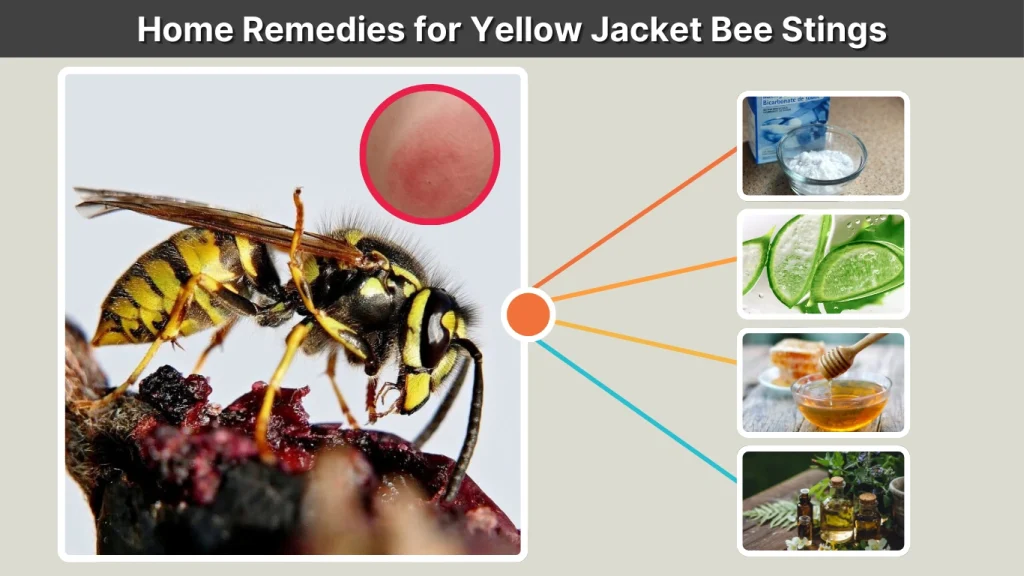
Natural Relief Options
If you don’t have access to medications immediately, certain household items can ease discomfort.
- Aloe vera gel cools the skin and reduces inflammation.
- Honey has antibacterial properties and can calm irritation.
- Apple cider vinegar may neutralize venom enzymes.
- Essential oils like tea tree or lavender oil provide mild pain relief and help prevent infection.
These remedies are especially useful for mild stings that don’t show signs of allergic reaction.
What’s Good for a Yellow Jacket Bee Sting?
Over-the-counter options often work faster:
- Antihistamines (diphenhydramine, loratadine) to reduce itching and swelling.
- Ibuprofen or acetaminophen to relieve pain.
- Topical anesthetics such as lidocaine for numbing effect.
These treatments should be applied as soon as possible to minimize discomfort.
Treatment Options and Medical Care

Over-the-Counter Treatments
Pharmacies stock a variety of sting treatments:
- Hydrocortisone cream helps control redness and swelling.
- Antibiotic ointments prevent infection if the skin is scratched.
- Cold and antihistamine gels can reduce both pain and itchiness.
These are effective for mild and moderate stings but should be combined with basic first aid for best results.
When to See a Doctor
Seek medical attention if you experience:
- Difficulty breathing or swallowing.
- Swelling of the face, lips, or throat.
- Severe dizziness, rapid heartbeat, or nausea.
- Multiple stings causing widespread pain.
In such cases, a doctor may prescribe stronger antihistamines, corticosteroids, or administer epinephrine in cases of anaphylaxis.
Yellow Jacket Bee Bite – Is It Real?
Many people search for information on yellow jacket bee bites, but technically, yellow jackets sting rather than bite.
However, they can bite with their mandibles when holding prey or defending their nests. This is not usually harmful to humans but may feel like a small pinch. The real danger comes from their stingers, which can inject venom multiple times.
Yellow Jacket Bee Sting Benefits (Myths vs Reality)
Some folk traditions suggest that stings may bring “health benefits,” such as stimulating the immune system or reducing arthritis pain.
While there are studies on bee venom therapy (apitherapy), yellow jacket venom is different and far more dangerous. There is no proven health benefit to deliberately being stung by a yellow jacket. In fact, repeated stings increase the risk of severe allergic reactions over time.
How to Prevent Yellow Jacket Bee Stings
Personal Protection
- Wear long sleeves and closed shoes when outdoors.
- Avoid wearing bright clothing or strong perfumes, as they attract insects.
- Keep food and drinks covered when eating outside.
- Stay calm and move slowly if a yellow jacket flies near you; swatting increases the chance of being stung.
Avoiding Nest Encounters
- Learn to recognize nests in the ground, trees, or wall voids.
- Do not disturb nests or attempt removal without professional help.
- Use repellents or traps when yellow jackets are abundant in outdoor areas.
By reducing attractants and staying alert, the risk of being stung decreases significantly.
FAQs
How dangerous is a yellow jacket bee sting?
A yellow jacket sting is more painful than a honeybee sting and can be dangerous if multiple stings occur or if the victim is allergic. Most people experience redness, swelling, and pain, but in severe cases, it can trigger life-threatening allergic reactions requiring immediate medical care.
What’s the fastest way to reduce swelling from a sting?
Applying a cold compress immediately after being stung is the quickest way to reduce swelling. Keeping the area elevated also helps. Over-the-counter antihistamines or hydrocortisone cream can further ease redness and itching, allowing faster recovery within hours to a couple of days.
Can yellow jackets sting more than once?
Yes, yellow jackets can sting multiple times because their stinger is smooth and doesn’t get stuck in the skin like a honeybee’s. This makes them more dangerous, especially when a nest is disturbed, as several yellow jackets may sting repeatedly in defense.
What should I do if I’m allergic to yellow jacket stings?
If you know you’re allergic, always carry an epinephrine auto-injector (EpiPen). After being stung, use it immediately if symptoms appear, and call emergency services. Even if symptoms seem mild at first, allergies can escalate quickly, making professional medical care essential.
How do I know if it’s a yellow jacket sting or another insect?
Yellow jacket stings are typically more painful, with rapid swelling and redness. Unlike honeybees, they may sting multiple times in succession. If you notice a smooth, shiny insect with bold black and yellow stripes near the site, chances are it was a yellow jacket sting.
