

Bumblebees are large, fuzzy insects that play a vital role in pollination. They are less aggressive than wasps and usually sting only when they feel threatened or if their nest is disturbed. While encounters are less frequent, a sting can still cause sharp pain, swelling, and discomfort. Knowing how to identify a bumblebee sting, recognize symptoms, and apply proper treatment is essential for minimizing risk and ensuring safety, especially for those prone to allergic reactions.
Identification of a Bumblebee Sting

What a Bumblebee Sting Looks Like
A bumblebee sting can be recognized by its distinct appearance and quick onset of symptoms. The sting site typically shows:
- A small puncture mark where the stinger entered.
- Redness and swelling developing within minutes.
- A raised, tender area around the sting.
Unlike honeybees, bumblebees do not leave their stinger behind, which means they can sting multiple times if provoked. This makes their sting somewhat similar to that of a wasp, though usually less aggressive in frequency.
How It Differs from Other Stings

- Bumblebees vs. Honeybees: Honeybee stingers are barbed and remain lodged in the skin, pumping venom until removed. Bumblebees, however, withdraw their stingers and may sting again.
- Bumblebees vs. Wasps: Wasp stings often cause more prolonged pain and may swell more extensively. Bumblebee stings are typically milder but can still be very painful.
In short, if you notice pain, redness, and swelling but no stinger left in the skin, it’s more likely from a bumblebee.
Symptoms of a Bumblebee Sting
Immediate Symptoms
Right after a sting, most people experience a sudden, sharp pain at the site. This pain is usually intense for a few minutes before subsiding into soreness. Other common immediate symptoms include:
- Localized redness forming around the sting.
- Swelling that develops quickly but remains near the puncture site.
- Itching or burning sensation that may last several hours.
These are the body’s natural responses to bee venom, which contains proteins that trigger inflammation.
Secondary Symptoms

Beyond the initial pain, some individuals may develop secondary reactions within a few hours:
- The sting site may feel warm and tender to the touch.
- Hives or small raised bumps may appear around the sting, especially in those with mild sensitivities.
- Mild fatigue or general discomfort, though rare, can occur in sensitive individuals.
Secondary symptoms are usually manageable and fade within a day or two with basic first aid.
Variability in Reactions
The intensity of symptoms depends on several factors:
- Location of the sting – stings on thinner skin (like the hands or face) often feel more painful.
- Individual sensitivity – people with allergies may experience stronger reactions, while others may only have mild redness.
- Number of stings – a single sting is usually not serious, but multiple stings can cause more widespread swelling and discomfort.
Recognizing whether a sting is producing a normal reaction or something more severe is critical in determining the next steps.
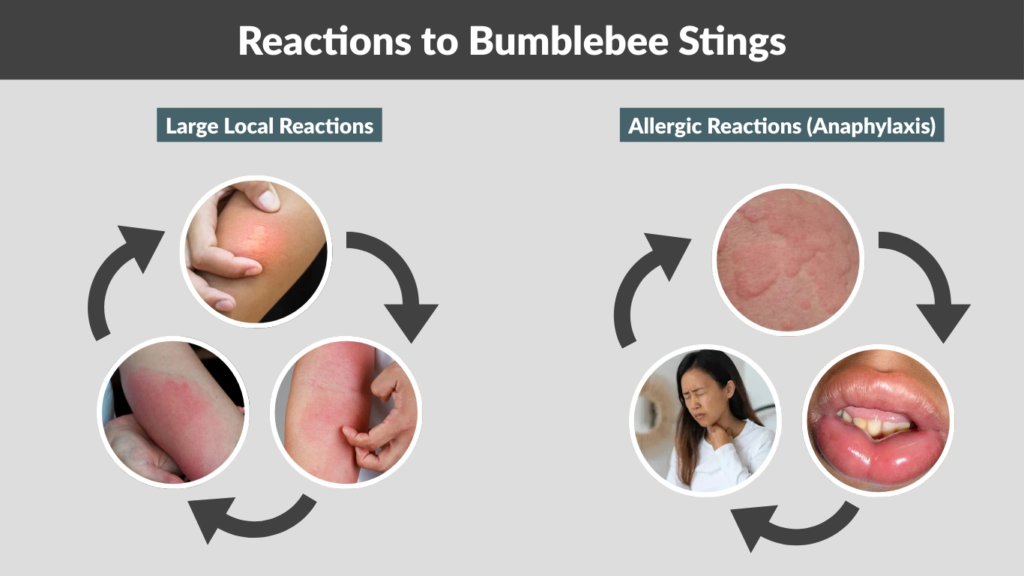
Reactions to Bumblebee Stings
Normal Reactions
For most people, a bumblebee sting causes only a localized reaction. The pain, redness, and swelling remain near the sting site and fade within a couple of days. These are considered normal and do not require medical intervention beyond basic first aid.
Large Local Reactions
Some individuals experience a stronger immune response called a large local reaction. Symptoms may include:
- Swelling spreading several inches beyond the sting site.
- Increased redness and itching lasting up to a week.
- Skin feeling firm or warm around the area.
Although uncomfortable, large local reactions are not usually dangerous. They can, however, interfere with daily activities—especially if the sting occurs on the hands, feet, or face.
Allergic Reactions (Anaphylaxis)
The most serious reaction to a bumblebee sting is anaphylaxis, a potentially life-threatening allergic response. Warning signs include:
- Swelling of the lips, tongue, or throat.
- Difficulty breathing or wheezing.
- Rapid heartbeat, dizziness, or fainting.
- Nausea, vomiting, or stomach cramps.
Anyone showing these symptoms needs immediate medical attention. Individuals with known bee allergies should always carry an epinephrine auto-injector (EpiPen) and use it at the first sign of a severe reaction.
Treatment for a Bumblebee Sting

Immediate First Aid Steps
Taking quick action helps minimize discomfort and prevents complications:
- Clean the sting site with soap and water to reduce the risk of infection.
- Apply a cold compress or ice pack wrapped in cloth for 10–15 minutes at a time.
- Elevate the affected area if the sting is on an arm or leg to help reduce swelling.
Over-the-Counter Treatments
- Antihistamines: Medications like diphenhydramine or loratadine can relieve itching and swelling.
- Pain relievers: Ibuprofen or acetaminophen reduce pain and inflammation.
- Topical creams: Hydrocortisone cream or calamine lotion helps soothe irritation and redness.
Home Remedies
Many natural options also provide relief:
- Baking soda paste: Mix baking soda with water and apply to the sting to help neutralize venom.
- Aloe vera gel: Its cooling and anti-inflammatory properties ease burning and swelling.
- Honey: Known for antibacterial effects, honey can reduce irritation when dabbed on the sting.
When to Seek Medical Help
Professional medical care is recommended if:
- Symptoms do not improve after 2–3 days.
- Swelling spreads significantly or becomes painful.
- Signs of allergic reaction appear.
- Multiple stings occur, especially in children or older adults.
Prevention and Safety Tips
While it’s impossible to avoid bees entirely, certain steps can reduce sting risks:
- Do not disturb nests: Bumblebees sting primarily in defense of their colony.
- Wear protective clothing: Long sleeves and gloves help when gardening or working near flowering plants.
- Stay calm: Avoid swatting at bees, which makes them more defensive.
- Plant flowers away from living spaces: Keeping pollinator-attracting plants further from patios or decks reduces encounters.
- Seal gaps and crevices: Prevent bumblebees from nesting in wall cavities or sheds.
Conclusion
Bumblebee stings are usually mild compared to wasp or honeybee stings, but they can still be painful and concerning. Most reactions are localized, involving redness, swelling, and itching that improve with basic first aid. However, larger reactions and allergic responses require more attention, and in rare cases, emergency treatment.
FAQs
1. Do bumblebees leave their stinger behind?
No. Unlike honeybees, bumblebees can withdraw their stinger and sting multiple times if threatened.
2. How long does swelling last from a bumblebee sting?
Mild swelling usually lasts a few hours to a couple of days. Larger local reactions may last up to a week.
3. Are bumblebee stings more dangerous than wasp or honeybee stings?
Generally, no. Bumblebee stings are less aggressive, but multiple stings or allergic reactions can still be dangerous.
4. Can you be stung by a bumblebee more than once?
Yes. Since their stingers do not detach, bumblebees are capable of stinging several times.
5. What is the fastest home remedy for sting relief?
Applying a cold compress immediately helps reduce pain and swelling. A baking soda paste or aloe vera gel can provide additional quick relief.
