
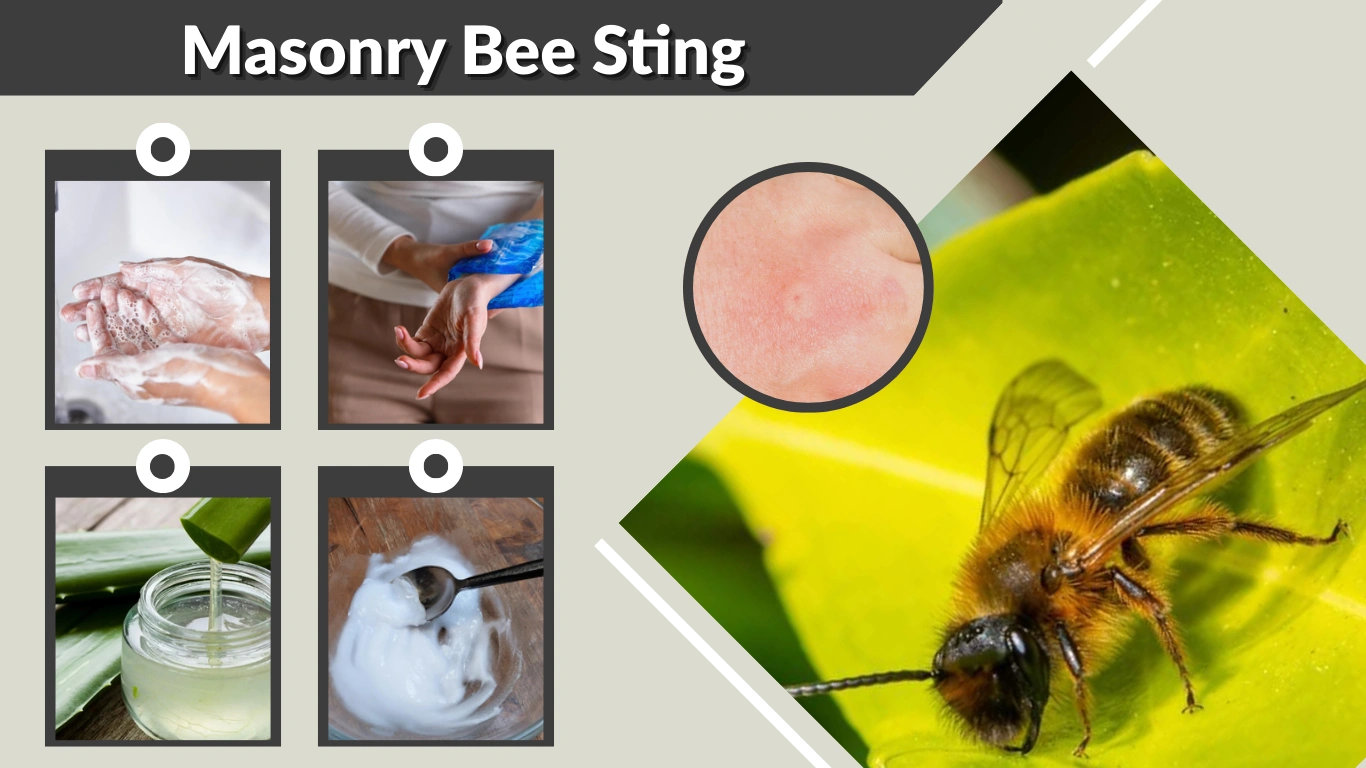
Masonry bees are solitary pollinators that play a crucial role in maintaining ecological balance. Unlike honeybees or wasps, these bees are not aggressive, but they can sting when provoked or threatened. Understanding how to identify a masonry bee sting, its symptoms, and effective treatment methods is essential for quick relief and safety. This guide explains everything you need to know about masonry bee stings, from recognition to first aid.
What is a Masonry Bee?
Appearance and Habits
Masonry bees are medium-sized, fuzzy, and often resemble honeybees. They are named for their nesting habits, as they typically burrow into soft mortar, clay, or crumbling walls. These bees are solitary, meaning each female builds her own nest rather than living in large colonies.
Difference from Honeybees and Wasps
While honeybees live in hives and wasps in paper-like nests, masonry bees prefer small holes or cracks in buildings. Importantly, they are less aggressive than wasps and rarely sting unless directly handled or trapped. Their ecological role is significant because they are efficient pollinators for gardens and orchards.
Do Masonry Bees Sting?

Sting Capability
Yes, female masonry bees can sting, but male bees cannot. Unlike honeybees, they do not lose their stinger after stinging. This means a female can sting multiple times, although such occurrences are rare.
Likelihood of Stinging
Masonry bees are known for their docile nature. They are more interested in nesting and foraging than attacking humans. A sting usually happens only if someone accidentally crushes, presses, or traps the bee. Compared to wasps, the chance of being stung is much lower.
Identifying a Masonry Bee Sting
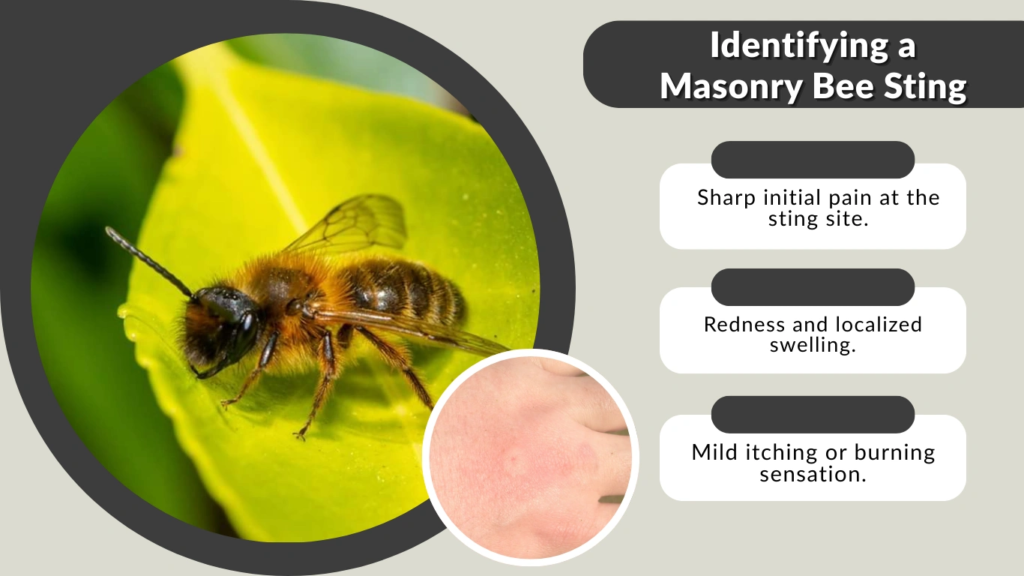
Key Characteristics
A masonry bee sting may look similar to a honeybee sting but is usually less severe. Common signs include:
- Sharp initial pain at the sting site.
- Redness and localized swelling.
- Mild itching or burning sensation.
Difference from Other Insect Stings
- Honeybee sting: Often leaves behind a stinger embedded in the skin.
- Wasp sting: More painful and usually leads to sharper swelling.
- Masonry bee sting: Typically milder and less likely to leave a stinger.
Recognizing these differences helps in applying the right treatment.
Symptoms of a Masonry Bee Sting
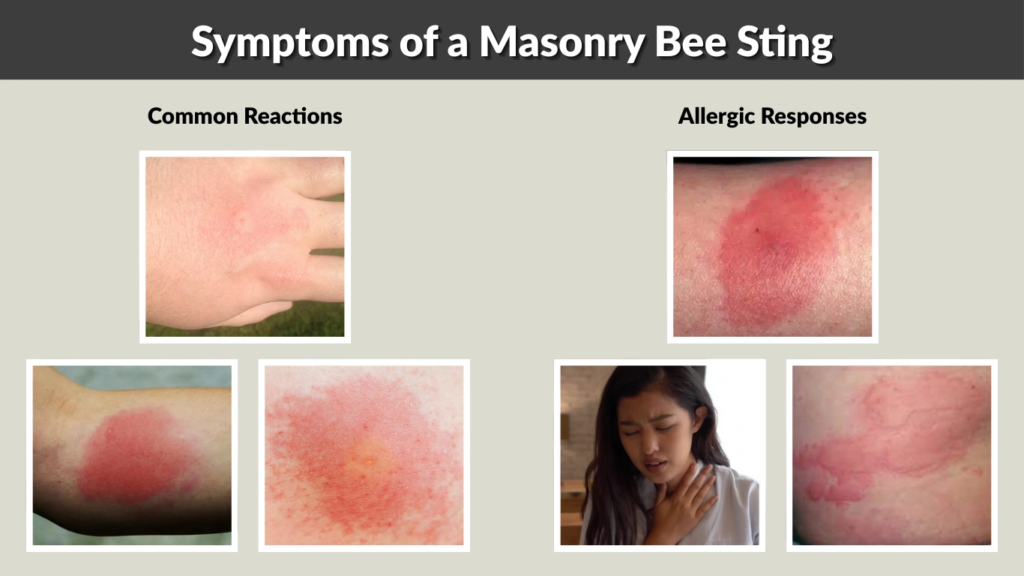
Common Reactions
Most people experience only minor discomfort, which includes:
- Localized redness.
- Swelling around the sting area.
- Warmth or slight tenderness.
These symptoms usually resolve within a few hours to a day.
Allergic Responses
In rare cases, a person may be allergic to bee venom. Symptoms may include:
- Larger areas of swelling spreading beyond the sting site.
- Raised, itchy welts or rash.
- Difficulty breathing, dizziness, or swelling of the face and throat (signs of anaphylaxis).
Anyone showing severe allergic reactions should seek immediate medical help.
First Aid and Treatment for Masonry Bee Stings
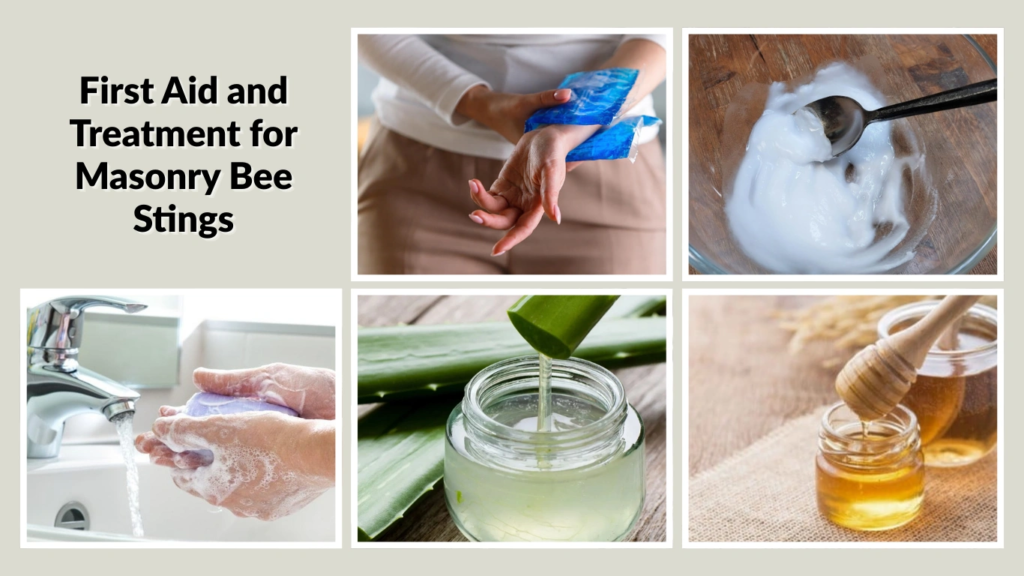
Immediate Steps
- Check for a stinger – Unlike honeybees, masonry bees don’t always leave a stinger, but if present, remove it gently with a scraping motion rather than pinching.
- Clean the area – Wash the sting site with mild soap and water to reduce infection risk.
- Apply ice or a cold compress – This helps minimize swelling and numbs the pain.
Home Remedies
- Baking soda paste: Neutralizes venom and reduces itching.
- Aloe vera gel: Soothes irritation and promotes healing.
- Honey application: Acts as a natural antibacterial agent and relieves discomfort.
Over-the-Counter Options
- Antihistamines: Reduce itching and swelling.
- Pain relievers: Ibuprofen or paracetamol can help manage discomfort.
- Hydrocortisone cream: Provides relief from itching and redness.
For most individuals, these treatments are sufficient, and recovery occurs within a day or two.
When to Seek Medical Help
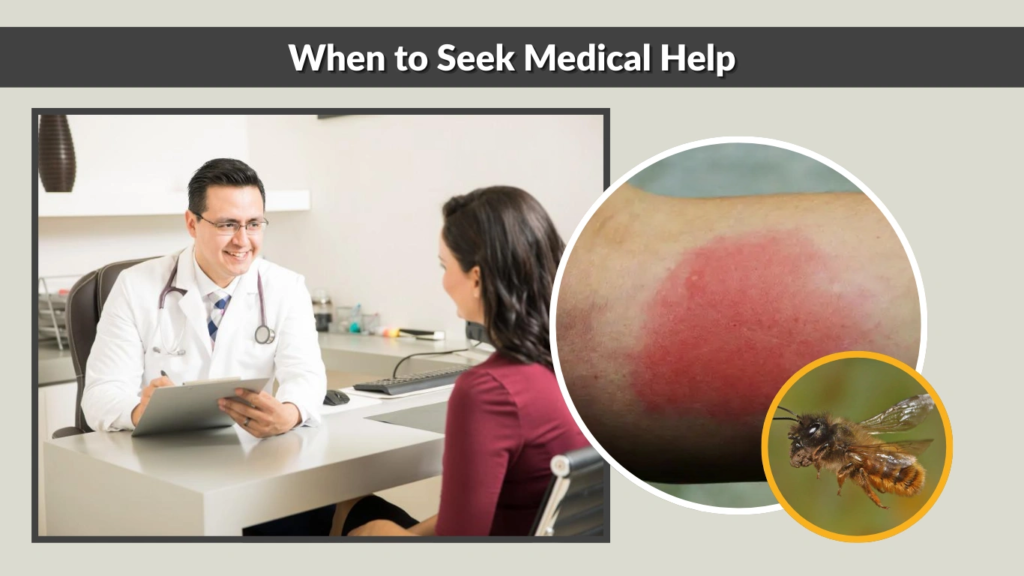
While most masonry bee stings are mild, there are times when professional medical care becomes necessary. You should seek help if you notice:
- Rapidly spreading swelling that does not subside.
- Severe pain that persists beyond 24 hours.
- Signs of infection such as pus, excessive redness, or warmth.
- Difficulty breathing, chest tightness, or swelling of the throat—these may signal anaphylaxis, which requires emergency treatment.
Immediate medical attention can prevent complications and ensure safety for those sensitive to bee venom.
Preventing Masonry Bee Stings
Be Cautious Near Nests
Masonry bees usually nest in old walls, crumbling mortar, or small cavities. Avoid disturbing these areas during spring and early summer when activity peaks. If you must work near potential nesting sites, proceed carefully.
Wear Protective Clothing
When gardening, landscaping, or repairing walls, wear gloves, long sleeves, and closed shoes. This reduces the chance of accidental contact with bees.
Do Not Swat or Trap Bees
Swatting increases the risk of provoking a sting. Instead, calmly step away and give the bee space. Remember, masonry bees are generally harmless unless they feel threatened.
Home Maintenance
Sealing cracks in walls or repairing mortar can help reduce nesting opportunities near your home. However, avoid exterminating these bees, as they are valuable pollinators that benefit gardens and crops.
FAQs
Can masonry bees sting multiple times?
Yes, female masonry bees can sting more than once because their stingers are not barbed like honeybees. However, they are non-aggressive and rarely sting unless provoked.
Are masonry bee stings more painful than wasp stings?
Generally, masonry bee stings are less painful than wasp stings. They cause mild discomfort, redness, and swelling, but the intensity is usually lower than the sharp pain associated with wasps.
Do male masonry bees sting?
No, male masonry bees do not have stingers. Only females can sting, and even then, it happens infrequently.
How long does a masonry bee sting last?
For most people, the sting symptoms last a few hours to a day. If swelling or itching continues beyond 48 hours, medical advice may be needed.
Can masonry bee stings cause infections?
Yes, although rare. If the sting site is not cleaned properly, bacteria may enter and cause infection. Keeping the area clean and avoiding scratching reduces this risk.
