
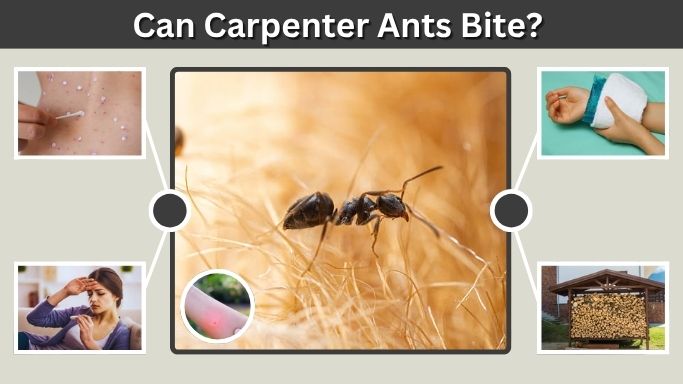
Yes, carpenter ants can bite humans, but they usually do not bite unless they feel threatened, trapped, handled, or their nest is disturbed. A carpenter ant bite often feels like a sharp pinch and may leave a small red, swollen, itchy, or tender spot. Most bites are mild and heal at home, but infection, allergic reactions, or repeated bites may need medical attention.
Can Carpenter Ants Bite Humans?
Carpenter ants can bite humans because they have strong jaws, also called mandibles. These jaws help them chew through soft or damaged wood to build nesting tunnels. If a carpenter ant feels threatened, it can use those jaws to pinch human skin.
Carpenter ants are not blood-feeding insects. They do not bite people for food like mosquitoes or bed bugs. Most bites happen by accident when someone touches, crushes, or disturbs the ants.
Why Carpenter Ants Bite People
Carpenter ants may bite when:
- You pick one up with bare hands
- You accidentally press one against your skin
- You disturb a nest in wood, soil, or wall voids
- You move firewood, mulch, logs, or old boards
- Ants crawl into clothing and become trapped
- A colony feels threatened during yard work or repairs
In most cases, the bite is defensive. Carpenter ants are not usually aggressive toward humans unless provoked.
Can a Carpenter Ant Bite You Indoors?
Yes, a carpenter ant can bite you indoors, but it is not the most common household bite problem. If you see carpenter ants inside your home, they are usually searching for food or moving from a nest. They may bite if you handle them or accidentally trap them against your skin.
Indoor carpenter ant activity can also be a sign of a bigger issue. These ants often nest in damp, damaged, or decaying wood. Seeing a few ants does not always mean there is a major infestation, but frequent sightings may suggest a nearby nest.
Indoor Bite Situations
Indoor bites may happen when you:
- Pick up ants near windows or baseboards
- Sleep or sit near an active trail
- Move boxes, wood, or stored items
- Touch areas where ants are nesting
- Crush ants inside clothing, bedding, or towels
If bites happen repeatedly indoors, the bigger concern may be finding and removing the carpenter ant colony.
Can Black Carpenter Ants Bite?
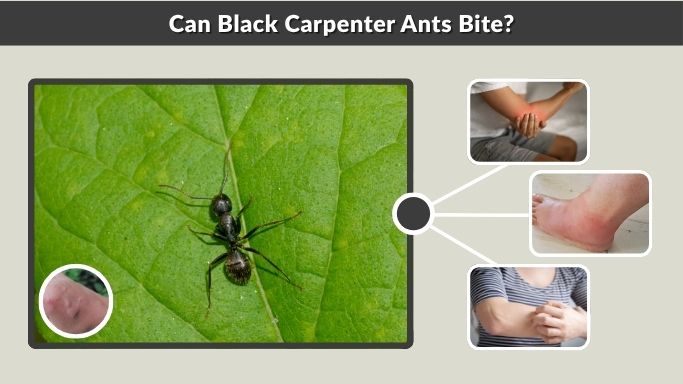
Yes, black carpenter ants can bite. In many areas, carpenter ants are large and black or mostly black, although some species may have reddish or brownish sections. Their size makes the bite feel more noticeable than a bite from a tiny household ant.
A black carpenter ant bite usually causes a quick pinch, mild pain, slight swelling, or itching. Some people also feel a brief burning sensation. This may happen because carpenter ants can spray or release formic acid, which can irritate the skin.
What Makes Their Bite Noticeable
Black carpenter ants may feel more painful because:
- They are larger than many common ants
- Their jaws are strong
- They may grip the skin firmly
- Formic acid can cause mild burning
- The bite may happen suddenly and startle you
Even so, most black carpenter ant bites are not dangerous and can be treated with basic first aid.
What Does a Carpenter Ant Bite Feel Like?
A carpenter ant bite often feels like a sharp pinch. Some people describe it as a quick sting, snap, or tiny needle-like pain. After the first bite, the spot may feel sore, itchy, warm, or slightly swollen.
The discomfort is usually local, meaning it stays around the bite area. It should not cause whole-body symptoms in a normal mild reaction.
Common Feelings After a Bite
You may notice:
- A sudden pinch
- Mild burning
- Tenderness
- Itching
- Slight swelling
- Skin warmth
- Minor soreness when touched
If you feel dizzy, short of breath, weak, or develop widespread hives, that is not a normal local reaction and needs urgent attention.
What Does a Carpenter Ant Bite Look Like?
A carpenter ant bite usually looks like a small irritated bump. On lighter skin, it may look pink or red. On darker skin, it may look brown, purple, gray, or darker than the surrounding skin. The area may be slightly raised or swollen.
Unlike fire ant stings, carpenter ant bites usually do not create white pustules. If a bite forms pus, spreads, or becomes very painful, infection or another type of insect bite may be involved.
Carpenter Ant Bite Appearance
A bite may look like:
- A tiny red or dark spot
- A small raised bump
- A mild welt
- Slight swelling around the bite
- A tiny center mark
- A scratch-like pinch mark
- Minor irritation from scratching
The mark may be hard to identify from appearance alone because many insect bites look similar.
Can Carpenter Ant Bites Make You Sick?
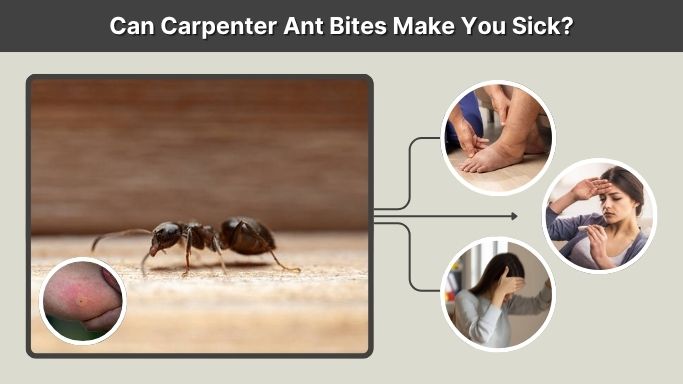
Carpenter ant bites usually do not make people sick. They are not known for spreading disease to humans through bites. Most people only develop mild local symptoms such as pain, itching, swelling, and redness.
However, feeling sick after a bite can happen in certain situations. A person may react strongly because of allergy, infection, anxiety, or multiple bites. Some people are more sensitive to insect bites and may develop larger swelling.
When Sickness Is Possible
A carpenter ant bite may need attention if it leads to:
- Increasing swelling
- Worsening pain
- Pus or drainage
- Fever or chills
- Red streaks near the bite
- Widespread hives
- Nausea, dizziness, or weakness
- Breathing trouble
Mild itching is common. Fever, breathing problems, fainting, or spreading redness are not normal and should not be ignored.
Can a Carpenter Ant Bite Kill You?
A carpenter ant bite is extremely unlikely to kill a person. These ants are not venomous in the same way as some stinging insects, and their bites are usually minor. For most people, the bite is uncomfortable but not dangerous.
The rare concern with any insect bite is a severe allergic reaction. Anaphylaxis can happen after insect stings or bites, though it is more strongly associated with insects such as bees, wasps, hornets, and fire ants. Still, severe allergic symptoms after any bite should be treated as an emergency.
Emergency Symptoms to Watch For
Get urgent medical help if a bite causes:
- Trouble breathing
- Swelling of the lips, tongue, throat, or face
- Chest tightness
- Dizziness or fainting
- Widespread hives
- Rapid heartbeat
- Confusion or severe weakness
These symptoms can be signs of a severe allergic reaction and need immediate care.
Carpenter Ant Bites vs Fire Ant Stings
Carpenter ants and fire ants can both affect human skin, but they are different. Carpenter ants mainly bite with their jaws. Fire ants bite to hold onto the skin and then sting with venom. This is why fire ant reactions are often more painful and more likely to form pustules.
Carpenter ant bites are usually single or limited to a few spots. Fire ant stings often appear in clusters because several ants may sting at once, and one fire ant can sting repeatedly.
| Feature | Carpenter Ant Bite | Fire Ant Sting |
| Main action | Bites with jaws | Bites then stings |
| Usual pain | Pinch or mild burn | Sharp burning pain |
| Common mark | Small bump or welt | Red bump, then white pustule |
| Cluster pattern | Usually one or few | Often many in clusters |
| Main concern | Irritation or infection | Pain, pustules, allergy risk |
If you see white pustules after several hours, fire ants may be more likely than carpenter ants.
How to Treat a Carpenter Ant Bite
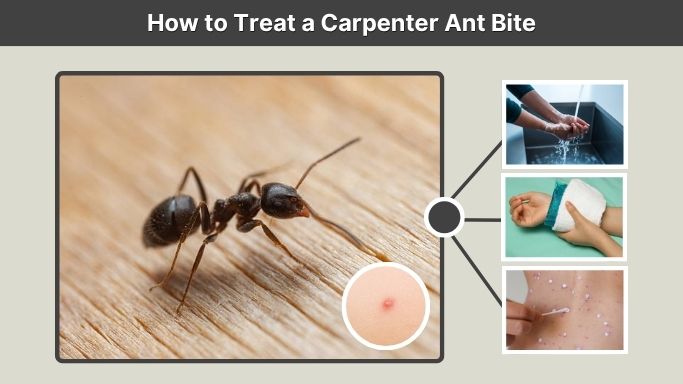
Most carpenter ant bites can be treated at home. Start by washing the area with soap and water. This helps reduce the chance of infection. Then apply a cold compress to calm swelling and pain.
Avoid scratching the bite. Scratching can break the skin and introduce bacteria. If itching is strong, you may use an over-the-counter anti-itch cream or oral antihistamine if it is safe for you.
Basic Bite Care
Use these steps:
- Wash the bite with soap and clean water
- Apply a cold compress for 10 to 15 minutes
- Keep the area dry and clean
- Avoid scratching or squeezing the skin
- Use calamine lotion or hydrocortisone cream for itching
- Cover irritated skin with a clean bandage
- Watch for infection or allergic symptoms
If the bite is painful, an over-the-counter pain reliever may help if you can safely take it.
When Should You See a Doctor?
You do not need a doctor for most mild carpenter ant bites. Medical care is more important when the reaction is severe, spreading, or not improving. A bite that gets worse after the first day may need closer attention.
People with diabetes, immune problems, poor wound healing, or a history of severe insect reactions should be more cautious. Children may also need extra monitoring because they may scratch bites and increase infection risk.
Call a Doctor If
Seek medical advice if:
- Swelling keeps spreading
- Pain gets worse instead of better
- The bite becomes hot or very tender
- Pus or yellow drainage appears
- Red streaks spread from the bite
- Fever or chills develop
- The bite is near the eye, mouth, or throat
- Symptoms last longer than expected
Emergency care is needed for breathing trouble, throat swelling, fainting, or widespread hives.
Can Carpenter Ants Bite Dogs or Pets?
Carpenter ants can bite dogs, cats, or other pets if the animal disturbs them or steps near a nest. Pets may react by licking, chewing, scratching, shaking, or suddenly jumping away. Bites may be hard to see under fur.
Most mild pet bites are not serious. Move your pet away from the ants, brush off any insects, and check paws, belly, and face. You can gently clean irritated skin with water.
Do not give human medications or apply strong creams to pets unless a veterinarian says they are safe. Call a vet if your pet has facial swelling, vomiting, weakness, breathing trouble, or many bites.
Why Carpenter Ants Are a Bigger Problem for Homes
Although carpenter ants can bite, their biggest risk is usually to wood structures. They tunnel through wood to create nests. They prefer damp, softened, or damaged wood, but colonies can expand into nearby sound wood over time.
A bite may be the first thing that gets your attention, but seeing carpenter ants indoors often should make you check for moisture and wood damage. Look around windows, doors, roof leaks, bathrooms, kitchens, basements, crawl spaces, decks, and firewood piles.
Signs of Carpenter Ant Activity
You may notice:
- Large black ants indoors
- Ant trails near windows or baseboards
- Sawdust-like material called frass
- Rustling sounds in walls
- Ants near damp wood
- Winged ants indoors
- Soft or damaged wooden areas
If you find signs of nesting, pest control may be needed to locate and remove the colony.
How to Prevent Carpenter Ant Bites
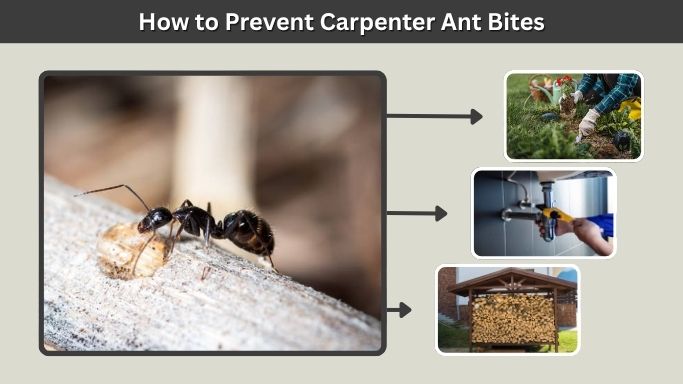
Preventing bites starts with avoiding direct contact. Do not pick up carpenter ants with bare hands. Wear gloves when handling firewood, mulch, logs, lumber, or old boards. Be careful when working near tree stumps, decks, sheds, and damp wooden areas.
Inside the home, reduce the conditions that attract carpenter ants. Fix moisture problems, seal entry points, and remove rotting wood.
Prevention Tips
To lower the risk of bites and infestations:
- Wear gloves during yard work
- Avoid handling ants directly
- Store firewood away from the house
- Remove rotting logs and damp wood
- Seal cracks around windows and doors
- Repair leaks quickly
- Keep tree branches trimmed away from the roof
- Clean food spills and crumbs
- Check damp areas for ant activity
If carpenter ants keep appearing indoors, treating only the visible ants may not solve the problem. The nest may need to be found.
FAQs
Can carpenter ants bite humans?
Yes, carpenter ants can bite humans. They usually bite only when handled, trapped, crushed, or when their nest is disturbed. The bite often feels like a sharp pinch and may leave a small red, swollen, itchy, or tender spot. Most bites are mild and heal with simple home care.
Can a carpenter ant bite you while sleeping?
It is possible but not common. A carpenter ant may bite while you sleep if it crawls into bedding or clothing and becomes trapped against your skin. If you often see carpenter ants indoors, check for trails, moisture problems, wood damage, and possible nesting areas near the room.
Can black carpenter ants bite?
Yes, black carpenter ants can bite. Their larger size and strong jaws can make the bite feel like a noticeable pinch. Some people may also feel mild burning from formic acid irritation. Most black carpenter ant bites are not dangerous, but they can itch, swell, or become sore.
Can carpenter ant bites make you sick?
Carpenter ant bites usually do not make people sick. They are not known for spreading disease through bites. However, a bite can become infected if scratched, and rare allergic reactions can cause more serious symptoms. Seek help for fever, pus, spreading redness, dizziness, hives, or breathing trouble.
Can carpenter ant bites kill you?
A carpenter ant bite is extremely unlikely to kill you. For most people, it causes only local pain, itching, or swelling. The rare emergency concern is a severe allergic reaction after any insect bite. Trouble breathing, throat swelling, fainting, or widespread hives need immediate medical care.
