
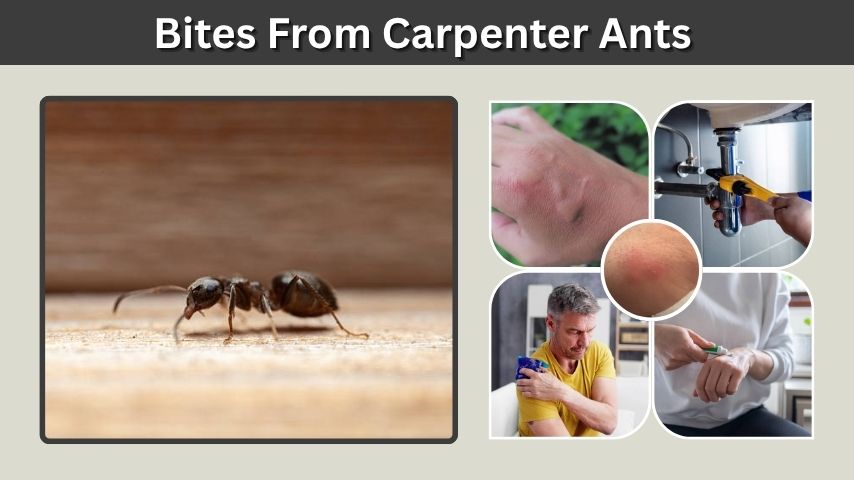
Bites from carpenter ants can happen when these large ants feel threatened, are picked up, or have their nest disturbed. A bite from a carpenter ant usually causes a quick pinch, mild pain, redness, itching, or slight swelling. Most bites are not dangerous, but they can be uncomfortable. Knowing what carpenter ant bites look like helps you treat the skin properly and spot signs of infection or allergy.
What Are Carpenter Ant Bites?
Carpenter ants are large ants that live in wood, trees, wall voids, damp structures, and outdoor nesting sites. They are better known for damaging wood than biting people. Unlike termites, they do not eat wood. Instead, they tunnel through it to create galleries for nesting.
A carpenter ant bite happens when the ant uses its strong jaws to pinch the skin. These ants do not usually chase people or attack without reason. Most bites happen when someone accidentally crushes an ant, handles one, reaches near a nest, or disturbs a colony.
Why Carpenter Ants Bite
Carpenter ants may bite as a defense response. They are more likely to bite if they feel trapped or if their nest is threatened. Outdoor workers, gardeners, homeowners, and children may get bitten after touching logs, old wood, tree stumps, mulch, or infested areas.
Their bite can feel stronger than a tiny ant bite because carpenter ants are larger and have powerful mandibles. Still, most reactions are mild and short-lived.
What Does a Bite From a Carpenter Ant Look Like?
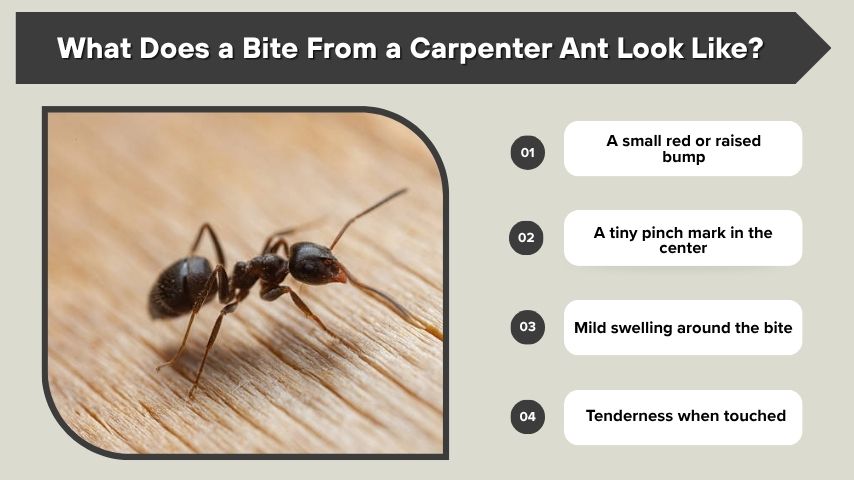
A bite from a carpenter ant often looks like a small red bump or irritated spot. It may be slightly raised, tender, or itchy. Some people notice a tiny center mark where the ant pinched the skin. Others may only see mild redness.
On lighter skin, the bite may look pink or red. On darker skin, it may appear brown, purple, grayish, or darker than the surrounding skin. The color can vary, so swelling, tenderness, itching, and timing are often better clues than redness alone.
Common Visual Signs
Carpenter ant bites may appear as:
- A small red or raised bump
- A tiny pinch mark in the center
- Mild swelling around the bite
- Tenderness when touched
- Itching or slight burning
- A small irritated patch
- Rarely, a larger welt in sensitive skin
Carpenter ant bites usually do not form the white pus-like pustules often linked with fire ant stings. If a blister or pus develops, it may be due to irritation, scratching, or infection rather than a typical carpenter ant bite.
Carpenter Ant Bite Symptoms
Most carpenter ant bite symptoms are local, meaning they stay around the bite area. The bite may hurt briefly and then become itchy or tender. Symptoms are usually mild and improve within a few days.
Some carpenter ants can release formic acid into the bite area, which may create a sharper stinging or burning feeling. This does not mean the bite is dangerous, but it can make the spot feel more irritated than expected.
Symptoms You May Notice
Common symptoms include:
- Quick pinch or sharp pain
- Mild burning sensation
- Redness or discoloration
- Itching around the bite
- Slight swelling
- Tender skin
- A small bump or welt
The symptoms can feel worse if the bite is scratched, rubbed by clothing, or exposed to sweat and dirt.
Carpenter Ant Bites vs Fire Ant Bites
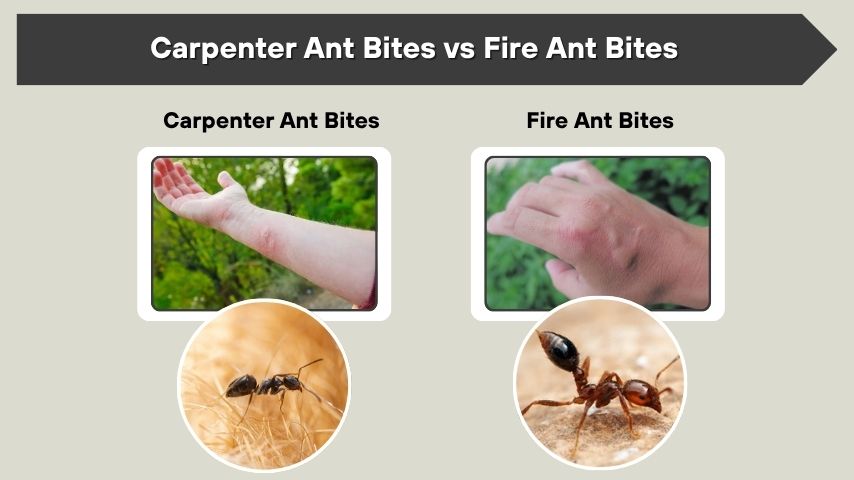
Carpenter ant bites and fire ant bites are often confused, but they are not the same. Carpenter ants bite with their jaws. Fire ants bite to grip the skin and then sting, injecting venom. This makes fire ant reactions more intense in many cases.
Fire ant stings often cause burning pain and may later form white pustules. Carpenter ant bites are usually simpler: a pinch, mild redness, slight swelling, and itching.
| Feature | Carpenter Ant Bite | Fire Ant Sting |
| Main cause | Pinching bite from jaws | Sting with venom after biting |
| Pain level | Mild to moderate pinch | Burning, sharp, often stronger |
| Appearance | Small bump, redness, swelling | Red bump, welt, white pustule |
| Clustering | Usually single or few bites | Often many stings in clusters |
| Risk level | Usually mild | Higher allergy and pustule risk |
If the bite formed a white blister after several hours, fire ants may be more likely than carpenter ants.
Where Carpenter Ant Bites Usually Happen
Carpenter ant bites can happen on any exposed skin. The hands are common because people touch wood, soil, mulch, firewood, or surfaces where ants are crawling. Feet and ankles may also be bitten if ants are disturbed outdoors.
Inside the home, bites may happen when someone touches an infested wall area, window frame, baseboard, attic space, or pile of stored wood. Outdoor bites are common near tree stumps, logs, fences, decks, and damp wooden structures.
Common Bite Locations
Bites from carpenter ants may appear on:
- Fingers and hands
- Wrists and forearms
- Feet and ankles
- Lower legs
- Arms after yard work
- Neck or shoulders if ants crawl on clothing
If you notice repeated bites indoors, it may be worth checking for carpenter ant activity around damp wood, cracks, windows, doors, or hidden nesting areas.
How Long Do Carpenter Ant Bites Last?
Most carpenter ant bites improve within a few days. Pain usually fades quickly, while itching and mild swelling may last longer. If the bite is not scratched, it often heals without problems.
Some people may notice a small mark for several days, especially if the skin becomes irritated. On deeper skin tones, temporary dark marks may remain after the swelling goes down. These marks usually fade slowly.
Normal Healing Timeline
A typical carpenter ant bite may follow this pattern:
- First few minutes: pinch, sting, or mild burning
- First few hours: redness, swelling, or itching
- Next day: tenderness and itching may continue
- After 2–3 days: swelling and irritation should improve
- After several days: mark fades or forms a small dry scab
If symptoms get worse instead of better, infection or another type of bite may be involved.
How to Treat Bites From Carpenter Ants
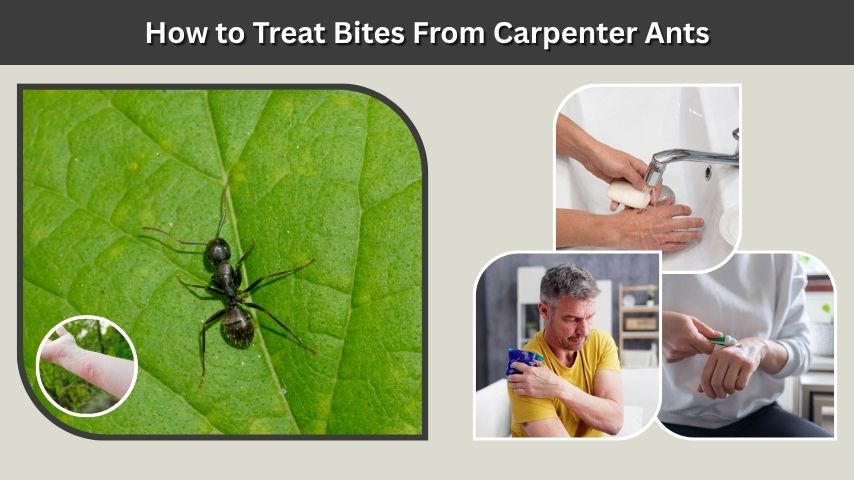
Most bites from carpenter ants can be treated at home. The first step is to clean the bite area. Use soap and water to remove dirt and reduce infection risk. Then apply a cold compress to calm pain and swelling.
Avoid scratching the bite. Scratching can break the skin and make the area more likely to become infected. If itching is bothersome, an anti-itch cream or oral antihistamine may help if it is safe for you.
Basic Treatment Steps
Use this simple care routine:
- Wash the bite with soap and clean water
- Apply a cold compress for 10 to 15 minutes
- Keep the area dry and clean
- Avoid scratching or squeezing the skin
- Use calamine lotion or hydrocortisone cream for itching
- Cover the bite with a clean bandage if it is irritated
- Watch for signs of infection
For pain, an over-the-counter pain reliever may help if you can safely take it. Always follow label directions.
Home Remedies for Carpenter Ant Bites
Home remedies may help soothe mild carpenter ant bites, but they should be gentle. The safest home remedy is a cold compress. Aloe vera gel may also feel calming for irritated skin.
Some people use baking soda and water paste for itch relief. If you try it, use it briefly and stop if it causes burning or more redness. Avoid harsh remedies such as bleach, toothpaste, rubbing alcohol, strong essential oils, or vinegar on broken skin.
Gentle Options to Try
For mild symptoms, you may use:
- Cold compresses
- Aloe vera gel
- Oatmeal bath for widespread itching
- Calamine lotion
- Mild soap and water
- A clean bandage to prevent rubbing
Natural does not always mean safe. If the skin reacts badly to a home remedy, rinse it off and stop using it.
Can Carpenter Ant Bites Get Infected?
Yes, any insect bite can become infected if bacteria enter the skin. This is more likely if the bite is scratched, picked, or left dirty. Carpenter ant bites are usually minor, but broken skin can still become a problem.
An infected bite may look more swollen, red, painful, or warm over time. Pus, yellow crust, red streaks, fever, or chills are warning signs. Infection is not the normal course of a carpenter ant bite and may need medical treatment.
Signs of Infection
Watch for these symptoms:
- Redness spreading around the bite
- Increasing pain after the first day
- Warm or hot skin
- Yellow or green drainage
- Swelling that keeps getting worse
- Red streaks near the bite
- Fever, chills, or feeling unwell
Do not try to cut, drain, or squeeze an infected bite at home. A healthcare provider can decide whether medicine is needed.
Allergic Reactions to Carpenter Ant Bites
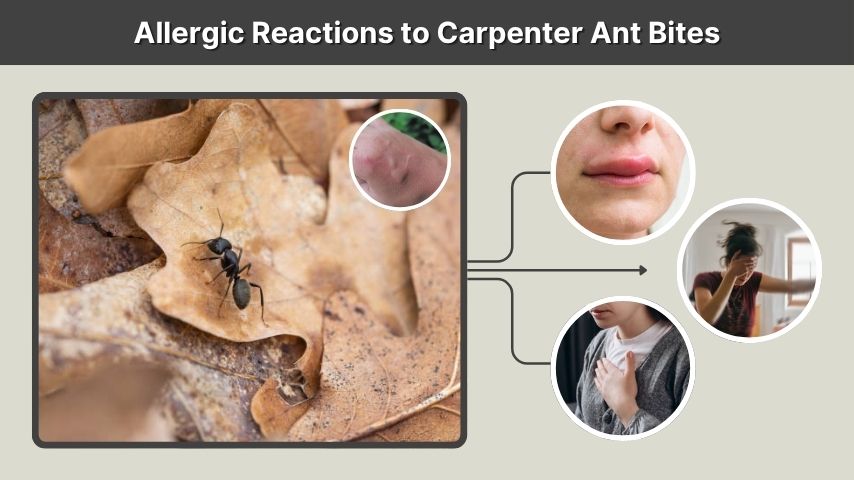
Severe allergic reactions to carpenter ant bites are uncommon, but allergic reactions to insect bites can happen. A mild local reaction may cause a larger itchy welt near the bite. This can be uncomfortable but may still be manageable with basic care.
A serious allergic reaction affects more than the bite area. Symptoms such as trouble breathing, throat tightness, face swelling, dizziness, fainting, or widespread hives need emergency attention.
Emergency Symptoms
Seek urgent medical help if a bite causes:
- Trouble breathing
- Swelling of the lips, tongue, throat, or face
- Dizziness or fainting
- Widespread hives
- Chest tightness
- Rapid heartbeat
- Confusion or severe weakness
These symptoms may suggest anaphylaxis, which can be life-threatening.
Pics of Bites From Carpenter Ants: What to Compare
People often search for pics of bites from carpenter ants because they want to confirm what bit them. Photos can help, but they are not always reliable. Many bug bites look similar, including mosquito bites, flea bites, spider bites, and other ant bites.
A carpenter ant bite picture may show a small red bump, slight swelling, or a tiny irritated spot. However, the better clue is the situation. If you were handling wood, saw large black ants, or disturbed a nest, carpenter ants are more likely.
What Pictures May Show
Carpenter ant bite photos may include:
- One small raised bump
- Mild redness or skin discoloration
- A tiny center mark
- Slight swelling
- A small welt from local irritation
If the photo shows many white pustules in a cluster, that may point more toward fire ants than carpenter ants.
Do Carpenter Ants Bite Dogs or Pets?
Carpenter ants can bite pets if they are disturbed, trapped in fur, or stepped on. Dogs and cats may react by licking, chewing, scratching, or suddenly jumping away from the area. Bites may be hard to see under fur.
Most mild pet bites are not serious. You can move the pet away from the ants, brush off any insects, and check the paws, belly, and face. Call a veterinarian if there is facial swelling, vomiting, weakness, breathing trouble, or repeated biting.
Do not give pets human medicines or apply strong creams unless your veterinarian says it is safe.
How to Prevent Carpenter Ant Bites
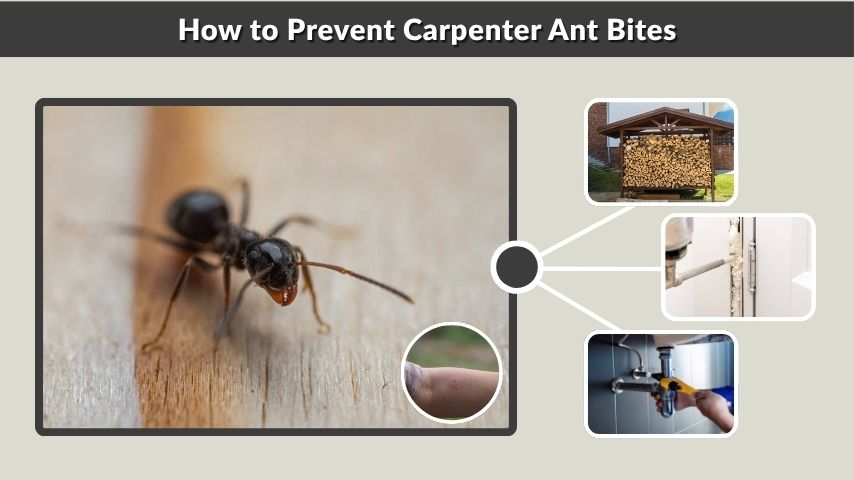
Preventing carpenter ant bites starts with avoiding direct contact. Do not pick up carpenter ants with bare hands. Use gloves when moving logs, mulch, firewood, or damp wood. Be careful around tree stumps, decks, sheds, and crawl spaces.
Since carpenter ants often nest in damaged or moist wood, prevention also means controlling the source. Fix leaks, remove rotting wood, seal cracks, and keep firewood away from the house.
Prevention Tips
To reduce the risk of bites:
- Wear gloves during yard work
- Avoid handling large ants directly
- Store firewood away from the home
- Remove rotting logs and damp wood
- Seal gaps around doors and windows
- Fix leaks and moisture problems
- Watch for sawdust-like debris near wood
- Call pest control for large indoor infestations
If you see carpenter ants indoors often, there may be a nest nearby.
When to Call a Doctor
Most carpenter ant bites do not need medical care. However, a doctor may be needed if the reaction is severe, unusual, or worsening. Do not ignore symptoms that spread beyond the bite area.
Call a healthcare provider if swelling continues to grow, pain increases, pus appears, or the bite does not improve after several days. Emergency care is needed for breathing problems, facial swelling, fainting, or widespread hives.
People with immune problems, diabetes, poor wound healing, or a history of severe insect reactions should be more cautious.
FAQs
Are bites from carpenter ants dangerous?
Bites from carpenter ants are usually not dangerous. Most cause a short pinch, mild redness, itching, or slight swelling. Serious reactions are uncommon, but any insect bite can become infected if scratched. Seek medical help if symptoms spread, worsen, or include breathing trouble, facial swelling, or widespread hives.
What does a bite from a carpenter ant look like?
A bite from a carpenter ant usually looks like a small raised bump, red or darkened spot, or mildly swollen patch. Some people notice a tiny center mark where the ant pinched the skin. It usually does not form the white pustules often seen with fire ant stings.
How do you treat a carpenter ant bite?
Wash the bite with soap and water, apply a cold compress, and avoid scratching. Calamine lotion or hydrocortisone cream may help itching. Keep the area clean and dry. If swelling worsens, pus appears, or allergic symptoms develop, contact a healthcare provider or seek emergency care.
Why did a carpenter ant bite me?
A carpenter ant may bite if it feels threatened, trapped, handled, or if its nest is disturbed. These ants do not usually attack people without reason. Bites often happen during yard work, moving wood, handling logs, or touching areas where carpenter ants are nesting or foraging.
How long does a carpenter ant bite last?
A mild carpenter ant bite often improves within a few days. Pain may fade quickly, while itching or swelling can last longer. The mark may remain for several days, especially if scratched. If the bite becomes more painful, hot, swollen, or filled with pus, it may be infected.
