

A wasp sting can take you by surprise, leaving behind sharp pain, redness, and swelling that may feel alarming at first. However, in most cases, these reactions are completely normal and can be managed safely at home with quick action. Knowing how to respond immediately not only reduces discomfort but also prevents the sting from getting worse.
In this guide, we’ll explore what a normal wasp sting reaction looks like, the right steps to take right away, and when it’s time to seek medical help.
What Happens During a Wasp Sting
When a wasp stings, it uses its sharp stinger to inject venom into your skin. Unlike bees, wasps don’t lose their stinger after the first sting, which means they can sting multiple times if they feel threatened. This makes their stings particularly painful and sometimes more alarming.
How a Wasp Sting Works
A wasp’s venom contains toxins that affect both the nerves and blood cells in your body. These toxins trigger an immediate pain sensation, followed by redness and swelling. The body’s immune system recognizes the venom as a foreign substance and quickly reacts, which is why you feel burning pain and notice a raised bump.
Typical Body Response
In most people, the body’s reaction is local and mild. The immune system sends white blood cells to the sting site, leading to inflammation. This is what causes redness, slight warmth, and swelling in the area. While the sting is uncomfortable, these symptoms are a normal part of the healing process and usually fade within a couple of days.
Normal Wasp Sting Reaction
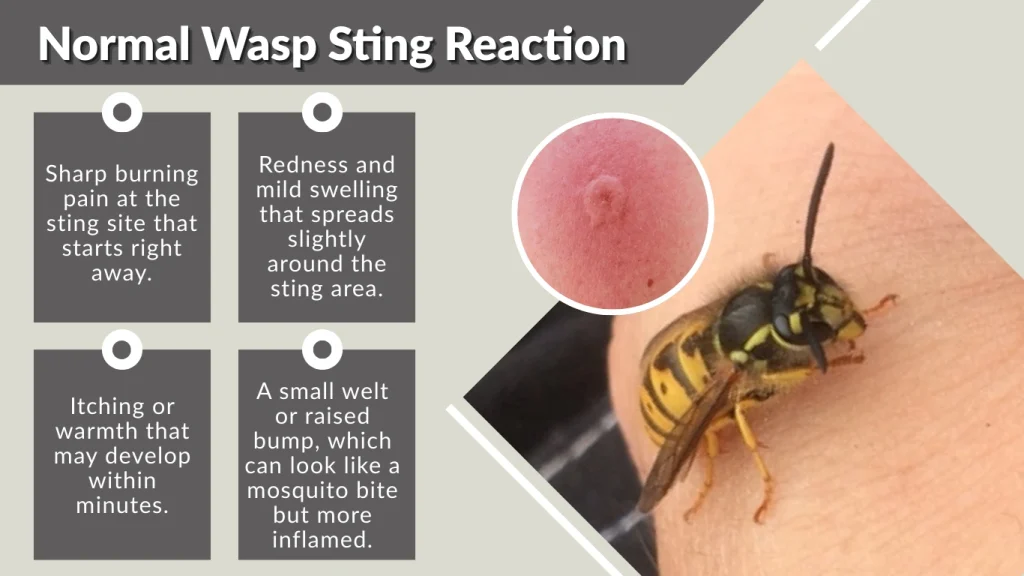
A normal wasp sting reaction may feel intense at first, but in most cases, it is not dangerous. The discomfort usually begins immediately after the sting and gradually decreases as the body heals.
Common Symptoms You Can Expect
- Sharp burning pain at the sting site that starts right away.
- Redness and mild swelling that spreads slightly around the sting area.
- Itching or warmth that may develop within minutes.
- A small welt or raised bump, which can look like a mosquito bite but more inflamed.
How Long the Symptoms Last
For most people, the pain begins to subside after about 30 minutes to an hour. Swelling and redness can remain for up to 48 hours, while itchiness may last a little longer until the skin fully recovers. The healing process is usually complete within 2–3 days, as long as the sting site is kept clean and not scratched.
Immediate First Aid for a Normal Reaction
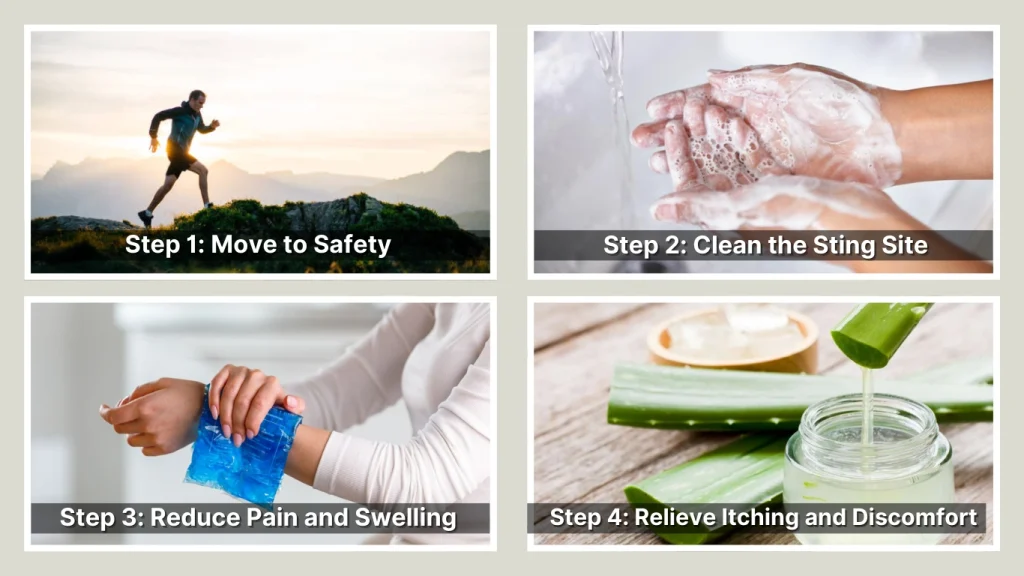
Acting quickly after a wasp sting can make a big difference in how much pain and swelling you experience. Simple steps taken within the first few minutes help reduce discomfort and speed up recovery.
Step 1: Move to Safety
As soon as you are stung, move away from the area. Wasps release a pheromone when they sting, which can attract other wasps to the same spot. Staying calm and leaving quietly prevents multiple stings.
Step 2: Clean the Sting Site
Wash the area thoroughly with soap and cool water. This removes venom from the surface and lowers the chance of infection. Pat the area dry with a clean towel instead of rubbing it.
Step 3: Reduce Pain and Swelling
Apply a cold compress or ice pack wrapped in a cloth to the sting for 10 minutes at a time. This helps numb the pain and control swelling. If the sting is on an arm or leg, keeping it elevated can also reduce swelling.
Step 4: Relieve Itching and Discomfort
If the sting site becomes itchy, you can use:
- An over-the-counter antihistamine tablet or cream.
- Calamine lotion, hydrocortisone cream, or a simple baking soda paste.
- Aloe vera gel for a natural soothing effect.
These treatments help calm the skin and prevent you from scratching, which could lead to infection.
What NOT to Do After a Wasp Sting
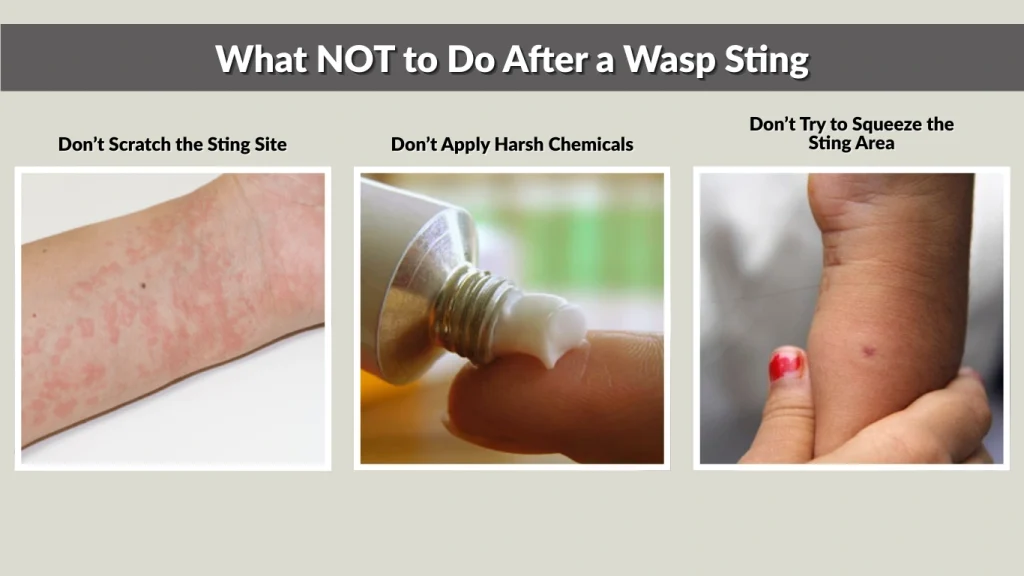
While it’s natural to want quick relief, some actions can actually make a wasp sting worse or slow down healing. Avoiding these mistakes will help your body recover faster.
Don’t Scratch the Sting Site
Scratching may feel tempting, but it can break the skin and increase the risk of infection. It can also cause the venom to spread slightly, leading to more irritation.
Don’t Apply Harsh Chemicals
Avoid pouring alcohol, bleach, or strong antiseptics directly on the sting. These can further irritate the skin and worsen inflammation instead of soothing it.
Don’t Try to Squeeze the Sting Area
Unlike bees, wasps don’t leave their stinger behind, so there’s nothing to remove. Pressing or squeezing the sting site will only push the venom deeper into your skin, making the pain and swelling worse.
Home Remedies for Quick Relief
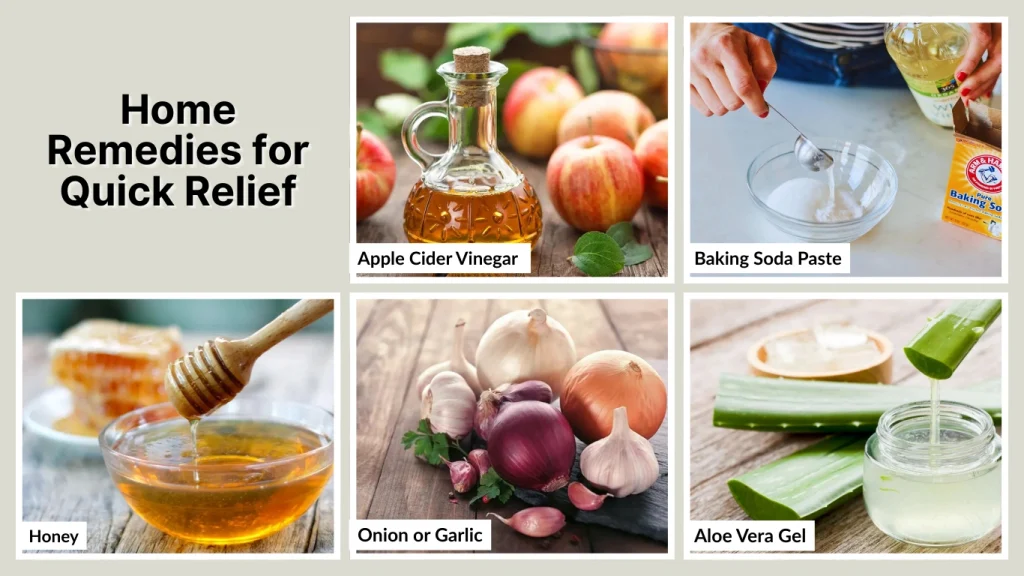
Along with basic first aid, some natural remedies can provide extra comfort and reduce irritation. These are especially useful if you don’t have medical creams or antihistamines at hand.
Natural Soothing Options
- Honey – Known for its antibacterial and anti-inflammatory properties, applying a thin layer of honey on the sting can reduce swelling and prevent infection.
- Apple Cider Vinegar – Dabbing a small amount with a cotton ball may help neutralize the venom and ease itching.
- Baking Soda Paste – Mixing baking soda with a little water and applying it as a paste can calm irritation and reduce redness.
- Onion or Garlic – Placing a freshly cut slice on the sting site is believed to draw out toxins and reduce pain naturally.
- Aloe Vera Gel – Cooling and soothing, aloe vera helps relieve itching and supports faster skin healing.
When to Use Them
These home remedies are best used after the sting has been properly cleaned. They should be seen as supportive treatments, not replacements for medical care. If discomfort worsens despite using them, it’s best to rely on proper medication or seek medical advice.
Difference Between Normal and Severe Reactions
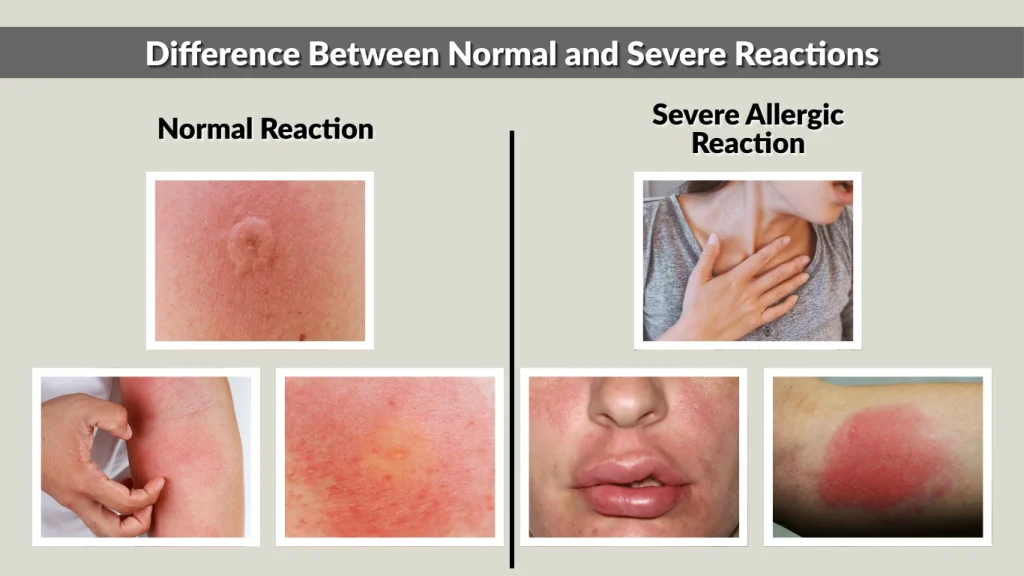
Most wasp stings cause only mild discomfort, but it’s important to know the difference between a normal reaction and a severe allergic response. Recognizing the signs early can save lives.
Normal Reaction
A normal sting reaction stays limited to the area around the sting. Typical signs include:
- Sharp pain at the site
- Redness, mild swelling, and itching
- A small raised bump or welt
These symptoms usually improve within 1–2 days with home care.
Severe Allergic Reaction (Anaphylaxis)
For people with wasp venom allergies, a sting can trigger a dangerous reaction called anaphylaxis. Symptoms often appear within minutes and may include:
- Difficulty breathing or wheezing
- Swelling of lips, tongue, or throat
- Hives spreading across the body
- Dizziness, fainting, or rapid heartbeat
This type of reaction is a medical emergency. Anyone showing these symptoms should call emergency services immediately and, if available, use an epinephrine auto-injector.
How to Care for Children After a Wasp Sting
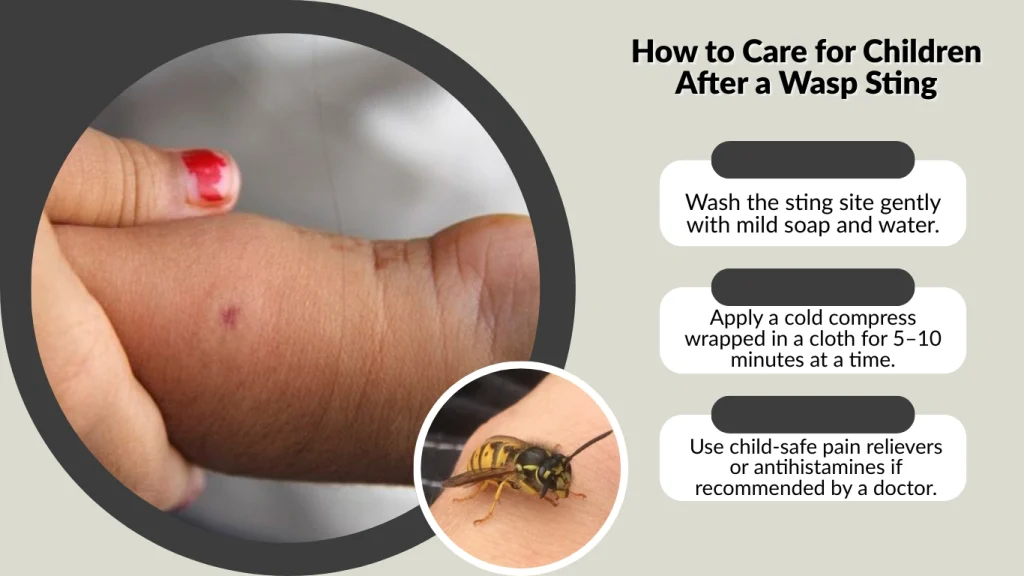
Children often react strongly to wasp stings because the pain and swelling feel more intense to them. While most stings are not serious, parents need to respond quickly to reduce discomfort and watch for unusual symptoms.
Child-Safe Steps to Reduce Pain
- Wash the sting site gently with mild soap and water.
- Apply a cold compress wrapped in a cloth for 5–10 minutes at a time.
- Use child-safe pain relievers or antihistamines if recommended by a doctor.
Monitoring for Unusual Reactions
Most children will only experience redness and swelling, but keep a close eye for symptoms such as excessive swelling, rash spreading beyond the sting site, or difficulty breathing. If any of these occur, seek medical help right away.
Comforting Methods
A wasp sting can be frightening for kids. Distraction, hugs, and reassurance go a long way. Applying aloe vera or calamine lotion not only soothes the skin but also helps calm the child by showing active care.
Preventing Future Wasp Stings
While you can’t completely avoid wasps outdoors, being mindful of your surroundings and taking preventive steps can greatly reduce the chance of being stung again.
Avoidance Tips
- Stay calm around wasps – Swatting or sudden movements make them aggressive. Move away slowly instead.
- Be mindful of clothing and scents – Bright colors and floral patterns can attract wasps, as can strong perfumes or scented lotions.
- Keep food and drinks covered – Wasps are drawn to sugary drinks, fruits, and leftovers, especially during summer. Always use lids or covers when eating outside.
Protecting Home & Garden
- Seal garbage bins tightly – Open trash is one of the biggest wasp attractants.
- Check outdoor spaces – Inspect eaves, sheds, and trees regularly for early signs of nests.
- Be cautious near flowers and fruit trees – Wasps feed on nectar and fallen fruits. Cleaning the area often reduces their visits.
- Call professionals for nest removal – Never try to knock down or spray a large wasp nest yourself, as this can provoke an attack.
By making small changes in habits and environment, you can lower the risk of future encounters and protect your family from repeated stings.
FAQs
How long does a normal wasp sting reaction last?
Most normal reactions last one to two days. The sharp pain usually fades within an hour, but redness and swelling can remain for up to 48 hours. Itching may persist a little longer until the skin fully heals. Proper care helps speed recovery and reduces discomfort.
Can a wasp sting get infected?
Yes, a sting site can get infected if it isn’t cleaned properly or if it’s scratched frequently. Signs of infection include pus, increasing redness, swelling, warmth, and sometimes fever. Keeping the area clean and applying soothing creams reduces the risk. If infection develops, medical treatment is necessary.
Do wasps leave their stinger behind?
No, unlike bees, wasps don’t lose their stinger after a sting. This means a single wasp can sting multiple times in quick succession. That’s why it’s important to move away calmly after being stung, as the insect may strike again if it feels threatened.
Is it safe to use vinegar or baking soda on a wasp sting?
Yes, both are common home remedies that may help neutralize the venom and soothe itching. Baking soda works as an alkaline agent, while vinegar offers mild acidity that calms irritation. They should only be applied after the area is cleaned with soap and water.
