
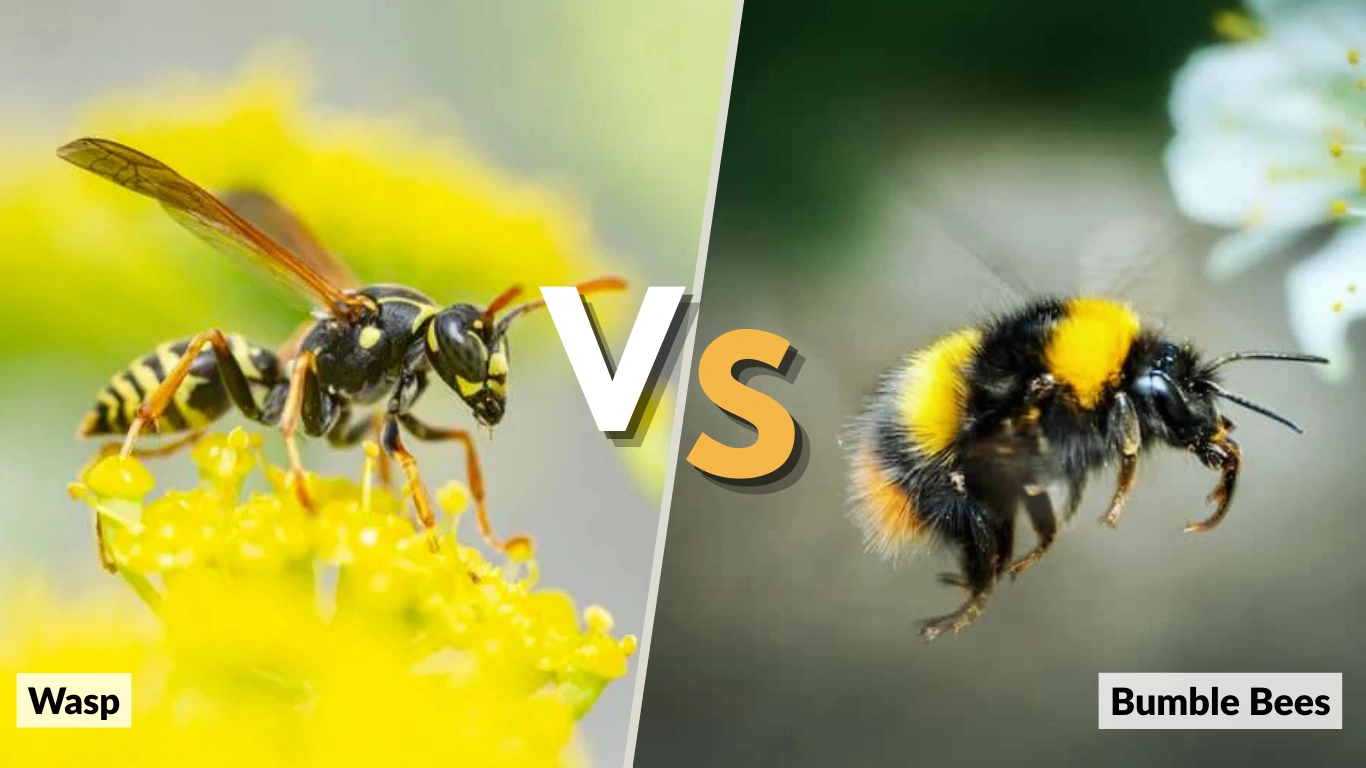
Wasps and bumblebees are often confused because of their similar yellow-and-black patterns. Yet, these insects differ greatly in appearance, behavior, diet, and role in nature. Knowing the differences is not only useful for identification but also for safety and understanding their ecological importance.
Quick Comparison Table

| Feature | Wasp | Bumblebee |
| Body Shape | Slim, smooth, narrow waist | Round, fuzzy, covered in hair |
| Color & Markings | Bright yellow, shiny black | Muted yellow, black stripes |
| Aggression | Aggressive, multiple stings | Gentle, single sting |
| Nest | Paper-like, above ground/trees | Underground, soil or burrows |
| Diet | Predatory + sugars | Nectar and pollen |
| Ecosystem Role | Pest control | Pollination |
| Colony Size | Thousands, seasonal | 50–400, smaller colonies |
1. Physical Appearance
One of the easiest ways to distinguish a wasp from a bumblebee is by looking at their body structure. Wasps have slender, elongated bodies with a noticeable narrow waist. Their smooth, shiny exoskeleton gives them a sleek look, and they lack the dense hair found on bees.
Bumblebees, on the other hand, are stockier and rounder. Their bodies are covered with thick, fuzzy hair that helps them collect pollen. This fluffier appearance makes them look softer and less intimidating compared to wasps.
2. Color and Markings
Wasps are usually brighter, with striking black and yellow bands that serve as a strong warning to predators. Their bodies reflect light due to their glossy texture, making them look sharp and dangerous.
Bumblebees also feature black and yellow stripes, but their colors are often muted by the dense hair covering their bodies. The fuzzy appearance not only aids in pollination but also makes their patterns less vivid compared to the bold shine of wasps.
3. Behavior and Aggression
Behavior is one of the most important differences between these insects. Wasps are well known for their aggressive nature. They are quick to defend their nests and may sting multiple times because their stingers do not detach after use. This makes them more dangerous during encounters.
Bumblebees, in contrast, are gentle creatures. They usually avoid conflict and will sting only when directly threatened. Unlike wasps, a bumblebee can sting only once, as its barbed stinger remains in the skin and causes the bee to die afterward.
4. Nesting Habits
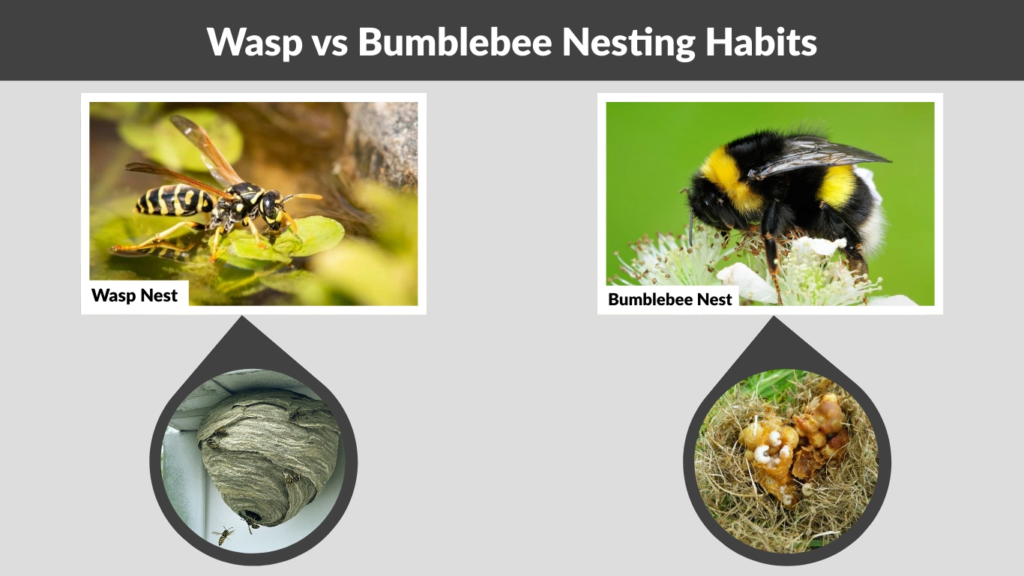
Wasps build their nests using a papery substance created by chewing wood fibers mixed with saliva. These nests are often found hanging from tree branches, under eaves, or inside wall cavities. Some species also build nests underground. A single wasp nest can house thousands of individuals during peak season.
Bumblebees prefer smaller, less conspicuous homes. They usually nest in the ground, occupying old rodent burrows, soil cavities, or grassy areas. A bumblebee colony is significantly smaller, typically ranging between 50 and 400 members. This makes them less noticeable and less of a nuisance compared to wasps.
5. Diet and Feeding Habits
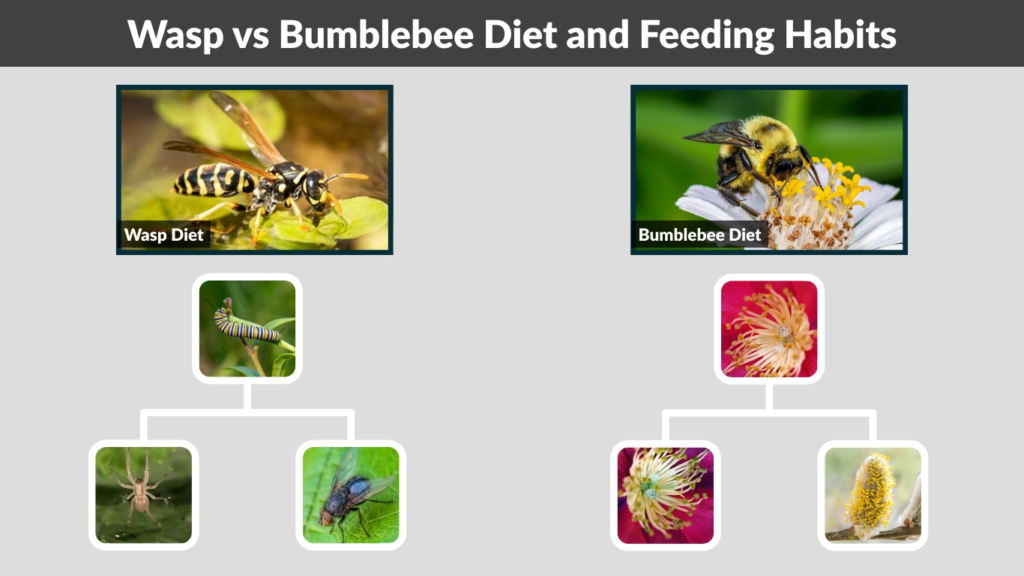
Wasps are omnivorous and predatory by nature. They feed on other insects such as caterpillars, flies, and spiders, which makes them valuable for natural pest control. In late summer, they also crave sugary substances like nectar, fruits, or even human food and drinks. This explains why wasps are often spotted around outdoor meals or garbage bins.
Bumblebees, however, are strict vegetarians. Their diet consists entirely of nectar and pollen. They use their long, hairy tongues to extract nectar from flowers while pollen clings to their fuzzy bodies. This makes them highly efficient pollinators compared to wasps.
6. Role in Ecosystem
Wasps and bumblebees both play important roles in the ecosystem, but their contributions differ. Wasps are nature’s pest controllers. By hunting other insects, they help regulate pest populations that might otherwise damage crops and plants.
Bumblebees are among the most vital pollinators in the natural world. Their hairy bodies are perfect for collecting pollen and transferring it between flowers. They play a key role in fertilizing plants, ensuring the production of fruits, seeds, and vegetables. Without bumblebees, many food crops would suffer reduced yields.
7. Lifespan and Colony Size
Wasps typically have large colonies, sometimes numbering in the thousands. These colonies, however, are seasonal. Workers and males usually die off in winter, leaving only fertilized queens to survive and start new colonies in spring. The lifespan of most wasps is just a few weeks to months, while queens may live up to a year.
Bumblebee colonies are smaller, usually between 50 and 400 individuals. Like wasps, most of the colony dies in winter, but queens survive by hibernating in soil or leaf litter until the following season. Bumblebee queens can live up to a year, whereas workers live for only a few weeks.
Conclusion
Though wasps and bumblebees share similar colors and body patterns, they are very different insects. Wasps are slim, aggressive predators with large colonies, while bumblebees are gentle, fuzzy pollinators with smaller groups. Both play vital roles in nature: wasps help control pests, and bumblebees ensure the survival of countless plants.
Understanding these 7 key differences not only improves identification but also deepens appreciation for their importance in ecosystems. Whether you encounter a wasp or a bumblebee, respect their roles and handle interactions with care.
FAQs
How can you quickly tell a wasp from a bumblebee?
Wasps are slim with smooth, shiny bodies and narrow waists, while bumblebees are rounder, fuzzier, and covered in dense hair.
Which is more dangerous, wasps or bumblebees?
Wasps are more aggressive and can sting multiple times. Bumblebees are generally gentle and sting only once when provoked.
Do both wasps and bumblebees pollinate plants?
Yes, but bumblebees are far more effective pollinators due to their hairy bodies. Wasps may contribute slightly but focus more on hunting insects.
Can a wasp sting multiple times while a bumblebee only once?
Yes. Wasps have smooth stingers that can be used repeatedly, while bumblebees have barbed stingers that lodge in the skin, causing the bee to die after stinging.
Where are you most likely to find their nests?
Wasps build papery nests above ground, in trees, or in structures, while bumblebees usually nest underground in soil cavities or abandoned burrows.
