
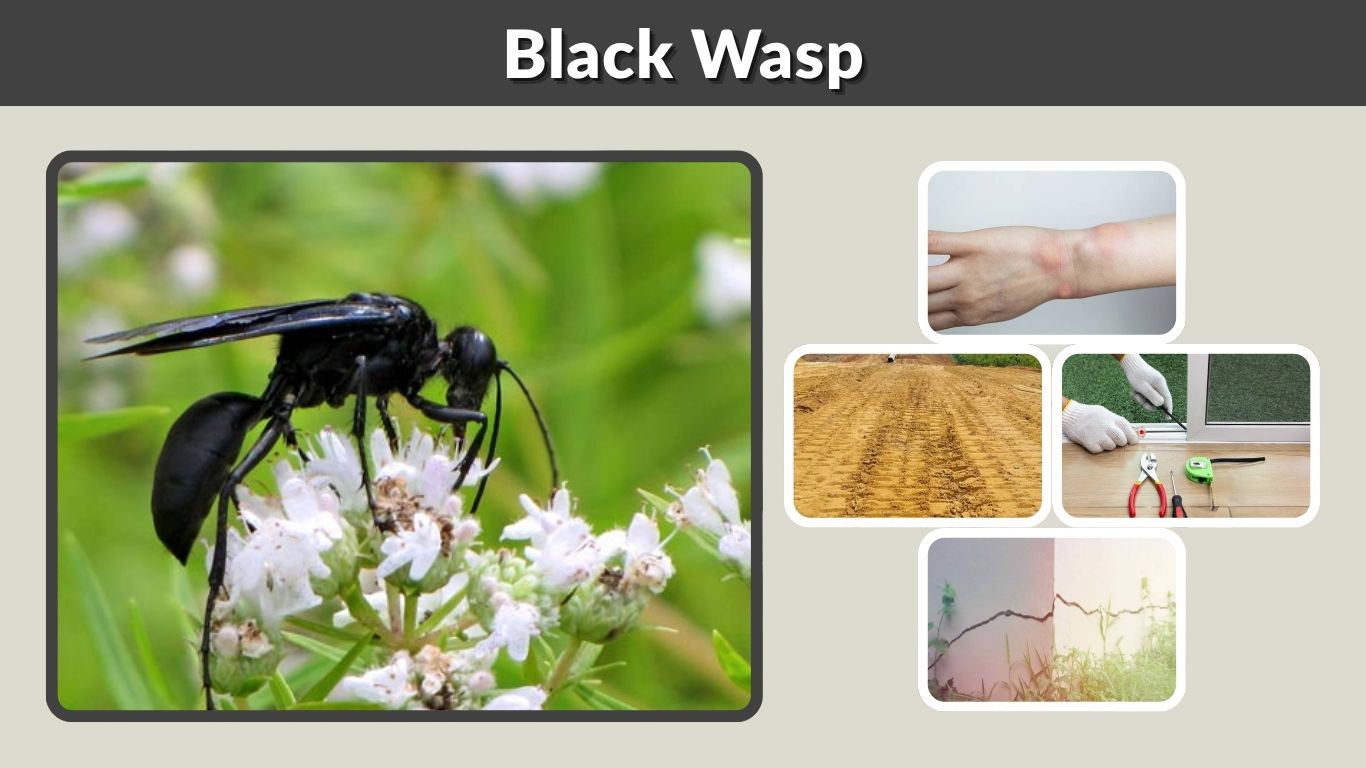
A black wasp can look intimidating because of its dark body, large size, and noticeable wings, but the name does not describe just one species. The great black wasp is one of the most recognizable examples, while mud daubers, mason wasps, and other species may also appear mostly black. Learning how to identify these insects, where they build nests, whether they sting, and how dangerous they are can help you respond safely when one appears around your home or garden.
What Is a Black Wasp?
The term black wasp is commonly used for several wasp species with bodies that are mostly black or very dark. One of the best-known examples in North America is the great black wasp, Sphex pensylvanicus. However, appearance alone is not always enough for identification because several solitary and social wasps can have similar dark coloration.
Great Black Wasp
The great black wasp is a large solitary wasp belonging to the digger wasp group. Adults have an almost entirely black body, dark wings, long legs, and a narrow waist. Females excavate underground nests where they provide captured insects as food for their developing young.
Unlike yellowjackets, great black wasps do not live in large colonies. A female generally manages her own nest, although several females may choose suitable nesting areas close together.
Are All Black Wasps the Same?
No. A big black wasp may be a great black wasp, while a smaller specimen could be a mason wasp, mud dauber, or another solitary species. Black wasps with white, yellow, red, blue, or orange markings can belong to entirely different groups.
For this reason, body shape, nest location, behavior, wing color, and markings should all be considered when identifying an unfamiliar wasp.
How to Identify a Black Wasp
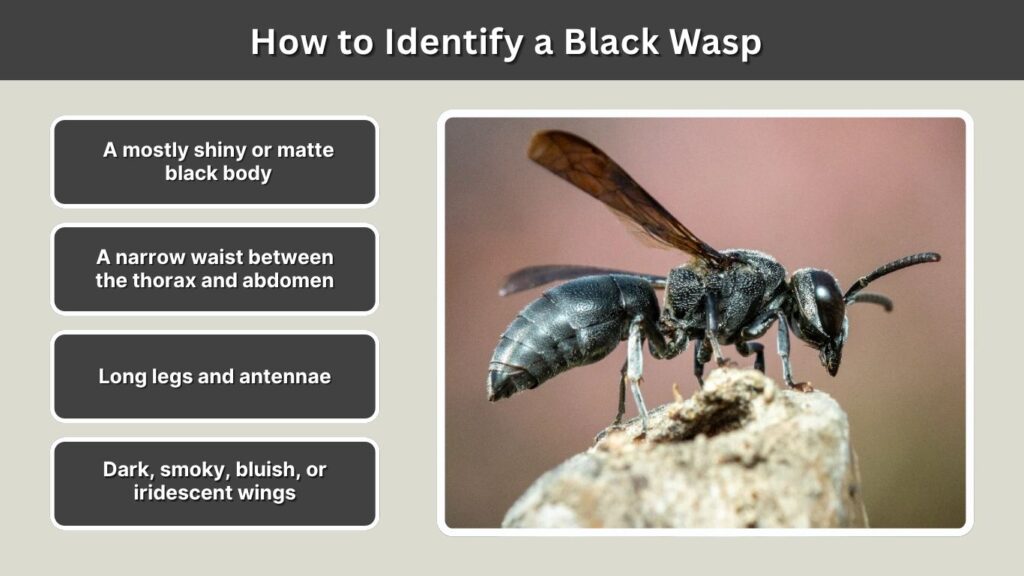
Black wasps vary considerably in size and appearance. Looking at several characteristics instead of relying only on color provides a better chance of identifying the insect correctly. Pay particular attention to overall size, body markings, wing coloration, waist shape, nesting behavior, and whether multiple wasps appear together.
Common Identification Features
Depending on the species, a black wasp may have:
- A mostly shiny or matte black body
- A narrow waist between the thorax and abdomen
- Long legs and antennae
- Dark, smoky, bluish, or iridescent wings
- A smooth body with relatively little visible hair
- A body ranging from small to noticeably large
- White, yellow, red, or orange markings in some species
Big or Giant Black Wasps
A particularly large, all-black wasp is often identified as a great black wasp, especially when it has smoky wings and is seen visiting flowers or searching near loose soil.
Great black wasps can appear alarming because females are relatively large. Their size does not automatically mean they are unusually aggressive. Their solitary lifestyle generally makes them less defensive than colony-forming wasps protecting a shared nest.
Black Wasp With Blue Wings
Some black wasps appear bluish because their wings reflect light. Great black wasps, certain spider wasps, and other species can display blue, purple, or metallic tones depending on lighting.
Color alone should therefore not be used as the sole identification characteristic.
Common Types of Black Wasps
Several wasps may be described casually as black wasps. Some are almost completely black, while others have contrasting markings. Their behavior and nesting habits can be very different, making identification useful before attempting any control measures.
Black Wasp Species You May Encounter
Common examples include:
- Great black wasp: Large, mostly black solitary digger wasp.
- Black mud dauber: Slender wasp associated with mud-built nests.
- Mason wasp: Often black with white, yellow, or other contrasting markings.
- Spider wasp: Usually dark-colored and known for hunting spiders.
- Giant ichneumon wasp: A slender parasitoid wasp, sometimes with an extremely long egg-laying structure.
- Black paper wasp: Some paper wasp species or regional color forms can appear predominantly dark.
Black and White Wasps
A black wasp with a white stripe, white spots, or pale bands may be a mason wasp or another related species. Bald-faced hornets are also strongly black and white, although they are actually a type of yellowjacket rather than a true hornet.
Because social species can defend their nests aggressively, identifying the nesting behavior is especially important.
Black and Yellow Wasps
Black wasps with yellow stripes can include yellowjackets, paper wasps, potter wasps, and numerous solitary species. Yellowjackets generally have compact bodies and bold yellow-and-black patterns, whereas many solitary wasps have slimmer bodies and different nesting habits.
Do Black Wasps Sting?
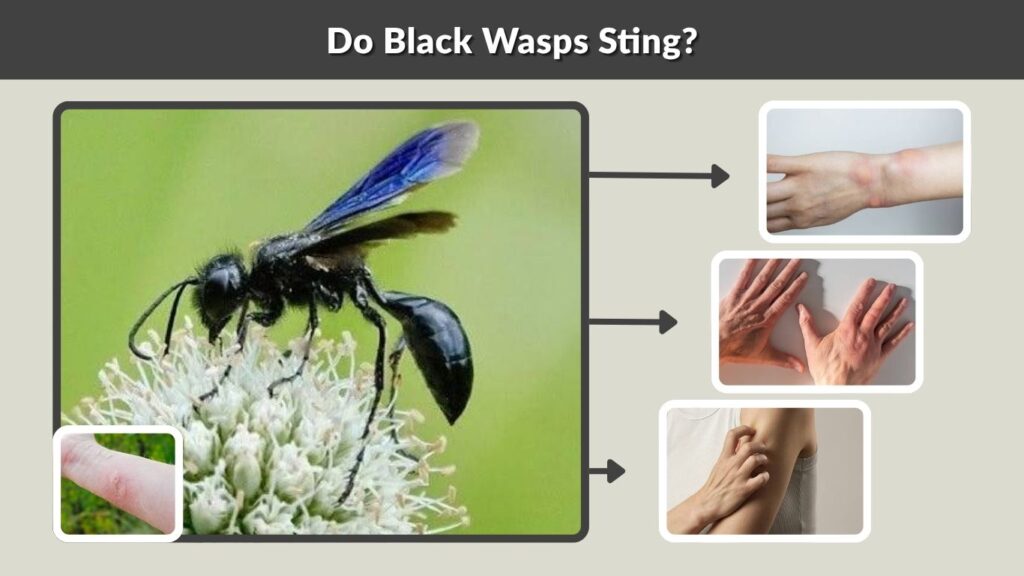
Yes, female black wasps of many species are capable of stinging. The likelihood of being stung depends heavily on the species and circumstances. Solitary wasps such as great black wasps generally use their sting to subdue prey and are less likely to sting people unless trapped, handled, stepped on, or strongly threatened.
Black Wasp Sting Symptoms
A sting can cause:
- Immediate sharp or burning pain
- Redness around the sting site
- Local swelling
- Tenderness
- Itching
- Warmth around the affected area
Reactions vary between individuals. Most localized reactions improve gradually, but some people can develop serious allergic symptoms.
What to Do After a Black Wasp Sting
For a mild localized sting:
- Move away from the area to prevent additional stings.
- Wash the skin gently with soap and water.
- Apply a wrapped cold pack for short periods to reduce swelling.
- Avoid scratching or irritating the sting site.
- Monitor symptoms over the following hours.
Seek emergency medical care for trouble breathing, swelling of the mouth or throat, faintness, widespread hives, or other signs of a severe allergic reaction.
Do Black Wasps Bite?
Wasps have jaws that can be used for feeding, digging, manipulating nesting materials, or handling prey. However, when people describe a painful defensive encounter as a “black wasp bite,” a sting is usually the more relevant concern.
Where Do Black Wasps Build Nests?
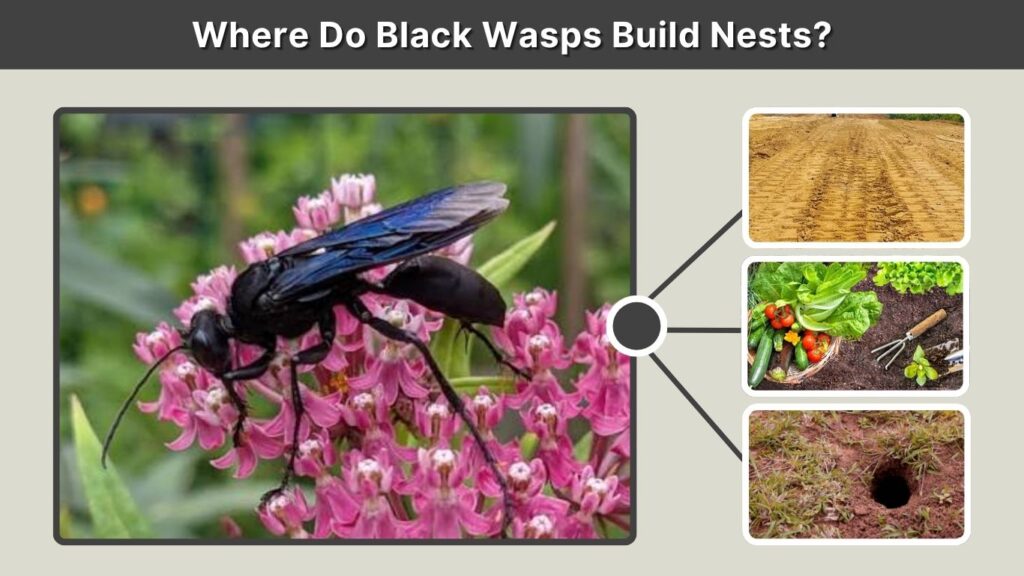
Nest type depends on the species. Some black wasps dig underground, while others construct mud nests or use pre-existing cavities. Determining where the insect repeatedly travels can provide useful clues about what species is present and whether the nest poses any significant concern.
Common Black Wasp Nest Locations
Possible nesting areas include:
- Loose or sandy soil
- Garden beds
- Areas beneath vegetation
- Ground burrows
- Hollow plant stems
- Cracks and small cavities
- Mud structures on sheltered surfaces
- Holes in wood or existing insect tunnels
Great Black Wasp Nest
Great black wasps usually nest underground. A female digs a burrow containing chambers where she places captured prey and lays eggs.
Several individual nests may occur in favorable soil, creating the impression of a colony. However, these females are generally operating independent nests rather than sharing one large social colony.
Are Black Wasps Dangerous?
Most black wasps are not inherently dangerous simply because they are large or dark-colored. Risk depends more on species, nesting behavior, proximity to people, and whether the insect feels threatened. Great black wasps are solitary and normally spend much of their time hunting or visiting flowers rather than defending a large colony.
Is the Great Black Wasp Dangerous?
A great black wasp can sting, but it usually has little reason to attack a person. Problems are more likely when a wasp is grabbed, trapped against clothing, or accidentally stepped on.
Seeing one feeding on flowers usually does not require intervention. Allowing enough space and avoiding unnecessary disturbance is generally the simplest approach.
When Black Wasps Need More Attention
A nest deserves additional caution when it is beside a doorway, children’s play area, frequently used walkway, or another location where accidental contact is likely.
Repeated activity from many defensive wasps entering the same nest opening can also suggest that the insects may be a social species rather than harmless solitary visitors.
Black Wasps Around the Home
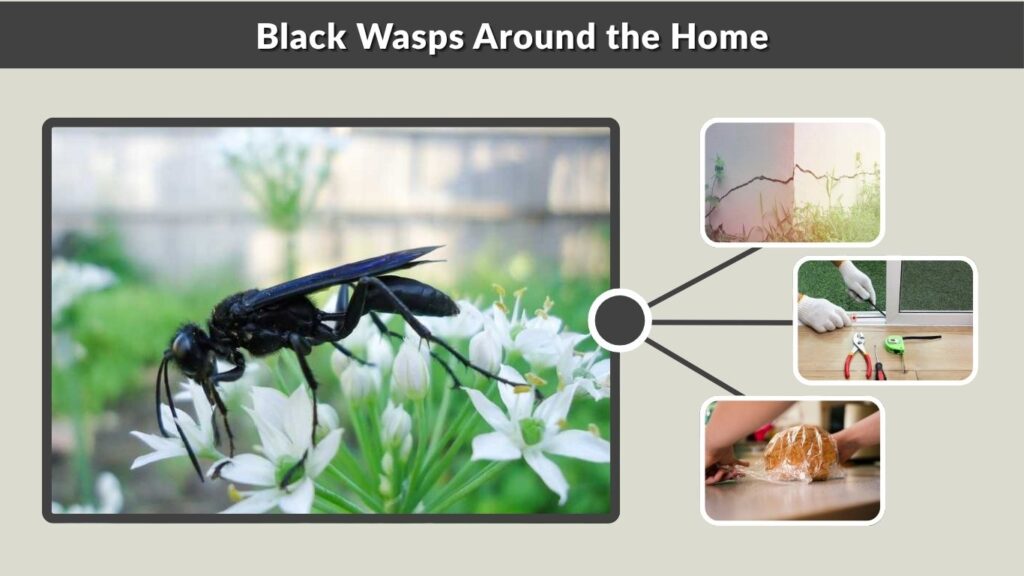
Finding an occasional black wasp outdoors does not necessarily mean you have an infestation. Many solitary wasps naturally move through gardens while searching for nectar, prey, nesting sites, or water. They can also contribute to natural insect control by hunting other arthropods.
Should You Remove a Black Wasp?
An individual wasp outdoors usually does not need to be removed. Avoid swatting at it and give it an open route to leave.
When a wasp repeatedly enters a structure or a nest is located in a high-contact area, accurate identification should come before control. Nest treatment methods appropriate for one species may be unnecessary or inappropriate for another.
Preventing Unwanted Wasp Activity
Keeping exterior cracks sealed, repairing damaged screens, reducing accessible cavities, and maintaining areas around doors and windows can help prevent wasps from entering buildings.
Outdoor food and sugary drinks should also be covered, particularly when yellowjackets or other scavenging social wasps are active. Avoid disturbing an unidentified nest until you know what kind of wasp is using it.
FAQs
1. What is a great black wasp?
The great black wasp, Sphex pensylvanicus, is a large solitary digger wasp found in North America. It has a predominantly black body and dark wings and commonly nests in underground burrows.
2. Does a black wasp sting?
Yes. Females of many black wasp species can sting. Solitary species generally sting defensively when trapped or threatened rather than actively pursuing people.
3. Are great black wasps aggressive?
Great black wasps are generally not strongly aggressive toward humans. They do not defend large communal colonies in the way many yellowjackets do.
4. Where do great black wasps nest?
Great black wasps usually create burrows in the ground, often selecting loose or workable soil. Each female typically manages her own nest and provisions it for her offspring.
5. What should I do if I see a large black wasp?
Avoid grabbing or swatting it. Observe its markings, size, and behavior from a safe distance. If it is simply visiting flowers, it can usually be left alone. If numerous wasps are defending a nest near people, consider professional identification and removal.
