

Wood boring bees, often known as carpenter bees, are beneficial pollinators but can cause frustrating damage to homes. By drilling half-inch holes into untreated wood, they create galleries where they lay eggs and raise larvae. Over time, this weakens decks, railings, fences, and eaves.
Fortunately, you don’t need to resort to harsh chemicals to deal with them. With a thoughtful, natural approach, you can deter wood boring bees, protect your property, and still respect their ecological value. This guide walks you through a safe, step-by-step process to get rid of carpenter bees naturally.
Tools & Natural Materials Checklist

Before beginning, gather simple, eco-friendly supplies. Most are inexpensive and widely available:
- Citrus oil spray (homemade or store-bought)
- Almond oil for coating vulnerable areas
- Vinegar spray as a deterrent
- Essential oils like peppermint, tea tree, or lavender
- Wooden dowels or steel wool plus strong glue
- Exterior wood filler or epoxy
- Sandpaper, primer, and exterior paint/stain
- Carpenter bee traps (non-toxic design, no chemicals)
Having everything ready ensures you can act quickly when you spot signs of activity.
Step 1: Identify Wood Boring Bees

The first step is confirming you are dealing with carpenter bees rather than another insect.
Signs of Carpenter Bees
- Round holes: About ½ inch in diameter, clean and smooth around the edges.
- Sawdust (frass): Piles beneath holes from excavation.
- Buzzing activity: Males hover nearby, guarding territory, while females bore into wood.
Carpenter Bees vs. Termites
- Carpenter bees: Create smooth, round tunnels and don’t eat wood.
- Termites: Leave irregular galleries filled with soil or mud and consume wood internally.
By distinguishing them correctly, you’ll avoid mistreating the problem with unnecessary chemicals or termite treatments.
Step 2: Apply Natural Repellents
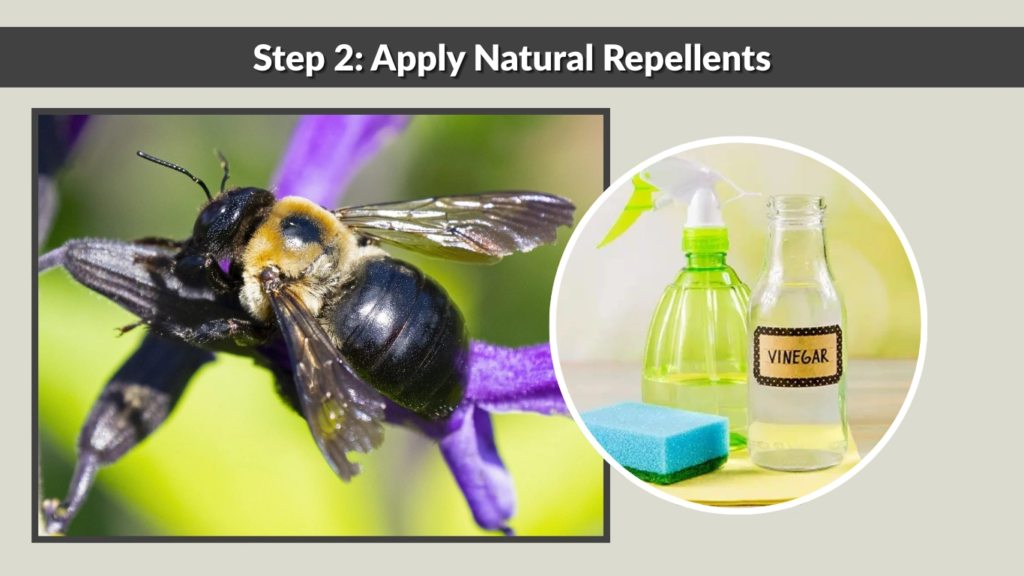
Natural repellents are safe for people, pets, and the environment while making wooden surfaces unappealing to carpenter bees.
Citrus Oil Spray
Carpenter bees dislike citrus odors. Boil citrus peels (lemon, orange, or grapefruit) in water for 10–15 minutes. Once cooled, pour into a spray bottle and apply directly into bee holes and around wooden surfaces.
Almond Oil
A highly effective natural deterrent, almond oil can be applied around nesting holes or directly onto exposed wood. Its smell and taste drive bees away, preventing reuse of tunnels.
Vinegar Spray
Mix equal parts vinegar and water. Spray into holes and around vulnerable wooden surfaces. The strong odor repels bees but may need frequent reapplication.
Essential Oils
Peppermint, tea tree, or lavender oils can be diluted in water (about 10–15 drops per cup) and sprayed on wooden areas. These scents are unpleasant to carpenter bees and discourage them from drilling.
Using repellents consistently in spring and early summer, when bees are scouting for nesting sites, provides the best results.
Step 3: Seal and Repair Existing Holes
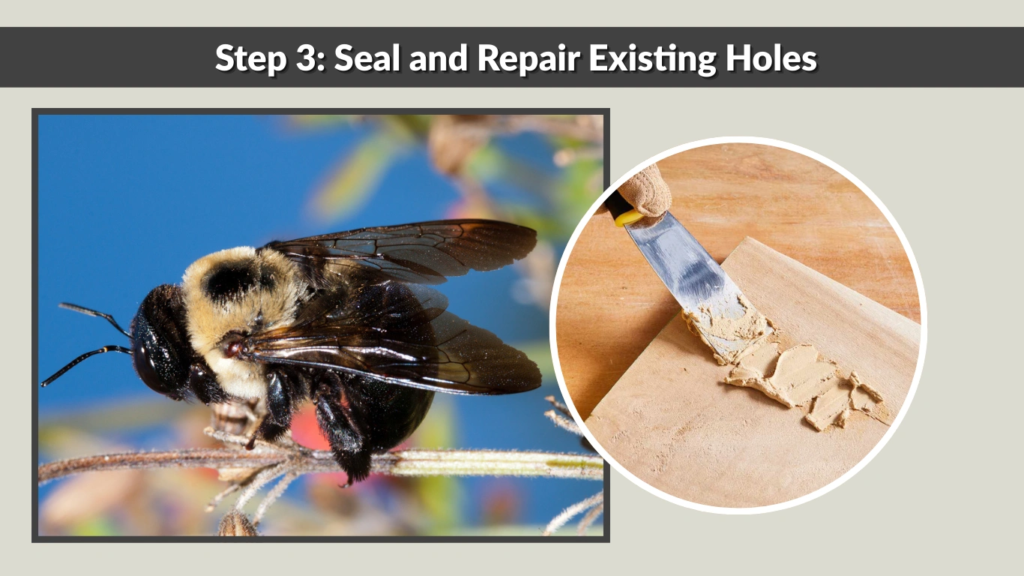
Once repellents have been applied and bees are less active, it’s time to repair any existing damage.
Plugging Holes
- Insert a wooden dowel coated with wood glue into the tunnel to block it.
- Alternatively, pack steel wool into the hole as a deterrent before sealing.
Filling and Smoothing
After plugging, apply exterior wood filler or epoxy over the hole. Smooth it with a putty knife and sand once dry. This ensures the repair blends with the surface and restores strength.
Timing Matters
Perform repairs at night or in late fall when bees are inactive. Plugging holes during the day, when bees are inside, can trap them and cause additional damage as they try to escape.
Repairing old galleries not only protects the structure but also prevents carpenter bees from reusing tunnels year after year.
Step 4: Protect and Coat Wood Surfaces

Even after sealing old holes, untreated wood remains highly attractive to carpenter bees. Applying protective coatings is one of the most effective natural deterrents.
- Paint: A solid coat of exterior paint creates a slick surface that bees rarely penetrate.
- Stain or sealant: Solid-color stains work better than transparent ones, as they form a stronger barrier.
- Regular reapplication: Recoat every 2–3 years, especially in exposed areas like decks, railings, and siding.
A consistent maintenance routine not only repels carpenter bees but also extends the lifespan of your wood.
Step 5: Use Non-Toxic Traps
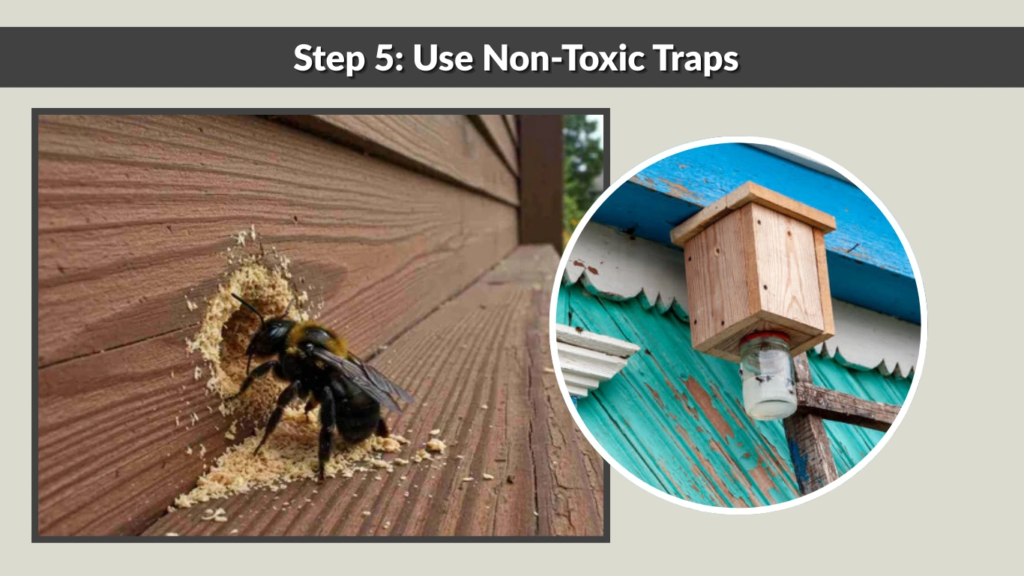
Carpenter bee traps are a safe, chemical-free way to reduce populations near your home.
How Traps Work
Traps mimic a nesting tunnel. Bees enter through angled holes and end up in a container they cannot escape. Over time, this reduces the number of bees drilling into wood.
Placement Tips
- Install traps in sunny, sheltered areas such as eaves, porches, or deck posts.
- Place them in spring before nesting begins for maximum effectiveness.
- Hang traps 6–10 feet above ground, near areas with past bee activity.
Maintenance
Empty and clean traps regularly to keep them functional. If using a lure, refresh it as recommended to maintain attractiveness.
Traps work best when combined with wood sealing and natural repellents, rather than as a stand-alone method.
Step 6: Prevent Future Nesting
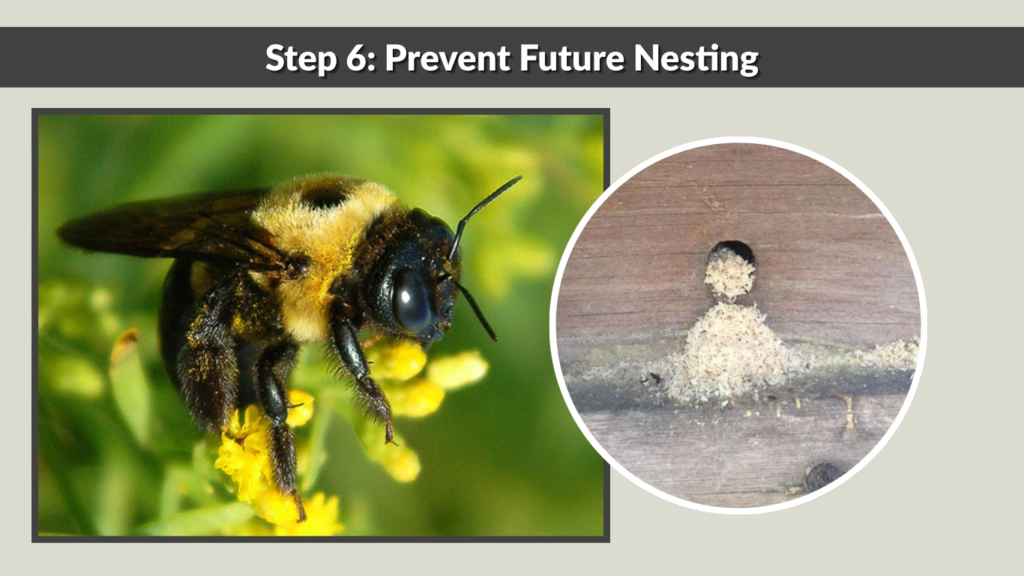
The final step is creating an environment that discourages carpenter bees from returning.
Material Upgrades
- Replace vulnerable softwoods like pine and cedar with hardwood, pressure-treated lumber, or composite materials.
- Wrap fascia boards and soffits with aluminum or PVC cladding for extra protection.
Structural Exclusions
- Seal cracks, joints, and exposed edges with caulk to eliminate entry points.
- Use wire mesh or screens over soffits and vents.
Landscaping Adjustments
- Keep flowering vines, like wisteria, away from wooden structures.
- Plant pollinator-friendly flowers in areas away from decks and fences to give carpenter bees alternative foraging spaces.
- Store firewood and scrap lumber away from the house, as these can also attract nesting activity.
By combining these steps, you’ll reduce the risk of carpenter bee infestations year after year.
