

Carpenter bees are one of the most misunderstood insects around homes and gardens. Their size and buzzing flight often cause them to be mistaken for bumblebees or even aggressive wasps. However, carpenter bees are solitary pollinators that bore into wood to create nests. Correctly identifying them is important not only for safety but also for protecting wooden structures from damage.
In this guide, we’ll answer the most common questions people ask, from what carpenter bees look like to what their nests, larvae, and eggs resemble.
What Does a Carpenter Bee Look Like?

Carpenter bees are large, sturdy insects, often about ¾ to 1 inch long. At first glance, they resemble bumblebees, but there are distinct differences:
- Shiny black abdomen – Unlike bumblebees, carpenter bees have a smooth, glossy abdomen with little to no hair.
- Fuzzy thorax – Their upper body (thorax) is covered in yellowish or black hairs, giving them a furry look.
- Strong mandibles – These allow them to drill perfectly round holes into wood.
- Buzzing flight – Their sound is deep and loud, especially when hovering near nests.
This combination of traits makes carpenter bees easy to identify once you know what to look for.
What Do Male and Female Carpenter Bees Look Like?

Male and female carpenter bees share many features, but a closer look reveals key differences.
- Males
- Lighter yellow or white markings on their faces.
- Do not have stingers.
- More territorial—males often hover in front of people or intruders but are harmless.
- Lighter yellow or white markings on their faces.
- Females
- Entirely black faces without pale markings.
- Possess stingers but rarely use them unless provoked.
- Responsible for drilling holes and building tunnels.
- Entirely black faces without pale markings.
Being able to distinguish male from female carpenter bees helps explain their behavior near wooden structures.
What Does a Queen Carpenter Bee Look Like?
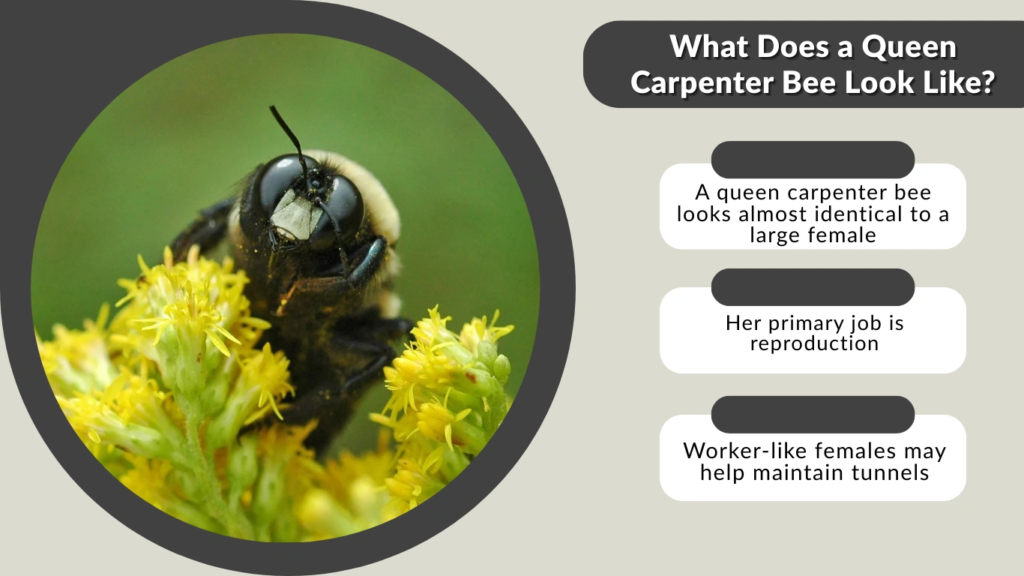
Unlike honeybees, carpenter bees are mostly solitary, but in some species, females may take on a queen-like role.
- A queen carpenter bee looks almost identical to a large female—robust, black-faced, and shiny.
- Her primary job is reproduction, laying eggs within the drilled tunnels.
- Worker-like females may help maintain tunnels or forage for pollen.
While not as socially organized as honeybees, the “queen” carpenter bee is simply the primary egg-layer in the nesting site.
Do Carpenter Bees Look Like Bumblebees?

Yes—this is one of the most common sources of confusion. From a distance, carpenter bees and bumblebees look alike. Both are large, buzzing, black-and-yellow bees. However, the differences are clear up close:
- Bumblebees – Fuzzy all over, including the abdomen. They live in colonies and often nest underground.
- Carpenter bees – Have shiny, hairless abdomens and prefer drilling into wood rather than soil. They live solitary or in small groups.
Understanding this distinction helps homeowners know whether they’re dealing with harmless pollinators or wood-boring bees.
What Bees Look Like Carpenter Bees?

Carpenter bees share features with other flying insects, which often leads to mistaken identity. Some of the closest look-alikes include:
- Bumblebees – Their fuzzy bodies make them the most common comparison.
- Wasps – Certain large wasps, like the cicada killer, can look similar but have slimmer bodies and longer wings.
- Hoverflies – These mimic bees with yellow-and-black stripes but are smaller and harmless.
When trying to identify carpenter bees, the smooth black abdomen is the key feature to look for.
What Insects Look Like Carpenter Bees but Aren’t?
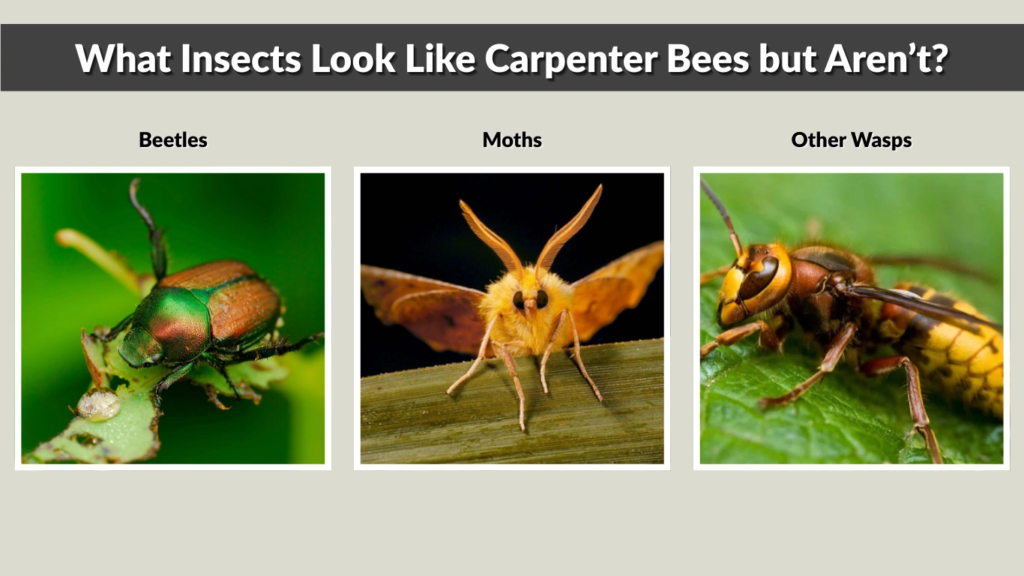
Beyond bees, several other insects can fool the eye:
- Beetles – Large black beetles with shiny shells may look like carpenter bees but lack wings for hovering flight.
- Moths – Some day-flying moths have yellow-and-black patterns that mimic bees for protection.
- Other Wasps – In places like Florida, wasps resembling carpenter bees are common, though they are slimmer and more aggressive.
Looking at flight style, body shape, and the presence of hair helps separate true carpenter bees from these mimics.
What Does a Carpenter Bee Nest Look Like?
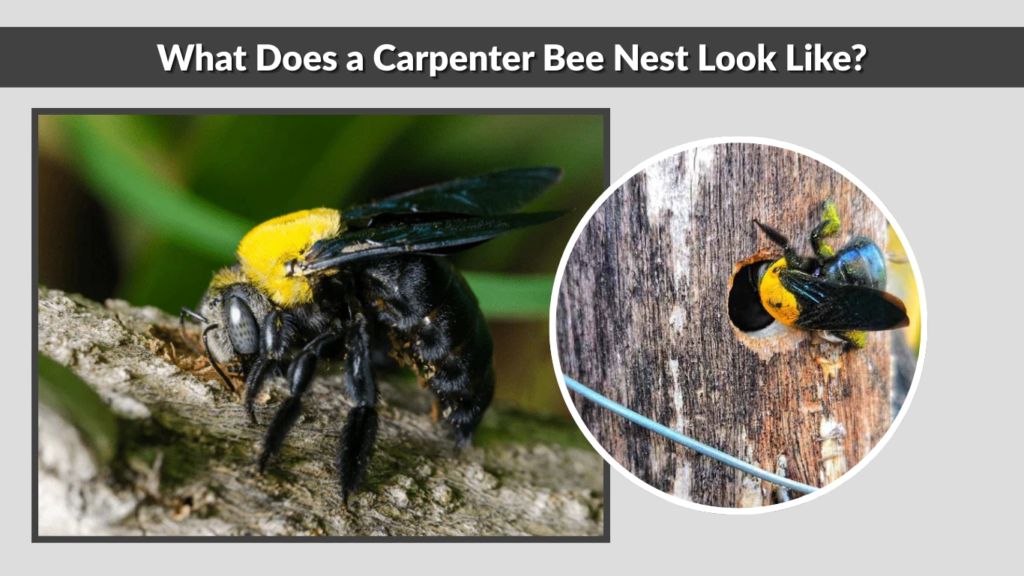
Unlike honeybee hives or bumblebee colonies, carpenter bees do not create large communal nests. Instead, they build individual tunnels inside wood. A nest looks like:
- Entry holes – Round openings about ½ inch wide on decks, fences, eaves, or outdoor furniture.
- Straight tunnels – The bee first bores straight into the wood for about an inch.
- 90-degree turn – After the entry, the tunnel usually turns sharply and continues along the wood grain.
- Brood chambers – Inside, the female creates small compartments where she lays eggs and seals them with pollen.
From the outside, all you may see is the neat circular entry hole, but inside lies a complex tunnel system.
What Does a Carpenter Bee Hole Look Like?
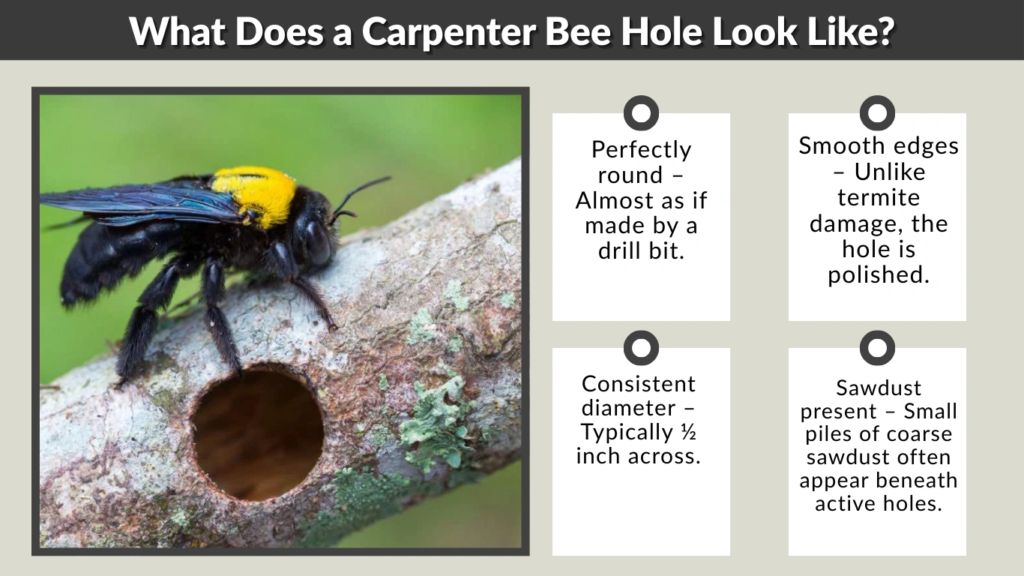
Carpenter bee holes are very distinctive and easy to spot once you know the signs.
- Perfectly round – Almost as if made by a drill bit.
- Smooth edges – Unlike termite damage, the hole is polished.
- Consistent diameter – Typically ½ inch across.
- Sawdust present – Small piles of coarse sawdust often appear beneath active holes.
Over time, multiple holes may cluster in one area, making damage more obvious.
What Do Carpenter Bee Larvae Look Like?

Inside these tunnels, you’ll find carpenter bee larvae developing. Their appearance is quite different from the adult bee:
- White and grub-like – Soft-bodied, legless, and curled in shape.
- Growing in chambers – Each larva is sealed in its own cell with a food supply of pollen.
- Lifecycle – Over weeks, larvae transform into pupae before emerging as adult bees.
Spotting larvae requires opening the wood, which most homeowners avoid. However, the presence of active holes usually means larvae are inside.
What Do Carpenter Bee Eggs Look Like?
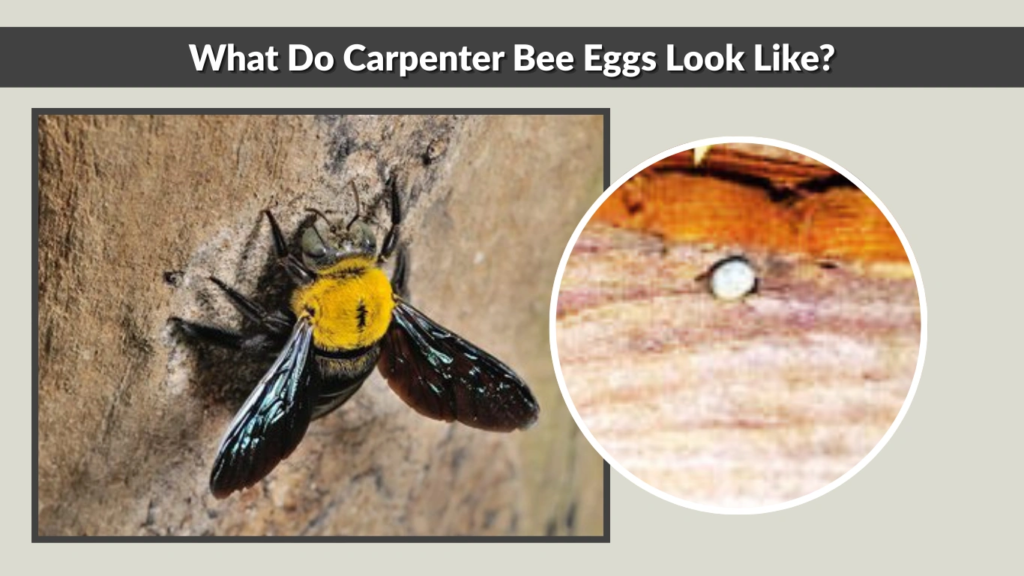
Carpenter bee eggs are rarely seen by homeowners because they remain hidden inside brood chambers. However, knowing what they look like helps in understanding their life cycle.
- Shape and Size – Eggs are small, oval, and translucent white.
- Placement – Each egg is laid inside a chamber along with a supply of pollen, sealed off with chewed wood pulp.
- Lifecycle Start – Eggs develop into larvae within a few days, beginning the next generation of carpenter bees.
Though they remain hidden, the presence of holes strongly indicates eggs and larvae may already be inside.
What Do Carpenter Bee Tunnels Look Like Inside?
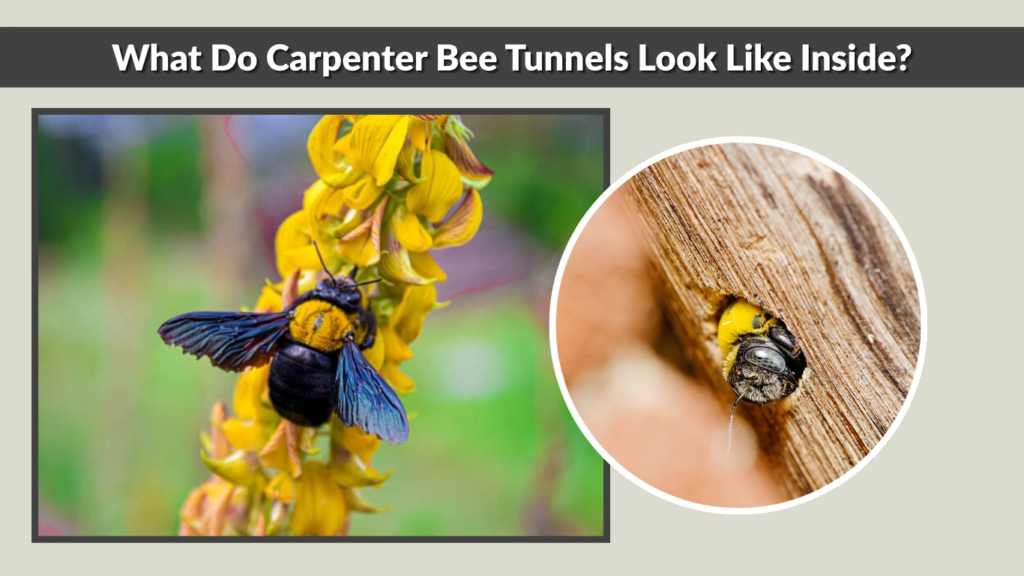
The tunnel system built by carpenter bees is surprisingly organized. From the outside, you see only a small hole, but inside, there may be:
- A straight entry tunnel about an inch long.
- A sharp turn running parallel to the wood grain.
- Multiple brood chambers, each sealed with pollen and nectar.
- Lengths of 6–10 inches, sometimes more in reused tunnels.
Over time, tunnels expand as new generations use the same entry point, increasing structural damage.
What Does Carpenter Bee Damage Look Like?
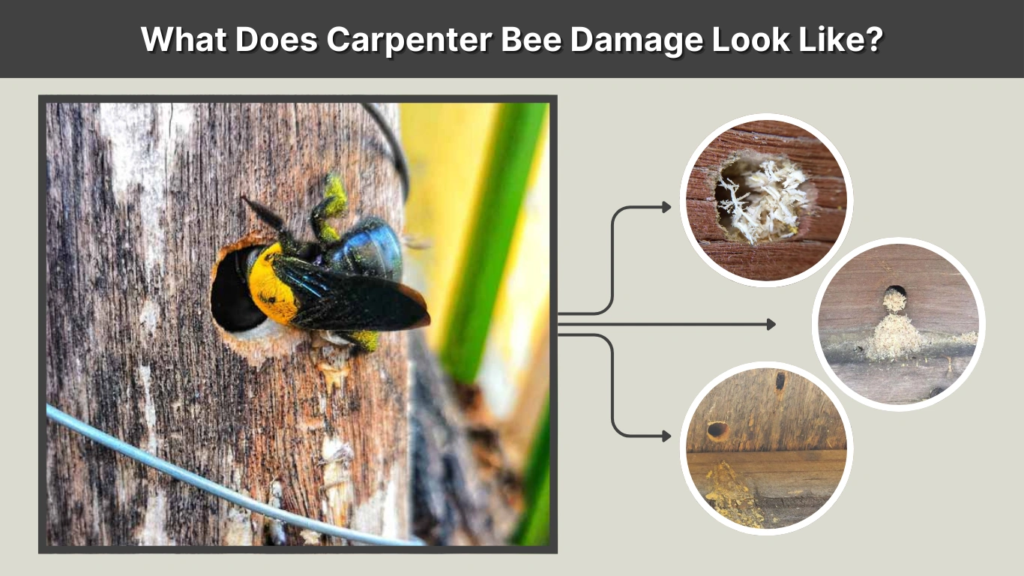
Carpenter bee damage is more than just a single hole—it can affect entire sections of wood. Signs include:
- Clusters of holes in siding, decks, or furniture.
- Coarse sawdust beneath entry points.
- Yellowish stains from bee feces near holes.
- Weakened boards that sound hollow or soft.
The combination of tunneling, staining, and secondary pests like woodpeckers makes carpenter bee damage especially costly if ignored.
What Does a Carpenter Bee Sting Look Like?
While male carpenter bees cannot sting, females can. Thankfully, they are not aggressive and sting only when provoked.
- Appearance – Redness, mild swelling, and localized pain.
- Comparison – Less severe than a wasp sting, though reactions vary by individual.
- Treatment – Clean the area, apply ice, and use antihistamines for itching or swelling.
Because female bees focus on tunneling rather than defending nests, stings are uncommon around homes.
What Does Carpenter Bee Poop Look Like?
One overlooked sign of carpenter bee activity is their waste. Carpenter bee droppings may stain wood surfaces, giving clues about hidden infestations.
- Appearance – Yellowish-brown streaks or spots near entry holes.
- Texture – Liquid or semi-liquid, often mistaken for mold or rot.
- Impact – Stains reduce the appearance of wood surfaces and may attract other insects.
Cleaning these droppings helps maintain surfaces, but sealing the holes is the only way to prevent more.
What Do Baby Carpenter Bees Look Like?
Young carpenter bees undergo several life stages before emerging as adults.
- Larvae – White, grub-like, soft-bodied.
- Pupae – Begin developing wings and segmented bodies inside chambers.
- Young Adults – Smaller versions of adult bees with shiny abdomens and fuzzy thoraxes.
By late summer, the new generation emerges, ready to repeat the nesting process.
What Do Carpenter Bee Nests Look Like Inside Wood?
If you could split open a board with a carpenter bee nest, you’d find a tidy tunnel system:
- Main entry hole – Smooth, ½-inch wide.
- Branching chambers – Each with an egg, larva, or pupa.
- Sealed partitions – Made from wood pulp separating each brood chamber.
This structured layout shows how efficient carpenter bees are at turning simple wood into safe nurseries for their offspring.
What Does a Carpenter Bee Infestation Look Like?
An infestation differs from a single bee hole because it involves multiple bees and repeated use of tunnels. Signs include:
- Numerous entry holes across large wooden surfaces.
- Woodpecker activity—birds pecking to feed on larvae.
- Buzzing and hovering bees around decks, siding, or eaves.
- Accumulated sawdust and droppings across seasons.
If left untreated, infestations can compromise the integrity of wooden structures.
What Does a Carpenter Bee Trap Look Like?
Traps are one of the most effective tools for managing carpenter bees without chemicals.
- Box-shaped traps with angled sides and a roof to protect from rain.
- Pre-drilled holes (about ½ inch) that mimic nesting sites.
- Collection jar at the bottom where bees are captured.
Proper placement near active areas ensures higher capture rates.
What Do Male and Female Carpenter Bees Look Like Side by Side?
When observed together, the differences are clear:
- Male – White or yellow face, smaller, no stinger, more aggressive hovering.
- Female – Black face, slightly larger, equipped with a stinger, responsible for drilling.
This distinction helps homeowners understand behavior when bees are buzzing around.
What Do Carpenter Bee Look-Alikes Tell Us?
Many insects imitate the appearance of carpenter bees as a survival strategy. For example:
- Bumblebees – True relatives but less destructive.
- Wasps – Slimmer, shinier, and more aggressive.
- Moths and beetles – Harmless imitators that confuse predators.
Learning these differences prevents unnecessary extermination of harmless or beneficial insects.
